


 Wall Street Journal: Iran is redoubling its efforts to enrich uranium by upgrading the equipment at its nuclear facilities, after its enrichment program was severely disrupted by a computer virus, according to diplomats familiar with a new assessment by the International Atomic Energy Agency.
The Wall Street Journal
By DAVID CRAWFORD
 Iran is redoubling its efforts to enrich uranium by upgrading the equipment at its nuclear facilities, after its enrichment program was severely disrupted by a computer virus, according to diplomats familiar with a new assessment by the International Atomic Energy Agency.
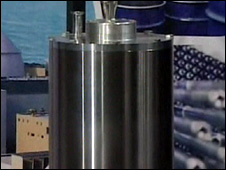
The IAEA, the United Nations’ nuclear watchdog, believes Iran is seeking to replace thousands of centrifuges it has been using to enrich uranium with more modern, carbon-fiber centrifuges that can enrich nuclear fuel at about five times the speed of Iran’s previous equipment, these diplomats say.
The diplomats say Iran is also replacing computers and other electronic equipment at its nuclear facilities, including its Natanz enrichment plant, after apparently failing to trace the source of a damaging computer virus known as Stuxnet. Replacing all of the electronics could take Iran up to two years, these people say.
The Stuxnet virus is widely believed to have been designed by a foreign intelligence service, possibly in Israel or the U.S., to slow down Iran’s nuclear program, although nobody has claimed responsibility for the alleged cyber attack.
U.S. officials say Iran is developing technology that could be used to produce nuclear weapons in violation of U.N. Security Council resolutions. The IAEA says Iran’s lack of cooperation prevents it from determining whether Iran’s nuclear program is military in nature. Iran says its nuclear program is strictly for peaceful purposes.
U.S. intelligence agencies’ recent classified assessment concludes that Iran’s leaders are debating whether to move further toward developing nuclear weapons, even as it works on nuclear-weapons research in addition to expanding its program to enrich uranium. According to the assessment, Iran’s debate over whether to proceed with an effort to build a nuclear bomb suggests international sanctions may be causing divisions in Tehran, U.S. officials said.
The new IAEA assessment of Iran’s militarily relevant nuclear activities was ordered by IAEA General Director Yukiya Amano, two people familiar with the matter say. Early drafts of the assessment, known as the “militarization report,” have been seen by diplomats involved with the IAEA’s work.
The carbon-fiber centrifuges are a concern, three of these diplomats say, because the new technology would allow Iran to reduce the time it would require to secretly produce enough fuel to ignite a nuclear weapon.
Currently Iran would need to operate about 6,000 of its original centrifuges for a year to produce enough highly enriched uranium for a bomb. Using carbon-fiber centrifuges with steel rotors that Iran has tested at its Pilot Fuel Enrichment Plant, Iran could cut the enrichment time to under 12 weeks, according to an analysis by Germany’s government.
Iran’s enrichment program faltered in November, when the IAEA says 25 of Iran’s 54 sets of centrifuges weren’t functioning. Diplomats believe the Stuxnet virus was responsible for the disruption. Two of the diplomats say it is unclear how quickly Iranian engineers can install enough carbon-fiber centrifuges to revive the pace of its uranium enrichment.
The IAEA report aims to provide an up-to-date review of Iran’s nuclear activities with a military significance, based on evidence provided by both agency inspectors and member states.
In the past, Iran has rejected as forged some documents presented by the IAEA as evidence. The IAEA said it received the documents from member states and considers the documents to be consistent with evidence it has found in its inspections. The new report will be used to test the veracity of Iran’s disclosures to the agency, and could lead to new lines of inquiry in Iran, the diplomats say.
Since 2008, Iran has declined IAEA requests for access to locations in the country where military activities with possible nuclear dimensions may have occurred. The IAEA says it needs access to these sites in order to test the truthfulness of the allegations as part of its obligation to determine if Iran’s nuclear activities are peaceful in nature.
Similarly, Iran has also declined IAEA requests to interview people who could assist in addressing open questions about alleged military aspects of its nuclear program.
IAEA inspectors pressed Iran to respond to these questions in a letter in October detailing outstanding issues the agency wants to resolve concerning Iran’s nuclear program. Diplomats say the list of outstanding issues is expected to be annexed to a forthcoming IAEA report on Iran to the agency’s board of governors.
—Adam Entous contributed to this article.


