


 Wall Street Journal – REVIEW & OUTLOOK: An attack on oil traffic would deserve a military response.
The Wall Street Journal
An attack on oil traffic would deserve a military response.
REVIEW & OUTLOOK
So now we know the kind of sanctions that hit Iran’s regime where it really hurts. The U.S. and Europe are at last mustering the gumption to target Iran’s multibillion-dollar oil industry, and almost immediately Tehran is threatening to bring Persian Gulf tankers to a halt.
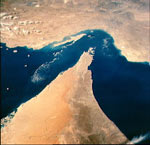
“If they impose sanctions on Iran’s oil exports, then even one drop of oil cannot flow from the Strait of Hormuz,” said Iran’s first vice president, Mohammad-Reza Rahimi, on Tuesday. On a typical day about 13 tankers carry 15.5 million barrels of oil through the strait, which is about 21 miles wide at its narrowest point.
Admiral Habibollah Sayari, who runs Iran’s navy, added yesterday that “shutting the strait for Iran’s armed forces is really easy—or as we say [in Iran] easier than drinking a glass of water.” Oil prices had surged after an Iranian lawmaker issued a vaguer threat last week, and they kept rising before falling yesterday.
As a military matter, this is mostly bluster. If it struck first, Iran could sink a few ships and do some damage. But Iran is no military match for the U.S. and its allies in the Persian Gulf. The Pentagon and the U.S. Navy’s Fifth Fleet both sent that message to Tehran yesterday. “Any disruption,” the Bahrain-based U.S. fleet said in an email, “will not be tolerated.”
Yet the Iranian tantrum is educational. Iran knows that Western leaders fear the economic and political impact of higher oil prices, not least with elections coming in 2012 for President Obama and French President Nicolas Sarkozy. Iran’s leaders are trying to see if they can intimidate those leaders into backing down. The Western response should be to tighten sanctions further to show such tactics won’t work.
The episode is also a reminder, the latest in a series, of the Iranian regime’s character and intentions. In October, the U.S. said it uncovered an Iranian plot to assassinate the Saudi ambassador in Washington—also wholly in character for the world’s leading state sponsor of terrorism. This is not a mature and rational actor that can be contained if it gets nuclear weapons. President Obama promised there would be consequences for the assassination plot, but there have been none.
The Hormuz threat is another opportunity to set boundaries on Iran’s rogue behavior. Washington, along with London, Paris and Riyadh, should say plainly that any attempt to close or disrupt traffic through the strait would be considered an act of war that would be met with a military response. That response would be robust and immediate, and it would target Iran’s military and nuclear assets, perhaps even its regime. Iran’s mullahs need to understand that an act of aggression would jeopardize their own survival.
The Hormuz flap should also underscore the strategic damage that would result if Iran does get the bomb. Fortified by a nuclear threat, the mullahs would be more willing to blackmail their neighbors and press for regional dominance. Would the U.S. dare resist Iranian aggression if it meant putting American forces at risk of a nuclear reprisal? Better to act now to stop Iran before we have to answer that terrible question.


