


 AFP: US President Barack Obama Saturday signed into law tough new sanctions targeting Iran’s central bank and financial sector, in a move that could intensify a brewing Gulf showdown.
By Stephen Collinson
HONOLULU, Hawaii (AFP) — US President Barack Obama Saturday signed into law tough new sanctions targeting Iran’s central bank and financial sector, in a move that could intensify 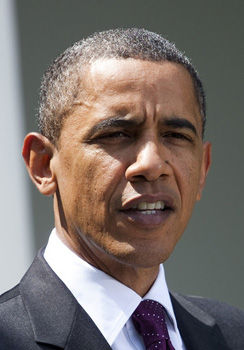 a brewing Gulf showdown.
The measures, meant to punish Iran for its nuclear program, were contained in a mammoth $662 billion defense bill, which Obama signed despite having reservations that it ties his hands on setting foreign policy.
The sanctions are meant to hit Iran’s crucial oil sector and require foreign firms to make a choice between doing business with Tehran’s financial sector and central bank or the mighty US economy and financial sector.
Foreign central banks which deal with the Iranian central bank on oil transactions could also face restrictions, sparking fears of damage to US ties with key nations such as Russia and China which trade with Iran.
Obama signed the bill in Hawaii where he is on vacation, at a time of rising tension with Tehran, which has threatened to block the Strait of Hormuz — through which more than a third of the world’s tanker-borne oil passes.
The United States has warned it will “not tolerate” such an interruption.
In comments reported Saturday, Tehran’s top nuclear negotiator Saeed Jalili warned that Iran would “give a resounding and many-pronged response to any threat” made against it.
But Jalili also said Iran was ready to rejoin EU-led talks with major powers on assuaging Western concerns over its nuclear program.
The White House held intense negotiations with Congress on the terms of the law’s implementation, given concern that sanctions on Iran’s central bank could spark chaos in the global financial system and hike the price of oil.
Obama said in a statement issued as he signed the bill that he was concerned the measure would interfere with his constitutional authority to conduct foreign relations by tying his hands in dealings with foreign governments.
The bill, which passed with wide majorities in Congress, did reserve some wiggle room for Obama, granting him the power to grant 120-day waivers if he judges it to be in the national security interests of the United States.
Earlier this month, Treasury Secretary Timothy Geithner wrote to Congress to express concern against an earlier, tougher sanctions measure along the same lines saying it could harm the US push with its partners to isolate Iran.
Geithner argued that foreign allies could resent the new US measures and make it less likely they would cooperate and the sanctions would have the “opposite effect” of their intended purpose of isolating Iran.
Senior US officials said Saturday that they would try to implement the new sanctions guidelines in a way that protected the global economy and US foreign policy priorities, in a way which would still inflict pain on Iran.
There are fears that increased sanctions on Iran’s central bank could force the global price of oil to suddenly soar, and actually give Tehran a financial windfall on its existing oil sales.
Rising oil prices could also crimp the fragile economic recovery in the United States and inflict pain on American voters in gas stations — at a time when Obama is running for reelection next year.
The Obama administration argues that it has imposed the toughest-ever sanctions on Iran by the United States and its allies and says the measures are now having a punishing impact on the Iranian economy and petroleum sector.
The West alleges Tehran is seeking to acquire a weapons capability under the guise of its nuclear research program. Iran denies any such ambition and says its work is only for civil energy and medical purposes.
In recent weeks, Iranian officials have insisted the country was ready to face new sanctions against the oil sector and central bank.
The Wall Street Journal reported this month that US and European officials were seeking assurances from major oil producers, such as Saudi Arabia, Kuwait and the United Arab Emirates, that they would increase exports to the West and Asian nations if tighter sanctions on Tehran’s energy exports are enforced.


