


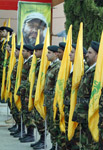
 Reuters: Daqduq was captured in March 2007 and initially claimed he was a deaf mute. U.S. forces accused him of being a surrogate for Iran’s elite Quds force operatives and say he joined the Lebanese Hezbollah in 1983.
By Phil Stewart
 WASHINGTON, June 1 (Reuters) – The United States has formally asked Iraq to extradite a suspected Hezbollah operative accused of killing American troops, a U.S. official told Reuters, amid heightened concerns in Washington that he may go free.
It was not immediately clear when the request was filed and Iraqi officials approached by Reuters denied knowledge of it, casting doubt on whether an extradition was seriously being considered at this point in Baghdad.
The fate of Ali Mussa Daqduq has been vexing American officials since last December, when the United States was forced to hand him over to Baghdad after failing to secure a custody deal ahead of the U.S. military’s withdrawal from the country.
At the time, the White House said it had received assurances from Baghdad that Daqduq would be tried for allegedly orchestrating a 2007 kidnapping that resulted in the killing of five U.S. military personnel. But an Iraqi court earlier this month cleared him of the charges, citing a lack of evidence.
Daqduq’s attorney confirmed that the Lebanese-born suspect remained in Iraqi custody but scoffed at the suggestion that Daqduq might face American courts.
“The Americans have no right to get him,” Abdulalmehdi al-Mutiri, Daqduq’s lawyer, told Reuters. “Whatever they claim that he did, it would have happened on Iraqi soil and that means he is under Iraqi jurisdiction.”
Indeed, there are real questions about whether Iraq – which previously shunned U.S. efforts to retain custody of Daqduq – would respond positively to an extradition request.
The White House declined comment on whether any request had been made but President Barack Obama’s government has said it will pursue all legal options to bring justice to Daqduq.
REPUBLICAN CRITICISM
Republicans have sharply criticized Obama’s handling of the case. In a May 10 letter to Defense Secretary Leon Panetta and Attorney General Eric Holder, Republican members of the Senate Judiciary Committee asked whether any formal extradition request had been made for Daqduq, who was born in Lebanon.
“The U.S. has filed a formal extradition request” with the Iraqi government, a U.S. official said, speaking on condition of anonymity.
Prime Minister Nuri al-Maliki’s media advisor Ali al-Moussawi said he was unaware of any extradition request for Daqduq and declined to be drawn into what he saw as a hypothetical question about how the Iraqi government would respond to one.
Asked about the possibility Daqduq might soon go free, the U.S. official confirmed: “That’s a real worry.”
Daqduq was captured in March 2007 and initially claimed he was a deaf mute. U.S. forces accused him of being a surrogate for Iran’s elite Quds force operatives and say he joined the Lebanese Hezbollah in 1983.
Daqduq’s attorney said a representative of Hezbollah had come to Iraq but left “because he felt he could not do anything more.”
“But legally Daqduq is clear, there are no charges against him,” Mutiri said.
If Daqduq were extradited, he would face charges for war crimes. A second U.S. official confirmed that charges filed against Daqduq in the U.S. military commissions system earlier this year included murder, attempted murder, attempted taking of hostages, spying, and terrorism.
It was not immediately clear where the U.S. military commission trial for Daqduq would be held if he were ultimately extradited. But Panetta last year told Congress that Daqduq would face “better justice” if tried by the United States.
FBI Director Robert Mueller said last month his department would be “willing and able” to cooperate with a military commission trial if the U.S. wins custody of Daqduq.
“In the meantime, however, we have cooperated with the Iraqi authorities in providing intelligence and information for their proceedings in Iraq,” Mueller told Congress. (Additional reporting by Suadad al-Salhy in Baghdad; Editing by Warren Strobel and Vicki Allen)


