


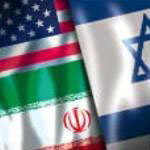
 AFP: Tensions between Israel and the United States over how to deal with Iran’s nuclear program bubbled to the surface Monday, as Washington rebuffed calls for it to declare “red lines.” By Nicolas Revise
 WASHINGTON (AFP)— Tensions between Israel and the United States over how to deal with Iran’s nuclear program bubbled to the surface Monday, as Washington rebuffed calls for it to declare “red lines.”
Both Washington and Israel say they are determined to stop Iran developing nuclear arms, but Iran continues to defy international pressure, and there are increasing signs of disagreement over tactics and timetables.
US President Barack Obama has made preventing weapons proliferation the centerpiece of his foreign policy, and has pledged that the United States will prevent Iran joining the nuclear club.
But Israel’s Prime Minister Benjamin Netanyahu, who regards the alleged Iranian bomb program as an existential threat to his country, fears Tehran may be on the brink of nuclear “break-out capacity.”
This is the point at which Iran will be able to credibly imply that it has enough weapons knowhow and highly enriched nuclear fuel to be able to quickly assemble a viable device if needed.
This in turn would vastly increase Tehran’s ability to deter Israeli and or Western military intervention — particularly if the Islamic regime has the time to disperse its equipment or protect it in deeper bomb-proof bunkers.
So, on Monday, Netanyahu took to the airwaves to urge Washington to declare “red lines” for Iranian behavior which, if crossed, could trigger immediate tough international action such as US-led air strikes.
“Iran will not stop unless it sees clear determination by the democratic countries of the world, and a clear red line,” the Israeli premier told Canadian public broadcaster CBC.
US officials have urged Israel not to take unilateral action, while arguing there is still mileage in UN-backed talks designed to persuade Iran to comply with its obligations under the Non-Proliferation Treaty.
They are also keen to push the timetable for any eventual strike beyond November 6, the date of the US presidential election.
But the State Department distanced Washington from the Israeli stance, which would be seen by many as locking the United States and Iran into a logic of confrontation that could quickly escalate into military action.
“The American people know that the president has said unequivocally he will not allow Iran to obtain a nuclear weapon,” State Department spokeswoman Victoria Nuland told reporters.
“So, you know, we are absolutely firm about the president’s commitment here, but it is not useful to be parsing it, to be setting deadlines one way or the other, red lines,” she said, promising “intensive consultations with Israel.”
US Secretary of State Hillary Clinton had also earlier played down talk of imposing a timetable on Iran.
“I think we’ve maintained a steady course of our two-pronged policy,” Clinton told Bloomberg radio Sunday at the end of a trip to Asia.
“We have always said every option was on the table, but we believe in the negotiation, the diplomatic effort through the P5+1, but also pressure,” she added in the remarks released Monday.
Clinton said tight sanctions imposed on Iran were having an effect, and that the group of nations leading negotiations would continue working on the issue even though negotiations with Tehran have ground to a halt.
The group comprises the five permanent members of the UN Security Council — Britain, China, France, Russia and the United States — and Germany.
It will meet in New York in the coming weeks on the sidelines of the UN General Assembly, Clinton said.
“We’re not setting deadlines. We’re watching very carefully about what they do, because it’s always been more about their actions and their words,” she said, in an interview given in Vladivostok during Asia-Pacific talks.


