


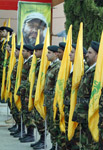
 AFP: Bulgaria has blamed Hezbollah for a July 2012 bomb attack that killed five Israeli tourists, leading to renewed calls on the EU to declare the Lebanese movement a “terrorist” organisation. By Dana Simeonova
 SOFIA (AFP) — Bulgaria has blamed Hezbollah for a July 2012 bomb attack that killed five Israeli tourists, leading to renewed calls on the EU to declare the Lebanese movement a “terrorist” organisation.
“What we can make as a justified conclusion is that the two persons whose identity we have established belonged to the military wing of Hezbollah,” Interior Minister Tsvetan Tsvetanov told reporters on Tuesday.
He said they “had Canadian and Australian passports but have resided in Lebanon since 2006 and 2010.”
The investigation made the conclusions on the basis of three fake drivers’ licenses — made in Lebanon — from the US state of Michigan used by the bomber and suspected accomplices between their entry into EU member Bulgaria on June 28 and the July 18 attack.
“From these three fake personalities, we established beyond doubt two persons’ real identity. … We traced their whole activity on the territories of Australia and Canada and we have data for funding and complicity with Hezbollah,” he added.
Canada confirmed that a suspect linked to the bomb attack on Israeli tourists in Bulgaria is a dual Canadian-Lebanese national and said it takes allegations of his involvement “very seriously.”
Five Israeli tourists and their Bulgarian driver were killed in the bus bombing at Bulgaria’s Black Sea Burgas airport in the deadliest attack on Israelis abroad since 2004.
Some 30 Israelis were also wounded in the attack, in which the bomber also perished.
Bulgarian investigators managed to recover DNA and fingerprints from his remains along with the fake driver’s license in the name of Jacque Felipe Martin.
The young Caucasian-looking man was also caught on airport cameras resembling a holidaymaker, wearing shorts and carrying a backpack.
His computer-generated image and DNA data were run through Interpol databases but failed to find any match.
Israel immediately blamed Iran and its “terrorist proxy” Hezbollah for the bombing, but Bulgarian investigators had stopped short of pointing the finger at anyone until now.
Tehran has also denied any involvement.
Israel and the United States have long pressed Brussels to blacklist Hezbollah, and on Tuesday both reiterated their stance, as did Canada.
“We strongly urge other governments around the world — and particularly our partners in Europe — to take immediate action to crack down on Hezbollah,” new US Secretary of State John Kerry said.
“We need to send an unequivocal message to this terrorist group that it can no longer engage in despicable actions with impunity,” he added in one of his first statements since taking up the reins of US diplomacy.
Canadian Foreign Minister John Baird echoed the view, urging the EU and others to recognise Hezbollah as a terrorist entity “and prosecute terrorist acts committed by this inhumane organisation to the fullest possible extent.”
Israeli Prime Minister Benjamin Netanyahu also said the European Union should now draw the “necessary conclusions about the true nature of Hezbollah”.
“This is yet a further corroboration of what we have already known, that Hezbollah and its Iranian patrons are orchestrating a worldwide campaign of terror that is spanning countries and continents,” he said.
Just after the bombing the EU rejected calls to change its designation of Hezbollah because of a lack of consensus among its 27 members.
Foreign Minister Erato Kozakou-Marcoullis of Cyprus, holder of the rotating EU presidency at the time, had said Hezbollah had both a political and an armed wing and was “active in Lebanese politics”.
On Tuesday EU foreign policy chief Catherine Ashton said that member states would now “discuss the appropriate response”, saying that she “underlines the need for a reflection over the outcome of the investigation”.
Lebanese Prime Minister Najib Mikati said that his Hezbollah-run government was “ready to cooperate with Bulgaria to shed light on the circumstances” of the attack.
Hezbollah is the most powerful faction in the current Lebanese cabinet, and its militia is the most powerful military force in Lebanon.
Bulgarian Foreign Minister Nikolay Mladenov summoned the ambassadors of all Arab countries represented in Bulgaria to convey the results of the investigation and spoke later to his Lebanese counterpart Adnan Mansour.
“As part of the international efforts to combat terrorism and in relation to the fact that the attack was perpetrated in a EU member state, Bulgaria will present the results of the investigation to its European partners,” his office said.
“We will discuss with them concrete measures to contribute to the prevention of similar terrorist attacks in the future.”


