


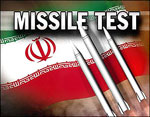
 Reuters: A U.N. Security Council committee is split over whether Iran’s missile tests last year violated U.N. sanctions imposed on Tehran because of its nuclear and ballistic missile programs, Australia’s U.N. envoy said on Monday. By Louis Charbonneau
UNITED NATIONS (Reuters) – A U.N. Security Council committee is split over whether Iran’s missile tests last year violated U.N. sanctions imposed on Tehran because of its nuclear and ballistic missile programs, Australia’s U.N. envoy said on Monday.
That division effectively rules out any expansion of sanctions against Tehran over the tests for the time being, U.N. envoys said on condition of anonymity.
Diplomats said it was Russia, backed by China, that refused to declare Tehran’s missile launches a violation of the U.N. restrictions, as a U.N. Panel of Experts on Iran said was the case.
The rift on the Iran sanctions committee, which consists of all 15 Security Council members, highlights the difficulties Western powers face in persuading Russia and China to join them in keeping up the pressure on Tehran to halt banned nuclear and missile work.
Iran rejects allegations by the United States, European powers and their allies that it is developing an atomic weapons capability. It says the U.N. sanctions against it are illegal and refuses to comply with them.
As long as the sanctions committee remains divided, it will be difficult for the Security Council to add names of any Iranian individuals or entities linked to the missile tests, Security Council diplomats said on condition of anonymity.
Australia’s U.N. Ambassador Gary Quinlan, chairman of the Iran sanctions committee, told the council that “a number of committee members expressed the view … that the launches constituted a clear violation of (U.N. sanctions) and that therefore all member states should redouble their efforts to implement ballistic missile-related sanctions on Iran.”
“At this stage some committee members cannot share this view,” he added in his latest three-month report to the council.
The tests involved the launch of Iranian Shahab missiles in July 2012 during the “Great Prophet 7” military exercises.
“These included launches of the Shahab 1 and 3, Zelzal, Fateh-110 and Tondar missiles, as well as an anti-ship ballistic missile, the Khalij Fars,” the Iran Panel of Experts said in its May report to the Iran sanctions committee.
‘HASTY CONCLUSIONS’
The panel said those exercises were conducted by the Aerospace Force of the Islamic Revolutionary Guard Corps.
Russia, diplomats said, led the dissenters in rejecting the view that the tests were a clear violation of U.N. sanctions.
A Russian delegate explained Moscow’s position to the Security Council, saying “hasty conclusions not based on facts must be avoided.”
A Chinese delegate reiterated Beijing’s stance: “We are not in favor of increased new pressure or new sanctions against Iran.”
U.S. Ambassador Rosemary DiCarlo told reporters, “We’re disappointed that the (Iran sanctions) committee was unable in this case to state the obvious.”
“There is nothing ambiguous about the ban imposed by the Security Council on such … missile launches,” she said. “Most of the Security Council members agree with us on this issue.”
Quinlan’s report also referred to alleged arms embargo violations.
Western powers accuse Iran of supplying arms to Syrian President Bashar al-Assad and militant groups like Lebanon’s Hezbollah, which has been fighting alongside Assad’s troops in Syria to defeat rebels in the civil war there.
“Several committee members stated that the evidence presented in the report was sufficient to assert that Iran was in violation of its obligations, illustrating a pattern of sanctions evasion through arms smuggling in the Middle East,” his report said.
“Other committee members stated that the lack of stronger evidence as to the provenance of the arms, such as documentation, justified the lack of a definitive conclusion,” his report added.
Russia and China were the “other committee members” who opposed finding Tehran in clear violation of the U.N. ban on Iranian arms exports, council diplomats said.
(Reporting by Louis Charbonneau; Editing by Xavier Briand)


