


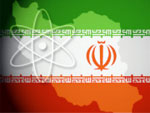
 Japan News: The six nations call for Iran, first and foremost, to halt production of uranium enriched to 20 percent, which could lead to production of a nuclear bomb. Iran needs to present concrete steps that can help dispel international concerns about its nuclear program.
The Japan News by The Yomiuri Shimbun
The stalemate over Iran’s nuclear development program is at a crucial stage.
After becoming Iran’s new president, moderate conservative cleric Hasan Rouhani declared he “will adopt a new approach toward international issues in order to have economic sanctions lifted.”
The sanctions have been imposed on the country because its former administration led by Mahmoud Ahmadinejad pushed for nuclear development in defiance of United Nations Security Council resolutions.
It is laudable that the new Iranian government has broken with the hard-line stance taken by the previous administration, which had stubbornly refused to concede, and has begun to seek a solution via dialogue.
Due to the sanctions, crude oil exports, which form the core of the Iranian economy, have plunged by more than half. And the decline in the country’s currency value has led to higher commodity prices, thereby burdening the people.
A list of Cabinet ministers presented by the new president to the Iranian parliament shows that key posts, such as oil and eonomic portfolios, are occupied by people with practical economic knowledge. Thus, the Cabinet lineup is designed to shore up the national economy.
The biggest focal point is what concrete policies Rouhani will put forth to end the sanctions.
Rouhani told a news conference he was “ready to begin an earnest dialogue” toward a solution, although he insisted on the country’s right to develop nuclear power for peaceful use.
He reportedly intends to resume talks soon with the five permament Security Council members–the United States, Russia, China, Britain and France–plus Germany and present a new proposal.
International surveillance
The six nations call for Iran, first and foremost, to halt production of uranium enriched to 20 percent, which could lead to production of a nuclear bomb. Surveillance by an international institution will also be indispensable. Iran needs to present concrete steps that can help dispel international concerns about its nuclear program.
Rouhani also showed a strong desire to have a direct dialogue with the United States.
In the United States, which has led the drive for international sanctions against Iran, moves have emerged in Congress to call for tougher penalties. The House of Representatives in July approved a bill to toughen sanctions against Iran aimed at preventing it from obtaining nuclear weapons, and the Senate will begin deliberations on the bill in September.
Iran, for its part, wants to avoid the toughening of sanctions.
But prospects are uncertain because Rouhani’s diplomatic discretion is limited. In Iran, where the union of politics and religion is upheld, the authority to make diplomatic decisions resides with the nation’s supreme leader, Ayatollah Ali Khamenei.
When Rouhani represented the country in nuclear negotiations with Britain, France and Germany in 2003 during the administration of reformist President Mohammad Khatami, he agreed to halt uranium enrichment after obtaining Khamenei’s approval.
As president, his ability to win over Khamenei and work out a solution to the uranium enrichment issue, which could provide a breakthrough for the lifting of sanctions, will be tested.
Taking advantage of its traditional friendly relationship with Iran, Japan must do more to persuade the country to move toward resolving the nuclear issue.


