


 UPI: What a difference half a century makes! Nuclear war was avoided 51 years ago as a young, inexperienced U.S. President, John F. Kennedy, whose foreign policy naivete led to the Bay of Pigs fiasco, came of age, confronting the Soviets “eyeball-to-eyeball until they blinked.” United Press International
By James Zumwalt, UPI Outside View Commentator
 HERNDON, Va., Nov. 19 (UPI) — What a difference half a century makes!
Nuclear war was avoided 51 years ago as a young, inexperienced U.S. President, John F. Kennedy, whose foreign policy naivete led to the Bay of Pigs fiasco, came of age, confronting the Soviets “eyeball-to-eyeball until they blinked.” Removal of Soviet nuclear missiles in Cuba ended the crisis.
While an assassin’s bullet cut his presidency short, three years in office taught Kennedy to play hardball with an enemy committed to the United States’ destruction.
Today, a young, inexperienced U.S. president, Barack Obama, whose foreign policy naivete has led to numerous fiascos, approaches his sixth year in office, remaining clueless on playing hardball with such enemies.
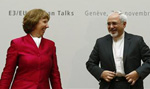
Iran and the P5+1 — the five permanent U.N. Security Council members (the United States, Great Britain, Russia, China and France) plus Germany) met Nov. 5 in Geneva negotiate enforcement of the 2006 U.N. resolution demanding suspension of uranium enrichment.
A tentative interim deal failed to achieve this goal.
One critic noted it gave “Tehran’s nuclear ayatollahs … billions in lifted sanctions … in return we get a promise that they’ll develop their nukes more slowly … We pay, they promise.”
The deal was to be a first step with a final agreement following within six months.
Thus, a country’s leadership, known for past deceptions by its own admission, needing more time to complete its nuclear weapons program, was to be given that time — plus a partial lifting of sanctions and release of $50 billion in oil revenues.
Yet, in return, no verification of Iranian compliance was demanded!
What were P5+1 negotiators thinking?
French Foreign Minister Laurent Fabius joined the talks late, saving Obama from the one-sided deal — at least temporarily. He balked — calling it a “fool’s deal” — for failing to stop possible nuclear weapons production while granting Iran another six months to continue it.
The draft deal even failed to meet Obama’s promise that any quick sanctions relief would be “targeted in proportion” to Iran’s actions. Most distressing to France was failure to halt construction on the Arak reactor. Once operational, Arak’s targeting would create massive radiation leaks.
Trying to reassure Americans, U.S. Secretary of State John Kerry said: “We are not blind and I don’t think we’re stupid. I think we have a pretty strong sense of how to measure whether or not we are acting in the interests of our country and of the globe.”
But he ignores the real measure of any such deal — verifiable restraints on Iran’s capability to weaponize its nuclear program.
The draft deal makes one wonder if Obama is driven by a need to justify the 2009 Nobel Peace Prize he undeservingly accepted.
With the election of Hassan Rouhani as Iran’s president, Obama quietly began rapprochement — reducing the financial pressure of Iranian sanctions. A “Daily Beast” investigation revealed the U.S. Treasury Department immediately throttled back on blacklisting companies circumventing sanctions against Iran.
Nothing will deter Iran’s mullahs from obtaining nukes. Under the concept of “taqqiya” — the belief Muslims can lie to non-Muslims to further their religious objectives — Rouhani calls for “creative” negotiations while remaining an extremist in moderate’s clothing.
Any U.S. official believing otherwise, i.e., Rouhani has undergone change from his extremist views and taqqiya deceptions while serving as head of Iran’s nuclear negotiating team with the European Union years ago, is either blind or stupid — or using taqqiya against the American people.
Only one issue needs resolution from which a meaningful deal could flow: agreement on minimal actions needed to reasonably convince the West Tehran isn’t engaged in weaponization.
It isn’t one Tehran will resolve as it would reveal its deceit. Just like Iran’s refusal to stop uranium enrichment, allowing such transparency is a “red line” to which the Iranians, unlike Obama, will stick.
Calls for diplomacy on the issue should be drowned out by the voice of International Atomic Energy Agency Director General Yukiya Amano. The release of a November 2011 IAEA report condemning a potential Iranian nuclear arms program prompted Amano to warn: “It is my responsibility to alert the world. From the indicators I had, I draw the conclusion that it is time to call the world’s attention to this risk.”
Meanwhile, Iran launches a Rouhani charm offensive to hide its real intentions.
Alireza Jafarzadeh, who first wrote about Iran’s nuclear program warns: “The P5+1 is allowing Iran to talk its way into a nuclear bomb; this explains the new atmospherics and smiles by the Iranian regime’s officials. The ruling mullahs only understand the language of strength and decisiveness. More concessions will only result in more deceit by the Iranian regime.”
Jafarzadeh’s point is valid. During the Cuban Missile Crisis, Kennedy adviser Dean Acheson pressed for a hard-line approach against the Soviets saying: “Gentlemen, for the last 15 years I’ve fought at this table alongside your predecessors in the struggle against the Soviet … I do wish to impress upon you a lesson I learned with bitter tears and great sacrifice. The Soviet understands only one language: action. Respects only one word: force.”
Tough sanctions forced Tehran to negotiate but so too has history. Iran witnessed its North Korean ally engage in similar discussions with the United States, reaching an agreement to unfreeze its assets only to return to its old ways.
On the home stretch of its nuclear weapons program, Iran has sacrificed much to get there. Continuing sacrifice is no problem. It only needs more time to continue its unfettered march to weaponization.
The next negotiations occur Wednesday. For a decade, Iran has proven a masterful negotiator on gaining time. Why should it lose faith in its skill now?
Iranian negotiators are undoubtedly humming the Rolling Stones’ song, “Time is on My Side.”
—
(A retired U.S. Marine, Lt. Col. James Zumwalt served in the Vietnam War, the U.S. invasion of Panama and the first Gulf War. He has written “Bare Feet, Iron Will — Stories from the Other Side of Vietnam’s Battlefields,” “Living the Juche Lie: North Korea’s Kim Dynasty” and “Doomsday: Iran — The Clock is Ticking.”)


