


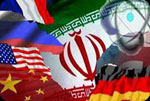
 Boston Herald: The United States and five other global powers reached an accord with Iran last month that would freeze some of its nuclear program in exchange for sanctions relief. The agreement is set to last for six months and allow more time for diplomatic negotiations on a more comprehensive nuclear accord.
The Boston Herald
By Ali Safavi
The United States and five other global powers reached an accord with Iran last month that would freeze some of its nuclear program in exchange for sanctions relief. The agreement is set to last for six months and allow more time for diplomatic negotiations on a more comprehensive nuclear accord.
The interim agreement obligates Iran to freeze uranium enrichment at current levels, halt some activities at a reactor that produces plutonium, and cease further work on centrifuges. In return, some of the U.S. and European Union economic sanctions will be suspended while new ones will not be considered for the six-month duration of the deal.
One reading of this accord is that by signing it, the Iranian regime has unwillingly but temporarily retreated from manufacturing a nuclear bomb. This reluctant temporary retreat is partly due to the crippling effect of international sanctions, but more important, it is due to growing popular discontent at home.
This important development presents both opportunities and grave threats. First, it is important to remember that the Iranian regime only decided to halt further advancement of its nuclear program after feeling the bite of international sanctions that were bound to increase even more. It has not abandoned its intention to develop a nuclear weapon.
The regime is also at an impasse domestically. The Iranian people are searching for opportunities to reignite social protests like the ones that shook the regime to its foundations in 2009. Factions within the ruling system are extremely divided and wary of any rapprochement with the West.
The Iranian regime is weak, isolated and severely fractured. This means that international powers could get a lot more concessions from the regime had they adopted a more firm and principled strategy. Faced with existential threats, the mullahs were not in a position to impose their conditions. They knew full well that more sanctions and more social protests were on the horizon. But, sadly, Western powers did not stand firm enough.
The interim agreement reached in Geneva does not ask Iran to shut down its plutonium reactor. This site, in Arak, is meant to be used for weapons development. The deal also does not require Iran to dismantle enrichment, or ratify additional nuclear protocols or provide free and open access to suspicious sites to monitors from the International Atomic Energy Agency.
The regime can still continue to construct the Arak heavy water plant that could yield plutonium for an atomic bomb. Plutonium and highly enriched uranium are the two fissile materials that can be used to build a nuclear weapon.
All this begs the questions: What now? The Iranian side must not be trusted. The regime concealed its nuclear program for decades and even after multiple revelations by the main Iranian opposition, the National Council of Resistance of Iran, about the existence of various nuclear sites, it tried to deceive, deny and deride. So, the United States and other international powers have to implement stringent monitoring arrangements to ensure Iran would not be able to violate the interim agreement.
In short, the world must have the resolve to act with firmness when it comes to the Iranian nuclear program. International sanctions and widespread social discontent brought the regime to sign on to a deal from a position of weakness and despair. This is an opportunity but its impact would be transient unless the international side follows through with its pressure.
To the degree that sanctions have been eased, the United States has lost its leverage vis-a-vis Iran. America needs to make up for that by providing space for the Iranian opposition and show no tolerance to the sharp rise in executions since Hassan Rouhani has taken office and proxy attacks against Iranian dissidents in Iraq, which have left 62 dead so far.
A firm policy to punish Iran’s infractions, aimed at dismantling its entire nuclear weapons capability, while standing with the Iranian people who seek fundamental change is the only viable option now. Anything less would embolden the regime in its mad dash toward the bomb and lead to catastrophic consequences for regional and international peace and security.
Ali Safavi is the spokesman for the U.S. Representative Office of the National Council of Resistance of Iran, a coalition of Iranian opposition committed to a democratic, secular and non-nuclear Iran.


