


By Jubin Katiraie
With the spread of the coronavirus in most corners of Iran and its effects on the lives of the people, one of its most serious side effects is on the children’s education.
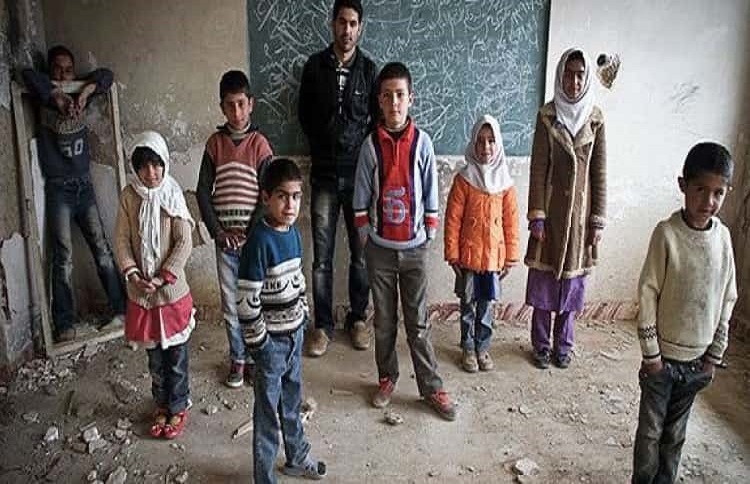
Iran’s Ministry of Education has decided to start the new school year by launching the Shad (happy) Internet network and to start educating students through the internet. But what here is not considered is the widespread poverty in most of the country’s provinces. Children who, due to poverty, do not have a mobile phone or tablet will be deprived of education in the upcoming year.
In 2018, it was announced in the regime’s parliament that between 3 to 7 million children were working in Iran. These children are forced to work due to economic problems, parental illness (addiction), the vulnerability of the family, lack of cultural resources, and to provide themselves and their families with the primitive needs.
The economic reality is showing that this situation is not going better, and the number of working children is rising. The other bitter truth is that these children have not the opportunity of any education, and before they should have to be concerned about the educational application, “Shad”, they are forced to go to the job market or work as garbage collectors.
According to statistics provided by the Minister of Education, the current number of students in Iran is about 9 million. Now, due to the existence of coronavirus and the method of teaching through the internet, the Ministry of Education has decided to replace the presence of students in the classrooms with the “Shad” application.
Rezvan Hakimzadeh, Deputy of Primary Education of the Ministry of Education, said on 4 August: “We have identified in all provinces and regions separately the number of students who are not members of the” Shad Network “and among them those who have access to smart tools and the possibility of using technology space to continue the education. There is a serious concern that these students, who are mostly in deprived areas, will be added to the population of school dropouts.”
However, the Minister of Education of the Rouhani government had previously (29 March) claimed that “70 percent of our students have the opportunity to communicate via the Internet, mobile phones, tablets. And only 30 percent of educational districts and schools do not have access to e-learning.”
But this statistic does not correspond to reality, and the problems of students and teachers do not end there. Many teachers and students in deprived areas are not connected to the “Shad” network. Some 3.225 million Iranian students across the country due to lack of smart devices and lack of access to phones and tablets, cannot make use of virtual education.
- Alborz Deputy of Primary Education says: “4500 elementary students do not have access to the internet.”
- The director-general of education of Ilam province says: “About 20,000 students of this province have not entered virtual education due to poverty.”
- Yazdanpanah, director-general of education in Kermanshah, has also said: Out of 325,000 students in this province, only 56 percent are connected to the “Shad” network. The rest of them cannot use this network.
- The director of education of Lorestan says: “Out of 352,000 students of this province, 30,000 students are deprived of internet classes and the “Shad” network due to not having a tablet or smartphone.
- Education officials of Golestan province have also announced that 81 percent of the student population of this border city of Golestan province cannot connect to this network.
In Sistan and Baluchistan Province, where most of the inhabitants suffer from extreme poverty and deprivation the situation is worse. The poor state of education in this province is very deplorable.
Idris Gahramzaei, a teacher from Sistan and Baluchistan, said in a television program: “Out of 700,000 students in Sistan and Baluchistan, only 200,000 of them have access to the ‘Shad’ education app.” This means that half a million students in Sistan and Baluchistan are not able to use this educational network.
Read More:


