


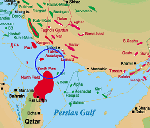
 Bloomberg: Iran plans to finish developing its giant South Pars gas field within three years, regardless of the sanctions on its economy, and is rescheduling a campaign to woo U.S. and European oil companies with investor contracts. Iran, holder of the world’s largest natural gas reserves, expects to expand production at the Persian Gulf deposit that it shares with Qatar.
Bloomberg
By Golnar Motevalli
Iran plans to finish developing its giant South Pars gas field within three years, regardless of the sanctions on its economy, and is rescheduling a campaign to woo U.S. and European oil companies with investor contracts.
Iran, holder of the world’s largest natural gas reserves, expects to expand production at the Persian Gulf deposit that it shares with Qatar even as curbs over its nuclear program limit access to investment and technology, said Ali Kardor, deputy managing director of the state-run National Iranian Oil Co. The country is postponing until late November a conference in London where it plans to announce new oil contracts, he said yesterday.
“In three years, we’d have completed South Pars,” Kardor said in an interview at his office in Tehran. “We will have seen full production from South Pars, and we think we’ll be ahead of Qatar,” the biggest exporter of liquefied natural gas, he said.
South Pars, which together with Qatar’s North Field forms the world’s largest gas deposit, will help Iran meet its own demand for gas, Kardor said. The OPEC member’s oil revenue has plunged since the U.S. and European Union stiffened sanctions in 2012, and its non-oil trade deficit more than doubled from late March to late June compared with the same period last year, according to data from the Customs Administration in Tehran. Talks to remove sanctions were extended to Nov. 24 after Iran and six world powers were unable to reach a final nuclear agreement in July.
The U.S. and its allies are concerned that Iran is seeking atomic weapons technology. The Islamic republic says it wants nuclear power solely for civilian use.
Joint Operations
Iran must develop shared fields “with or without sanctions,” Kardor said, without specifying if the country was prepared to do so without foreign help. Iran was planning to introduce what it describes as a flexible and attractive oil contract at an event in London from Nov. 3 to Nov. 5. It has pushed back the date until later that month since the nuclear talks were extended, Kardor said.
The contracts are “somewhere between a buy-back model and a production sharing agreement” and are designed to encourage long-term investors, he said. Companies won’t be allowed to take ownership of reserves, though they will be able to set up joint operating companies with local partners to manage fields, he said.
“We’ll get access to technology and foreign investment,” Kardor said. “They’ll be able to stay in the longer term, and access to oil will be provided for them.”
Legal Review
Iran’s existing buy-back contracts require companies to pay for oil and gas exploration and recover their investment from any production at a prearranged rate of return. Under the new contracts, investors would receive income for each barrel of oil they produce. The rate will vary, depending on the size of the investment and the project’s difficulty, he said.
The contract model is under legal review in Iran, a necessary step before the government can make official offers, Kardor said. Many foreign oil companies have expressed interest, while none have made a formal approach so far to enter a deal, he said.
The Middle East nation has an estimated 1,193 trillion cubic feet of gas reserves and the world’s fourth-biggest oil deposits of 157 billion barrels, according to BP Plc (BP/)’s Statistical Review published in June 2014.
“The energy market doesn’t have much flexibility,” Kardor said. “You cannot comfortably exclude us from the energy market for the long-term.”


