

Iran’s Regime Lays Groundwork for Expanded ExecutionsAccording to informed sources cited by Linkiesta, a unit of 15 to 20 individuals operates inside the Iranian regime’s embassy in Rome. This team is involved in cyber monitoring, field surveillance, and reporting directly to Tehran, in coordination with the Ministry of Intelligence and the IRGC. Tehran reportedly uses its foreign diplomatic missions to covertly monitor dissidents and fund influence operations under the guise of cultural initiatives.
Italian Media Reveals Scope of Iranian Regime’s Espionage and Propaganda Network in Italy
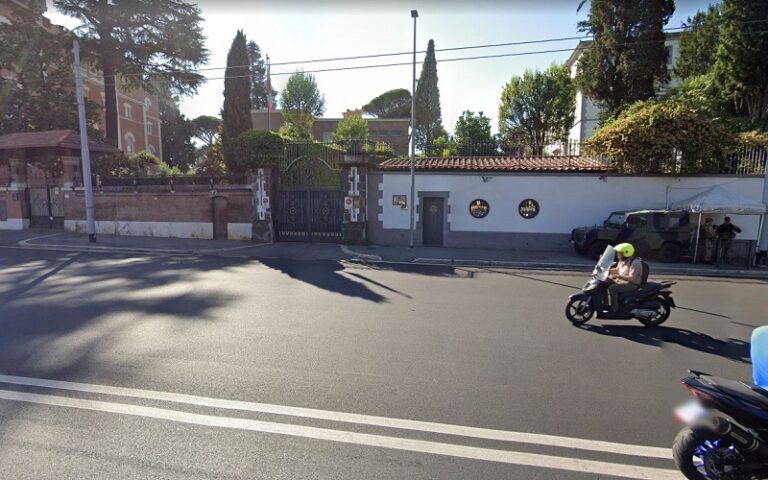
The Italian news website Linkiesta has reported that the Iranian regime has established a shadowy and complex network in Italy, using cultural diplomacy, religious centers, academic partnerships, ideological propaganda, and digital operations to monitor dissidents and expand its influence.
In an investigative report published on Monday, July 7, Linkiesta wrote that multiple accounts have surfaced of threats, surveillance, and pursuit of Iranian regime opponents in Rome, Milan, and other Italian cities.
The report quotes an Iranian woman opposed to the regime saying: “After the protests, I was followed, my phone stopped working, and my family in Iran was threatened.”
Another dissident activist reported a suspicious break-in at his home and the disappearance of USB drives. He added that during a protest, an agent from the Iranian regime’s embassy threatened him by saying, “We’re watching you. Your family in Iran will shed tears.”
“No to Execution Tuesdays” Campaign Marks 76th Week, Spreads to 47 Prisons Across Iran
In its 76th consecutive week, political prisoners across Iran have continued the “No to Execution Tuesdays” campaign, staging hunger strikes in 47 prisons nationwide. In a joint statement, the prisoners urge all human rights organizations and activists to intensify pressure on Iran’s regime to uphold human rights. The full statement reads as follows:
First, we find it necessary to honor the memory of those who lost their lives in the student uprising of July 1999. Though brutally suppressed, that movement laid the foundation for future protests in 2009, 2017, 2019, and 2022—demonstrations that will continue until the people achieve freedom and the right to self-determination.
The Continuation Of The “No To Executions Tuesdays” Campaign In Its Seventy-Fifth Week Across 47 Prisons In IranMembers of the “No to Execution Tuesdays” campaign express deep concern and growing outrage over the latest wave of executions and intensifying security crackdowns across the country. Since June 22, at least 24 people have been executed in Iran, bringing the total number of executions since March 21, 2025 (the start of the Iranian year 1404), to 428. These horrific figures represent just a portion of the widespread and systematic violations of human rights in Iran. Beyond this new wave of executions, this week has also seen further deadly repression, including the killing of two young men in Hamedan by regime forces and an armed assault on women in the village of Gunich near the city of Khash, which resulted in the death of two local women. These incidents are clear examples of the regime’s deep-rooted misogyny and its fear of public dissent, aimed at intimidating society. In this context, Ms. Mai Sato, the United Nations Special Rapporteur on the situation of human rights in Iran, issued a serious warning on July 4 regarding the regime’s exploitation of regional conflicts to suppress national and religious minorities and political dissidents. She emphasized the need to protect the fundamental rights of all citizens based on international law and accused the Iranian regime of continuing systematic repression. Members of the “No to Execution Tuesdays” campaign also strongly condemn the issuance of death sentences for five Kurdish political prisoners—Rezgar Beigzadeh Babamiri, Pejman Soltani, Soran Ghasemi, Kaveh Salehi, and Tayfour Salimi Babamiri—who were arrested during the 2022 uprising. These inhumane rulings, lacking any semblance of fair trial, have collectively sentenced the five men to 12 executions. The campaign calls on the international community, human rights organizations, and conscious, freedom-loving individuals not to remain indifferent to the fate of dual-national prisoners such as Ahmadreza Djalali. He was abducted inhumanely by regime security agents on the night of the Evin Prison bombing and, after years of suffering in prison, is now at risk of having a medieval-style death sentence carried out. The campaign urges all not to be intimidated by the regime’s terror tactics and to stand fully in defense of the “right to life” of citizens and prisoners on death row. The campaign further urges all organizations and human rights defenders to intensify efforts to clarify the situation of prisoners, demand access to prisons, and call for direct dialogue with political prisoners. The testimonies of political prisoners exiled to the Greater Tehran and Qarchak prisons offer just a glimpse of the inhumane conditions that prevail in Iran’s prison system. If this is the state of the prisons in the capital, one can only imagine the atrocities occurring in other facilities, especially those affecting ordinary and unrecognized inmates. We demand the immediate abolition of all death sentences in Iran and firmly believe that the people of Iran, in solidarity with other oppressed nations, will continue this path of resistance and steadfastness until victory and liberation are achieved.
Young French Tourist Disappears in Iran
A French diplomatic source confirmed that a young French tourist disappeared while cycling through Iran and described the matter as “a cause for concern.” Prior to this, announcements had been shared on social media to help locate the individual.
The young Frenchman, named Lennart Monterlos, has not contacted his family since June 16, 2024.
The unnamed French diplomatic source, speaking to AFP (Agence France-Presse), called Monterlos’s disappearance “worrying” and said, “We are in contact with the family about this.”
The source emphasized that French citizens are advised against traveling to Iran, as the Iranian regime has adopted a “deliberate policy of taking Westerners hostage.”
According to a post on Instagram, Monterlos is 18 years old and holds both French and German citizenship.
Iranian Authorities Transfer Detained French Couple to Undisclosed LocationThe news of this tourist’s disappearance comes at a time when concerns have grown over the situation of Cécile Kohler and Jacques Paris, two other French nationals currently imprisoned in Iran. They face charges including “espionage for Mossad,” allegations that could lead to the death penalty.
Unfinished journey by bicycle
On his Instagram page, Monterlos described himself as a “lover of rock climbing and cycling.” In a post from June 2024, he announced that he was preparing for a one-year cycling journey across Eurasia—a dream he aimed to fulfill before starting university. Lennart had planned a 400-day route covering 35,000 kilometers through 35 countries. A knowledgeable source told AFP they could not confirm whether this young Frenchman was among European citizens detained in Iran on charges of “espionage” for Israel. The source added that the Iranian regime “targets French nationals passing through [Iran], accuses them of espionage, and holds them in inhumane conditions—some of which, under international law, qualify as torture.” The source warned that any French citizens currently in Iran should leave the country as soon as possible due to the risk of arbitrary arrest and imprisonment. Iranian regime officials have previously arbitrarily detained and imprisoned numerous foreign and dual nationals. France and other European Union member states have described these detentions as politically motivated and part of the Iranian regime’s hostage diplomacy. This policy is used to exert pressure on the West and extract concessions from it.Iranian Authorities Transfer Detained French Couple to Undisclosed Location
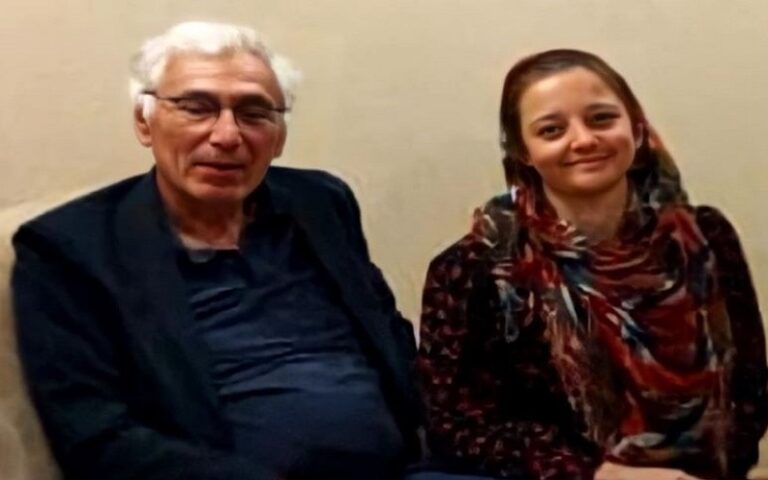
According to the families of the two French citizens detained in Iran, regime authorities transferred Cécile Kohler and Jacques Paris—who had survived explosions during the Israeli airstrikes on Evin Prison on June 24—to undisclosed locations.
The French couple were arrested in April 2022 during a tourist visit to Iran and have remained in detention since. According to their families, only one consular visit has taken place since the Israeli airstrike on Evin Prison—on July 2—during which their survival was confirmed.
Former French Hostage: The Iranian Regime Treats Prisoners Like “Animals”The French nationals were held in Ward 209 of Evin Prison, which is operated by Iran’s Ministry of Intelligence. This ward operates outside the official judicial oversight, and Human Rights Watch has described it as a “prison within a prison,” where detainees are subjected to prolonged solitary confinement, denial of access to legal counsel, and harsh interrogations—a situation amounting to torture. Iranian regime officials have recently leveled severe charges against the two French nationals, including “espionage for Israel,” “conspiracy to overthrow the state,” and “corruption on Earth,” all of which are capital offenses under Iranian regime law. In her last direct contact on May 28, Cécile told her family that the judge in their case had warned a “very severe” verdict would soon be issued against them. After more than three years of inhumane detention and narrowly surviving the recent attacks, Iranian regime authorities are continuing to subject the couple to psychological torture by now bringing charges that could lead to execution. France has condemned the charges against its two citizens, calling them “baseless and political,” and has demanded their immediate release. Jean-Noël Barrot, France’s foreign minister, described the accusations as “inappropriate and unfounded.” Cécile Kohler, a teacher, and her partner Jacques Paris are the last known French citizens still detained by Iran’s regime. French President Emmanuel Macron has referred to them as “state hostages.” France and other European Union countries accuse Iran’s regime of systematically taking foreign nationals’ hostage to exert political pressure on Western governments. Regime officials deny these accusations, claiming that the arrests follow legal procedures and rejecting allegations of prisoner mistreatment.
Power Outages Return in Iran After the 12-Day War
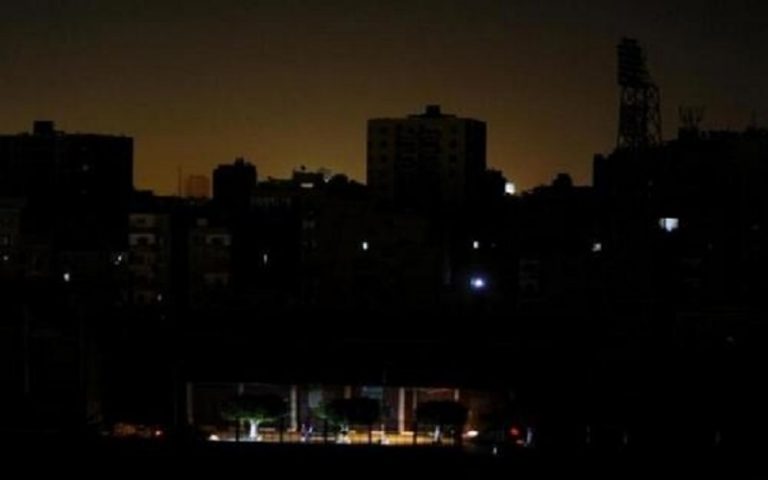
With rising temperatures and a return to normal conditions after the 12-day war between Israel and Iran’s regime, Mostafa Rajabi Mashhadi, the CEO of Tavanir (Iran Power Generation, Transmission and Distribution Management Company), announced the resumption of power outages in the residential sector across Iran.
Rajabi Mashhadi stated that electricity demand exceeds supply, and due to the rise in consumption and limited generation capacity, two-hour daily blackouts are being imposed in residential and public sectors. He added that reducing outages depends on reducing electricity usage.
He further said that once the energy shortage crisis subsides, the outages will also decrease.
The Return of Power Outages in Iran Amid Intense Summer HeatAmid the worsening energy crisis in Iran, Mohammad Bahrami Seyf-Abadi, a member of the regime’s Majlis (parliament) Energy Committee, announced a new tiered pricing plan for electricity and gas. He stated that under this plan, each individual will be allotted a quota, and if usage exceeds it, they must pay the full market price of energy. He added: “The core concept of the two-tiered electricity and gas tariff system is based on the ‘energy per person’ model. That means instead of subsidizing consumption, subsidies are assigned to each national ID and individual.” The decrease in electricity consumption during the 12-day war was due to shutdowns, but the regime took credit for it. With the war now over, the shortcomings have once again become evident. Abbas Aliabadi, Iran’s regime energy minister, stated earlier on July 1: “We are trying to reduce nighttime power cuts for the people, and if an issue arises, outages will mostly be implemented during the day.” Amid the scorching summer heat and soaring temperatures in Khuzestan Province, the situation has become unbearable for many residents. The use of diesel generators is no longer limited to bakeries—many businesses have now been forced to rely on them, leading to increased noise and environmental pollution. In previous summers as well, the country faced repeated power shortages—a crisis regime officials refer to as a “supply-demand imbalance.” Experts believe that the main causes of Iran’s electricity crisis—and its shortage of approximately 14,000 megawatts—are lack of investment in the power sector, outdated infrastructure, and underdeveloped power plants.
Severe Air Pollution in Various Cities of Iran

As severe air pollution persists in Tehran and other cities in Iran—including 21 cities in Khuzestan Province that are currently in red and orange alert levels—people are growing increasingly frustrated with the authorities’ continued disregard for public health.
Tehran’s Air Quality Control Company announced on Saturday, July 5, that the air quality index (AQI) in the capital has reached 159, indicating a “red” level of pollution that is unhealthy for the entire population.
Iran’s Health Ministry: 30,692 Deaths Due to Air Pollution Last YearThe company added that over the past 24 hours, the average AQI in Tehran stood at 153, which is dangerous for vulnerable groups such as the elderly, children, and individuals with cardiovascular and respiratory illnesses. Unhealthy air is denoted with the color red, very unhealthy with purple, and hazardous conditions with brown. Additionally, in the past three days, the concentration of airborne particulate matter in the capital has increased. Tasnim News Agency, affiliated with the Islamic Revolutionary Guard Corps (IRGC), reported that the average air quality index in Tehran over the past 24 hours reached 324, indicating a hazardous level. According to the report, the main pollutant currently affecting Tehran’s air is particulate matter smaller than 2.5 microns (PM2.5).
Air Pollution in Other Provinces
According to data from the Air Quality Monitoring System, on July 5, the air in 21 cities of Khuzestan Province was classified as red or orange, while the city of Hamidiyeh reached the purple level, indicating “very hazardous” conditions. Exposure to this level of pollution can result in long-term negative effects, such as lung damage or increased risk of chronic illnesses. Meanwhile, Mohammad Reza Fallah-Nejad, Director General of Crisis Management at the Alborz Province Governorate, issued a yellow-level weather warning for the province and urged vulnerable groups—including children, the elderly, and individuals with heart or respiratory conditions—to avoid outdoor exposure. He stated that wind gusts have led to dust storms and increased air pollution in most parts of Alborz Province, adding: “This situation will persist until Sunday evening next week, after which air quality is expected to improve starting Monday.”Environmental Crisis, Air Pollution, and Mismanagement of Iran’s ResourcesThe public relations office of the Department of Environmental Protection in Qom Province announced in a statement that on July 5, the air quality index reached 114, placing it in the unhealthy category. According to the report, more than 24 active dust-producing hotspots have been identified in Qom Province, significantly contributing to the rise in air pollution. The Meteorological Department of Markazi Province also warned that increased easterly wind speeds across the central desert regions of the country are leading to more dust transmission and local dust storms in vulnerable areas of the province. Experts warn that ongoing drought, the expansion of dust storm sources, and an extreme heatwave could make for a critical summer in Iran.
UN Rapporteur Expresses Concern Over Possible Enforced Disappearance Of Evin Prison Detainees
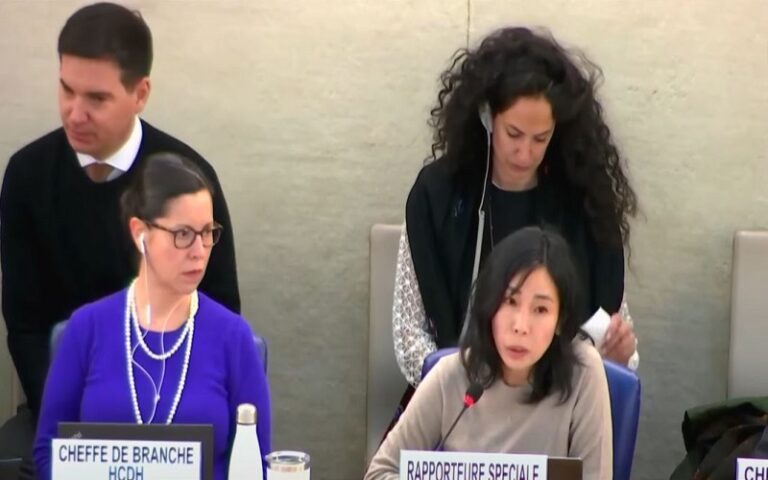
The United Nations Special Rapporteur on the situation of human rights in Iran, Mai Sato, published a post on the social media platform X on Friday, July 4, expressing concern about the potential “enforced disappearance” of several political prisoners in Evin Prison, including Ahmadreza Djalali, an Iranian-Swedish researcher.
Mai Sato wrote in part of the post: “I continue to receive reports of deteriorating conditions faced by prisoners transferred from Evin Prison to the Great Tehran Penitentiary and to Qarchak Prison after Israeli attacks on its facilities. The whereabouts of some prisoners detained at Evin Prison remain unknown, raising fears of enforced disappearances.” In light of numerous reports of the arrest of hundreds of individuals—including media activists, social media users, journalists, human rights defenders, and foreign nationals such as Afghan migrants, as well as ethnic and religious minorities—she objected to the ongoing wave of arrests on charges of “espionage for Israel.” The UN Special Rapporteur also noted the escalation in executions of prisoners convicted of espionage for Israel or collaboration with hostile states. “I am concerned by official statements announcing expedited trials on accusations of espionage, putting individuals at heightened risk of summary execution or punishment without adequate due process. Equally alarmed by Iran’s Parliament advancing a legislation that would classify intelligence or espionage activities carried out for ‘hostile governments’ as ‘corruption on earth’ – an offence punishable by death.” Mai Sato issued a warning to Iran’s regime: “post-conflict situations must not be used as an opportunity to increase repression against ethnic and religious minorities or suppress dissent.” At the end of her post, she called on the international community to prioritize support for Iranian civil society activists and to provide financial and technical assistance to “independent media and human rights organizations.”Press release: Post-conflict situations must not be used as an opportunity to increase repression against ethnic and religious minorities or suppress dissent. I am alarmed by reports of executions, mass arrests, particularly against of minorities, notwithstanding the impact of…
— Mai Sato (@drmaisato.bsky.social) (@drmaisato) July 4, 2025
Water Tensions In 25 Provinces And 53 Cities Of Iran
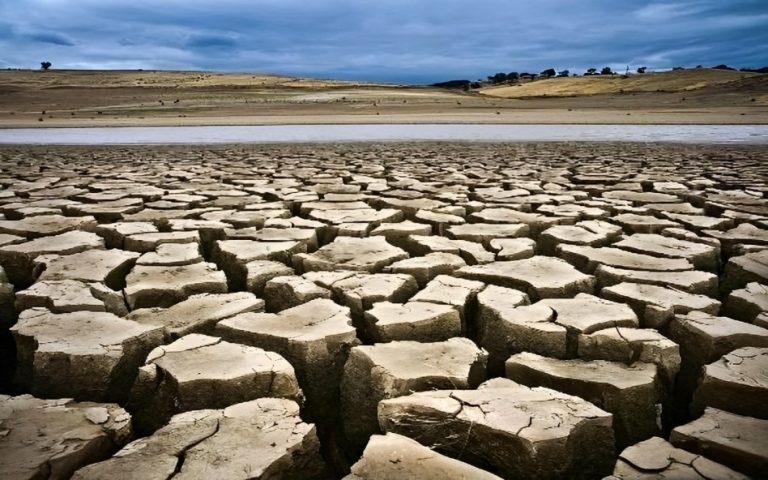
According to the state-run Tasnim News Agency, quoting the head of Iran’s Water and Wastewater Company, “25 provinces and more than 53 cities in the country are currently facing water tension.”
Hashem Amini, referring to the recent 12-day war, stated that water outages occurred for several hours in Tehran due to a missile hitting Ghods Square in the Tajrish district, but there have been no other major issues affecting citizens’ access to drinking water.
He emphasized the need for “water consumption management” by consumers and said, “We have introduced emergency plans, and the government has allocated funds for them.”
Hashem Amini described the stabilization and resilience of the drinking water and sanitation network, as well as the preservation of water quality, as a “red line” for his organization, and stated that all efforts by the water and wastewater companies are aimed at minimizing consumer concerns in this area.
Warning About the Possibility of Water Rationing in IranThese claims come as Iranian citizens have continued to report multiple-hour water and electricity outages in various cities across the country on social media, even after the end of the 12-day war. Over the past years, the water crisis has consistently remained a major issue for residents in various provinces, especially in Iran’s western, eastern, and southern border regions. In August 2021, one of the largest protests related to the water crisis took place in Khuzestan province. These protests were met with brutal repression by the regime, resulting in the killing and wounding of several demonstrators.
New U.S. Sanctions on Iranian Oil Network and Hezbollah Financial Entity
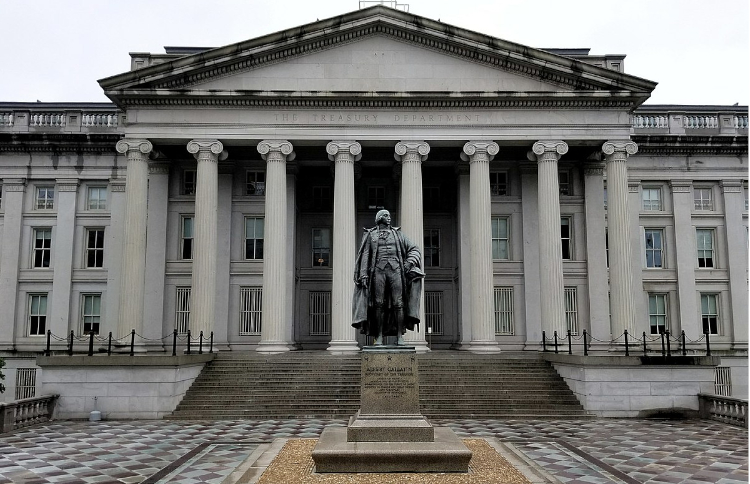
The U.S. Department of the Treasury has imposed sanctions on a network of companies and individuals accused of smuggling billions of dollars’ worth of Iranian oil by forging documents and falsely labeling it as Iraqi oil. Additionally, a financial institution affiliated with Lebanon’s Hezbollah has also been targeted by these sanctions.
The Office of Foreign Assets Control (OFAC) of the U.S. Treasury Department stated that this smuggling network is led by Iraqi-British businessman Salim Ahmed Said. By blending Iranian oil with Iraqi oil, the network sold it to foreign buyers, primarily through the United Arab Emirates and Iraq, circumventing sanctions. Said allegedly bribed Iraqi officials to produce forged documents and also controls the companies VS Tankers and Oil Terminal, which played roles in smuggling oil and transferring foreign currency to Iran.
The sanctions are based on Executive Orders 13902 and 13224, which target the Iranian regime’s oil sector and terrorism-related activities. U.S. Treasury Secretary Scott Bessent emphasized that this move is part of a maximum pressure campaign to cut off the Iranian regime’s financial resources and weaken its destabilizing activities.
Simultaneously, the U.S. State Department has sanctioned six entities and four vessels involved in oil trade with Iran. Iran’s so-called “shadow fleet” uses unflagged, sanctioned ships to transport oil from Iran to Asia.
The Singapore-based company Trans Arctic Global Marine Services has also been sanctioned for assisting vessels of the National Iranian Tanker Company in navigating through the Strait of Malacca. Four vessels—VIZURI, FOTIS, THEMIS, and BIANCA JOYSEL—are reported to have transported millions of barrels of Iranian oil.
In the same context, the company Al-Qatirji has facilitated Iranian oil sales on behalf of the Quds Force of the Islamic Revolutionary Guard Corps (IRGC), generating hundreds of millions of dollars in revenue. Vessels such as ELIZABET, ATILA, and GAS MARYAM have participated in these operations by delivering Iranian oil to global markets under false identities.
In another part of the sanctions, the Treasury Department designated seven senior officials, and one company connected to Al-Qard al-Hassan, a financial institution affiliated with Hezbollah. Through their management roles, these individuals have enabled Hezbollah to access Lebanon’s financial system and evade U.S. sanctions. The move is in support of the new Lebanese government’s efforts to limit Hezbollah’s influence.
The company Tasheelat has also been sanctioned for its role in financing Hezbollah. All assets and transactions related to these individuals and entities within U.S. jurisdiction have been frozen, and any dealings with them are prohibited for U.S. citizens.
Protests Erupt at Funeral of Young Men Murdered by Iran’s Regime
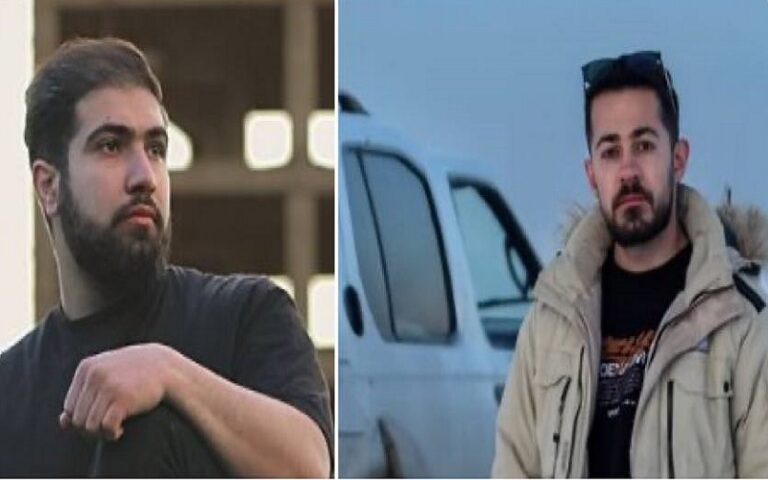
The funeral procession for Mohammad-Mehdi Abaei and Alireza Karbasi, two young men killed by gunfire from Basij forces (a paramilitary wing under the IRGC), was held on Thursday, July 3. Attendees turned the ceremony into a protest against Iran’s regime policies, chanting “Death to the oppressor” and demanding the prosecution of those responsible for their deaths.
During the burial of the two young men killed by security forces in Hamedan, participants chanted “I will kill those who killed my brother.”
A group of attendees also chanted: “Our enemy is right here; they lie when they say it’s America.”
Another video shows attendees at the funeral of the two young men in Hamedan continuing their protest with the chant: “Iranians will die but will not accept humiliation.”
Earlier, following reports of the two young men being killed by regime forces in Hamedan, the state-run Fars News Agency, affiliated with the IRGC, confirmed the incident and wrote that it resulted from “security operation forces” shooting at a vehicle carrying three occupants.
Fars reported that regime agents, suspecting a vehicle due to drone activity in the Tarik Darreh area, initially fired warning shots, gave a “halt” order, and then opened fire on the vehicle, resulting in the deaths of two occupants and injury of the third.
The head of the Armed Forces Judicial Organization in Hamedan Province stated that a case has been filed in judicial authorities and field investigations are underway.
The two young men had gone to the outskirts of Hamedan for a nature outing.
In 2024, indiscriminate shootings by military forces across different parts of the country killed at least 163 civilians and injured 321 others.
Following the ceasefire in the 12-day war between Iran’s regime and Israel, security forces have set up checkpoints, holding vehicles for hours and conducting thorough inspections. Reviewing mobile phone contents, creating long queues, deploying machine guns, and even building barricades are part of the heightened security atmosphere now in place.
Some reports indicate that at the entry and exit points of various cities, all passing vehicles are stopped and searched.
