

Iranian Regime’s Judiciary Announces Execution of 9 PrisonersOn Monday, June 16, security prisoner Esmaeil Fekri was secretly hanged in Ghezel Hesar Prison on espionage charges. These shocking execution statistics are not just numbers—they tell the tragic story of lives unjustly taken. Most of these executions occur without transparency, without fair legal process, and in total media silence. Many of the victims are the impoverished, religious minorities, and political prisoners—people whose only “crime” was seeking justice, freedom, or the right to survive. One of them was PMOI political prisoner Mojahed Korkor, who was arrested during the 2022 nationwide uprising and, after two and a half years of imprisonment and torture, was tragically executed last week. We, the members of the “No to Execution Tuesdays” campaign, once again emphasize in this 73rd week: “Execution is not a punishment; it is a crime, and we strongly condemn all death sentences regardless of the charges. These executions are state-sponsored murders. We will never forget the victims, we will not stay silent, and we will not retreat.” To the people and the international community: in these perilous times of war, the lives of many political and civil prisoners are under threat—just as seen last night in Dizel Abad Prison in Kermanshah, which was both bombed and assaulted by the prison’s brutal repressive guards. Now more than ever, public presence and solidarity matter. You, the informed and free people, are our only support and voice. The release of all political and ideological prisoners and the immediate abolition of all death sentences must become a public demand. The lives of political prisoners and those on death row are in serious danger, and there is a real fear the regime will continue using executions to intensify repression and spread terror. In its 73rd week, the “No to Execution Tuesdays” campaign will include hunger strikes in 47 prisons across the country on Tuesday, June 17.
Week 73 of “No to Execution Tuesdays” Campaign Spreads to 47 Prisons
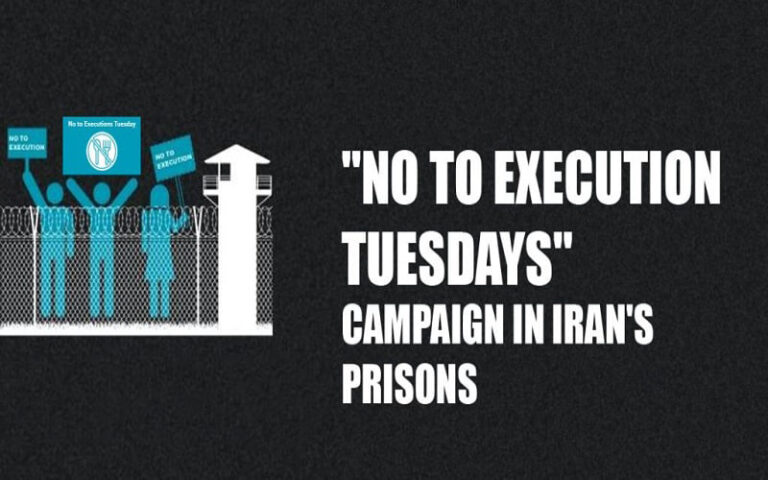
Political prisoners in Iran condemned death sentences in the 73rd week of the “No to Execution Tuesdays” campaign. In their statement, they said:
The people of Iran have become entangled in a war they never sought. War and execution are two sides of the same coin, both stripping people of their right to life. We express our solidarity with all civilian victims and stress collective unity under the extraordinary circumstances imposed on us by two warmongering regimes.
Despite the ongoing war and crisis, the machinery of death continues relentlessly, as the oppressive regime keeps executing citizens. Since the beginning of Khordad (May 21), at least 126 people have been executed, including 12 prisoners who were hanged on June 10 alone.
A Look into the Background of Mohammad Bagheri, The IRGC Commander Who Was Killed in the Recent Attacks
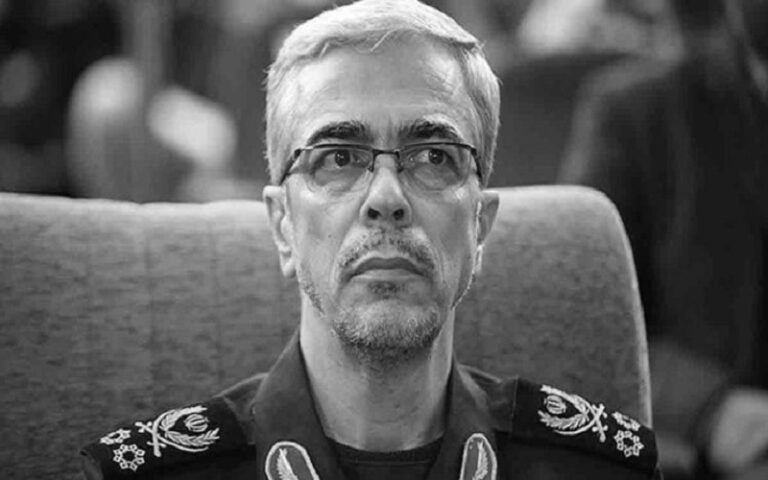
Major General Mohammad Hossein Afshardi, known as Mohammad Bagheri, served as the Chief of the General Staff of Iran’s armed forces from 2016 to 2025. After the 1979 revolution, Bagheri participated in the takeover of the U.S. Embassy in Tehran. He joined the Islamic Revolutionary Guard Corps (IRGC) that same year.
According to his own claims, Mohammad Bagheri took part in all military operations during the eight-year Iran-Iraq war.
A Look at the Criminal Background of Amir Ali Hajizadeh, One of the Killed IRGC Commanders in IranOn June 28, 2016, Bagheri was appointed by regime supreme leader Ali Khamenei as the successor to Hassan Firouzabadi in the General Staff of the Armed Forces.
Military and Intelligence Background of Mohammad Bagheri
From 2002 to 2014, Bagheri served as the deputy of intelligence and operations at the General Staff of the Armed Forces. Concurrently, from 2007 to 2016, he held the position of coordinating deputy at the Khatam al-Anbiya Central Headquarters, a key strategic military command under the IRGC. From 2014 to 2016, he also served as deputy for general affairs and joint operations. Before assuming leadership roles in the IRGC, army, or General Staff, Bagheri was promoted to the rank of Major General.Mohammad Bagheri’s Role in Domestic Repression
A few days after the 1999 Tehran University dormitory unrest, the state-run newspaper Kayhan published a confidential letter. This letter, signed by several IRGC commanders, was addressed to then-president Mohammad Khatami. The commanders wrote at the end of the letter: “We declare that our patience has run out and we do not consider further tolerance permissible if the situation is not addressed.” IRGC commander Bagheri was among the signatories of this threatening letter. As Chief of the General Staff and a member of the Supreme National Security Council, Mohammad Bagheri was directly responsible for issuing orders to use lethal force against protesters. This includes the protests of December 2017, the nationwide uprising of November 2019, and the countrywide protests of 2022. Bagheri was one of the key decision-makers and staunch advocates of a military crackdown on internal dissent in Iran.Mohammad Bagheri’s Admission of the Ineffectiveness of Repressive Approaches
On May 26, 2025, during a speech, Bagheri acknowledged the ineffectiveness of the Iranian regime’s repressive methods. He said: “Our highly complex and evolving society requires scientific work. If the police command seeks to act with a hard approach and batons, it will lead nowhere.” In the case of repression and human rights violations, Mohammad Bagheri held the following positions: Head of Intelligence and Operations for the IRGC Ground Forces. Head of Intelligence for the Karbala Headquarters and the Khatam al-Anbiya Central Headquarters. Coordinating Deputy of the Khatam al-Anbiya Central Headquarters (national level). Head of the Intelligence Department of the General Staff of the Armed Forces. Deputy for General Affairs and Joint Operations of the General Staff of the Armed Forces (national level). Faculty Member of the Supreme National Defense University. In addition, Iranian state media describe Mohammad Bagheri as “one of the main architects of the concept of ‘preemptive defense’ in Iran’s military doctrine.” This indicates his role in orchestrating terrorist operations abroad.International Sanctions Against Mohammad Bagheri
On November 4, 2019, Mohammad Bagheri was added to the U.S. Treasury Department’s sanctions list. According to the U.S. government, he and eight other sanctioned individuals were involved in terrorist attacks in Lebanon and Argentina. The U.S. Treasury’s statement noted that Bagheri was appointed by Ali Khamenei as the Chief of the General Staff of Iran’s Armed Forces, the highest military institution in the country. Also on November 4, 2019, the Canadian government sanctioned Mohammad Bagheri for human rights violations in Iran and “blatant disregard for human life.” On October 20, 2022, the European Union sanctioned Mohammad Bagheri, along with two others senior IRGC officials and several Iranian regime-linked industries. The sanctions were imposed due to Iran’s supply of drones to Russia for use in the war in Ukraine. In November 2022, the Swiss government also sanctioned Mohammad Bagheri, along with one company and two other officials, for Iran’s support of Russia in the Ukraine war. These sanctions further highlight the international scope of Bagheri’s responsibilities.Iranian Regime Concerned Over Potential Cyberattacks Amid Rising Tensions with Israel and The West

Following escalating tensions between the Iranian regime and Israel, as well as the U.S. decision to evacuate some of its facilities in the Middle East, AFTA—the Strategic Center for the Security of Information Production and Exchange, affiliated with the office of the Iranian presidency—issued a warning to critical infrastructure and government facilities about the risk of cyberattacks.
The Strategic Center for the Security of Information Production and Exchange (AFTA) issued a cyber alert to executive branch managers in a letter published in the media on Thursday, June 12.
According to the letter, the likelihood of cyberattacks targeting the regime’s organizations and infrastructure has increased.
Therefore, the regime ordered that security offices, IT managers, and technical staff remain on-call from June 11 to 21 and strictly implement all security protocols.
Established in 2007, this center is tasked with regulation, cybersecurity oversight, issuing security certifications for software and tech products, and coordinating with government agencies and the private sector to counter cyber threats.
Iran and Hezbollah’s Cyber Attacks on Israel Have Tripled Since October 7 AttackCurrently, AFTA is the primary authority overseeing the cybersecurity of critical infrastructure in Iran, and its directives and announcements are binding for all government and regime-affiliated organizations. This letter was issued amid intensifying tensions between the Iranian regime on one side and Israel and Western countries on the other. Previously, the United States had taken precautionary measures at several of its military and diplomatic facilities across the Middle East in response to the rising tensions. In recent years, cyberattacks against the Iranian regime’s critical infrastructure have increased, particularly by Israel or groups affiliated with it. One of the most notable incidents was the 2010 Stuxnet virus attack that targeted the Natanz nuclear facility. It has been widely attributed to a joint operation by Israel and the United States. This operation, aimed at destroying centrifuges at Natanz, is recognized as one of the first cyberattacks to cause physical damage on an international scale. In the following years, additional attacks occurred, including a widespread hacking of gas stations in November 2023 by the group “Predatory Sparrow,” which disrupted about 70% of the country’s fuel pumps and was once again attributed to Israel. Other hacker groups also attacked systems belonging to the judiciary, SMS platforms, the Press TV network, the state-run Fars News Agency, and other institutions in 2022 and afterward. These attacks point to a complex cyberwarfare campaign that has targeted the Iranian regime’s vital infrastructure, including energy, transportation, and government institutions.
Saeed Borji, Mastermind Behind Atomic Bomb Trigger Design in Iran’s Nuclear Weapons Program, Killed
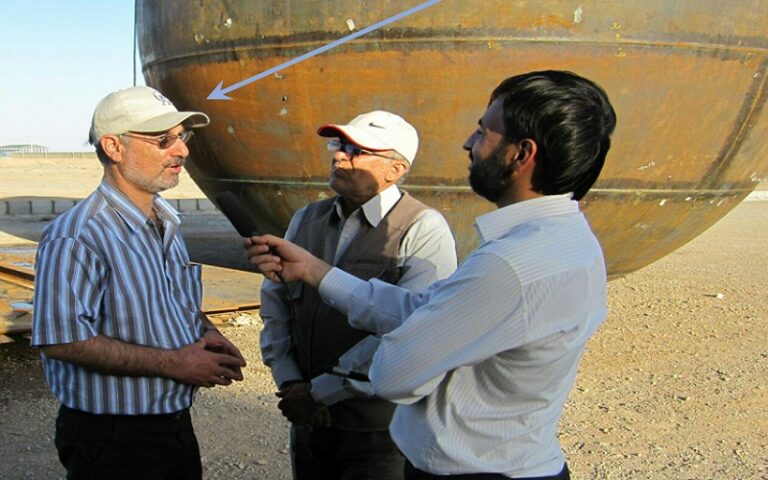
Saeed Borji, a senior member of SPND (the Organization of Defensive Innovation and Research) and an explosives trigger expert who played a pivotal role over the past two decades in developing technologies related to nuclear bomb detonation, was among those killed in the recent Israeli strike on Iran.
Borji, who held a Ph.D. in mechanical engineering from Malek Ashtar University of Technology, remained an obscure but crucial figure in the Iranian regime’s military nuclear program for years.
His collaboration with the Islamic Revolutionary Guard Corps (IRGC) began in the 1980s during the Iran-Iraq war and continued actively over the subsequent decades in sensitive projects related to nuclear weapons development.
Iranian Regime Close to Building Nuclear BombAccording to nuclear documents obtained from Iran, Borji was one of the core members of the secret “Amad” project—a program aimed at designing and building nuclear weapons, which was launched in the early 2000s and, according to Iranian claims, halted in 2003. However, numerous sources indicate that Borji and his colleagues continued their work covertly beyond that date through organizations like SPND.
Development of Advanced Trigger Technologies
For years, he headed the Center for Research on Explosion and Impact Technology, one of the subdivisions of SPND. He played a central role in developing advanced detonation technologies, such as multi-point initiation (MPI) triggers and exploding bridgewire (EBW) detonators, which are used in implosion-type nuclear bombs. Borji, in cooperation with foreign experts, including Vyacheslav Danilenko—a Ukrainian scientist and former specialist in the Soviet nuclear program—underwent training in explosive chamber design and participated in designing large explosion test chambers at the Parchin military site. These chambers were used to simulate the internal explosion mechanism of a nuclear bomb.NCRI-US Reveals Iran’s Secret Nuclear Weapon Program – The Kavir PlanAccording to intelligence assessments, the Abadeh site in Fars Province was also one of the locations used by Borji for explosive trigger tests. The U.S. Department of the Treasury placed Saeed Borji on its sanctions list due to his central role in Tehran’s nuclear weapons efforts. In a statement issued alongside sanctions against 13 other individuals and 17 entities linked to SPND, Borji was identified as an explosives and metals expert working for the Shahid Karimi group. In addition to his scientific activities, Borji also managed front companies connected to nuclear projects. Until his death in the Israeli airstrike, he served in recent years as chairman of companies such as “Azar Afrooz Saeed” and “Arvin Kimia Abzar.” These companies ostensibly operated in the oil and petrochemical sectors, but according to intelligence reports, they functioned as covers for military research into nuclear detonation triggers.
Conducting Explosive Tests
Leaked documents from the Iranian regime’s nuclear program show that Borji was also involved in moving explosive tests to highly secured sites such as “Sanjarian” in eastern Tehran and collaborating on classified projects inside “Parchin Project 6,” which intelligence files identify as a location for conducting highly sensitive and top-secret nuclear-related tests. Borji’s role in post-Amad projects was particularly significant in preserving and expanding Iran’s ability to rapidly resume its nuclear weapons program. He was one of the few individuals capable of advancing nuclear trigger know-how from theoretical development to actual testing and implementation. Borji was in effect “Iran’s nuclear trigger man”—a figure who bridged the early circles of the Amad Project with its secret successors, consistently acting as a conduit between the old generation of scientists and the current structure of military nuclear research. According to reports, the technology developed under his leadership enabled Iran to domestically produce synchronized explosive triggers and elevate them to an operational level.A Look at the Criminal Background of Amir Ali Hajizadeh, One of the Killed IRGC Commanders in Iran
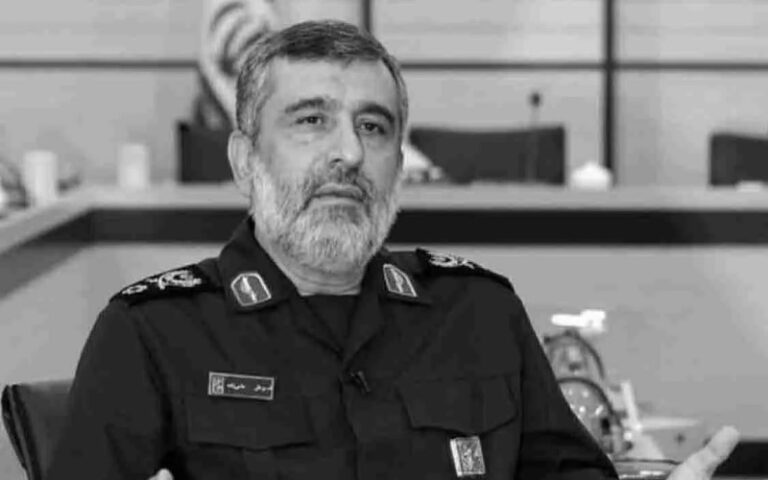
Brigadier General Amir Ali Hajizadeh, the former commander of the IRGC’s Aerospace Force, was directly involved in widespread human rights violations.
He was particularly responsible for violations of the right to life and the deaths of civilians. The downing of Ukraine International Airlines Flight 752 on January 8, 2020, occurred during his tenure as commander. This tragic incident resulted in the deaths of all 176 people on board.
As the commander of the IRGC’s Aerospace Force, Amir Ali Hajizadeh was responsible for the downing of the Ukrainian passenger plane in January 2020.
The plane was shot down only hours after the IRGC launched a missile attack on the Ain al-Asad airbase in Iraq, which hosts U.S. forces.
Denial and Cover-up of the Truth by Amir Ali Hajizadeh
Despite the fact that the Ukrainian airliner was shot down by surface-to-air missiles from the IRGC’s Aerospace Force, officials of Iran’s regime denied the truth for three days, claiming the cause was a technical failure. This was despite the fact that images and videos from the crash site clearly showed missile impact, and footage of the moment the missile struck the plane had also been made public. Even one day after the incident, regime officials continued to deny a missile strike. However, Canadian Prime Minister Justin Trudeau held a press conference and confirmed that the definite cause of the crash was a missile strike. In addition to his role as commander of the forces that shot down the Ukrainian plane, Amir Ali Hajizadeh was also directly involved in the regime’s efforts to deny and conceal the truth. Despite knowing the cause of the crash within hours after the incident—as he later admitted—he took no action. While many Iranian citizens were seeking the truth, Amir Ali Hajizadeh held a press conference on January 9 to celebrate the missile strike on the Ain al-Asad base. At this press conference, Hajizadeh made no mention of the Ukrainian passenger plane being shot down. He called the strike on the Ain al-Asad base a “victory” and spoke about the operation’s success. Eventually, after three days of denial and once it was confirmed that the plane had been brought down by IRGC air defense missiles, the General Staff of Iran’s Armed Forces accepted responsibility. On the morning of January 11, 2020, the General Staff released a statement, describing the downing of the plane as the result of an “unintentional human error.”Confession by Amir Ali Hajizadeh and Lack of Legal Accountability
Following the statement, the Iranian regime’s state-run IRINN news network aired a press conference with Amir Ali Hajizadeh. In that broadcast, Hajizadeh accepted responsibility for the downing of the Ukrainian airliner by forces under his command. In the pre-recorded report, Hajizadeh admitted that he had been informed of the incident within hours of the crash. He had also informed higher-ranking commanders of the incident. According to Hajizadeh, the air defense operator had mistaken the passenger aircraft for a cruise missile and fired at it. Despite Amir Ali Hajizadeh’s direct role as the commander of the forces responsible for shooting down the Ukrainian airliner, the judiciary of Iran’s regime never recognized him as a defendant in the legal case opened on the matter. On the first anniversary of the downing of the Ukrainian plane in January 2021, Hajizadeh appeared in a detailed television report. In the program, without any mention of the downed aircraft, he referred to the day of the incident and the missile strike on Ain al-Asad base as “a day of God and a great victory.”Canada: Iran Must Take Full Responsibility for Downing Ukrainian Flight
Background and Victims Associated with Amir Ali Hajizadeh
Amir Ali Hajizadeh’s record includes: 1980: Joined the Islamic Revolutionary Guard Corps (IRGC). 2006 to October 2009: Commander of IRGC Air Defense. October 2009 to June 13, 2025: Commander of the IRGC’s Aerospace Force. He was killed on June 13, 2025, during an Israeli strike. Amir Ali Hajizadeh was placed under U.S. sanctions on July 14, 2019. The sanctions were imposed due to his “malign role and involvement in provocative missile programs and sabotage of commercial ships in international waters.”Tensions in Iranian and global markets following Israeli attack; sharp rise in currency and gold prices
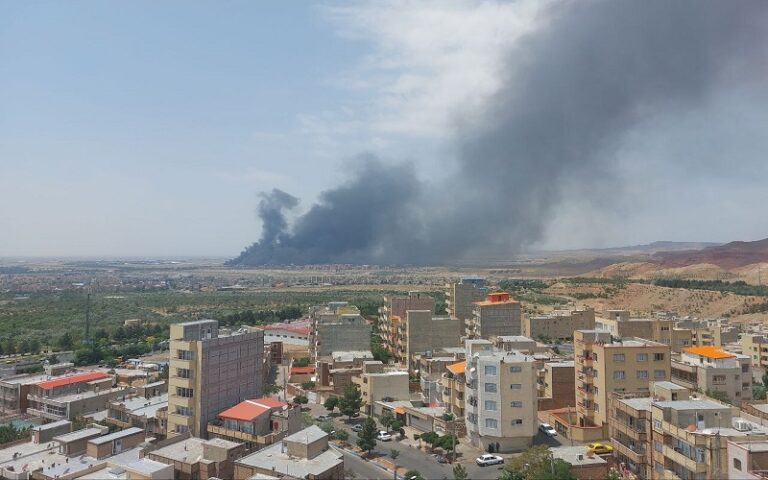
Following Israeli airstrikes targeting commanders and military infrastructure of Iran’s regime, the prices of foreign currencies and gold are rapidly rising. Global markets have also experienced volatility. The prices of oil, gold, and gas have increased, while global stock indices declined, although these effects eased somewhat later in the day.
In Iran’s domestic markets, although today—Friday, June 13—the official markets are closed, the dollar experienced an unusual surge, rising by more than 100,000 rials and reaching around 938,000 rials by Friday afternoon.
On Thursday, June 12, the dollar was about 837,000 rials.
The euro and the British pound also saw similar increases. By Friday afternoon, the euro, which was about 969,000 rials on Thursday, rose to approximately 1,081,500 rials in the open market.
Iran’s Economy in Freefall: A Looming Hunger CrisisThe pound also increased from around 1,140,000 rials to approximately 1,270,000 rials. The price hikes in these assets continued until 2:30 PM Tehran time, even though Iran’s official markets had not yet opened.
Global Markets
In the initial hours following Israel’s attack on Iran, Brent crude oil prices surged by more than 7%, even reaching up to 13%, although they later gave up some of those gains. Even before the attack, the oil market had already reached its highest level in the past two months. At the same time, natural gas prices in Europe experienced their highest increase in more than five weeks. The main concern was the Strait of Hormuz, a strategic waterway through which about one-quarter of the world’s oil and all of Qatar’s liquefied natural gas exports pass. Although physical delivery of gas has not yet been disrupted, delays could occur if ships begin avoiding the strait. Gold, regarded as a safe-haven asset, rose by up to 1.7% before slightly declining. As of Friday morning, gold was trading about $90 below its all-time high of $3,500 per ounce, recorded in April. In contrast, stock markets reacted negatively, with U.S. indices seeing steeper declines compared to other markets. Some analysts attribute this to concerns among American investors about the possibility of a wider conflict in the Middle East. These developments are unfolding while Iran’s regime has yet to deliver its final response, and it remains unclear whether the conflict will escalate beyond limited aerial strikes.A 73% Increase in Tehran Residents Moving to the Outskirts of the Capital
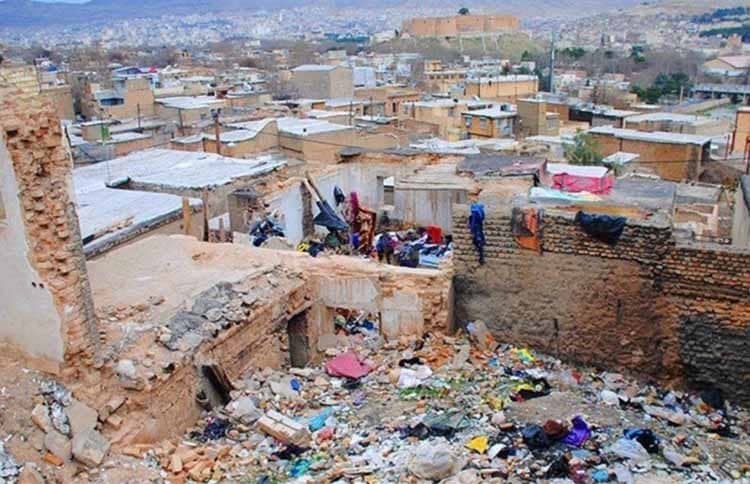
Domestic media, citing data from a service application, reported a 73% rise in tenant migration from Tehran due to rising living costs.
On Thursday, June 12, newspapers cited data from the service app Achareh, reporting that family relocations from various districts of Tehran to the suburbs of the capital have increased by 73%.
According to public relations data from Achareh—which offers moving services—the rate of relocation from Tehran to suburban areas, including Pardis, Bumehen, Pakdasht, and Baqershahr, increased by about 73% from 2023 to 2024.
Iran: Housing Constitutes 70% of Workers’ ExpensesAn analysis of Achareh’s 2024 data shows that 11.5% of moves to Tehran’s outskirts originated from District 4, located in the eastern part of the capital and including neighborhoods such as Tehranpars, Hakimiyeh, Narmak, and Heravi. Following District 4, Districts 5, 3, and 2 rank next, accounting for 5%, 4%, and 3.5% of all moves to the suburbs, respectively. It is notable that these districts include relatively affluent neighborhoods such as Punak, Shahrak-e Gharb, Darrous, and Vanak, and now some of their residents have also been forced to leave the city.
Housing Poverty in Iran Is Twice the Global Average
Although these figures are not based on a comprehensive scientific study and are derived from a mobile application with an unknown user base, official data somewhat corroborate the trend. According to data from the Research Center of Iran’s regime’s Majlis (parliament), housing poverty in Iran rose from 32% in 2011 to about 55% in 2021, while the global average for this indicator is around 20%. One of the serious challenges facing Iran’s regime is the growing crisis of informal settlements on the outskirts, a phenomenon that could again trigger protests similar to those in Kuy-e Tollab in Mashhad and Eslamshahr near Tehran.A New Pattern of Informal Settlement
The Social Studies Office of the regime’s Majlis Research Center published a report in November 2022 titled “Informal Settlement in Iran: Approaches, Policies, and Actions.” According to the report, in 2021, at least 6.187 million people across the country were considered informal settlers or residents of unregistered housing areas. As in many other parts of the world, informal settlement and migration to urban outskirts were common in Iran. However, the population of these areas was generally composed of migrants from rural areas and small towns. During the second term of Hassan Rouhani’s presidency, between 2018 and 2021, an unprecedented shift occurred. Due to soaring housing inflation, statistics indicated a rise in migration from urban centers to the outskirts of cities.Tehran Housing Prices Surge: Average Price Per Square Meter Reaches $1,100Earlier, Ahmad Vahidi, the interior minister under Ebrahim Raisi’s government, had also confirmed the migration of urban residents to peripheral areas. In March 2023, Beitollah Satariyan, a faculty member at the University of Tehran, stated that due to extreme pressure in the housing markets of major cities, many citizens can no longer afford to stay in their current residences and are forced to move to smaller spaces or peripheral areas. He also warned that in some cases; this trend leads to a rise in residence within informal settlements.
Iran’s Brain Drain Crisis: How Corruption and Repression Are Driving a Generation Away

Brain drain is a challenge facing Iranian society. Bahram Salavati, researcher and former director of the Iranian Migration Observatory, told the state-run Entekhab news outlet on June 9: “Every 10 years—starting from 2006, the year that administration came in which they called the ‘miracle of the millennium’—we have seen the number of Iranian students abroad double. If we start at 15,000 that year, it reached 30,000 after the first decade. Then in the late 2000s and early 2010s, it rose from 30,000 to 60,000. But just in the past four or five years, that 60,000 has jumped to 120,000 students. Meaning we did what used to take 10 years in just four.”
Terrifying Brain Drain Statistics: Iran Deprived of Its Human Capital
Salavati continued: “If we continue at this pace, we’ll realize what’s happening. For the first time in this country’s history, we have more than 100,000 students abroad—just in numbers. … The return rate is 1%—that’s extremely dangerous. Migration has become one-way. The concept of brain circulation doesn’t apply to Iran at all. And this is the picture we’re facing in 2025, while the major shocks are still ahead of us.”Growing Wave of Professor Migration Poses Serious Challenge To Iran’s Scientific FutureAccording to credible reports, between 2007 and 2021, around 150,000 to 180,000 scientific professionals left Iran—resulting in an annual loss of $50 to $70 billion. Worst of all, only 1% of these elites consider returning, while the global average return rate for skilled migrants is 7%. This means Iran is not only losing its elite to brain drain but is effectively gifting them permanently to other countries.
OECD Data on Iranian Brain Drain
According to data from the Organisation for Economic Co-operation and Development (OECD), over 20% of Iranians living abroad hold higher education degrees. From 1979 to 2018, the number of Iranian emigrants grew from 500,000 to 3.1 million, increasing from 1.3% to 3.8% of the country’s population. The primary destinations for these emigrants are the United States, Canada, Germany, and the United Kingdom. In the United States alone, 96% of patents registered by Iranian inventors between 2007 and 2012 belonged to Iranians residing abroad. Furthermore, 110,000 Iranian researchers and scholars work at universities and research institutions outside the country—equivalent to one-third of Iran’s total research workforce.Iran: Some Nurses Are Homeless and Sleep in Their Cars
Crisis in Key Sectors: From Doctors to Engineers
Brain drain is not limited to students. The healthcare sector is in even more critical condition. Mohammad Reza Zafarghandi, secretary-general of Iran’s Medical Community, warned that 80% of medical students are considering emigration. In 2022, 6,500 doctors and medical specialists left the country. Additionally, 3,000 nurses emigrate from Iran each year, despite the government spending around $68,000 to train each one. The situation in the information technology sector is no better. Over 50% of employees in Iran’s tech startups intend to migrate, and most have no plans to return. From pilots and truck drivers to construction workers, people from all walks of life are fleeing. Even 83 out of the 86 recent Olympiad medalists have emigrated.Cronyism and Corruption: The Silent Killers of Talent
Why has brain drain become a norm? The answer is simple: corruption, cronyism, and the regime’s incompetence.Each Year, 1,500 Nurses Leave Their Jobs, 500 Emigrate from IranRunaway inflation has devalued the national currency by 45% in a single year, reducing professionals’ wages to a joke. An engineer in Iran earns the equivalent of $600 per month, whereas abroad they can earn significantly more. Brain drain is a national crisis that has robbed Iran of its future. Thirty percent of the population dreams of emigrating, and 62% of those who leave have no intention of returning. This is not merely an economic problem—it is a cultural and social catastrophe.
Trump’s ‘Declining Confidence’ in Possibility of Deal with Iran’s Regime
While the Board of Governors of the International Atomic Energy Agency (IAEA) is reviewing the Iranian regime’s nuclear case and a resolution may be issued, Donald Trump said in an interview that his confidence in Iran agreeing to stop uranium enrichment has decreased.
At the same time, a spokesperson for the US Embassy in Baghdad confirmed the reduction in staff presence at the embassy.
Earlier, Reuters news agency, citing three American and two Iraqi sources, reported that the United States is preparing to evacuate its embassy in Iraq due to rising security risks in the region.
Iranian Regime Close to Building Nuclear BombThese sources, however, did not specify which security threats prompted this decision. An official from Iraq’s Ministry of Foreign Affairs also confirmed a “partial evacuation” of US embassy staff, attributing it to potential security concerns linked to possible regional tensions. In an interview conducted on Monday, Mr. Trump was asked whether he believed he could persuade Iran to stop its nuclear program. He replied, “I don’t know. I don’t know. I did think so, and I’m getting more and more — less confident about it.” When asked about the consequences of failing to reach an agreement with Iran, he reiterated that he will not allow Iran to acquire a nuclear bomb and warned that achieving that outcome without war would be preferable. Mr. Trump has repeatedly warned in the past that if a new nuclear agreement with Iran is not reached, military action would be inevitable.
Iran warns about possible resolution from IAEA Board of Governors
Meanwhile, Aziz Nasirzadeh, the defense minister of Iran’s regime, warned that if nuclear negotiations fail and a war is “imposed” on Iran, “the other side will suffer greater casualties.”NCRI-US Reveals Iran’s Secret Nuclear Weapon Program – The Kavir PlanNasirzadeh expressed hope that the situation between Iran and the US would not lead to conflict, but he also stated, “If a conflict is imposed, the other side will definitely suffer more casualties than us. All American bases are within our reach, and we will target those bases in host countries without hesitation.” He also added that Tehran has recently tested a missile with a two-ton warhead and does not accept any restrictions in this area. The IAEA Board of Governors is reviewing Iran’s nuclear case during its quarterly meeting in Vienna. With the session concluding, discussions are expected to continue tomorrow, followed by the issuance of a resolution. Mohammad Eslami, head of Iran’s Atomic Energy Organization, said after a cabinet meeting that his country will “definitely” respond to any resolution by the IAEA Board. Reza Najafi, the Iranian regime’s permanent representative to the IAEA, stated, “Our response to the adoption of a resolution will be very strong.” The sixth round of negotiations between Iran’s regime and the US for a new nuclear agreement is scheduled to take place soon. Tehran says the talks will be held on Sunday in Oman. The news website Axios also quoted a senior US official, who remained unnamed, saying that holding the negotiations on Friday in Oslo, the capital of Norway, was also among the options. Currently, the Iranian regime and the United States are at odds over uranium enrichment on Iranian soil. The United States has said Iran must cease this activity, but Ali Khamenei, the supreme leader of Iran’s regime, has rejected this demand and called the US’s repeated statements “nonsense.”
Iranian Regime’s Judiciary Announces Execution of 9 Prisoners
Mizan News Agency, affiliated with the judiciary of Iran’s regime, reported the execution of nine prisoners who had been arrested in 2018 and sentenced to death on charges of “waging war against God through rebellion, armed uprising, and possession of military weapons.”
On Tuesday, June 10, the Judiciary’s media center referred to the executed individuals as members of the “ISIS group” but did not disclose their identities, nationalities, or the time and place of the executions. It stated, “After being arrested and undergoing legal and judicial procedures, they were hanged.”
According to Mizan, the group attempted to enter Iran from the western region on January 27, 2018. They were reportedly surrounded by Islamic Revolutionary Guard Corps (IRGC) forces, and during the confrontation, three IRGC members were killed.
The judiciary’s news agency wrote that after court hearings; the Revolutionary Court sentenced the nine individuals to death. The sentences were upheld by the Supreme Court and subsequently carried out by hanging.
