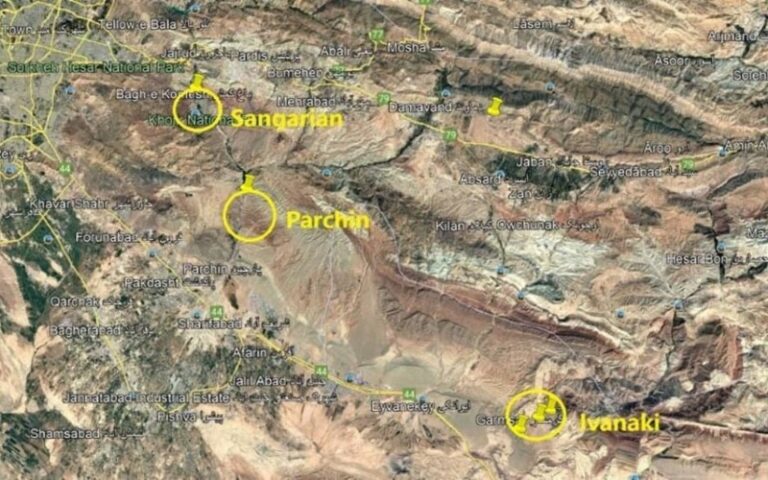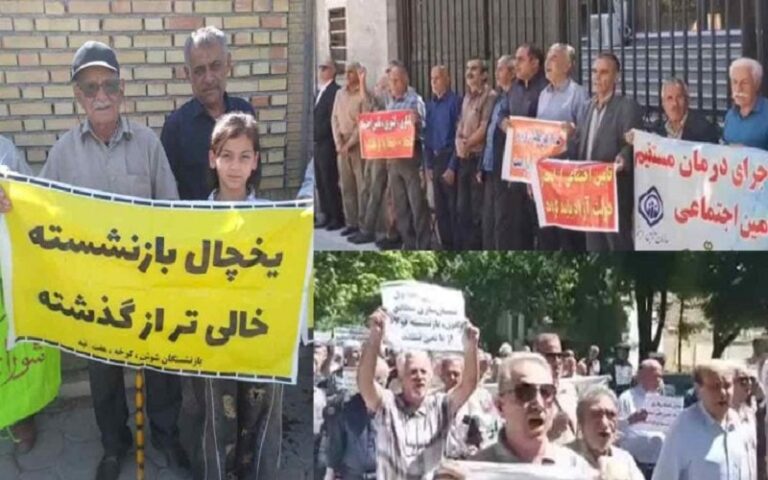
Iran’s Regime Says It Will Increase Uranium EnrichmentSpeaking on the sidelines of the Munich Security Conference, Grossi warned that time for reviving the JCPOA is running out but added that this does not mean it cannot be accomplished quickly. According to Grossi, the IAEA possesses all the necessary information, but decision-making rests with the Agency’s member states. The IAEA chief stated that Iran is in the process of increasing its monthly production of 60% enriched uranium by sevenfold. He added that by the time the Agency releases its quarterly report next month, the Iranian regime’s stockpile of 60% enriched uranium could reach 250 kilograms. According to IAEA standards, this amount of uranium, if further enriched, would be sufficient to produce six nuclear bombs. Grossi warned that the international community must take this issue very seriously, emphasizing that time should not be wasted. He expressed hope that the Iranian regime would once again become a focal point of global attention. The IAEA Director General stated that he eagerly awaits the White House’s appointment of a U.S. special envoy for Iran so that discussions and consultations on the next steps regarding the Iranian regime can begin. Grossi also noted that the IAEA remains in contact with the Trump administration. Grossi’s remarks come as U.S. President Donald Trump reinstated the “maximum pressure” campaign against Iran’s regime by signing an executive order on Tuesday, February 4. According to this directive, maximum pressure on the Iranian regime will be reinstated, pathways to acquiring nuclear weapons will be blocked, and efforts will be made to counter the Iranian regime’s malign influence abroad. Another section of the directive states that Donald Trump will not tolerate the Iranian regime’s possession of nuclear weapon capabilities or its continued support for terrorism, particularly against U.S. interests.
Grossi: Iran Seeking to ‘Sevenfold’ Its Production of 60% Enriched Uranium
As the Iranian regime continues to insist on high-level uranium enrichment, Rafael Grossi, Director General of the International Atomic Energy Agency (IAEA), warned on Friday, February 14, about the sharp increase in Iran’s enriched uranium stockpile. He stressed that time is running out for reviving the JCPOA (Joint Comprehensive Plan of Action).
Despite widespread international opposition, the Iranian government continues to enrich uranium to 60%, bringing it dangerously close to the 90% enrichment level required for nuclear weapons production.
U.S. Congress Proposal to Push Three European Countries to Trigger Snapback Mechanism Against Iran
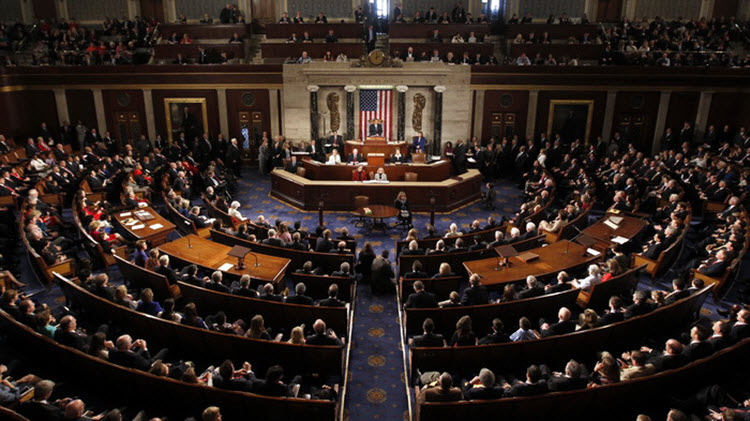
Several members of the U.S. House of Representatives and Senate have introduced proposals urging the three European signatories of the JCPOA to follow the maximum pressure policy against Iran’s regime and to trigger the snapback mechanism, reinstating all sanctions on Tehran.
Senator Pete Ricketts introduced this proposal to the Senate, while Claudia Tenney is behind the initiative in the House of Representatives.
On Thursday, February 13, Pete Ricketts described the reinstatement of all sanctions against Iran’s regime (snapback mechanism) as a key factor in the success of Donald Trump’s maximum pressure policy. He stated that his proposal sends a strong message to the United States’ European allies.
In a video message, the Republican senator referred to Iran’s regime as the world’s leading state sponsor of terrorism and warned that its acquisition of nuclear weapons would pose a threat to the security of the U.S. and its allies.
Emphasizing that Donald Trump took decisive actions against Iran’s malign activities within the first month of his presidency, he urged France, the United Kingdom, and Germany to act swiftly and trigger the snapback mechanism before October, after which the opportunity would be lost. He described this measure as essential for curbing Iran’s nuclear ambitions and other malign activities. This proposal has been introduced to the U.S. Senate by Pete Ricketts with the support of 13 other senators. Claudia Tenney, while introducing the proposal to the House of Representatives, stated that the initiative sends a clear message to the three European countries: “It’s time to step up.” The snapback mechanism refers to a process that leads to the immediate and automatic reinstatement of all United Nations sanctions against Iran and remains valid until the expiration of the JCPOA in October 2025. U.S. President Donald Trump has repeatedly stated in recent weeks that he would prefer not to have to resort to the maximum pressure policy against Iran and instead reach a verifiable nuclear agreement with Tehran. In his latest remarks in an interview with Fox News, he stated that Iranian officials were worried and fearful and willing to negotiate. He stated that he preferred to reach a better nuclear agreement with Iran rather than resort to military action..@POTUS has taken strong action to restore his successful maximum pressure policy against Iran. Our allies need to do their part, too. Yesterday, I announced I’m introducing legislation to push our E3 allies to initiate a snapback of U.N. sanctions. pic.twitter.com/EX1MBgFZhC
— Senator Pete Ricketts (@SenatorRicketts) February 13, 2025
Iranians Can’t Afford to Buy Homes
The inability to afford housing has become one of the most significant challenges for Iranian households in recent years. Here’s a brief look at the root causes of this issue.
Some housing policymakers believe that the housing market imbalance is physical in nature. They argue that a shortage of 5 million housing units is the main cause of this imbalance. However, the real issue is the lack of purchasing power among households.
Since 2011, investment growth in construction has been negative 4%. Additionally, from 2019 to the final quarter of 2024, capital formation in buildings has recorded a negative growth rate of 5%.
Severe Housing Price Increases: Home Ownership, a Distant Dream for Many IraniansDisruptions in housing supply and demand have been caused by imbalances in key macroeconomic variables. These imbalances have pushed the housing market into an abnormal state. Since 2014, the housing production slump has continued, and construction volume has remained below the minimum required for market balance. Estimates indicate a housing unit shortage of approximately 2.6 million units nationwide. However, three key factors indicate that physical imbalance is not the root cause of the housing crisis. Those advocating for the mass construction of housing cite the household density index as evidence. They argue that urban housing shortages amount to approximately 1.5 million units. However, in Iran, high inflation and economic risks have led to many housing units remaining vacant. In 2016, while there were 18.1 million urban households, only 17.4 million residential units were occupied. The household density index indicated a shortage of one million units. However, in the same year, nearly 5 million vacant or second-home properties existed.
The Issue Is Not Supply Shortage; The Real Problem Is Poverty
This indicates that when considering both occupied and vacant housing units, the market in 2016 faced an oversupply, not a shortage. In recent years, a portion of existing housing has remained out of the consumer market. If these units were made available, a significant part of the housing imbalance would be resolved. Physical imbalance can be addressed if economic imbalance is resolved. However, as long as economic issues persist, solving the physical imbalance alone will not yield results. The experience of constructing 2.3 million “Mehr Housing” units in 2007 demonstrates that even after seven years, 15% of all housing units in the country remained unused. Additionally, the experience of the state-backed Maskan Melli (National Housing) project in the past three years has shown that many eligible households cannot afford the initial payment. Out of over 5 million registered households, only 1 million have been able to provide the required upfront payment. The dominance of speculative and real estate investment profits is another obstacle preventing new housing units from entering the consumer market. Between 2011 and 2023, approximately 5.5 million new housing units were constructed. However, at the same time, over 1 million new households joined the ranks of renters.House Rent Prices at Record High in IranThese figures indicate that a portion of new housing units was acquired by existing property owners rather than increasing supply for new buyers. During this period, the number of urban households grew by 6 million, while 5.5 million new housing units were built. However, the number of renters increased from 4.5 million to nearly 6 million, and the number of homeowners rose from 9.4 million to 13.6 million households. These statistics confirm that the real issue is the economic imbalance in the housing sector—household poverty.
Housing: A Necessity or a Tool for Speculation by Government Entities?
Currently, 1.5 million urban renters live in absolute poverty, a figure that has increased 1.5 times since 2011. Additionally, over 4 million households in cities and rural areas lack adequate housing. Half of Iranian households spend more than the acceptable limit on housing costs. This economic reality indicates that the housing crisis is driven more by economic imbalance than by a physical shortage of homes. For developers to increase housing production, they need to sell or rent out their constructed units. However, as long as household financial difficulties persist, the housing market will not experience growth. High inflation and low economic growth have driven up living costs. In this situation, households struggle to afford basic necessities such as food, medicine, and clothing, leaving them unable to pay for housing. As a result, demand for purchasing or renting housing has declined, pushing the market into a deeper recession.Improving the housing market requires sustainable economic solutions
Unless inflation is controlled and household incomes increase, neither construction will thrive nor will the housing market imbalance be resolved. In short, Iran’s housing crisis stems from the lack of purchasing power and economic deprivation of citizens, not from a shortage of housing units. Many powerful and wealthy entities have exploited the housing market for speculation, reaping enormous profits. It was previously revealed that over 2 million vacant homes in Tehran are owned by state-affiliated banks, and no taxes are paid on them.Lebanon Cancels Mahan Air Flight Directing Money From Tehran To Hezbollah
After the cancellation of a Mahan Air flight to Lebanon, Hezbollah supporters blocked the roads leading to Beirut airport.
This flight was scheduled to depart from Tehran to Beirut on Thursday, February 13, but Lebanon’s Civil Aviation Authority canceled it.
An official at Beirut’s Rafic Hariri International Airport told Agence France-Presse (AFP) that, based on an order from Lebanon’s Ministry of Transport, the airport informed Mahan Air that it could not accommodate two of its flights scheduled for Thursday and Friday.
Following the news of the flight cancellations, a number of protesters holding Hezbollah flags and pictures of the group’s leaders blocked the roads leading to Beirut airport.
Videos posted online also show protesters burning tires and chanting slogans.
Iranian Plane Inspected in Beirut Airport on Suspicion of Carrying Aid to HezbollahA few hours before the news of the Mahan Air flight cancellation, the Israeli military announced that Iran’s Quds Force, a branch of the Islamic Revolutionary Guard Corps (IRGC), was attempting to transfer money to Hezbollah in Lebanon using civilian flights. Avichay Adraee, the Arabic-language spokesperson for the Israeli military, wrote on X that the Iranian regime and Hezbollah had made several attempts in recent weeks to transfer money for attacks against Israel, and they estimate that some of these smuggling efforts were successful. According to Adraee, the Israeli military, which is in contact with the ceasefire monitoring committee, regularly provides the committee with necessary intelligence. The Israeli military previously warned that Hezbollah is attempting to rebuild itself with financial and military support from Iran. Hezbollah suffered heavy losses in the recent conflict with Israel, including the deaths of many senior commanders as well as Hassan Nasrallah, the group’s leader.
Iranian Authorities Reissue Death Sentence for Political Prisoner Sharifeh Mohammadi
The lawyers of Sharifeh Mohammadi, a labor activist imprisoned in Lakan Prison in Rasht, have reported the reissuance of the death sentence against her in the retrial process.
This death sentence had previously been overturned by the Supreme Court, and her case had been referred to a parallel branch for reconsideration.
The “Campaign to Defend Sharifeh Mohammadi” page, which is managed by her family members, announced on Thursday, February 13, that Mohammad-Ali Darvish-Goftar, the head of Branch 2 of the Islamic Revolutionary Court in Rasht, who upheld this sentence, is the son of Ahmad Darvish-Goftar, the judge of Branch 1 who had issued the previous ruling.
Iran: 85 Political Prisoners on Hunger Strike in Protest of Sharifeh Mohammadi’s Death SentenceThe baseless charge against Sharifeh is her alleged membership in an opposition group through her involvement in the Coordination Committee, whereas this committee is an independent labor organization with no political affiliations. On December 19, 2024, the Campaign to Defend Sharifeh Mohammadi reported that a hearing for her case had been held at Branch 2 of the Revolutionary Court in Rasht. It stated that despite her lawyers’ request for her in-person attendance, part of the session was held online and remotely, during which she answered some of the judges’ questions. Sharifeh Mohammadi was arrested in December 2023 and sentenced to death on July 4, 2024, by the regime’s Islamic Revolutionary Court in Rasht on charges of “rebellion” due to alleged membership in an opposition group. This accusation has been denied by her, her husband, and her family. Additionally, members of the Coordination Committee for Helping to Establish Labor Organizations have rejected any association with this party. At the time of her arrest, Ms. Mohammadi was charged with “acting against the state.” The Campaign to Defend Sharifeh Mohammadi had previously reported that she was subjected to torture while held at the detention center of Iran’s Ministry of Intelligence in Sanandaj. The issuance of the death sentence for Sharifeh Mohammadi was met with widespread global protests from labor unions, trade syndicates, and human rights organizations. In September 2024, Amnesty International condemned the death sentence against Sharifeh Mohammadi, calling her trial “grossly unfair” and stressing that her claims regarding torture and mistreatment “were never investigated.” This international human rights organization stated that the Revolutionary Court of Gilan Province sentenced Sharifeh Mohammadi to death solely for her peaceful human rights activities, identifying her as a labor rights activist, a women’s rights advocate, and a proponent of abolishing the death penalty. Since the start of the nationwide protests in 2022, the Iranian regime has intensified its repression and crackdown on civil activists, particularly women. Between February 2024 and February 2025, the Iranian regime executed 1,024 people, setting a global record.
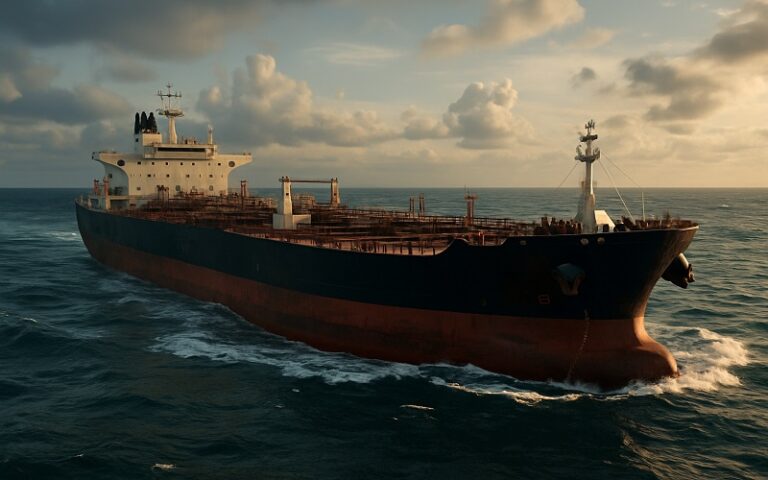
Iranian Oil Shipments Stranded at Sea Without Buyers
Following the intensification of U.S. sanctions against Iran and Russia, the volume of oil stored in tankers by these two countries has reached its highest level in recent months, leading to an increase in global crude oil prices.
Reuters reported on Wednesday, February 12, citing trade sources and analysts, that as sanctions have tightened, the number of available tankers for transporting Iranian and Russian oil shipments has decreased, and buyers have shown less willingness to purchase these cargoes.
According to the report, since October 2024, Washington has imposed multiple rounds of sanctions on vessels and entities linked to Iranian and Russian oil, disrupting their trade with China and India, their traditional customers.
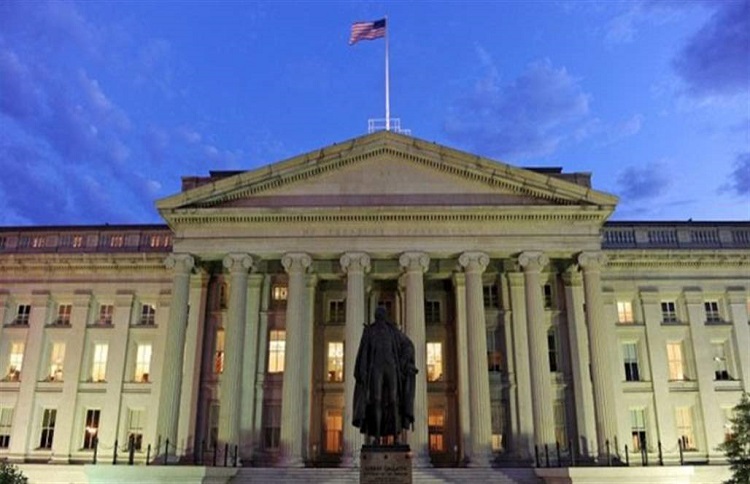
Negative Record in Iran’s Oil Exports; Consequences of SanctionsOn February 4, U.S. President Donald Trump signed an order to resume the maximum pressure policy against Iran and bring its oil exports to zero, warning that the Iranian regime should no longer be allowed to sell oil to other countries. As the first action following Trump’s directive, the U.S. Treasury Department announced on February 6 that it had sanctioned an international network involved in the transfer and sale of Iranian oil shipments. Reuters further reported that last month, China’s Shandong Port Group banned the entry of sanctioned vessels carrying Iranian and Russian oil into the province’s ports. As a result of this recent decision by Shandong Port Group, the unloading of Iranian and Russian oil shipments has faced significant challenges. According to data from Braemar ACM, 57% of the 127 Very Large Crude Carriers (VLCCs) involved in transporting Iranian oil to China have been blacklisted under U.S. sanctions. Reuters, citing estimates from three analysts, added that due to rising oil exports and, at the same time, a slowdown in cargo unloading in China, Iran’s floating oil storage has increased by 10 to 20 million barrels so far this year.
Speculations About Iran’s Floating Oil Reserves
Reuters also reported that experts do not agree on the total volume of Iranian oil stored in floating tankers, known as the “shadow fleet.” According to data from Kpler, Iran’s floating oil storage has surpassed 25 million barrels, marking the highest level in over a year. About 80% of these cargoes are floating in the waters of Singapore and Malaysia. On the other hand, Emma Li, a senior analyst at the oil tanker tracking firm Vortexa, believes that Iran’s floating storage of crude oil and condensates had risen to 73.1 million barrels by the end of January 2025. She added that Iranian oil exports had been rising for the second consecutive month, reaching 1.78 million barrels in January. The reduction in the number of non-sanctioned tankers available to transport Iranian oil to China has contributed to a rise in global crude oil prices.Iran Ranks 151st in Global Corruption Perception Index Among 180 Countries
In Transparency International’s 2024 report, the Iranian regime ranked among the lowest in the “Corruption Perception Index.”
According to the report, Iran ranked 151st out of 180 countries in terms of corruption, scoring 23 points—one point lower than last year—making it one of the most corrupt countries in the world.
Countries such as the Democratic Republic of Congo, Bangladesh, Mozambique, Iraq, and Pakistan performed better than the Islamic Republic of Iran in terms of corruption.
Transparency International ranks 180 countries and regions worldwide based on the “perceived level” of public sector corruption. Scores range from zero (highly corrupt) to one hundred (very clean).
Flawed Economic Policies and Foreign Exchange Corruption in Iran; An Obstacle to Growth and LivelihoodsAccording to the report, Denmark (90), Finland (88), and Singapore (84) are at the top of the list and are recognized as the least corrupt countries. Each country’s score is based on a combination of at least three data sources drawn from 13 different assessments and evaluations of corruption. These sources are compiled by reputable institutions, including the World Bank and the World Economic Forum. In this ranking, the highest possible score is 100, and a country’s ranking is less important than its actual score in indicating the level of corruption within that country. The organization considers corruption a major factor in undermining democracy, causing instability, and violating human rights. It has called on the international community to make combating corruption a top and long-term priority. In its report, the organization described the outlook for anti-corruption efforts in the Middle East and North Africa (MENA) region as “bleak,” noting that over the past 12 years, the regional Corruption Perceptions Index (CPI) score has increased by only one point, reaching 39 out of a possible 100. This makes it one of the lowest regional averages in the world. According to the report, stagnation in corruption levels in this region is largely due to the absolute control of national leaders who, while amassing wealth, suppress any opposition to maintain their power and fuel conflicts in other countries. These leaders also obstruct progress on global issues such as advancing gender equality. The United Arab Emirates holds the highest score in the region with 68 points, while Syria has the lowest with 12 points. Meanwhile, Bahrain has shown the most improvement since 2017, with a 17-point increase.
Iran: Protesters Chant Anti-Regime Slogans on the Anniversary of the 1979 Revolution
Following public protests in Dehdasht, the intelligence forces of the Islamic Revolutionary Guard Corps (IRGC) in Kohgiluyeh and Boyer-Ahmad Province arrested several protesting citizens on the evening of Tuesday, February 11.
The ongoing public protests in the capital of Kohgiluyeh and Boyer-Ahmad Province coincide with the anniversary of the 1979 revolution, at a time when the government is struggling with a crisis in providing for citizens’ livelihoods. Meanwhile, government offices and educational institutions in many provinces have been closed under the pretext of “cold weather” and officials’ inability to supply energy.
According to reports on social media over the past four days, coinciding with the anniversary of the Iranian revolution, protests against the Iranian regime have been ongoing in Dehdasht. Groups of citizens have chanted slogans such as “This year is the year of blood, Seyed Ali [Khamenei] will be overthrown,” “Death to the Islamic Republic,” and “Death to the dictator.”
In some citizen-recorded video reports from the protests in Dehdasht, protesters can be seen setting fires, and the sound of gunfire can also be heard.
According to the Hengaw website on Wednesday, February 12, IRGC intelligence agents arrested five citizens and took them to an unknown location.
A Number of Arrested Protesters in Dehdasht
According to this report, four other citizens, including one woman and three men, have also been arrested, but their identities are still unknown. Additionally, it is unclear where the detainees are being held or what charges have been brought against them. Public protests on the anniversary of the revolution have also taken place in other parts of Iran. For instance, citizen reports indicate that anti-regime slogans have been chanted in various areas of Tehran. In the Narmak neighborhood, a group of citizens chanted “Death to Khamenei.”Iran: The “No to Executions Tuesdays” Campaign Warns of Possible Death Sentences for “Ekbatan” Case DefendantsSlogans against Ali Khamenei, the Supreme Leader of the regime, were also chanted in Ekbatan residential complex. The resurgence of protests in various parts of Iran comes as regime officials have recently warned about the decline in public trust and the erosion of the government’s social capital.
Iranian Regime Arrests Two British Citizens on “Security” Charges
Iranian state media reported that regime officials have arrested two British citizens accused of security-related crimes.
The regime’s official news agency, IRNA, announced on the evening of Wednesday, February 12, that the two British citizens are being held in a prison in Kerman Province, without disclosing their identities, the exact charges against them, or the circumstances of their arrest.
London has not yet commented on the matter, but IRNA stated that Hugo Shorter, the British Ambassador to Iran, met with these “two British nationals accused of security offenses” at the Public and Revolutionary Prosecutor’s Office in Kerman.
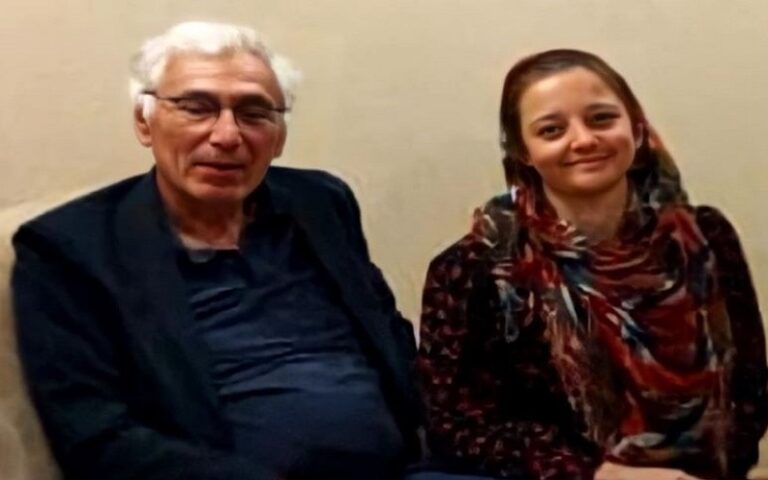
IRNA also published images of the meeting, with the faces of the man and woman—presumably the two detained British citizens—blurred and unidentifiable.
The report states that Mehdi Bakhshi, the Prosecutor of Kerman, and Rahman Jalali, the Deputy Governor for Security and Law Enforcement Affairs of Kerman, were also present at the meeting.
Several other European nationals are also currently imprisoned in Iran. In recent years, the Iranian regime has repeatedly exchanged these European detainees for prisoners it sought to secure from Western countries.
One of the most recent suspected prisoner exchanges occurred last month when Iranian authorities released Cecilia Sala, an Italian journalist. Four days later, Mohammad Abedini Najafabadi was released in Italy and returned to Iran.
Abedini Najafabadi, who had been accused by the United States of transferring sensitive drone components to the IRGC, was arrested at Milan Airport in Italy on December 16, 2024. However, Iran’s judiciary later claimed that his detention was due to a “misunderstanding.”
Two years ago, Iran’s regime also executed Alireza Akbari, a dual Iranian-British citizen, an act that provoked outrage from Western governments. The UK condemned his execution as a “barbaric” act.
Alireza Akbari was a former deputy defense minister of Iran. Iranian authorities accused him of “espionage” for British intelligence services and of being involved in the assassination of Mohsen Fakhrizadeh, a prominent figure in the Iranian regime’s nuclear program.
Iran’s Economy in Freefall: A Looming Hunger Crisis
Iran’s economy, long plagued by structural inflation, is now facing an alarming crisis as food price inflation outpaces general inflation. This phenomenon has had severe repercussions for low- and middle-income households, pushing the country to the brink of widespread hunger.
According to official data from the Iranian Statistical Center, point-to-point inflation in January 2025 reached 31.8%. However, beyond this concerning figure lies the stark reality of skyrocketing prices of essential goods, which have exacerbated economic disparities and placed millions of Iranians in a precarious situation.
The Poverty Line in Iran: A Worsening Situation