

Disarming Hezbollah: A Crippling Blow to Iranian RegimeAccording to an analytical report by The Wall Street Journal citing Lebanese security sources, Prime Minister Nawaf Salam’s government has dismissed dozens of airport employees who were collaborating with Hezbollah and implemented a range of advanced surveillance measures to strengthen control over the facility.
Hezbollah has been expelled from Beirut Airport
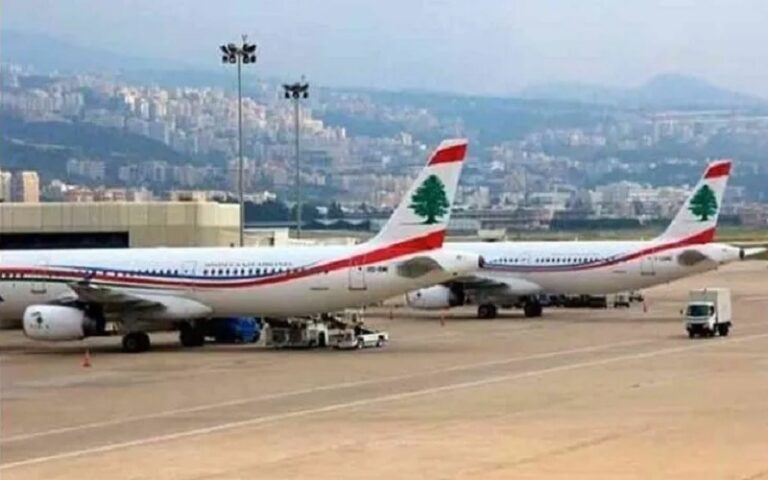
In a significant development, Lebanon’s new government, with direct support from the United States, has succeeded in reclaiming full control of Beirut’s Rafic Hariri International Airport from forces affiliated with Hezbollah and restoring it to official state institutions. This move is seen as the beginning of a new policy aimed at curbing the influence of this Tehran-backed group within the country’s key infrastructure.
Over the past years, especially after the civil war and Hezbollah’s growing influence in Lebanon’s security and economic structures, Beirut International Airport had effectively fallen under the group’s control. Reports indicate that the airport had become one of Hezbollah’s main logistical hubs for transferring equipment, cash, and even gold from Iran.
Widespread Coverage of Iranian Resistance’s Nuclear Revelation
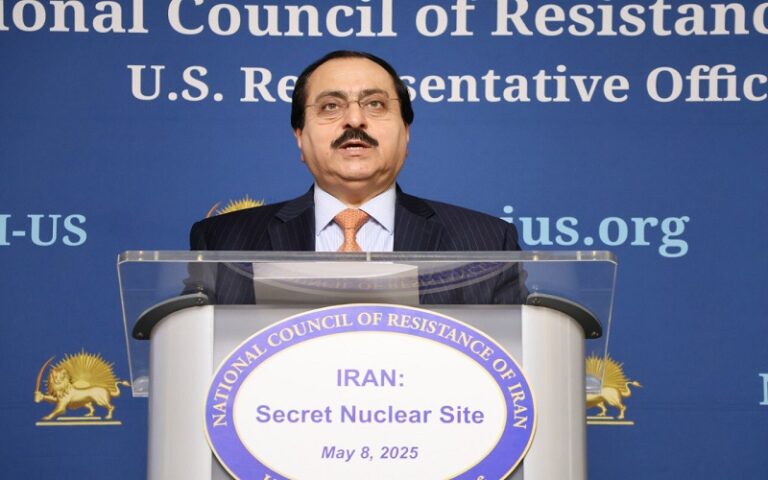
Following a new revelation by the National Council of Resistance of Iran (NCRI) regarding the Iranian regime’s secret nuclear projects, a wave of international reactions and coverage has emerged across media outlets, analysts, and diplomatic entities. The revelation, presented during a press conference on Thursday, May 8, 2025, by the NCRI’s representative office in Washington, unveiled unprecedented details of a covert project at the Ivanekey facility in Semnan Province. According to sources within the Iranian opposition, this project is part of the regime’s nuclear weapons program overseen by an entity known as SPND (The Defense Advanced Research Organization).
New NCRI Intelligence Reveals Iran’s Nuclear Weapons Program Is Advancing RapidlyThis disclosure is based on intelligence gathered through the internal network of the People’s Mojahedin Organization of Iran (PMOI/MEK). According to the Resistance’s spokespersons, it contains solid evidence of systematic efforts to develop a nuclear bomb, including the capability to build a hydrogen bomb.
Details of the Revelation: From Tritium to Long-Range Missiles
According to the information, the Ivanekey facility, operating under the front company “Diba Energy Sina,” is in fact a key site for producing nuclear weapon components. Spanning roughly 2,500 hectares, the facility is located in a strategic area 55 kilometers southeast of Tehran and has been concealed from international organizations through stringent security measures. The Iranian Resistance also disclosed that the regime is involved in the processing of tritium, a radioactive isotope of hydrogen that has strictly military applications. One of the key revelations is the involvement of nuclear fusion experts and chemists such as Dr. Ebrahim Haji Ebrahimi and Hadi Zaker-Khatir, who are affiliated with Iran’s Atomic Energy Organization. In an exclusive report, Fox News confirmed the existence of a covert facility known as the “Ranginkaman site” (Rainbow site) in the Ivanekey area using newly released satellite imagery. The American news network stated that this facility has been operating for at least a decade under the cover of front companies. Fox News reported that the site, known among regime officials by the codename “Ranginkaman site,” is part of a network that has significantly advanced Iran’s capability to produce nuclear warheads. This report was released simultaneously with the resumption of nuclear talks between Tehran and Washington in Muscat and could impact the course of these negotiations. Fox News analysts warned that the disclosure of undeclared nuclear sites will complicate the diplomatic process. The UK’s Daily Express also published a detailed report citing information from the Iranian Resistance, analyzing the regime’s nuclear activities. Referring to the NCRI’s history of past disclosures, the report described the new revelation as well-documented and alarming. According to the Daily Express, the new information indicates a significant increase in SPAND’s activities to produce nuclear weapons. These developments could pose a serious obstacle to negotiations between Iran’s regime and global powers. Tammy Bruce, spokesperson for the U.S. Department of State, in response to reporters’ questions about the newly uncovered facility, stressed that the United States will not allow Iran to obtain a nuclear weapon. She said they have seen the reports, and while they cannot go into details, it is clear that the Iranian regime cannot be allowed to obtain a nuclear weapon. She added that this is President Trump’s red line. She added that the U.S. will look at actions, not claims, and that the diplomatic teams and negotiators are fully aware of what is happening. Alireza Jafarzadeh, Deputy Representative of the NCRI in the United States, stated at the press conference that over the past three decades, every phase of the Iranian regime’s nuclear program has been exposed by the Resistance. These revelations have forced the regime to make admissions it previously denied. The recent disclosure by the Iranian Resistance and its broad coverage in international media once again highlights the crucial role of the opposition in exposing the Iranian regime’s covert activities. If these new findings are taken seriously, they will undoubtedly have a major impact on nuclear negotiations and future Western policy toward Iran. As Iran’s economic situation continues to deteriorate, social unrest grows, and sanctions loom on the horizon, the regime’s attempt to maintain secret military projects could further intensify Tehran’s international isolation.The Heavy Cost of Iran’s Nuclear Program
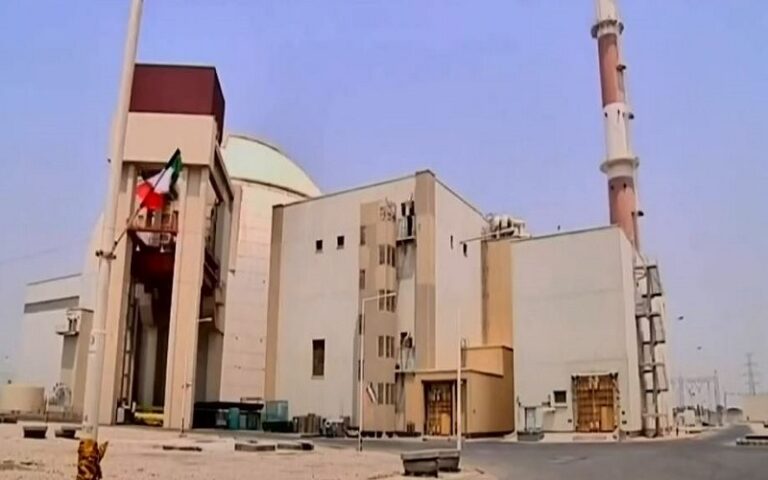
As long and daily power outages return to cities across Iran with the onset of summer, former foreign minister of the Iranian regime, Mohammad Javad Zarif, stated that by 2021, Iran had incurred at least one trillion dollars in costs and damages due to investments in nuclear energy.
It is important to note that this figure was stated by a regime official, and the actual amount is likely much higher.
For the past three decades, Iranian regime officials have consistently claimed that their goal in building nuclear power plants is the peaceful use of nuclear energy, including electricity generation. However, according to the Ministry of Energy, nuclear power has so far accounted for only 1.1% of total electricity production in Iran.
Iran’s Nuclear Power Dream: From Fantasy to RealityMeanwhile, officials from the Ministry of Energy have projected that Iran’s electricity shortage will soon rise from 25,000 megawatts to 30,000 megawatts, leading to longer daily power outages for households and various industries. Majid Dabirian, a member of the syndicate of power production companies, previously estimated the cost of building a 10,000-megawatt power plant at around 5 billion euros. This means that to achieve an ideal state where power production exceeds consumption, a budget of at least 15 billion euros would be required. Additionally, considering the urgent need for investment in fossil fuel sources such as gas and diesel to supply new power plants, all of Iran’s energy sector problems could be resolved with an expenditure of at most 50 billion euros. In conclusion, with the massive one trillion-dollar expenditure and losses in the nuclear sector, as stated by Mohammad Javad Zarif, regime officials could have fully renovated Iran’s energy infrastructure more than 20 times over. On the other hand, the cost of constructing a 1,000-megawatt nuclear power plant is roughly equal to that of an 8,000-megawatt hybrid plant (fossil fuel and solar). According to many experts, considering Iran’s possession of some of the world’s largest oil and gas reserves, shifting toward nuclear energy for electricity production appears illogical. The state–run media outlet Chandsanieh reported that in 2020 alone, over 17.3 billion cubic meters of gas were burned off via flaring instead of being utilized. Meanwhile, the country with the second-largest natural gas reserves in the world is unable to produce sufficient electricity. Despite this, the Iranian regime—due to the belligerent policies of its supreme leader Ali Khamenei and the insistence on uranium enrichment, which triggered Western reactions and extensive economic sanctions over suspicions of nuclear weapons development—completely lost the opportunity to modernize the country’s energy infrastructure. Over the past week, large numbers of citizens along with business owners and industrial workers in Iran—including bakers and those working in Tehran’s steel market—held protest gatherings against recurring power outages, which have at times lasted up to 12 hours a day. Fatemeh Mohajerani, the government spokesperson, announced on Wednesday, May 7, that due to worsening power shortages, the working hours of government offices would change. She wrote on X that starting Saturday, May 10, government offices will operate from 6 a.m. to 1 p.m. This decision means employees living on the outskirts of the capital—due to high rent prices—will have to begin their commute around 4 a.m. Meanwhile, Mostafa Rajabi Mashhadi, managing director of Tavanir Electric company, the main electricity provider, claimed that the electricity of 700 banks in Tehran had been cut off due to their high consumption. Ali Akbari, the regime’s energy minister, also stated on Wednesday that electricity prices would “increase progressively” according to a law passed by the Majlis (parliament), justifying it as a measure to “incentivize high-consumption users to reduce and optimize their electricity use.” This is despite international statistics showing that electricity consumption in Iran is less than half that of many European and Persian Gulf countries.
Rising Unemployment Rate in Iran in Winter 2025
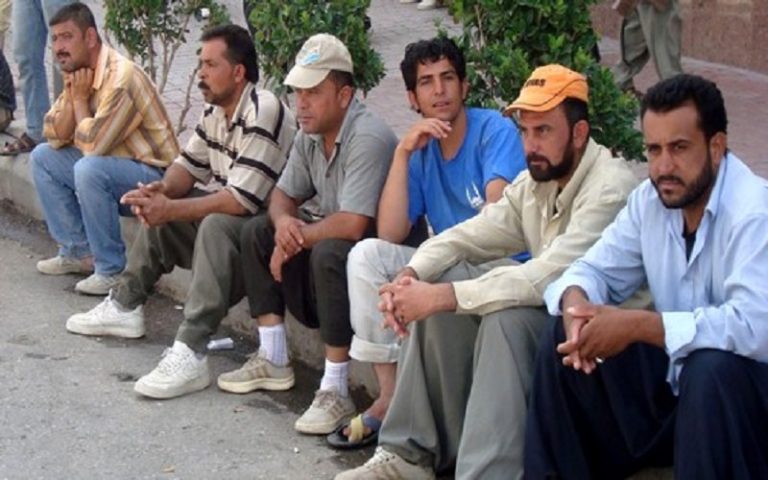
The Iranian regime’s Statistical Center reported a rise in the unemployment rate in winter 2025 compared to autumn 2024. Critics, however, argue that due to flaws in the data collection methodology, the actual unemployment rate is significantly higher than the figures published by regime-affiliated data centers.
According to the regime-affiliated ISNA news agency and based on the report from the Statistical Center, by the end of winter 2025, the unemployment rate among individuals aged 15 and older reached 7.8%, reflecting a 0.6% increase compared to the previous season.
Iran: Unemployment Rate Among University Graduates Higher Than National AverageAccording to the published data, the unemployment rate rose in both male and female demographics. Among men, it increased from 5.9% in autumn 2024 to 6.5% in the past winter. Among women, it rose from 13.7% to 14.2% by the end of winter 2025. Unemployment also increased in both urban and rural areas. In urban regions, the rate rose from 7.8% in autumn to 8% in winter, while in rural areas it increased from 5.2% in autumn 2024 to 6.9% in the past winter. This is while, during the same period in the previous year (2023), the unemployment rate among individuals aged 15 and older across the country was 8.6%, with 7.1% for men, 15.6% for women, 9% in urban areas, and 7.1% in rural areas. The announcement of rising unemployment during winter comes amid serious criticisms of the regime’s data collection methods. These flaws suggest that the actual unemployment rate is higher than what government data centers report. For example, in the surveys, random field questions are asked about individuals’ income, and they may state that they have income. However, their workplace or job type is not questioned. The presence of any income is considered proof of employment, which is one of the flaws that skews the measurement of employment and unemployment rates. Moreover, over 40% of the unemployed in the country are university graduates. This indicates that unemployment is especially high among graduates and youth, with no significant job creation in these segments. Furthermore, based on International Labour Organization (ILO) definitions, anyone who works two hours per week is considered employed. However, in Iran, due to significantly lower wages compared to other countries, this definition is not practical. In Iran, even individuals who work 192 hours a month—equivalent to a full-time shift—are often unable to meet basic living needs.
Mandatory Power Outages in Iran’s Government Offices
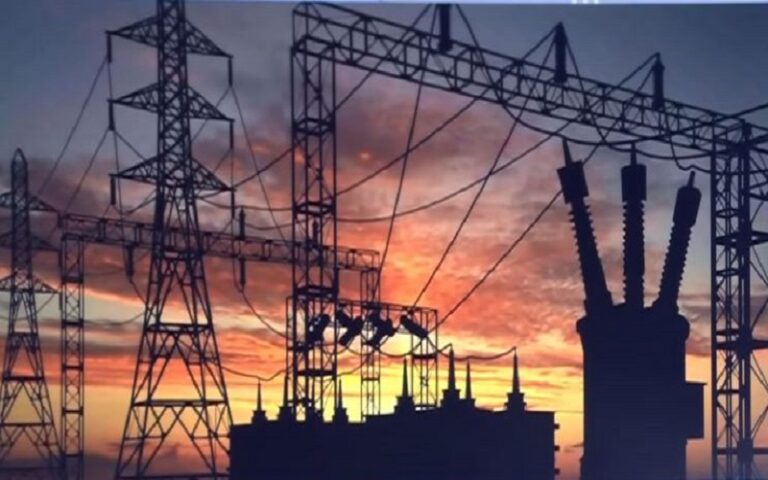
According to Fatemeh Mohajerani, spokesperson for the government of Iran’s regime, the decision to shut down cooling systems in government offices has been made in order to “reduce electricity consumption” and “save energy.”
The government spokesperson announced a new directive requiring all cooling systems in government offices and public institutions to be turned off after office hours (1:00 PM).
Mohajerani stated on Saturday, May 10, that the decision to shut off cooling systems in government offices was made to “reduce electricity consumption” and “conserve energy.”
Power Outages Expose Iran’s Infrastructure Collapse and Trigger Nationwide ProtestsAccording to Mohajerani, in addition to the mandatory shutdown after 1:00 PM, all executive bodies are required to set their cooling systems to 27°C and reduce their electricity consumption by at least 30% during office hours. The oil minister of Iran’s regime also admitted, “The country’s electricity production capacity is limited, and we must manage consumption.” Additionally, according to a directive issued by the Ministry of Interior and communicated to government offices on May 7, the working hours for all government offices, public and non-governmental institutions, banks, insurance companies, and municipalities will be from 6:00 AM to 1:00 PM starting Saturday, May 10, until September 22. These decisions come as, over the past years, Iran’s regime has failed to expand electricity production capacity despite numerous warnings about aging infrastructure, poor energy policy, and the sharp increase in residential and industrial consumption. Furthermore, by allocating a significant portion of energy resources to industries affiliated with military and security institutions, the regime has placed even greater strain on the national power grid.
Army Commander of Iranian Regime: The Situation Is Very Sensitive, We Are on High Alert
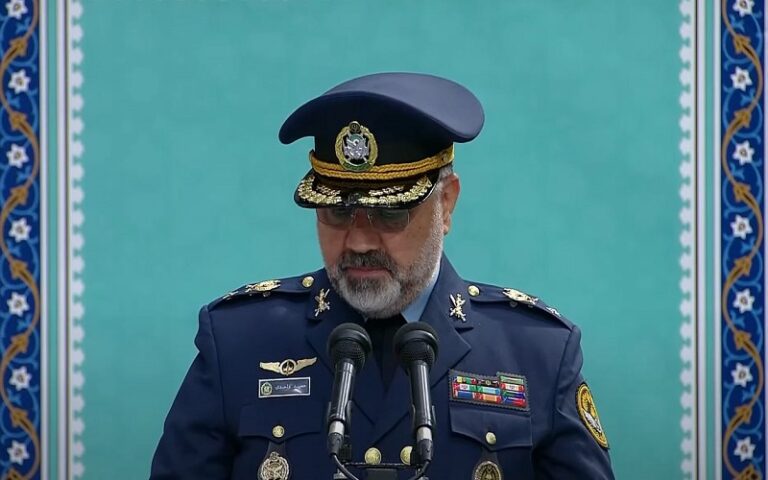
Hamid Vahedi, the commander of the Air Force of the Iranian regime’s army, announced on Thursday, May 8, that all army fighter jets have been equipped with domestically produced ammunition, equipment, and long-range missiles and are on high alert.
This senior military official, speaking at a ceremony honoring families of fallen Air Force personnel, stressed that “we are in a very sensitive period,” adding: “Our country’s doctrine is defensive, but we will respond forcefully to any attack.”
These statements come as top Israeli officials have escalated their threats against Iran’s regime.
Just hours before Vahedi’s remarks, Israel’s defense minister directly threatened Iran’s regime.
At the same time, U.S. President Donald Trump said regarding negotiations with Iran that he is trying to resolve the issue of Iran’s regime without the need for bombing.
The fourth round of negotiations between Iran’s regime and the United States was suspended last week, casting doubt over the future of the talks.
On May 7, Donald Trump stated in an interview that the United States seeks the removal of the regime’s nuclear centrifuges.
He further emphasized that Iranian regime officials must either dismantle these facilities through negotiation or face their destruction by force. “The choice is theirs,” he said.
New NCRI Intelligence Reveals Iran’s Nuclear Weapons Program Is Advancing Rapidly
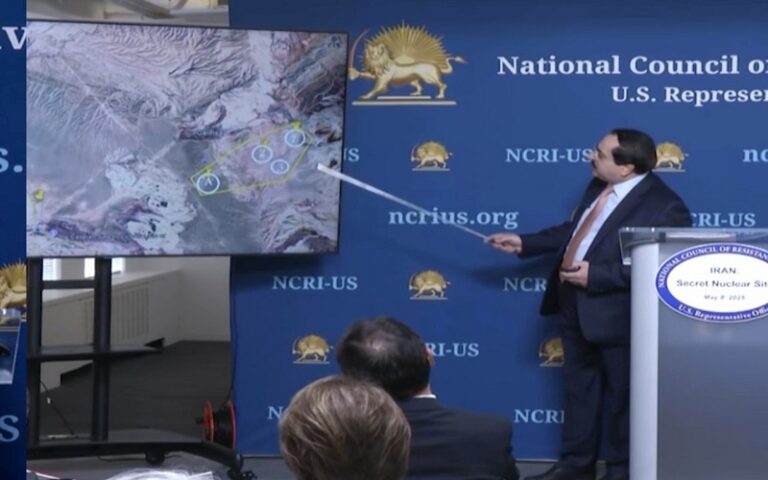
Washington, D.C. – In a major revelation, the National Council of Resistance of Iran (NCRI) unveiled new intelligence exposing a dangerous escalation in Tehran’s nuclear weapons efforts. Presented at a conference by the NCRI’s U.S. Office, the findings—sourced from the People’s Mojahedin Organization of Iran (PMOI/MEK) network inside Iran—confirm that the Iranian regime’s nuclear weapons program has never ceased and is now aggressively advancing.
According to Alireza Jafarzadeh, Deputy Director of the NCRI’s U.S. Office, Tehran is developing advanced “boosted” nuclear weapons capable of being mounted on ballistic missiles with ranges exceeding 3,000 kilometers. Even more alarming, he revealed, is the regime’s simultaneous pursuit of technology to build a hydrogen bomb.
At the heart of this development is tritium, a rare radioactive isotope used in both boosting atomic bombs and enabling hydrogen bomb creation. “The extraction and utilization of tritium give the regime a parallel path to building a hydrogen bomb,” Jafarzadeh said. Soona Samsami, NCRI U.S. Office Director, emphasized that the Organization for Defensive Innovation and Research (SPND), controlled by the IRGC, has been secretly recruiting nuclear fusion and tritium experts from Iran’s Atomic Energy Organization since 2013.
SPND has imposed a strict secrecy policy, instructing affiliated universities and scientists not to publish or share any research related to fusion or tritium, further pointing to the military and illicit nature of the program.
Underground Sites and Front Companies
Central to these revelations is the SPND-controlled Eyvanaki site—codenamed “Rangin Kaman.” Located on 2,500 acres, the highly secured facility was overseen by Mohsen Fakhrizadeh, the assassinated architect of Iran’s nuclear program. The site includes extensive underground structures and is shielded by IRGC-operated radar and missile defense systems. Locally, it masquerades as a paint factory. To mask its operations and procure critical materials, the regime operates a network of front companies. Chief among them is Petsar, a firm outwardly linked to the petrochemical industry but founded by IRGC Brigadier General Nasser Maleki, a figure under UN sanctions for nuclear proliferation activities. Petsar’s subsidiary, Diba Energy Sina Company, established in 2011, runs the Eyvanaki facility under the cover of producing chemical solvents.A Program That Never Halted
Despite international scrutiny, the Iranian regime has steadily advanced its nuclear weapons ambitions. “The program was never stopped,” Jafarzadeh asserted. “At certain points, it even accelerated.” He explained that the original Amad Plan was replaced with a more advanced initiative, clearly aimed at producing nuclear arms. The most recent intelligence uncovers Tehran’s strategy of developing boosted warheads and moving rapidly toward more destructive thermonuclear devices. According to Samsami, “SPND’s work demonstrates a qualitative leap in the regime’s nuclear weapons drive, not just quantitative progress.”Domestic Repression Tied to Nuclear Ambitions
The NCRI stressed that Tehran’s nuclear drive is tied to internal repression and regime survival. “The program has no peaceful purpose,” Samsami stated, noting that the regime has spent over $2 trillion on its nuclear ambitions while neglecting vital sectors like oil and gas. “This is about staying in power,” she said, referencing the regime’s increasing executions—over 1,200 under its new president Masoud Pezeshkian—and persecution of political prisoners. “The bomb is a shield against both the people and the international community,” Samsami said. “It’s the mullahs’ ultimate guarantee of staying in power.”Call for International Action
The NCRI emphasized that only firm international action can stop the regime. “All of the regime’s nuclear sites must be shut down,” Jafarzadeh said. “The IAEA should monitor their closure—not just inspect.” Samsami reiterated, “No enrichment capability must be allowed. Snapback sanctions must be triggered immediately before time runs out.” The NCRI underscored that the most effective and sustainable solution is empowering the Iranian people and their organized resistance. “There’s no need for foreign military intervention,” Samsami said. “What’s needed is recognition of the Iranian people’s right to resist the IRGC.” The NCRI’s track record of nuclear disclosures, including the 2002 Natanz revelations that led to IAEA inspections, demonstrates their credibility. “Every significant nuclear revelation has come from the Resistance,” Samsami emphasized. “And once again, we’re warning the world.” She concluded that a democratic, secular Iran is the only real safeguard against nuclear proliferation and regional instability. “The world must support the Iranian people and their resistance movement to ensure peace, security, and a non-nuclear future.”Iran: Death Sentence Issued for Political Prisoner Peyman Farahavar
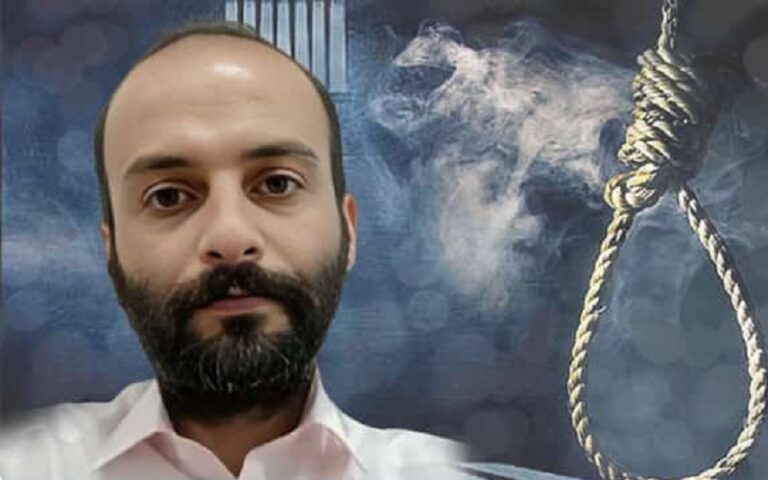
Iran’s regime has sentenced political prisoner Peyman Farahavar to death. This sentence was issued due to his poems, writings, and positions in support of farmers, his protest against environmental destruction, widespread construction of luxury villas, and harmful economic policies in Gilan Province.
Iran Human Rights Society reported on Tuesday, May 6, that political prisoner Peyman Farahavar, a poet from Gilan, was sentenced to death for the charges of “rebellion” (baghi) and “enmity against God” (moharebeh), and to three months of imprisonment for “propaganda against the regime.” This verdict was issued on May 1 in a court session presided over by Judge Ahmad Darvish-Goftar, without the presence of a defense attorney.
Political prisoner Peyman Farahavar, who has a ten-year-old child, was arrested by security forces in August 2024 and, after a period of interrogation by the intelligence department, was transferred to Lakan Prison. He had previously been arrested and sentenced for his activism.
This political prisoner suffers from severe health problems, including complications from gallbladder surgery, lymphatic sensitivity, and intense pain in the surgical area. Despite his critical condition, prison authorities have so far refused to transfer him to medical centers.
Farahavar also suffered internal bleeding during interrogations and remains deprived of proper medical treatment.
He was subjected to severe psychological and physical torture during his detention. Arrested by the IRGC Intelligence on August 17, 2024, he endured a week of intense torture, to the point of losing consciousness and remaining unconscious for 24 hours.
This case is yet another alarming example of death sentences issued against civil and political activists in Iran, without observing the principles of a fair trial and with gross violations of the defendants’ rights.
Manouchehr Fallah Sentenced to Death on the Pretext of Causing Damage to the Rasht Courthouse BuildingJudge Ahmad Darvish-Goftar is the head of the Revolutionary Court in Rasht and previously headed the first branch of this court. He has presided over several cases, including those of Manouchehr Fallah and Sharifeh Mohammadi, both of whom were sentenced to death for “rebellion.” Darvish-Goftar also sentenced political prisoner Hamzeh Darvish to 14 years in prison. According to reports, after Sharifeh Mohammadi’s death sentence was overturned by the Supreme Court, her case was referred to the second branch of the Revolutionary Court in Rasht, where the presiding judge is the son of Ahmad Darvish-Goftar.
Power Outages Expose Iran’s Infrastructure Collapse and Trigger Nationwide Protests
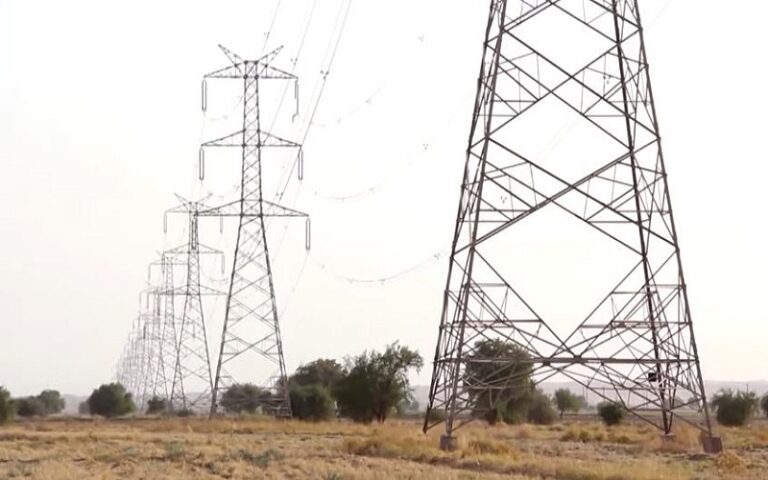
In recent days, widespread and repeated power outages, along with disruptions in water supply across various areas of Tehran Province, have been met with scattered yet notable public protests.
According to a report by the regime-affiliated website Baharnews, within one year—from September 2023 to September 2024—electricity demand in the country increased by around 7,000 megawatts. Meanwhile, production capacity only rose by 2,235 megawatts—a figure that clearly reflects a deep gap between supply and demand in this vital sector.
The same report notes that addressing the 20,000-megawatt electricity shortfall will require massive investments, including:
$10 billion to offset the production shortfall,
$20 billion for the development of power plants and electricity supply infrastructure,
$35 billion for modernization of the transmission and distribution network,
and a total of $100 billion to eliminate the overall energy imbalance in the country.
These figures clearly show that Iran’s energy crisis stems not from a lack of resources but from chronic mismanagement, widespread corruption, and systematic neglect of vital infrastructure development.
In response to the current critical situation, nationwide protest calls have been issued.
On Tuesday, May 6, bakers in Tehran and other cities announced that they would halt their activities for three days (May 6, 7, and 8), and would gather at 11:00 a.m. in front of county governor’s offices and provincial governorates.
Additionally, on Thursday, May 8, farmers across the country are planning to hold demonstrations. The exact timing of these protests has not yet been announced.
The disastrous electricity and water outage policies have placed immense pressure on families and lower-income groups. These measures, introduced in mid-spring, serve as a clear warning of even more severe conditions during the hotter months, particularly in August.
Power outages in Iran, especially in spring 2025, are not merely a technical issue or due to energy shortages; they are a concrete sign of managerial collapse, structural corruption, and governmental incompetence. The regime prioritizes its survival through repression, terrorism, and plunder rather than ensuring the welfare of the people.
The electricity crisis is being managed as if no responsible authority or prior planning exists. Outages occur without prior notice, and their official schedules contradict what is actually happening on the ground.
The blackouts are a direct result of widespread corruption at the highest levels of the regime. Billions of dollars in national revenue have been diverted from energy infrastructure investments to fund the IRGC (Islamic Revolutionary Guard Corps), missile programs, support for regional militias, and domestic repression.
Meanwhile, regime officials refuse to answer to the public. This complete disconnect between the ruling system and the people signals the collapse of the regime’s social legitimacy.
From students at the National University to shopkeepers in the city of Shahriar, all have participated in these protests. Power outages, like other crises (inflation, water scarcity, pollution, unemployment), have become a shared experience across all social classes. This convergence forms a concrete foundation for the emergence of a nationwide uprising.
Iranian Regime Found Liable for Torture of American Hostage in Lebanon

A U.S. federal court has found the Iranian regime liable for its role in the detention and torture of Amer Fakhoury, a Lebanese American citizen who was arrested in Lebanon in 2019. The ruling comes after nearly four years of legal pursuit by the Fakhoury family.
The Fakhoury family stated that the Iranian regime was involved in their father’s arrest through its proxy group, Hezbollah in Lebanon. This is the first time a U.S. court has officially recognized such a connection.
Amer Fakhoury, who once served in the army in southern Lebanon, was arrested during a trip to the country in September 2019 and faced serious charges. He returned to the U.S. in March 2020 after being acquitted by Lebanon’s Supreme Court but died in September of that year due to cancer and complications stemming from his detention.
The Fakhoury family expressed appreciation for the court’s decision, stating that the ruling could pave the way for legal action on behalf of other citizens who have faced pressure or detention in Lebanon.
They also called for sanctions against Lebanese officials whom they claim have collaborated with Hezbollah and the Iranian regime.
Hezbollah supporters have repeatedly engaged in violence and suppression of citizens in Lebanon over the past years.
Three years ago, Dima Sadek, a Lebanese Shiite journalist critical of Hezbollah, received threats of sexual assault and murder after condemning the attack on Salman Rushdie.
At the time, an unnamed Hezbollah official told Reuters that the group had no knowledge of the attack on Salman Rushdie by a man of Lebanese descent (Hadi Matar) and therefore could not comment.
Meanwhile, Hezbollah supporters on social media referred to the attack as a “sacred stabbing” and described the assailant as “brave” and a “hero.”
