Resistance Announces Interim Government After Khamenei’s Death, Drawing Global AttentionEarly Tuesday, the compound of the Islamic Republic of Iran Broadcasting (IRIB), the Iranian regime’s state broadcaster in Tehran, was targeted in an airstrike. Fighter jets also struck several locations in Tehran and Karaj. Precise details about the extent of damage and casualties have not yet been released. Reports indicate impacts at multiple sites. The Human Rights Activists News Agency reported that part of the wall of Evin Prison in Tehran was destroyed in a missile strike. The area around Imam Hossein University, affiliated with the Islamic Revolutionary Guard Corps (IRGC), and the prison wall were targeted. The organization warned that the condition of the prisoners is unknown and their lives are in immediate danger. This incident has intensified human rights concerns amid the regional war. In another development, a political activist from Abdanan reported that nearly all detainees from the January 2026 uprising in that city have been released. Only Ahmad Alizadeh remains in custody. This news was published amid the escalation of the regional war. The US Central Command (CENTCOM) told Fox News that the Strait of Hormuz is completely open. It emphasized that the Iranian regime is not conducting any patrols and that there are no signs of minelaying. CENTCOM stated that navigation continues and the strait is under control. These remarks were made amid concerns about disruptions to global energy supplies.
Day Four of the War; Uncertainty Over Iran’s Regime Next Leader
Developments in the early hours of Tuesday, March 3, 2026, pushed the region into a new phase of regional war. A series of air, missile, and drone strikes were reported in Iran and several Middle Eastern countries. At the same time, US, Israeli, and Iranian regime officials announced their official positions. These events are unfolding as the debate over succession to the supreme leadership in Tehran has also intensified.
US President Donald Trump, in an interview with NewsNation, stated that a response to the attack on the US embassy in Riyadh and the killing of US military personnel would be delivered soon. He emphasized that the response would be decisive. At the same time, media outlets affiliated with the Iranian regime reported extensive airstrikes in Tehran.\
Iran’s ‘No to Executions Tuesdays’ Campaign Enters 110th Week
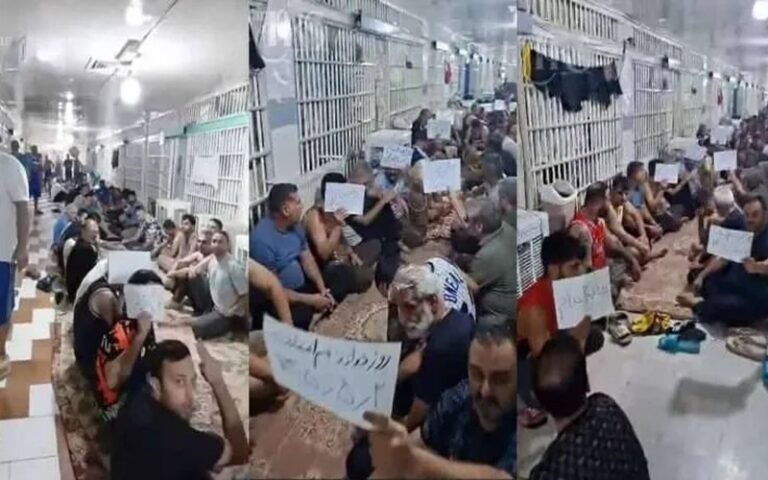
On Tuesday, March 3, 2026, the “No to Executions Tuesdays” campaign entered its 110th week. On this occasion, prisoners participating in the campaign issued a statement referring to the killing of Ali Khamenei, the Iranian regime’s supreme leader, and described the death of the dictator of Iran as the beginning of the end of the abhorrent system of Velayat-e Faqih (absolute clerical rule) and the gateway to democracy.
In their statement, the prisoners also emphasized: The “No to Executions Tuesdays” campaign has once again drawn the attention of the international community and human rights organizations to the situation of prisoners, especially political prisoners sentenced to death, and calls for their release. The disgraceful and crime-filled record of this regime must be referred to the United Nations Security Council.
UN Rights Chief Warns of Execution Risk for Iranian ProtestersThe full text of the statement by the prisoners of the “No to Executions Tuesdays” campaign The continuation of the “No to Executions Tuesdays” campaign in its 110th week across 56 different prisons The “No to Executions Tuesdays” campaign considers the death of Iran’s dictator Ali Khamenei, responsible for the killing and execution of tens of thousands of Iranian people, as the beginning of the end of the abhorrent system of Velayat-e Faqih and the gateway to democracy. Under the current harsh wartime conditions imposed on our country by the authoritarian regime, we prisoners consider ourselves alongside the general public and share in their pain and suffering. We believe that despite all the ups and downs, Iran is ultimately moving toward a bright future and will never return to the past or to dictatorial systems. Iran’s freedom will be achieved by the people themselves, through their unity and solidarity, not by any foreign force. The number of executions in the past 13 days has surpassed 65. In recent days, a death sentence has also been issued in Tehran for another detainee from the January 2026 uprising, Mohammadreza Majidi Asl, on the charge of “moharebeh” (“waging war against God,” a charge used by the Iranian regime). Two Kurdish prisoners from the 2022 uprising, Mohammad Faraji and Raouf Sheikh Maroufi, have also been sentenced to death. The death sentence of another political prisoner, Peyman Farahavar, held in Lakan Prison in Rasht, northern Iran, has been upheld for the second time by the regime’s Supreme Court, placing his life in greater danger than ever before. At the same time, many other detainees are under pressure and torture and face the risk of inhumane death sentences and heavy punishments. The “No to Executions Tuesdays” campaign has once again drawn the attention of the international community and human rights organizations to the situation of prisoners, especially political prisoners sentenced to death, and calls for their release. The disgraceful and crime-filled record of this regime must be referred to the United Nations Security Council. In its 110th week, prisoners participating in the “No to Executions Tuesdays” campaign in 56 prisons across the country are on hunger strike.
Resistance Announces Interim Government After Khamenei’s Death, Drawing Global Attention
In days when Iranian society, following the death of regime supreme leader Ali Khamenei, has entered a sensitive and turbulent phase and religious and hereditary despotism is breathing its last,
Mrs. Maryam Rajavi, the President-elect of the National Council of Resistance of Iran (NCRI), announced in a message:
The death of Khamenei will mark the end of the absolute religious dictatorship of Velayat-e Faqih — the end of the mullahs’ regime, the end of dictatorship in any form, under any name, and the end of lifelong theocracies and monarchies alike.
This official announcement, which emphasizes the implementation of a 10-point plan to establish a democratic republic based on the people’s vote, separation of religion and state, gender equality, and commitment to human rights, received widespread coverage in international media.
Announcement of a Provisional Government by the National Council of Resistance of IranThe Spanish news agency EFE wrote that the interim government under Rajavi’s leadership will implement a program to achieve a non-nuclear Iran free of weapons of mass destruction within the framework of peace and international cooperation. It rejects religious rule and emphasizes popular sovereignty in a republic based on universal suffrage and pluralism. Fox News reported that the interim government seeks to transform the country from a dictatorship into a democratic republic, and that the 10-point plan outlines the necessary steps to bring freedom to Iran. Newsweek Romania also stated that the government will operate for six months to transfer sovereignty to the people and establish a democratic republic. Lebanon’s An-Nahar newspaper also reported on the formation of an interim government aimed at transferring sovereignty to the Iranian people and published the provisions of the 10-point plan. At the political level, reactions were also notable. Charles Michel, former President of the European Council and former Prime Minister of Belgium, stated: “Let us be on the right side of history. Let us fully stand with the people of Iran. A new era has arrived. Only the people have the legitimacy to shape their future and build a free and democratic Republic of Iran. From dictatorships to freedom, the choice is with the people.” Alejo Vidal-Quadras, former Vice President of the European Parliament, also emphasized that the National Council of Resistance of Iran has formed an interim government based on the 10-point plan… Iranians want a democratic republic founded on the separation of religion and state. Thus, the announcement of an interim government to transfer sovereignty to the people is regarded as the beginning of a new phase and the opening of a new chapter toward the establishment of a democratic republic in Iran.
UN Rights Chief Warns of Execution Risk for Iranian Protesters
Speaking at a session of the UN Human Rights Council in Geneva, Switzerland, the UN High Commissioner for Human Rights called for the immediate suspension of executions in Iran and warned that following the recent protests, a growing number of Iranians are at risk of execution.
Volker Türk, the UN High Commissioner for Human Rights, said on Friday, February 27, that “I am horrified by reports that at least eight people, including two children, have been sentenced to death in connection with the protests.”
Türk added that it appears 30 others may also be at risk of receiving similar death sentences.
According to information compiled by Amnesty International, at least 30 people are at risk of the death penalty in connection with the protests that took place in January.
Human Rights Watch Warns About Tsunami Of Arrests And Enforced Disappearances In IranEight of these individuals, who were sentenced to death in February within just weeks of their arrest, are: 18-year-old Saleh Mohammadi, 19-year-old Mohammad Amin Biglari, Ali Fahim, Abolfazl Salehi Siavoshani, Amirhossein Hatami, Shahin Vahedparast Kolour, Shahab Zahedi, and Yaser Rajaeifar. At least 22 others, including two 17-year-old teenagers, are currently undergoing legal proceedings or awaiting trial. Amnesty International stated that these individuals have faced confessions extracted under torture and other serious violations of fair trial rights, including being denied access to legal counsel during the investigation phase and the rejection of independent lawyers chosen by their families. The human rights organization called for the immediate halt of executions and the annulment of the related convictions. Many other detainees from the January protests are facing charges that could result in heavy sentences, including the death penalty, and reports indicate that arrests related to these cases are still continuing in various parts of the country. According to human rights reports, tens of thousands of people have been arrested in recent weeks, and some independent sources estimate the actual number of summonses and arrests to be close to 100,000 or even higher. A significant portion of these individuals are teenagers, young people, and citizens under the age of 30—a generation that often has no prior experience dealing with security interrogations or expedited court proceedings. This trend has heightened concerns about the widespread use of harsh judicial sentences as a tool to suppress popular protests, and human rights bodies have once again warned about violations of fair trial rights and the danger of carrying out death sentences against protesters.
With the Launch of “Pro” SIM Card Sales, Tiered Internet Access Becomes Official in Iran
While millions of citizens in Iran remain under pressure from internet filtering, shutdowns, and disruptions, reports indicate the official sale of “Pro” SIM cards offering unfiltered internet access. This expensive and limited service effectively transforms free access from a public right into a special privilege for a select group.
The state-run Shargh newspaper reported that the service, branded as “Pro Internet,” is being offered through one of the country’s major telecom operators. In its advertisements, it is described as international internet access without filtering or disconnection, available to a limited group.
The story began with an image circulating on social media—an advertisement bearing the explicit message: “Goodbye to VPNs and access to free and unfiltered internet for colleagues holding a business license.”
Iran Loses 1.56 million Dollars Every Hour Due To Internet ShutdownsThe advertisement introduces international internet that is activated directly on the SIM card without filtering or disruption and is currently available only through one of the country’s major operators. Shargh reported that after following up as a customer, the operator’s marketing department sent a product introduction file along with a draft service request letter. This indicates that the offering of Pro Internet is not a black-market initiative but rather an official and organized process. According to published information, access to this service is limited to the first 500 applicants. The activation fee has been announced as 21,780,000 rials (approximately 14 dollars), a figure that effectively places this type of access beyond the reach of a large portion of society from the outset. However, the discrimination does not end there. Under the details of the service, regular internet traffic is calculated at 80,000 rials per gigabyte, while access to filtered websites and platforms—including social media networks and widely used global services—costs 400,000 rials per gigabyte. This means that the same filtering long imposed on the public under the pretext of security and cultural considerations has now been turned into a paid premium service. Shargh wrote that its reporter’s investigation shows the company providing Pro Internet is a subsidiary of one of the country’s major telecom operators and offers the service entirely officially, with a legal identity verification process. The product catalog emphasizes that Pro Internet is designed to support commercial and international activities and is presented as a specialized solution for organizations, companies, guilds, and cooperatives. The catalog lists features such as stability even under special conditions and international internet disruptions, full access to global resources, use of a sanctions-bypass service, activation without the need for additional software, availability on both personal and corporate SIM cards, and integrated management of organizational SIM cards.
Iran Ranks 95th In Global Internet Quality; Higher Costs, Lower SpeedsIt also explains the registration process through a dedicated platform and identity verification via a unified gateway—facilities that effectively deepen the divide between ordinary and privileged users. This type of user segregation and tiered access is what critics have long referred to as “tiered internet.” In this model, specific groups, with authorization from state institutions, have access to a level of internet that is blocked or restricted for the general public. The idea of tiered internet access was first raised during the administration of Hassan Rouhani, a former president of Iran’s regime. During that period, the Ministry of Information and Communications Technology provided unfiltered internet to certain journalists close to the government, signaling the early formation of this approach. In November 2022, the Special Digital Economy Task Force under the government of former Iranian regime president Ebrahim Raisi approved regulations promising unfiltered internet access to freelancers approved by the authorities. Critics viewed the move as another step toward formalizing a multi-tiered internet structure.
Contradiction with the government’s official promises
The official entry of a major telecom operator into providing tiered internet under the name Pro Internet comes despite repeated statements by officials in the government of Iranian regime president Masoud Pezeshkian that they do not believe in tiered internet and that internet access should be available to all people. On July 18, 2025, Fatemeh Mohajerani, spokesperson for Pezeshkian’s government, rejected the idea of tiered internet and said: “The government’s approach is free internet, but in times of crisis, special facilities must be given to those with special needs.” However, the experience of special internet access during the 12-day war, unfiltered access in some universities, the activation of “white internet” for specific groups, and now the official sale of Pro SIM cards indicate that this policy is effectively becoming institutionalized. In January of this year, Iran faced one of the longest periods of widespread internet shutdowns and disruptions in its history. The blackout began on January 8 and, according to reports, lasted for more than one month. This communication blackout coincided with a wave of repression and widespread reports of the street killing of protesters. The blackout, along with the disruption of other communication channels, also paralyzed a large portion of the digital economy. Under such conditions, the internet in Iran is no longer merely a tool for communication and access to information; it has become a new dividing line among citizens, determining who remains connected at all times and who, in critical moments, is left behind the wall of filtering and disconnection.Iranian Regime Forms Temporary Three-Member Council After Death of Ali Khamenei
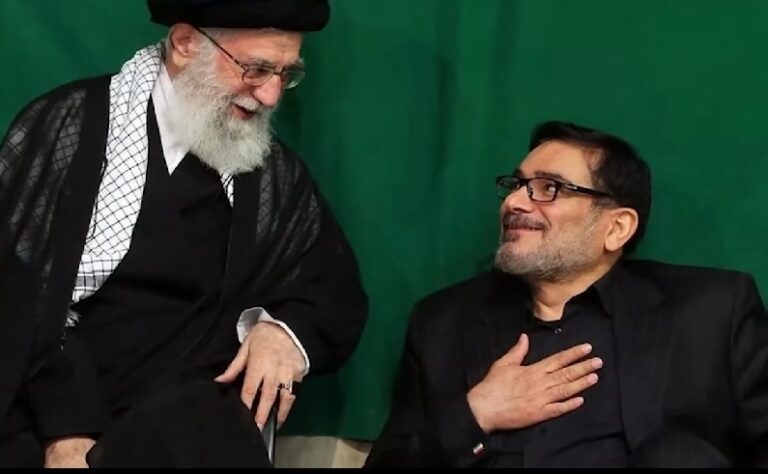
The Iranian regime’s state television Shabakeye Khabar officially announced and confirmed in the early hours of Sunday the killing of Ali Khamenei, the regime’s supreme leader; news that had been preceded hours earlier by numerous reports of explosions and missile attacks in various parts of the country.
Following the killing of Hossein Pakpour, commander-in-chief of the Islamic Revolutionary Guard Corps (IRGC), the state-run Khabar Online website reported the appointment of Ahmad Vahidi as the new IRGC commander. Arab media outlets also reported that the Iraqi government declared three days of public mourning. Former US Secretary of State Mike Pompeo stated that this action was the first step toward a future in which “an evil dictatorship” cannot hold the world hostage, emphasizing that if the mission is not completed, the problem will not be resolved.
US–Israel Carry Out Major Strike Against Iranian RegimeThe state-run Shargh newspaper reported that Mohammad Bagheri, chief of staff of the Armed Forces; Hossein Pakpour, commander-in-chief of the IRGC; Ali Shamkhani, a senior security official and former secretary of the Supreme National Security Council; and the defense minister were killed in the attacks. Mohammad Baseri, a senior official at the Ministry of Intelligence, also died in Tehran. Reuters, citing Iranian state media, reported that Khamenei’s daughter, granddaughter, daughter-in-law, and son-in-law were also killed in U.S. and Israeli airstrikes. Ali Larijani, an adviser to the Iranian regime’s supreme leader and former speaker of parliament, stated, “You burned our hearts,” emphasizing that an enemy attack does not mean the matter is over. He said the enemy is deluded if it thinks assassinating commanders can destabilize the ruling system and added that now is not the time to settle internal disputes. Larijani announced the imminent formation of a temporary leadership council. Mohammad Bagher Ghalibaf, speaker of the regime’s Majlis (parliament), also said that the country’s military and administrative structure is no longer centered on individuals and that planning has been done for all scenarios, warning that they must avoid playing on the enemy’s field. The Iranian regime’s foreign ministry announced it would use all its capabilities to counter what it called “enemy mischief.” The regime’s Supreme National Security Council said in a statement that the operation occurred during negotiations and that the armed forces had begun a crushing response. The head of the judiciary stated that the United States cannot undermine the will of the ruling system through such actions. The cabinet declared 40 days of public mourning and seven days of nationwide closure, and the Supreme National Security Council announced the closure of all schools nationwide until further notice. The IRGC stated it would stand firm against internal and external conspiracies and that the armed forces and the Basij militia would continue Khamenei’s path. In statement number six, the IRGC announced that the sixth wave of Operation “True Promise 4” was carried out with extensive missile and drone attacks, targeting 27 U.S. bases in the region, along with Tel Nof airbase, the Israeli General Staff headquarters in HaKirya, and a defense industries complex in Tel Aviv. Reuters, citing the IRGC, reported that the most intense offensive operation against Israel and U.S. bases is forthcoming. Telegram sources reported drone attacks by the regime’s proxy forces in Erbil, Iraq. In response, U.S. Central Command (CENTCOM) announced it had successfully defended against hundreds of Iranian missile and drone attacks, and the Israeli military reported the start of a new wave of strikes against Iran’s ballistic missiles and air defense systems.
Attacks on other countries
At the same time, reports emerged of a column of smoke at Dubai airport and successive explosions in Kuwait. Explosions and air defense activity were also reported in northeastern Tehran. Reuters reported an airstrike on a sports hall in Lamerd, southern Iran, which left 15 dead. Al Arabiya reported that the IRGC had closed the Strait of Hormuz and warned passing vessels to leave the area immediately; a move that coincided with a recommendation from the U.S. Department of Transportation advising commercial ships to avoid transit through the Persian Gulf. An emergency meeting of the United Nations Security Council was held regarding the situation in Iran. UN Secretary-General António Guterres condemned the escalation of military tensions in the Middle East and called for the immediate return of all parties to the negotiating table. The U.S. representative stated that the operation was aimed at eliminating Iran’s missile capabilities and preventing a nuclear threat and criticized the presence of the Iranian regime in the council. Representatives of France and the United Kingdom also warned against further escalation and condemned Iran’s attacks on regional countries. China’s representative expressed deep concern over the U.S. and Israeli attacks and called for an immediate ceasefire. The German chancellor stated that the United States had sought a negotiated solution for weeks but that Iran had not agreed. In contrast, Iran’s representative to the United Nations emphasized that as long as aggression continues, Iran will respond decisively.The End of an Era: Khamenei’s Death Triggers NCRI Call for a Provisional Government
The death of Iran’s Supreme Leader Ali Khamenei marks a definitive turning point in the nation’s political trajectory. Maryam Rajavi, President-elect of the National Council of Resistance of Iran (NCRI), characterized the event as the death of religious tyranny and the end of the Velayat-e Faqih regime. Seizing upon this historic vacuum, the NCRI has moved swiftly to announce the formation of a provisional government, aiming to transition the country toward a democratic republic.
The Death of Khamenei Is the Death of Religious Despotism and the End of the Velayat-e Faqih Regime
The Roadmap for a Provisional Government
The NCRI’s blueprint for the immediate post-Khamenei era relies heavily on its established Ten-Point Plan for transferring sovereignty to the Iranian populace. Rajavi has declared that the provisional government, once established on Iranian territory, is obligated to hold free and fair elections within a six-month window. These elections are designed to form a National Legislative and Constituent Assembly. The mandate of this newly formed Assembly will be extensive. It is tasked with drafting a new constitution, defining the parameters of the new republican system, and legislating the administration of current affairs. Crucially, the Assembly will designate a new government to assume responsibility after the six-month provisional government resigns. In her address, Rajavi emphasized that the NCRI and the provisional government are not seeking permanent power, but are acting as a conduit to transfer sovereignty back to the Iranian people. To manage the immediate domestic situation, Rajavi called upon a wide swath of civil society—including students, workers, nurses, teachers, and young entrepreneurs—to work alongside the National Liberation Army to safeguard public health, safety, and security. She issued a direct appeal to the patriotic personnel within the traditional army to stand with the people, while simultaneously demanding that the Islamic Revolutionary Guard Corps (IRGC) and other regime preservation forces lay down their weapons and surrender.Independence and Coalition Building
The NCRI positions itself as the most enduring democratic and independent coalition in Iran’s history. Mrs. Rajavi firmly rejected any need for foreign intervention in this transitional period, stating that the Iranian people write their own destiny. The coalition further clarified that it seeks neither foreign funds nor the presence of foreign military forces on Iranian soil. Instead, the leadership is calling for internal solidarity. Pointing to the National Solidarity Front plan introduced 24 years ago, Rajavi urged all political forces committed to overthrowing religious despotism and separating religion from the state to unite. She specifically warned against factions seeking to co-opt the democratic revolution, explicitly rejecting both the dictatorial Shah and the tyrannical mullahs, as well as the remnants of “monarchical fascism”.US–Israel Carry Out Major Strike Against Iranian Regime
A large-scale military confrontation erupted early Saturday as the United States and Israel launched coordinated strikes against key installations and leadership targets associated with the Iranian regime. The operation, described by Israeli officials as pre-emptive and by Donald Trump as “major combat operations,” quickly expanded into a broader regional confrontation after the regime responded with missile and drone attacks across the Middle East.
Explosions were reported across Iran throughout the day, including in Tehran, Isfahan, Karaj, Tabriz, Kermanshah, and Lorestan. State media acknowledged that more than twenty provinces had been targeted, with additional blasts later reported in the southeastern port of Chabahar and in Hormozgan province. Witnesses described repeated waves of strikes hitting military facilities, missile infrastructure, and locations linked to the regime’s security apparatus.
Interim Government; Democratic Opposition Ready to Move Beyond Iran’s RegimeOne of the most consequential targets appears to have been the compound of Ali Khamenei in central Tehran. Satellite imagery cited by state-affiliated outlets reportedly showed the compound completely destroyed following the strikes. Smoke was observed rising from the area while officials declined to confirm the condition or location of the regime’s top leadership. Israeli officials said the operation had been planned for months and was designed to target sites where senior regime figures were believed to be gathered. Reports indicate that the strikes may also have targeted the residence of Masoud Pezeshkian, though the outcome of that strike remains unclear.
Senior leadership casualties reported
As the scale of the attacks became clearer, reports began to surface indicating significant casualties among senior military figures. Sources cited by Reuters said Iran’s Defense Minister Amir Nasirzadeh and a senior commander of the Islamic Revolutionary Guard Corps ground forces, Mohammad Pakpour, were believed to have been killed in the bombardment. Iranian officials have offered only limited confirmation. Foreign Minister Abbas Araghchi acknowledged that the regime may have lost “one or two commanders” but insisted that Khamenei was believed to be alive. Iranian authorities also imposed widespread internet restrictions, limiting the flow of information from inside the country as the situation continued to evolve. Meanwhile, Iranian state media reported that the national Red Crescent had recorded at least 201 deaths and 747 injuries across 24 provinces by Saturday evening. The figures have not been independently verified. Authorities also claimed that an earlier strike hit a girls’ school in Hormozgan province, killing or injuring more than 150 students. Separate state media reports said a school in Minab had been struck, with around 40 fatalities reported there.Iranian regime retaliation spreads regionally
Within hours of the initial strikes, Tehran ordered retaliatory operations across the region. The Revolutionary Guard announced that U.S. bases and interests throughout the Persian Gulf would be considered legitimate targets. Missiles and drones were subsequently launched toward Israel, with Israeli media reporting that at least 125 missiles had been fired during the day. Sirens sounded across multiple Israeli cities as air defenses attempted to intercept the incoming projectiles. The retaliation quickly expanded beyond Israel. Iranian missiles were reportedly directed toward bases hosting U.S. forces in Qatar, Bahrain, Kuwait, the United Arab Emirates, and Saudi Arabia. Authorities in Bahrain reported that residential buildings in the capital, Manama, were struck. Kuwaiti officials said hospitals were treating at least a dozen wounded following missile debris falling near military facilities. In the UAE, officials confirmed that air defense systems intercepted several incoming missiles, though witnesses in Dubai said the explosions shook windows across parts of the city. In Abu Dhabi, one fatality was reported after debris from an intercepted missile landed near the airport area. Elsewhere, Jordanian forces intercepted two missiles that entered its airspace, while an errant projectile struck a residential building in southern Syria, killing four people.Economic and security repercussions
The escalation quickly began affecting global energy markets and regional transport routes. Major oil companies and trading houses reportedly suspended shipments through the Strait of Hormuz, a narrow waterway through which roughly one-fifth of the world’s oil supply normally passes. Shipping executives told media outlets that tankers had been ordered to remain in place until the security situation became clearer. At the same time, the European Union’s maritime mission in the region warned vessels to remain vigilant amid threats from Iranian-aligned Houthi forces to attack shipping in the Red Sea and Gulf of Aden. Air travel was also disrupted. Major airlines suspended flights across the region as airspace closures and missile alerts spread throughout the Middle East.Heightened tensions inside Iran
Inside the country, the regime moved quickly to tighten internal control. Schools and universities were shut nationwide, and severe internet disruptions were reported. The Supreme National Security Council issued a public warning stating that any Iranian citizen accused of “cooperation with the enemy” would face the harshest punishment. The message was widely interpreted as a signal that authorities fear potential unrest during the crisis. Meanwhile, President Trump issued a public message directly addressing the Iranian population, urging them to “take over your government” and describing the operation as necessary to eliminate what he called imminent threats from the regime’s nuclear and missile programs.An uncertain trajectory
By Saturday evening, fresh airstrikes were again reported in Tehran and in Bushehr, where missiles were said to have struck neighborhoods near the country’s main nuclear power plant. With leadership targets struck, regional bases attacked, and the conflict spreading across multiple countries, the confrontation has already moved beyond a limited military exchange. The coming days will determine whether the escalation stabilizes through diplomatic pressure or evolves into a broader regional war.Interim Government; Democratic Opposition Ready to Move Beyond Iran’s Regime
Diplomatic sources opposed to Iran’s regime report that the opposition is prepared to announce an “interim government.” The news comes amid rising regional tensions and statements by American officials. Since the morning of Saturday, February 28, extensive attacks have been carried out against bases of the Islamic Revolutionary Guard Corps (IRGC), which were responsible for the January crime.
Announcement of an Interim Government for the Transfer of Sovereignty
The National Council of Resistance of Iran (NCRI), an opposition coalition led by Maryam Rajavi, is on the verge of announcing the formation of an interim government. The stated aim of this move is to transfer sovereignty to the people and establish a democratic republic. The plan is based on the ten-point program presented by Maryam Rajavi.Announcement of a Provisional Government by the National Council of Resistance of IranIn a statement dated February 28, 2026, the secretariat of the NCRI described the formation of an interim government as a step toward ending the system of Velayat-e Faqih, or rule by the supreme jurist. The statement emphasized the establishment of a multi-party republic based on the free vote of the people. Under this plan, the IRGC, its Quds Force, the Basij militia, and the Ministry of Intelligence would be dissolved. It also envisages guaranteeing freedom of speech, political party activity, public gatherings, and the press within the framework of the future republic. The NCRI’s transitional government program also includes a ban on torture and the abolition of the death penalty.
The Interim Government and Principles of the Future Structure
Within the framework of the announced plan for the interim government, the separation of religion and state is explicitly stated. The proposal emphasizes full equality between women and men in political and social rights. Judicial independence and granting self-governance to nationalities within Iran’s territorial integrity are also included. The creation of a non-nuclear Iran free of weapons of mass destruction is another component of the program. The NCRI has said the goal of this policy is to strengthen peace and regional cooperation.The U.S. Position and Security Warnings
Meanwhile, U.S. President Donald Trump, in a video message, called on Iranians to take control of their own government. A reporter for the American news website Axios stated that the objective is to create conditions for the fall of Iran’s regime. Following the announcement of the start of large-scale military operations, the U.S. State Department also advised American citizens in Iran to remain at their places of residence until further notice. Recent developments have turned the issue of announcing a transitional government by the NCRI into one of the main focal points of Iran’s political landscape. The declaration of readiness to form an interim government signals the opposition’s effort to move entirely beyond the structure of Iran’s regime. This process is being مطرحed at a time when the divide between the government and society is reported to be deeper than ever. Especially after Iran’s regime massacred Iranian youth during the January 2026 uprising, Iranian society is described as being on the brink of explosion at any moment.Announcement of a Provisional Government by the National Council of Resistance of Iran
Announcement of a Provisional Government by the National Council of Resistance of Iran
to Transfer Sovereignty to the People of Iran and Establish a Democratic Republic
Based on Mrs. Maryam Rajavi’s Ten-Point Plan
Long Live the Democratic Republic of Iran
Secretariat of the National Council of Resistance of Iran (NCRI)
28 February 2026
https://www.ncr-iran.org/en/ncri-statements/statement-iran-resistance/announcement-of-a-provisional-government-by-the-national-council-of-resistance-of-iran/
Maryam Rajavi’s Ten-point-Plan for the Future of Iran
June 20, 2020
- Rejection of velayat-e faqih (absolute clerical rule). Affirmation of the people’s sovereignty in a republic founded on universal suffrage and pluralism;
- Freedom of speech, freedom of political parties, freedom of assembly, freedom of the press and the internet; Dissolution and disbanding of the Islamic Revolutionary Guard Corps (IRGC), the terrorist Qods Force, plainclothes groups, the unpopular Bassij, the Ministry of Intelligence, Council of the Cultural Revolution, and all suppressive patrols and institutions in cities, villages, schools, universities, offices, and factories;
- Commitment to individual and social freedoms and rights in accordance with the Universal Declaration of Humans Rights. Disbanding all agencies in charge of censorship and inquisition. Seeking justice for massacred political prisoners, prohibition of torture, and the abolishment of the death penalty;
- Separation of religion and state, and freedom of religions and faiths;
- Complete gender equality in the realms of political, social, cultural, and economic rights, and equal participation of women in political leadership. Abolishment of any form of discrimination; the right to choose one’s own clothing freely; the right to freely marry and divorce, and to obtain education and employment. Prohibition of all forms of exploitation against women under any pretext;
- An independent judiciary and legal system consistent with international standards based on the presumption of innocence, the right to defense counsel, right of appeal, and the right to be tried in a public court. Full independence of judges. Abolishment of the mullahs’ Sharia law and dissolution of Islamic Revolutionary Courts;
- Autonomy for, and removal of double injustices against, Iranian nationalities and ethnicities consistent with the NCRI’s plan for the autonomy of Iranian Kurdistan;
- Justice and equal opportunities in the realms of employment and entrepreneurship for all of the people of Iran in a free market economy. Restoration of the rights of blue-color workers, farmers, nurses, white-color workers, teachers and retirees;
- Protection and rehabilitation of the environment, which has been massacred under the rule of the mullahs; and
- A non-nuclear Iran that is also devoid of weapons of mass destruction. Peace, co-existence and international and regional cooperation.