In a rare admission that reflects the depth of Iran’s economic collapse and political unrest, Majid-Reza Hariri, head of the Iran-China Chamber of Commerce, exposed unprecedented levels of financial corruption and organized smuggling within state institutions. He warned that the “’Iranian ship”’ is on the verge of sinking unless the many holes of corruption are urgently sealed.According to his candid statements, Iran is witnessing an annual capital outflow of $25 billion—an average of approximately $68 million per day—in an economy that has lost all forms of transparency and oversight. Hariri explained that nearly $20 billions of this figure is due to unregulated imports, while $10 billion is smuggled out of the country as capital flight, invested in real estate in cities such as Toronto, Barcelona, Dubai, Istanbul, and Muscat. He stressed that this ongoing financial hemorrhaging is driven by a corrupt environment that pushes the wealthy to transfer their fortunes abroad in search of safety.
What is most striking in Hariri’s statements is not only the staggering figures, but his emphasis that corruption in Iran is systematic and institutionalized. It is not confined to a single sector; it permeates public institutions, government bodies, and even the private sector. He declared bluntly: “‘No one is exempt; corruption has become a system in itself… those who do not participate in it are seen as weak.”‘ He pointed out that this phenomenon is not new, dating back to the mid-2000s, when major embezzlement scandals began to multiply, with individual cases now reaching tens of trillions of tomans, largely ignored by the state.Against this backdrop, Hariri issued a grim warning: 70% of the Iranian population now lives on or below the poverty line—particularly workers, small tradespeople, and farmers. He noted that the country’s minimum wage today does not exceed $40 per month, amid a relentless surge in prices and the collapse of purchasing power. “‘We argue for months over minor salary increases, then approve a one or 20 million rials raise. This is not a solution; it is an economic farce,”‘ he lamented.Hariri’s words also betray a genuine sense of fear within the regime—not only of financial ruin, but of a looming social explosion. His acknowledgment that “‘everyone is sinking”‘—from the wealthy to the poor, from hardliners to reformists—reveals a growing internal awareness that the ship is heading toward disaster, and that the continuation of the current path could trigger a massive, uncontrollable wave of public anger.Iran is now at a critical juncture. The country’s social and economic foundations are disintegrating, and trust between the regime and its people has all but vanished. In the face of this fragmentation, ideology can no longer obscure reality, and security crackdowns are insufficient to suppress the escalating public discontent. Even voices from within the regime now admit that corruption has reached existential levels, and that a social eruption is not merely a possibility—but an imminent reality. The urgent question remains: will the regime reform before it collapses, or has the moment of explosion already drawn near?
The U.S. Department of Commerce has announced a new package of sanctions targeting 80 entities across several countries, including Iran, China, the UAE, Taiwan, and South Africa, due to ‘activities contrary to the national security and foreign policy interests of the United States.’In a statement issued by the Department’s Bureau of Industry and Security, the move aims to “disrupt Iran’s procurement of unmanned aerial vehicles (UAVs) and related defense items”, in addition to “impair the development of unsafeguarded nuclear activities and ballistic missile program.”The statement confirmed that among the sanctioned entities are two Iranian and two Chinese organizations involved in the procurement of U.S.-origin equipment for use in Iran’s defense industries and drone programs.
Other objectives of the sanctions include curbing China’s ability to access advanced computing and quantum technologies for military purposes and preventing the development of hypersonic weapons programs.In this context, U.S. Secretary of Commerce Howard Lutnick emphasized on March 25, 2025, that “under the strong leadership of President Donald Trump, the Commerce Department is taking decisive action to protect America.” He added, “we will not allow adversaries to exploit American technology to bolster their own militaries and threaten American lives,” Jeffrey Kessler, Assistant Secretary for Industry and Security, stated that “American technology should never be used against the American people,” reaffirming the administration’s commitment to protecting national security.Previously, on February 27, 2025, the U.S. Treasury Department imposed sanctions on six institutions in Hong Kong and China for their role in purchasing and supplying key drone components for the Iranian regime.It is noteworthy that on February 5, 2025, U.S. President Donald Trump issued an executive directive to reinstate the ‘maximum pressure’ policy against the Iranian regime, aiming to bring its oil exports to zero and force it to abandon its nuclear program.In a statement dated March 22, 2025, Trump warned that Washington will hold the Iranian regime accountable for any attacks carried out by the Houthis, while U.S. National Security Advisor Mike Waltz declared on March 23, 2025, that the American administration seeks to completely dismantle Iran’s nuclear program.
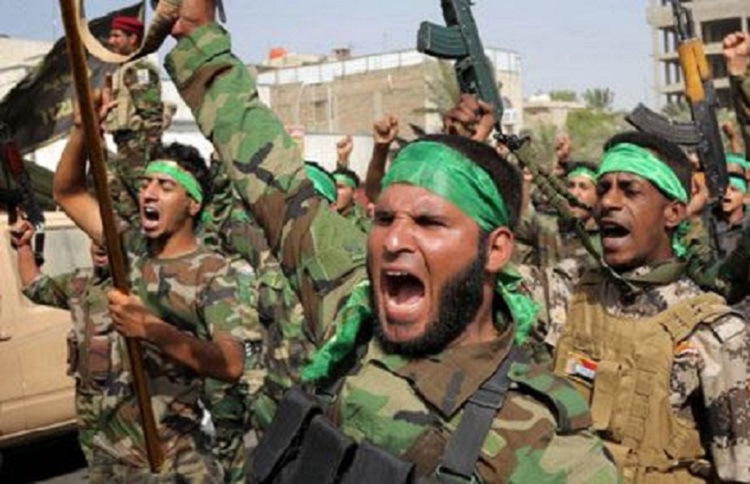
Iran-backed Iraqi armed groups have carried out large-scale relocations and changes to their bases and weapons depots.Sources affiliated with these groups confirmed this and told the media that with the renewed war in Gaza and recent attacks in Lebanon, some political factions in Iraq, “fearing an Israeli attack,” have put “pressure on Iran-aligned armed groups.”A senior member of the “Iraqi Resistance Coordination” told the media that Iraq’s Prime Minister had recently contacted the leaders of these groups, urging them to refrain from any “military action against Israel.”
Previously, Esmail Qaani, commander of the Quds Force of Iran’s Islamic Revolutionary Guard Corps (IRGC), traveled to Iraq and urged Iran-aligned armed groups to avoid any action against the U.S. and Israel that could lead to a loss of control over the situation.On March 18, Reuters reported, citing informed sources, that the Iranian regime had asked Yemen’s Houthis to de-escalate tensions.On March 15, former U.S. President Donald Trump issued a warning—also published in Persian—stating that from now on, any attack by Yemen’s Houthis would be considered an assault using Iranian weapons and under Iranian direction.Four days later, on his social media platform Truth Social, Trump wrote that although Iran’s military support for the Houthis had declined, Tehran was still supplying the group with significant amounts of equipment and logistics.U.S. State Department Warns Iraqi Government About Iran-Backed Armed Groups’ ActivitiesTami Bruce, spokesperson for the U.S. State Department, told reporters that the activities of any militia group not under the full control of the Iraqi government were unacceptable within Iraq’s borders.Bruce further warned the Iraqi government, stressing that Baghdad must ensure full command and control over all security forces, including the Popular Mobilization Forces (PMF or Hashd al-Shaabi).Iraq’s Shia political forces, after intense discussions among themselves and with the leaders of armed groups, have reached an agreement under which the Popular Mobilization Forces (PMF) will be kept away from politics, and all armed groups will be integrated into this institution.On the evening of Tuesday, March 25, Shafaq News reported in an exclusive piece that the Coordination Framework factions had reached an initial agreement approving the integration of armed groups into the PMF. Additionally, under the agreement, armed groups would no longer be allowed to attack U.S. interests in Iraq and must halt cross-border operations.Shafaq News noted the “sensitivity of Iraq’s situation” and stated that the current phase requires maximum measures to ensure the country’s security.Meanwhile, the U.S.-based Institute for the Study of War reported that Trump’s message to Iran included a demand for the dissolution of the Popular Mobilization Forces in Iraq.
Nitzan Amar, Israel’s Deputy Cyber Defense Chief, announced that since Hamas’s October 7 attack, cyberattacks by the Iranian regime and Hezbollah against Israel have tripled.On Wednesday, March 26, at the “Cybertech 2025” conference in Tel Aviv, Amar stated that last year was not an ordinary year; it was a challenging and unique one. He added that since the beginning of the war, Israel has seen a significant increase in the scale of Iran and Hezbollah’s malicious activities against Israeli institutions.He reported a 300% increase in phishing attacks against Israel during this period, adding that these actions aim to exploit information, target Internet of Things (IoT) devices, and disrupt the daily lives of Israeli citizens.
On October 7, 2023, Hamas militants attacked southern Israel, killing approximately 1,200 people and taking more than 250 hostages. Since then, regional tensions have escalated dramatically.In its October 2024 annual report, Microsoft stated that since the start of the Gaza war, Israel has become the primary target of Iranian cyberattacks, whereas Tehran had previously focused mainly on the United States.In November 2024, the Israeli newspaper Haaretz reported that an Iranian regime-affiliated hacker group had exposed the identity of an Israeli nuclear scientist and several of his colleagues.The Israeli Deputy Cyber Defense Chief further stated at the “Cybertech 2025” conference that despite the “unprecedented” increase in cyberattacks against Israel, these efforts have been unsuccessful.Amar said that despite their adversaries’ efforts since October 7, none of the cyberattacks against Israeli institutions have managed to damage national infrastructure or disrupt the operational freedom of the Israeli military in carrying out its missions.He also announced the implementation of Israel’s “Cyber Dome” defense program, adding that Israel has employed advanced defensive technologies that have played a vital role in mitigating and countering these threats.
Mohammad Jalili, head of the Faculty Recruitment Center at Iranian regime’s Ministry of Health, has warned that the exodus of faculty members has now reached the country’s major universities. According to Jalili, these professors either continue working in their fields outside the university system or leave the country altogether.In an interview with the state-run Shafaqna website on Sunday, March 23, Jalili described the situation of faculty migration from medical universities as “deeply concerning.” He stressed that professors are among the country’s elite, in whom significant investments have been made, and that they should not be lost so easily.He suggested measures such as elevating faculty members’ status and respect in society, improving their living and financial conditions, and easing the process of recruiting and retaining top talent as key solutions to prevent university professors from leaving.Jalili noted that the departure of faculty members is visible across all universities in Iran. He stated: “We even have cases where individuals either do not get the opportunity to become faculty members or, if they are, they leave their positions to exit the university system. After that, they either work in their field outside academia or leave the country entirely.”This is not the first time reports have emerged about the migration of experienced and distinguished university professors and other professionals in Iran.The large-scale migration of university professors, doctors, nurses, midwives, pharmacists, and other healthcare professionals in recent years has fueled concerns about the future of Iran’s healthcare system.The head of the Faculty Recruitment Center at the Ministry of Health admitted that no official or precise statistics exist regarding the number of faculty members leaving the country. However, he acknowledged that this issue has become a serious concern for many universities, both large and small.Jalili pointed out that salary caps for faculty members at universities under the Ministry of Science have been removed. He expressed hope that the Ministry of Health would follow the same logic and lift the salary cap for faculty members at medical universities.Jalili noted that the minimum salary for faculty members at medical universities is approximately 200 million rials (~$210), while their salary cap is around 600 million rials (~$630). He described this limit as “irrational” and stressed the need for its removal.
High Emigration Intentions Among Iranians
Mostafa Moein, former Minister of Science and head of the “Iranian Association for Ethics in Science and Technology,” stated in December 2024 that only 16% of Iranians do not consider emigration.He further revealed that 53% of university professors, 45% of doctors and nurses, and 40% of students and graduates expressed a desire to emigrate.
Crackdown and Dismissal of University Professors
The dismissal of university professors in Iran has also been a controversial issue in recent years.Mahmoud Sadeghi, a former member of parliament, reported in September 2023 that more than 1,500 university professors in Iran had faced “administrative punishment” for supporting the 2022 anti-regime uprising.In September 2023, the newspaper Etemad published the names of 52 university professors who had been dismissed, forced into early retirement, suspended, or barred from teaching between September 2021 and September 2023.
Foreign currency prices in Iran experienced a sudden surge, with the U.S. dollar rising by 50,000 rials compared to the last day of the Iranian year 1403 (March 21, 2025), surpassing the one-million-rial threshold.According to Iranian exchange rate websites, on Tuesday, March 25, the U.S. dollar reached 1,035,000 rials, setting a new record in the history of the rial’s depreciation.Since Masoud Pezeshkian took office in August last year, the Iranian rial has lost more than half its value. In late August, the U.S. dollar was around 580,000 rials.
The euro, the official currency of the European Union, also increased to approximately 1,190,000 rials, while the British pound was traded at 1,340,000 rials.The rise in foreign currency prices occurred amid numerous reports in recent weeks about the potential for new negotiations between Iran’s regime and the United States to reach a fresh agreement on Iran’s nuclear program.While the maximum pressure policy of Donald Trump’s second administration against Iran’s regime continues, the U.S. president has sent a letter to Ali Khamenei, the Supreme Leader of the Iranian regime, which, according to Iranian officials, contains “opportunities and threats.”The rise in the U.S. dollar’s value in Iran’s open market may indicate skepticism about the likelihood of renewed negotiations between Tehran and Washington and the lifting of sanctions, although both Iran’s regime and the U.S. claim to be in indirect contact through various channels.The Iranian regime’s Foreign Minister stated that Donald Trump’s letter is under review and will be responded to soon.
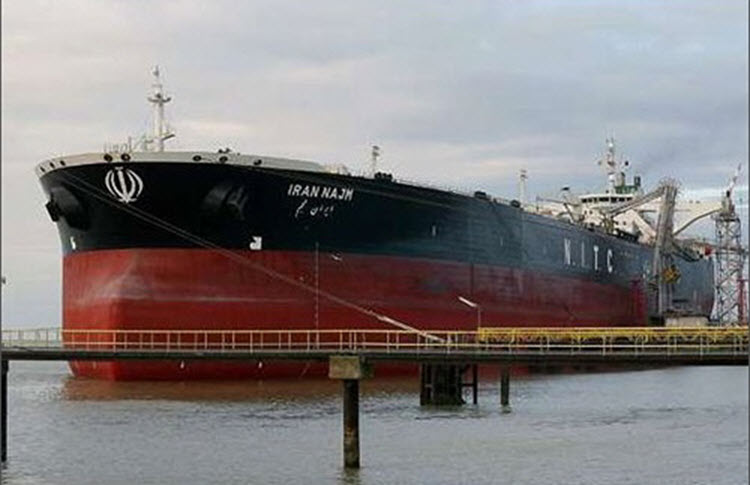
Following remarks by Iraq’s Oil Minister regarding the provision of information to the United States about Iran’s sanctions evasion, a senior official from the Iranian regime’s Ministry of Oil rejected these reports, calling them “negative and malicious propaganda.”Hayan Abdul Ghani, Iraq’s Oil Minister, stated that Iranian oil tankers have been using falsified Iraqi documents to bypass sanctions and that this matter has been reported to the United States.Without providing details, Abdul Ghani added that Baghdad has received reports regarding the seizure of oil tankers in the Persian Gulf by U.S. naval forces, which were carrying Iraqi documents.However, Ali Mohammad Mousavi, the Iranian regime’s Deputy Minister for International Affairs and Commerce in the Ministry of Oil, stated on Monday, March 24: “Iran’s oil sales are conducted in full compliance with all recognized standards and criteria governing oil trade interactions.”He added: “Such negative and malicious propaganda will have no effect on the determination of the Ministry of Oil in fulfilling its legal duties and responsibilities.”The senior Iranian regime official also claimed that the statements of Iraq’s Oil Minister had been “incompletely reported” and that the issue of “the seizure of several Iranian oil tankers by the United States” was actually raised by American officials.
The remarks by Iran’s Deputy Oil Minister come amid past reports indicating that Iranian oil has been exported using falsified Iraqi documents.For example, Reuters reported in 2019 that the Grace-1 oil tanker had transported Iranian oil using documents indicating it had been loaded in Basra, Iraq.On December 3, this news agency also reported that a complex fuel oil smuggling network operating in Iraq, benefiting the Iranian regime and its proxy groups, has generated between one to three billion dollars annually since the beginning of Prime Minister Mohammed Shia’ Al-Sudani’s tenure in 2022.On March 19 of last year, the Iraqi Navy announced the seizure of an Iranian vessel in the Persian Gulf on fuel smuggling charges, stating that the Iranian captain, eight Indian crew members, and two Iraqi crew members had been arrested.On February 4, former U.S. President Donald Trump signed an executive order to reinstate the “maximum pressure” policy against the Iranian regime, aiming to bring Iran’s oil exports down to zero in order to pressure Tehran into halting its nuclear program.The U.S. government has also placed Iran’s Oil Minister under its sanctions list.Fatemeh Mohajerani, the spokesperson for the government of Masoud Pezeshkian, responded on March 17 to Washington’s decision to sanction Iran’s Oil Minister, stating that it is impossible to reduce Iran’s oil exports to zero.The Iranian regime’s Foreign Ministry also described the U.S. efforts to bring Iran’s oil exports to zero as “contrary to international law.”Although sanctions on Iran-linked oil tankers began in October 2024, their intensity and precision have increased in recent months.
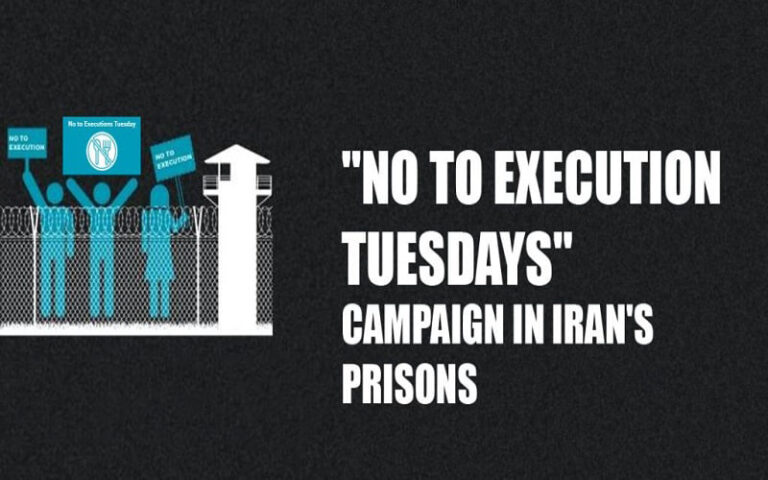
While the international community has repeatedly warned about the rising number of executions in Iran, new statistics reveal that in the Iranian year 1403 (March 21, 2024 – March 21, 2025), over 1,150 prisoners were executed in Iranian prisons.According to a statement issued by the “No to Execution Tuesdays” campaign, among those executed, 135 were Baluchi citizens, and 104 were Kurdish citizens. Additionally, 38 women were among those executed last year. Alongside these figures, five political and ideological prisoners were executed, and eight public executions were carried out.This campaign, which has been active for over a year, announced in its 61st week that on Tuesday, March 25, prisoners in 38 prisons across the country will go on a hunger strike.
The “No to Execution Tuesdays” campaign emphasized in its report that 85% of last year’s executions took place during the presidency of Masoud Pezeshkian. This highlights once again that different factions within the Iranian regime make no distinction in repression and carrying out executions, and the policy of mass executions continues.Activists of this campaign, emphasizing their resistance against the death penalty, have called on all human rights organizations, civil institutions, political parties, and activists to take more concrete actions against this practice in the new year. They hope that the year 1404 (beginning on March 21, 2025) will mark the end of executions and repression and be a step towards freedom.The “No to Execution Tuesdays” campaign, which operates weekly, has recently announced that prisoners in 38 different prisons across the country, including Evin, Ghezel Hesar, Greater Tehran, Adelabad in Shiraz, Urmia, Tabriz, and Mashhad, will join the hunger strike.The mass execution of prisoners in Iran continues amid ongoing protests against harsh judicial rulings and the increasing execution rate. Many international organizations, including the United Nations and Amnesty International, have repeatedly called for an end to these repressive policies, yet the Iranian authorities persist in carrying them out.With the continuation of the regime’s repressive policies and the rising wave of executions, concerns about escalating violence and the continuation of this trend in the new year have grown even more.In their statement, they emphasized: “We, the members of the ‘No to Execution Tuesdays’ campaign, stand united, with one voice and with all our strength, against the inhumane death penalty. We call on all political parties, organizations, unions, activists, human rights defenders, civil groups, and justice seekers who care about ‘the right to life and human rights’ and oppose executions to take more practical and effective measures against executions in the new year. We hope that the year 1404 will mark the end of repression and executions and the beginning of freedom for Iran.”
The U.S. House Committee on Education and the Workforce has launched an investigation into Seyed Hossein Mousavian, a former Iranian regime diplomat and a professor at Princeton University.According to Fox News, 12 Republican members of the committee have sent a letter to Christopher L. Eisgruber, the president of Princeton University, requesting an explanation regarding the Iranian regime’s influence through Mousavian’s activities at the institution.Lisa McClain, a Republican representative from Michigan, who co-authored the letter with Jim Banks, stated:“Higher education has bowed down to the radical left and enemies of America for far too long, and the mere fact that a former member of the Iranian regime is given a platform at Princeton is proof.”Hossein Mousavian, a former Iranian regime diplomatConcerns about Mousavian intensified after he attended the 2020 funeral of Qassem Soleimani, the commander of Iran’s Quds Force, and spoke about Soleimani on Iranian television in 2022. In that program, he claimed that an American official told him that the wife of Brian Hook, then U.S. Special Representative for Iran, had lost sleep for several nights out of fear of Iranian retaliation.In response, Mousavian said, “The 10-second clip from my two-hour interview with Iranian TV was taken out of context.”
Republicans in Congress have accused Mousavian of advancing Iranian interests in the U.S., a concern that grew after it was revealed that he had spoken at a symposium hosted by the U.S. Strategic Command (STRATCOM) in August 2023.Republican lawmakers have also pointed to Mousavian’s background as the Iranian regime’s ambassador to Germany in the 1990s. They recalled that a Berlin court, in the case of the assassination of four Iranian dissidents at the Mykonos restaurant, identified the Iranian embassy as the center of planning for the attack. Mousavian has denied these allegations, stating that his name was not mentioned in the court ruling.Republicans are now calling for action against Mousavian and others linked to the Iranian regime within the U.S. education system. Jim Banks, one of the signatories of the letter, has demanded Princeton University sever ties with Mousavian and also with Robert Malley, the former Biden administration’s envoy for Iran. Banks claimed:“Mr. Mousavian is a longtime Iranian propagandist who only knows how to teach anti-Israel, antisemitic lies.”However, Mousavian defended himself in an interview with Fox News, stating: “My work is just academic, and I have nothing to do with the U.S., Iran, or any other government.”Despite multiple requests, Princeton University has so far refrained from commenting on the matter.
Iraqi Oil Minister Hayyan Abdul Ghani stated that Iranian oil tankers have been using fake Iraqi documents to circumvent sanctions, and that this matter has been reported to the U.S.Speaking on a television program, the Iraqi oil minister, without providing details, said that Baghdad had received reports about U.S. naval forces seizing tankers in the Persian Gulf that were carrying Iraqi documents.He emphasized that Washington had been informed that these documents were fraudulent.Over the years, there have been reports about Iran’s regime exporting oil using forged Iraqi documents.For instance, in 2019, Reuters reported that the tanker Grace-1 transported Iranian oil under documents claiming it was loaded in Basra.On December 3, 2024, Reuters also reported that a complex fuel smuggling network in Iraq, benefiting the Iranian regime and its proxy groups, had generated between $1 billion and $3 billion annually since the start of Prime Minister Mohammed Shia’ Al-Sudani’s tenure in 2022.On March 19, the Iraqi Navy announced the seizure of an Iranian vessel in the Persian Gulf for fuel smuggling, stating that the ship’s Iranian captain, eight Indian crew members, and two Iraqi crew members had been arrested.
On February 4, former U.S. President Donald Trump signed an order to resume the maximum pressure policy against the Iranian regime and eliminate Iran’s oil exports to pressure Tehran into halting its nuclear program.Meanwhile, on March 17, Fatemeh Mohajerani, spokesperson for the government of Iranian regime President Masoud Pezeshkian, responded to Washington’s decision to sanction Iran’s oil minister by stating that eliminating Iran’s oil exports is impossible.Iran’s Foreign Ministry also condemned the U.S. attempt to halt Iran’s oil exports, calling it “a violation of international legal principles.”Although sanctions against Iran-linked oil tankers began in October 2024, their intensity and precision have increased in recent months.Since December 2024, the U.S. Department of the Treasury has placed special focus on targeting Iran’s covert fleet of Very Large Crude Carriers (VLCCs).These tankers, with a capacity of 300,000 tons—equivalent to two million barrels of crude oil—play a key role in Iran’s oil exports.