

UN Special Rapporteur: Death Penalty in Iran Must EndIn her remarks, Sato stated that in 2024, the wave of executions in Iran has reached its highest level since 2015, raising concerns that if this trend continues, the number of executions in the country could exceed “one thousand per year.” She emphasized in her report that these figures only reflect the executions for which information is available, meaning that the Iranian regime does not provide transparent statistics on this issue, and the exact number of executions remains unknown. Sato addressed the Iranian authorities, stating that such data should be disclosed transparently. In her report, Sato highlighted discrimination against Baha’is, Sunni Muslims, Christian converts, ethnic minorities, and mistreatment of women, stating that at least 13 women were executed in Iran in 2024. Referring to activists Varisheh Moradi, Sharifeh Mohammadi, and Pakhshan Azizi, who are on death row in Iran, she also addressed issues of forced marriage, child marriage, and the high rate of femicide in the country. The UN Special Rapporteur further pointed out the legal gaps in Iran regarding women’s rights, including the fact that under the current laws of the Iranian regime, a woman’s testimony is considered equal to only half of a man’s testimony. Sato ultimately emphasized that despite this repression, the people of Iran continue their “resistance.”
Mai Sato Issues First Report on the Human Rights Situation in Iran
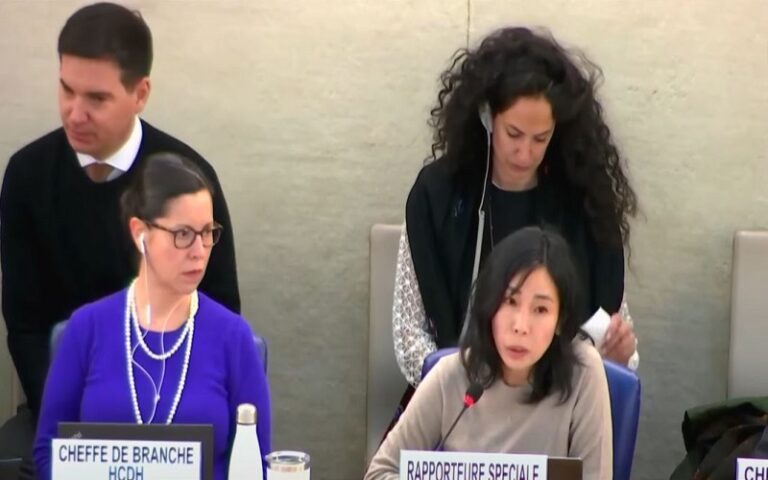
The new UN Special Rapporteur on Human Rights in Iran, in her first report, highlighted the increasing number of executions in Iran, the lack of transparency regarding information on executions and detainees, the continued repression of protesters, and the discrimination against minorities as repeated human rights violations in the country.
On Tuesday, March 18, Mai Sato presented these findings in her first report on the human rights situation in Iran at the 58th session of the United Nations Human Rights Council.
On March 12, she also referred to the high number of executions of women in Iran and expressed serious concern over the government’s use of the death penalty, stating that the number of executions in Iran has “significantly increased.”
The Resistance of Prisoners with the “No to Execution Tuesdays” Campaign, 1,148 Executions in Less Than a Year
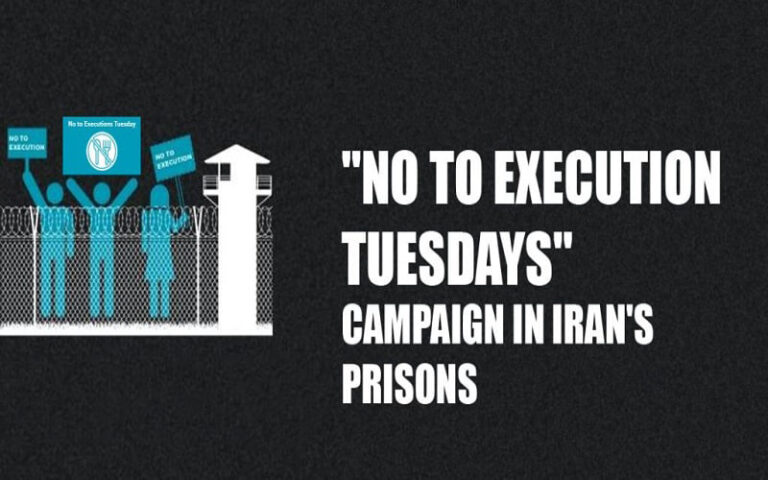
At least 116 prisoners have been executed in Iranian prisons in the month of Esfand this year (starting on February 19, 2025).
On Tuesday, March 18, coinciding with the last Tuesday of the Iranian year (which begins on March 21), the “No to Execution Tuesdays” campaign marked its 60th week, while the Iranian Supreme Court rejected the retrial request of Hatam Ozdemir, a political prisoner sentenced to death.
Members of this campaign, while congratulating the Iranian people on Nowruz (the Persian New Year), expressed their hope that their resistance against “tyranny and executions” would burn as brightly as the flames of Chaharshanbe Suri (the fire festival held on the last Wednesday before Nowruz).
They pointed out that at least 116 prisoners have been executed in Iranian prisons between February 19 and now, stating that Iran has set a “shameful record” in issuing and carrying out death sentences.
Iran: The 59th Week of “No to Executions Tuesdays” with the Participation of Women’s Ward in Sepidar PrisonCurrently, prisoners in 38 prisons across the country go on hunger strike every Tuesday to protest against the implementation of death sentences in Iran. The statement issued by the members of this campaign in its 60th week is as follows: The ‘No to Execution Tuesdays’ campaign, on the eve of the New Year, congratulates the dear people of Iran and our compatriots around the world on the arrival of the national celebration of Chaharshanbe Suri. We hope that the people’s resistance against tyranny and executions in Iran will burn even brighter, like the flames of the last Wednesday of the year, and bring an end to darkness, executions, killings, and violence. The ruling religious dictatorship has executed 116 people since February 19. Additionally, in a horrifying statistic, 1,148 prisoners have been brutally executed during the year 1403 (from March 21, 2024, to March 18, 2025), setting yet another shameful record. In another inhumane act, on March 13, a citizen named Haidar Mohammadi (Hassanvand) was killed under torture by officers at the Nahavand detention center. Despite immense pressure, the “No to Execution Tuesdays” campaign has endured its second Nowruz (Persian New Year) with resistance and steadfastness against repression and executions. It hopes to continue standing against death sentences with even greater strength and determination in the year 1404 (beginning March 21, 2025). All the support received over the past year has been invaluable to us. We express our gratitude to political, civil, labor, and human rights organizations and groups, both inside and outside Iran. We also appreciate the various sectors of society—including workers, teachers, nurses, retirees, writers, artists, families seeking justice, and students—who have opposed executions and supported this campaign, whether directly or indirectly, in any form. We have now risen against executions in 38 different prisons, taking a small step toward saving the lives of thousands of prisoners sentenced to death. The prisons of the regime are filled with inmates who may face execution in the coming year. For example, out of approximately 130 female prisoners in Lakan Prison, 14 have been sentenced to death, and the execution orders for two of them have already been issued. Lakan Prison is just one of dozens of such prisons. In this regard, we call on all prisoners across the country and everyone who seeks freedom and justice to join and support this campaign.
The Minimum Wage for Iranian Workers in 2025 Announced
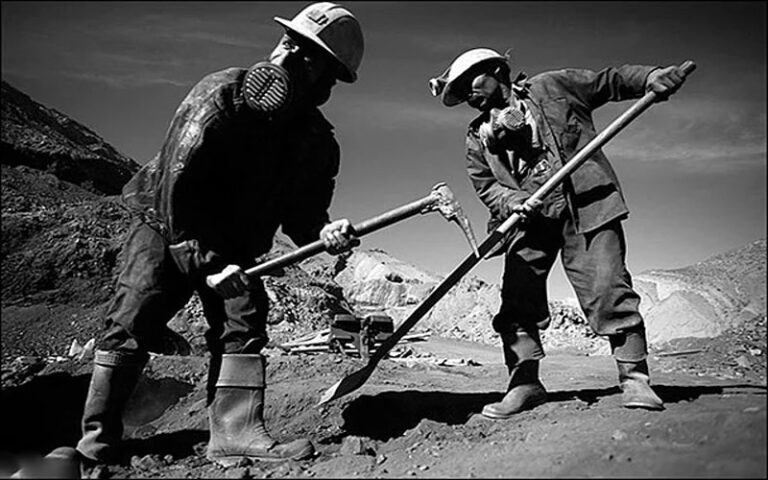
According to the Iranian regime’s Minister of Labor, the minimum wage for workers in 2025 has increased from 71 million rials (approximately $75) to 103.99 million rials (approximately $110). This indicates a more than 46% increase in the minimum wage.
According to the state-run Mehr News Agency, Ahmad Meydari, the Iranian regime’s Minister of Cooperatives, Labor, and Social Welfare, announced after the 335th session of the Supreme Labor Council that an agreement had been reached between worker representatives, the government, and employers regarding the minimum wage for workers in 2025. The final meeting was held on Saturday, March 15.
The Decline of Iranian Workers’ Purchasing PowerMeydari stated that under the new agreement, the monthly minimum wage has risen from 71 million rials to 103.99 million rials. The housing allowance remains unchanged, and the total minimum earnings for married workers with two children have increased to 163.51 million rials (approximately $172). Previously, this amount was 116 million rials (approximately $122) and has now increased to 163.51 million rials. Regarding wages for married workers, Meydari stated: “The wages for married workers without children have increased from 99 million rials (approximately $104) to 139.09 million rials (approximately $147). Additionally, the labor consumption allowance (or worker’s benefits package) has increased from 14 million rials (approximately $15) to 22 million rials (approximately $23).” The Iranian regime’s Minister of Labor added that further details would soon be made available to the media. He also announced that the seniority-based salary increment had increased from 21 million rials (approximately $22) to 28 million rials (approximately $30).
Systematic Fuel Smuggling and Corruption by Iran’s IRGC
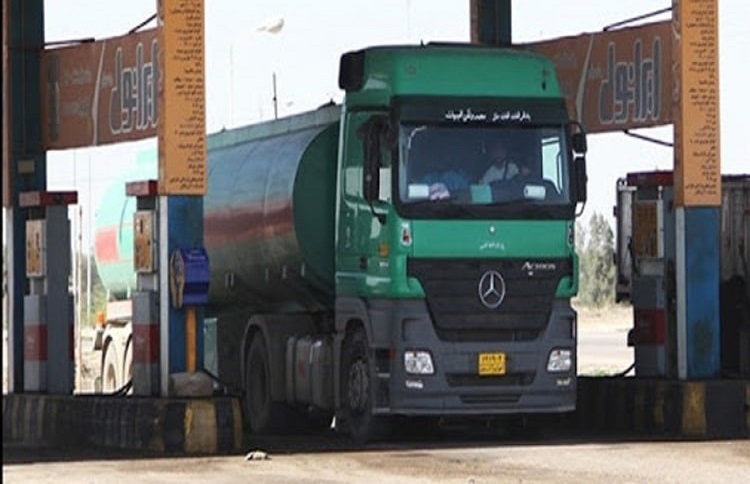
On March 13, Gholamhossein Mohseni Ejei, the head of the Iranian regime’s judiciary, told the state-run Shabakeye Khabar (News Network): “They say a pipeline has been extended from the airport to the sea for smuggling… This can’t be the work of an ordinary person.”
Despite being fully aware of the scale of this disaster, Iranian regime officials—from the president to the parliament speaker—do not dare to name the main culprit. Masoud Pezeshkian, the regime’s president, merely states that “a few million liters of fuel are smuggled daily,” while Mohammad Bagher Ghalibaf, the parliament speaker, cautiously remarks that “a powerful entity is behind fuel smuggling.” However, neither of them dares to mention the Islamic Revolutionary Guard Corps (IRGC). This silence is not due to ignorance but out of fear of the consequences of exposing a network that operates under the direct protection of Supreme Leader Ali Khamenei.
Fuel Smuggling Mafia and the Policy of Concealment in IranReports from local media in Baluchestan, southeast Iran, reveal that dozens of fuel tankers—each with a capacity of 36,000 liters—are smuggled daily across the borders of Sistan and Baluchestan into Afghanistan and Pakistan. This trade, which includes both fuel and gas, is entirely controlled by the IRGC, funneling vast revenues into the military organization’s coffers. To deceive public opinion, the IRGC has ordered the killing of impoverished fuel carriers to create the illusion that smuggling is conducted by ordinary individuals. The IRGC, the military arm of Khamenei and the regime’s main pillar of survival, enjoys total immunity for its crimes. Ejei further remarked: “Today, wealth accumulation has reached the point of suffocation, while some people struggle to afford their daily bread.” Today, IRGC commanders have become the country’s most powerful financial cartel, while 96% of Iranians endure hardship and poverty. Fuel smuggling is just one part of this systematic plunder, which, under Khamenei’s support, not only continues unchecked but has also become a tool for sustaining the rule of the clerical dictatorship.
U.S. Sanctions Key Financial Channels of Iran’s Regime
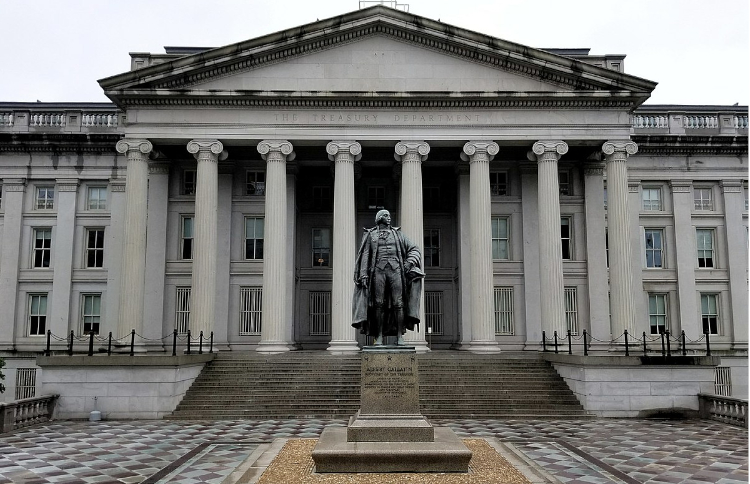
The pressure of sanctions on Tehran’s economic lifeline and the regime’s nervous reactions highlight their impact on Iran’s already fragile economy. The latest U.S. sanctions against the Iranian regime once again exposed its fragile dependence on oil revenues. This time, the Iranian regime’s Oil Minister, Mohsen Paknejad, along with several oil tankers and trading companies, was placed on Washington’s blacklist. Esmaeil Baghaei, the Iranian Foreign Ministry spokesperson, condemned the move, calling it “petty and contrary to international legal standards.”
The U.S. Treasury Department stated that these sanctions specifically target Iran’s “shadow fleet” and the oil tankers the regime relies on for exports to China. The objective is clear: to reduce Iran’s oil exports to zero and sever the financial lifeline that Tehran uses to advance its destabilizing agenda.
“The Iranian regime continues to use the proceeds from the nation’s vast oil resources to advance its narrow, alarming self-interests at the expense of the Iranian people,” Scott Bessent, the U.S. Treasury Secretary, stated.
U.S. Treasury Imposes Sanctions on a Covert Iranian Drone Procurement Network
From Appeasement to Supporting the Iranian People
Sanctions alone are not enough. The international community must abandon its policy of appeasement toward the “banker of terrorism and fundamentalism” and firmly support the Iranian people in their struggle to break free from religious fascism. Despite its claims, the Iranian regime does not allocate any portion of its oil revenues to improving the people’s livelihoods. Instead, these vast resources are funneled into futile nuclear projects, regional terrorism, and sustaining a crumbling dictatorship. The Iranian regime’s destabilizing ambitions are not confined within its borders. After the fall of Bashar al-Assad, the former Syrian dictator, Supreme Leader Ali Khamenei made an interventionist appeal to Syrian youth, urging them to “restore his lost strategic depth.” Continuing this policy, the IRGC’s Quds Force sent weapons and funds to Assad’s remnants, attempting to legitimize their deception by establishing the so-called “Islamic Resistance Front of Syria.” Sanctions will deliver a significant blow to the foundation of the regime’s terror and oppression machine. The latest U.S. sanctions and the regime’s reactions once again expose the fact that Tehran is more vulnerable than ever to international pressure. The global community now faces a historic choice: to continue appeasing a state sponsor of terrorism or to stand with the Iranian people in their fight for freedom and justice. The choice is clear; it is time for the world to stand with the Iranian people and against religious fascism instead of reinforcing dictatorship.Pharmacists and Doctors Concerned Over the Impact of Rising Drug Prices and Shortages in Iran
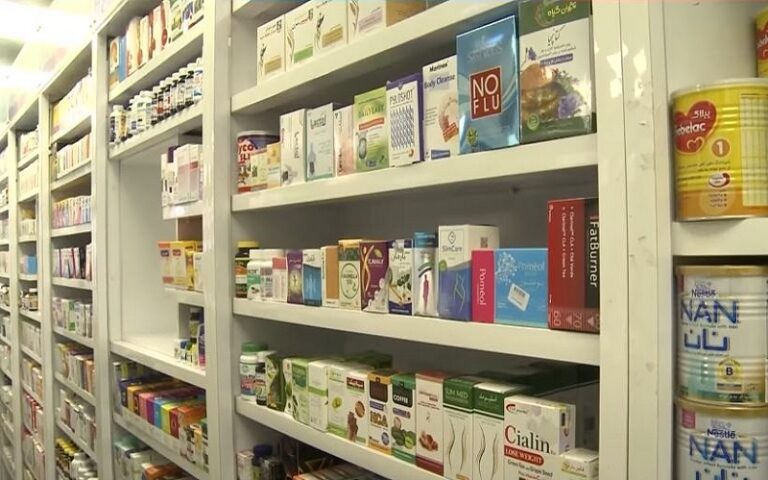
The rise in drug prices in Iran, ranging from 50 to 400 percent, has once again made headlines. What deeply concerns doctors is the long-term impact of the pharmaceutical sector’s instability on public health.
Many patients must pay for their medications out of pocket. Regarding “hard-to-treat diseases,” individuals register with the Social Security Organization, health services, or the National Health Fund. Once approved, they are “tagged” in the system, but the annual medication cost coverage is capped at 2 billion rials (approximately 2,100 dollars).
Meanwhile, pharmaceutical experts report that a single chemotherapy course can cost up to 10 billion rials (approximately 10,526 dollars).
The treatment protocol for a child with cancer can impose a financial burden of at least 100 million to 5 billion rials (approximately 1,052 to 10,526 dollars) and at most 10 to 30 billion rials (approximately 10,526 to 31,578 dollars) or even more over a three-to-five-year treatment period.
In Iran, One-Third of Patients Refrain from Purchasing MedicationInsurance organizations, including health services and social security, delay payments to pharmacies for up to six months. This has led some pharmacies to stop accepting insurance prescriptions altogether. As a result, the heavy costs of medication fall on families, and in cases of life-threatening illnesses, this situation can cost patients their lives. Official statistics, which only reveal part of the reality, indicate that since March 21, 2024, more than 2,500 hemophilia patients have lost their lives. According to official reports, the number of new cancer cases in Iran stands at 141,641 per year, with approximately 390 new cases recorded daily. Some cancer patients have stopped their treatment, saying, “Last year, we managed to obtain the medication somehow, but this year, we simply can’t afford it.” Last year, the cost of a single course of treatment with the anti-cancer drug Venetoclax was around 900 million rials. However, the same drug now costs 1.9 billion rials (approximately 2,000 dollars), making it unaffordable for most families due to economic conditions. It is worth noting that the minimum wage for a worker with two children in 2024 was approximately 116 dollars. Even those willing to pay exorbitant prices to save their own lives or those of their loved ones are searching for medication online. This issue is not limited to specialized or new drugs; it also affects common medications.
Shortage of Essential Vaccines
Poor planning and officials blaming each other have made common vaccines, such as the flu shot, unavailable. Even vulnerable individuals and healthcare workers miss their vaccinations before the peak season of viral outbreaks. The head of the Communicable Disease Control Center at the Ministry of Health stated that this year, only about 500,000 to 600,000 flu vaccines were distributed, some of which were domestically produced. According to specialists, there was little public demand for the Iranian-made vaccines. Regarding COVID-19, while most countries provide updated vaccines for their citizens, in Iran, effective vaccines and antiviral pills from Pfizer are unavailable due to the policies of the Iranian regime. Additionally, a significant portion of vaccines is being sold on the black market at prices three to four times higher than the official rate.Government-Imposed Pricing and Decline in Domestic Production
While imported medications, particularly for serious illnesses and cancer, are scarce and highly expensive, pharmaceutical industry experts state that since drug pricing is controlled by the Ministry of Health and subject to “government-imposed pricing,” the prices of domestically produced medications do not adjust in line with the country’s inflation rate. Pharmaceutical industry experts report that the Ministry of Health pressures the Food and Drug Organization to keep prices low. Consequently, with rising costs of raw materials—most of which are imported from countries like China—and other production expenses, profit margins have drastically shrunk. As a result, companies are facing financial losses, leading to a decline in domestic production. Under these circumstances, the government occasionally grants temporary import permits for the same medications that are produced domestically, with most of these imports coming from India.Tehran Housing Prices Surge: Average Price Per Square Meter Reaches $1,100
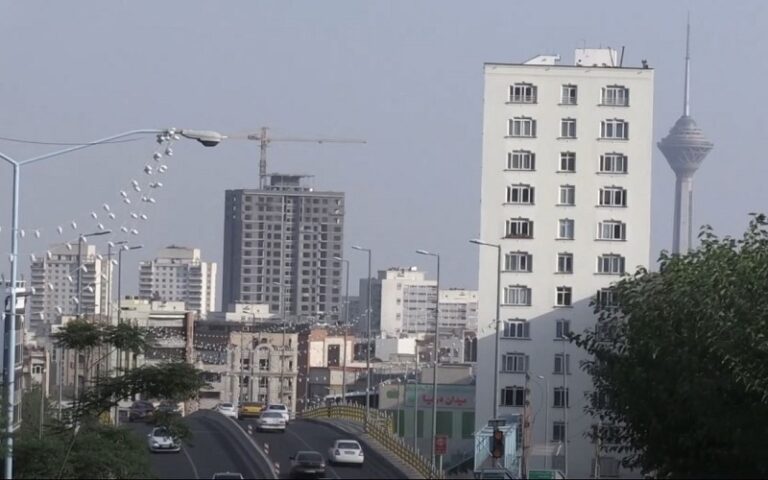
The state-run Etemad Online website reported on Saturday, March 15, regarding the real estate market in Iran’s capital, stating: “Field observations and a review of listed advertisements on websites show that the average price per square meter of housing in various areas of Tehran has surpassed 1.03 billion rials (approximately 1,084 dollars).”
The report, noting that “in recent months, Tehran’s housing market has witnessed a significant price increase,” states that “the average housing price in Tehran, based on listings on real estate platforms, rose from approximately 950 million rials in September 2024 to 990 million rials by November, 1.01 billion rials by January 2025, and 1.03 billion rials by February.”
Previously, economist Farshad Momeni had stated: “Housing prices have increased by approximately 1,700 percent from March 2019 to August 2024.”
Etemad Online, emphasizing that these figures “are in stark contrast with the purchasing power of Tehran’s residents,” added: “The rise in housing prices in Tehran has made access to housing more difficult for many families, particularly the middle and low-income classes. This issue could lead to increased social inequality and a decline in overall public welfare.”
According to the report, rising housing costs could also negatively impact other economic sectors, as families allocate a larger portion of their income to housing expenses, leading to reduced spending in other areas.
Iran: Housing Constitutes 70% of Workers’ ExpensesThe website noted: “Given the current conditions and the instability in financial markets, it is predicted that housing prices in Tehran will continue to fluctuate.” Previously, housing market expert Mahmoud Olad told the regime’s Khabaronline website: “On average, the waiting time to purchase an ordinary home has reached up to 35 years, which is a terrifying figure.” He added: “This means that in some cases, it takes two generations of work to become homeowners.” The latest official statistics show that from 2016 to 2022, more than 48 percent of renters in Iran have fallen below the poverty line. Additionally, according to statistics, the population living below the poverty line in Iran reached over 33 percent at the beginning of 2023. Many experts believe that, considering the inflation of the past two years, the rising exchange rates, and the further depreciation of the national currency, the percentage of the impoverished population has now exceeded 50 percent.
Warning About the Possibility of Water Rationing in Iran
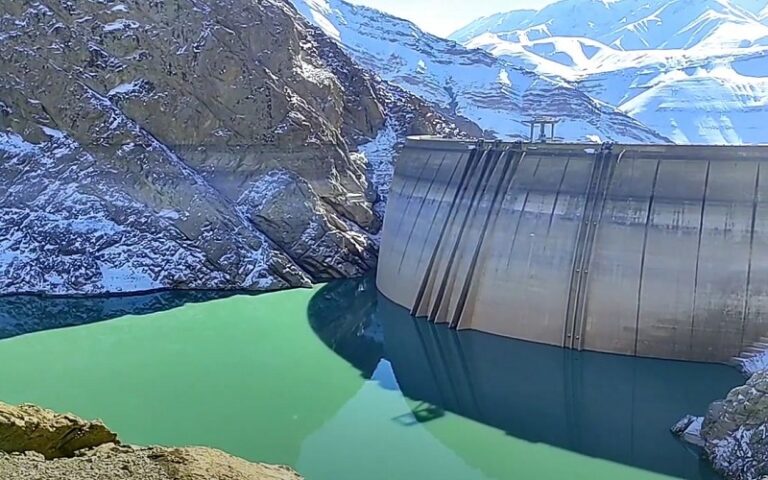
With decreasing rainfall in Iran and the absence of a proper system for protecting water resources, media reports indicate that water rationing is imminent in the country.
According to reports, water reserves behind Iran’s dams are in a critical state, and in the coming months, the water supply crisis will add to the country’s existing crises.
The government-affiliated Tejarat News website wrote on Friday, March 14, that due to reduced rainfall, poor management of surface and groundwater, and an increase in both legal and illegal well drilling for groundwater extraction, Iran’s water situation is disastrous.
Media reports on water reserves behind Tehran’s dams indicate that Lar Dam has only 11 million cubic meters of water, equivalent to just 1% of its capacity. Latyan Dam holds 8 million cubic meters (10% capacity), Mamlu Dam has 29 million cubic meters (12% capacity), and Amir Kabir Dam contains 11 million cubic meters (6% capacity).
Tehran on the Brink of a Water CrisisIn this regard, Issa Bozorgzadeh, spokesperson for the Iranian regime’s water industry, stated on March 10 that “the water reserves in Tehran’s dams are far from adequate.” Additionally, Didbaniran news outlet reported that on March 12 that Ahad Vazifeh, head of the National Center for Climate and Drought Crisis Management at Iran’s Meteorological Organization, warned about Tehran’s water situation, stating that “four out of the five dams supplying water to Tehran are currently below 10% capacity, making the risk of water shortages in the summer even more severe.” Meanwhile, Mehdi Chamran, head of Tehran’s City Council, announced that the water authority plans to drill 50 deep wells, each 250 meters deep, to provide drinking water for the summer. However, this measure could lead to the depletion of other wells and worsen land subsidence in Tehran. Ahad Vazifeh also stated that the watersheds of the Karun, Dez, Karkheh, and Marun rivers in southwestern Iran have been among the driest regions this year, with rainfall in these areas decreasing by more than 50%. He stressed that there is little hope for adequate rainfall in the upcoming spring and explained that, in a typical hydrological year, 44% of rainfall occurs in winter, 25% in autumn, 25% in spring, and a small amount in summer. Given that both autumn and winter this year were drier than usual, the outlook for spring rainfall is also not promising, which increases the risk of water shortages in the summer. Images and videos circulating on social media show that in recent weeks, residents of various cities have experienced reduced water pressure or complete water outages. Experts predict that with rising temperatures and increased water consumption, water cuts will become widespread and affect all cities in Iran.
Iran: Commemoration of Political Prisoners Executed in the 1980s
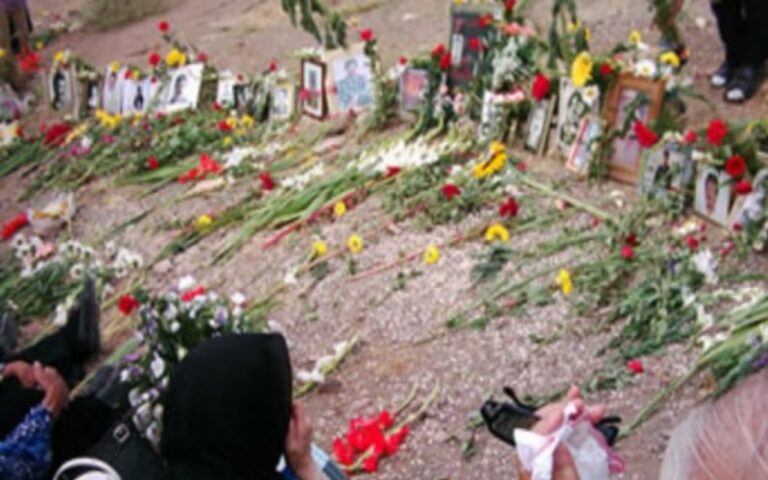
On Friday, March 14—the last Friday of the Iranian calendar year, which begins on March 21—families of political prisoners executed in the 1980s held a commemoration ceremony behind closed doors at Khavaran Cemetery.
This ceremony took place under the ongoing restrictions imposed by Iranian regime’s security forces, who have kept the gates of Khavaran Cemetery closed for the past year, preventing families from visiting their loved ones’ graves to honor their memory.
The families of political prisoners executed in the 1980s have protested the burial of deceased members of the Baha’i community in the mass grave section designated for political prisoners executed in the summer of 1988. This protest has also been supported by the Baha’i community.
Pursuing Justice for Iran’s 1988 Massacre: A Significant Step ForwardThe Khavaran families have stated that they consider this action part of a deliberate policy to erase the evidence of the organized mass execution of political prisoners in the summer of 1988. In 1988, the Iranian regime executed 30,000 political prisoners, the majority of whom were supporters of the People’s Mojahedin Organization of Iran (PMOI/MEK), within a matter of weeks. There have been numerous reports in the past regarding the Iranian regime’s repeated prevention of families of executed political prisoners from entering Khavaran Cemetery in Tehran to hold commemorative ceremonies. Regarding Khavaran Cemetery, the Iranian government has long been barring families of executed political and ideological prisoners from visiting the site while simultaneously forcibly burying deceased Baha’i citizens in the section where political prisoners from the 1988 executions were laid to rest. The Khavaran families see this action as an attempt by the Iranian regime to erase “the evidence of the massacre of political prisoners in the 1980s, particularly in the summer of 1988,” and they have repeatedly protested this practice.
History PMOI/MEK – 1979 Iran RevolutionKhavaran Cemetery, located in southeastern Tehran along Khavaran Road and adjacent to cemeteries belonging to religious minorities, is the burial site of thousands of political and ideological prisoners who were executed in the summer of 1988. These individuals were secretly buried in mass graves without identification. The mass execution of political prisoners in August and September 1988 remains one of the darkest chapters of former Iranian regime’s president Ebrahim Raisi’s record of crimes. Nearly 36 years later, much remains unknown about the full extent of these atrocities. Raisi was a key member of the notorious “Death Commission,” a five-member panel that conducted brief trials lasting only a few minutes before sending prisoners to the execution squads.
UN Fact-Finding Committee: The Iranian Government Continues to Repress Opponents
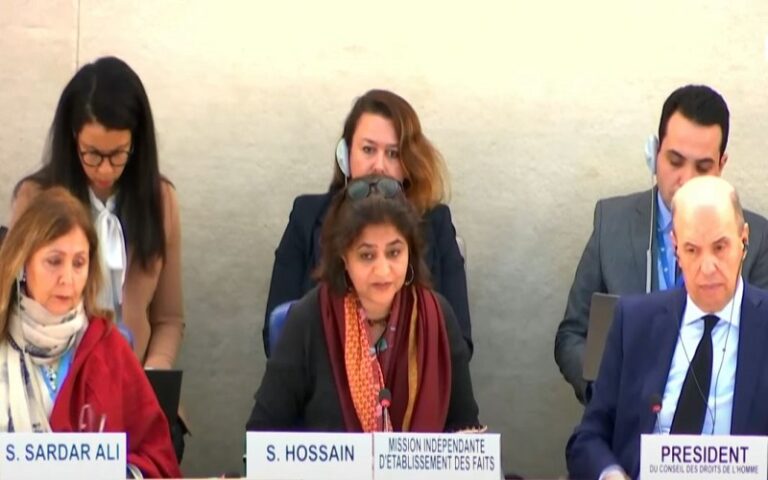
The Independent UN Fact-Finding Committee on Iran announced on Friday, March 14, that the Iranian regime continues its “systematic repression” of dissidents following the protests of 2022.
According to the UN Human Rights Council website, the committee stated in its latest report on the Iranian regime’s actions that two years and six months after the protests began in September 2022, the Iranian government continues to intensify its efforts to restrict the rights of women, girls, and those advocating for human rights.
The Independent UN Fact-Finding Committee, referring to the implementation of the so-called “Noor Plan” in Iran, noted that criminal prosecution against women opposing mandatory hijab has intensified.
The New “Hijab and Chastity” Law in Iran: A Tool for Suppression and ControlIn this latest crackdown on women’s choice of clothing under the “Noor Plan,” the Iranian regime has deployed its security forces and plainclothes agents in the streets of various cities. However, despite widespread arrests, civil resistance continues. The committee further reported that human rights defenders and women’s rights activists continue to face penalties such as fines, long-term imprisonment, and, in some cases, the death penalty for their peaceful advocacy of human rights. This report, set to be presented to the UN Human Rights Council in Geneva on March 18, highlights that the government’s actions are aimed at suppressing women’s and girls’ human rights and their right to equality. Sara Hossain, the chair of the Independent UN Fact-Finding Committee on Iran, stated that the Iranian government has refused to implement the demands for equality and justice raised during the 2022 protests. The report further states that, beyond increasing surveillance, the government has expanded internet restrictions and extended its repressive policies beyond Iran’s borders to silence human rights defenders, including journalists. The committee also reported that, so far, 10 male political prisoners have been executed in connection with the protests, and at least 14 other political prisoners—11 men and three women—are at risk of execution. The committee emphasized its “serious concerns regarding the implementation of fair trial rights,” the regime’s use of “forced confessions,” and “violations of due process” within the Iranian regime’s judicial system. In its report, the Independent UN Fact-Finding Committee stated that over the past two years, it has gathered a vast collection of evidence, including more than 38,000 documents, and conducted interviews with 285 victims and witnesses. The report once again confirms gross human rights violations and crimes against humanity in Iran. It highlights further cases of sexual violence against female protesters, including gang rape, as well as the deaths of protesters, which the government has described as “suicides.” Additionally, it examines the widespread use of mock executions of detainees, which amounts to torture.
