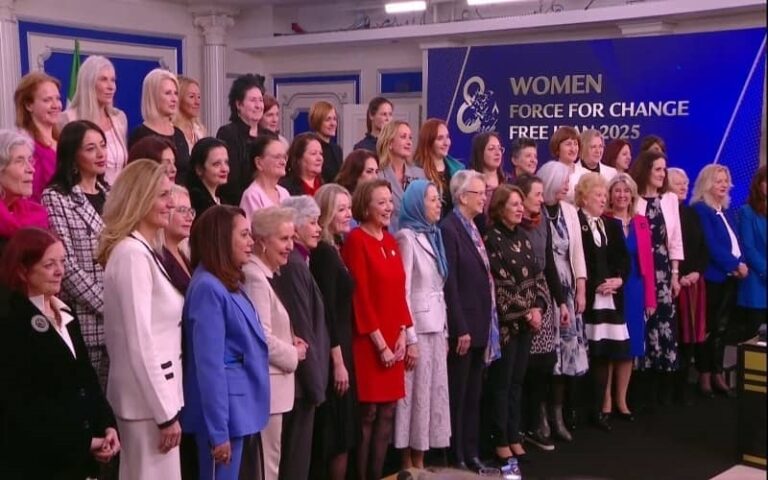
On February 22, 2025, in Paris, the international conference “Women, Force for Change – Free Iran 2025” brought together global leaders, activists, and human rights advocates to address the struggle of Iranian women against systemic oppression. Held ahead of International Women’s Day, the event served as a powerful platform to condemn the Iranian regime’s discriminatory laws and highlight women’s leadership in the fight for democracy.
#WomenForce4Change – International Conference marking International Women’s Day 2025 – When you leave here, tell your daughters and mothers about those who gave up everything they had for the ideal of freedom and equality for the people of Iran.#IWD2025pic.twitter.com/hijBvWNVD5
Maryam Rajavi, the President-elect of the National Council of Resistance of Iran (NCRI), delivered a compelling keynote address, paying tribute to Iranian women who have defied oppression for decades. She described their fight against compulsory hijab, enforced religion, and repressive governance as a battle for human dignity. Rajavi emphasized that the Iranian regime, propped up by religious fascism and nuclear threats, cannot withstand the determined will of its people. Her call to action urged the international community to stand with the Iranian resistance and support the movement for a free, democratic society.
#WomenForce4Change, Free Iran 2025 International Conference marking #IWD2025 .@rosaliaarteaga I strongly believe that Maryam Rajavi and the women of Iran are a power of nature. And I also believe that the women with a vision led by Maryam Rajavi can make the difference and can… pic.twitter.com/eOaw771eMr
The conference featured a series of powerful speeches from former heads of state, members of parliament, and women’s rights advocates. Sarvenaz Chitsaz, Chair of the NCRI Women’s Committee, stressed that gender equality is inseparable from Iran’s broader struggle for democracy. She argued that true change requires elevating women into leadership roles to dismantle the deep-rooted structures of misogyny in Iranian society.
Former French Minister of State Michele Alliot-Marie declared that “discrimination against women is enshrined in [the Iranian regime’s] law and will remain so until the regime changes.” She called for a national uprising, stating that the Iranian government’s reckless nuclear program poses a major threat to global security.Former Ecuadorian President Rosalía Arteaga Serrano expressed hope for a democratic Iran, praising Maryam Rajavi’s leadership as a force capable of transforming the country. She affirmed her commitment to Rajavi’s Ten-Point Plan, which envisions a secular, democratic Iran where human rights are fully respected.
Des femmes leaders venues du monde entier afin de réaffirmer leur soutien à @Maryam_Rajavi d'avoir cet inébranlable courage de poursuivre,de ne pas céder sous la torture ni aux exécutions,pour construire un Iran libre! Tenez, vous y êtes presque! Femme, Résistance, Liberté ! pic.twitter.com/7mbizuj0XP
Former Finnish Prime Minister Anneli Jäätteenmäki highlighted the persistent legal and social discrimination faced by Iranian women in education, employment, and political participation. She pointed to the 2022 protests as a defining moment, proving that Iranian women are determined to secure full social, economic, and political freedoms.Former Colombian Senator Ingrid Betancourt honored Iranian women’s resistance, declaring, “There’s no place on earth I would rather celebrate Women’s Day than here.” She emphasized that the NCRI is “the only organization where women are at the core of leadership”, a fact that sets it apart from other movements.
Linda Chavez, former director of the White House Office of Public Liaison, praised Rajavi’s Ten-Point Plan, comparing it to the American Bill of Rights. She stated that true change in Iran must come from within, as the Iranian people themselves must rise up and reclaim their country.Dominique Attias, Chair of the European Lawyers Foundation, honored Mariam Akbari Monfared, a political prisoner who has spent over fifteen years behind bars for her activism. Attias hailed weekly protests, hunger strikes, and other acts of defiance as evidence that Iranian women’s resistance cannot be broken.
Candice Bergen, former Conservative Party leader in Canada, revealed that over 650 female leaders from 80 countries, including former heads of state and Nobel laureates, had signed a statement of support for Iranian women’s struggle. She called on international institutions to pressure Iran into abolishing its misogynistic laws.Cherie Blair, President of the Cherie Blair Foundation for Women, delivered a video message denouncing Iran’s repressive policies. She highlighted the case of Maryam Akbari Monfared, imprisoned for seeking justice for her siblings who were executed during the 1988 massacre of 30,000 political prisoners. Blair urged the global community to stand in solidarity with Iranian women demanding freedom and justice.Other influential figures echoed the urgent need for change. Baroness O’Loan denounced the state-sponsored executions and imprisonment of women in Iran, while Theresa Villiers, former UK MP, criticized the country’s harsh legal restrictions on marriage, divorce, and inheritance. Dorien Rookmaker, former Dutch MEP, spoke about the power of digital activism in fighting Iran’s authoritarian rule, while German MPs Katja Adler and Sandra Weeser emphasized that Iran’s oppression of women is not just a domestic issue but a global concern.Italian MP Naike Gruppioni paid tribute to the women of Ashraf 3, a community of Iranian dissidents in Albania, describing them as symbols of unwavering resistance. Former Irish Deputy Leader Catherine Noone compared Iran’s struggle for democracy to Ireland’s own historical fight for freedom, urging sustained international pressure against Tehran.Former Portuguese Minister of National Defense Helena Carreiras reinforced the idea that nations that suppress women ultimately fail, calling for global solidarity in amplifying the voices of Iranian women. British Olympic champion Sharron Davies drew a parallel between gender discrimination in sports and the oppression of Iranian women, urging the international sports community to take a stand.
Un pensiero speciale va alle donne iraniane, che combattono con coraggio per i loro diritti. E non si fermano. L’Iran è il simbolo della lotta… pic.twitter.com/t8e7CvXBwA
Carmen Quintanilla, a former Spanish senator, reaffirmed her support for Maryam Rajavi’s Twelve-Point Plan, calling it a comprehensive roadmap for democratic reform in Iran. Former Tunisian Minister Sihem Badi declared that dictatorships fall, but the struggle for freedom endures, emphasizing the unbreakable resilience of women fighting for their rights.As the conference concluded, speakers emphasized the importance of sustained international pressure to hold Iran’s ruling regime accountable for human rights violations. There was a unanimous call for blacklisting the Iranian Revolutionary Guard Corps (IRGC) as a terrorist organization and supporting Iranian women as the vanguard of the country’s democratic transformation.The resistance movement is gaining momentum, with global leaders, activists, and human rights organizations uniting in their support for a free and democratic Iran. As one speaker put it: “2025 must be the year of a free Iran.”
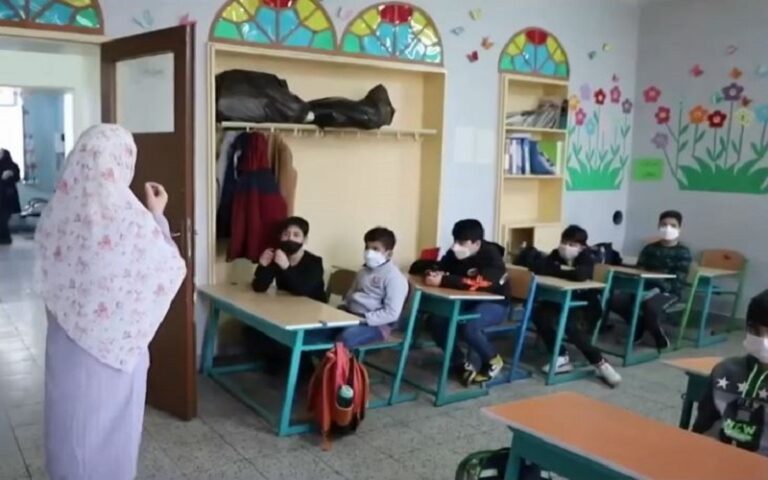
While the issues faced by teachers and instructors at Farhangian University persist, the Iranian regime’s policies have focused more on altering educational content and expanding state propaganda in textbooks rather than addressing the financial and legal crises of teachers.According to the state-run ILNA news agency, instructors at Farhangian University are protesting the “unfair implementation” of salary equalization and the lack of wage increases. A total of 2,500 retired instructors from this university, who are covered by the National Pension Fund, have been excluded from any salary increases.
Equalization or Elimination of Retirees’ Salaries?
Anoushiravan Hajian, a representative of retired instructors at Farhangian University, told ILNA that “the equalization formulas have been implemented unfairly, and in some cases, salary increases for instructors have amounted to zero.”He emphasized that despite continuous follow-ups, none of the officials have taken responsibility for this “wage injustice.”
This retired instructor, with 35 years of teaching experience, stated that he has received no salary increase and that all attempts by instructors to appeal to the Pension Fund and the parliament have been unsuccessful.He added, “In 2020, the salaries of non-faculty instructors were not increased, and now, in the equalization process, we have been completely ignored.”
Teachers’ Protests and Continuous Repression
The financial difficulties faced by teachers, retirees, and instructors at Farhangian University are only part of a larger educational crisis in Iran.In recent months, widespread protests by teachers have taken place across the country, where they have voiced their grievances over low wages, lack of attention to insurance and benefits, and the poor conditions of schools and educational facilities.Nevertheless, the Iranian regime’s response to these protests has not only been indifference but also repression.Many teacher union activists have been arrested and threatened, and no tangible improvements have been made in their legal or welfare conditions.
While teachers’ dissatisfaction with their financial and legal conditions has reached its peak, the Iranian regime’s education policies have primarily focused on altering textbook content and promoting state ideology rather than addressing these concerns.In recent years, under the orders of Ali Khamenei, the supreme leader of the Iranian regime, extensive changes have been made to school curricula, including the removal of scientific and historical topics and the increase of ideological propaganda in textbooks, while teachers’ infrastructural, legal, and financial issues have been ignored.These policies reflect the priorities of the ruling system, which, instead of improving the quality of education and the conditions of teachers, has focused on ideological indoctrination of students.
Injustice in Teachers’ Salaries
Despite government promises to improve teachers’ conditions and implement salary equalization plans, evidence suggests that these programs have had little to no impact on the lives of teachers and instructors.Many instructors at Farhangian University continue to live on meager salaries without job security.A total of 2,500 instructors with master’s and doctoral degrees are waiting for their employment status to change, but experience has shown that the Iranian regime, in practice, does not prioritize improving teachers’ conditions.As long as teachers’ financial difficulties remain unresolved, protests and dissatisfaction will persist.
The Iranian regime’s Statistical Center, in its latest report, announced that the prices of imported goods increased by 53.8% in the four quarters leading up to autumn 2024 compared to the same period the previous year. This figure, which reflects an unprecedented rise in inflation in the imported goods sector, is yet another clear indication of the economic crisis and the failure of the Iranian regime’s economic management.According to this report, the overall price index for imported goods reached 827.2 in autumn 2024, marking a 15.1% increase compared to the previous quarter and a 64.8% rise compared to the same season last year. This surge in prices has occurred despite repeated claims by the government that it has control over the market, yet economic realities contradict these assertions.
Economic experts have consistently emphasized that the Iranian regime’s currency and customs policies, instead of stabilizing the market, have themselves become the primary drivers of instability and rising prices. Ill-advised policies such as artificial price controls, preferential currency allocations for imports, and a lack of oversight over customs processes have led to increased import costs, which are ultimately passed on to the final consumer.A crucial point is that official statistics released by the state-run institutions in Iran are always met with skepticism by independent experts. The state-run Statistical Center of Iran acknowledged in its report that these figures are based on preliminary data from the Customs Administration and may be revised later. Experience has shown that such revisions are usually aimed at concealing the severity of the economic situation.Moreover, in the past, economic data from the government have often been delayed in publication or altered for political and propaganda purposes. As a result, the figures provided by government institutions today do not necessarily reflect the actual state of the country’s economy, and the real inflation rate for imported goods is likely even higher than the reported number.
The Consequences of Severe Inflation in Imported Goods in People’s Lives
The skyrocketing increase in the prices of imported goods has serious consequences for people’s livelihoods.Given that many essential goods, including medicine, raw materials for production, industrial machinery, and even certain food items, are imported, the 53% rise in import inflation will significantly raise the cost of living for the people.
On the other hand, the rising cost of imported raw materials will directly lead to higher prices for domestic products, more factory closures, reduced employment, and increasing poverty.In this situation, the regime has not only failed to provide any effective solutions to control the crisis but, according to many experts, continues to worsen inflation and rising prices with its “misguided policies.”
The Iranian Regime’s Economic Management: The Main Cause of the Crisis
The root cause of Iran’s economic crisis is not foreign sanctions but rather corruption, mismanagement, and the structural inefficiency of the Iranian regime.While Iran’s neighboring countries are experiencing economic growth and development, the Iranian regime remains trapped in failed economic policies that lead only to a decline in public welfare and a widening class divide.Meanwhile, the regime’s unscientific and monopolistic policies, along with interference from security and military institutions in the economy, have not only caused stagnation and inflation but have also destroyed market competition and driven capital out of the country.Under such circumstances, according to many independent observers, expecting any improvement in the economic situation while this inefficient system of governance remains in place is nothing more than an illusion.
A Dark Future Awaits Iran’s Economy
The recent report from the Statistical Center of Iran only reflects part of the dire economic reality of the country.Given the current trajectory, inflation, rising prices, and declining purchasing power will intensify in the coming years.The Iranian regime, which has consistently failed to address economic crises, has only deepened this crisis with its policies.In these conditions, the Iranian people become poorer by the day, businesses collapse, and economic inequalities continue to rise.
Frequent power and gas outages in Fars province, like in other provinces of Iran, have created serious challenges for producers and workers, especially in the industrial sector.What was previously an issue during summer has now extended into winter, leading to factory shutdowns and workforce reductions.According to the state-run ILNA news agency, power outages have forced many industries—especially energy-dependent sectors such as steel, petrochemicals, cement, and food production—to partially or completely halt their production lines.
To compensate for this shortfall, some industries have resorted to using diesel generators; however, this solution comes with high costs and environmental consequences.
Small Industries Suffer the Most
Bahram Zanoobi-Tabar, the head of the Coordinating Council of Islamic Labor Councils in Fars province, warned about the risk of layoffs and industrial closures, stating that “small industries are the most affected by power and gas outages. These problems have created serious challenges for both employers and workers, jeopardizing their job security.”He added, “Reduced production, declining productivity, rising costs, damage to machinery, customer dissatisfaction, and financial problems are among the main challenges that employers are facing.”Zanoobi-Tabar also stressed that frequent production interruptions have led to decreased output, delays in order deliveries, and, in some cases, irreversible damage to sensitive equipment.
Economic Growth Affected by Power and Gas Outages
Jamal Razaghi, the regime’s vice president of the Fars Chamber of Commerce, told ILNA that “according to statistics provided by the head of the Economic Commission of the Iranian regime’s Majlis (parliament), power outages during this summer caused the country to lose one-third of its economic growth. Now, with gas shortages in addition to electricity cuts in winter, the damage in this period will be even greater than in the first half of the year.”
Razaghi stated that the country’s economic problems stem from broader foreign policy decisions and the lack of support for the private sector.He emphasized that handing over the economy to the private sector and reforming economic policies could help prevent the worsening of the crisis.
The Impact of Power Outages on People’s Livelihoods
One of the most significant consequences of declining economic growth is the sharp decrease in people’s purchasing power.Razaghi stated that even if production continues, the decline in people’s purchasing power will push the market into recession. He said, “Industries face difficulties in selling their products even if they continue production. Even if we assume that power and gas outages have no impact on industrial activities, people’s inability to afford goods will further deepen the crisis in the industrial sector.”This economic expert also pointed to the increasing tax burden on the private sector, saying, “It is not possible to run one part of the country through special privileges while placing all economic pressures solely on the private sector.”“The government, in an attempt to compensate for budget deficits and pay pensions, has increased tax and social security pressures on production units, which has further aggravated the difficulties faced by industries.”Continuous Power and Gas Outages Have Both Economic and Social ConsequencesZanoobi-Tabar warned that factory closures or reduced working hours, lower wages, increased workload, and job insecurity are direct consequences of this crisis for workers.He emphasized that prolonged factory shutdowns will ultimately lead to workforce reductions and widespread unemployment.Zanoobi-Tabar added, “Power and gas outages cause serious harm not only to employers but also to workers, leading to widespread economic and social repercussions.”With the ongoing energy crisis in the country, the production and employment sectors are at serious risk.Experts have warned that if the Iranian regime fails to reform its broader economic policies, this crisis could lead to widespread industrial shutdowns, rising unemployment, and a deepening of people’s livelihood difficulties.
Reza Nourani, the head of the Iranian regime’s National Union of Agricultural Products, told the state-run ILNA news agency that the country’s agricultural trade balance remains negative this year.Referring to the 10-month statistics up to January 2025, he stated that agricultural imports have significantly exceeded exports.
Export and Import Statistics
According to Nourani, during this 10-month period, approximately 8.356 million tons of agricultural products worth $6.662 billion were exported from the country.In comparison, during the same period last year, exports amounted to approximately 6.834 million tons, valued at $4.946 billion. Therefore, export volume increased by 22%, and its value rose by 34%.
On the other hand, agricultural imports during the same period reached 20.224 million tons, valued at $13.117 billion.These figures indicate a 5% decrease in import volume and a 12% decline in value compared to the previous year.
Negative Trade Balance
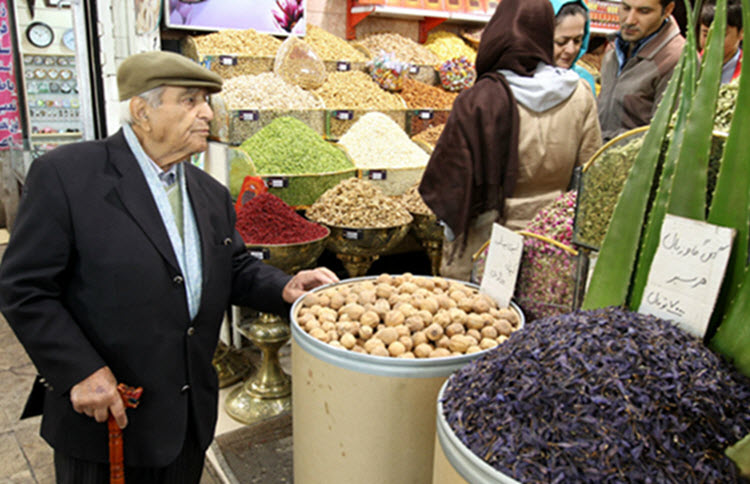
By comparing these statistics, Iran’s agricultural trade balance remains negative. Nourani emphasized that this situation reflects the dominance of imports over exports in the agricultural sector.One of the major challenges in the agricultural trade sector is the widespread smuggling of almonds and walnuts into Iran.According to the state-run Fararu website, about 90% of walnuts and almond kernels enter Iran illegally through the country’s southern ports, particularly Ganaveh, Bandar Abbas, and Bushehr.As reported by this source, in addition to harming domestic producers, the lack of health inspections on these products could pose a risk to consumer health.Massoud Soleimani, Secretary of the Iranian Association for Nut, Dried Fruit, and Spice Supply and Packaging, stated:“Currently, 40,000 tons of walnuts and 50,000 tons of almonds are smuggled into the country. This not only generates enormous profits for the smuggling mafia but also inflicts serious damage on domestic suppliers and producers.”Nourani, referring to the ban on importing certain products such as almonds and walnut kernels, stated that these restrictions have led to an increase in smuggling.He stressed that revising trade and import policies could help prevent smuggling and improve the country’s trade balance.However, the inefficiency of the governance system remains the root cause of all the crises affecting Iranian society.
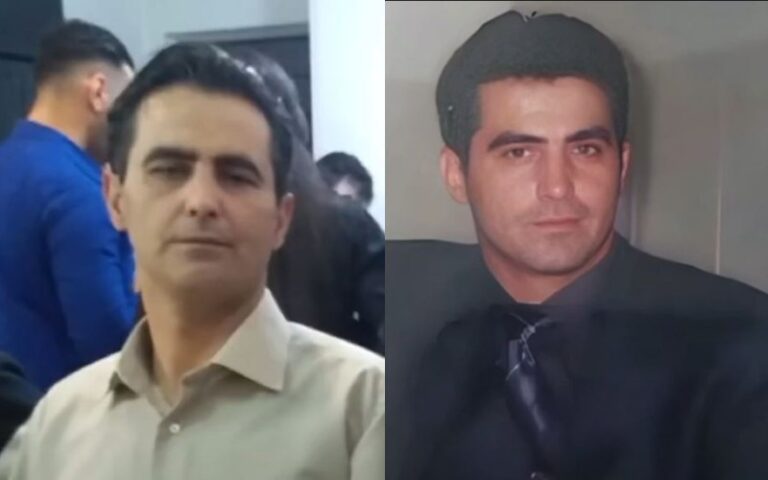
Daughter of Iranian political prisoner Mehdi Hassani: My father could be executed at any momentMaryam Hassani, the daughter of Mohammad Hassani, a political prisoner sentenced to death, has announced that the Supreme Court has rejected her father’s request for a retrial. On Sunday, February 23, she wrote on X: “According to my father’s lawyer, his retrial request has been rejected, and his execution could be carried out at any moment.”
Mehdi Hassani’s execution had previously been halted after the Supreme Court accepted his lawyer’s request for a retrial.Mr. Hassani, born in 1976, is married and the father of two children. He was arrested on September 9, 2022, in Zanjan while attempting to leave the country and was subsequently transferred to Evin Prison.
He, along with another prisoner named Behrouz Ehsani, was sentenced to death in mid-September 2024 by Branch 26 of the Islamic Revolutionary Court, presided over by Judge Iman Afshari. They were charged with “rebellion (Baghi), waging war against God (Moharebeh), and corruption on earth (Efsad fil-Arz).”Other charges against them include “gathering classified information, conspiracy and collusion against national security, and membership” in the People’s Mojahedin Organization of Iran (PMOI/MEK).
Abdolreza Golpayegani, the Iranian regime’s Deputy Minister of Roads and Urban Development, described the issue of informal settlements as serious and reported that currently “around 6.5 to 7 percent of Iran’s population lives in the outskirts of cities.”In an interview with the state-run ILNA news agency, published on Sunday, February 23, Golpayegani described the situation in Razavi Khorasan Province (mainly Mashhad), Sistan and Baluchestan, Hormozgan (Bandar Abbas), Khuzestan, and Tehran as “more critical.”
He stated, “In some cities of Tehran Province, the figures and statistics for informal settlements are very high. We are witnessing informal settlements within Tehran itself, and this phenomenon has spread into the city’s urban boundaries. In areas such as Islam Abad Valley, Farahzad Valley, Oqaf neighborhood, Khak Sefid, southeast Tehran, and parts of District 19, informal settlements are expanding.”Experts and researchers have long attributed the expansion of informal settlements in Tehran and provincial capitals to the concentration of resources and business centers in these cities.However, according to the Deputy Minister of Roads, the primary cause of informal settlement expansion in Iran’s eastern provinces is drought—an issue the government has been unable to resolve in recent years, leading to its worsening.Golpayegani stated, “In the eastern provinces of the country, the common factor behind the expansion of informal settlements has been prolonged droughts, which have occurred over the past 30 to 40 years.”The regime’s Deputy Minister of Roads did not provide current statistics on informal settlements in different provinces. However, in 2022, the state-run ISNA news agency, citing the Statistical Center of Iran, reported that “more than one million people in the four cities of Zabol, Zahedan, Chabahar, and Iranshahr in Sistan and Baluchestan Province live in informal settlements.”
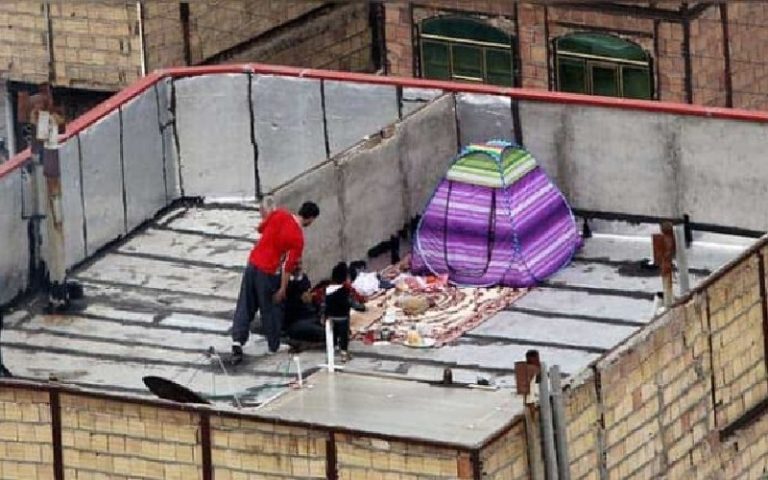
Iran’s Welfare Organization had estimated the number of informal settlers in the country at 12 to 13 million in 2016 and approximately 19 million in 2018.Earlier, Iranian media had reported that housing construction in the capital had dropped “to its lowest level in 23 years.”In May 2024, Ahmadreza Sarhadi, a housing expert, warned in an interview with the state-affiliated Entekhab website about the phenomena of “shared housing” and “rooftop sleeping” in Tehran, stating that people’s incomes do not “match” housing rental prices.The rise in housing costs in Iran in recent years has led to the expansion of informal settlements and the emergence of phenomena such as “grave sleeping,” “rooftop sleeping,” and “shared housing.”He stated, “Some people cannot even afford to rent a house in the lower-income neighborhoods of Tehran. Renting a 50-square-meter house in Naziabad [located in southern Tehran] now requires a 1 billion rial (approximately $1065) deposit and a monthly rent of 100 million rials (approximately $107).”It is worth noting that the minimum wage for a worker with two children is 110 million rials (approximately $117).
As the value of Iran’s rial has dropped and the exchange rate of the dollar has raised sharply in recent months, retirees and wage earners are facing a severe decline in their purchasing power. A retirees’ rights activist states, “The first winner of the dollar’s price surge is the government.”According to the state-run ILNA news agency, Mohammadreza Ghorbani, a labor retirees’ union activist, explained the winners and losers of the currency surge, stating, “The higher the exchange rate goes, the government receives more foreign currency through legal exports or even by bypassing sanctions, and by converting it to rials, it compensates for its budget deficit.”
Ghorbani added, “After the government, quasi-private rent-seeking companies such as petrochemical firms, steel industries, and large mines benefit the most, as exports become easier for them, and their revenues multiply with the rising exchange rate.”Criticizing the widespread economic corruption in the Iranian regime’s system, he further stated, “Embezzlers and those who obtain massive loans from banks without proper regulations or guarantees are also among the winners.”Describing the struggles of workers in obtaining a 300 million rial loan (approximately 320 dollars), this retirees’ rights activist remarked that some influential and well-connected individuals secure billion-rial loans, use them to buy dollars and gold, and within a few months, amass astronomical wealth in this turbulent economy.This social security retirees’ union activist emphasized that the main losers of the dollar’s price hike are employed workers, retirees, teachers, nurses, and all government employees with fixed incomes.He warned, “The upper layers of wage earners, who once belonged to the middle class, have now fallen below the poverty line, while the lower classes are plunged into absolute destitution.”Ghorbani, referring to the dire situation of working-class families, said, “In the outskirts of Tehran, such as Abdolabad, I know workers who have been forced to pull their children out of school due to the sharp rise in living costs.”Describing how these children are now street vendors instead of students, he stated, “Street vending by the children of the working class in the southern parts of the city has become normal, which means education has become deeply class-based.”Ghorbani then pointed to the consequences of the dollar’s surge in the healthcare sector, adding, “The deregulation of drug prices and the rising exchange rate have made it impossible for workers and retirees to afford doctor visits or buy medicine.”This labor activist further noted, “Many have been forced to resort to self-treatment or forgo treatment altogether—which puts their lives at risk.”Iran’s economy has faced multiple challenges in recent months. With the continued rise in the dollar’s value and persistent inflation, retirees and workers are experiencing severe financial strain.While labor activists warn about the livelihood crisis of wage earners, economic policymakers continue to insist on policies that, according to Ghorbani, “only fill the pockets of embezzlers and profiteers.”
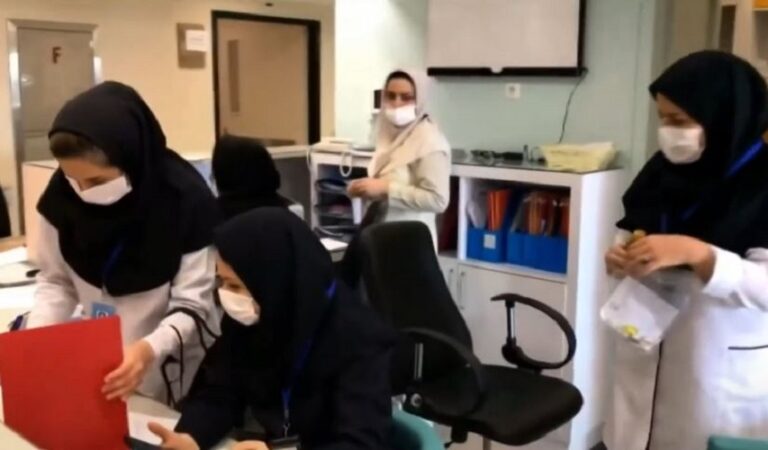
Mohammad Sharifi-Moghaddam, the Secretary-General of Iran’s Home of Nurse, says that some nurses in Tehran are homeless and, to avoid paying rent, work multiple shifts and sleep in their personal cars during rest hours.On Saturday, February 22, Sharifi-Moghaddam told the state-run ILNA news agency that these nurses even use hospital showers for bathing and “live in a homeless manner.”Sharifi-Moghaddam stated that according to World Health Organization standards, there should be three nurses per 1,000 people to prevent increased patient mortality. However, he added that in recent years, Iran has set a record low, with only “one and a half nurses” per 1,000 people.
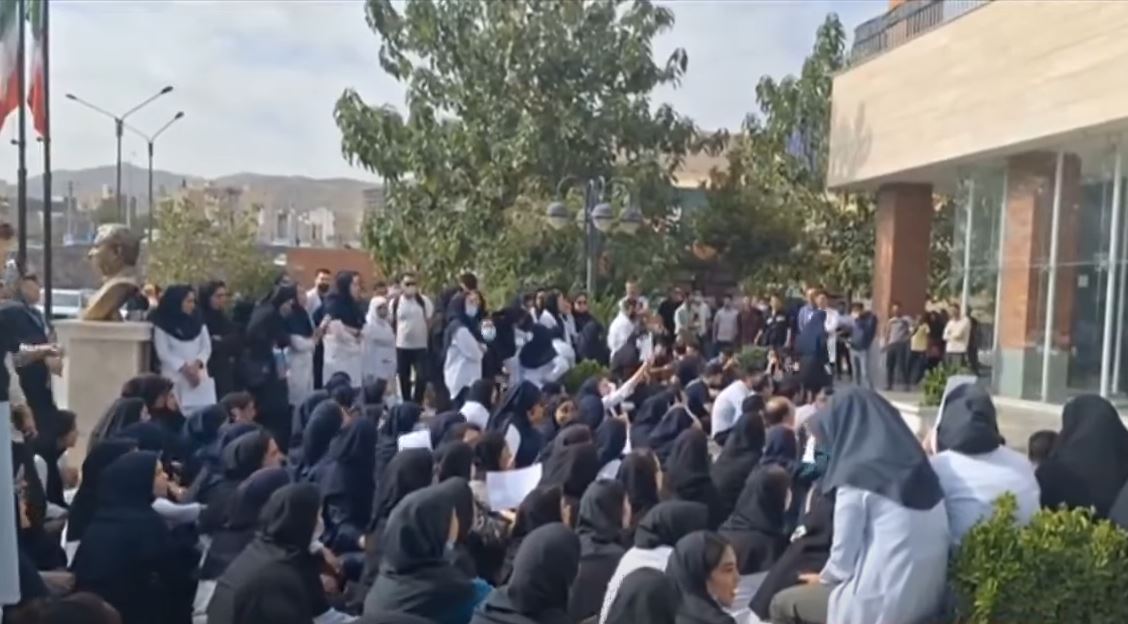
The Secretary-General of the Home of Nurse, pointing to the high rate of nurses leaving the profession or emigrating to work abroad, said that the nursing community has become “hopeless” about any improvements in their livelihoods, human resource management, and service tariff systems.Mohammad Sharifi-Moghaddam stated that the nursing profession in Iran has been in a tense situation for years and added that Milad Hospital in Tehran has been experiencing turmoil in recent weeks.According to human rights media outlets and some professional nurse news channels, nurses in several other cities in Iran have also staged protests in recent days.The Telegram channel of the Coordinating Council of Nurse Protests published images of demonstrations by the medical staff of Beheshti Hospital in Kashan on February 20. The channel reported that these nurses gathered to protest against “delayed payment of wages,” “low salary levels,” and “overtime payments and service tariff issues.”Meanwhile, on August 31, 2024, Masoud Pezeshkian, the President of the Iranian regime, announced that he had received permission from the regime’s Supreme Leader to withdraw funds from the National Development Fund to settle the healthcare workers’ debts.This decision came in response to widespread protests by nurses in various hospitals across Iran, which lasted for nearly two months.Widespread nurses’ protests in IranThe nurses’ protests began on August 3 last summer with demonstrations and strikes by nurses in hospitals in Shiraz and later spread to other cities.Nurses protested both the neglect of their demands and the harsh working conditions, including “mandatory overtime with extremely low wages, exhausting work under insults and threats” in their workplaces. According to them, this situation has seen “no change” so far.
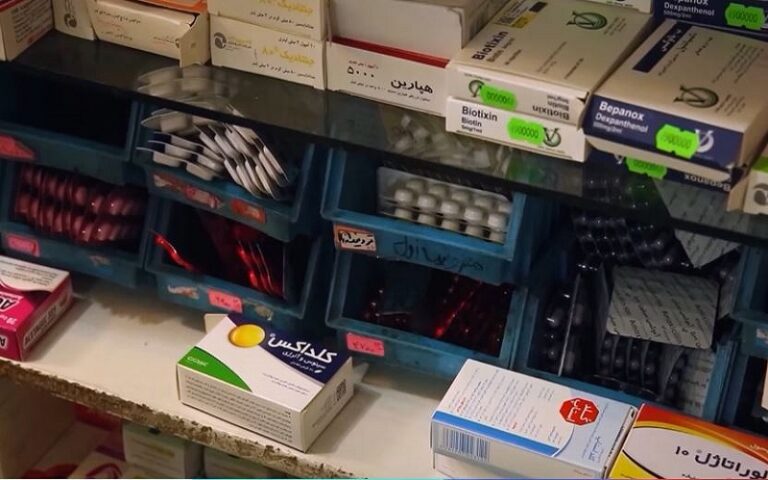
In continuation of the medicine crisis in Iran, Mohammad Jamalian, a member of the Health and Treatment Commission in the Iranian regime’s Majlis (parliament), announced that in the “coming months,” medicine shortages will be seen with “greater intensity.”Jamalian issued this warning in an interview with the state-run ILNA news agency, which was published on Friday, February 21.Jamalian said, “The medicine production cycle has been disrupted, and even if the situation is corrected today, it will take four months to compensate for this deficiency. For this reason, unfortunately, in the coming months, we will see medicine shortages with greater intensity.”
Speaking about the cause of the disruption in the medicine production cycle in the country, Jamalian said, “Social Security Insurance, due to not receiving its claims from the government, has been unable to pay the claims of pharmacies and private centers. Pharmacies have not paid pharmaceutical companies, and companies have also not paid importers.”This situation has arisen while medicine production in the country depends on importing raw materials from foreign countries.This MP, noting that currently “between 350 to 400 types” of medicine are in shortage, said: “Our concern is that in the coming months, we will again reach a stage where essential medicines and those whose consumption is a matter of life and death for patients will become scarce.”The warning from this Majlis member was published while some social media users wrote on Friday that soon insurance companies will stop covering medicine costs.In this regard, Jamalian confirmed that pharmacies are not accepting Social Security Insurance.As he stated, “Pharmacies have announced that from February 20, they will no longer accept Social Security Insurance booklets. In some provinces, this date has been set for February 22, and in others, March 5.”It was previously reported that while the price of some medicines has increased up to fourfold, insurance companies and the government are blaming each other and refusing to take responsibility for the issue.The warning about the worsening medicine shortage in the country was published less than ten days after a revelation that the Iranian Pharmacists Association had sent a letter to the regime’s Secretary of the Supreme National Security Council, warning about the medicine crisis caused by the failure of Social Security Organization and insurance companies to pay pharmacies’ claims.The letter emphasized that the Social Security Organization had only paid 8.8% of pharmacies’ claims, which is not sufficient to cover their operating costs.Mohammad Jamalian also had no good news regarding this matter: “When the Social Security Health Management was present in the commission two days ago, they announced that the Social Security account is empty.”In its letter, the Pharmacists Association requested the Supreme National Security Council to take urgent action to resolve this crisis to prevent disruptions in medicine supply for patients and to safeguard public health.A member of the board of directors of the Iranian Pharmacists Association stated on January 26 that the increase in the price of some medicines has caused “shock” among the people, and out of every ten people who enter pharmacies, three do not purchase any medicine.