

Iran: USD-rial Exchange Rate Increasing HourlyThe price of various gold coins also jumped between 1.5 percent and over three percent on Thursday compared to Wednesday. On the same day, Iran’s Statistical Center released a report indicating that the price of goods and services in February (corresponding to the Iranian month of Bahman) increased by 4.1 percent compared to January. This marks the highest monthly inflation rate in the past two years. However, inflation in food items has been significantly higher than other goods and services, reaching 6.7 percent. The year-on-year increase in the price of goods and services in February (point-to-point inflation) has been reported at over 35 percent, with food items experiencing a higher rate of inflation compared to other goods and services. However, field reports from Iranian media suggest that the actual inflation rate is significantly higher than the figures provided by the Statistical Center. For example, Iranian media have reported an 83 percent surge in the price of rice in February 2025 compared to September 2024. However, the Statistical Center claims that the highest monthly inflation rate was recorded in vegetables and legumes at approximately 17 percent, while other food items saw lower price increases. In recent years, Iran has faced rampant inflation, with household purchasing power shrinking each year. According to the International Monetary Fund (IMF), Iran is once again among the ten countries with the highest inflation rates in the world. Amid this crisis, Iran’s Statistical Center reports that 27 percent of Iranians live on a daily income of just two dollars, meaning that one-third of the population cannot afford basic living necessities. Additionally, the Global Hunger Index (GHI) indicates that 6.5 percent of Iran’s population suffers from malnutrition. Masoud Pezeshkian, the president of the Iranian regime, has failed to curb the rising exchange rate in the free market despite his promises. Moreover, the exchange rate in the NIMA system (the official foreign exchange market) has also soared, and from next year, the allocation of preferential foreign currency for essential goods will be discontinued.
USD Surpasses 940,000 Iranian Rials as Inflation Accelerates
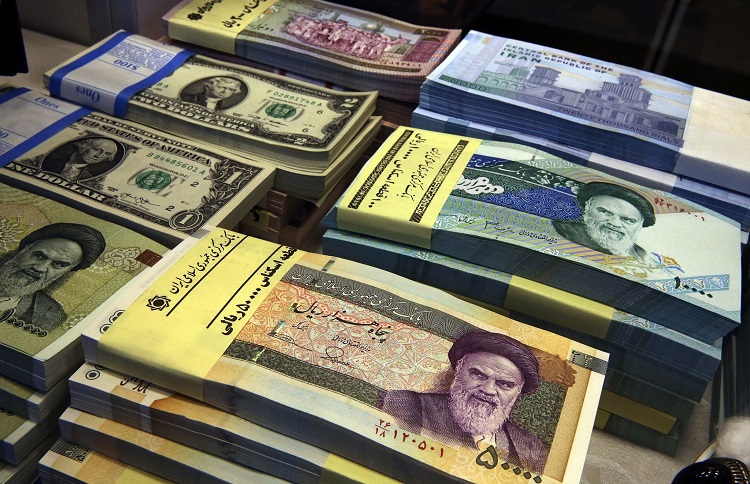
The exchange rate of the U.S. dollar in Iran’s free market surged by more than 13,500 rials on Thursday, February 20, reaching 941,000 rials. Meanwhile, Iran’s Statistical Center reports that monthly inflation in February has broken a two-year record.
The value of the U.S. dollar against the Iranian rial has increased by five percent over the past week, more than 15 percent in the past month, and nearly 70 percent in the past year. This trend, coupled with the expansion of liquidity, has led to rampant inflation in the country.
Grossi: The JCPOA Is an Empty Shell
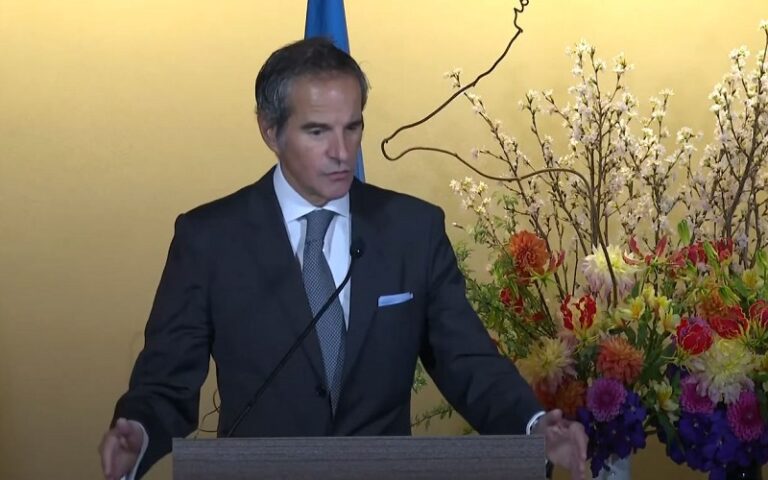
Statements by the Director-General of the International Atomic Energy Agency (IAEA) regarding the ineffectiveness of the Joint Comprehensive Plan of Action (JCPOA) in imposing restrictions on Iran’s nuclear program have prompted a reaction from the Iranian regime.
On Thursday, February 20, the Atomic Energy Organization of Iran (AEOI) called Grossi’s remarks “biased,” while Kazem Gharibabadi, Deputy Legal and International Affairs Minister of the Iranian regime’s Foreign Ministry, described them as “political and unprofessional” in a post on X (formerly Twitter).
Grossi: Iran Seeking to ‘Sevenfold’ Its Production of 60% Enriched UraniumOn Thursday, during a press conference in Tokyo, Grossi stated that the JCPOA is obsolete in relation to Iran’s nuclear program and that seeking a new framework for an agreement with Iran is necessary. He went on to describe the JCPOA as an empty shell and said he does not believe anyone still thinks the agreement can play a role at this point. He added that while the agreement was in effect for some time, regardless of opinions on its benefits or drawbacks, it is now technically obsolete and no longer functional. Clarifying his remarks, the IAEA chief pointed out that the previous agreement contains outdated elements, such as specifications on the types of centrifuges used by Iran. However, he noted that in a meeting with Iranian regime Foreign Minister Abbas Araqchi, both sides agreed that the fundamental philosophy of the JCPOA—which is based on Iran refraining from certain activities in exchange for incentives—could still continue. In response to these statements, the AEOI said: “At a time when the U.S. and certain Western countries are seeking to exploit this agency for their unjust pressures against Iran, such political and unprofessional remarks could serve as a pretext for their illegitimate ambitions.” The statement further claims that Grossi has demanded Iran prove that it is not seeking nuclear weapons, adding, “Any rational mind knows that the most fundamental legal principle is the presumption of innocence.” These comments come while there is substantial evidence, including recent revelations by the National Council of Resistance of Iran (NCRI), that the Iranian regime is continuing to move closer to developing a nuclear bomb. The protests by this Iranian government body and Gharibabadi against Grossi’s remarks come despite the fact that the IAEA has for years been unable to persuade the Iranian regime to provide a logical explanation for the traces of uranium discovered at its undeclared sites. Furthermore, Tehran officials have yet to provide an explanation for enriching uranium to 60 percent purity—very close to weapons-grade levels required for a nuclear bomb—only stating that Iran has deviated from its nuclear commitments in response to the U.S. withdrawal from the JCPOA. On February 14, the IAEA director-general also warned that Iran intends to “increase sevenfold” its monthly production of 60 percent enriched uranium and cautioned that time is running out to reach an agreement to curb Iran’s nuclear program. He stated that Iran is in the process of increasing its monthly production of 60 percent enriched uranium by approximately seven times. He further noted that by the time the IAEA releases its next report in the coming weeks, Iran will likely have around 250 kilograms of uranium enriched up to 60 percent. Reuters reports that this amount of uranium stockpile, if further enriched to 90 percent, would be sufficient to produce six nuclear bombs.
The Outflow of Capital from Iran Through Cryptocurrencies Increased By “70 Percent” In 2024

A recent report published by the American company Chainalysis reveals that 39 percent of “illegal cryptocurrency transactions” in 2024 were carried out by countries under U.S. sanctions, including Iran.
The report states that entities and countries under U.S. sanctions traded $15.8 billion worth of cryptocurrency last year. Financial restrictions and geopolitical tensions have pushed countries like Iran and Russia toward digital assets as a means to circumvent sanctions.
Chainalysis, a New York-based company specializing in Bitcoin tracking and blockchain analysis, highlighted in its recent report Iran’s growing reliance on cryptocurrencies and the outflow of capital from the country through domestic centralized exchanges.
According to the report, capital outflows from Iran through cryptocurrencies reached $4.18 billion in 2024, marking a 70 percent increase compared to the previous year.
Chainalysis attributes this rise not only to the Iranian government’s attempts to evade sanctions but also to Iranians’ growing preference for digital assets due to the sharp devaluation of the rial and soaring inflation in the country.
Previous reports had also indicated that many Iranians, facing international sanctions and economic instability, have turned to cryptocurrencies to safeguard their wealth.
Under these circumstances, Iran’s central bank blocked the payment gateways of all domestic cryptocurrency exchanges in November and December 2024.
The central bank then imposed strict conditions on cryptocurrency trading platforms in Iran, stating that payment gateways would only be reopened if these regulations were met.
Among the central bank’s requirements for granting operating licenses to cryptocurrency exchanges were the submission of detailed transaction records and all user order and trade data.
However, the Chainalysis report indicates that despite the severe restrictions imposed on Iranian citizens’ use of cryptocurrencies, the Iranian government itself is increasingly leveraging this financial technology to bypass sanctions.
A Lethal Iranian Regime Drone Displayed at Major Republican Event in the U.S.
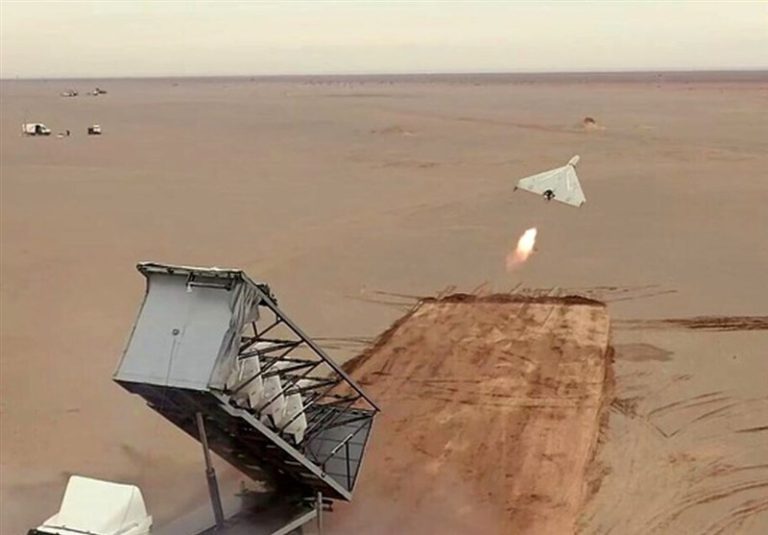
At this year’s major Republican gathering in the U.S., on Thursday, February 20, an Iranian regime-manufactured drone was displayed as definitive evidence of its involvement in transnational wars.
This drone, a Shahed-136 model produced by the Iranian regime, was recently transferred to the United States.
The Shahed-136 drone is manufactured under the supervision of the Islamic Revolutionary Guard Corps (IRGC), which the U.S. has designated as a terrorist organization.
Ukraine shot down 9 Shahed drones made by Iran’s regimeThis drone is one of many weapons supplied by the Iranian regime to Russia and has been used in attacks against Ukraine. The Shahed-136 drone was also used in a deadly attack by Iran-backed Shia militias on a U.S. base in Jordan called “Tower 22” in January 2024. That attack prompted a military response from the U.S. This drone was transferred to the U.S. with the cooperation of the organization “United Against Nuclear Iran” (UANI), led by Mark Wallace, a former U.S. ambassador to the United Nations. The U.S.-based non-governmental organization UANI has stated that the drone was moved from Ukraine to Poland and then to Washington. The drone will be displayed on Thursday at the “CPAC” summit, a major gathering for conservative policymakers in the U.S. Mr. Wallace himself will present the drone during the CPAC summit. This gathering will host top figures from the current U.S. government, including President Donald Trump, Vice President J.D. Vance, White House National Security Advisor Mike Waltz, senior senators, and other officials. The destructive power of the Shahed-136 is equivalent to more than 50 kilograms of TNT, and it has been used in various attacks. Each of these drones costs Iran’s regime approximately $80,000 to produce. A large number of these drones and similar weapons are continuously supplied by the Iranian regime to its allies. The Iranian regime’s support for Moscow, initially limited to drone sales, later expanded to include joint production within Russian territory. Despite repeated warnings from the international community regarding its support for Russia against Ukraine, the Iranian government has increased its military cooperation with Moscow through the sale of ballistic missiles.
University Students in Iran Condemn Regime for Murder of Amir Mohammad Khaleqi
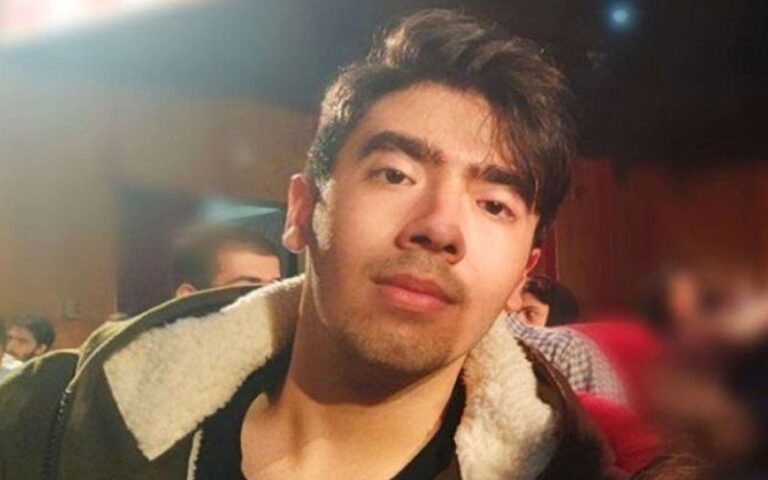
In response to the killing of Amir Mohammad Khaleqi, a 19-year-old University of Tehran student, by Iranian regime security agents, students from two universities issued separate statements on Tuesday, February 18, criticizing the “lack of security” in society and the “incompetence and inefficiency” of the government.
According to the Telegram channel Daneshjuyan-e Motahed (United Students), the student council of Beheshti University and a group of students from Allameh Tabataba’i University in Tehran emphasized the need to break the silence against “this injustice and oppression” and demanded an “immediate, thorough, and decisive” response from authorities to this “heartbreaking crime.”
The student council of Beheshti University, in its statement, strongly condemned the murder of Amir Mohammad Khaleqi following a “brutal attack by armed thieves” and described it as “a clear indication of the deteriorating security situation around university campuses and the increasing threats to students’ lives.”
At the same time, a group of students from Allameh Tabataba’i University held a gathering in memory of Amir Mohammad Khaleqi, attributing his murder to the consequences of “the dominance of a weak and ineffective political structure” and the result of the authorities’ neglect of the “lack of security” for students.
In their statement, they did not limit the blame for Amir Mohammad Khaleqi’s murder to street criminals, emphasizing: “His killer is a system that has sacrificed security to its own incompetence
The protesters at Allameh Tabataba’i University added: “Law enforcement agencies, which are supposedly responsible for maintaining security, have long deviated from their primary function and have become tools for repressing society.”
They emphasized: “We will not remain silent in the face of this injustice and oppression, nor will we allow this crime to be buried in silence. Our demand is an end to this vicious cycle and broken system. We refuse to continue paying the price for your incompetence.”
Amir Mohammad Khaleqi, a 19-year-old undergraduate business management student at the University of Tehran, lost his life on the evening of Wednesday, February 12, after being stabbed by “muggers” near the university.
On Tuesday, February 19, Tehran’s police claimed that five individuals had been arrested in connection with Amir Mohammad Khaleqi’s “murder.”
Mohammad Shariari, the head of Tehran’s criminal prosecutor’s office, cited the “confessions” of the suspects and stated that their motive was “robbery.”
The killing of Amir Mohammad Khaleqi has sparked widespread reactions in Iran, with student protests at the University of Tehran continuing over the past several days.
In this context, the “No to Executions Tuesdays” campaign, consisting of prisoners protesting against executions in 36 prisons across the country, has called Amir Mohammad Khaleqi’s murder suspicious and held the government responsible for the incident.
At a protest and march on Monday, February 18, students at the University of Tehran condemned the authorities’ disregard for student safety, the allocation of resources to suppress individual freedoms, and the enforcement of the government’s mandatory hijab policy on women. They chanted: “So many hijab enforcers, yet not a single guard for our safety.”
The national student councils also issued a statement emphasizing: “The lives of students are not only not a priority for university officials, but they hold absolutely no significance in university policymaking.”
Poverty and the Collapse of Ethical Values Under Iran’s Regime
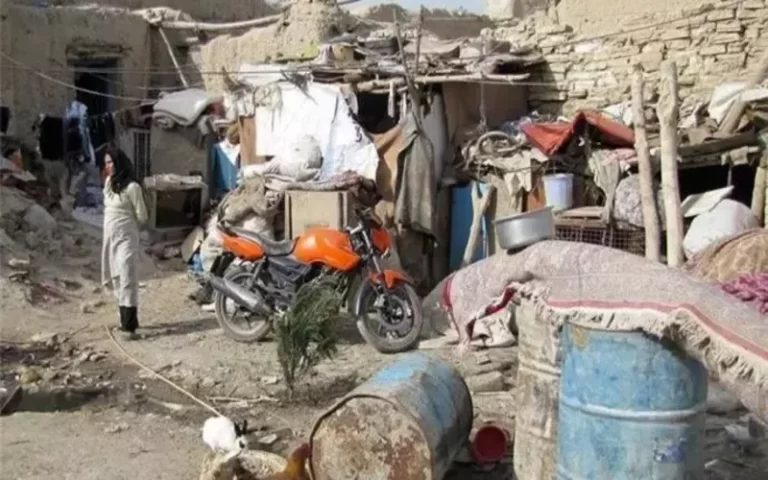
Ahmad Delbari, Senior Advisor at Iran’s Welfare Organization, has revealed that 4,800 elderly individuals have been abandoned in hospitals, shrines, and on the streets by their own children. He also confirmed that thousands of retirees have become homeless, now residing in shelters across Tehran.
According to official statistics, Iran has 9.8 million elderly citizens, including 5.15 million women and 4.7 million men. Hesamodin Allameh, the former head of Iran’s National Council for the Elderly, warned that Iran has one of the fastest-growing aging populations in the world, stating that “Iran will not witness a single good day in the field of elderly care over the next decade.”
During a conference on “Aging Justice,” Delbari disclosed that 30% of nursing homes in Iran are filled with unidentified elderly individuals, reflecting the deepening social crisis in the country. He added that aging in Iran has escalated from a “crisis” to a “mega-crisis” due to the lack of supportive policies for the elderly.
Inflation, Falling Pensions, and Homeless Retirees
Iran’s disastrous economic conditions have forced retirees—who should be enjoying a dignified life—to return to work just to survive. Official studies indicate that:
- 25% of retirees receive pensions below the minimum wage.
- 60% of pension payments fall below the poverty line.
- More than half of living expenses are not covered by pensions, forcing retirees to seek additional jobs or work in the informal economy.
- “Enough with the warmongering, our tables are empty!”
- “Our enemy is right here, they lie when they say it’s America!”
Continued Suspension of Iran-Lebanon Flights; Rising Tensions in Beirut
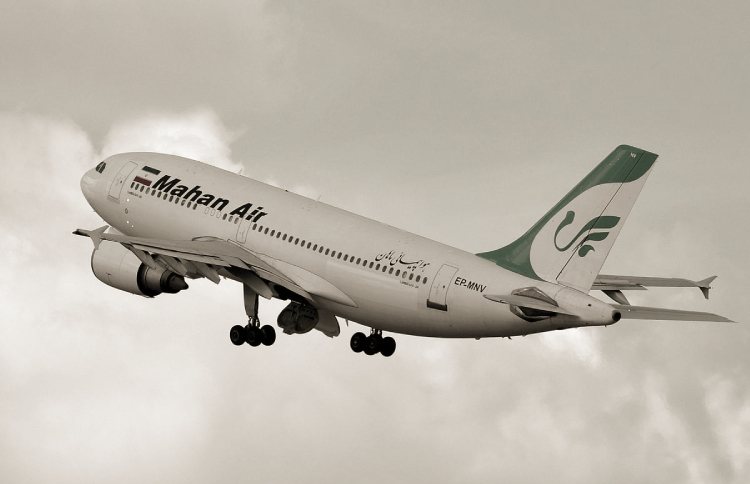
The Lebanese government has indefinitely extended the suspension of incoming and outgoing flights to and from Iran, a decision taken following a U.S. warning about the potential targeting of these flights by Israel.
On Monday, February 17, the Lebanese government announced the indefinite extension of the flight suspension. Previously, the restriction was set to last until February 18, but according to Najat Sharaf al-Din, the spokesperson for the Lebanese presidency, the ban will remain in place until further notice.
Without specifying a potential timeline for lifting the ban, Sharaf al-Din stated: “The Minister of Public Works and Transport has been tasked with extending the suspension of flights to and from Iran.”
This decision follows a warning from the United States to Lebanon that Israel may target Iranian aircraft attempting to land in Beirut.
A Lebanese security source told Agence France-Presse (AFP) that after the ceasefire on November 27 between Hezbollah and Israel—brokered by Washington—concerns grew regarding the possible transfer of weapons from Iran to Lebanon through Beirut’s airport.
Israel has repeatedly accused Hezbollah of using the airport to receive military equipment from Iran, an allegation that Hezbollah and Lebanese officials have consistently denied.
Hezbollah’s Reaction and Street Protests
The Lebanese government’s decision has sparked strong reactions from Hezbollah and its supporters. Following the announcement of the flight ban, Hezbollah sympathizers blocked access roads to Beirut International Airport in protest.
Najat Sharaf al-Din stated that the Lebanese government had instructed security forces to prevent road blockages near the airport and to enhance security measures for all incoming and outgoing flights.
Sheikh Naim Qassem, Hezbollah’s Deputy Secretary-General, condemned the government’s move, calling it “the implementation of an Israeli directive.”
Amid the protests in Beirut, a United Nations (UNIFIL) convoy was attacked near the airport on Friday. During the incident, one of the UN vehicles was set on fire, and two peacekeepers were injured.
The attack has raised international concerns about escalating tensions in Lebanon. While Lebanese authorities have yet to issue an official statement regarding the incident, analysts believe that the rift between Hezbollah and the Lebanese government is deepening.
Stranded Lebanese Citizens in Iran
As a result of the extended flight suspension, some Lebanese citizens currently in Iran are facing difficulties returning home. The Lebanese government has stated that the Minister of Foreign Affairs is actively working on the matter and coordinating efforts to facilitate the return of Lebanese nationals from Iran.
The decision to extend the suspension of Iran-Lebanon flights is one of the most sensitive measures taken by the Beirut government in recent months. Not only has it provoked strong reactions from Hezbollah and led to street protests, but it has also intensified Lebanon’s internal tensions.
The U.S. warning regarding Israeli threats has further heightened concerns over potential regional escalations. Meanwhile, the attack on the UN convoy and the ongoing protests in Beirut suggest that Lebanon is once again on the brink of a security crisis.
Sharp Rise in Food Prices in Iran; Meat and Rice Lead the Surge
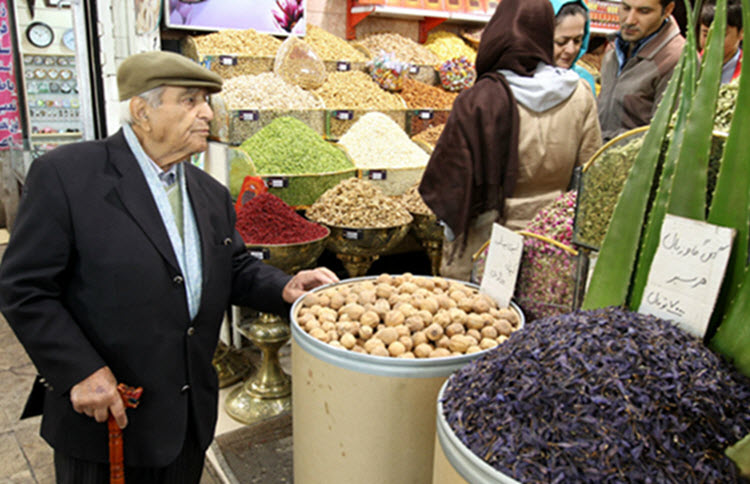
Red meat prices in Tehran’s market have risen significantly, with some items reaching unprecedented rates. According to the state-run news agency Eghtesad Online, the price of boneless lamb loin in Tehran stores has reached 10 million rials (approximately $11) per kilogram. Additionally, lamb fillet, priced at 18 million rials (approximately $19.5), has set a record as the most expensive cut of red meat.
Meanwhile, veal is also considered an expensive item, priced at 9.2 million rials (approximately $10) per kilogram. This is while online stores list prices significantly higher than those announced by the Sheep Meat Union.
Red Meat Consumption In Iran Has Fallen Below 600,000 Tons Per YearThe recent increase in red meat prices has caused considerable concern among consumers. Economic experts cite supply shortages, rising livestock farming costs, and currency market fluctuations as key reasons behind this surge. Previous reports indicate that red meat prices in Iran have been on the rise in recent years. In February 2024, data from Iran’s Statistical Center showed that red meat had the highest inflation rate among the country’s ten essential food items, with a 93% price increase. Additionally, in November 2023, the head of the Sheep Meat Union stated that livestock shortages were the main cause of the price hikes. The continuous rise in red meat prices has led to a decline in its consumption among Iranian households. This drop in consumption could have negative consequences for public health. In recent months, the food basket has experienced a new inflation rate of at least 30%, and in recent days, a 25% increase in intercity bus ticket prices has been approved. According to these statistics, one-third of food items saw a price increase of 30% to 50% over the past year, while one-fourth experienced price hikes exceeding 50%.
Reports of a Sharp Increase in Rice Prices in Iran
Following the increase in the price of Iranian rice to 2 million rials (approximately $2.2) per kilogram or even higher, the Tehran Agricultural Jihad Organization announced the distribution of rice at lower prices to “regulate the market.” In this regard, the state-run newspaper Tejarat News reported on Saturday, February 15, that the rice market in Iran “has experienced severe price fluctuations in recent days, with prices in some cases exceeding 2 million rials per kilogram.”Decline in Rice Production and Rising Prices in Iran Amid Inflation Growth and Public ProtestsLast week, the Minister of Agriculture, on the sidelines of a cabinet meeting, addressed the issue, stating that rice prices are “artificial.” He attributed the situation in the rice market to “hoarding.” Mehdi Younesi, the governor of Mazandaran province, also acknowledged that the rice market in the country is in a “stormy state.” According to Tejarat News, rice prices have increased significantly over the past four months, with statistics indicating an 83% rise in rice prices during this period. Additionally, the price of Tarom rice has risen by 44%. In November 2024, Shahrokh Sharifi, the head of the Tehran Supermarkets and Protein Products Union, cited not only high inflation but also the rise in the exchange rate of the dollar as key factors behind the increase in the prices of essential goods. According to the state-run Fars News Agency, Iran requires around one million tons of rice imports annually, but this year, only about 500,000 tons have been imported. Demand for rice in the domestic market increases ahead of Ramadan and the Nowruz (Persian New Year) holidays. It is worth noting that the minimum wage for a worker with two children is approximately $120 per month.
Continued Student Protests in Iran; Protesters: We Didn’t Sacrifice Lives to Compromise
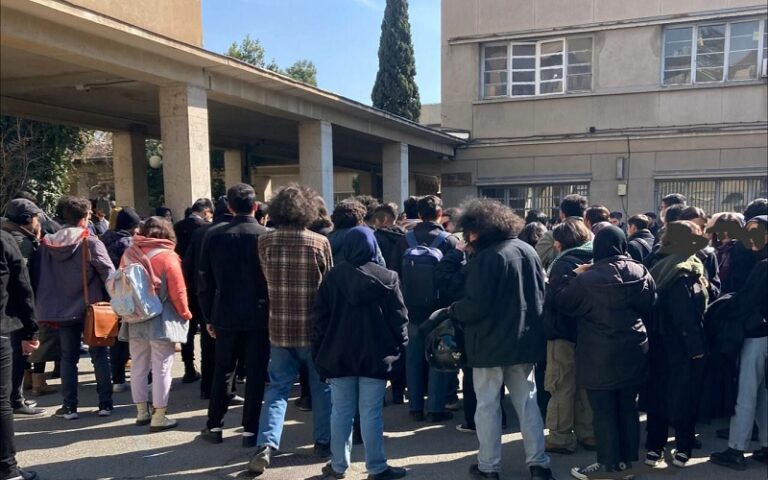
As student protests continue following the killing of Amir Mohammad Khaleghi in Tehran, several student organizations have expressed their support for the demonstrations. Protesters at the University of Tehran gathered, chanting, “If we don’t unite, we’ll be killed one by one,” calling for student solidarity.
The protesting students also chanted, “Students are awake, they despise tyranny,” and “We didn’t sacrifice lives to compromise, nor to praise the murderous official.”
A group of students at the Faculty of Fine Arts at the University of Tehran also marched, chanting, “We don’t want spectators, join us,” and “Shout, student, cry out for your rights,” encouraging other students to join the protests.
Iran: Students Protest Dormitory Poisoning with a Sit-InSeveral student organizations and associations issued statements condemning the killing of Amir Mohammad Khaleghi. For instance, a group of students from Allameh Tabataba’i University stated in a declaration that “this incident not only highlights the existing insecurity in educational institutions but also further exposes the irresponsibility and incompetence of university administrators and relevant authorities.” The statement further emphasized that “the government is currently incapable of ensuring any aspect of security—economic, social, or psychological—for the people” and that “its only sustained strategy is widespread and systematic repression.” It also noted that “poverty and social inequality have fueled crime in society, affecting even university campuses.” The student organization stressed that “we will not remain silent in the face of repression,” referencing the student sit-in at the University of Tehran’s dormitory complex. They stated that the Iranian regime’s response to “this peaceful protest” has been to “securitize the university environment” in an effort to “turn the campus into a stage for suppression and intimidation.” However, they asserted that “today, the University of Tehran is crying out a truth that will resonate throughout society.” Amir Mohammad Khaleghi, a 19-year-old undergraduate student in business management at the University of Tehran, was fatally stabbed by “muggers” near the university on Wednesday night. His death has sparked widespread reactions across Iran, with student protests at the University of Tehran continuing for the past four days. Hussein Simayee Sarraf, the regime’s Minister of Science, apologized following the widespread student protests. He also claimed that no one was arrested during the students’ protest at the university dormitory on Friday night. This claim comes amid reports that the protest turned tense due to the intervention of plainclothes agents, with several students being arrested.
Rising Suicides in Tehran Metro; Lack of Safety Measures and Economic Crisis
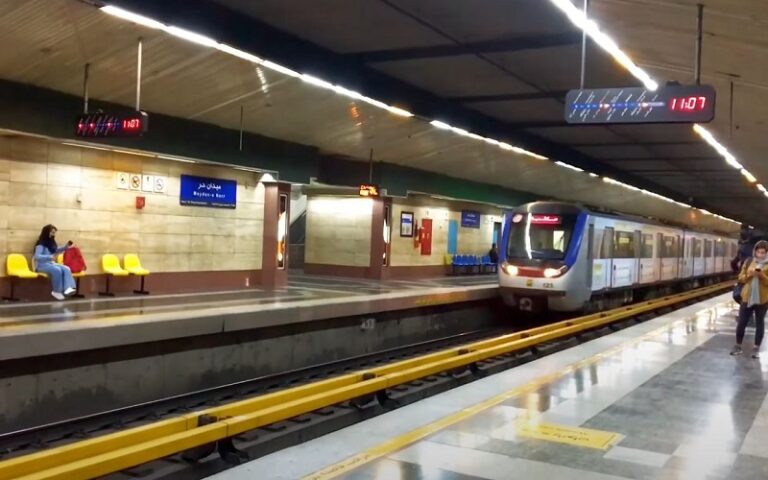
While suicides in Tehran’s metro stations remain a serious issue, official statistics in this area have not been updated for over a decade. Experts believe that the lack of proper safety measures, such as platform screen doors, plays a significant role in prolonging this crisis.
The state-run Khabar Online website, in an investigative report on the lack of safety measures in metro stations, noted that based on 2014 statistics, between 17 and 18 people per year attempted suicide in Tehran’s metro stations.
The report adds that subsequent studies have shown an increasing trend in these numbers over the years. However, no updated statistics have been released, and many of these incidents are officially reported under the label of “unauthorized entry into the rail area.”
The first recorded case of suicide in the metro dates back to March 2005, when an 18-year-old girl took her own life at Beheshti station.
Iran: Two Teenage Girls Commit Suicide Due to School Authorities’ MistreatmentBetween 2007 and 2012, multiple cases of suicide were reported in various metro stations. In 2014, a middle-aged woman at Vali Asr station and a man on metro Line 4 ended their lives. This trend continued into the 2010s; in September 2016, a 40-year-old man at Enghelab station threw himself onto the tracks, and in February 2017, a 28-year-old woman lost her life at Azadi Square station. These incidents have persisted in recent years. In March 2024, an 18-year-old youth attempted suicide at Janbazan metro station, and in August 2024, a 30-year-old woman at Ibn Sina station was severely injured after being struck by a train. The report highlights the Tehran Municipality’s neglect of safety measures, noting that many metro stations lack platform personnel who can activate the emergency stop button during critical moments. One of the metro train operators stated, “The shortage of staff has not only increased the likelihood of suicides but has also led to other issues such as passengers forcibly closing train doors, street vending, and even smoking inside stations.” Furthermore, the absence of physical barriers, such as protective doors, has made it easy for anyone intending to commit suicide to access the tracks without any obstacles. While many countries have successfully reduced metro suicides through preventive measures, in Tehran, such solutions have been stalled for various reasons, and no clear plan has been proposed to address this crisis. However, the root causes of youth suicides in Iran are none other than poverty and the increasing repression by the government, which pushes young people toward suicide.
