

The Iranian Regime’s Debt to Banks Has Increased By “Two and A Half Times” In Past Three YearsHigh bank interest rates have led to an increase in liquidity. The competition among private banks to pay higher interest rates has fueled liquidity growth, becoming a driver of inflation and an expansion of the monetary base. Banks have entered various markets without accountability. This dangerous action has disrupted production and destabilized the economy. High bank interest rates have reduced productive activities. While economic growth has stalled, banks in Iran are engaged in non-productive activities. Banks have altered the path of the economy. They do not extend loans to the private sector in Iran, sidelining it. Bank-affiliated companies, state-owned, and semi-state-owned companies take large loans but fail to repay them. In reality, banks have directed financial resources to their affiliated entities. Easy loans to insider companies have created massive bank debts, leading to significant economic problems. Currency fluctuations and the rising price of coins show that the banking system is actively involved in informal markets. Productive activities in the country do not yield similar profits. This indicates that the banking system has moved its capital into speculative currency and coin markets. In the 2000s, the entry of the banking system into the housing market caused an uncontrolled surge in prices. This growth led to severe recessions, the effects of which are still present. In recent years, mismanagement within the banking system has led to a decline in public trust. Many people have withdrawn their deposits from the banking system due to the poor performance of banks. This loss of confidence has put additional pressure on the economy. The lack of transparency in the banking system’s operations is one of the main reasons for the crisis. Banks do not fully disclose their financial reports. This lack of transparency has made oversight of their operations difficult. Insufficient supervision has allowed banks to continue their harmful activities without accountability. The latest list of major bank debtors, dated late December, was recently published by the Central Bank. The list includes updated names of debtors from various banks, such as Shahr, Eghtesad Novin, Refah Kargaran, Sarmayeh, and Iran Post, updated through late autumn 2024. Other banks on the list include Export Development, Middle East, Karafarin, Keshavarzi (Agriculture), Iran Zamin, Ayandeh, Dey, Sina, Iran-Venezuela, Gardeshgari (Tourism), and Melli banks. Subsidiaries of the banking system are all listed among the top bank debtors. According to the Central Bank, the Iran Government Trading Corporation and the Amir Mansour Arya Group are the largest debtors of Bank Melli. Additionally, companies such as Mazandaran Wood and Paper, Isfahan Steel, and Iran Steel Industrial Group are among the major debtors of Bank Melli. Railway companies, Verdin Pazan, and Rail Transportation are also included in this list. Various banks are still struggling to recover their large claims. These debts have not only pressured the banking system but have also harmed Iran’s economy. The banking system, instead of supporting production, has exacerbated the economic crisis. Their policies have effectively hindered economic development. In Iran, the banking system uses public capital for the ruling establishment’s profiteering purposes. This has widened social inequality and increased poverty. The banking system in Iran operates as a tool of the ruling establishment. Instead of being accountable to the people, they implement government policies. This has caused banks to lose their intended role in the economy.
The Banks of Iran: Serving the Economy or Corrupt Capitalism?
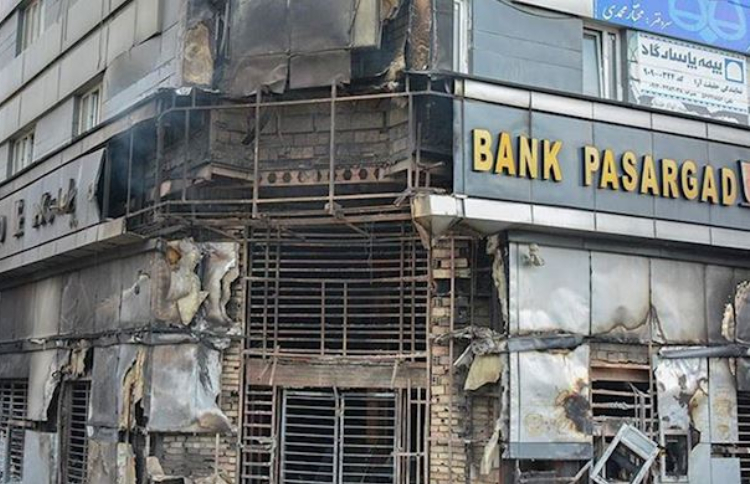
The chaotic state of banks in Iran is one of the main causes of the country’s economic crisis. Instead of playing a supportive role in production, they have become tools serving the ruling establishment. This shift has led to an increase in debt and inflation.
The latest list of major bank debtors, dated mid-December 2024, was recently published by the Central Bank. According to the report, the overdue claims of banks have exceeded 7,890 trillion rials (approximately $9.85 billion). This figure is the result of large loans taken by state-owned, semi-state-owned companies and influential individuals.
The resources come from public deposits. The uncertainty in the repayment of these debts harms the public rights of the Iranian people.
The Bankruptcy of Industries in Iran
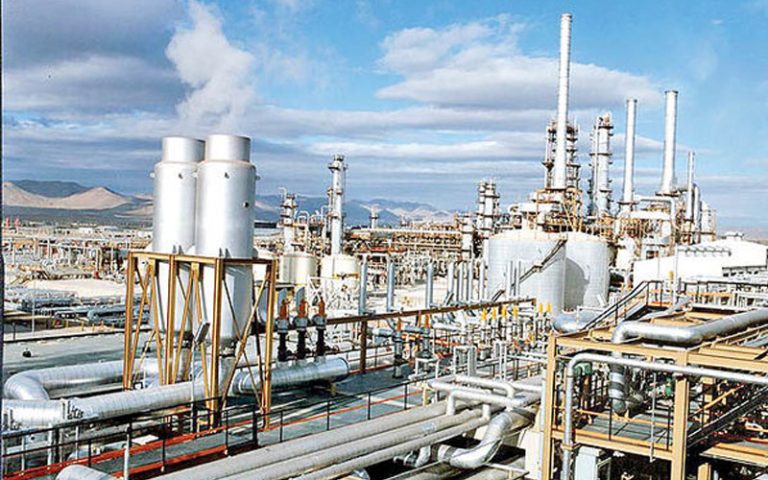
Gas and electricity outages in Iran’s industries are one of the serious economic issues that have affected production and employment in recent years.
Manufacturing industries require continuous access to energy to maintain production stability. However, in practice, frequent electricity and gas outages have halted production lines and reduced efficiency. This issue has imposed heavy costs on industries and decreased product quality.
Furthermore, the persistence of energy carrier outages indicates that the energy infrastructure is incapable of meeting industrial demands. Even with financial resources, industries cannot return to stable production, disrupting the entire economic cycle.
Iran: 50% Reduction in Industrial Production Due to Power ShortagesMohammad Atabak, Iran’s Minister of Industry, Mines, and Trade, announced that in recent government meetings, the imbalance and shortage of energy for industries have been a constant topic of discussion. He emphasized that Masoud Pezeshkian, the President of the Iranian regime, has expressed his support for ensuring the supply of gas and electricity for production. In this regard, a support package has been prepared in collaboration with the private sector and is set to be presented to the cabinet after approval by the Economic Commission. However, two weeks after this announcement, there has been no news of the support package’s approval. The Minister of Industry once again announced that the package is under review in the cabinet and stated that its details will be announced within the next two sessions. He emphasized that the support package will be provided to production units to compensate for electricity and gas outages in industries. According to him, this measure is being implemented for the first time and is not merely symbolic. According to a report presented by Mohammad Atabak, the electricity supplied to industries in the first half of this year was 40% less than the same period last year. Moreover, the downtime in industrial production has increased from 14% last year to 22%. This reduction in access to electricity and gas has had devastating effects on industrial production and efficiency. The Ministry of Industry, Mines, and Trade announced that the losses caused by reduced production in the country’s major industries reached 1.73 quadrillion rials (approximately $2.1 billion) in the summer of 2024 alone. Alireza Kolahi, head of the Iranian Chamber of Commerce’s Industry Commission, explained the main points of the support package. He stated that deferring payments for water, electricity, and gas in industries is one of the core policies of this package. According to him, this measure is proposed to reduce financial pressure on industrial units and prevent their closure. Alireza Kolahi also mentioned the deferral of loan installments as one of the key solutions in this package. However, the financial crises of Pezeshkian’s administration have made it difficult to completely eliminate penalties. He emphasized that expecting industrial units to pay interest on loans, taxes, and other expenses is impossible when many of them operate only two days a week. Pezeshkian’s government has discussed measures such as tax deferrals, insurance premium postponements, and loan repayment extensions. Special facilities for paying energy costs have also been included in this package. Nevertheless, frequent electricity and gas outages have left many production units unable to pay taxes and other expenses. This demonstrates that the support package cannot address the underlying problems. Many experts believe that with the continuation of gas and electricity outages, there will be no production to export. The continuation of outages has reduced industrial revenues, ultimately leading to lower employment and higher unemployment. Support packages have no impact because they fail to resolve the primary issue of sustainable energy supply.
Rafael Grossi: Iran Should Reach an Agreement with the Trump Administration Regarding Its Nuclear Activities
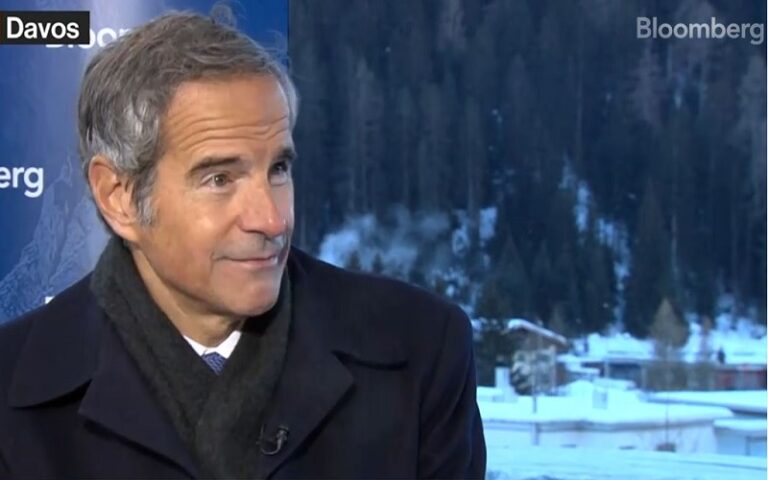
Rafael Grossi, Director General of the International Atomic Energy Agency (IAEA), stated that the Iranian government must reach an understanding with the administration of Donald Trump, the newly elected president of the United States, to prevent another military conflict in the Middle East.
Speaking to Bloomberg Television on the sidelines of the 2025 annual meeting of the World Economic Forum in Davos, Switzerland, Mr. Grossi said: “We are engaging with Russia, with China, with the European countries, but it’s clear for everybody that the US is indispensable,” he said.
In this interview, published on Tuesday, January 21, he added: “What we need is to find an understanding. This is going to be our mission in the next few weeks.”
With the defeat of Tehran’s proxy groups in Lebanon, Gaza, and Syria, as well as the increase in the regime’s 60% enriched uranium stockpile, concerns about the Iranian government’s attempts to acquire nuclear weapons have intensified.
The Director General of the IAEA confirmed that the Iranian regime continues to produce large quantities of highly enriched uranium and emphasized: “Now we need to come to terms with how we deal with this, excluding, of course, a war.”
During Donald Trump’s first term as president, he pursued a “maximum pressure” policy against the Iranian regime and withdrew the United States from the nuclear agreement reached during Barack Obama’s administration, which imposed restrictions on Iran’s nuclear program in exchange for sanctions relief.
Previously, Marco Rubio, the new U.S. Secretary of State, during his confirmation hearing before the Senate Foreign Relations Committee on January 15, emphasized that the Iranian regime is in its weakest state and added that any concessions to the Iranian regime would be used to expand its nuclear program and create tensions in the Middle East.
Marco Rubio further stated that there are two lines of thought within the Iranian regime: one suggesting that the situation is dire, and time must be bought, and the other advocating reliance on nuclear capabilities by enriching uranium from 60% to 90% to safeguard against any external actions.
In this context, Emmanuel Macron, the President of France, recently warned that the acceleration of Iran’s nuclear program is reaching very close to the point of no return.
Last December, the United Kingdom, Germany, and France accused the Iranian government of increasing its enriched uranium stockpiles to unprecedented levels without providing any credible civilian justification for this action.
These three powerful U.S. allies in Europe emphasized their determination to use all diplomatic tools to prevent the Iranian regime from acquiring nuclear weapons, including invoking the snapback mechanism if necessary.
The snapback mechanism, which is part of the 2015 agreement known as the Joint Comprehensive Plan of Action (JCPOA), allows the signatories to reimpose United Nations sanctions on Iran in case of “significant non-compliance” with the agreement.
Snapback Sanctions and Iran’s Nuclear Weapons ProgramThe option to activate this mechanism expires this October, adding greater urgency to the ongoing diplomatic efforts.
Environmental Crisis, Air Pollution, and Mismanagement of Iran’s Resources
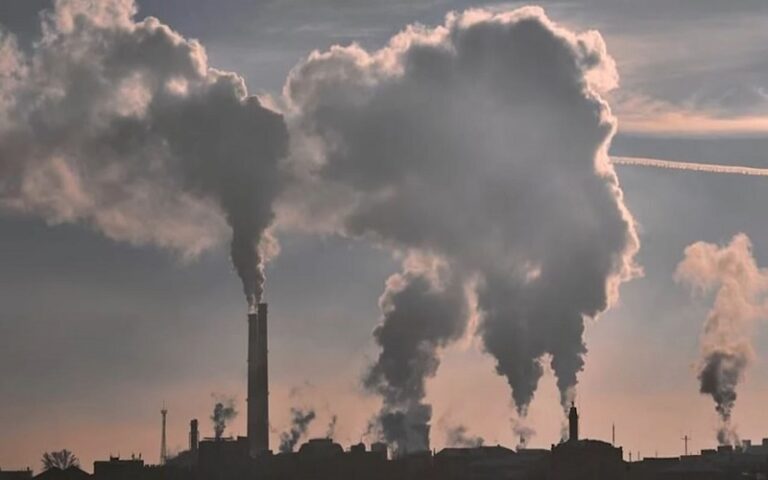
Masoud Pezeshkian, the President of the Iranian regime, spoke at the National Clean Air Day Conference on January 20. He stated that this year the government had planned not to burn mazut and had announced this decision, but they faced constraints. If mazut had not been burned, they would have had to cut off gas supplies to households.
Pezeshkian added that the government’s slogan is to uphold the law. Expressing displeasure over the non-implementation of laws, he stated that this issue is unpleasant for the government, even though the government itself has not implemented some laws. He noted that certain laws do not maintain a balance between resources and consumption.
Pezeshkian once again identified citizens as the primary cause of energy imbalances and the burning of mazut. He emphasized that to improve living standards, a balance must be created between resources and consumption. He acknowledged that these imbalances are not limited to the energy sector and mazut burning.
Schools Closed in Several Cities Across IranReferring to existing laws, he stated that the government faced challenges in paying wheat farmers. The law mandates the purchase of wheat, but the funds were not available. The government needed to pay 2.2 quadrillion rials (approximately $2.67 billion), while it had only 1.6 quadrillion rials (approximately $1.94 billion) at its disposal. He added that the government had drawn from the environmental, healthcare, and treatment budgets, yet it still fell short. He added that the government has spent $150 billion on fuel, and these resources are being wasted. He stressed that imbalances exist in all sectors, including water, electricity, gas, and the environment, and he called on experts to step in and help solve these issues. Pezeshkian commented on the gas and electricity cuts to production centers, stating that this is not the right approach. He criticized the parliament for passing a law mandating gas supply to villages, questioning how this could be achieved when there is no gas available. He went on to say that the “environment, water, soil, and air are our living spaces. If we do not protect these resources, we will leave scorched earth for future generations.” He emphasized that he does not want to hand over scorched earth to the next generations. He further stated that the government sells diesel at a price of 3,000 rials per liter, while abroad, this fuel costs 600,000 rials. He asked, “Where in the world does such a price for diesel exist?” However, he did not mention the obvious fact that Iran, with 208 billion barrels of oil, holds about 18% of the world’s oil reserves and ranks third globally. In terms of natural gas, Iran, with reserves of 1,203 trillion cubic feet (approximately 34 trillion cubic meters), holds about 17.3% of the world’s gas reserves and ranks second globally. Additionally, reports indicate that air pollution has increased significantly due to the burning of mazut in power plants. Meanwhile, Abbas Shahsavani, head of the Air Health Group at the Ministry of Health, announced that 6,939 deaths occur annually in Tehran due to air pollution and mazut burning. He added that this pollution leads to low birth weight in newborns and preterm births. Hadi Ahmadi, a board member of the Pharmacists Association, also announced that there is a disagreement between the Food and Drug Organization and pharmacists regarding the number of scarce medicines. However, they have agreed on 300 items. He added that about 100 medicines, including respiratory sprays and cardiac drugs, have become unavailable. Amidst mazut burning and severe air pollution, health and pharmaceutical problems have also increased. This severely threatens public health, yet the Iranian regime and government officials do nothing but make empty promises. At the same time, they funnel all of Iran’s revenues into their proxy groups and warmongering in the region.
The Spread of Poverty in Iran
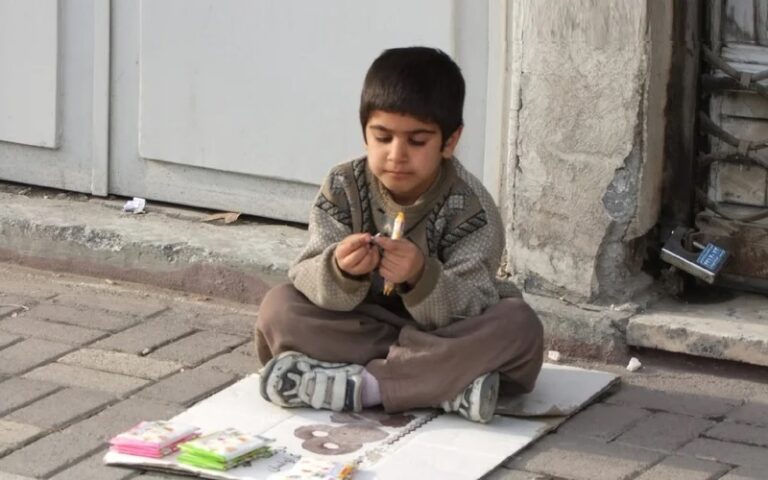
Poverty has become one of the biggest social challenges in Iran. Inefficient economic policies, chronic inflation, and unequal income growth are the main factors behind this crisis.
According to reports, the poverty rate in Iran has significantly increased in recent years, with more than one-third of the population now living below the poverty line.
One of the most important reasons for the spread of poverty is high inflation. In recent years, the prices of essential goods and services have increased at a much faster rate than people’s incomes.
Inflation in the housing sector, in particular, has put significant pressure on households. Many families can no longer afford to buy or even rent suitable housing.
Over 80% of Iranian Households Below the Global Poverty LineThis has forced many people to live in extremely difficult conditions and in underprivileged areas. Widespread corruption prevents support programs from reaching those who truly need them. These structural problems have turned poverty from an exception into the norm, making the descent of individuals into lower strata of society a routine occurrence. Despite vast oil resources and natural wealth, Iran has been unable to implement effective policies for equitable wealth distribution. The dimensions of poverty in Iran are not limited to economic issues. Income poverty, which means the inability to meet basic needs such as housing, food, and healthcare, is prevalent, but there are also other aspects such as educational and cultural poverty. Many children are deprived of education because their families cannot afford tuition and related expenses. Another major issue is economic policies that exacerbate poverty instead of reducing it. For example, unjust and inefficient tax policies have increased pressure on the lower income deciles of society. According to available reports, the poverty rate in Iran has surpassed 30% in recent years. However, this figure is based on the regime’s official statistics. Many experts and economists present significantly higher figures than this. In contrast, neighboring countries of Iran show different poverty rates. In the Gulf Cooperation Council (GCC) countries, the poverty rate is significantly lower. For instance, the poverty rate in Qatar is just 0.4%, while in Saudi Arabia, it stands at 13.6%. These differences reflect the impact of varying economic and social policies in these countries. In Turkey, the poverty rate has decreased in recent years to around 21.3%, thanks to the implementation of economic and social reform programs in the country. These statistics indicate that Iran has a higher poverty rate compared to some neighboring countries. Multiple factors, such as inefficient economic policies, corruption, and unequal resource distribution, may contribute to these differences. According to available reports, Iran holds 209 billion barrels of oil reserves, accounting for about 18% of the world’s oil reserves, ranking third globally after Venezuela and Saudi Arabia. Additionally, Iran possesses 32.5 trillion cubic meters of natural gas reserves, making it the world’s second-largest holder of gas reserves after Russia. The value of Iran’s natural resources is estimated at approximately $27.3 trillion. However, given Iran’s population of approximately 85 million, the share of these natural resources per individual is lower compared to some countries with similar resources.
Iran Faces a Harsh Summer Ahead
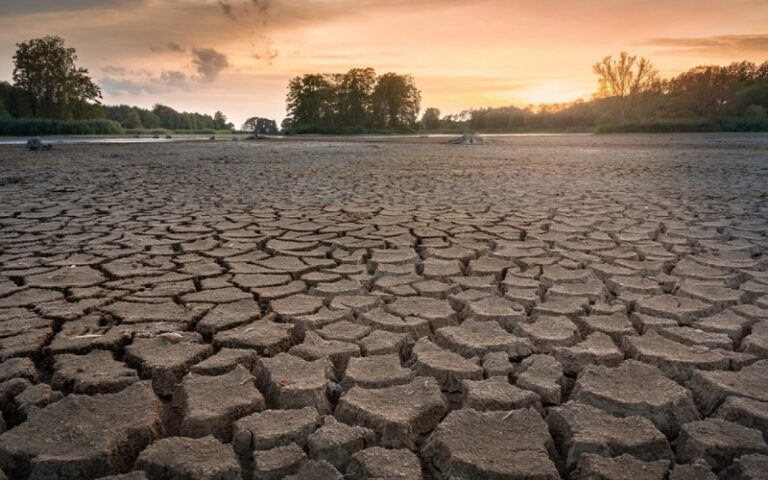
Water scarcity has become one of Iran’s main crises. Due to declining rainfall in recent years and mismanagement of water resources, it is predicted that the upcoming summer will pose even more serious challenges in this regard.
Climate change, overexploitation of groundwater resources, and the lack of sustainable planning are among the key factors exacerbating this crisis.
Water consumption naturally increases in the summer. This, combined with declining reservoir levels and the erosion of groundwater tables, puts additional pressure on the limited water resources.
Reservoir water levels in Iran have drastically declined. If reduced rainfall is not compensated by the end of winter, the water supply crisis will worsen. Reports indicate that as of January 12, six dams in the country are holding less than 10% of their capacity.
The volume of water in reservoirs has been reported at only 44% of capacity. Inefficient management of energy resources in Iran has caused numerous problems. Power shortages in the summer have become a perennial issue. This time, experts are warning of water shortages and a challenging summer ahead.
Water Crisis and Air Pollution in Iran: Mismanagement and Environmental ConsequencesAbbas Aliabadi, the Minister of Energy, has described the potential power and water shortages in the upcoming summer as a major problem. He stated that he prays such a crisis does not occur. The spokesperson for the water industry also reported in early January a 33% decrease in rainfall since September 2024. He emphasized that solving the water crisis has become even more challenging than addressing the electricity problem. Statistics show that apart from three provinces, other regions of the country are experiencing reduced rainfall. This situation has also affected major cities, including Tehran. The average fill level of dams around Tehran is reported to be only 19%. Water resources behind dams are expected to be stored for the summer during winter. However, Iran’s dams currently hold less than half of their capacity. Dam outflows have increased by 4%. The reduction in dam reserves is attributed to decreased inflow and poor management. Some government insiders also claim that the previous administration depleted dam reserves. With the start of Masoud Pezeshkian’s administration, some of his associates stated that the previous administration of Ebrahim Raisi (the former president of the regime who died in a helicopter crash) had increased hydroelectric production. This action by the previous government left the new cabinet facing an 8,000-megawatt deficit in hydroelectric energy.
Water Outages, Drought, and Dust Storms Await Iranian Citizens
Increased consumption of water resources and excessive exploitation of groundwater reserves have intensified land subsidence. Several of Iran’s main dams used to generate 10 to 13 percent of the country’s electricity annually. However, efforts to compensate for power shortages in the spring led to the depletion of significant volumes of dam water. This action was taken in the hope of abundant rainfall, which did not materialize, resulting in reduced water reserves. Now, with only two months left until the dry season, there is insufficient time to replenish water shortages. Past rainfall models indicate that only two or three strong rainfalls will occur during this period. If rainfall remains below consumption levels, Iran will face a gradual drought. Continuing this trend will result in persistent drought, water shortages, and serious agricultural problems. Water consumption rises during the warmer months, and evaporation will further exacerbate the crisis. Additionally, electricity consumption will increase, placing further strain on dams. Iran endured a tough winter, but the upcoming summer will be even more challenging. In winter, heat production is supported by gas, whereas summer requires more electricity. Increased energy consumption during summer will aggravate the existing imbalances. Approximately 85 to 90 percent of Iran’s water consumption is allocated to agriculture. Water shortages in the summer will impact agricultural production and the prices of goods. Experts believe the upcoming summer will be particularly challenging for Iran in terms of energy and water supply.Warning from the “No to Executions Tuesdays” Campaign on the Death Sentence of a Prisoner Accused of Rebellion
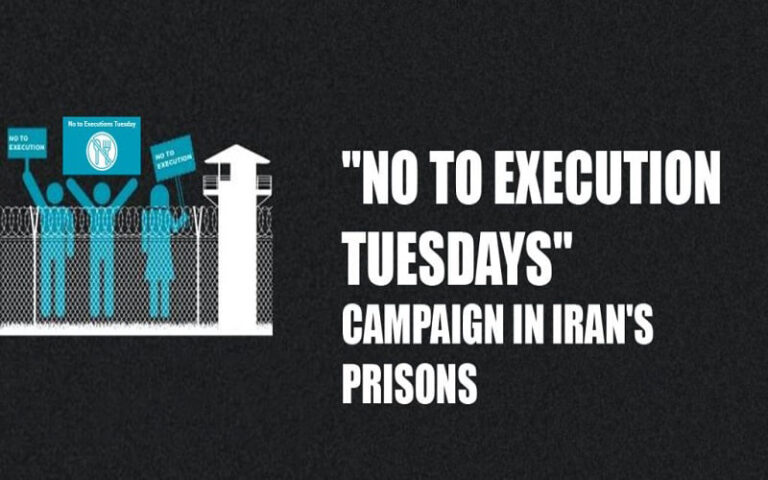
In the 52nd week and on the eve of the anniversary of the “No to Executions Tuesdays” campaign, prisoners in 34 prisons across the country issued a statement on Tuesday, January 21, announcing that over 110 executions had occurred in the past month, bringing the total number of executions since March 21, 2024, to 950.
The imprisoned members of the campaign stated in the statement that the removal of two notorious judges, Mohammad Moghiseh and Ali Razini, who were responsible for issuing thousands of death sentences for political and non-political prisoners over four decades, reflects the profound aversion of the Iranian people to the death penalty and the consequences of 45 years of policies of repression and killings.
This move was widely welcomed in society, particularly among the families seeking justice for the thousands of victims of political executions.
Members of the campaign in 34 prisons nationwide warned that Malek Davarshenas (Mousavi), a 26-year-old political prisoner from the city of Karkheh, has been sentenced to death on charges of “rebellion (Baghi).”
Campaign “No to Executions Tuesdays”: 21 Executions in Iran Coinciding with the New YearDetained since 2021, he was forced under psychological and physical torture to confess and now faces the imminent risk of execution. In response to such inhumane sentences, society and prisoners continue to resist governmental violence. Another part of the statement noted that the “No to Executions Tuesdays” campaign has so far expanded to 34 prisons and has garnered widespread domestic and international support. Eleven teachers’ unions in various provinces of the country, despite security pressures, have bravely supported the “No to Executions” campaign and have repeatedly raised this slogan in their weekly gatherings. Additionally, religious leaders in various cities in Kurdistan have taken a stance against the death penalty. The campaign once again emphasized the inhumanity of the death penalty and called on all prisoners to join this movement. It also supported the general strike of the people of Kurdistan against executions, scheduled for Wednesday, and called on the public to participate in these protests.
Latest News and Reports on the Killing of Two Death Judges in Iran
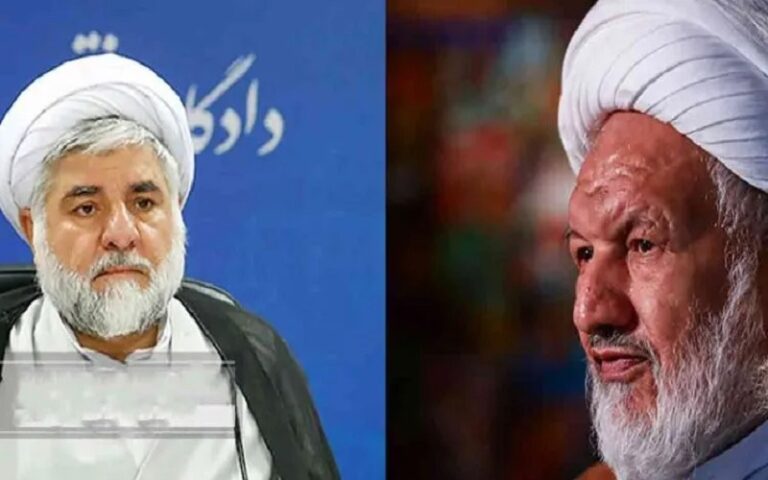
Following the announcement of the killing of clerics Mohammad Moghiseh and Ali Razini in Tehran, government officials and media released contradictory reports.
The state-affiliated Mizan News Agency, linked to the regime’s judiciary, reported that the assailant was an armed individual who entered the office of the two judges and killed them. The agency denied reports of injuries to a third judge.
The government media outlet Khabar Fori quoted Moghiseh’s statement from a month ago, in which he had said: “Insecurity in society is our red line!”
Ali Rabiei, a former advisor to the regime’s president and an intelligence operative, wrote about the killing of these two clerics: “Public vigilance will neutralize these conspiracies in the continuation of Iranian solidarity. Whenever a glimpse of hope and resolution appears, Iran’s ill-wishers engage in targeted and hypocritical acts of violence, such as today’s bloody assassination within the judiciary.”
Who Were Razini and Moghiseh?
In the early 1980s, Ali Razini served as the Revolutionary Prosecutor in Mashhad, overseeing the arrest, execution, and torture of members of the People’s Mojahedin Organization of Iran (PMOI/MEK) and other dissidents in Khorasan Province. During his tenure, thousands of PMOI members were executed by firing squads across cities in Khorasan. In March 1985, in recognition of Razini’s loyalty to his regime,Ruhollah Khomeini, the former Supreme Leader of the Iranian regime, appointed him as the Central Revolutionary Prosecutor, succeeding Asadollah Lajevardi, a notorious torturer. From then on, executions of prisoners in Tehran were carried out under his supervision and orders until 1987.High-Ranking Iranian Regime Judges Mohammad Moghiseh and Ali Razini KilledAfter the 1979 Revolution, Mohammad Moghiseh joined the prosecutor’s office. Due to his cruelty and brutality, he became a lead interrogator at one of Evin Prison’s notorious branches in 1981, sending prisoners to execution fields in groups. In 1984, Mohammad Moghiseh, under the alias “Naseri,” was appointed as the deputy prosecutor overseeing Ghezel Hesar Prison. After Ghezel Hesar Prison was emptied of political prisoners in 1986, he was appointed as the chief deputy prosecutor of Gohardasht Prison. Moghiseh did not even spare sick prisoners from execution. In August 1988, at Gohardasht Prison, he insisted on executing all prisoners whose sentences had been completed. According to state media reports, two judges involved in the 1988 summer massacre, Moghiseh and Razini, were targeted and killed on the morning of Saturday, January 18, in the Supreme Court building. The state-run Fars News Agency reported, quoting an informed source, that the judges were targeted with live bullets, killing two of them and injuring a third one. According to the report, the assailant committed suicide after the shooting. In March 1981, Ali Razini became a judge at the Islamic Revolutionary Court in Tehran while simultaneously serving at the “Revolutionary Military Court” and the “Revolutionary Court of the IRGC.” In the fall of 1981, he was sent to Bojnourd and subsequently appointed by the Supreme Judicial Council as the head of the Khorasan Provincial Court. He moved to Mashhad, where, alongside Mostafa Pourmohammadi, who held the position of Revolutionary Prosecutor, he orchestrated the massacre of political dissidents in the province, particularly members of the PMOI. Many were sent to execution squads, prisons, and torture chambers under his orders. The execution of women in Mashhad began under Razini. During this period, numerous reports emerged of women being subjected to sexual assault before execution following his involvement in the Mashhad Revolutionary Court. Razini actively participated in the massacre of political prisoners in the 1980s, issuing death sentences for many political detainees. Razini was also appointed by Khomeini as a judge on the Death Committee, which in the summer of 1988 massacred over 30,000 political prisoners, most of whom were members or supporters of the PMOI.
Iran’s Regime Denies Reports of Oil Company Building Being Shut Down in Rotterdam
Ismail Baghaei, spokesperson for the Iranian regime’s Ministry of Foreign Affairs, described reports about the seizure of another building of the National Iranian Oil Company in Rotterdam, Netherlands, as “inaccurate” but did not clarify what had happened to the building.
On Monday, January 20, the Ministry’s spokesperson reacted to the matter, stating: “This case is being pursued by the Presidential Legal and International Affairs Center and the National Iranian Oil Company.”
According to published reports, despite the National Iranian Oil Company’s opposition, the transfer of its building in Rotterdam was approved to settle a $2.6 billion debt to the UAE-based Crescent Company, and the building was officially awarded to Heuvel Company.
The building, seized under an international arbitration ruling, was transferred to the company through a public auction on April 20, 2023.
The state-run Shargh newspaper reported that the National Iranian Oil Company had previously requested the Dutch court to annul the April 2023 auction and restore the building’s ownership, arguing in its defense that the building belonged to a state-owned company and that, under international law, state-owned assets should be immune to seizure and auction.
IEA Weighs in on The Impact of New U.S. Sanctions on Iran’s Oil ExportsIn contrast, the auction winner and buyer of the building stated that the property was purchased in a legal auction conducted in accordance with the law and emphasized that it is the official owner of the building. Ultimately, the court rejected all requests from the National Iranian Oil Company, including the recovery of the building.
What is Crescent?
The contract between the National Iranian Oil Company (NIOC) and Crescent Petroleum, known in the media as the “Crescent Case,” was signed in 2002. Under this contract, unprocessed gas from the Salman gas field, which shared reserves with a gas field in the United Arab Emirates, was to be exported to the UAE. In 2005, coinciding with a change in Iran’s administration, the Iranian regime’s Court of Audit halted the contract. The UAE party, Crescent Petroleum, filed a complaint with international arbitration authorities over the unilateral termination of the contract.Seizure of NIOC Assets in Favor of Crescent
So far, Crescent has successfully claimed part of the damages related to the Crescent contract in foreign courts. Prior to and on April 18, 2024, a British court issued a ruling to seize a building owned by the National Iranian Oil Company, valued at £100 million ($125 million), in central London. Known as NIOC House, the building is located near the British Parliament and Westminster Abbey and had been owned by Iran for approximately 50 years. Following the seizure of its offices in London and Rotterdam, the company no longer has any offices in Europe.Protests by Various Groups of People in Iranian Cities
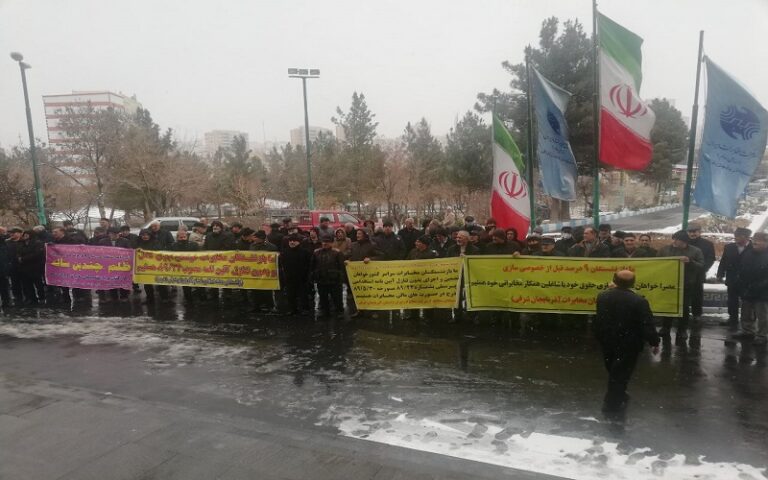
Protests by various groups of people continue to expand. On Sunday, January 19, different groups of Iranians, including social security pensioners, steel retirees, and others, gathered in various cities to protest poor economic conditions and neglect of their demands. These protests reflect the growing public discontent with the government.
Ahvaz: Steel retirees, after holding a protest march, gathered in front of the governor’s office, chanting slogans such as “Our problem is livelihood and healthcare.”
Tehran: Steel and mining retirees, along with teacher and teaching assistant exam candidates, gathered in protest. Demonstrators chanted slogans against IRGC commanders and demanded reforms in assessments.
Iranian Regime Security Forces Attack Protesting Steel Industry RetireesTeacher exam candidates protested against biased and unfair evaluations for teaching positions. During their protest, they chanted, “False promises no longer work.” Kermanshah: Social security retirees demanded the release of imprisoned workers and an increase in wages. They also held placards reading “Wage suppression is life suppression,” protesting government policies on wages and livelihoods. Protesters chanted: Plundering the people’s pockets, under the slogan of justice, Enough with the warmongering, our tables are empty, Workers, retirees, unite! Gathering, protesting is our unalienable right! Inflation, high prices, no to war and destruction! Kerman: Mining, steel, and coal retirees gathered to protest unfulfilled promises and economic pressures. Isfahan: Steel retirees demanded attention to their rights, chanting, “Don’t say there’s no budget, we’re tired of these lies.” Social security retirees from Haft Tappeh, Karkheh, and Shush protested government failure to fulfill its promises, chanting: They looted social security, left us destitute, High prices and inflation are destroying people’s lives, Devastating inflation rules the market, Our rights can only be claimed in the streets, Retiree, shout and demand your rights. Fars: Regional power station operators protested pay discrimination and demanded fair wages. Contractual operators from regional power stations in Fars protested against the stark disparity in wages and benefits, while their share of wages is overlooked. They declared in their protest, “Don’t cut our wages!”
