IMF: Iran’s Economic Growth Will Decline
Last year, Iran experienced 5% economic growth due to a significant increase in oil exports and government spending. However, according to the IMF’s projections, published on Tuesday, October 22, Iran’s economic growth will drop to 3.7% this year and only 3.1% in 2025. The decline will continue, reaching just 2% by 2029.
As a result, the anticipated 8% economic growth target set in Iran’s Seventh Five-Year Development Plan (2024-2028) is unlikely to be achieved.
Previously, Iranian regime President Massoud Pezeshkian emphasized that to achieve 8% economic growth, $200 to $250 billion in investment is required. Pezeshkian noted, “We have no more than $100 billion available in the country, meaning if we gather all the money we have, we would reach $100 billion and could invest it. Therefore, we need $100 billion in foreign investment to achieve 8% economic growth.”
However, IMF data shows that the ratio of total investments made in the country to its GDP will not change by 2029. In fact, it will decline from 40% in 2023 to below 37% in 2029.
United Nations statistics indicate that annual foreign direct investment in Iran has dropped to $1.5 billion in recent years. On the other hand, figures from Iran’s Central Bank reveal a significant increase in capital flight, with more than $20 billion leaving the country in the first nine months of last year, marking a historic record.
200 IRGC Members and Iran’s Proxy Militias Killed in Syria This Year
The Syrian Observatory for Human Rights (SOHR) reported on Tuesday, October 22, that since the beginning of 2024, it has documented 121 Israeli attacks on Syria, resulting in the deaths of over 200 members of the Islamic Revolutionary Guard Corps (IRGC) and Iranian-backed proxy militias.
SOHR reported that out of the 121 attacks this year, 98 were airstrikes, while the remainder were missile attacks by Israeli ground forces. These attacks targeted various locations in Syria, destroying more than 200 sites, including buildings, weapons and ammunition depots, command centers, and vehicles.
According to SOHR, 295 individuals were killed in these attacks, with 181 others wounded.
The SOHR list of casualties includes 50 members of Hezbollah, 28 Iraqi nationals, 75 Syrian militiamen supported by the Iranian regime, 24 non-Syrian militiamen backed by Tehran, 56 Syrian army soldiers, and one unidentified person near “Al-Muallim Square” in Quneitra on the Golan Heights.
On Monday, October 21, SOHR quoted its sources in Deir ez-Zor province, stating that for security reasons, Iranian-backed militias are reducing their public presence in the city of Al-Bukamal in the eastern countryside of the province and in areas near the Syria-Iraq border.
Many headquarters in secure areas have been evacuated of foreign forces, with their security now being handled by local forces in Deir ez-Zor.
According to the report, the city of Al-Bukamal has also witnessed a significant reduction in the presence of foreign forces, patrol activities, and checkpoints, which were previously overseen by members of the IRGC and the Fatemiyoun Division, formed by Iran’s regime.
According to these sources, forces stationed at certain checkpoints, especially at the entrance and exit of Al-Suwiya city, have been replaced by local forces. Meanwhile, foreign militias, fearing airstrikes on new shipments, have distributed large amounts of weapons to depots across various parts of Deir ez-Zor province.
SOHR sources also confirmed that foreign commanders have left the area and moved to Iraq to manage operations remotely.
The report also indicates that despite efforts to recruit locals, many military training courses have been canceled due to local leaders’ refusal to participate, stemming from fears of airstrikes.
Concerns Over Rising Gasoline Prices in Iran
Following remarks by Iranian regime president Massoud Pezeshkian in Parliament about the necessity of what he called the “reform of energy subsidies, including gasoline,” concerns about a possible increase in gasoline prices next year and a reduction in gasoline quotas have intensified.
These statements were made as Massoud Pezeshkian, in his speech while submitting the budget bill to Parliament, mentioned that the total cost of gasoline, excluding oil prices but including refinery, transportation, and station costs, amounts to approximately 80,000 rials (around $0.117).
He emphasized that this year approximately 900 trillion rials (around $1.323 billion) were spent on gasoline imports, and if the current situation continues, 1,300 trillion rials (around $1.911 billion) will be needed next year. Each liter of imported gasoline costs between 300,000 and 400,000 rials (around $0.44 to $0.58).
Pezeshkian, citing these figures, stated the “necessity of reforming energy subsidies” and said that the current situation cannot continue.
The Iranian Retirees Council, stating that “everything is ready for an attack on public life,” wrote: “The misuse of the current situation and political excuses directly target the people’s livelihood. However, the people are closely monitoring all the actions of the government. Think about the days ahead.”
Meanwhile, concerns and reactions to Massoud Pezeshkian’s statements led Fatemeh Mohajerani, his government’s spokesperson, to tell reporters on Wednesday, October 23, that “the people will not be surprised by an increase in gasoline prices.”
However, this government official confirmed in her remarks that gasoline prices would rise and added: “All efforts are being made to ensure that, despite the pressures on the government, the least possible burden is placed on the people.”
On the other hand, Ali Nikzad, Deputy Speaker of Parliament, regarding the 80,000-rial gasoline production cost mentioned by the President in Parliament, said: “I have no information about a potential increase in energy carrier prices, particularly gasoline, next year. However, if the government intends to raise energy prices, it must certainly coordinate with Parliament.”
The discussion of increasing gasoline and other energy prices comes as Farshad Momeni, an economist and university professor, said on October 19: “Hasn’t testing this policy a hundred times over the past 35 years been enough? Do we need to test it again?” He added: “It is shameful that the dollar-based purchasing power of wages has fallen by about 85% in just the past 15 years.”
The sudden rise in gasoline prices on November 15, 2019, led to protests in at least 54 cities in Iran. Eventually, the Iranian regime responded by cutting off internet access nationwide and violently suppressing protesters in various cities.
During the crackdown on the November 2019 protests, at least 1,500 protesters were killed.
Political Prisoner and PMOI Supporter Maryam Akbari Monfared Transferred to New Prison
Maryam Akbari Monfared, a political prisoner and supporter of the People’s Mojahedin Organization of Iran (PMOI), was transferred from Semnan prison (located 230 kilometers from Tehran) to the infamous Qarchak Varamin prison, south of Tehran, to serve an additional two years of imprisonment after enduring 15 years of incarceration without furlough.
Maryam Akbari Monfared is one of the longest-serving female political prisoners in Iran’s history.
Previously, Maryam Akbari Monfared’s lawyer had stated that Iranian authorities opened a new case against her just months before her original sentence was due to end. During her imprisonment, she was not granted a single day of furlough.
In October, Akbari Monfared’s initial 15-year prison term will end. Despite this, she was never granted furlough. In addition, she has been sentenced to another two years in prison on a separate charge, and recently, yet another case was opened against her, despite the fact that she has been in prison during the entire time.
The new case includes allegations against Akbari Monfared’s family and relatives, and Article 49 of the Iranian regime’s Constitution has been invoked to seize and confiscate their assets in favor of the “Execution of Imam Khomeini’s Order Headquarters.” This case has been referred to Branch 6 of the regime’s Revolutionary Court.
According to the regime’s current laws, punishment should be limited to the individual and not extend to their relatives. However, the Iranian regime often shows no leniency in political cases, particularly those related to the PMOI, Iran’s largest opposition group.
There is a precedent of Iranian authorities routinely opening new cases against political prisoners nearing the end of their sentences, aiming to prolong their incarceration.
In September 2023, it was reported that the Semnan Criminal Court sentenced Maryam Akbari Monfared to two years of “ta’zir” imprisonment (punitive sentence) and a fine of 150 million rials (15 million tomans) on the charge of “spreading lies on social media.”
Maryam Akbari Monfared, born in 1975, is married and has three children. She was arrested on December 31, 2009, following the protests in Iran that year, and was sentenced to 15 years in prison by Judge Abolqasem Salavati in Branch 15 of the Islamic Revolutionary Court in Tehran.
The court charged her with “supporting the People’s Mojahedin Organization of Iran.” Three of Maryam Akbari Monfared’s brothers and one sister were executed during the 1988 massacre. In the summer of 1988, the Iranian regime executed more than 30,000 political prisoners, most of whom were members of the PMOI. Among the victims were children as young as 13, pregnant women, and elderly men and women.
Fourfold Increase in Share of Iran’s Armed Forces from Oil and Gas Export Revenues
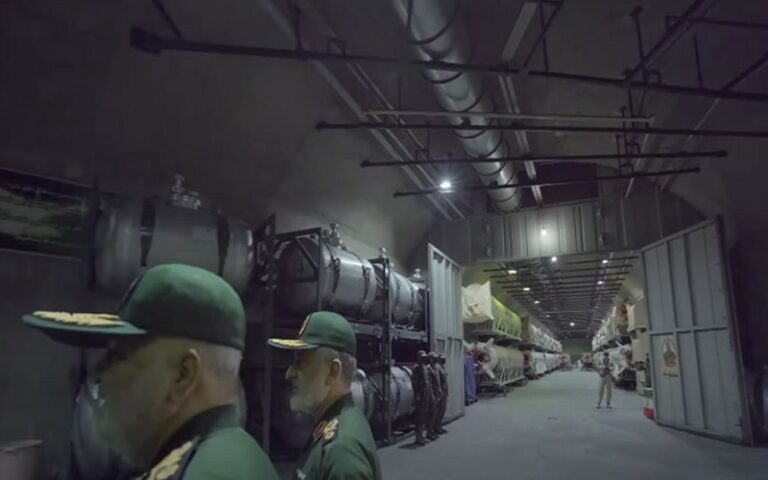
The share of Iran’s armed forces from the revenues of “oil and gas exports in the government’s general budget” will be 51%, according to the details of the 2025 budget bill.
According to the budget bill submitted to parliament by Iranian regime President Massoud Pezeshkian on Tuesday, October 22, the government’s share of total oil and gas exports next year will be 37.5%, equivalent to 12 quadrillion rials (approximately $17.977 billion).
Out of this amount, 5.61 quadrillion rials (approximately $8.4 billion), equivalent to 51%, will go to the armed forces “to strengthen the country’s defense capabilities.” This figure is more than four times higher than the current year’s budget allocation of 1.34 quadrillion tomans (approximately $2.007 billion).
Due to significant changes in the structure of next year’s budget, including shifts in budgetary and off-budget items, it remains unclear exactly how the armed forces’ share of the total state budget will change compared to this year. It is also uncertain whether the increase in their share from oil revenues will affect other budget lines related to the military.
Calculations suggest that the value of the Iranian armed forces’ budget in 2024 is at least $17 billion.
The oil export figures in next year’s general budget are calculated in euros, with a notable shift in the exchange rate from 310,000 rials per euro this year to over 500,000 rials per euro next year. Currently, the market rate for one euro is around 720,000 rials.
If calculated in euros, the government is expected to provide 4.5 billion euros in oil for the armed forces to export this year, with this figure rising to over 9 billion euros next year—a 100% increase compared to this year and a 144% increase compared to last year.
Total oil and gas exports of the country
The government has not specified an exact figure for oil exports in next year’s budget, but overall projections suggest that the total value of the country’s oil and gas exports will be around 30 quadrillion rials (approximately $45 billion), equivalent to 60 billion euros at the set exchange rate. However, as mentioned, the euro’s market value is higher than the budget rate. Of this amount, approximately 5 billion euros will come from gas exports and 55 billion euros from oil and petroleum products. The government’s share of oil and gas export revenues will be around 37.5%, in addition to the full revenue from the export of petroleum products. Last year, Iran exported approximately $37 billion (€35 billion) worth of oil, and in the first half of this year, this figure reached $24 billion. It is not exactly clear how the government expects to raise this figure to 55 billion euros next year. The oil price in next year’s budget bill is set at €57.5 per barrel, which is not significantly different from this year’s budget law. Nevertheless, while the budget does not mention oil export volumes, the country’s crude oil production is projected to reach 3.75 million barrels per day, which is 350,000 barrels more than the current level.The real share of different sectors from oil revenues
As mentioned, 37.5% of the total oil and gas export revenues will go to the government. Around 14.5% will go to the National Iranian Oil Company, and 48% will be allocated to the National Development Fund. However, a clause in the 2025 budget bill stipulates that 28% of the National Development Fund’s share of oil export revenues will be lent to the government. This means that effectively, the government’s share of oil revenues—both direct and through borrowing from the National Development Fund—will reach 65.5%, while 14.5% will go to the National Iranian Oil Company, and the remaining 20% will go to the National Development Fund. The total oil budget revenues of the government, including both exports and domestic markets, are projected to reach 21 quadrillion rials (approximately $31.46 billion) next year, which is 32% higher than last year. Thus, 57% of the government’s oil budget will rely on foreign markets, while 43% will depend on domestic markets.Sheiban Prison in Ahvaz Joins the “No to Executions Tuesday Campaign”
The “No to Executions Tuesday Campaign,” comprised of hunger-striking prisoners from over 20 prisons across Iran, announced in its 39th week on October 22 that a group of political prisoners from Sheiban Prison in Ahvaz has joined the campaign.
The statement mentioned that “in the wake of the anniversary of the 2022 protests, the anniversary of the victims of this movement, and the growing internal and external crises of the regime, we have witnessed an alarming and widespread acceleration of executions, with over 140 individuals hanged between September 22 and October 22 this year.”
The campaign added that among those executed, five were women. It also noted that according to reports, nearly 35 people have been executed in the past week alone, with 17 executed on October 16.
The “No to Executions Tuesdays” Campaign further stated, “In another repressive measure, four Arab political prisoners on death row in Sheiban Prison in Ahvaz have been transferred to solitary confinement for the implementation of their death sentences, and their lives are in grave danger.”
According to the campaign’s statement, “Following these inhumane sentences, a group of political prisoners from Sheiban Prison in Ahvaz declared in a statement their joining of the campaign.”
The “No to Executions Tuesdays” Campaign condemned the “systematic executions” carried out by the Iranian regime and called on “all political, civil, labor, and human rights activists and all conscious individuals, both inside Iran and internationally, to stand against these repressions. Standing against the issuance and execution of death sentences must become a social demand today.”
The authors of the statement believe this goal “will only be achieved through resistance, solidarity, and collective will,” and through this, “we can stop this killing machine and overthrow the foundation of such inhumane sentences in our country.”
According to the statement, a hunger strike was held on Tuesday, October 22, as a form of protest by members of the campaign in the following prisons: Evin Prison (Women’s Ward, Ward 4 and 8), Ghezel Hesar Prison (Units 3 and 4), Karaj Central Prison, Greater Tehran Prison, Khorramabad Prison, Arak Prison, Asadabad Prison in Isfahan, Nezam Prison in Shiraz, Bam Prison, Mashhad Prison, Lakan Prison in Rasht (Women’s and Men’s Wards), Qaemshahr Prison, Ardabil Prison, Tabriz Prison, Urmia Prison, Salmas Prison, Khoy Prison, Naqadeh Prison, Saqqez Prison, Baneh Prison, Marivan Prison, Kamyaran Prison, and Sheiban Prison in Ahvaz.
Protests By Official Oil Employees and Contract Workers at South Pars Gas Refineries
Reports from Iran’s oil and gas regions indicate that official oil employees and contract workers at South Pars Gas Refineries held protests on Tuesday, October 22, while security forces confronted the official workers in the Asaluyeh Special Economic Zone.
It is reported that several protesters were arrested by security forces. However, following protests from other workers, they were forced to release the detained workers.
The official oil employees are protesting the oil minister’s failure to implement a parliamentary resolution that exempts employees in operational zones from the unfair salary cap law.
They are also demanding the removal of unfair deductions, full payment of legal benefits that have caused widespread demotivation among employees, the elimination of retirement caps, full payment of end-of-service benefits, refunds of taxes collected unlawfully, and the non-merger of the oil retirement fund with other bankrupt funds.
Contract workers at the South Pars Gas Refineries held their twelfth week of strikes and protests on Tuesday.
These protests, known as “Protest Tuesdays,” are held weekly in response to the government’s failure to meet workers’ demands.
In recent years, protests in Iran’s oil and gas regions have been on the rise. This trend, along with growing protests from workers, retirees, teachers, nurses, and other wage earners, has led to increased security and judicial crackdowns by the Iranian regime.
Despite these crackdowns, the protests have continued to grow, especially as the living conditions for workers and other wage earners have become increasingly difficult.
Currently, the minimum monthly wage for workers covered by the Labor Law, who are married and have children, is around 110 million rials (approximately 168 USD). Meanwhile, according to estimates from labor activists who previously held government positions, the monthly cost of living has risen to about 370 to 400 million rials (approximately 565 to 611 USD).
Over Past Six Years, at least 863 City Council Members and Mayors in Iran Have Been Arrested
The government-run newspaper Farhikhtegan reported an increase in administrative corruption in Iran, stating that over the past six years, at least 863 city council members and mayors have been arrested. According to the report, since 2021, 430 city council members and mayors across the country have been arrested.
On October 20, Farhikhtegan reported the arrest of at least 20 city council members and mayors in various urban areas across the country in the past two weeks.
These incidents include the arrest of the mayor of Pataveh and several city council members, the arrest of seven city council members and the mayor of Abali, the arrest of four people in Pakdasht, and the dismissal of three members of the Talesh city council by the county governor.
In its report, Farhikhtegan stated that between 2021 and the first seven months of the Persian calendar year 1403 (March 21, 2024, to October 21, 2024), 430 city council members and mayors across the country were arrested for widespread corruption and financial misconduct. “When combined with the 433 arrests between 2018 and 2020, the total number of arrests reaches 863.”
Corruption in the municipal system, including the arrest of mayors, city council members, and middle managers, has frequently made headlines in recent years.
In one such case, Iranian journalist Hadi Kasaeezadeh released a video in which an individual claimed that Saeed Sadrzadeh, an assistant to Tehran Mayor Alireza Zakani, demanded 400 gold coins and $450,000 in exchange for appointing him as the deputy for urban planning and architecture in Tehran’s District 1.
The rising trend in arrests
According to statistics published by Farhikhtegan, around 145 city council members and mayors were arrested nationwide in 2021, mostly for financial misconduct. In 2022, the number dropped to 68 across the country, but in 2023, it surged by about 98%, reaching 135 arrests. In the first seven months of this year (March 21 to October 21), at least 82 municipal officials and city council members were arrested for urban-related offenses. Farhikhtegan emphasized that this report only covers those arrests that have been publicly reported in the media, suggesting that the actual number may be higher. The report compares the statistics, noting that from 2018 to 2020, a total of 433 arrests were made across city councils, village councils, mayors, and municipal employees. In the last three and a half years alone, without including village council members or municipal employees, 430 arrests have been made.Reasons for the increase in administrative corruption
Farhikhtegan cited factors such as widespread conflicts of interest, extensive monopolies, “golden signatures” (approvals from influential individuals), a rent-seeking structure, low-quality legislation, complex and multilayered bureaucracy, and lack of transparency as reasons placing Iran among countries with high levels of administrative corruption. The report added that this situation has led to administrative violations, bribery, embezzlement, theft, fraud, and abuse of job positions at a low cost and risk, which has further facilitated the increase in administrative corruption in Iran. Farhikhtegan noted that before anything else, the relationship between corruption and its key points should be understood, explaining why there is significant corruption in urban management. According to a report by the Parliamentary Research Center, construction violations stem from various factors, including economic, social, structural, managerial, and regulatory issues. Economic corruption within various pillars of the Iranian regime has frequently made headlines. In recent years, numerous reports have surfaced about the arrest of officials at different levels across the country on economic charges. Among them, some individuals who had been arrested on corruption charges in previous years have returned to their positions. The state-run Etemad Online newspaper published an infographic on December 9, 2023, stating that embezzlers are competing with each other toU.S. Sanctions Six Chinese Companies for Assisting Iran’s Military Programs
The United States has sanctioned six Chinese companies for allegedly assisting in the development of Iran’s “weapons of mass destruction” and drone programs, as well as aiding the modernization of the People’s Liberation Army of China.
Two companies based in Hong Kong and Shenzhen were added to the list for attempting to avoid providing information about the end users of their products and components.
The U.S. Department of Commerce stated in its announcement that these two companies were engaged in transactions with an Iranian procurement company.
This Hong Kong-registered company was previously on the list of “unverified” entities, which includes companies that U.S. export control officials cannot inspect or verify.
Three other companies were added to the sanctions list for allegedly attempting or succeeding in providing U.S. components for Iran’s drone and weapons of mass destruction development programs.
The list announced by the U.S. Department of Commerce on Monday, October 21, contained 26 companies, including 16 Pakistani companies, three companies registered in the United Arab Emirates, and one Egyptian company.
Four companies from the UAE and Egypt were added to the list for allegedly cooperating with Russia in the Ukraine war.
The U.S. Department of Commerce said that these 26 companies have violated U.S. export regulations, participated in the weapon programs of banned countries, or circumvented U.S. sanctions against Iran and Russia.
The inclusion of these companies on the sanctions list will block their access to U.S. technologies and products unless they receive a special license from the U.S. government—a license that is extremely difficult and unlikely to obtain.
Under Secretary of Commerce for Industry and Security Alan F. Estevez: “Our actions today send a message to malicious actors that if they violate our controls, they will pay a price.”
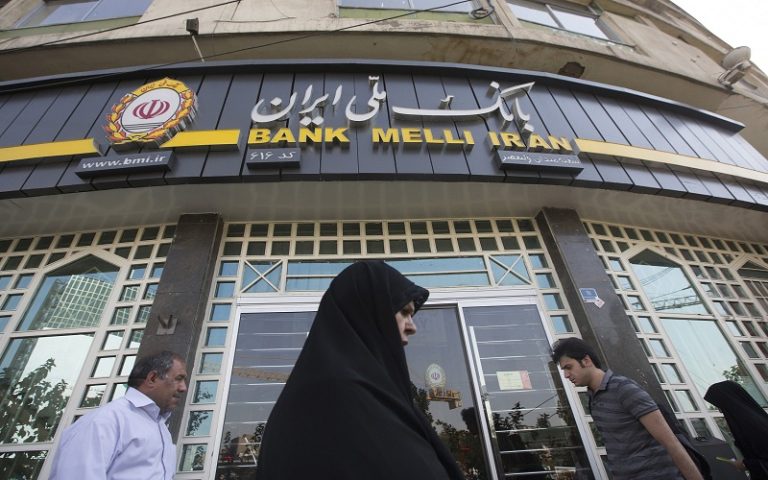
The Iranian Regime’s Debt to Banks Has Increased By “Two and A Half Times” In Past Three Years
New statistics from Iran’s Central Bank show that under Ebrahim Raisi’s administration, the government’s debt to the banking system surged by 148%. Additionally, liquidity surpassed 90 quadrillion rials (approximately $139.86 billion), more than double the amount when Raisi’s government took office in 2021.
The latest Central Bank report indicates that by August of this year, the government’s debt to the banking system had risen to 16.54 quadrillion rials (approximately $25.7 billion), which is two and a half times the level when Raisi’s administration began.
Government debt to the country’s banking system in August of this year saw an increase of nearly 39% compared to August 2023.
Of the total public sector debt to banks, about 15% is attributed to state-owned companies, while 85% is directly the government’s responsibility.
Approximately 30% of the total government debt to the banking system is related to borrowing from the Central Bank.
This massive surge in government debt comes despite Ebrahim Raisi’s promise at the start of his presidency to reduce inflation by halting borrowing and controlling liquidity.
However, Central Bank statistics show that liquidity surpassed 90 quadrillion rials by the end of the 13th government. At the start of Raisi’s term, liquidity stood at 40 quadrillion rials (approximately $62.16 billion).
In recent years, the government has engaged in uncontrolled borrowing from financial institutions, including the banking system, to address a massive budget deficit, forcing the Central Bank to print unsupported money.
As a result, the monetary base and liquidity in the country have skyrocketed, the value of the rial has sharply declined, and inflation has averaged over 41.5% annually over the past three years, placing Iran among the few countries with higher inflation rates.
The International Monetary Fund (IMF) has predicted that inflation in Iran will be 37.5% this year, placing the country among the top eight nations with the highest inflation rates globally.
The IMF has also forecast that inflation in Iran will be 32.5% next year, ranking it as the sixth-highest in terms of price increases worldwide.