

Khamenei Calls for Strengthening Iraq’s Hashd al-Shaabi
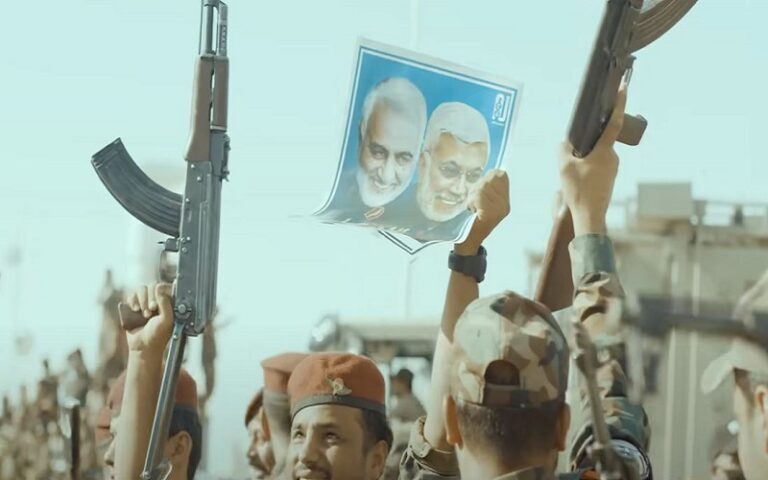
Ali Khamenei, Iran’s regime Supreme Leader, stated during a meeting with Iraq’s Prime Minister that the United States is trying to expand its presence in Iraq, and therefore, the Iraqi government must further strengthen Hashd al-Shaabi, the Iranian-backed Shiite militia group.
On Wednesday, January 8, during a meeting in Tehran with Iraqi Prime Minister Mohammed Shia’ Al-Sudani, Khamenei said: “Hashd al-Shaabi is one of the key pillars of power in Iraq, and efforts must be made to preserve and further strengthen it.”
Khamenei’s emphasis on maintaining and strengthening Hashd al-Shaabi comes as prior reports indicated that the Iraqi Prime Minister’s visit to Tehran aimed to discuss “the dissolution and integration of certain armed groups within the Hashd al-Shaabi structure.”
Last week, reports emerged that U.S. President-elect Donald Trump had sent a special message to the Iraqi Prime Minister, emphasizing the need to limit Iranian regime’s proxy forces and prevent interference in Syria’s internal affairs following the fall of Bashar al-Assad’s government.
On Wednesday, January 8, in a separate speech, Khamenei reiterated his regime’s anti-American stance, stating: “Before the revolution, Iran was under U.S. control, but the Islamic Revolution took away that immense political and economic wealth from American hands. Therefore, their resentment towards the revolution is immense.”
He added: “The U.S. failure to reclaim Iran despite heavy costs over the past 46 years is another reason for their hatred toward the Iranian nation and regime. America has failed in Iran and is now trying to compensate for that loss, which is why it opposes the Iranian people in every possible way.”
Khamenei further stated: “One of the demands of global arrogance, led by the U.S., from all nations, including Iranian officials, is to prioritize their interests in policy-making. Accepting this unreasonable demand from the U.S. would threaten democracy and republicanism in our country.”
“The people have voted for officials to serve their interests, not America’s. Therefore, decision-makers in economic matters such as inflation, production, and currency, as well as cultural issues like hijab, must only consider the interests of the Iranian nation, without any regard for American and Zionist interests.”
Khamenei’s call for strengthening Hashd al-Shaabi comes at a time when the so-called ‘Resistance Axis’ has been severely weakened due to the fall of Assad’s government and the elimination of Hezbollah Lebanon’s secretary-general and senior commanders.
Hashd al-Shaabi is considered one of Iran’s proxy forces in the region.
Following the collapse of Assad’s government, multiple reports have emerged about U.S. efforts to restrict Iranian regime’s proxy forces in Iraq.
During the fall of Assad’s government, Hashd al-Shaabi stated that its forces were not deployed in Syria and would only enter Syrian conflicts upon receiving orders from the Iraqi Prime Minister.
Japanese Yakuza Leader Admits to Smuggling Nuclear Materials from Myanmar to Iran

The U.S. Department of Justice has announced that the leader of a Japanese criminal organization known as the “Yakuza,” who had been accused by U.S. authorities of smuggling nuclear materials to Iran, has pleaded guilty.
According to a Justice Department statement released on Thursday, January 9, Takeshi Ebisawa, a 60-year-old Yakuza leader, pleaded guilty in a Manhattan court to conspiring to smuggle nuclear materials from Myanmar to countries including Iran. He admitted to working with a network of criminals to traffic uranium and weapons-grade plutonium suitable for nuclear weapons.
The statement also notes that Takeshi Ebisawa has admitted to international drug and arms trafficking charges.
In February 2024, U.S. officials charged the Yakuza leader with conspiring to smuggle nuclear materials from Myanmar to Iran for use in nuclear weapons.
He had also been charged in 2022 with international drug trafficking and firearms-related crimes.
Acting U.S. Attorney Edward Y. Kim for the Southern District of New York stated:
“As he admitted in federal court today, Takeshi Ebisawa brazenly trafficked nuclear material, including weapons-grade plutonium, out of Burma.”
“At the same time, he worked to send massive quantities of heroin and methamphetamine to the United States in exchange for heavy-duty weaponry, such as surface-to-air missiles, to be used on battlefields in Burma. He also laundered what he believed to be drug money from New York to Tokyo. It is thanks to the extraordinary efforts of the DEA’s Special Operations Division, the career national security prosecutors of this Office, and the cooperation of our law enforcement partners in Indonesia, Japan, and Thailand, that Ebisawa’s plot was detected and stopped.”
Ebisawa’s plot was uncovered and thwarted through cooperation between authorities in the United States, Indonesia, Japan, and Thailand.
Iran: Confirmation of Death Sentences for Political Prisoners – 54 Political Prisoners on Death Row
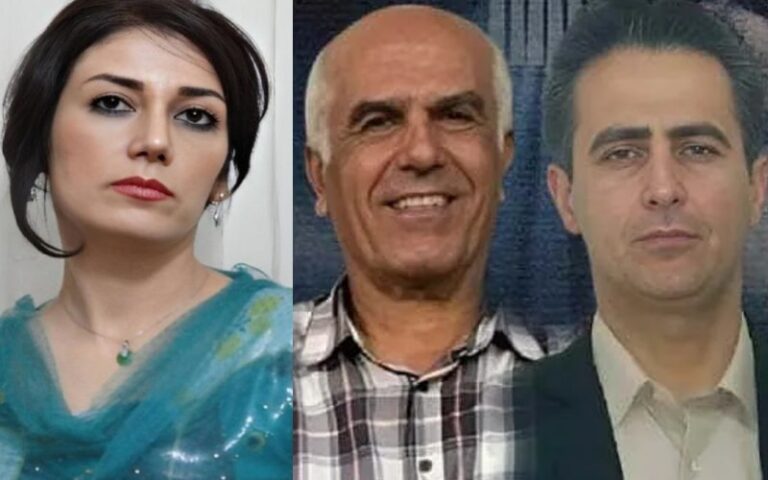
In November, The National Council of Resistance of Iran (NCRI), in a statement regarding the issuance of death sentences for six political prisoners on charges of “rebellion” (Baghi), called for urgent action by the UN Security Council, the High Commissioner for Human Rights, the UN Human Rights Council and related UN bodies, as well as the European Union and its member states to save their lives and secure the release of all political prisoners.
The six political prisoners—Akbar Daneshvar Kar, Mohammad Taghavi Sang-Dehi, Babak Alipour, Pouya Ghobadi Bistouni, Vahid Bani-Amarian, and Abolhassan Montazer—have been sentenced to death on charges of “Baghi” (armed rebellion) on charges of membership in the People’s Mojahedin Organization of Iran (PMOI/MEK).
Mohammad Taghavi was a political prisoner in the 2000s and 2010s. His brothers, Mojtaba and Ali Taghavi, have been sentenced to imprisonment and exile solely due to their family ties with him.
Iran’s Supreme Court Upholds Death Sentences for Three More Political Prisoners
News sources have also reported that Iran’s Supreme Court has upheld the death sentences of three political prisoners held in Evin Prison: Pakhshan Azizi, Behrouz Ehsani Eslamloo, and Mehdi Hassani.
Amir Raeesian, the lawyer of Pakhshan Azizi, announced on Wednesday, January 8, that the Supreme Court’s Branch 39 has confirmed the death sentence for this political prisoner.
Azizi’s lawyer had previously stated that “the evidence and documents against my client were so weak that a simple review would have been enough to dismiss the charge of Baghi.” However, despite this, “even though innocence does not require proof, we had submitted credible documents to the Supreme Court.”
On July 23, 2024, Pakhshan Azizi was sentenced to death and four years in prison by Branch 26 of Tehran’s Revolutionary Court, presided over by Iman Afshari, on charges of “Baghi, through membership in opposition groups.”
Death Sentences for Behrouz Ehsani Eslamloo and Mehdi Hassani Upheld
Additionally, in a new statement, the NCRI declared that the Iranian regime’s supreme court has upheld the death sentences of Behrouz Ehsani Eslamloo and Mehdi Hassani.
Their death sentences were officially communicated to their lawyers on Tuesday, January 7.
Behrouz Ehsani Eslamloo and Mehdi Hassani were sentenced to death in mid-September 2024 by Branch 26 of Tehran’s Revolutionary Court, presided over by Iman Afshari, on charges of “Baghi (armed rebellion), Moharebeh (waging war against God), corruption on earth, gathering classified information, and conspiracy against national security.”
“Membership in the People’s Mojahedin Organization of Iran (PMOI/MEK)” was cited as one of the accusations against these two prisoners.
At Least 54 Political Prisoners on Death Row in Iran
Currently, at least 54 political and security-related prisoners are on death row in Iran, facing charges such as “Baghi (armed rebellion), Moharebeh (waging war against God), and corruption on earth.”
Iran’s Efforts to Reclaim 25 Million Barrels of Stranded Oil in Chinese Ports

Reuters has reported that Iran is attempting to release 25 million barrels of its oil, which has been stranded in Chinese ports for six years due to U.S. sanctions.
According to “informed sources” in China and Iran cited by Reuters, these oil shipments are now valued at approximately $1.75 billion and are stored in leased tanks at the ports of Dalian and Zhoushan.
This oil shipment was seized in China during Donald Trump’s first presidency when oil sanctions were imposed. Analysts predict that in Trump’s second term, which begins on January 20, sanctions on Iran’s oil exports will be further intensified.
China has repeatedly stated that it does not recognize unilateral sanctions and has sourced 90% of its oil from Iran in recent years with significant discounts. However, the stranding of some Iranian oil shipments in Chinese ports highlights Iran’s challenges in selling oil, even to an ally like China.
Over the past four years, despite some of the toughest Western sanctions against Iran, the Iranian regime has maintained a thriving oil trade. This trade largely relies on a “ghost fleet” of tankers that turn off their automatic identification systems, conduct ship-to-ship transfers in the open ocean, rebrand oil, and ultimately deliver it to Chinese ports.
In September and October, the United States sanctioned dozens of tankers in the “ghost fleet,” causing Iran’s oil exports to China to drop below 1.3 million barrels per day in November and December—550,000 barrels lower than the September levels.
Reuters reports that most Iranian oil sold to China is rebranded along the way and arrives at Chinese ports as non-Iranian oil. However, the particular shipment that has remained stranded in Chinese ports since 2018 was officially documented as Iranian oil. It arrived in China when the Trump administration had issued waivers allowing the sale of Iranian oil to China.
When Trump revoked these waivers in 2019, the Iranian oil stored in tanks at the ports of Dalian and Zhoushan was left without buyers and got stuck in Chinese customs.
One of the three Iranian sources told Reuters that the cost of storing this amount of Iranian oil at the port of Dalian in China has exceeded $450 million.
Reuters, citing an Iranian source familiar with oil exports from Iran and Chinese customs procedures, reported that Iran will likely have to reload the oil from Chinese storage tanks onto its own ships, conduct ship-to-ship transfers at sea, and sell it under falsified documents as non-Iranian oil.
In recent weeks, as the start of Donald Trump’s second presidential term approaches, negotiations between Iranian and Chinese officials have intensified regarding the payment of storage fees and other conditions for releasing Iranian oil stored in China.
Meanwhile, the Shandong Port Group, which operates China’s largest oil terminals receiving crude from Iran, Russia, and Venezuela, has banned the entry of U.S.-sanctioned oil tankers amid a sharp decline in Iranian oil exports over the past two months.
The majority of Iran’s oil shipments are delivered to Chinese refineries through this port.
The sanctions imposed on Iran during Trump’s previous presidency reduced Iran’s daily oil exports from 2.5 million barrels to less than 350,000 barrels.
Iran’s Regime Sentences 54 “Political and Security” Prisoners to Death
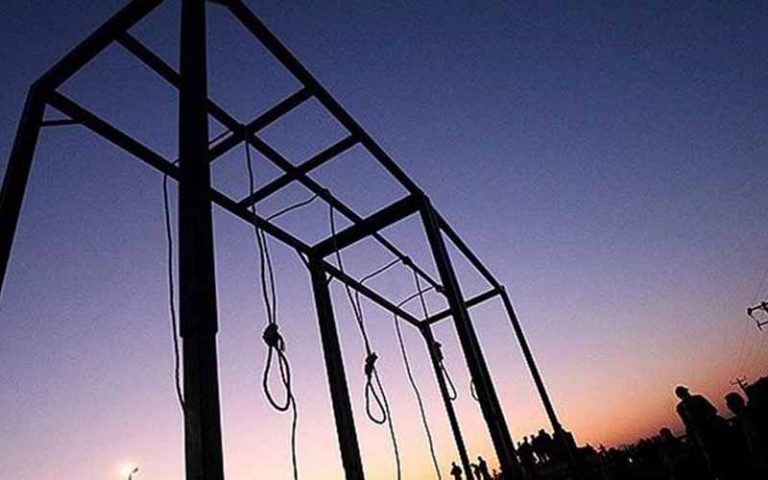
The Human Rights Activists in Iran organization has published a list of 54 “political and security” prisoners sentenced to death. According to the report, at least 24 individuals have been sentenced to execution by the Revolutionary and Criminal Courts of Tehran, while 20 others have received the same sentence in courts in the provinces of Khuzestan, Khorasan Razavi, West Azerbaijan, Sistan and Baluchestan, and Kurdistan.
This report, which was released on Monday, January 6, states that the execution sentences for these “political and security” prisoners have been upheld by Iran’s Supreme Court, and their cases have been transferred to the execution branch for enforcement.
The HRANA news agency, the media arm of this human rights organization, has listed the names of the prisoners sentenced to death, including “Varisheh Moradi, Pakhshan Azizi, Abolhassan Montazer, Vahid Bani-Amrian, Pouya Ghobadi Biston, Babak Alipour, Seyed Mohammad Taghavi Sang-Dehi, Akbar Daneshvarkar, Mohammad Amin Mahdavi Shayesteh, Saman Mohammadi Khiyareh, Ali Obeidavi, Malek Davarshenas, Malek Ali Fadaei-Nasab, Taj Mohammad Khormal, Abdolhakim Azim Gorgij, Abdolrahman Gorgij, Isa Eidmohammadi, Farhad Shakeri, Habib Dris, Salem Mousavi, Adnan Ghabishavi, Moein Khonafari, Mohammad Reza Moghadam, Ali Mojadam, Mohammad Mehdi Soleimani (Mohammad Mehdi-S), Yousef Ahmadi, Ahmad Reza Jalali, Abbas Deris, Mohammad Javad Vafaei Thani, Azam Narouei, Mohammad Zeinaldini, Farshid Hassan Zehi, Shahriar Bayat, Shahin Vosaf, Naser Bakrzadeh, Mehrab (Mehram) Abdollahzadeh, Hatem Özdemir, Hamid Hosseinnezhad Heidaranlou, Mehdi Hassani, Behrouz Ehsani, Rasoul Ahmad Mohammad, Azad Shojaei, Edris Ali, Alireza Barmarz Pournak, Hossein Nemati, Navid Najaran, Amir Mohammad Khosh-Eghbal, Alireza Kafaee, Milad Armon, Soleiman Shahbakhsh, Abdolrahim Ghanbar Zehi, Gorgij Abdolghani Shahbakhsh, Eido Shahbakhsh, and Abbas Korkor(Mojahed Korkor).”
The report by the Human Rights Activists in Iran organization emphasizes that many of these prisoners have been “denied the right to a fair trial” and have faced issues such as “limited or no access to legal representation and a lack of transparency in the judicial process.” It states that “some of them were not allowed to choose their lawyers, and even those who had appointed attorneys were prevented by judicial authorities from meeting with them.”
According to the report, “A significant number of these prisoners have denied the charges against them and were sentenced to death through opaque and unjust proceedings.” Some of them are “currently held in solitary confinement, awaiting execution.”
The majority of the execution sentences for these 54 prisoners were issued based on the charge of “Baghy,” which in legal terms refers to “armed rebellion or uprising against the government.”
The report highlights the “prominent role” of Abolqasem Salavati, the head of Branch 15 of the Tehran Revolutionary Court, and Iman Afshari, the head of Branch 26 of the same court, in issuing these death sentences. (Both judges have been subjected to international sanctions because of their human rights violations.) It also states that Branch 3 of the Urmia Revolutionary Court has sentenced several prisoners, “including border couriers (Kolbars),” to death on charges of “espionage for Israel.”
In some cases, including those of Mojahed Korkorand Hatem Özdemir, after the regime’s Supreme Court overturned their death sentences, parallel branches of the court reissued execution rulings against the defendants.
Read more…
Additionally, Mohammad Javad Vafaei Thani, a protester sentenced to death because of his support for the People’s Mojahedin Organization of Iran (PMOI/MEK), has been given a death sentence for the third time in his judicial process.
HRANA stresses that the Iranian regime “instrumentalizes” espionage charges to suppress political dissidents, and due to the “lack of transparency in details and judicial proceedings,” the issued sentences are always met with skepticism.
According to this human rights organization, “lawyers of some of these prisoners have repeatedly stated that their clients were sentenced to death through unfair judicial processes that did not meet the standards of a fair trial.”
Various domestic and international sources have repeatedly emphasized that the issuance and enforcement of death sentences by the Iranian regime serve the purpose of “spreading fear and intimidation.”
Shandong Port in China Bans Oil Imports from Iran and Russia
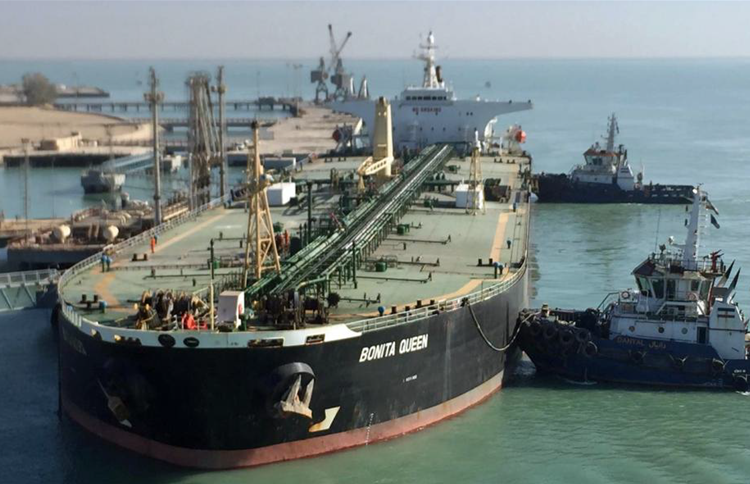
Shandong Port in China, which served as the main hub for importing sanctioned oil from Iran, Russia, and Venezuela, has banned the entry of oil tankers sanctioned by the United States into its managed ports.
According to Reuters, three traders active in these ports told the news agency that the Shandong Port Group has banned U.S.-sanctioned oil tankers from docking at its ports in eastern China.
Ship tracking data from Kpler shows that this province imported nearly 1.74 million barrels per day of oil from Iran, Russia, and Venezuela last year, accounting for approximately 17% of China’s total oil imports.
According to the report, if this ban is enforced, transportation costs will rise for independent refineries in Shandong, which are the primary buyers of discounted crude oil from these three countries.
Last month, Washington announced additional sanctions against companies and shadow fleets involved in transporting and trading Iranian oil.
Donald Trump, the U.S. president-elect, is expected to intensify sanctions against Iran under his maximum pressure policy, similar to his first term in office.
According to Reuters, enforcing this ban could reduce oil imports to China, the world’s largest oil importer.
Shandong Port Issues Second Directive
In a second directive issued by Shandong Port on Tuesday, January 7, obtained by Reuters, it stated that they expect the announced ban to have a limited impact on independent refineries since most sanctioned oil from these three countries is transported by non-sanctioned tankers. Estimates from Vortexa, a company that tracks oil tankers, show that in December, eight very large crude carriers (VLCCs), at least four of which are sanctioned by the U.S. Treasury Department, unloaded two million barrels of Iranian oil in Shandong. Michelle Wiese Bockmann, the lead analyst at Lloyd’s List Intelligence, told Reuters that the estimated number of shadow fleet tankers involved in transporting oil from Iran, Russia, and Venezuela is around 669 vessels. In October and December, the U.S. Treasury Department imposed sanctions on 35 tankers, which they claim are part of Iran’s ghost fleet. The price of Iranian crude oil sold to China reached its highest level in recent years last month, as new U.S. sanctions constrained transportation capacity and increased logistics costs.Pharmaceutical Production Decline and the Exodus of Pharmacists from Iran
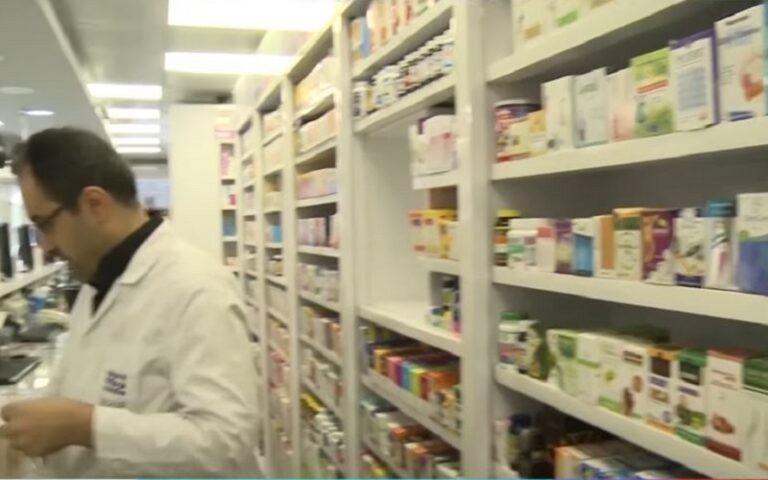
One week after the Iranian regime’s Majlis (Parliament) Research Center reported an 18.5% decline in pharmaceutical production among publicly traded companies in the first half of the year, the regime’s Ham-Mihan newspaper has published a report on the exodus of pharmacists from the country and the crisis in the pharmaceutical industry.
In mid-December 2024, the Majlis Research Center released a report on the state of the country’s industries, indicating that the pharmaceutical sector has suffered the second-largest decline in production, following the wood and paper industry.
According to the report, pharmaceutical production by publicly traded companies declined by 2.6% in the spring and 18.5% in the summer of this year.
The report did not provide information on the total pharmaceutical production in Iran. However, Jaafar Ghaem-Panah, the acting head of the Presidential Office, had previously reported a 30% decline in the country’s overall pharmaceutical production.
Pharmaceutical Experts Leaving Iran
On Tuesday, December 24, 2024, Ham-Mihan newspaper reported that pharmaceutical industry professionals, due to payment delays and a lack of a promising future, have either chosen to leave domestic companies or relocate their production facilities to neighboring countries. These companies are not only struggling with government-imposed price controls and a lack of foreign currency for importing raw materials, but they are also burdened by massive unpaid debts owed by the government.Government’s Massive Debt to the Pharmaceutical Industry
Mehdi Pirsalehi, head of the Food and Drug Administration of Iran, recently announced that the government owes 330 trillion rials (approximately $407.5 million) to the pharmaceutical industry and 220 trillion rials (approximately $271.6 million) to the medical equipment sector. The Director-General of the Pharmaceutical Affairs Department at the Food and Drug Administration stated last week that a major pharmaceutical holding, which has had 140 trillion rials (approximately $172.8 million) in sales, is currently owed 80 trillion rials (approximately $99 million) by the government. Regarding this company, he added: “They cannot even pay their workers’ salaries and say they will send them to sit in front of the Ministry of Health because they cannot afford to pay their wages.” This official also reported that half of the shortages in injectable medicines are due to problems faced by this very company, which has stated: “We do not have the money to buy vials.”Declining Production, Reduced Imports, and Drug Shortages
Alongside the production decline, customs data shows that pharmaceutical imports decreased by 13.6% last year, dropping to $2.3 billion. Between March and September, only $1.1 billion worth of pharmaceuticals have been imported into the country. The decline in both domestic production and imports has resulted in shortages of many essential medicines across the country.Campaign “No to Executions Tuesdays”: 21 Executions in Iran Coinciding with the New Year
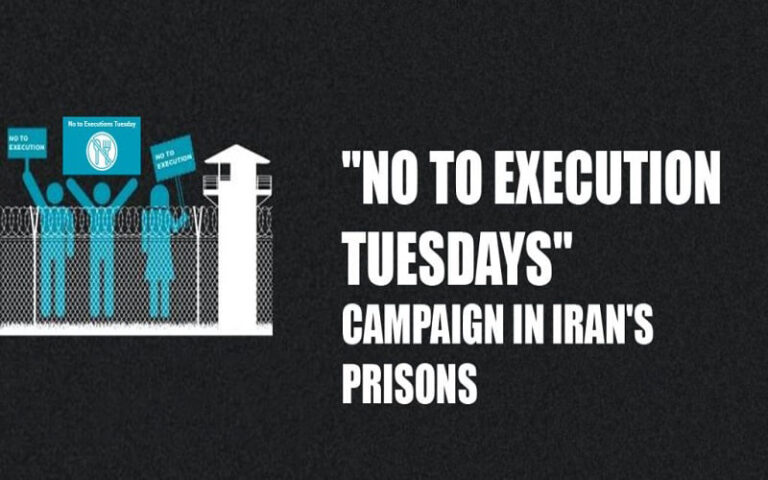
The “No to Executions Tuesdays” campaign, in a statement on Tuesday, January 7, announced that the Iranian regime executed 21 people on January 1, coinciding with the beginning of the new year.
According to the campaign’s statement, since the beginning of January, the number of executions has exceeded 80. In 2024 alone, the number of executions reached 1,000, setting another grim record.
Meanwhile, 128 countries around the world have abolished the death penalty. Recently, Zimbabwe also completely abolished capital punishment as a New Year’s initiative. However, in Iran, the number of executions continues to rise.
Members of the “No to Executions Tuesdays” campaign have announced that on Tuesday, January 7, they will continue their hunger strike, coinciding with the anniversary of the fifth anniversary of the Ukrainian airliner shot down by the IRGC, which resulted in the death of all 176 passengers onboard
This action takes place as the families of the victims of the Ukrainian plane crash express solidarity with other activists and protesters against the government’s policies.
As the “No to Executions Tuesdays” campaign expands, Sepidar Prison in Ahvaz and Ramhormoz Prison have also joined the protest movement.
This campaign, now active in 30 different prisons, includes hunger strikes by prisoners protesting against the death penalty and the government’s repressive policies.
The “No to Executions Tuesdays” campaign has called on people in Iran and worldwide to support this protest movement, advocating for the abolition of the death penalty and resistance against this inhumane policy. According to the organizers, victory in this struggle is possible and within reach.
The prisons participating in the “No to Executions Tuesdays” campaign include Evin, Ghezel Hesar, Karaj, Greater Tehran, Khorin (Varamin), Arak, Khorramabad, Asadabad (Isfahan), Dastgerd (Isfahan), Sheyban (Ahvaz), Nezam (Shiraz), Bam, Kahnuj, Tabas, Mashhad, Qaemshahr, Rasht, Roudsar, Ardabil, Tabriz, Urmia, Salmas, Khoy, Naqadeh, Saqqez, Baneh, Marivan, Kamyaran, Sepidar (Ahvaz), and Ramhormoz.
Gas Supply Cut to 12 Petrochemical Complexes in Iran
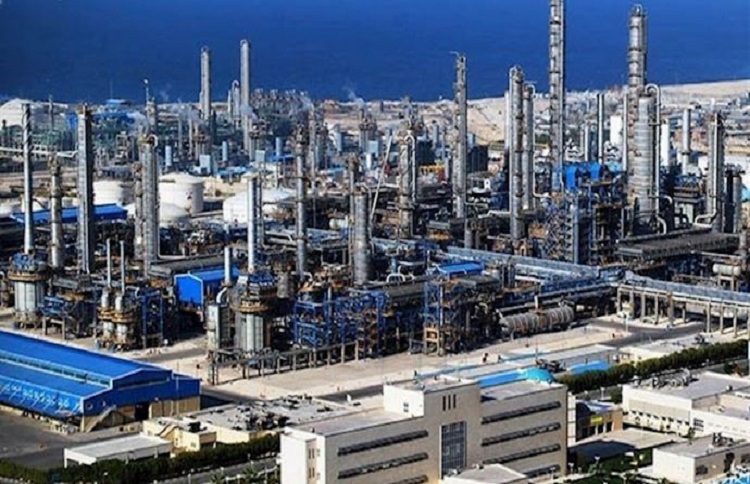
mid ongoing gas shortages in Iran, Iranian media have reported that gas supply to 12 petrochemical complexes has been cut off.
The Secretary-General of the Iranian Petrochemical Employers Association announced that the energy crisis in Iran has led to the gas supply cut for 12 petrochemical complexes. Ahmad Mahdavi stated on January 4 that investment in the energy sector is the solution to Iran’s energy imbalance. However, investment contracts for upstream gas projects in the petrochemical sector have yet to be finalized.
Mahdavi cited the rise in household gas consumption as the main reason for the gas supply restrictions to petrochemical plants. However, he did not specify the names of the 12 affected complexes. Earlier, on January 1, Saeed Tavakoli, the CEO of Iran’s National Gas Company had announced in a meeting that gas consumption would peak in the next two days. Tavakoli warned that cold weather in northwestern and northeastern regions could cause serious problems.
Tasnim News Agency, affiliated with Iran’s Islamic Revolutionary Guard Corps (IRGC), reported that out of 600 power generation units, 80 have been shut down due to gas shortages. Iran’s power plants have a total capacity of 58,000 megawatts. The shutdown of these plants has led to an 8,000-megawatt reduction in electricity production, equivalent to a 14% decrease.
On November 29, 2024, Tavakoli had emphasized that without household gas conservation, there would not be enough gas for productive industries, including petrochemical plants, cement, and steel factories. Additionally, Mohammad Bagher Ghalibaf, the speaker of the regime’s parliament (Majlis), recently admitted that under the current situation, the country would soon be left without both electricity and gas.
11-Fold Increase in Gas Exports Amid Gas Shortages in Iran
Meanwhile, data from Turkey’s Energy Market Regulatory Authority shows that Iran’s gas exports to Turkey increased 11-fold in September and October 2024. This surge in exports comes at a time when domestic consumers in Iran are facing a severe gas shortage, leading to strict limitations on fuel supply to industries, petrochemical plants, and power plants. Overall, between September 1 and October 31, Iran exported 1.38 billion cubic meters of gas to Turkey—more than 10.5 times the amount exported in the same period in 2023. Iran also exports gas to Iraq, though exact figures on these exports are unavailable. Additionally, Iran has a gas-for-electricity swap agreement with Armenia, under which it receives 3 kilowatt-hours of electricity for each cubic meter of gas supplied.Gas Exports Continue Despite Industrial and Petrochemical Shutdowns
According to Armenia’s customs data, Iran’s gas exports to Armenia increased by 23% in the first half of 2024. During this period, over 226 million cubic meters of gas, valued at $38 million, were exported to Armenia. Data from BP and the Gas Exporting Countries Forum (GECF) indicates that Iran exported approximately 14 billion cubic meters of gas in 2023. However, no official estimates have yet been released for Iran’s total gas exports in 2024. The administration of Masoud Pezeshkian has set a target of exporting 16 billion cubic meters of gas in its proposed budget for 2025. This target has been set despite Iran’s severe gas shortages. In recent days, gas supply to many industries and petrochemical plants has been cut off. Oil Minister Mohsen Paknejad has stated that under Iran’s Seventh Development Plan, daily gas production must reach 1.38 billion cubic meters. During the colder months of the year, Iran’s maximum daily gas production capacity is 850 million cubic meters. However, the country still faces a daily shortfall of 300 million cubic meters. The annual average gas production stands at around 730 million cubic meters. Paknejad emphasized that achieving the development plan’s goals would require an investment of $45 billion, which should be allocated to the expansion of gas fields and related infrastructure.22-27% Percent of Iranians Struggling with Poverty
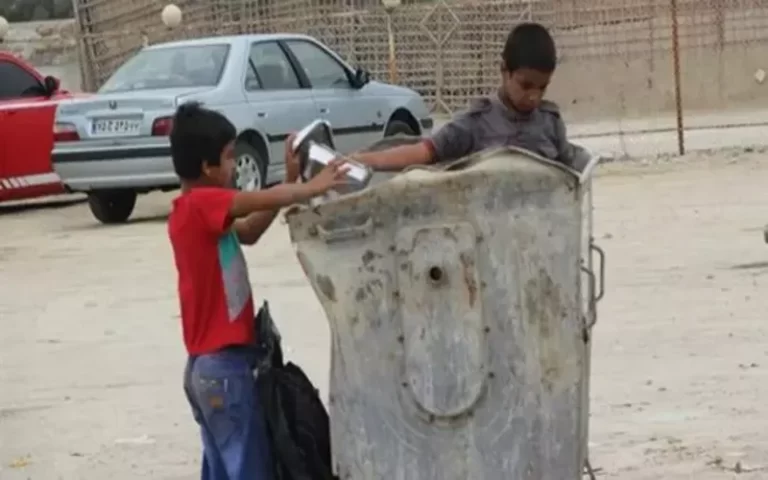
Ebrahim Sadeghi-Far, head of the Labor and Social Security Institute, warned that 22 to 27 percent of Iranians are struggling with poverty and face difficulties in meeting their basic needs.
Speaking at a meeting on January 5, Sadeghi-Far presented these statistics, emphasizing that poverty is one of the main challenges in the country that requires urgent attention.
He added, “Today, poverty in Iran is not a marginal issue; it has become an undeniable reality affecting a large portion of society.”
Previously, on November 16, the Iran’s regime Chamber of Commerce Research Center reported that as of early 2022, approximately 32 million Iranians were living below the food poverty line. The report warned that this trend is rapidly worsening due to severe inflation in recent years.
On October 29, 2024, the Iranian Parliament Research Center also reported that the poverty rate had exceeded 30 percent in 2023, stating: “Last year, at least one-third of the population was unable to meet their basic needs and lived below the poverty line.”
The head of the Labor and Social Security Institute argued that fighting poverty solely through economic measures is a mistake and called for an examination of its roots in political, social, and cultural factors.
Referring to existing data showing that school dropout rates are rising due to economic and social difficulties, Sadeghi-Far questioned why poverty persists in Iran despite the country’s vast oil resources.
On September 9, 2024, the Donya-e-Eqtesad newspaper reported that the poverty line for a three-person household in Tehran this year stands at 200 million rials (approximately $247).
Citing economic experts, the newspaper added that approximately 26 million Iranians are unable to meet their basic needs.
In May 2024, the Etemad newspaper published an article titled “2024 Budget: Incapable of Poverty Reduction”, analyzing poverty data and stating that a 10 percent increase in the poverty rate over two years means approximately 8 million more people have fallen into poverty.
Citing an analysis by the Iranian Parliament Research Center, the newspaper warned that since 2017, Iran’s poor population has increased by approximately 50 percent.
