

Iran’s Gas Exports Surge Despite Unmet Domestic Demand
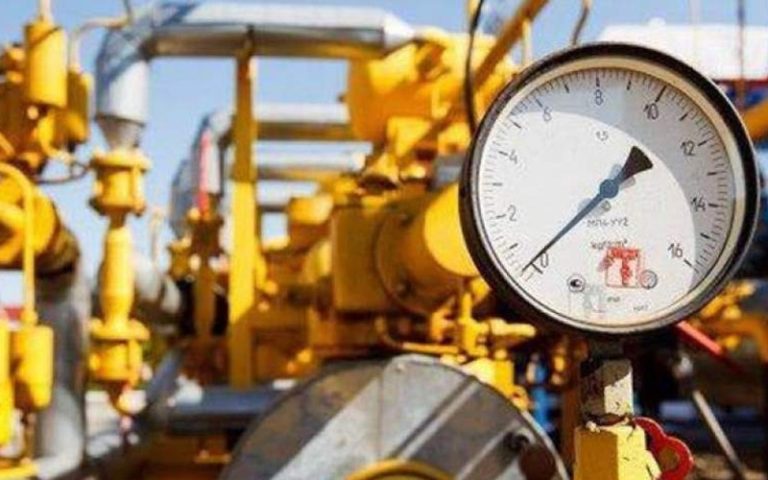
Statistics from Turkey’s Energy Market Regulatory Authority indicate that Iran’s gas exports to Turkey in September and October 2024 increased elevenfold compared to the same period last year.
This surge in gas exports to Turkey occurs as Iran faces a significant domestic gas shortage since the start of autumn, severely restricting fuel supply to industries, agriculture, and power plants.
Details from Turkey’s monthly energy statistics show that Iran delivered a total of 5.58 billion cubic meters of gas to Turkey in the first ten months of 2024, marking a 41% increase compared to the same period the previous year.
According to the latest statistics published on the organization’s website, Iran exported no gas to Turkey in September 2023, but over 510 million cubic meters in September 2024. In October 2024, Iran exported over 866 million cubic meters of gas to Turkey, seven times more than October 2023.
In total, between September 1 and October 31, 2024, Iran sold 1.38 billion cubic meters of gas to Turkey, more than 10.5 times the volume for the same period last year.
Iran also exports gas to Iraq, but neither country has released data on the volume delivered so far.
Iran also has a gas-for-electricity swap agreement with Armenia, wherein it receives 3 kilowatt-hours of electricity for each cubic meter of gas delivered.
Official statistics from Armenia’s customs indicate that Iran increased its gas deliveries to the country by 23% in the first half of 2024. During this period, Iran delivered over 226 million cubic meters of gas to Armenia, valued at $38 million.
Statistics from BP and the Gas Exporting Countries Forum (GECF) show that Iran exported approximately 14 billion cubic meters of gas in 2023. However, no estimates for Iran’s total gas exports in 2024 have been released yet.
The Iranian regime has set a target of exporting 16 billion cubic meters of gas in the draft budget for the upcoming Persian calendar year (starting in March).
The goal to increase gas exports comes despite the country’s significant gas imbalance. On Wednesday, January 1, Iran’s regime Oil Minister Mohsen Paknejad stated that under the Seventh Development Plan law, daily gas production needs to reach 1.38 billion cubic meters.
Achieving this production level was also targeted in the Sixth Development Plan but was not realized.
During peak winter consumption, Iran produces gas at its full capacity of 850 million cubic meters per day but still faces a deficit of 300 million cubic meters. On average, Iran’s daily gas production throughout the year is approximately 730 million cubic meters.
Paknejad stated that achieving the Seventh Development Plan’s goals requires $45 billion in investment, most of which must be allocated to developing gas fields and related infrastructure.
Financial Action Task Force (FATF): A New Wave of Disputes Among Iranian Regime Factions
The Iranian regime is witnessing a new wave of internal divisions as the issue of Financial Action Task Force (FATF) legislation resurfaces. These laws, which have been stalled in the legislative process for years, have sparked renewed debate among the country’s political factions, reflecting the complexity of the interplay between domestic politics and international pressures.
The Iranian regime’s Minister of Economic Affairs and Finance recently announced that Supreme Leader Ali Khamenei has approved the reconsideration of FATF-related bills by the Guardian Council. Masoud Pezeshkian, the regime’s president, confirmed this during a meeting with the Iranian Chamber of Commerce on December 31, 2024, emphasizing the need for collective action by all authorities to address the country’s economic challenges.
These developments come amid a severe economic crisis, including the collapse of the Iranian currency, exacerbated by international sanctions and geopolitical challenges. The discussions center on two key bills: the Palermo Convention and the Countering Financing of Terrorism (CFT) Act, aimed at aligning Iran’s financial regulations with FATF standards.
The FATF is an international body focused on combating money laundering and terrorist financing. It blacklists non-cooperative countries, and currently, Iran and North Korea remain the only nations on this list, further isolating Iran from the global financial system.
The issue of complying with FATF standards has long been contentious in Iran. Proponents argue that compliance would help ease sanctions, while opponents claim it would limit the regime’s ability to support allied groups such as Hezbollah.
Although the bills were approved by the Parliament in 2018, the Guardian Council, whose members are tightly controlled by Khamenei, rejected them, turning the matter into a recurring source of disputes. The issue has often been used as a tool to manipulate market sentiments during times of economic crisis.
Following Khamenei’s announcement approving a review of the bills, the Iranian stock market saw increased demand for bank shares, reflecting investor optimism about a potential economic breakthrough if FATF standards are met. However, skepticism remains, as previous endorsements by Khamenei, such as in December 2020, failed to produce tangible outcomes.
The opposition to these bills is led by hardline factions, who view them as a tool for “foreign infiltration.” Critics claim that adhering to FATF recommendations could hinder Iran’s ability to circumvent sanctions. Prominent voices such as Gholamreza Mesbahi Moghadam and Mohsen Rezaei have raised concerns about sovereignty and the regime’s strategic interests.
On the other hand, the worsening economic conditions and the failure of nuclear negotiations under former President Ebrahim Raisi’s administration have increased pressure to address the FATF issue. Although Raisi initially ignored the legislation, he later acknowledged its importance, calling compliance “inevitable” under the current circumstances.
While Khamenei has not explicitly opposed the bills, his influence on the Guardian Council’s decisions is evident. In October 2018, Khamenei stated he was not against reviewing the bills in Parliament, yet final approval remains elusive. The council, dominated by hardliners, continues to oppose the legislation, reflecting deep divisions within the regime.
The FATF reaffirmed in July 2023 that Iran remains on its blacklist, warning that the country would stay on the list unless deficiencies are addressed. These international pressures, coupled with domestic economic challenges, add further complexity to Iran’s political landscape.
The reopening of the FATF file highlights persistent disagreements within the Iranian political scene. With Khamenei’s tacit approval and mounting economic pressures, the Guardian Council is set to reconsider the Palermo Convention and CFT bills. However, hardline opposition remains strong, driven by ideological concerns and resistance to international oversight. As Iran navigates these internal and external challenges, the question of FATF compliance remains unresolved, carrying significant implications for its economic and geopolitical future.
Saeed Massouri: An Execution Every 2.5 Hours in Iran, a Bloody Christmas with Nearly 25 Executions
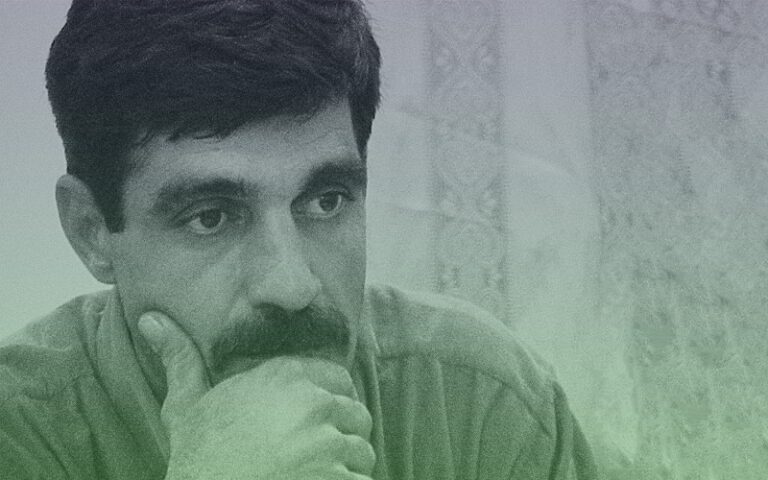
Saeed Massouri, a political prisoner serving a life sentence in Iran, currently in his 24th year of imprisonment at Ghezel Hesar Prison, has written a letter to the UN Secretary-General, the President of the European Parliament, and the Special Rapporteur on the Human Rights Situation in Iran, reporting a sharp rise in executions in the country, especially during the Christmas season.
In the letter, he noted: “In the past, executions happened with some time intervals, but now, on average, there is one execution every four hours. During the Christmas period alone, nearly 25 innocent people were executed, which equates to almost one execution every 2.5 hours.”
This political prisoner, a member of the “No to Executions Tuesdays” campaign, has called on the international community and human rights organizations to take swift action on this issue.
This full text of the letter follows:
This is the 25th Christmas that I am spending in prison. I do not know what more my eyes must see or what further burdens and heartaches this heart must endure. From the time I was sentenced to death and held in solitary confinement, considering every meeting to be my last and every “opening and closing” sound of the door as a death knell (even after 25 years, every such sound due to psychological conditioning still triggers the same feeling), to witnessing the executions of dear friends and comrades up close—I no longer know how much more I must see and endure. From the absence and taking away of cellmates (Hojjat Zamani, Majid Kavousi, Farzad Kamangar, Ali Saremi, Abdolreza Rajabi, Afshin Osanlou, Mansour Radpour, Shahrokh Zamani, Loqman and Zaniar Moradi, Ali Heydarian, and others…).
To dear and loving cellmates like Mohsen Dokmehchi, Jafar Kazemi, Mohammad Haj Aghaei, Gholamreza Khosravi, Hamed Ahmadi, Shahram Ahmadi, Ghasem Abesteh, Aso, Ayoob, Farhad Salimi, Anvar, Khosrow, Mohsen Shekari, and Mohammad Ghobadlou—to hearing the screams and wails of their families…
I truly do not know… I still cannot understand how, after seeing the childish drawing of Mahna, a 6-year-old girl, who drew herself and her mother next to her father’s gallows at the gates of Gohardasht Prison while waiting for her last meeting and kissing her father’s face (upon receiving his body), my heart has not yet stopped from these piercing and agonizing beats…!!?
Currently, we witness an execution every 4 hours on average. During this Christmas period alone, nearly 25 innocent people were executed, equating to almost one execution every 2.5 hours!
This letter is not addressed to my fellow compatriots this time (who are doing whatever is within their power) but to all awakened consciences in international human rights institutions, especially the UN Human Rights Council (High Commissioner), rapporteurs, particularly the Special Rapporteur Ms. Mai Sato, and all influential figures: UN Secretary-General Mr. António Guterres, European Commission President Ms. Ursula von der Leyen, and European Parliament President Ms. Roberta Metsola. I urgently ask them not just to express concern or condemn the executions but to take more serious measures to prevent these executions.
Do not perceive the number of executions merely as figures; these are human lives being lost daily.
The least that can be done in this regard is to bind this “execution government” to humane and human rights standards by conditioning diplomatic and political interactions on halting this killing machine in hopes that the massacres will cease.
If necessary, even referring this human rights violation case to the Security Council! Every hour and day of delay in this matter results in more and more executions and, of course, the shedding of blood from the bodies of the Iranian people.
Perhaps if effective actions had been taken earlier, even Italian journalist Ms. Cecilia Sala would not have fallen victim to hostage-taking policies (and during Christmas, no less!).
A look at the most notable political events related to Iran in 2024
It is evident that the survival strategy of the Iranian regime faced its most significant blows in the past year. The following developments highlight this claim:
January 3, 2024: A bombing in Kerman killed at least 103 people during a ceremony commemorating the assassination of Qassem Soleimani.
January 15, 2024: The IRGC launched ballistic missiles and drones targeting Erbil in the Kurdistan region of Iraq, killing four and injuring five. A missile was also fired at a target in Aleppo province, Syria.
January 20, 2024: An Israeli airstrike on a building in Damascus, Syria, killed five IRGC members, including Commander Sadegh Omidzadeh.
February 8, 2024: Meta removed Iranian Supreme Leader Ali Khamenei’s Instagram accounts for violating its policy on “dangerous organizations and individuals.”
March 8, 2024: A UN fact-finding mission declared that human rights violations by the Iranian government had reached the level of crimes against humanity.
April 1, 2024: An Israeli airstrike on the Iranian regime’s consulate in Damascus killed eight IRGC members, including Commander Mohammadreza Zahedi.
April 13, 2024: Iran fired between 400 to 500 drones and cruise missiles at Israel from Iran, Iraq, Syria, southern Lebanon, and Yemen. Over 90% of the missiles failed to reach Israeli territory, resulting in the death of only one Palestinian worker.
April 20, 2024: Suspected Israeli missile strikes targeted sites near Isfahan in Iran, Iraq, and radar facilities in Syria.
May 18, 2024: A helicopter crash killed regime President Ebrahim Raisi, Foreign Minister Hossein Amir-Abdollahian, East Azerbaijan Governor Malek Rahmati, and Ali Khamenei’s representative in the province, Mohammad-Ali Al-Hashem.
June 14, 2024: Hamid Nouri, an Iranian official sentenced to life imprisonment in Sweden, was released in a prisoner exchange mediated by Oman.
June 19, 2024: Canada added the Islamic Revolutionary Guard Corps (IRGC) to its list of terrorist organizations.
July 4, 2024: Massoud Pezeshkian defeated Saeed Jalili in the second round of presidential elections to become the ninth president of the Iranian regime.
August 1, 2024: Ismail Haniyeh, the leader of Hamas, was assassinated in Tehran.
August 28, 2024: The Hamburg government in Germany expelled Mohammad Hadi Mofateh, the head of the Islamic Center of Hamburg, setting a deadline for his departure by September 10.
September 21, 2024: An explosion at the Tabas coal mine killed at least 51 workers and injured 28 others.
September 27, 2024: An Israeli airstrike on a Hezbollah headquarters in Beirut killed Hezbollah Secretary-General Hassan Nasrallah and IRGC Commander Abbas Nilforoushan.
October 2024: The Iranian regime launched a series of missile attacks against Israel under the operation name “True Promise 2.”
October 28, 2024: Jamshid Sharmahd, a political dissident with German citizenship, was executed. This action led to Germany recalling its ambassador and closing Iranian consulates in Germany.
December 8, 2024: The cities of Homs and Damascus in Syria fell to opposition forces, prompting Iranian regime ally Bashar al-Assad to flee the country.
December 18, 2024: Cecilia Sala, an Italian journalist, was arrested in Tehran on unspecified charges.
December 18, 2024: Russian President Vladimir Putin announced that his country assisted in the evacuation of 4,000 Iranian forces from Syria.
Nationwide Protests in Iran on December 31, 2024: A Unified Call for Justice and Rights
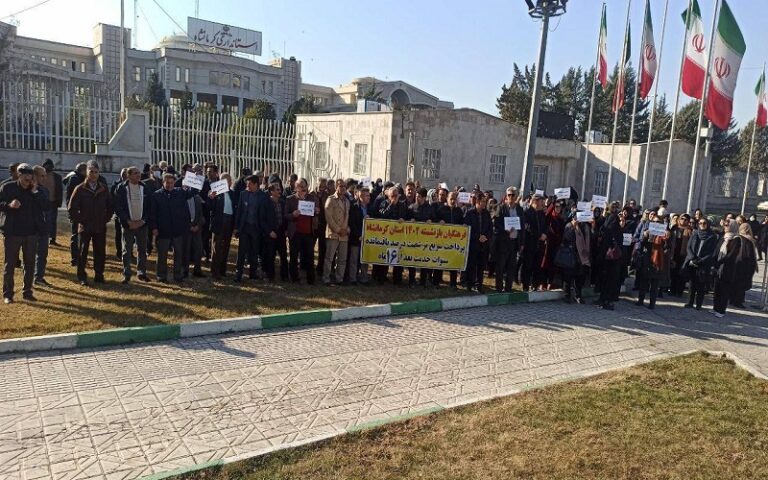
Protest gatherings by various segments of the Iranian population were held on Tuesday, December 31, 2024, coinciding with political prisoners’ protests in 28 prisons against inhumane death sentences. Protest gatherings by different groups, particularly retirees and oil workers, have added new momentum to the protest movement.
Protest by Retired Educators in 2023
Retired educators protested the non-payment of bonuses that have been overdue for 16 months by holding demonstrations in various cities across the country.
These protests took place in cities such as Shiraz, Urmia, Rasht, Kermanshah, Golestan, and several others. During their gatherings, the retirees chanted: “Whoever challenges teachers falls — Justice, where are you? Justice, where are you?”
Mass Protest by Employees of Gachsaran Oil and Gas Company
Workers at the Fajr Jam Gas Refinery in eastern Bushehr province staged protests within the refinery premises. Employees of the Gachsaran Oil and Gas Company protested against the lack of response to their demands, including work status conversion through the elimination of contractor firms, establishing a fair system for wages, bonuses, and benefits, revising the job classification plan, implementing Administrative Court Ruling 3188, tax reforms, and more.
Contract workers at the Fajr Jam Gas Refinery united in their demand for their legal and human rights. Chanting slogans like “Enough with the promises, our tables are empty,” the workers declared that they could no longer endure discrimination and job insecurity. They demanded the removal of contractors, job security, and fair wages.
The workers carried banners in the protests, calling for the elimination of contractor companies, revisions to the job classification plan, implementation of rotational work schedules for all contract workers, wage parity with permanent employees, and access to the refinery’s welfare services.
Drivers of the Fajr Jam Gas Refinery also participated in the demonstration, carrying banners with demands such as: “Human dignity, job security, proper and fair overtime, wages, and benefits considering the rising cost of vehicle parts.”
Protest by Addiction Treatment Professionals Nationwide
Addiction treatment professionals from across the country held a protest in front of the Iranian Ministry of Health in Tehran. The professionals objected to the use and spread of narcotics among addicts, which they see as equivalent to the destruction of the country’s young generation.
Protest by Agriculture Ministry Staff in Ilam Province
Staff of the Agriculture Ministry in Ilam province protested their poor living conditions and low wages by holding a demonstration in front of the provincial office of the ministry, symbolically spreading an empty tablecloth to illustrate their plight.
Intensified Overcrowding and Dire Conditions in Ghezel Hesar Prison in Iran
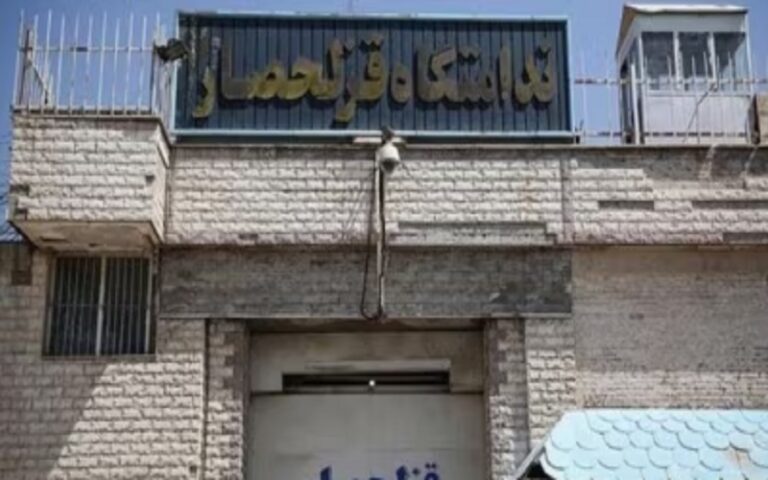
Reports indicate that Iran’s Prisons Organization plans to transfer 1,200 inmates from the central prison in Karaj to Ghezel Hesar Prison, a move that will further exacerbate the critical conditions in this facility. This transfer, reportedly aimed at exploiting prisoners as labor, has been heavily criticized by human rights activists.
Severe Overcrowding in Ghezel Hesar Prison
Ghezel Hesar Prison, located near Tehran, currently houses a population far beyond its capacity. Rooms designed for 9 to 12 beds now accommodate 15 to 20 people, forcing many inmates to sleep on the floor or in hallways. Even the prison’s mosques, repurposed as accommodation spaces, are filled with 50 to 60 people.
This prison, notorious for its dire sanitary conditions and poor facilities, houses between 400 and 600 inmates in each ward, many of whom struggle with drug addiction. Additionally, some prisoners suffer from serious illnesses such as HIV and lack adequate access to medical care. The absence of proper ventilation and unsanitary conditions have created an unbearable environment for the inmates.
Exploitation of Prison Labor
The primary goal of transferring inmates appears to be using them as labor in factories. Reports suggest that 1,200 prisoners from Ward 4 of Ghezel Hesar Prison, along with 500 Afghan nationals residing in Hall 19 of the facility, are working under these harsh conditions.
Prisoners who recently used their own funds to improve conditions in Ward 4 now face the risk of being relocated again. Families of political prisoners in this ward have expressed concern about the psychological impact of these repeated relocations.
A History of Poor Planning and Prisoner Rights Violations
This is not the first time that transferring inmates has worsened conditions. Last year, the sudden closure of Gohardasht Prison led to over 1,200 inmates being moved to Ward 3 of Ghezel Hesar Prison. This transfer transformed Ghezel Hesar, which was previously designated for drug offenders, into a facility housing prisoners with diverse charges, including political and ideological detainees.
A member of a political prisoner’s family stated: “With the merging of Gohardasht Prison and the transfer of drug offenders from Karaj to Ghezel Hesar, conditions became such that many inmates had no place to sleep and were reduced to sleeping in the corridors.”
More Than 1,800 Poor Quality Prefabricated Classrooms in Iran
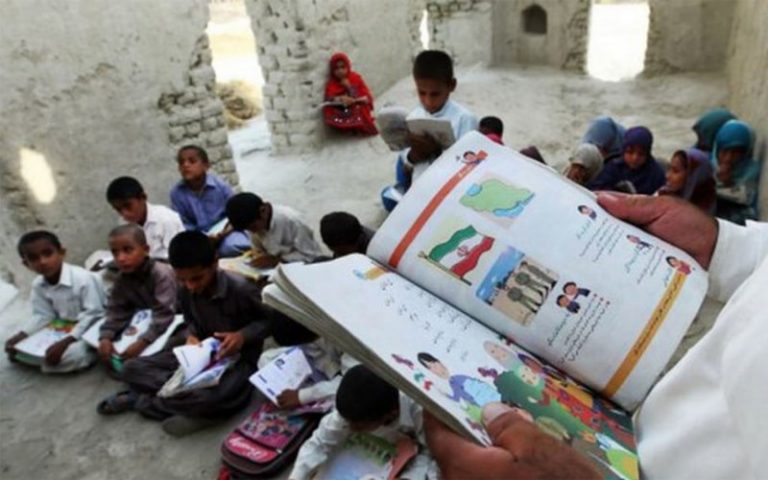
Majid Abdollahi, Deputy Director of the Organization for Renovation, Development, and Equipping Schools in Iran, reported the existence of approximately 1,820 prefabricated classrooms and announced that these schools need to be organized and made safe.
On Monday, December 30, Abdollahi told the Young Journalists Club that prefabricated classrooms with more than ten students have been prioritized in the prefabricated school project.
He also revealed that approximately 1,100 stone-structured schools have been identified nationwide and said that planning to assess local needs and project site selection is the responsibility of the Renovation Organization and provincial education departments.
Earlier, on November 27, Hamidreza Khanmohammadi, head of the Organization for Renovation, Development, and Equipping Schools, warned that seven provinces—Tehran, Qom, Sistan and Baluchestan, Khuzestan, Khorasan Razavi, Alborz, and West Azerbaijan—are facing a severe shortage of schools.
On October 14, Alireza Kazemi, Minister of Education, stated: “The existence of prefabricated schools does not signify a crisis; environmental conditions and sometimes the number of students lead to the establishment of prefabricated schools.”
According to official statistics, approximately 70,000 classrooms in the country need structural reinforcement, and 30,000 others require demolition and reconstruction.
The necessary funding for improving educational spaces and building new schools in Iran is generally provided through the participation of philanthropic school builders.
In May, Safarali Yazerloo, Deputy Director of the Organization for Renovation, Development, and Equipping Schools, announced that 57% of schools in the country are built with the help of individuals and legal entities.
Thus, the Iranian regime’s share in financing school construction is only 43%.
Bloomberg: Shamkhani’s Son’s Influence in the International Banking System
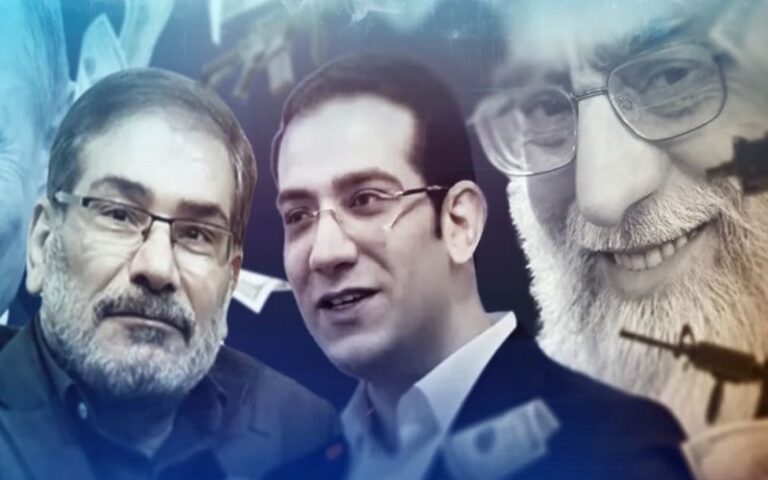
Bloomberg reports that Hossein Shamkhani, the son of Ali Shamkhani, a senior figure close to Supreme Leader Ali Khamenei, has used Dominica’s citizenship-by-investment programs and a lobbying firm in Washington, D.C., to circumvent sanctions and gain substantial economic benefits, including purchasing property outside Iran.
According to the report published on Monday, December 30, Hossein Shamkhani gained access to the international banking system through his Dominica citizenship and maintained his access via channels established in the UAE and Washington.
The small Caribbean nation of Dominica has issued passports to foreigners in exchange for significant payments. This initiative has injected billions of dollars into Dominica’s economy and provided easy second citizenships to individuals whose primary nationality might be problematic.
Among those participating in this six-figure-cost program were a group of Iranians, including Hossein Shamkhani, who, according to Bloomberg, leads strategic businesses in oil and arms trade for Tehran and Moscow.
Shamkhani also manages an investment fund operating in global financial hubs.
Hossein Shamkhani, whose father is a senior advisor to Khamenei, has made significant efforts to keep his business interests confidential.
The Bloomberg report illustrates how he managed to integrate his companies into the Western financial system.
The core entities in Hossein Shamkhani’s network have been responsible for delivering Iranian weapons to Russia. His network operates from cities such as London, Geneva, Dubai, and Singapore, establishing ties with some of the biggest names in the financial world.
Alongside Shamkhani, other Iranians who obtained Dominica passports include a ship captain named Alireza Derakhshan, known as “Captain D,” affiliated with the Milavos Group; Mahdyar Zare Mojtahedi, senior manager of the Ocean Leonid investment fund; and Hossein Ghorbani-Zadeh, a senior associate at the Golden Nest Group. They assisted Shamkhani in forging global banking connections.
The Dominica program served as a platform for Shamkhani and his associates to transform the “Admiral Group” into a multi-billion-dollar business empire encompassing dozens of companies.
The Admiral Group refers to a business enterprise founded by Hossein Shamkhani and his brother Hassan. According to the report, the name was chosen in honor of their father’s military rank.
Alireza Derakhshan obtained Dominica citizenship in 2009. His name also appears in a business registry in Turkey as a Dominica citizen. In the UK, company records show Zare Mojtahedi and Ghorbani-Zadeh registered as Dominica citizens as well. In all these cases, there is no mention of Iran in the documents.
Bloomberg notes that in private discussions with their American counterparts, some Emirati officials, including Yousef Al Otaiba, the influential UAE ambassador to Washington, have expressed opposition to sanctions targeting Shamkhani.
The report also states that some officials in Joe Biden’s administration have privately acknowledged that keeping oil prices low and avoiding a trade war with China have taken precedence over targeting prominent figures in Iran’s oil market, such as Shamkhani.
The report also highlights a Washington-based lobbying firm, Qorvis, as a key player in Hossein Shamkhani’s campaign to protect his business interests.
Bloomberg states that Qorvis has played a significant role in Shamkhani’s efforts by providing strategic advice and facilitating negotiations with American officials. The revelation of this firm’s involvement has sparked significant reactions among U.S. observers of Iranian affairs.
The 49th week of the “No to Executions Tuesdays” campaign across 28 prisons
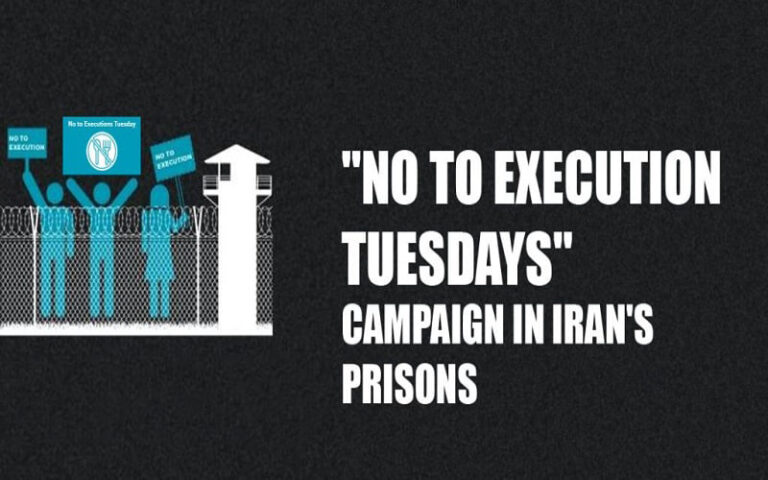
The “No to Executions Tuesdays” campaign issued a statement during its 49th week of hunger strikes in 28 prisons across Iran. The statement declared that despite increasing protests from the public and activists against executions, the regime has not retreated from its actions but has intensified its repression. The judiciary recently authorized the amputation of (hands and feet) of individuals accused of theft and “moharebeh” (enmity against God) in an attempt to normalize its brutal practices. Many of these theft suspects are victims of systemic corruption, class discrimination, and massive embezzlements by rulers and their associates.
The misogynistic regime has also sentenced several women in Qarchak Prison to stoning on charges of illicit relationships. Even in the most optimistic scenario, these sentences may be converted to execution. The statement emphasized that remaining silent in the face of such atrocities equates to complicity in injustice, and it called for resistance against this barbarity.
Over the past week, from December 21 to 30, at least 41 people were executed, including 23 individuals in just three days across various prisons. Many death row inmates have been transferred to solitary confinement in preparation for their executions. Among them is political prisoner Mojahed Mojtaba Korkor, who has been imprisoned for over two years. His death sentence, previously overturned, has been reinstated, placing his life in grave danger.
Furthermore, the regime has intensified pressure on independent lawyers who take on cases involving political prisoners and death row inmates, threatening them with arrest. These actions, which have escalated in recent years, have resulted in the imprisonment of several lawyers solely for defending their clients. The statement stressed the importance of supporting these honorable and free-spirited lawyers.
In conclusion, the statement condemned these repressive actions and called on all Iranians and human rights activists to join the campaign. It urged people to act with unity and solidarity to halt death sentences and transform Iran into a land free of violence and executions.
At Least 883 Executions in Iran in 2024
The human rights website HRANA reported in its latest annual report that at least 883 people were executed in prisons across Iran in 2024, reflecting an 18.3% increase compared to the previous year.
The report, published on December 26, states that during this period, 207 individuals were sentenced to death by the Iranian regime’s judiciary, and the death sentences of 54 individuals were upheld by the Supreme Court.
According to the report, the issuance of death sentences increased by 33.5%, and among those whose genders were specified, 772 were men and 26 were women.
Additionally, five individuals who were under 18 at the time of their alleged crimes, legally referred to as juvenile offenders, were among those executed this year.
Of the executions during this period, four were carried out publicly.
In recent weeks, the rise in executions and the issuance of death sentences for political prisoners in Iran have sparked numerous protests both inside and outside the country.
One of these protests is the hunger strike campaign “No to Executions Tuesdays,” which began in February to halt executions. On Tuesday, December 24, it marked its 48th week across 28 prisons in the country.
According to HRANA’s report, 51.87% of those executed in 2024 in Iran were charged with drug-related offenses, while 40.54% faced murder charges.
Additionally:
- 2.49% were charged with sexual offenses
- 1.81% faced unspecified charges
- 0.7% were charged with “corruption on earth”
- 0.7% were charged with “waging war against God (non-political)”
- 0.57% faced charges of armed robbery
- 0.57% were charged with security offenses including “espionage, terrorism, and bombings”
- 0.57% faced political and security charges of “waging war against God and rebellion”
