

Disabled Man Dead Following Assault at Care Center in Iran
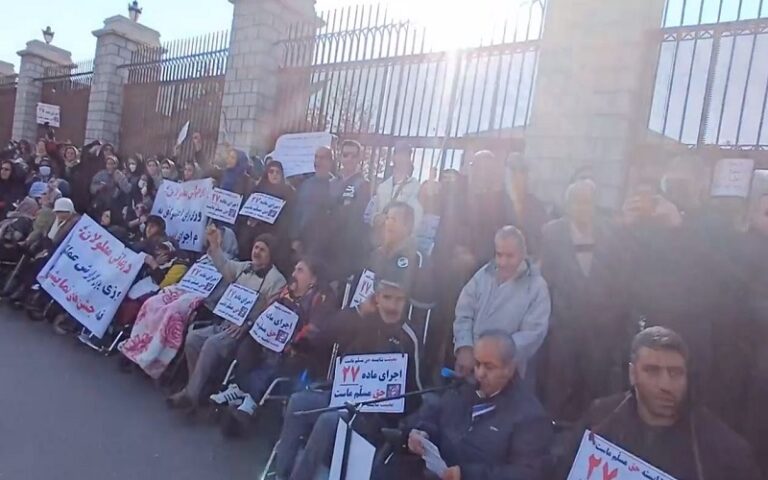
One of the residents of a center for people with disabilities in Hamadan Province, Iran, died after being beaten by staff at the facility.
On Wednesday, December 18, Iranian media reported that a 38-year-old man with intellectual disabilities was assaulted by staff at a supportive home overseen by Hamadan’s Welfare Organization and passed away.
Following this incident, Abbas Najafi, the prosecutor of Hamadan Province, announced the initiation of a judicial case and its referral to an investigative branch. He added that arrest warrants had been issued for the suspects under the charge of intentional assault and battery.
Acts of violence and mistreatment against citizens with disabilities have occurred previously in the country.
In March 2024, the Disabilities Campaign released a video on X, revealing incidents of harassment, assault, battery, and exorbitant fees at the Mehr-Afarin Center for Men with Mental Illness in Karaj.
Iran’s official news agency, IRNA, reported on December 18 regarding the deceased individual in Hamadan, stating that the initial examination by the Forensic Medicine Organization confirmed evidence of assault and battery, but final conclusions were contingent on an autopsy and necessary tests.
IRNA quoted Hamadan’s prosecutor, saying the suspects were released on bail by the case investigator after spending one night in detention, pending the final forensic results.
Despite the prosecutor’s remarks, the deputy director of Hamadan’s Welfare Organization stated that the center’s staff were not employees of the organization and that the facility was regularly monitored by the welfare department.
Previously, on December 17, the head of the Iranian Institute for Population Studies announced that one in six people aged 60 and older had experienced some form of abuse in social settings over the past year.
Mohammad Javad Mahmoudi added: “The rate of abuse of elderly individuals in institutions such as nursing homes and long-term care centers is high.”
In August 2023, a video showing violent behavior towards individuals with intellectual disabilities at a care center in Bushehr was circulated.
In June 2023, IRNA reported that staff at the Fatemeh Zahra Rehabilitation Center in Jahrom subjected several individuals with disabilities to harm by burning them with lighters.
In recent years, individuals with disabilities in Iran have frequently held protests against the non-implementation of the Disability Protection Law.
Record-Breaking Currency Rates in Iran: The Dollar Surges, Euro Crosses 800,000 Rials
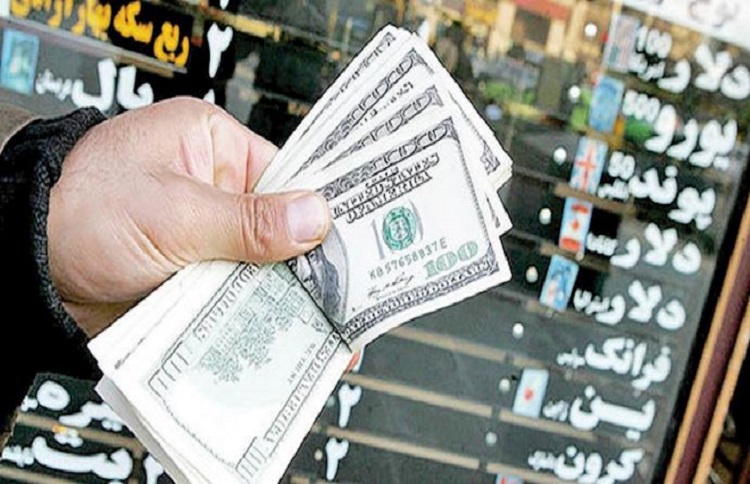
The exchange rate of the U.S. dollar in Iran’s free currency market continued its upward trend, reaching a record high of 776,500 rials.
The euro also surpassed the 800,000-rial mark for the first time and was trading around 806,000 rials by the morning of Thursday, December 19. The British pound, having crossed 980,000 rials, is nearing the one-million-rial threshold.
A series of political and economic factors, including “Donald Trump’s victory in the U.S. presidential elections,” “developments in the Middle East and the risk of military conflict involving the Iranian regime,” “the increased likelihood of triggering the snapback mechanism against the regime,” and “the removal of preferential currency rates,” have been cited as the main reasons behind the dollar’s historic records.
In recent days, based on the Central Bank’s decision, the agreed-upon dollar rate of approximately 610,000 rials has replaced the preferential exchange rate.
Accordingly, exporters and importers must now conduct their currency transactions through the trade exchange platform.
Previously, importers could bring in goods at a rate of 540,000 rials. The sudden removal of the NIMA exchange rate, which leads to higher prices for goods and services, has sent an upward signal to the unofficial currency market. Nonetheless, officials deny that this decision has impacted prices.
On December 17, the head of Iran regime’s Central Bank attributed the rise of the dollar to “psychological operations by the enemy” during a televised interview and promised a reduction in foreign exchange rates. However, since then, the dollar’s rate has increased by at least 10,000 rials.
The Central Bank had anticipated that the introduction of the agreed currency market would align official rates closer to the free-market rate. However, following this change, the free-market dollar rate is once again diverging from the official rate.
Dire Conditions in Qarchak Women’s Prison: Inmates Endure Cold, Illness, and Deprivation
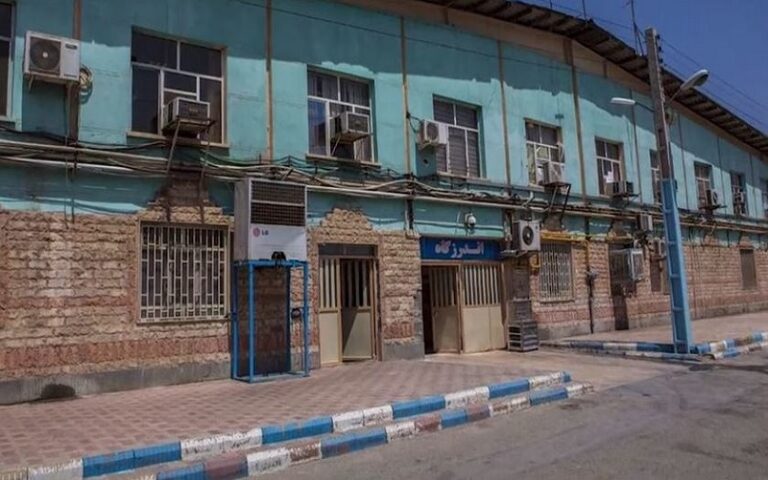
With the onset of cold weather, the breakdown of heating systems and lack of hot water in Qarchak Women’s Prison have severely endangered the lives and health of the inmates, including pregnant women and nearly 20 young children.
Jila Baniyaghoub, a journalist and women’s rights activist in Iran, reported on X that almost all prisoners in Qarchak Prison have fallen ill and caught colds.
According to the same report, there is insufficient medication in the prison infirmary, and each sick prisoner has been given only two antibiotic capsules for treatment.
The journalist further noted that almost all inmates in this prison are convicted of ordinary crimes and that some children also live there with their mothers.
In another part of her report, she highlighted the issue of potable water in the prison, stating, “Potable water has been cut off for several days. Each ward, with over 100 inmates, has access to only one tap for drinking water, brushing teeth, and washing dishes.”
Baniyaghoub also reported that the prison’s heating system remains out of order, and authorities do not allow families of inmates to bring them additional warm clothing.
Hamed Farmand, a children’s rights activist, wrote on X that Qarchak Prison is located in a desert area, stating, “The lack of heating, which is not a new issue, means intensified cold. Children are held here with their mothers, and there have been as many as 20 children.”
The conversion of a poultry farm into an overcrowded prison, the lack of ventilation and safe drinking water, frequent sewage overflows, the spread of various diseases, the abundance of pests and vermin, and the harsh conditions for children and their imprisoned mothers are part of a report previously published by the Iran Human Rights Organization about Qarchak Prison in Varamin.
The report described the prison as one of the “darkest symbols of systematic human rights violations in the Iranian regime.”
According to the report, the prison wards are essentially converted warehouses originally intended for poultry, which have been repurposed for detaining female inmates, including political prisoners, for years without adhering to any standards.
The Iran Human Rights Organization stated that women in Qarchak Prison are held in cramped spaces with inadequate ventilation and lighting. They face unsafe drinking water, poor-quality food, lack of adequate health and medical services, and humiliating and gender-biased treatment as part of their daily suffering.
Inmates reported an abundance of pests and vermin, including cockroaches, mice, salamanders, lizards, water scorpions, and even venomous tarantulas in their living quarters.
According to prisoners, the water is not drinkable and, if not boiled and filtered, causes various gastrointestinal and kidney diseases. Political prisoners temporarily exiled to this prison stated that the water is not even suitable for bathing.
The report noted that Qarchak Prison lacks a water filtration system. Women, many of whom have no financial means, must purchase bottled water at high prices from the prison shop to access safe drinking water.
Meanwhile, the low-quality tap water is frequently cut off during the summer months.
According to the Iran Human Rights Organization, each hall in Qarchak Prison, housing an average of 150 inmates, has at most three or four toilets, which lack proper human waste disposal systems.
Despite the high number of sick prisoners, access to medical consultations is very limited, with a maximum of five inmates from each ward typically receiving medical attention.
Additionally, while prison authorities are extremely strict in prescribing and providing necessary medications, the distribution of sedatives and painkillers is widespread, used as a method to pacify inmates.
New U.S. Sanctions on Individuals and Entities Involved in Iran’s Missile and Drone Programs
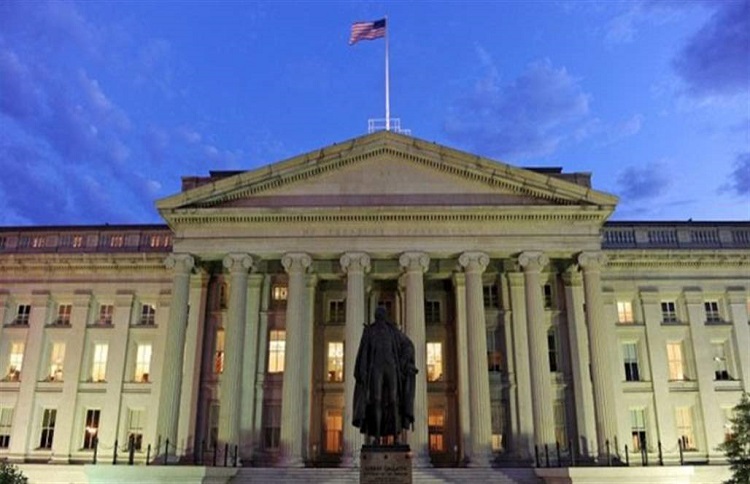
On Wednesday, December 18, the Office of Foreign Assets Control (OFAC) of the U.S. Department of the Treasury sanctioned two entities and two individuals for their roles in developing and procuring sensitive navigation components for Iran’s Islamic Revolutionary Guard Corps (IRGC).
According to the Treasury Department’s statement, the IRGC Aerospace Force Self-Sufficiency Jihad Organization (IRGC ASF SSJO) and other Iranian regime organizations use these critical components to manufacture and proliferate drones and missiles.
Simultaneously, the U.S. Department of State also sanctioned one individual, and two entities involved in Iran’s drone and missile programs.
The Treasury Department’s statement further noted that Wednesday’s sanctions were coordinated with the Departments of Commerce and Justice, with the Justice Department assisting in coordinating the arrest of one of the sanctioned individuals.
Bradley T. Smith, Acting Under Secretary of the Treasury for Terrorism and Financial Intelligence, emphasized Iran’s persistent efforts to acquire critical components to facilitate the production of ballistic missiles and drones, stating, “The United States will continue to disrupt Iran’s attempts to provide its deadly weapons to Russia, its terrorist proxies, and other destabilizing actors around the globe.”
Sanctioned Entities and Individuals by the Treasury Department
Sanat Danesh Rahpuyan Aflak Company Ltd: According to OFAC, this company is engaged in consulting, designing, manufacturing, and supplying navigation and automation systems, including those for cruise and ballistic missiles, drones, and unmanned surface and underwater vehicles. Kaveh Merat: He is the Chief Technology Officer, chairman of the board, and a shareholder of Sanat Danesh Rahpuyan Aflak Company Ltd. Illumove SA: Mohammed Abedininajafabadi is the sole board member and CEO of this Switzerland-based company, which, according to OFAC, solely represents the interests of Sanat Danesh Rahpuyan Aflak abroad, including procuring Western electronic equipment and other technologies. In recent years, the United States and the European Union have imposed extensive sanctions on individuals and entities involved in Iran’s drone and missile programs, as well as on human rights violators and those responsible for suppressing protesters. In response, the Iranian regime, despite repeated Western warnings about continued sanctions, remains adamant about persisting with its destabilizing activities in various domains, including military and human rights issues.Reuters: Iran’s Revolutionary Guards Control Half of Iran’s Oil Exports
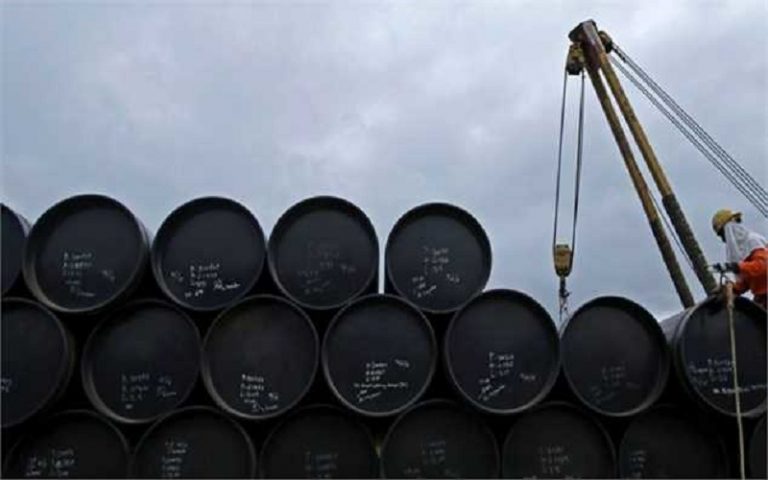
Citing Western officials, security sources, and informed Iranian insiders, Reuters reported that the Islamic Revolutionary Guard Corps (IRGC) has tightened its grip on Iran’s oil industry, now controlling half of the country’s oil exports.
Western and internal sources reveal that the IRGC’s control over Iranian oil encompasses managing a covert fleet of tankers, logistics, and front companies used to sell oil primarily to customers in China.
According to the report, the IRGC’s share of Iran’s oil exports has grown from about 20% three years ago to 50% today. Simultaneously, under Iran’s 2024 budget law and the proposed 2025 budget bill, nearly the entire budget for Iran’s armed forces is allocated in crude oil and condensates.
The Iranian regime is determined to secure buyers for oil shipped to Dalian, China, before Donald Trump potentially returns to the White House. Tehran officials fear that Trump’s return could jeopardize access to oil shipments in Dalian, valued at approximately $1 billion.
The IRGC has expanded its activities into domains traditionally held by state institutions, such as the National Iranian Oil Company (NIOC) and its subsidiaries in oil trade.
Richard Nephew, a former deputy special envoy for Iran at the U.S. State Department, noted that when sanctions began impacting Iran’s oil exports years ago, those managing the NIOC and broader industries sought ways to circumvent rather than avoid sanctions. Nephew, now a researcher at Columbia University, said, “The IRGC guys were much, much better at smuggling, just terrible at oil field management, so they began to get larger control of oil exports.”
China’s Role and IRGC Discounts
China, as Iran’s largest oil buyer, receives Iranian oil offered by the IRGC at significant discounts to attract customers. An insider involved in Iran’s oil sales to China told Reuters that oil export revenues are roughly equally split between the IRGC and NIOC. The source noted that the IRGC sells oil at a $1–$2 discount compared to NIOC’s rates. Reuters also cited two Western sources estimating that the IRGC’s discounts average $5 per barrel but can reach as high as $8. According to U.S. Energy Information Administration estimates, Iran’s oil revenues reached $53 billion in 2023, up from $16 billion in 2020. These revenues stood at $37 billion in 2021 and $54 billion in 2022. Washington Free Beacon reported on December 13 that Iran’s oil sales significantly increased under the Biden administration. According to the latest government figures and expert estimates, Iran’s illicit oil revenues during Biden’s presidency reached approximately $200 billion.The Quds Force and Iran’s Covert Oil Fleet
Intelligence documents indicate that Qasem Soleimani, the former commander of the IRGC Quds Force, who was killed in a 2020 U.S. airstrike in Baghdad, established a secret base to oversee this unit’s oil smuggling operations. Reports estimate the IRGC’s annual budget for routine operations and headquarters at around $1 billion. Additionally, Hezbollah’s budget is estimated at approximately $700 million, with 70%–80% of its funding directly provided by Iran. Hassan Nasrallah, the former Secretary-General of Hezbollah, who was killed in an Israeli airstrike in Beirut, stated that the Iranian regime provides funding for the group, including salaries for its members and weapons. The National Iranian Tanker Company, previously central to oil exports, now serves the IRGC. Ship-to-ship transfers are among the methods used to conceal the oil’s origin, with much of it shipped to China. This year, the U.S. Treasury and Israel’s National Bureau for Counter Terror Financing imposed sanctions on ships linked to the Quds Force. This “ghost fleet” uses sophisticated methods to evade sanctions and sell embargoed oil. In recent months, the U.S. sanctioned 35 tankers tied to the Quds Force.U.S. Oil Sanctions on Iran Will Remain in Place and Be Fully Enforced
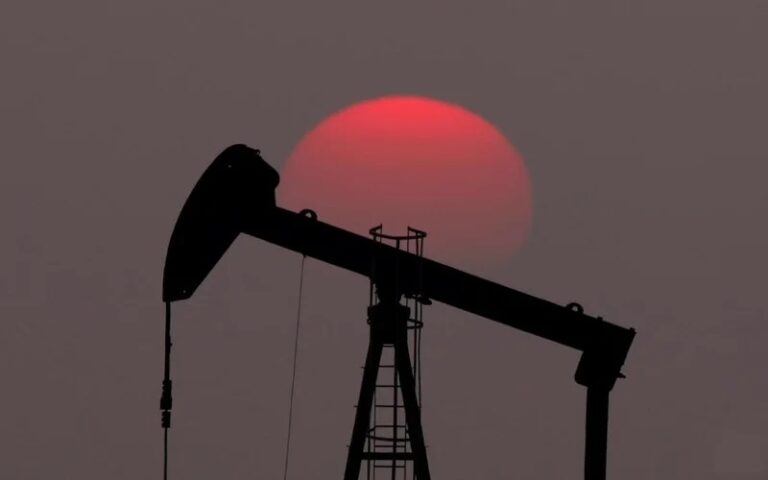
Abram Paley, the Deputy Special Representative for Iran at the U.S. State Department, referring to Washington’s latest sanctions on Iranian oil sales, stated to have received unverified reports about the transfer and sale of Iran’s oil reserves and the oil sanctions on Iran remain in place and will be fully enforced.
The Iranian regime is attempting to sell its stored oil in China, which was previously transferred there via the “dark fleet,” before the start of Donald Trump’s presidential term.
The Iranian regime fears that Donald Trump, the U.S. President-elect, will impose stricter sanctions after taking office, preventing the sale of this oil.
According to data from the oil tanker tracking company Vortexa, after a decline in Iran’s oil sales over the past month, the volume of Iran’s floating oil reserves has increased from approximately 36 million barrels in mid-September to 48 million barrels this month, with the value of this increase estimated at around $1 billion.
According to Iran’s 2024 budget law, the General Staff of the Armed Forces has been authorized to sell crude oil and gas condensates up to a monthly limit of 134 trillion tomans (approximately $1.763 billion) to strengthen the country’s defense capabilities.
This amount equals the sale of 104 million barrels of oil, or 21% of Iran’s total oil exports planned for 2024.
According to the budget bill, if the government fails to allocate the required budget to military institutions, the National Iranian Oil Company (NIOC) must compensate for the shortfall by delivering crude oil or gas condensates to representatives of the military institutions.
Iranian oil, which is under U.S. and allied sanctions, is often exported via tankers known as the “dark fleet” and is usually transferred to other tankers in Malaysian and Singaporean waters.
At this stage, Iranian oil is rebranded as Iraqi, Emirati, Omani, or Malaysian oil before being transferred to small, independent Chinese refineries known as “teapots.”
Shandong port in China is the main hub for receiving this rebranded oil. However, tanker tracking companies have reported a significant increase in shipments to China’s Dalian port this year.
The U.S. Treasury Department sanctioned 45 tankers this month that were used to circumvent sanctions and transport Iranian oil to Shandong port.
Despite these sanctions, Vortexa data indicates that over 100 large tankers in the dark fleet remain unaffected by sanctions and continue to transport Iranian oil to China, albeit in smaller volumes than before.
Decline in Crude Oil Exports
Iran’s daily oil exports have declined by more than half a million barrels per day compared to September, reaching approximately 1.3 million barrels per day in November. According to data from the analytics firm Kpler, Iran’s average daily oil exports this year have been around 1.6 million barrels, with nearly all of it going to China. This figure is 300,000 barrels per day higher than last year. However, oil deliveries to China have sharply declined in recent weeks. Additionally, Iran has stopped oil exports to Syria following the fall of Bashar al-Assad’s regime. Under these conditions, the future of Iran’s oil exports to China remains uncertain, and Vortexa statistics show that the volume of Iran’s unsold floating oil continues to rise. The majority of Iran’s floating oil reserves are stored in Singaporean waters, awaiting intermediaries and buyers to transfer it to China. The drop in Iran’s oil exports to 1.3 million barrels per day comes as Masoud Pezeshkian’s government plans to export 1.85 million barrels per day next year.U.S. Charges Two Individuals Over Iran-Linked Drone Attack That Killed American Soldiers in Jordan
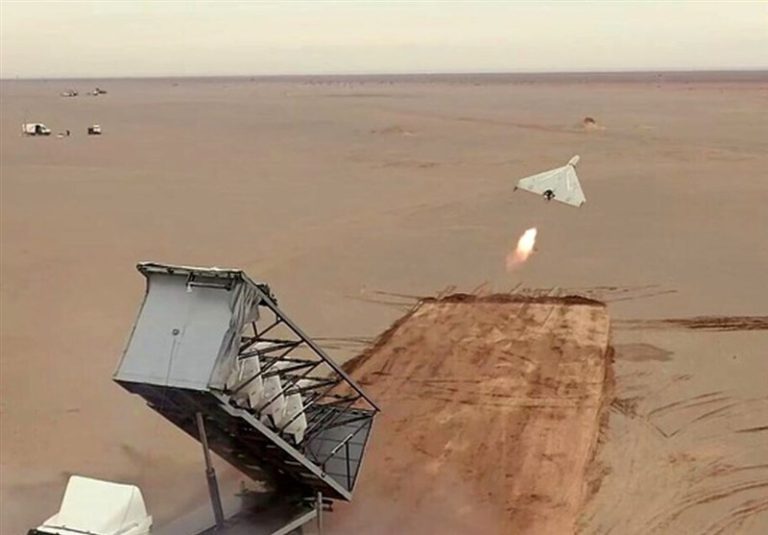
On Monday, December 16, U.S. prosecutors announced charges against two individuals in connection with a drone attack carried out by militias affiliated with the Iranian regime in Jordan, near the Syrian border, which took place in January.
The attack resulted in the deaths of three U.S. service members and injured more than 47 others.
Federal prosecutors in Boston stated that they would announce charges later on Monday at a press conference against an Iranian citizen and a dual Iranian-American national. The charges include violations of export laws and materially supporting the Iranian government in connection with the drone attack.
According to Reuters, one of the individuals, Mahdi Sadeghi, was arrested in Massachusetts and is scheduled to appear in court soon. The other individual, Mohammad Abedini, was arrested outside the United States.
On Monday evening, U.S. officials announced in a press conference that by examining the drone used in the attack on the base hosting U.S. forces in Jordan, they were able to trace how its parts ended up in the Iranian drone used in the January attack.
They stated that Mohammad Abedini, who owns a company in Iran with ties to the government, the Islamic Revolutionary Guard Corps (IRGC), and the armed forces, obtained an American-made component through Mahdi Sadeghi, who worked at the company that manufactured the part. The part was procured via a front company in Europe.
Abedini was arrested in Italy through efforts by the FBI, and U.S. officials are working to extradite him to the United States for trial.
These charges relate to the first deadly attack against U.S. forces since the start of the Israel-Hamas war in October 2023.
regime responsible for the drone attack on U.S. forces, an attack that sent shockwaves throughout the Middle East.
The coalition known as the “Islamic Resistance” in Iraq, consisting of extremist militias affiliated with the Iranian regime, claimed responsibility for attacks on three bases, including one near the Jordan-Syria border.
Enormous Economic Losses for Iran’s Regime Following Assad’s Fall
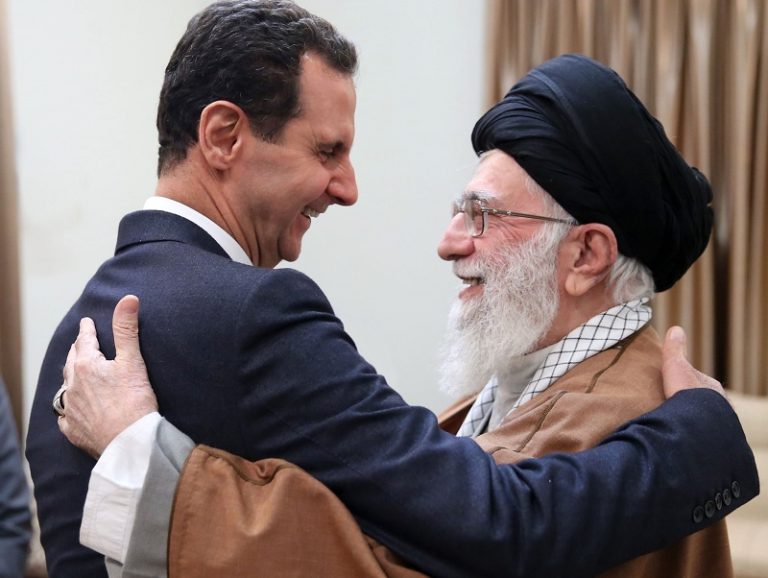
The collapse of Bashar al-Assad’s regime, symbolized by his flight to Russia on December 8, sparked extensive discussions about the political and geopolitical ramifications of this event, including the diminished credibility and influence of Iran’s regime in the region. However, the economic consequences for Iran’s regime were no less severe than the political ones.
The Congressional Research Service and the Stockholm International Peace Research Institute (SIPRI) report that Iran’s regime spent between $30 billion and $35 billion from the start of Syria’s civil war in 2011 until 2023.
The Center for Strategic and International Studies (CSIS) and the Middle East Institute report that Iran’s regime maintained seven airbases, 15 missile depots, 22 forward command centers, and 85 kilometers of underground tunnels in Syria.
These infrastructures and military bases, following the collapse of Assad’s regime, imposed a heavy burden on an economy already struggling to meet the basic needs of its citizens.
According to the Eurasia Foundation, Iran’s regime spent around $2 billion between 2012 and 2022 on renovating and maintaining Shia religious sites in Syria. This was part of a strategy aimed at expanding soft power and ideological influence in the region, with shrines serving as symbols of this soft power.
With Iran’s funding and initiative, the Zaynab Palace Hotel was reopened in 2016 near the shrine of Sayyida Zaynab. The Middle East Institute estimated the cost of constructing this hotel, which includes 150 rooms, prayer spaces, and hospitality services, at approximately $35 million.
For a few years, Iran’s regime earned income from pilgrimage tourism to these shrines while also promoting its fundamentalist ideology. However, with Assad’s regime’s fall, Iran’s investments in Syria’s religious tourism faced significant risks.
IRGC-affiliated companies invested billions of dollars in key Syrian sectors such as energy and urban reconstruction, thereby expanding their economic and political influence.
Housing Foundation of Islamic Revolution and Investments in Aleppo’s Reconstruction
The Housing Foundation of the Islamic Revolution (Bonyad-e Maskan) made substantial investments aimed at reconstructing housing in Aleppo, Syria. The Syrian Air Force, with Russian support, extensively bombed and destroyed Aleppo between 2012 and 2016 to recapture it from opposition forces. According to Syria’s Central Bank, Bonyad-e Maskan spent up to $1.5 billion from 2016 to 2021 to rebuild residential neighborhoods in Aleppo. In another project, Khatam-al Anbiya Construction Headquarters, the largest engineering firm affiliated with the IRGC, participated in reconstructing several strategic roads, such as the Homs-Damascus highway, at a cost of $500 million. Another IRGC-linked company, Iran’s Sadra Marine Industrial Company, invested over $1.2 billion between 2015 and 2020 in renovating the Port of Tartus.Energy Projects and Strategic Infrastructure
Another major investment was the Iran-Iraq-Syria gas corridor, launched in 2013 at an estimated cost of $8 billion. According to the Middle East Energy Association, the project aimed to transport Iran’s energy resources to the Mediterranean Sea. However, it was halted in 2022. The goal of these investments was not only construction but also strengthening ties with Syria and expanding Iran’s influence in this key region. However, following the fall of Assad’s regime and the potential alignment of Syria’s new rulers with rival countries, the sustainability of these investments is now at risk. According to the Tehran Trade Statistics Office, trade between Iran and Syria reached its historical peak of $475 million in 2010. Syria was a critical market for Iranian goods such as textiles, electrical equipment, and food products, particularly because it allowed Iranian goods to bypass international sanctions and enter other regional markets. Syrian companies acted as intermediaries, exporting Iranian products to Lebanon and even Eastern European countries. This complex operation generated revenue for Iran’s regime. The Tehran Center for Economic and Trade Research reports that in 2012, nearly 15% of Iran’s manufactured exports to the Middle East were transited through Syria. The Tehran Trade Statistics Office estimates that Iranian companies could face losses of up to $300 million due to changes in trade policies under Syria’s new government. The closure of the Syrian market is not just a loss of an export destination; it also disrupts supply chains for goods essential to Iran’s economy. Middle East Trade Monitor speculates that the management of the Port of Latakia, which served as a transit hub for Iranian goods, might be handed over to Turkish or Saudi companies. Iran’s Central Bank reports that Iranian banks and financial institutions played a central role in financing projects in Syria, extending over $5 billion in consortium loans. The Central Bank estimates that losses from unpaid loans could amount to 3% of Iran’s GDP. The collapse of the Assad regime not only cost Iran its sole geostrategic ally in the region but also inflicted enormous economic losses and eliminated a key avenue for generating revenue by circumventing sanctions.Campaign of “No to Executions Tuesdays”: 40 Executions Last Week in Iranian Prisons
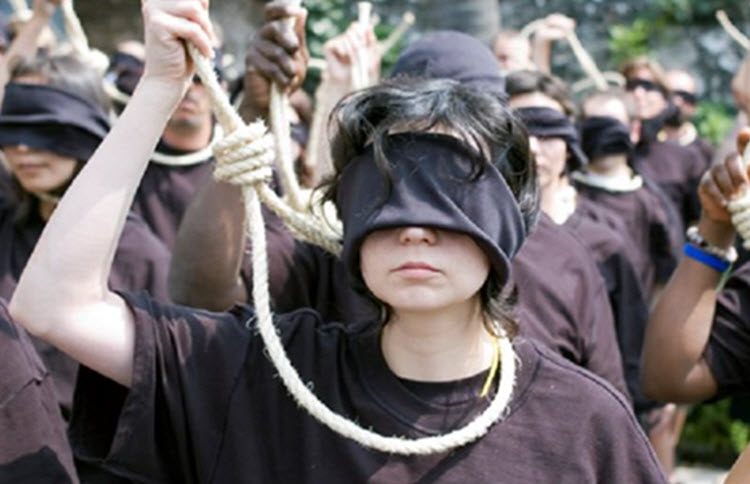
The “No to Executions Tuesdays” campaign, in a statement dated December 17, announced that during the 47th week of hunger strikes by prisoners in 27 prisons across the country, at least 40 people had been executed in Iran over the past few days.
The imprisoned members of the campaign also expressed concern about the possible approval of death sentences for two political prisoners named Mohammad Amin Mahdavi Shayesteh and Saman Mohammadi Khiyareh.
The statement, citing reports, adds that at least 40 people were executed in Iran last week, some of whom were hanged on drug-related charges. This comes while, following the collapse of Assad’s government in Syria, a factory linked to the Iranian regime was discovered, storing and distributing tens of tons of drugs to various parts of the world.
Activists in this campaign stress that executions for the possession of a few grams of drugs are being carried out, while large-scale drug trafficking continues with the involvement of regime-affiliated operatives.
The statement noted that Sistan and Baluchestan province, which has always faced severe pressure and deprivation, was among the regions with the highest number of executions this week, with at least 10 residents of the province executed.
The situation of political prisoners in Ghezel Hesar prison has also raised concerns. Mohammad Amin Mahdavi Shayesteh, who was sentenced to death on charges of “espionage” in a vague trial, has been transferred to this prison, and there is a possibility that his sentence will be approved and carried out.
On the other hand, Saman Mohammadi Khiyareh, another political prisoner who has been imprisoned for 15 years, has been transferred to solitary confinement, raising fears about the execution of his sentence. Security forces told Saman’s parents that they could visit their son for the last time at Ghezel Hesar prison on Tuesday. Saman was also informed that he would be allowed one final phone call before his execution.
Saman was about 20 years old when he was arrested and is now 35. He has a son who was born just days after his arrest; now his son is the same age as the years his father has spent in prison.
The statement also reported that in continuation of protests against the death penalty, prisoners in Tabas prison in South Khorasan and Khurin prison in Varamin announced through letters that they would join the “No to Executions Tuesdays” campaign and hold hunger strikes every Tuesday. According to the statement’s authors, with this move, the number of participating prisons in the campaign has increased to 27.
The “No to Executions Tuesdays” campaign began last year with the goal of abolishing executions and ending state violence, initiated by several political prisoners and gradually expanded with the support of other prisoners.
Domestic Violence Against Women in Iran
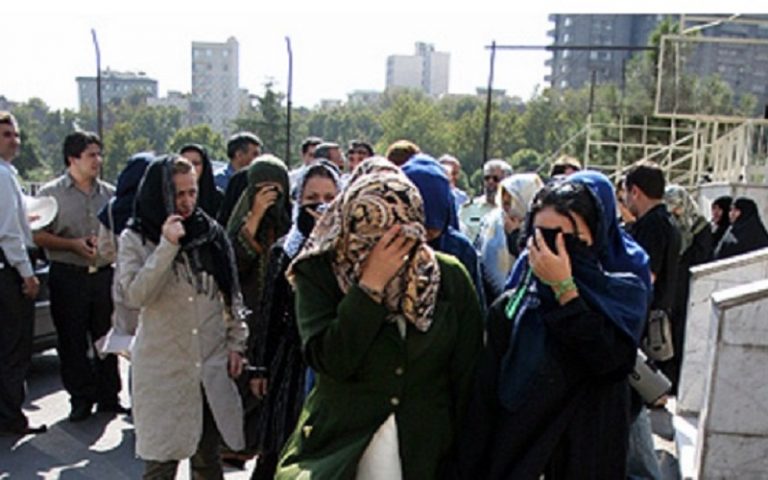
Official statistics in Iran indicate that an average of over 74,000 women annually visit forensic medical centers for examinations related to spousal abuse. In other words, one in every 300 married women in Iran seeks assistance from forensic services to report domestic violence. However, not all cases are reported. Estimates suggest that the actual instances of domestic violence against women in Iran are approximately 100 times higher than this figure.
The latest statistics from the World Bank’s gender data section reveal that nearly one-third of women in Iran experience violence from their intimate partners. This rate is the third highest in the region after Afghanistan and Turkey.
Estimates from UN Women, the United Nations agency for gender equality, show that 133 women are victims of femicide every day worldwide, or at least five women per hour.
In Iran, official bodies do not publish accurate statistics on femicide. However, Iranian newspapers occasionally report based on available news. For example, in the summer, the newspaper Shargh analyzed news reports from the crime sections of newspapers and websites, revealing that between June 2021 and June 2023, at least 165 femicides occurred in Iran. In two-thirds of these cases, the perpetrators were husbands, and in one-fifth, they were fathers or brothers.
