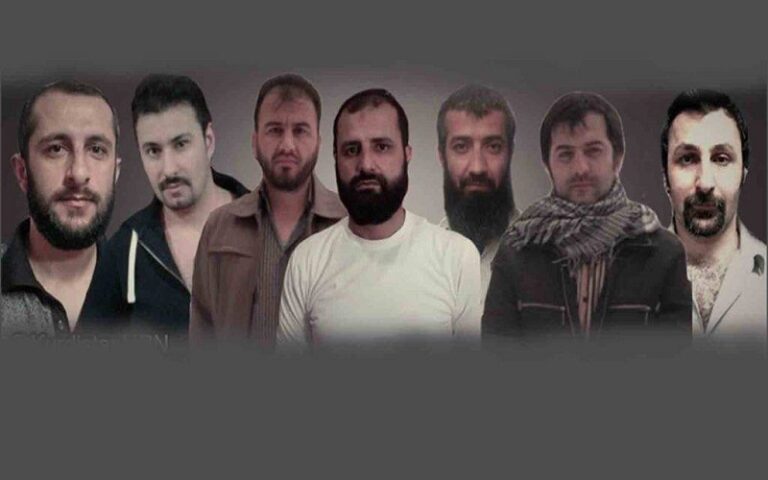
Human rights sources in Iran report that Kamran Sheikheh, a Kurdish political prisoner, was executed on the morning of Thursday, July 25, in Urmia prison.Six previous defendants in this case, named Qasem Abesteh, Ayub Karimi, Farhad Salimi, Davood Abdollahi, Anwar Khezri, and Khosrow Beasharat, were executed in recent months for the alleged murder of a government cleric in 2009.In recent days, Kamran Sheikheh, a Sunni Kurdish prisoner sentenced to death, was transferred from Mahabad prison to solitary confinement in Urmia Central Prison for the execution of his sentence.Prison officials informed the family of this prisoner, who had been incarcerated for 15 years, that his execution would be carried out on Thursday morning.Arash Sadeghi, a former political prisoner, wrote about Kamran Sheikheh on the social media platform X: “Kamran always sang Kurdish songs during exercise time, for his mother, for Kurdistan, for Lake Zarivar. He missed them all.”He also added: “Kamran and his six co-defendants were neither terrorists nor murderers. They were enamored with living.”These seven defendants were subjected to “severe torture” to extract confessions during their detention, and the judicial process was “ambiguous” and marred by numerous flaws.All these death sentences were issued in unfair, non-transparent courts that did not meet even the minimum standards of a fair trial and lack any legal validity.Kamran Sheikheh and six other Sunni prisoners were sentenced to death in March 2016 by Judge Mohammad Moghiseh at Branch 28 of the Tehran Revolutionary Court. This verdict was overturned by Ali Razini in the Supreme Court.Their case was referred back to Branch 15 of the Tehran Revolutionary Court for reconsideration, and their trial was held from June 17 to 19, 2019. Judge Abolqasem Salavati once again issued death sentences for them.
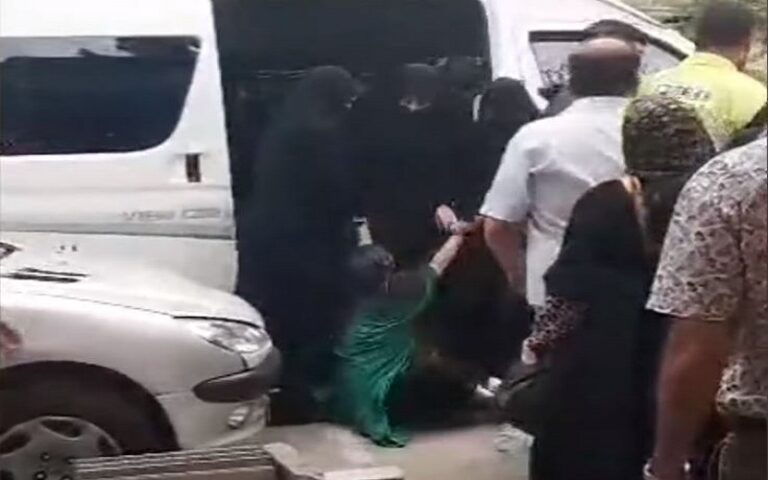
Reports indicate that Iranian regime police officers in the city of Noor, Mazandaran province, shot a young woman named Arezou Badri, whose car was on a list for impoundment due to mandatory hijab regulations. She is now in critical condition and in a coma.Some reports on social media published this news on Wednesday, July 24.An informed source at Khomeini Hospital in Noor city stated that this young woman, “about 30 years old,” was brought to the hospital’s “emergency room on Monday, July 22, after being shot by the State Security Forces (SSF).”The car of this young woman was on the impound list for not adhering to hijab regulations. The officers ordered her to stop, but she did not stop out of fear. The regime’s SSF first aimed at the car’s tires, and their next shot hit Arezou.Some reports indicate that after imaging, it was found that the bullet hit her spinal cord, causing paralysis from the waist down, and she is currently under observation in the ICU.Meanwhile, the Iranian regime police news outlet quoted Ahmad Amini, the police chief of Noor city, claiming that around 11 PM on Monday, July 22, “while patrolling, they suspected a car with tinted windows” and after “ordering it to stop,” the driver “attempted to flee the scene,” and the officers “used a weapon to stop the car.”According to the police chief of Noor city, one of the two passengers in the car “was injured” and “is under treatment.”In March, following a direct shot by a SSF officer from a close distance at a family’s car in Aligudarz, Lorestan province, Negar Karimian, a 21-year-old citizen, was killed.Previously, hasty shooting by regime’s SSF at cars has often resulted in the death of several citizens, including children.In February 2024, during a direct shooting by “plainclothes” forces of the Iranian regime in Borujerd county, one citizen was killed, and another was injured.
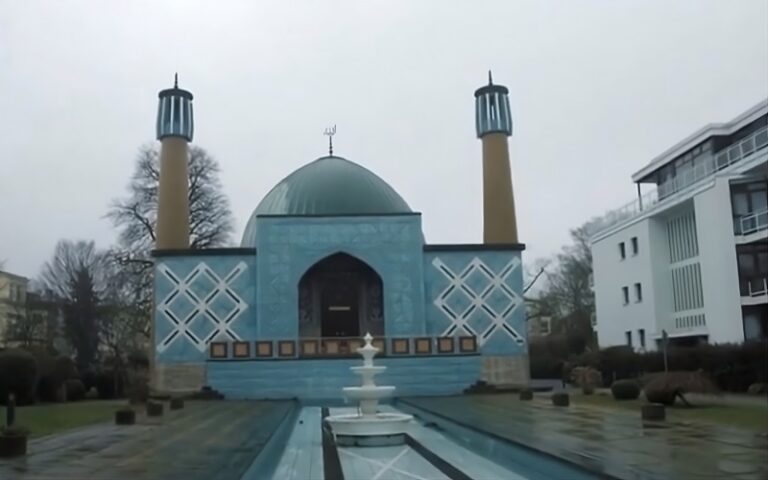
German media announced that police forces raided the Hamburg Islamic Center and all other Islamic centers affiliated with the Iranian regime from early morning on Wednesday, July 24, and declared their activities banned.In a statement, Germany’s Interior Minister announced that the evidence gathered in the investigations confirmed serious suspicions to such an extent that they issued the ban today.Nancy Faeser added that the Hamburg Islamic Center promotes extremist and totalitarian Islamist ideology in Germany and its subsidiaries also support Hezbollah terrorists.According to the ministry, the association that runs the Islamic Center of Hamburg, known as the “Blue Mosque,” violates the constitutional order of the Federal Republic of Germany.According to the German Interior Ministry, representatives of the mosque have previously praised the violent actions of terrorist organizations like Hamas and supported banned terrorist organizations like Hezbollah.Interior Minister Nancy Faeser said this action was taken due to extremism.The center has been under the scrutiny of the federal government for months. It has been at least ten months since the German Federal Interior Ministry began searching the “Hamburg Islamic Center” and dozens of its affiliated offices on November 16, 2023, to find evidence for the possible necessity of banning its activities. Now, after this period, Nancy Faeser signed the order to shut down and end the activities of this Islamic center.The Office for the Protection of the Constitution had previously stated that there was evidence showing this Islamic center is “a significant propaganda center for the regime in Europe and an arm of the Iranian regime.”In August 2023, the German State Office for the Protection of the Constitution announced that the “Frankfurt Islamic Cultural Center” and the “Blue Mosque of Hamburg” are both connected with the “Iranian regime” and the “Muslim Brotherhood” of Egypt and are attempting to spread their radical Islamic ideology.According to the Hamburg Administrative Court’s ruling, the city’s Islamic Center, also known as the “Blue Mosque,” is classified as an “extremist Islamist organization.”In June 2022, Hamburg government officials issued a deportation order for Soleiman Mousavi-Far, the deputy head of the Hamburg Islamic Center, and three months later, he was deported from Germany.At that time, German investigative officials expressed confidence that Soleiman Mousavi-Far supports extremist Shia militant organizations and terrorist organizations.
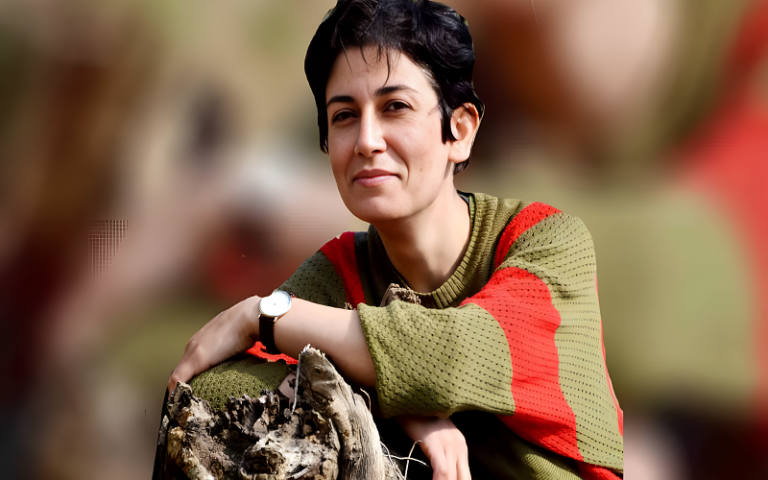
The Iran Human Rights Center announced on Tuesday, July 23, that Pakhsan Azizi, a political prisoner previously accused of “baghi,” has been sentenced to death by the Revolutionary Court.According to the laws of the Iranian regime, baghi means rebellion against the legitimate Imam and the Islamic ruler.Since late June, Pakhsan Azizi had been denied visits and contact with her family by the order of Evin prison officials.She was arrested on August 4, 2023, in Kharrazi Township, Tehran, and was interrogated and tortured in the detention center of the Ministry of Intelligence. She was then transferred to Ward 209 of Evin prison and later to the women’s ward. In the winter of 2023, she was charged with “rebellion through membership in opposition groups” by Branch 5 of the Evin Security Prosecutor’s Office.This political prisoner appeared on May 28 and June 16, 2024, at Branch 26 of the Islamic Revolutionary Court in Tehran, presided over by Judge Iman Afshari, to address the charge of “baghi.”Human rights organizations say Pakhsan Azizi has been subjected to torture and pressure by security officials to force her to make coerced confessions.Pakhsan Azizi, a native of Mahabad and a graduate in social work from Allameh Tabataba’i University, was first arrested in November 2009 during a student protest against political executions in Kurdistan and was released on bail on March 19, 2010.She has consistently faced accusations of “membership in opposition groups.”Another two political prisoners, Varisheh Moradi and Sharifeh Mohammadi, are also imprisoned on charges of “Baghi.”Varisheh Moradi, is also imprisoned on charges of “rebellion”Sharifeh Mohammadi, who was a member of the “Coordinating Committee to Help Form Workers’ Organizations” over a decade ago, was arrested in December 2023 and sentenced to death by the Islamic Revolutionary Court of Rasht on July 4.The Coordinating Committee to Help Form Workers’ Organizations, which Sharifeh Mohammadi was a part of in the 2000s, has rejected the charges against her.Following the nationwide protests in 2022, Iranian regime officials have intensified the repression of women activists and human rights defenders, resorting to harsher methods and issuing heavy sentences to silence dissenters and those with differing views.
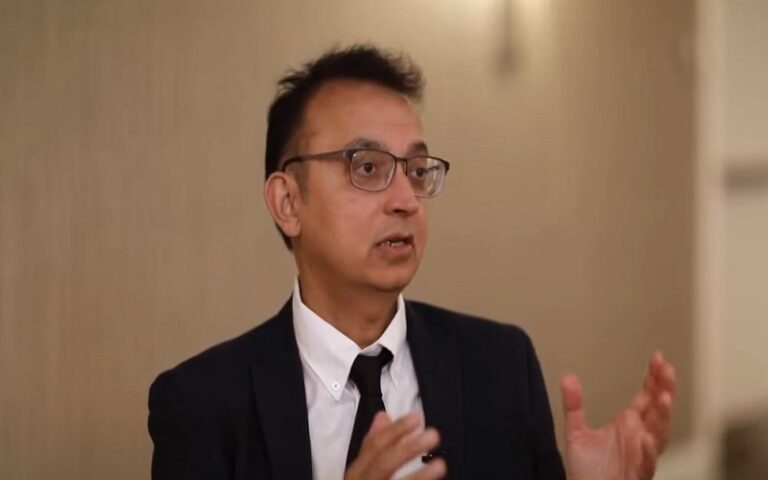
Javaid Rehman, the UN Special Rapporteur on the situation of human rights in Iran, examined the “atrocities” of the Iranian regime against Iranian citizens from 1981 to 1982 and in 1988 in a detailed report. According to this report, published on Monday, July 22, the “atrocities” comprise genocide, crimes against humanity, and war crimes and are considered “the most serious crimes against humanity.” In this 66-page report, Mr. Rehman details the arbitrary and extrajudicial executions of thousands of opponents and political prisoners by the Iranian regime, describing these acts as murder and slaughter and labeling them crimes against humanity. In the methodology of his report, he relies on five sources: testimonies and interviews with witnesses, official government sources, UN documents and sources, documented evidence, and reports and documents from international organizations and expert contributions. The report also details other crimes committed by the Iranian regime against humanity, including torture, harassment, and enforced disappearances, as well as inhumane actions such as inflicting severe pain and causing physical and mental injuries to political prisoners. Javaid Rehman, in another part of his report, addresses the executions of prisoners, including a large number of children and women prisoners, some of whom were sexually assaulted before their execution. In examining the instances of crimes against humanity, he analyzes sexual and gender-based crimes against women and girls, as well as harassment of religious and ethnic minorities (Baha’is, Christians, and Jews), and ethnic and linguistic minorities (Kurds, Ahwazi Arabs, Turkmen, and Baluch) during the first decade of the Iranian regime’s rule.
Khomeini’s Fatwa and the 1988 Summer Massacre of Prisoners
The UN Special Rapporteur on the situation of human rights in Iran dedicates a significant portion of his report on the Iranian regime’s “atrocities” to Khomeini’s 1988 fatwa and the subsequent massacre of political prisoners following sham and extrajudicial trials. According to the report, most of those executed were members of the People’s Mujahedin Organization of Iran (PMOI/MEK), but hundreds of other opponents of the Iranian government were also executed by “death committees” as a result of Khomeini’s fatwa and buried in unmarked mass graves across Iran. Javaid Rehman notes that the “atrocities” committed by the Iranian regime are the worst and most flagrant human rights violations in living memory, in which senior Iranian government officials, through planning, active participation in organization, ordering the execution, and committing these acts, have committed crimes against humanity and genocide against their own citizens. According to the report, despite the abundant evidence and documentation, the perpetrators of these “atrocities” still hold power, the international community has been unable or unwilling to hold them accountable, and these “criminals” continue to enjoy governmental privileges and immunity from international justice and accountability. Javaid Rehman reiterated that survivors and witnesses of these “atrocities” continue to grapple with its psychological consequences, families of the disappeared are still searching for their loved ones, and victims and survivors expect the United Nations and members of the international community to help achieve justice and hold the criminals accountable. According to the UN Special Rapporteur, examining the crimes committed by the Iranian regime in its first decade provides a clear picture of the current flagrant human rights violations by this government, with the continued issuance of arbitrary and illegal sentences, such as “moharebeh” (enmity against God) and “ifsad fil-arz” (corruption on earth) against political opponents, indicating this. In the final section of his report, Javaid Rehman calls for the establishment of an independent international mechanism to promptly, impartially, comprehensively, and transparently address the crimes committed by the Iranian regime in its first decade and hold the perpetrators accountable. He also calls on the international community to oblige Iranian government officials to fully and publicly disclose enforced disappearances and extrajudicial executions in the first decade of the regime’s rule, issue public apologies and accept responsibility for committing these crimes, stop the destruction of mass graves, provide information to survivors’ families about the burial sites of their loved ones, end the harassment of grieving families, and grant international human rights organizations access to the burial sites of those killed. Javaid Rehman also calls on world governments to prosecute and issue arrest warrants for the perpetrators and instigators of the “atrocities” in Iran.
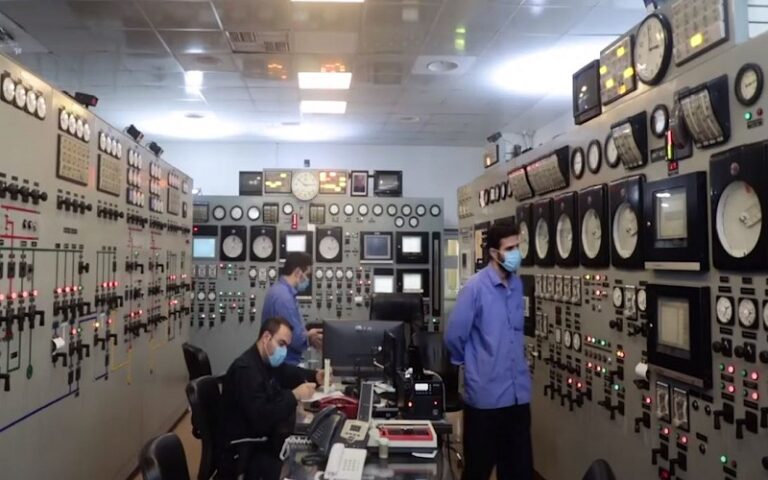
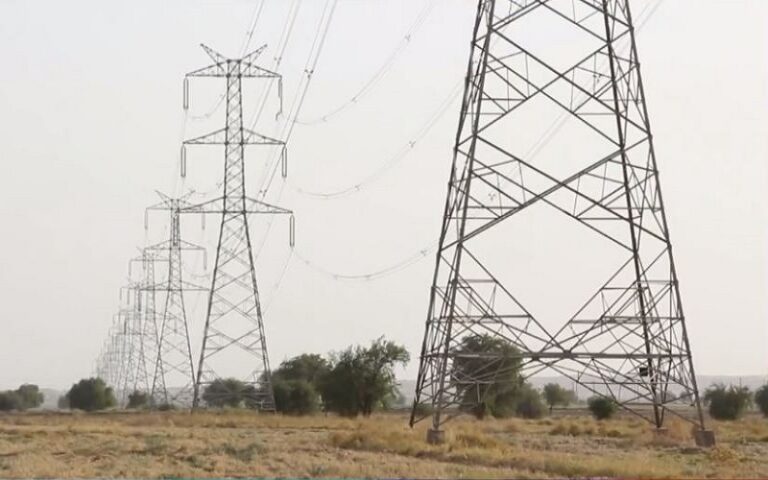
In recent years, Iran has faced increasing electricity shortages during the peak of summer. This year not only is electricity supply to industries severely limited, but households also experience frequent blackouts, and offices in some provinces have been shut down.Iran’s electricity shortage this summer is estimated to be around 14,000 megawatts, a substantial figure equivalent to twice the total electricity production of Azerbaijan, a country that exported 3 terawatt-hours of electricity (about 10 percent of its production) worth $402 million to Russia, Georgia, Iran, and Turkey last year.In other words, even assuming neighboring countries have 14,000 megawatts of surplus electricity and the infrastructure for importing electricity is ready, Iran would need to purchase more than $8 billion worth of electricity for just the three summer months.According to previous estimates by the Ministry of Energy and the Majlis Research Center (Parliament), Iran needed to add 5,000 megawatts (7 percent) to its electricity production annually to prevent shortages.However, as official statistics show, this target has not been achieved in recent years.Additionally, some of the country’s old power plants have been decommissioned. At the same time, hydroelectric power plants are not operating at full capacity due to droughts.For example, Iran aimed to launch more than 6,000 megawatts of new power plants in 2023, but less than one-third of this goal was achieved.The last time Iran successfully launched 5,000 megawatts of new power plants was in 2010, and since then, the target for increasing electricity production has never been met. As a result, net electricity exports (the difference between exports and imports) dropped from a positive 8 terawatt-hours in 2014 to 1 terawatt-hour in 2022.Iranian officials say the country’s electricity trade balance has been hovering around zero since last summer.The Ministry of Energy’s archive of statistics also indicates a steady increase in imports and a decline in electricity exports since 2020. This ministry has blocked access to monthly reports on the state of the country’s electricity since June 2023.
Other Troublesome Factors
Besides the failure to achieve electricity production growth targets, continued widespread losses also exacerbate the country’s energy crisis.Official statistics from the Ministry of Energy and the Majlis Research Center (Parliament) show that 13 percent of Iran’s electricity production is lost in the transmission and distribution network; this significant figure is equivalent to 40 percent of the total household electricity consumption in the country.The low efficiency of thermal power plants in Iran is another factor contributing to the worsening electricity shortage crisis.More than a decade ago, Iran set a goal to convert gas and steam power plants into combined cycle power plants to increase efficiency from about 30-33 percent to 45 percent. However, not only was this goal not achieved, but most of the power plants launched in recent years are also inefficient steam or gas types.On the other hand, the regime’s neglect of clean energy has also caused problems; as such, the share of solar and wind power plants in Iran’s electricity production is currently only about one percent.This is while Iran, with 300 sunny days, could be ideal for developing solar energy.In 2023, the Iranian government aimed to launch 2,850 megawatts of new solar and wind power plants, but only two percent of this goal was achieved.
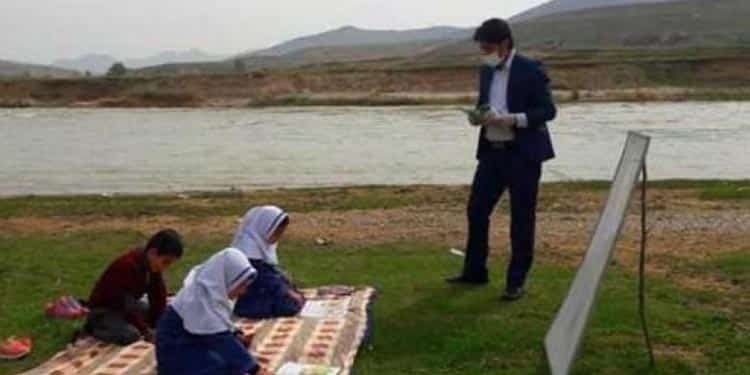
Alireza Monadi Sefidan, Chairman of the Education and Research Commission of the regime’s Majlis (parliament), announced a shortage of 70,000 to 80,000 teachers in the new academic year, stating that the retirement of a large number of teachers will create “huge gaps” in the country’s education system.He emphasized the need to send a letter to the new president to address the current situation and provide solutions, suggesting that increasing the amount of part-time teaching pay to motivate current teachers is a solution to this problem. He also mentioned that there are about 24,000 contractual teachers who need to be given permanent positions.While the Chairman of the Education and Research Commission of the regime’s Majlis (parliament) mentioned a teacher shortage in the range of 70,000 to 80,000, Iranian media have reported this shortage as up to 176,000 teachers.The Tasnim News Agency, affiliated with the Revolutionary Guards, also addressed this issue, stating that the education system is facing a shortage of 176,000 teachers as the school year begins in late September, and the solutions proposed by the parliament are not feasible. Additionally, the new government does not have the opportunity to take fundamental action to resolve this crisis.According to Tasnim, classes without teachers and classes with untrained teachers lacking basic knowledge and skills are among the issues and problems of ordinary public schools in recent years and one of the reasons for their declining quality.Tasnim News Agency, in response to Monadi’s letter to the new government, wrote that “the very late letter from the Education Commission, assuming it is effective, is not even a remedy after death.”This news agency criticized linking the teacher shortage to teacher retirements, attributing any shortages in this area to managerial negligence.According to reports, the head of the Research Center of the Islamic Consultative Assembly announced on June 30 that the government owes over 700 trillion rials to educators and stated that there is a shortage of 176,000 teachers for the new academic year.Babak Negahdari emphasized that it is predicted that about 72,000 teachers will retire by October 2024, making it more difficult for the Ministry of Education to provide sufficient manpower.Negahdari attributed the human resources crisis in the Ministry of Education to the neglect of developing the capacities of Farhangian University, the weakening and dissolution of teacher training centers, and the set of employment determination laws for teachers from 2009 to 2021.Statements from parliamentary representatives and media reactions indicate that in the education system under the Iranian regime, planning has no place, and the lack of an educational and scientific development outlook has led to the current problems and issues in the education sector.One of these issues is the teacher shortage in schools, which was at its highest historical level last academic year.In this context, on November 2, 2023, Mohammad Vahidi, a member of the Education Commission of the Islamic Consultative Assembly, announced that 68,000 teachers had left the Iranian education system at the beginning of the school year and that there were 100,000 classes without teachers.Now, ten months after the peak of the crisis last academic year and the promises of the Minister of Education, not only have the problems not been resolved, but with the retirement of nearly 72,000 teachers, the challenge of providing human resources in education will be greater than before.This is while currently employed and contractual teachers are also facing delayed wages and the suppression of their legal demands.The shortage of teachers and the promises of Iranian regime officials to “provide teachers” for teacherless classes have gripped Iran’s education system and reached its highest historical level. It seems that even if human resources are recruited, the number of applicants will not meet the needs.This lack of willingness to work in the education system, aside from economic issues and delayed payment of wages, is rooted in the suppression of the demands of educators and teachers, who in recent years have repeatedly held protest rallies to achieve their professional and livelihood demands and criticized the policies governing education in the country.According to this report, the government’s pressure on teachers’ union activists has intensified in recent years, especially after the nationwide protests of 2022, and some of them have been arrested or faced sentences such as forced retirement, dismissal, suspension, and confiscation of property.
Following the continued increase in rental prices and the housing crisis in Iran, Iranian regime media have reported monthly rent for a bed in central Tehran at prices ranging from 65 to 106 million rials.The regime’s ecoIran website has announced that the minimum monthly rent for a bed in central Tehran is at least 65 million rials (approximately $112).It is worth noting that the minimum wage for a worker with two children is estimated to be around $200.The website emphasized that the majority of the demand for these dormitories and hostels comes from employees and workers. If the basis of received wages is the Ministry of Labor’s wage for 2024, the minimum cost of renting a single room in the center of the capital for single individuals without work experience is about 69% of their monthly salary, and the maximum rental cost is equivalent to 112% of their monthly salary.Yesterday, Iranian media also reported on the chaotic state of the housing market, announcing that even with 500 years of current wages and salaries, it is impossible to purchase a 75 square meter apartment.In a report on Thursday, July 18, the Ettelaat newspaper addressed the issue of rent, stating that over 7 million renting households across the country have experienced heavy increases in housing rent in recent years.Housing has become a super crisis for households over the past decade. Government promises to solve the housing problem have also gone nowhere. During his election campaign and after taking office, Ebrahim Raisi promised to build one million housing units per year. However, more than three years into his government and after his death, nothing significant has happened in this area, and concerns about the continuation of the current trend persist in Masoud Pezeshkian’s government.
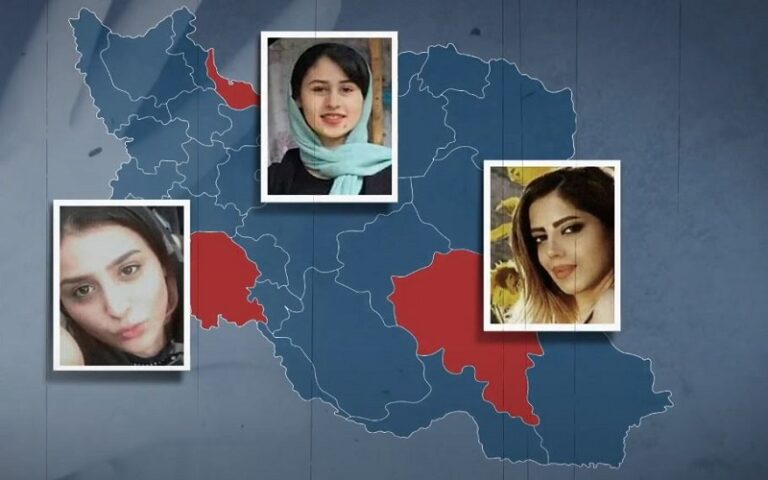
The newspaper “Etemad” reported on femicide in Iran, stating that in the first quarter of the years 2022 to 2024, at least 85 femicide cases were recorded in Iran, with most of the accused being husbands.Etemad emphasized that news of the murder of women and girls, referred to in government literature as “honor killings” or family disputes, is often not reported by the media.honor killing is the killing of a relative, especially a girl or woman, who is perceived to have brought dishonor on the family.According to the newspaper, such killings have been on the rise in Iran over the past three years.Etemad wrote that in the first quarter of the past three years (from March 21 to June 20), at least 85 women and girls were killed by their husbands, fathers, brothers, and other close male relatives.According to this report, in the first quarter of 2022 (from March 21 to June 20), at least 22 women and girls, in the first quarter of 2023 at least 28 women and girls, and in the first quarter of 2024 at least 35 women and girls were killed in various cities in Iran.The report also mentioned the geographical distribution of the murders, stating that in the first quarter of 2024 (from March 21 to June 20), the highest number of murders occurred in the cities of Urmia, Talesh, Tabriz, Mashhad, Iranshahr, and Tehran.According to Etemad, “Tehran with five femicides” topped the list in this period. Similarly, during the same period in 2023, the highest number of murders occurred in the cities of Divandarreh, Kuhdasht, and Tehran, with “Tehran having 11 femicides” at the top. In the first quarter of 2022, the highest number of murders also occurred in “Tehran with 10 femicides,” most of which were committed by the victims’ husbands during the same period.The report emphasized that most of the killers were husbands, with statistics showing that in 2022, 16 women, in 2023, 15 women, and in 2024, 27 women were killed by their husbands.According to reports, 156 cases of “femicide” were recorded in Iran in 2023, averaging 13 murders per month.In 92% of recorded femicide cases, the killer knew the victim, with the killer being the woman’s husband in half of the cases and violence being perpetrated by relatives other than the husband in 57 cases.Women’s rights activists say the lack of judicial strictness towards femicide perpetrators has led to an increase in these cases. In recent years, there have been many instances where a father or brother killed a young woman on the pretext of not observing hijab or having a relationship with another man, and the killer faced minimal punishment.Some academic articles and theses have reported an annual statistic of 375 to 450 cases of femicide in Iran, referred to as “honor killings” in official government literature.According to the laws of the Iranian regime, a victim’s father, if he is the killer, is practically immune due to the right of blood and what is called “guardian of the blood” in regime laws. In cases of uxoricide or femicide, Islamic penal laws also leave openings for the killer to gain immunity under pretexts such as “honor” or suspicion of “illicit relations.”According to the regime’s Islamic Penal Code, the punishment for “murder” is “retribution,” but according to Article 630 of the Islamic Penal Code, “if a man sees his wife committing adultery with another man and knows that the woman has consented, he can kill them both at the moment. If the woman was coerced, he can only kill the man.”Civil activists and human rights defenders have protested against discrimination against women in Iranian regime laws for decades. International organizations and the United Nations have repeatedly called on the regime’s officials to abolish discriminatory laws in their periodic reports, a demand that has remained unanswered for the past four decades.
The spokesperson for Iran’s electricity industry says that due to the intensifying heat in Iran, the electricity consumption demand is expected to increase by “7.5 percent.” On Saturday, July 20, Mostafa Rajabi, noting that two “very hot” weeks lie ahead for Iranian citizens, told ILNA News Agency: “We predict that electricity consumption demand will break records set this year starting today.”Rajabi stated that this level of consumption is “5,500 megawatts” higher than last year, which is “equivalent to the electricity consumption of the provinces of Khorasan and Sistan and Baluchestan.”On Friday, Tehran’s electricity distribution company issued a notice asking the residents of Iran’s capital to “reduce electricity consumption by at least 10 percent, especially from 11 AM to 5 PM” in the coming week to prevent disruptions in the power network.The company also threatened to take action against “customers” and “offices” that “do not adhere to the necessity of reducing electricity consumption.”At the same time, an official from the Ministry of Energy announced: “Electricity consumption in Iran alone is more than half of the consumption of the 27 member countries of the European Union.”Mojtaba Gilvanejad, pointing to the rising temperatures in the coming days, stated: “Since most of our country’s electricity is generated by burning gas, the increase in temperature not only reduces production efficiency but also leads to higher energy consumption.”He continued: “With each degree increase in temperature, the load on the power grid increases by about 1,800 megawatts, and the capacity of power generation and network facilities decreases by more than 400 megawatts.”In recent weeks, there have been numerous reports of widespread power outages in Iran.In this regard, the head of Tehran’s Chamber of Commerce announced last week that the pharmaceutical industry, like other industries in the country, has been affected by power imbalances and experiences power cuts during the hot days of the year.On July 13, Mahmoud Najafi-Arab said that production units in Iran’s pharmaceutical industry also experience power outages for two days a week.Some areas of Tehran also faced an unprecedented five-hour power outage on Thursday, July 11, and the rise in temperatures and record-breaking electricity consumption caused several provinces in the country to shut down.According to reports from Iranian domestic media, “to prevent a nationwide blackout and planned power outages in 15 provinces, Thursday was declared a holiday” to reduce office electricity consumption and “manage the network and avoid blackouts.”Due to repeated delays in the development of power plants and widespread electricity losses in the outdated network, Iran faces a 14,000-megawatt electricity deficit during the hot seasons each year, and the country’s electricity deficit increases annually.Last year, the Iranian government aimed to launch more than 6,000 megawatts of new power plants, but only 2,000 megawatts have been achieved.