

70% of Iranians Either Below Poverty Line or At Risk of Falling Into Poverty
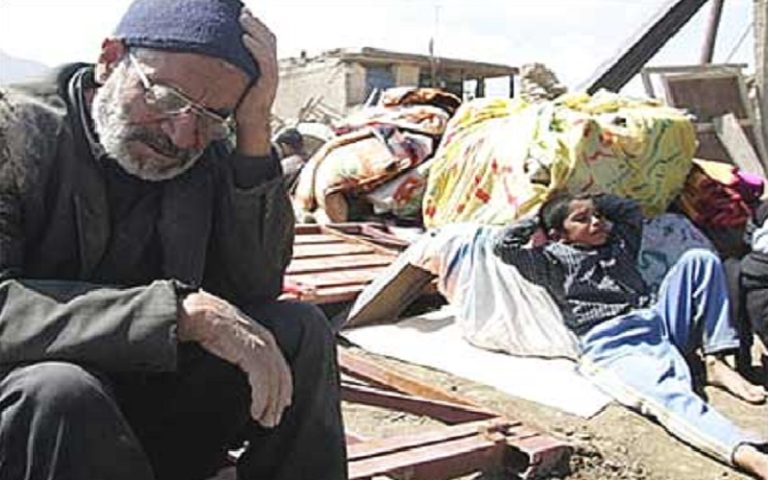
In an interview with the state-run Econegar website Farshad Momeni, an economist and university professor, described the economic situation of the Iranian people as critical.
He pointed out that 30% of the country’s population is below the poverty line, stating that another 40% are on the verge of falling below the poverty line with the current methods of wage determination.
The economist, noting the insistence of employer representatives on considering a 140 million rials (approximately $236) livelihood basket for workers, added: “Since the government, as a major employer, leans towards employers, there is a possibility that this year, like last year, they will have to confront wage determination based on the inflation rate.”
He emphasized, “Today, due to the government’s economic policies, we are facing a very dangerous and alarming tsunami of poor workers in Iran’s political economy. The heads of over 60% of the country’s poor households are actively working, indicating an extraordinary scoring for rent-seekers and usurers, causing a severe crisis in the national production structure.”
“When it comes to the hijab, officials say we don’t care if it’s religious or non-religious; it’s the law. We also say, unless the same law states in determining the minimum wage, the government officials compensate for the lost purchasing power due to the officially announced inflation rate, how can official authorities say not to compensate for the lost purchasing power of the workforce, as they are exposed to the wage and inflation spiral?” Farshad Momeni also stated.
Representatives of workers, employers, and the government all express different opinions before deciding on the minimum wage. However, ultimately, they all overlook the two components of inflation and the livelihood basket in labor law and only consent to the amount of calories needed to survive below the poverty line.
The minimum wage for workers in 2023 was about 80 million rials (approximately $135), while according to official statistics, the normal cost of living for people has been announced to be between 250 to 300 million rials (approximately $421 to $505). Workers’ representatives for 2024 demand the determination of a 190 million rials (approximately $320) livelihood basket, but employer representatives insist on considering a 140 million rials (approximately $236) livelihood basket.
On Tuesday, March 12, a group of retirees nationwide gathered in protest of the living conditions and the authorities’ indifference to their demands in several cities in Iran. Simultaneously, there were reports of worker strikes in Aghajari, protests by nurses in Rafsanjan, and the gathering of municipal employees in SarPol-e Zahab.
The continuation of economic protests in Iran occurs while, according to official statistics from the regime’s Statistics Center, in the three years since the inauguration of the Raisi government in 2021, basic commodity prices have grown between 125% and 290%.
Migration Crisis: 3,000 Nurses Left Iran Last Year
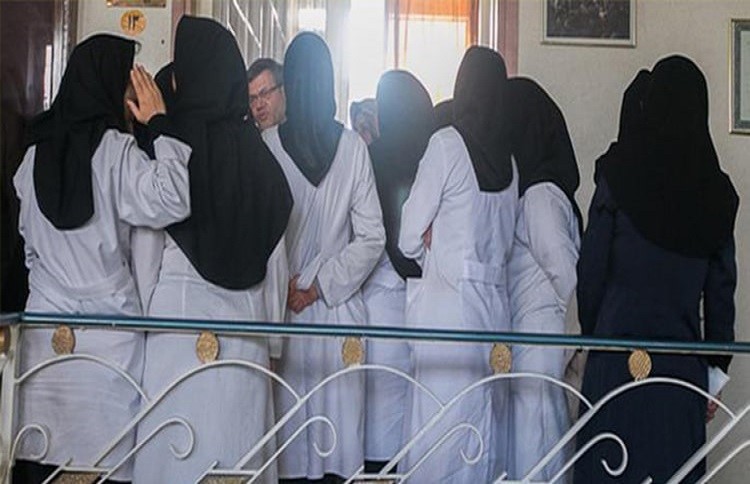
Abolghasem Aboutalebi, a member of the Supreme Nursing Council in Iran, has described the situation of nurses’ migration from the country as a “near crisis” and called for finding solutions.
According to Aboutalebi, while approximately 10,000 nursing personnel are trained in the country annually, nearly 3,000 nurses migrated last year.
Officials from the regime’s Ministry of Health state that the destination of nurse migration includes a wide range of countries, from neighboring nations and the Persian Gulf region to Western and European countries, as well as South Africa.
Aboutalebi also criticized the slow hiring of nurses, stating that to meet the standard of 2.5 nurses per bed, the current number of 240,000 nurses in the country should triple.
On December 11, 2023, the regime’s official IRNA news agency, in a report titled “Nurses Migrating, Officials Watching,” quoted Mohammad Sharifi Moghadam, the Secretary-General of the Nursing House, highlighting the consequences of the nursing shortage, including patients losing their lives.
Sharifi Moghadam also reported dissatisfaction among over 90% of nurses in Iran, attributing it to livelihood problems, income disparities, discrimination within the medical staff, improper implementation of tariff laws, staff shortages, mandatory overtime with “very minimal compensation,” and job burnout.
In explaining the income gap between healthcare staff, Sharifi Moghadam stated that the average salary of a newly hired nurse is 90 million rials (approximately $151), which doesn’t even cover the cost of renting a home, while a specialized government-employed physician earns over 1.4 billion rials (approximately $2,345) per month.
Nurses are among the groups that, in recent months, have expressed their job and livelihood dissatisfaction through mass protests to Iranian regime authorities, demanding attention to their grievances.
These protests have faced punitive measures from Iranian officials, including a six-month suspension from service for protesting employees.
While the wave of migration from Iran is not limited to nurses and encompasses a broad spectrum of students, workers, physicians, and specialized professionals, experts have warned about the consequences of the workforce leaving the country.
Morteza Ezati, a university professor and economic expert, recently discussed with the website “Khabar Online,” considering migration as a cause of exacerbating “serious crises” in Iran’s economy and predicting that its consequences will soon manifest in society and the economy.
Long Food Queues and Empty Tables in Iran at the Beginning of Ramadan
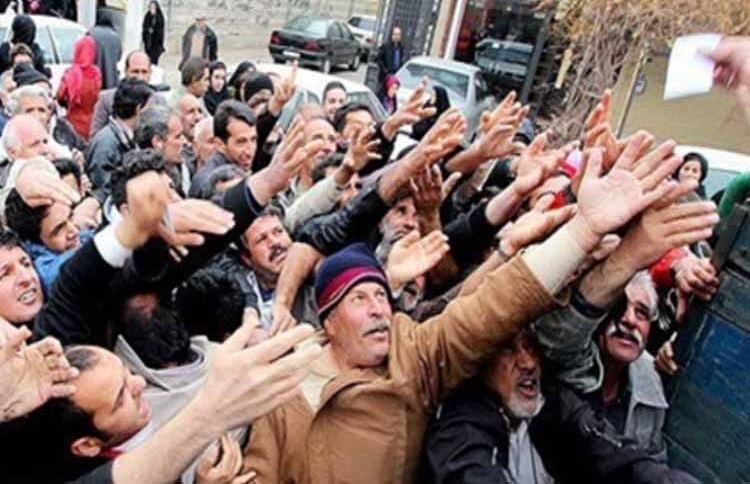
The release of various videos depicting long queues for “government-subsidized meat” in Iran during the month of Ramadan has sparked significant reactions. Now, the regime’s media outlets report insufficient meat supply for distribution to the applicants, stating that people, despite hours of waiting, return home empty-handed.
The state-run Khabaronline website has announced that these long queues reflect a bitter reality that has been witnessed for months. With reference to economic indicators and statistics presented by the Statistical Center, it is predicted to persist.
The report emphasizes that while officials claim economic improvement, the reality is that “people’s purchasing power has sharply decreased, and their food basket has shrunk.”
The coupon plan illustrates the depth of the catastrophe, forcing people to wait in these long lines to obtain food.
Reviewing reports published in other media outlets also indicates that the government’s target in this plan is more than 60 million out of Iran’s 85 million population.
On March 12, Ham-Mihan newspaper criticized the government’s supportive policies, stating that the supply of “regulated market meat” is much less than the existing demand. The newspaper questions, “Why do people have to stand in line for hours to get meat, only to sometimes return home without receiving any?”
Media outlets have compared images of various queues, including meat queues in Iran, to the era of the eight-year war between Iran’s regime and Iraq.
In many of these reports, a partisan approach is evident, attempting to attribute existing problems to the government of regime President Ebrahim Raisi. However, a review of reports and economic indicators during the regime’s rule in Iran shows that the economy has never been on a balanced and scientific development path. It is clear that the economic situation has worsened during Ebrahim Raisi’s term.
Statistics indicate that Iran’s economy has been in a downward spiral over the past four decades, and despite reductions in the pace of this decline in various governments, the trajectory has not changed.
Experts believe that given the macroeconomic policies, often considered “mistakes” by many specialists, and the entrenched inflation in the near future, we might witness people lining up for all goods.
Iran’s Regime Draws Money From Pension Funds Without Notifying Retirees
While Iranian media have reported that the government has deducted 10 million rials from the pensions of retirees in March, the head of the Retirees Association of the Social Security Organization says they were supposed to pay the debts of retirees of this organization to the “Petrochemical Shares.”
In this regard, Parsineh newspaper wrote: Retirees’ March salaries have been deposited under conditions where, without notification and permission, 10 million rials (approximately $17 which is around one-eighth of the minimum wage for workers) have been deducted from their accounts, and text messages have been sent by the Retirees’ High Association of Social Security to retirees and pensioners, stating that the Social Security Organization is in the process of creating a cooperative company for retirees and investing in the shares of companies. This process will be realized through participation in the auction with the allocation of 150 million rials (approximately $252) in cash deductible from the March pension.
In response to this news, the head of the Retirees Association of Social Security Organization told the regime’s Fars News Agency: “It was agreed that 52% of the shares of Amir Kabir Petrochemicals would be transferred to the retirees of this organization, and it was said that pensioners who do not wish to buy these shares can withdraw by sending a withdrawal text message.”
Some experts say, firstly, the Retirees’ High Association has no right to establish any investment institution, and this action is against its articles of association. Secondly, this investment trick can lead to major abuses by creating a layer of capitalists and, with the credit of a trade union, wipe out the meager rights of retirees.
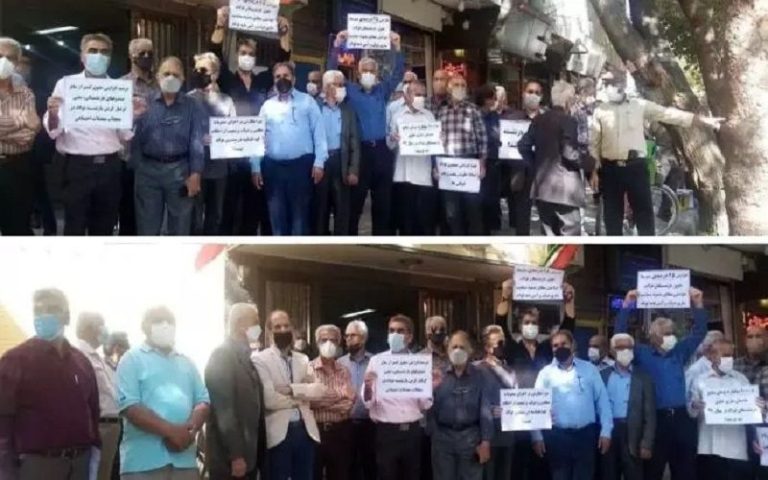
This is happening while, according to reports, a group of retirees from the Social Security and National Pension Organization gathered on March 10 in protest of the economic situation in several cities, including Arak, Isfahan, Ahvaz, Shush, and Kermanshah.
The continuation of economic protests in Iran is happening while an economic media outlet, by examining official data from the government’s central statistics agency, reported that since the inauguration of the government of Ebrahim Raisi in 2021 until now, that is, in the past three years, the prices of essential goods have grown between 125% to 290%.
Iranian Authorities Set 30-Million-Rial Fine for Violating Hijab Rules
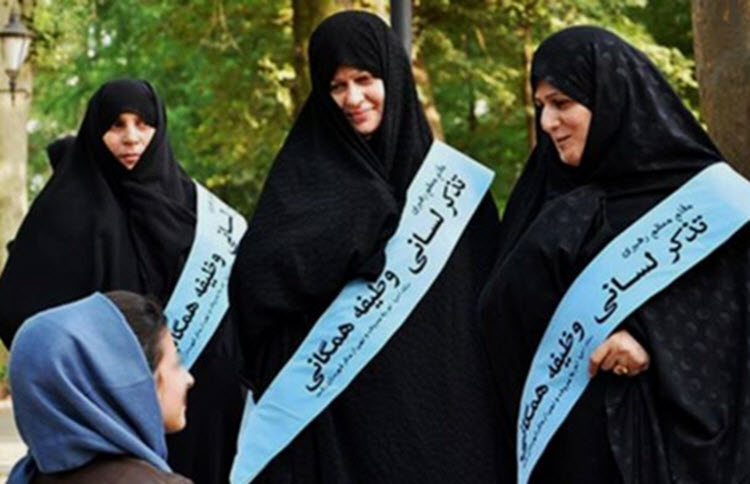
Babak Negahdari, the head of the Research Center of the Iranian regime’s Majlis (Parliament), has defended the imposition of a “cash fine” for opponents of mandatory hijab instead of dealing with them through the Morality Police. However, the spokesperson for the regime’s State Security Forces (SSF) says that such an order has not been communicated yet.
Negahdari, in a conversation with the state-run ILNA news agency on March 10, admitted that the Morality Police led to “clashes in the public sphere of society” and added that the images of police officers’ confrontation with women “were being exploited by enemies of the revolution and Iran.”
He stated that the Majlis took action to “eliminate the Morality Police and replace it with cash fines to remove the undesirable images created by the clashes in the public sphere.”
While announcing the removal of the Morality Police, he reported on the presence of unmarked police vans in the streets and their confrontation with women without specifying their authority, which has been widely reported this year.
The clash between the Morality Police and Mahsa Amini in September 2022, resulting in her death in detention, marked the widest protests in the history of the Iranian regime.
Last week, Amir Hossein Bankipour, a member of the parliament, announced in a television program the possibility of implementing the “Hijab and Chastity” bill after the Persian New Year, specifying a fine of 30 million rials (approximately $51) for not observing mandatory hijab.
It is worth mentioning that the minimum wage for a worker in the year 2023 was around $135.
He mentioned that this amount would be deducted from the individual’s account by a “system,” and if there was not enough money, the person would become a “debtor” and, in case of repetition, would have to go to “court.”
His statements were met with widespread reactions.
Meanwhile, Saeed Montazer al-Mahdi, the spokesperson for the SSF, said to reporters about the 30-million-rial fine for not observing mandatory hijab: “Such a matter has not been communicated to us yet.”
In the ongoing conflict between the regime and its supporters with women, a video circulated on social media on Saturday, March 9, showing a Mullah filming a mother holding her child in a medical center in the city of Qom.
The prosecutor of Qom, without providing details, announced the formation of a legal case in this regard and stated that an order has been issued to “identify individuals who transferred the image to the media.”
In this case, Iran’s criminal regime again intends to arrest those who have published these images instead of addressing the case.
House Rent Has Become the Main Economic Concern of Iranians

An examination of Iranian citizens’ messages on social media indicates that house rent has become one of the most significant economic concerns for Iranians. A considerable number of messages shared by users on a daily basis on social media focus on issues related to rent, high costs, and inflation in this domain.
The common theme in these messages is the inability to afford house rent and the monthly increasing expenses, especially in the capital.
According to a survey, the average share of rent in the expenses of Tehran households has exceeded 50%, and residents of the capital, on average, spend around 150 million rials (approximately $252) monthly on house rent.
More than 50% of the survey participants declared monthly incomes and salaries of less than 160 million rials (approximately $269).
A March 9th report in Etemad newspaper examines the relationship between rent inflation and overall inflation in Iran, noting that, except for some initial months of the year, in the second six months, rent inflation has surpassed monthly general inflation.
According to the report, comparing rent inflation this year with that of 2022 shows that tenants in 2023 have faced a more challenging year. In late September 2023, the regime’s Donyaye Eghtesad newspaper reported a 12-year record-high annual increase in nationwide rents during the first half of the year, reaching 38.5%.
The report highlights that the recent six-month growth in rents has been unprecedented since 2011. A user on social media, referring to the days before the Persian New Year, wrote: “People are trapped under these skyrocketing prices… Besides house rent and utility bills, they are struggling to fill their stomachs, and whether it’s a holiday or not has become irrelevant to them.”
Another citizen commented on the situation: “Nights close to the Iranian New Year, for some, are reminders of unpaid debts, bounced checks, unmet demands, medical expenses, empty bank accounts, house rent, school fees for children, and a broken-down car.”
Etemad, citing Abbas Akbarpour, a real estate market expert, reported on March 9 that if the declared inflation rate is around 40%, the rent rate exceeds this figure, with the primary reason being the increase in the foreign exchange rate in the market.
According to Akbarpour, in one instance alone, the Euro-to-rial exchange rate has faced a 25% growth in the last two weeks, which has had a significant impact on all items, including rents.
The real estate market expert further stated: “If the increase in rent rates is higher than inflation, landlords in this ailing economy won’t benefit much from these rates, but whether tenants comply with these rates for rent renewal is crucial.”
In August 2023, online news outlet Faraz published a report indicating that many families, due to the inability to pay house rent, have migrated from Tehran and stored their household items in rented containers.
On October 11, 2023, the state-run ILNA news agency reported on income and expenses of workers, stating that on average, about 55% of workers’ salaries in provinces go towards house rent.
According to the report’s data, in the capital, workers’ entire salary is spent on rent.
A social media user on X, referring to the widespread concern about house rent, wrote: “Until around the age of 20, we had no understanding of house rent or the prices of household necessities and expenses. I traveled in a bus with school children and saw today’s 10- and 12-year-olds fully aware of the house prices in their area and knowing that high rent brings them trouble.”
Despite the denial of inflation and skyrocketing prices by Iranianauthorities, some official reports indicate a significant disparity between incomes and citizens’ public expenses.
Babak Negahdari, the head of the parliament’s research center, stated on October 8, 2023, that housing prices and rents had increased tenfold from 2018 to the present.
Based on this, if five years ago, the rent for a small apartment was about 10 million rials, today, a family renting the same, likely older, house must pay at least 100 million rials per month.
Canada Sanctions Iranian Officials Over Women’s Rights Violations
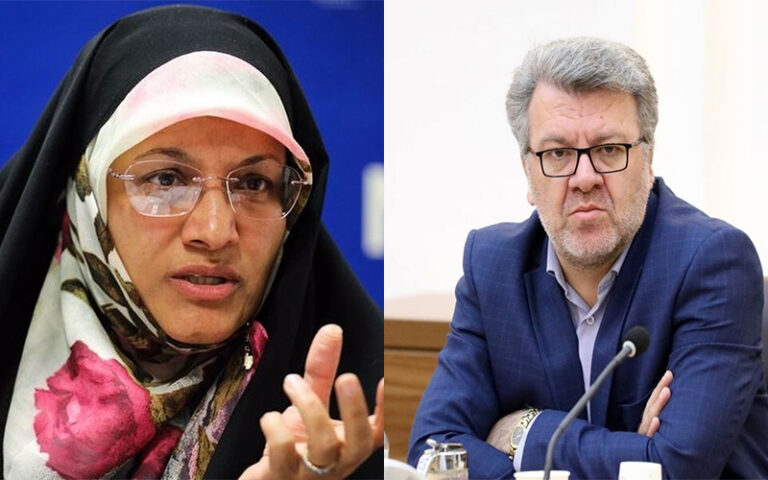
On Friday, March 8th, the Canadian government, in conjunction with International Women’s Day, announced sanctions against Masoud Dorosti, the CEO of Tehran Metro, and Zahra Elahian, a representative in the regime’s Majlis (parliament), for their involvement in the suppression of Iranian citizens, particularly women and girls.
According to a statement from the Canadian Ministry of Foreign Affairs, these sanctions were imposed in response to the systematic and severe ongoing violations of human rights, especially those of women and girls, and the continuous actions of the Iranian regime to destabilize peace and security in the region.
The statement further mentions that Masoud Dorosti is sanctioned for enforcing compulsory hijab laws in public transportation, while Zahra Elahian is sanctioned for supporting the execution of protesters during nationwide demonstrations.
Mélanie Joly, the Minister of Foreign Affairs for Canada, stated in relation to the seventh round of Canadian sanctions against Iranian regime authorities and institutions since the start of protests triggered by the killing of Mahsa (Zhina) Amini, that Canada will always defend the rights of women and girls. She emphasized that the message is clear: this behavior must come to an end, pointing to the Iranian regime’s ruthless and harsh tactics against women.
The Canadian Minister of Foreign Affairs pledged that Canada will continue to raise awareness about these severe human rights violations and advocate for accountability for those involved.
Since the beginning of nationwide protests in 2022, the United States, Canada, the United Kingdom, and European countries have implemented numerous sanction packages against individuals and entities involved in the repression of Iranian protesters.
CENTCOM Chief Warns That Iran Has Put Middle East Into “Convergence of Crises”
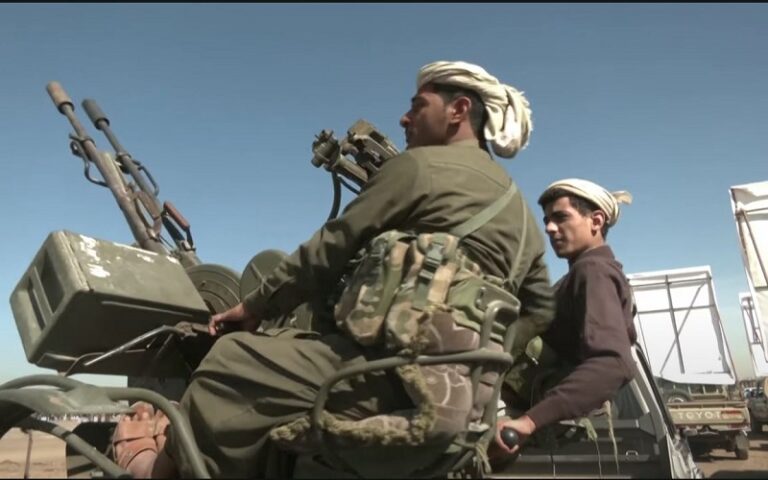
The senior commander of the Central Command of the United States, during a session of the Armed Services Committee of the U.S. Senate, stated the key to deterrence is “Tehran has to understand there are consequences” but “deterrence is temporary.”
“Iran has thrown the Middle East into “a convergence of crises” with its military support of Hamas in Gaza and the Houthis in Yemen,” Army Gen. Michael Kurilla told the Senate Armed Services Committee Thursday adding the middle east is in the most volatile situation in 50 years.
Kurilla said: “In the Middle East, to help finance these militia operations, Iran is selling 90 percent of its oil to China.”
He, with reference to the danger of Tehran becoming a nuclear power, emphasized that Tehran remains on “the threshold” of becoming a nuclear power.
Kurilla added that the key to deterrence is “Tehran has to understand there are consequences” but “deterrence is temporary.” He said there have been more than 170 attacks on U.S. forces in Syria and Iraq since Oct. 7, the day Hamas in the Gaza Strip launched a series of attacks on Israel. There have been eight U.S. military strikes in response.
Kurilla said that the United States economy relies on safe transits of commercial shipping through the Red Sea. He added 30 percent of all maritime trade passes through its waterways.
Kurilla continued that 24 nations’ navies are participating in Operation Prosperity Guardian trying to protect container and tanker ships in the Red Sea. But the continuing strikes have caused an increasing number of shippers to take the far longer route around the Cape of Good Hope at Africa’s southern tip for safety.
Continuing, he pointed out the ongoing attacks by the Houthi rebels, stating, “You have to have a layered defense” on land and sea to protect against drone attacks. Swarms of cheap attributable drones flying low and slow pose a particularly acute danger. Kurilla urged Congress to pass a supplemental budget, which would provide him with more than $530 million for more high-powered microwave systems and relatively cheap Army Coyote interceptors to take done that kind of attack.
Houthi semi-military forces in Yemen, who receive support from the Iranian regime, have repeatedly attacked international commercial ships in the Gulf of Aden and the Red Sea with missiles and drones since late October 2023.
Many of these group’s attacks have been neutralized by American or coalition forces, and a significant number of their bases within Yemen have become targets of independent or joint attacks by the US military and other allied countries.
Nevertheless, Houthi leaders have declared that they will refrain from attacking ships until the end of the conflict in Gaza.
The Biden administration, which had removed the Houthis from the list of terrorist organizations shortly after taking office in January 2021, re-designated this group as “specially designated global terrorists” on February 16, 2024.
On January 10, the Telegraph reported, citing its sources inside Iran, that Houthi forces in Yemen have received training at the “Khamenei Maritime Science and Technology University” in Zibakenar, Rasht (northern Iran), and that Ali Khamenei, the Supreme Leader of the Iranian regime, oversees their activities.
Iran’s Regime Continues Unjust Detention of Father of Executed Political Prisoner
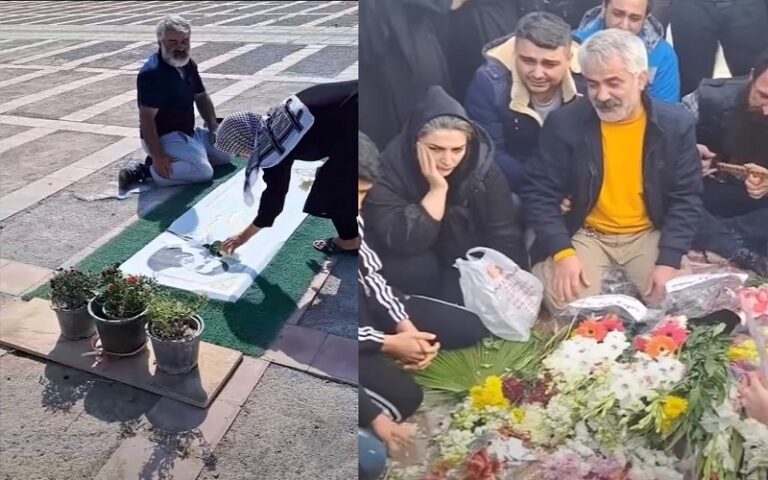
Mashallah Karami, the father of executed protester Mohammad Mehdi Karami, continues to be held in Karaj Central Prison under unspecified conditions, despite more than six months passing since his arrest, according to human rights sources.
According to HRANA news agency, a source familiar with the matter stated, “Mr. Karami, despite 196 days of detention, is still being held incommunicado in Ward 15 of Karaj Central Detention Center.”
The source, close to Mr. Karami’s family, mentioned that efforts for his “temporary release” have been unsuccessful so far.
Mashallah Karimi is the father of Mohammad Mehdi Karimi, an athlete and protester who was executed by the Iranian regime. Mohammad Mehdi Karimi was detained during nationwide protests that began in September 2022, following his participation in the 40th-day memorial ceremony for Hadis Najafi and Parsa Razadoust, two young protesters murdered by the regime’s security forces.
On January 7, 2023, he was executed alongside Mohammad Hosseini, another protester, in a case referred to as the “Murder of an IRGC Basij Member Ruhollah Ajamian.” The trials of the two protesters was marked with torture, forced confessions, and a flawed judicial process.
Mashallah Karimi was arrested by the regime’s security forces on August 22, 2023. Security officials confiscated all electronic devices and also froze his family’s bank accounts.
Throughout his detention amid last year’s nationwide protests, Karami’s family has been subjected to harassment by Iranian regime security forces. On November 3, more than 70 days into Mashaallah Karami’s detention, his wife and child were forced to leave their home due to “repeated assaults” by security forces.
On December 20, 2023, Mashallah Karami was charged by Branch Eleven of Karaj Public and Revolutionary Court with allegations such as “membership in groups and gatherings with the intent to act against national security, propaganda against the regime, insulting sanctities, forming a group with the intent to disrupt national security, and insulting the leader (the regime’s supreme leader Ali Khamenei).”
In this situation, hra-news agency, has revealed that since Mashaallah Karami’s detention, his family has been pressured not to provide information about him. They have also faced restrictions on phone calls and daily movements.
There are indications of severe pressure on Mashallah Karami to accept charges of “fraud and manipulation of public sentiment,” and there is a possibility that a coerced confession video may be broadcast in the future.
Supreme Court of Sweden Upholds Life Sentence for Former Iranian Prison Guard Hamid Nouri
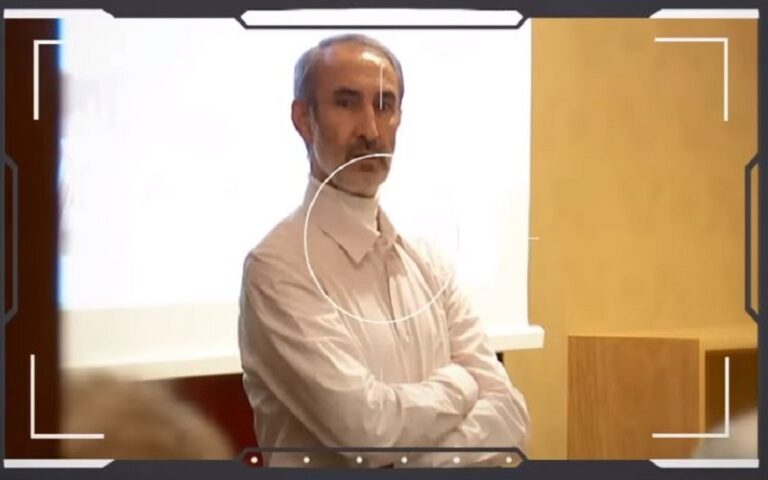
Hamid Nouri, accused of involvement in human rights violations in Iran against political prisoners.
The Supreme Court of Sweden announced that it will not review the request for the appeal of the verdict against Hamid Nouri, a former deputy warden of Gohardasht Prison, who was sentenced to life imprisonment for his participation in the mass murder of political prisoners in the summer of 1988.
At the time, the regime brutally executed 30,000 political prisoners, around 90% of whom were members of the opposition People’s Mojahedin Organization of Iran (PMOI/MEK).
The trial concluded in July 2022 in Sweden, where Nouri was convicted of “gross violation of international humanitarian law and murder.”
A higher court also affirmed the life sentence for Nouri on December 19, 2023. The highest judicial authority in Sweden, in its March 6, 2024, ruling, stated, “The Supreme Court has decided not to grant a review of the final judgment in this case. This decision means that the verdict issued by the appellate court remains in force.”
Hamid Nouri, 62, was arrested on November 9, 2019, upon his arrival at Stockholm airport on a direct flight from Iran, based on a complaint filed by human rights activists and opponents of the Iranian regime.
The Swedish prosecutor’s office charged Hamid Nouri with evidence related to the secret mass murder of thousands of political prisoners in Iranian regime prisons in the summer of 1988.
These executions were carried out on the orders of Ruhollah Khomeini to retaliate against the PMOI/MEK after the end of the Iran-Iraq War.
During the 1988 summer executions, Hamid Nouri, using the alias “Hamid Abbasi,” served as the deputy warden of Gohardasht Prison.
The Swedish prosecutor filed charges against Hamid Nouri based on the principle of universal jurisdiction, allowing the prosecution of crimes regardless of the location where they occurred. Swedish judicial authorities tried him on these grounds.
The trial, spanning 93 sessions in the Swedish judiciary, involved at least 60 complainants and witnesses and 12 experts in Islamic jurisprudence and international law discussing Nouri’s case.
The Stockholm regional court, which sentenced Nouri to life imprisonment, stated in its verdict, “He, as the deputy prison official, was involved in selecting prisoners, transferring them to the sentencing committee, and transporting them to the execution site.”
Hamid Nouri denied these charges, asserting that the allegations about his role in the executions are “fabricated.”
However, even the judge of the appellate court stated in a December 2023 statement, “Our assessment is that the case presented by the prosecutor is strong and convincing overall, and the regional court correctly determined that the prosecutor’s charges are well-supported.”
This case has garnered special attention due to implicating current senior Iranian officials, including the Iranian regime President Ebrahim Raisi, in membership in the so-called “Death Committee” during the summer of 1988, which issued execution orders. The Death Committee was a group of regime officials who tried prisoners in minutes-long trials and sent them to the gallows if they did not repent their support for the MEK.
The case has also strained relations between Sweden and the Iranian regime.
In March 2022, while the trial of Hamid Nouri was still ongoing, Iranian security forces detained Johan Floderus, a Swedish employee of the European Union, upon his return from a personal trip at Tehran airport.
This Swedish citizen is accused of espionage, which, if proven under Iranian regime laws, could lead to execution.
Floderus’ parents have requested the Swedish government to consider exchanging prisoners between the two countries and to swap their son with Hamid Nouri.
Another Swedish citizen, Ahmadreza Jalali, a physician and university professor, has been imprisoned in Iran since 2016 and is sentenced to death.
In recent years, the Iranian regime has detained several citizens of Western countries and dual nationals on various charges, including espionage and collaboration with foreign security agencies.
Human rights organizations and Western governments have condemned these actions as “hostage-taking and extortion for political purposes.”
