

Reuters: The Role and Threats of Monarchists in the Ban on Iranian Resistance Rally in Paris
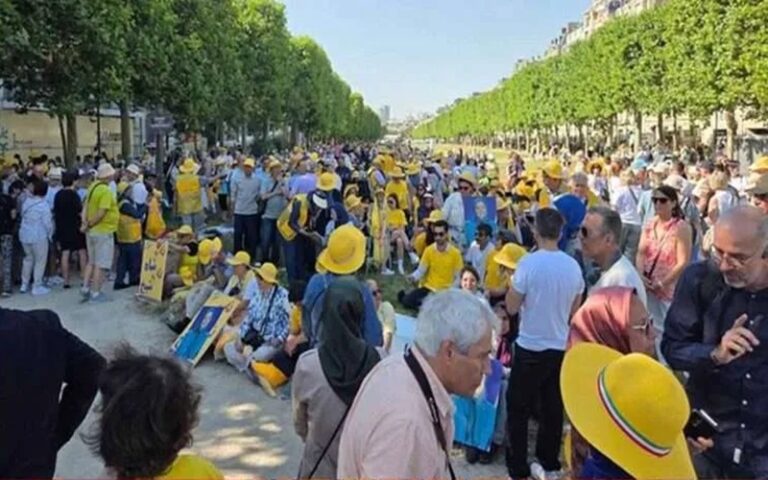
Reuters reported that French authorities canceled a major demonstration by supporters of the Iranian Resistance in Paris just hours before it was scheduled to begin, citing security warnings about threats linked to monarchist groups.
According to the report, published on June 30, the large-scale “Free Iran” demonstration, which had been scheduled for June 20 and was expected to draw 100,000 supporters of the National Council of Resistance of Iran (NCRI) and the People’s Mojahedin Organization of Iran (PMOI/MEK) in Paris, was canceled after French authorities received security and intelligence assessments.
Reuters obtained an intelligence document indicating that French security services had warned of increasing threats from individuals affiliated with monarchist groups. According to the document, some individuals displaying symbols associated with SAVAK, the secret police of Iran’s former monarchy, threatened to carry out a bombing if the gathering went ahead.
Trump Claims Iran’s Regime Has Agreed to All U.S. Demands
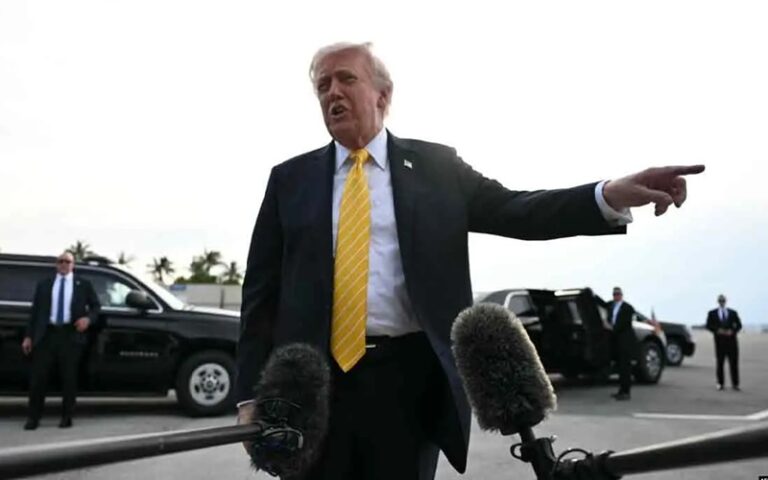
U.S. President Donald Trump said in an interview with CNBC that the Iranian regime has agreed to nearly all of the United States’ demands. He made the remarks in response to a question about the nature of the recent conflict with Iran and whether it would become an “endless war.”
Defending his Iran policy, Trump emphasized that the United States’ objective in the conflict was to eliminate Iran’s nuclear weapons capability rather than engage in a prolonged war. He also claimed that the Iranian regime had agreed not to develop nuclear weapons, an issue that had already been included in the 2015 nuclear agreement, formally known as the Joint Comprehensive Plan of Action (JCPOA). During his first term, however, Trump described the JCPOA as the worst deal in history and unilaterally withdrew the United States from it.
The U.S. president also repeated his previous claim that Tehran had agreed to transfer its stockpile of enriched uranium to the United States. Officials from the Iranian regime have denied this claim, and it remains one of the main points of disagreement in the ongoing negotiations.
According to Trump, indirect negotiations between Tehran and Washington, mediated by Qatar and Pakistan, are continuing, although reaching a final agreement on Iran’s nuclear program remains highly challenging. He also said that the talks would resume after the funeral ceremony of Ali Khamenei, the former supreme leader of the Iranian regime.
Elsewhere in the interview, Trump again claimed that the United States had achieved a military victory over Iran, although he said Iran still retains part of its missile capabilities. He added that the United States would be able to destroy those capabilities if necessary. He also referred to U.S. retaliatory actions in response to attacks attributed to Iran against commercial vessels in the Strait of Hormuz.
Defending his decision to enter the conflict with Iran, the U.S. president said it was not actually a war but rather an effort to eliminate Iran’s nuclear weapons capability. He described the four months of fighting as a relatively short period and reiterated that the Iranian regime must not be allowed to obtain nuclear weapons.
Meanwhile, the recent memorandum of understanding signed between Tehran and Washington has drawn criticism in Israel, and reports have emerged of growing disagreements between the Trump administration and Israeli Prime Minister Benjamin Netanyahu.
He went on to describe the naval blockade against Iran as a “steel wall,” claiming that it had been completely effective throughout the war and that not a single ship had managed to enter Iran. This claim comes despite reports from intelligence and maritime organizations indicating that Iran’s shadow fleet has continued operating and that there have been breaches of the blockade.
Trump also repeated his claim that, under the agreement ending the war, Iran has committed to purchasing essential agricultural products, including wheat, corn, and soybeans, from the United States. Referring to the Iranian regime’s economic situation, he said, “They need food, and American farmers will provide it.”
According to Trump, under the memorandum of understanding signed with Tehran, the United States has eased some of the restrictions imposed on Iran’s ports and oil exports. However, he said the resulting revenue must be used to purchase food rather than rebuild Iran’s military capabilities.
These remarks come despite previous statements by Iranian regime officials, including Abdolnaser Hemmati, governor of the regime’s Central Bank, who have insisted that there is no commitment or obligation to purchase agricultural products from the United States.
Death Sentence Issued for Political Prisoner Arghavan Fallahi
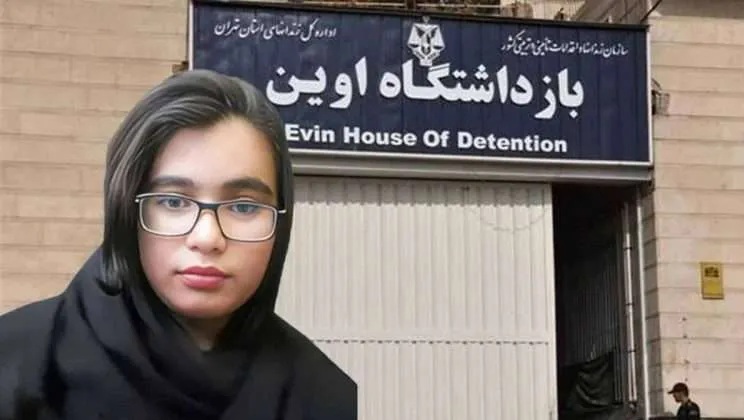
The National Council of Resistance of Iran (NCRI) announced that Arghavan Fallahi, a 25-year-old political prisoner and supporter of the People’s Mojahedin Organization of Iran (PMOI/MEK), the largest Iranian opposition group, has been sentenced to death by Branch 15 of the Tehran Revolutionary Court, presided over by Judge Abolqasem Salavati. According to the NCRI statement, the death sentence was formally communicated to her through her lawyer on July 1. The NCRI described the ruling as “criminal” and called for immediate action by international organizations and human rights groups to prevent its implementation.
Nine Months of Uncertainty for Four Political Prisoners in IranAccording to the statement, Arghavan Fallahi was arrested by security forces in the city of Parand on January 25, 2025, and transferred to Ward 241 of Evin Prison, which is controlled by the Intelligence Protection Organization of Iran’s judiciary. The NCRI said she spent approximately five months in solitary confinement under interrogation and severe physical and psychological pressure. Following the evacuation of Evin Prison, she was first transferred to Tehran Greater Prison (Fashafouyeh) and later to the women’s ward of Evin Prison. The NCRI also called on the United Nations, relevant international bodies, and human rights organizations to take immediate action to save the life of Arghavan Fallahi and other political prisoners sentenced to death. It also reiterated the need for an international fact-finding mission to visit Iran’s prisons and meet with political prisoners.
Background of Arghavan Fallahi’s Case
Before her latest arrest, Arghavan Fallahi had previously been detained in November 2022 along with her father, Nasrollah Fallahi, by security forces in Shiraz. After being transferred to Evin Prison, she was sentenced by Branch 26 of the Tehran Revolutionary Court, presided over by Judge Iman Afshari, to two years in prison on charges of “assembly and collusion” and “propaganda against the regime.” She was released after completing her sentence. In the new case, she has remained in detention since January 2025 without resolution. According to reports by human rights organizations, she has been denied access to a lawyer, regular contact with her family, and due process throughout her detention. Reports have also alleged that she was subjected to torture and pressured into making forced confessions in connection with the killings of two regime judges, Mohammad Moghiseh and Ali Razini.Why Is Iran’s Electricity Industry Facing a Crisis?
Despite possessing the world’s second-largest natural gas reserves and one of the largest fossil fuel resources, Iran theoretically should not be facing an electricity crisis. However, the reality for millions of Iranian citizens is quite different: widespread power outages, industrial shutdowns, reduced production, and growing public dissatisfaction. This raises the question of how a country with such vast energy resources has become unable to supply its own electricity needs.
The answer lies in a combination of structural corruption, rent-seeking, chronic mismanagement, and the political priorities of the Iranian regime.
Power Outages to Resume in Iran Starting in JanuaryAccording to the U.S. Energy Information Administration (EIA), Iran has faced a widening gap between electricity generation and consumption in recent years. In the summer of 2023, the country’s electricity shortfall reached approximately 12,000 megawatts, and some domestic estimates for 2025 and 2026 suggest that the gap could exceed 20,000 megawatts. This is despite Iran’s officially reported installed power generation capacity of about 95,000 megawatts. Due to aging equipment, underinvestment, and technical problems, however, the actual operational capacity has fallen to around 70,000 to 75,000 megawatts. One of the primary causes of this crisis is the lack of effective investment in electricity infrastructure over the past two decades. While the country’s electricity demand has grown by 4% to 6% annually, many power plant projects have either never been completed or have entered operation only after years of delay. The Sirik Power Plant in Hormozgan Province is a notable example. The project was intended to become one of the country’s largest combined-cycle power plants but remained stalled for years due to financial, managerial, and implementation problems.
The Aging Structure of Iran’s Electricity Industry
Meanwhile, billions of dollars in oil revenue that could have been used to modernize the country’s electricity infrastructure were instead directed toward military and security institutions and opaque projects rather than investment in the energy sector. As a result, a significant share of Iran’s electricity is still generated by power plants that, in some cases, are more than 30 to 40 years old. According to official statistics, the average efficiency of Iran’s thermal power plants is approximately 39%, a figure that significantly lags behind modern power plants elsewhere in the world. In addition to aging infrastructure, Iran’s electricity transmission and distribution network faces serious challenges. Some reports estimate that power losses across the grid are around 13%, meaning that a substantial portion of generated electricity is lost before reaching consumers. In many developed countries, this figure is below 6%. Cryptocurrency mining has also become one of the most controversial issues affecting the electricity sector. Iran’s Ministry of Energy has repeatedly stated that part of the electricity shortage is caused by cryptocurrency mining operations. However, the key question remains: how did thousands of mining machines enter the country and begin operating on such a large scale despite international sanctions? Numerous media reports over recent years have indicated that large cryptocurrency mining facilities affiliated with military institutions have benefited from subsidized electricity and special permits. These operations have generated substantial profits for powerful organizations, while ordinary citizens have borne the cost through power outages and rising prices. Meanwhile, renewable energy continues to play only a minor role in Iran’s electricity sector. Despite the country’s vast solar and wind potential, renewable and nuclear energy combined account for less than 7% of the country’s electricity generation. This comes as many neighboring countries have made substantial investments in clean energy in recent years. Therefore, Iran’s electricity crisis is neither a natural occurrence nor the result of increased public consumption. Rather, it is the product of years of corruption, rent-seeking, mismanagement, and the allocation of resources to priorities other than the development of national infrastructure. Today’s power outages are, in reality, the price of the decisions and corruption that have accumulated within the country’s energy management system over past decades.Concept of Escalating Bread Prices in Chain of Economic and Political Hyper-Crises
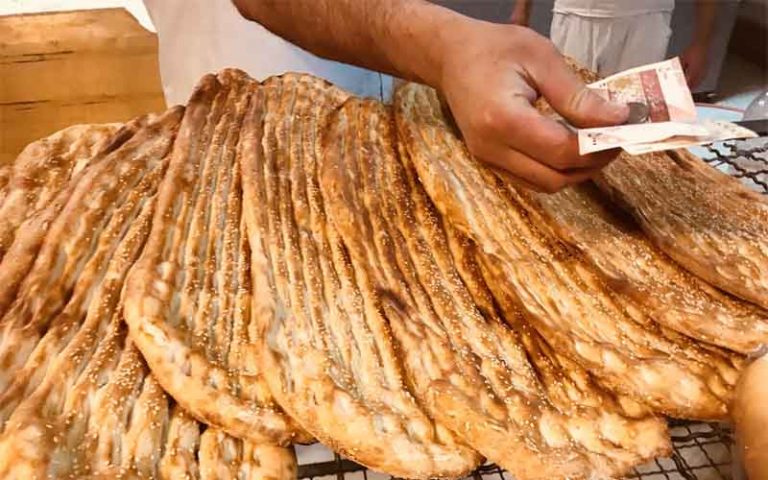
Crises in Iran under the rule of the mullahs are interconnected like links in a chain, forming a comprehensive hyper-crisis engulfing the country. A brief look at the headlines highlighted by state-run media
The heaviest weight of the escalating crisis, which has not stopped for a single day over the past decade, lies within the economic hyper-crisis. One must not overlook a constant reality: the economic crisis is always the legitimate offspring of the political crisis—a policy built on deception, lies, theft, and empty promises that define the current establishment, where its government resorts to raising wages by 60% while increasing bread prices by 140%.
Bread Prices Rise Again in Tehran; Fresh Pressure on Household BudgetsIn this context, the state-run Tose’e Irani newspaper published a report on June 30, 2026, exposing the futility of these policies: “The minimum wage for the current year was set at 16,625,550 tomans (Approximately $91), while the minimum basic subsistence basket for workers was estimated at around 45 million tomans (Approximately $257) during the March 14, 2026, meeting of the Supreme Labor Council. Consequently, the approved minimum wage covers only about 37% of the subsistence basket cost… Many working-class families rely on bread, cheese, eggs, and tomatoes to meet their minimum food needs… The latest central bank data shows that bread recorded an inflation rate exceeding 140% in May 2026, capturing the highest inflation rate among all basic commodities.”
Indicators of Collapse and Erosion of Purchasing Power
The data published in the state newspaper provides a clear picture of the depth of the livelihood crisis in Iran. This crisis is no longer limited to declining purchasing power; it has transformed into a direct threat to the most basic elements of human survival. When the minimum wage covers only 37% of the cost of the subsistence basket, it means the vast majority of workers enter their daily life cycle with a permanent and chronic financial deficit, which can only be compensated for by eliminating the essential needs for staying alive. Consequently, bread, which for decades represented the last resort on the tables of low-income groups—has become a luxury item difficult to obtain. The official admission that “many working-class families have restricted their food to bread, cheese, eggs, and tomatoes” proves that the tables of millions of citizens had already been reduced to the bare minimum before this wave. Now, with inflation exceeding 140% in bread prices, this minimum itself is threatened with erasure and non-existence. This catastrophic situation is the product of chronic economic and political policies based on inefficiency, organized structural corruption, and the theft of the people’s sustenance. The promotional wage increases, which coincide with frantic leaps in the price indices of the most vital food items by multiples of that percentage, are nothing but a desperate attempt to hide the real and resounding collapse of purchasing power. Thus, rampant inflation in bread prices becomes a milestone of the collapse of food security, the deepening of poverty, and the widening of the vast chasm between the regime’s official promises and the bitter reality experienced by millions of Iranian families.Future Outlook
When people are deprived of bread, the resulting vacuum will be filled by two forces that are seemingly contradictory but flow into the same channel: the first is a sequential multiplication of crises of corruption, crime, and social collapse, and the second is explosion, anger, and an inevitable uprising that cannot be avoided. The consequences of high bread prices and the stark imbalance between wages and the inflation rates of basic items will inevitably lead to these two compounded effects. There are no horizons for the mullahs’ regime to avoid this fate unless the structural framework is completely overthrown from its foundations, allowing a new system that respects human rights to emerge from its rubble. This dark horizon for the Iran’s regime is what even its official media warns against, quoting the executive secretary of the “Worker’s House” (Khaneh Kargar) in eastern Tehran, who issued a public warning to the ruling authority, stating: “If a family is forced to reduce its daily bread consumption, this matter will have widespread repercussions that will directly affect social stability and peace and disturb the tranquility of the public.”Iranian Regime Parliament Speaker: No Access Will Be Granted to Bombed Sites
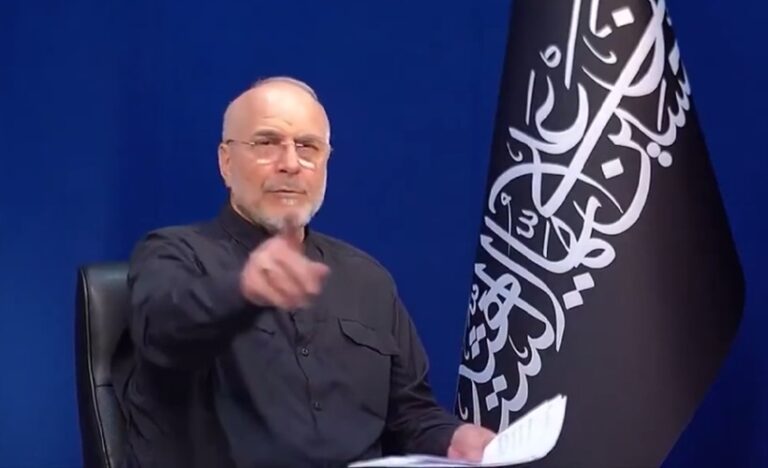
Mohammad Bagher Ghalibaf, the speaker of the Iranian regime’s Majlis (parliament) and head of the Iranian regime’s negotiating team, claimed that inspectors from the International Atomic Energy Agency (IAEA) will not be allowed access to nuclear facilities that were bombed by the United States.
The Fordow, Natanz, and Isfahan nuclear sites were targeted in U.S. and Israeli strikes against the Iranian regime last year and this year.
Since last year’s 12-day war, the Iranian regime has denied the IAEA access to enrichment sites, where it is believed the regime has stored enough highly enriched uranium to produce as many as 10 nuclear weapons if it decided to move rapidly toward building an atomic bomb.
Grossi: A Very Robust Verification System is Needed for Iran’s Nuclear ProgramEarlier, U.S. President Donald Trump said, “With the cooperation of the Iranian regime and by entering Iran, we will collect the enriched uranium and then transfer all of it to the United States.” Earlier, Rafael Grossi, Director General of the International Atomic Energy Agency, said during a press conference in Japan that an agreement exists and that, in order to implement it, the IAEA must have access to the sites and conduct inspections. Access to these sites has become one of the main points of contention in the recent negotiations. In a televised interview broadcast Wednesday evening on the Iranian regime’s state television, Ghalibaf said: “At present, they only have the right of access to two facilities: the Bushehr Nuclear Power Plant and the Tehran Research Reactor. Access has been limited to these two sites, and we remain committed to that.” Ghalibaf added: “The Majlis passed a law, and the Supreme National Security Council has also adopted a resolution on the matter. Under this law, no access whatsoever will be granted to sites that have been bombed and damaged.” Before the U.S. strikes on the Iranian regime’s nuclear facilities during the 12-day war, the IAEA announced that the regime possessed more than 400 kilograms of uranium enriched to 60%. In the final days of the 12-day war, U.S. President Donald Trump ordered the bombing of Iran’s enrichment facilities at Fordow, Natanz, and Isfahan. He later announced that the facilities had been destroyed and that the enriched uranium had been buried beneath the rubble. In April, the head of the International Atomic Energy Agency said that a large portion of the Iranian regime’s enriched uranium was likely still located at the Isfahan nuclear complex. One month later, CNN reported that the Iranian regime had deliberately destroyed the tunnels leading to its high-enriched uranium storage facilities and had mined their entrances. Five sources familiar with U.S. intelligence told CNN that in recent weeks, following U.S. President Donald Trump’s threat to seize Iran’s stockpile of 60%-enriched uranium through military action, the Iranian regime has significantly intensified efforts to block access to the material.
Tanker Trackers: Vessel Grounded in the Strait of Hormuz Belongs to Iran’s Oil Smuggling Network
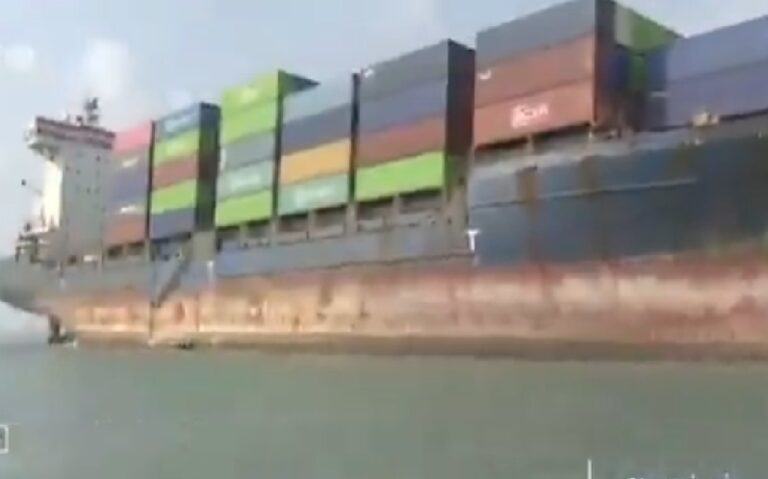
Maritime monitoring firm TankerTrackers responded to Iranian regime media claims that a vessel had “run aground” after sailing outside a route designated by the Islamic Revolutionary Guard Corps (IRGC), stating that the ship is part of the “Shamkhani smuggling network” fleet.
The company, which monitors maritime traffic, particularly the so-called “shadow fleet,” wrote on X on July 1: “This is ARISTA (9348493). She is Comoros-flagged (as far as being “foreign” goes) but is part of Iran’s Shamkhani network. ARISTA has been under US OFAC sanctions since last summer.”
According to TankerTrackers, the ARISTA has been under sanctions by the U.S. Office of Foreign Assets Control (OFAC) since last summer and has effectively been stranded and grounded in Iranian territorial waters north of Hormuz Island since early April 2026. Iranian regime state television claimed in a report on Wednesday, July 1, that a vessel traveling outside the designated route in the Strait of Hormuz had run aground. The state television reporter, who presented the report in a dramatic tone, claimed the vessel was a foreign container ship that became grounded after entering shallow waters along its chosen route, preventing it from continuing its voyage.Ahh, so it's THIS vessel. This is ARISTA (9348493). She is Comoros-flagged (as far as being "foreign" goes) but is part of Iran's Shamkhani network. ARISTA has been under US OFAC sanctions since last summer. She's actually been stuck in this same spot since mid-March 2026; at… https://t.co/tqqKnos5mt
— TankerTrackers.com, Inc. (@TankerTrackers) July 1, 2026
U.S. Treasury Sanctions Shamkhani Oil NetworkThe reporter further claimed that the ship’s owner would need the Iranian regime’s assistance to refloat the vessel and would have to pay for that assistance. During the war with the United States and Israel, the Iranian regime disrupted the main shipping lane through the Strait of Hormuz and forced vessels to transit south of Larak Island. Reports indicate that the Iranian regime has laid at least 80 naval mines in the Strait of Hormuz and clearing them is expected to delay the full reopening of this strategic waterway.
The United States and Arab Allies Sanction Five Entities and 16 Hezbollah Officials
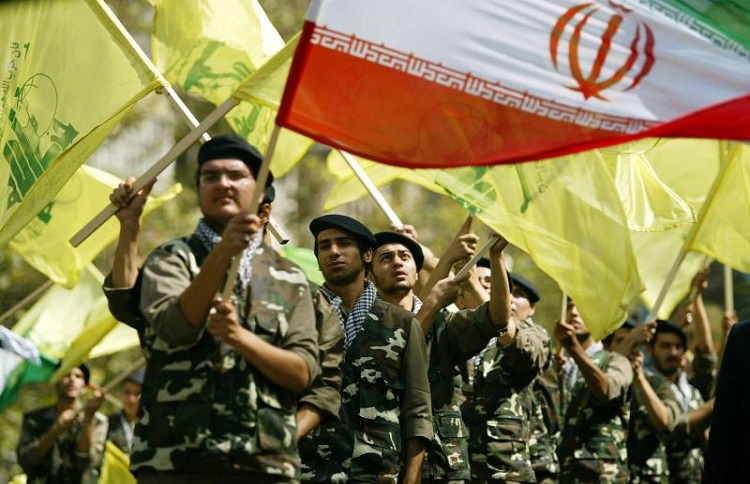
The United States and the member states of the Terrorist Financing Targeting Center (TFTC) have imposed a new round of sanctions against the financial network of Hezbollah in Lebanon, the Iranian regime’s principal proxy group in the country. In this joint action, five entities and 16 senior executives and officials associated with Hezbollah’s financial structure were placed under sanctions.
The U.S. Department of the Treasury announced on Tuesday, June 30, that the sanctions were imposed to weaken Hezbollah’s financial infrastructure, deny the group access to funding, and restrict its operational capabilities in Lebanon and across the region. According to the statement, Hezbollah’s two principal financial institutions, “Al-Qardh Al-Hassan” and “Bayt al-Mal,” along with several of their senior executives and officials, have been designated under the sanctions.
Iranian Regime-Backed Hezbollah Under Heavy Pressure
The joint statement issued by the member states of the Terrorist Financing Targeting Center emphasized that financial networks linked to proxy groups backed by the Iranian regime threaten regional stability, international security, shared interests, and global trade. The U.S. Department of the Treasury also stated that targeting Hezbollah’s financial resources is part of international efforts to protect the global financial system, support the people of Lebanon, and prevent the activities of terrorist networks affiliated with the Iranian regime. According to the U.S. Department of the Treasury, although Al-Qard Al-Hassan is officially registered as a non-governmental organization in Lebanon, it effectively operates as Hezbollah’s unofficial bank and provides extensive financial services beyond its legal authority. U.S. officials say Hezbollah has used the institution to transfer funds, finance its military activities, and evade international sanctions. According to the Treasury, over the past decade, the network has moved more than $500 million through Lebanon’s banking system by using intermediary and front accounts. Among those sanctioned are several senior members of Hezbollah’s financial network, including Ahmad Mohammad Yazbek, Chief Financial Officer of Al-Qard Al-Hassan; Abbas Hassan Gharib, the institution’s Information Technology Director; Ibrahim Ali Zaher, head of Hezbollah’s Central Finance Unit; Adel Mohammad Mansour, Executive Director of Al-Qard Al-Hassan; as well as Samer Hassan Fawaz, Ali Mohammad Karneeb, and Imad Mohammad Baz. The U.S. Department of the Treasury also identified Bayt al-Mal as Hezbollah’s unofficial financial treasury, responsible for holding the group’s assets, managing its investments, and overseeing its financial resources while acting as an intermediary between Hezbollah and Lebanon’s formal banking sector. In addition, the companies “Al-Khubaraa for Accounting, Auditing and Studies” and “Tasheelat” have also been sanctioned for assisting in the management and transfer of Hezbollah’s financial resources. Hezbollah, which has been designated as a terrorist organization by the United States and a number of Western and Arab countries, has served as the Iranian regime’s primary proxy in Lebanon for the past four decades and has received a substantial portion of its financial, military, and logistical support from Tehran. U.S. officials and their Arab allies have emphasized that the objective of this latest round of sanctions is to disrupt Hezbollah’s funding channels and limit the group’s ability to continue its military and regional activities.Drug Crisis: Chemotherapy Costs in Iran Have Increased Tenfold
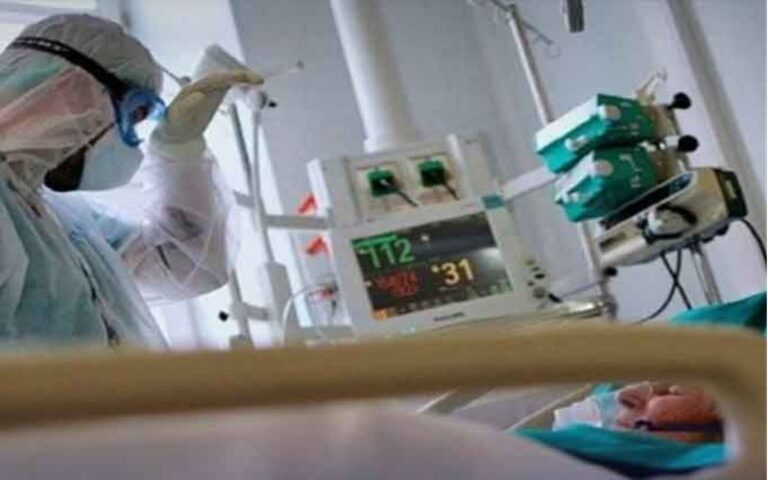
A new wave of drug price increases in Iran has catastrophically raised the cost of medical treatment. In one example alone, the cost of each chemotherapy cycle has risen from about 70 million rials two years ago to nearly 700 million rials. The increases affect everything from widely used generic medications to specialized drugs for patients with rare and chronic illnesses. Insurance providers have not increased their coverage in line with rising prices, forcing patients to pay the difference out of pocket.
Inflation in the healthcare sector has been significantly higher than overall inflation, reaching 15.6% in April, 23.1% in May, and 8.6% in June. In addition, the foreign currency allocation for medicines and medical equipment has been reduced from $3.5 billion to $3 billion.
Iranian Citizens Face Drug Shortages and Health CrisisOther factors behind rising healthcare costs include severe liquidity shortages, government-imposed price controls, delays in insurance reimbursements, fragile supply chains, and the forced shift in transporting medicines and raw materials from sea routes to land routes due to regional tensions resulting from the Iranian regime’s foreign policies, which has sharply increased transportation costs. Months ago, pharmaceutical industry representatives warned that production could not continue without structural reforms, but the Iranian regime has taken no effective action. The main burden of soaring prices has fallen directly on patients. The Iranian regime’s destructive foreign policies, which have resulted in extensive sanctions, proxy wars, and international isolation, have reduced foreign currency allocations and made transportation routes more expensive and less secure. At the same time, systemic corruption, economic mismanagement, government-imposed price controls, and the failure to allocate resources properly have pushed the pharmaceutical industry to the brink of collapse. As a result, cancer patients and people suffering from serious chronic illnesses now face an extremely critical situation. Many are abandoning treatment altogether, while others are selling their assets and taking on overwhelming debt, destroying their own lives and those of their families. This humanitarian disaster is unfolding while a large share of the country’s oil revenues and national resources is being spent on war, regional adventurism, domestic repression, and looting by regime institutions instead of being invested in public healthcare. By continuing these failed policies, the Iranian regime is effectively condemning patients to death or extreme poverty and has plunged Iranian society into a deep healthcare crisis.
Iran’s Negative Economic Growth: From Statistical Manipulation to the Collapse of Investment
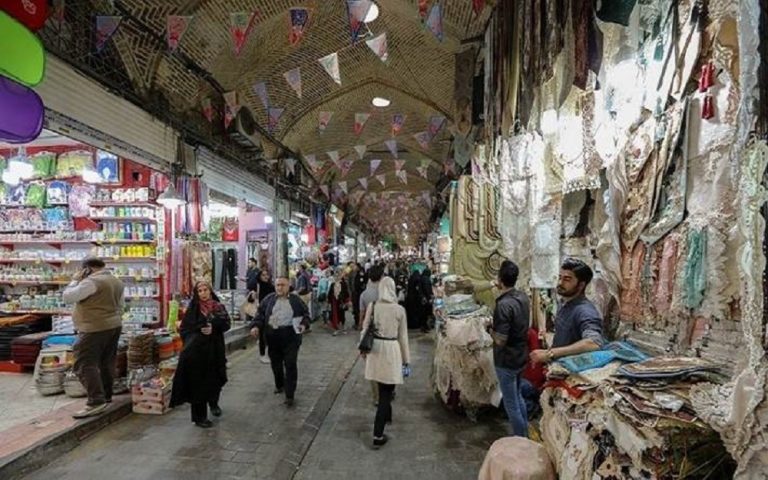
When the gap between official figures and reality becomes too wide, the economic crisis is no longer confined to production and investment—it also consumes public trust. Iran’s negative economic growth during 2025 reflects the collapse of investment, declining household consumption, and the role of the governance structure, international sanctions, and the erosion of social capital in shrinking the country’s economy.
Why Did Iran’s Economy Shrink in 2025?
Official data released for 2025 show that Iran’s economy has entered a new phase of structural stagnation. Although some official institutions have reported slightly positive economic growth, excluding oil revenues presents a completely different picture. Negative economic growth indicates that the core problem is not a temporary shock but the gradual erosion of the foundations of production, investment, and social trust.Inflation in Iran and the Limits of What an Agreement with the United States Can Achieve
