

Iranian Regime Moves to Resume Oil Sales to JapanThe move comes as the United Kingdom Maritime Trade Operations (UKMTO) organization has reported that three oil tankers were attacked in the waters of the Strait of Hormuz and surrounding areas in recent days. U.S. officials have said that preliminary findings indicate the Iranian regime was involved in the attacks, although no group has claimed responsibility and the Iranian regime has not responded to the allegations. According to the reports, on July 6, two oil tankers—one carrying Saudi Arabian crude oil and the other transporting Qatari liquefied natural gas (LNG)—were attacked. One day later, a third tanker in the same area was struck by a projectile, incidents that have once again challenged the security of one of the world’s most important energy transit routes. Despite these tensions, the U.S. official emphasized that Washington continues to keep the diplomatic path open and that American negotiators are working in good faith to reach a final agreement with the Iranian regime. However, the official warned that the recent attacks could undermine the fragile understanding between the two sides and place the negotiations at serious risk. The revocation comes as easing restrictions on oil exports had been one of the most significant economic incentives in negotiations between the United States and the Iranian regime. With the U.S. Treasury’s latest decision, economic pressure on the Iranian regime has once again increased. Oil exports remain the Iranian regime’s most important source of foreign currency revenue. Despite U.S. sanctions, the regime has continued to export much of its oil in recent years, particularly to China. According to observers, revoking the license for oil and petrochemical sales could place additional pressure on the regime’s financial resources and further limit its ability to finance domestic expenditures and regional activities.
U.S. Treasury Revokes License Allowing Iranian Regime Oil and Petrochemical Sales
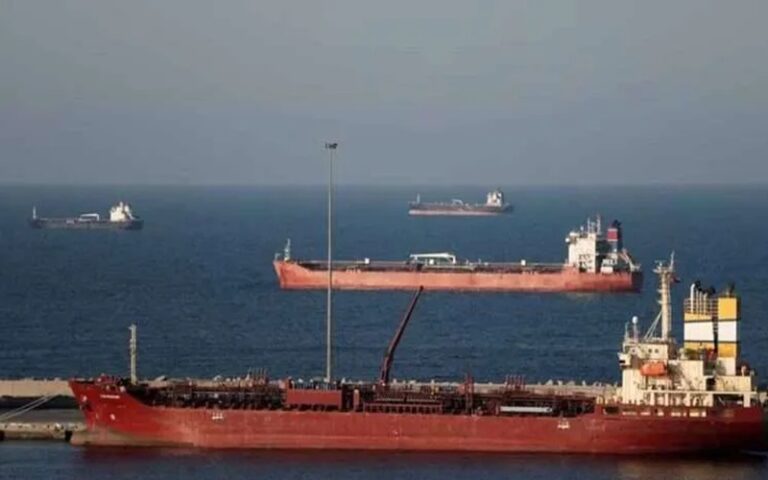
The U.S. Department of the Treasury announced on Tuesday, July 7, that it had revoked the general license covering the sale of the Iranian regime’s crude oil, petroleum products, and petrochemical products. The decision followed recent attacks on several oil tankers in the Strait of Hormuz, attacks that Washington has attributed to the Iranian regime and warned would have consequences.
Reuters and Agence France-Presse (AFP), citing a U.S. official, reported that the U.S. government had revoked the license that had allowed the Iranian regime to sell oil. The official stressed that the regime’s actions in the Strait of Hormuz were “completely unacceptable” and would face serious consequences.
US and Iranian Regime Exchange Escalating Military Strikes
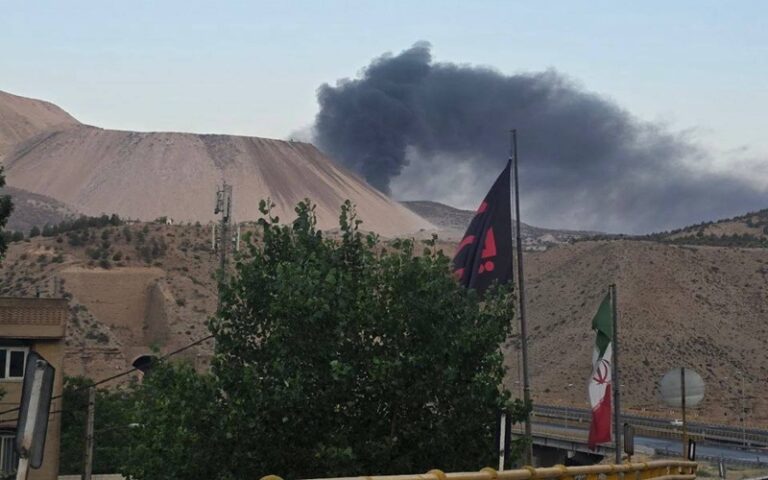
Tensions between the United States and the Iranian regime entered a new phase early Wednesday, July 8. U.S. Central Command (CENTCOM) announced the launch of a large-scale operation against Iranian regime military targets, stating that the strikes were carried out in response to attacks by the regime’s forces on three commercial vessels transiting the Strait of Hormuz. At the same time, the Islamic Revolutionary Guard Corps (IRGC) announced the start of missile and drone attacks against U.S. positions in Bahrain and Kuwait.
In a statement, CENTCOM said U.S. forces had struck more than 80 targets associated with the Iranian regime in southern Iran. According to the statement, the targets included air defense systems, command-and-control centers, coastal radar sites, anti-ship missile equipment, and more than 60 IRGC fast attack boats in or around the Strait of Hormuz.
U.S. Central Command emphasized that the operation was intended to reduce the regime’s offensive capability to attack commercial shipping and to ensure the security of one of the world’s most important maritime routes. CENTCOM also described the regime’s actions against commercial vessels as unprovoked, dangerous, and a clear violation of the ceasefire, warning that if Tehran continues its actions, U.S. forces are prepared to respond further.
The state-run Mehr News Agency reported U.S. strikes on the Sirik area, while state television said multiple explosions had occurred in the vicinity of Qeshm Island, Bandar Abbas, and villages around the counties of Qeshm and Sirik. Iranian regime officials have not yet released information on the extent of the damage or possible casualties.
Pezeshkian Rushes Back to Tehran
In response, the IRGC announced that in its first retaliation against the U.S. strikes, the IRGC Aerospace Force and Navy jointly targeted “85 key U.S. military facilities” in Bahrain and Kuwait with missiles and drones. The statement also claimed that a U.S. MQ-9 drone had been shot down over southern Iran, a claim that has not been confirmed by U.S. officials. At the same time, the state-run Fars News Agency claimed that the headquarters of the U.S. Navy’s Fifth Fleet in Bahrain had come under attack and that several explosions had occurred at the base. However, neither the United States nor the Bahraini government has responded to the claim. In Bahrain, the country’s Ministry of Interior announced that air raid sirens had sounded and urged residents to remain calm and proceed to the nearest safe location. In Kuwait, the country’s military said its air defense systems were intercepting incoming missiles and drones. The Kuwaiti military did not identify the source of the attacks but stressed that the explosions heard were caused by air defense interception operations. Khatam al-Anbiya Central Headquarters, the Iranian regime’s unified military command, also issued a statement declaring that the U.S. attacks would be met with a “crushing response.” The headquarters claimed that the only safe passage through the Strait of Hormuz is the route managed by Iran and warned that it would not allow U.S. interference in the waterway. Mohammad Bagher Ghalibaf, Speaker of the Iranian regime’s Majlis (parliament), described the U.S. attacks and the reimposition of oil sanctions on Iran as “a violation of the memorandum of understanding,” but made no reference to the attacks on commercial vessels in the Strait of Hormuz. Taken together, these developments indicate that the confrontation between Washington and Tehran has entered an unprecedented phase. With both sides carrying out direct attacks, exchanging threats, Gulf states remaining on high alert, and growing concerns over the security of the Strait of Hormuz, the risk of the conflict expanding across the region has increased significantly.Iran’s ‘No To Executions Tuesdays’ campaign Enters Its 128th Week
On Tuesday, July 7, the “No To Executions Tuesdays campaign” continued. The campaign, which was launched to end all forms of executions in Iran, is now being carried out simultaneously in 57 prisons across the country.
The imprisoned participants in the campaign issued a statement during the 128th week of their strike, condemning the reappointment of executioner Gholamhossein Mohseni Ejei as head of the judiciary and calling for global protest against executions in Iran.
The prisoners’ statement reads as follows:
Continuation of the “No To Executions Tuesdays” Campaign in Its 128th Week Across 57 Prisons
The Retention of Mohseni Ejei in Office Is a Serious Threat to Prisoners and Human Rights in Iran
On the eve of July 9, the anniversary of the killing of students during the July 9, 1999 student protests, the “No To Executions Tuesdays campaign” honors the memory of those who gave their lives for freedom and equality. It commemorates the day when the regime violently suppressed student protests and brutally attacked the University of Tehran dormitories.Arrested Iranian Protesters in Critical Conditions, Human Rights Bodies WarnAccording to published figures, Iran’s illegitimate regime has executed at least 15 people since June 22 and has issued the inhumane death sentence against a number of prisoners convicted of both ordinary and political charges. Last week, Judge Abolghasem Salavati, one of the Iranian regime’s most notorious judges who has issued numerous death sentences, handed down the medieval punishment of death to Arghavan Fallahi, a female political prisoner held in the women’s ward of Evin Prison. The sentence was issued despite the fact that the case was conducted under unfair conditions and under pressure from the regime’s security agencies.
Death Sentence Issued for Political Prisoner Arghavan FallahiDeath sentences have also been issued against several people arrested during the January 2026 uprising, including Kamal Khan-Babaei, who is imprisoned in Choobindar Prison in Qazvin, and Vahid Khan-Sanami, who is held in Greater Tehran Prison. They were sentenced to death through unfair judicial proceedings intended to intimidate society. These inhumane sentences are being issued as Gholamhossein Mohseni Ejei, the regime’s judiciary chief, was recently reappointed by Iran’s autocratic ruler Mojtaba Khamenei. Ejei has a long record of human rights violations and, over the past four years, has overseen the highest number of death sentences carried out in the past three decades. While condemning these unjust death sentences, the “No To Executions Tuesdays campaign” calls on all international bodies and people of conscience to respond to the humanitarian catastrophe unfolding in Iran’s prisons. Death sentences are effectively decided behind closed doors through psychological and physical torture during interrogations. Therefore, everyone must take serious action, by every possible means, to pressure the regime to uphold the principles of fair trial, particularly by ensuring public court hearings in cases where the charges may result in capital punishment. Finally, we would like to note that many people have created content in support of the campaign or have asked for their anti-execution content to be published through the “No To Executions Tuesdays campaign”. This is a nationwide campaign that belongs to all striking prisoners, regardless of political affiliation, and therefore represents a broad demand that transcends groups, parties, and political movements. In addition, numerous submissions are sent to the campaign’s social media pages. If we have not republished these submissions, it is primarily to ensure that the campaign remains above political factions and belongs equally to all its members, supporters, and opponents of the death penalty. Secondly, the primary purpose of the campaign’s online platforms is to publish the weekly statements and maintain an archive of them. We thank all supporters of the campaign and everyone opposing the death penalty for producing content and organizing progressive initiatives in defense of the right to life, and we warmly extend our solidarity to all of you. Without a doubt, through resistance and collective solidarity against executions, we will prevail! On Tuesday, July 7, imprisoned participants in the “No To Executions Tuesdays campaign” are on hunger strike for the 128th consecutive week in 57 prisons across Iran.
Oil Tanker Attacked Near the Strait of Hormuz
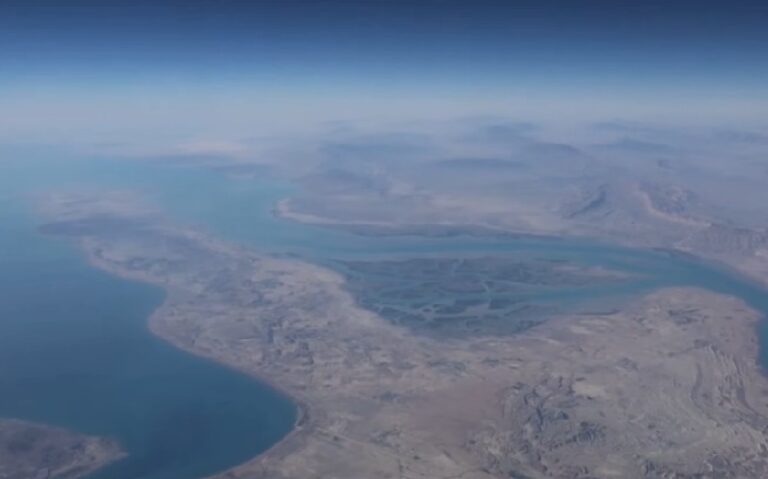
The United Kingdom Maritime Trade Operations (UKMTO), a British maritime security monitoring organization, reported that an oil tanker sailing south approximately 8 nautical miles east of Limah, Oman, was struck on its port side by an unidentified projectile, causing a fire to break out on board.
According to the report, no casualties or environmental pollution have been reported, and authorities are investigating the incident. Passing vessels have also been advised to navigate with caution and report any suspicious activity to UKMTO.
Tanker Trackers: Vessel Grounded in the Strait of Hormuz Belongs to Iran’s Oil Smuggling NetworkThe attack occurred along one of the world’s most strategically important energy shipping routes, where any maritime tension can quickly take on major security and economic implications. Media reports, citing U.S. officials, say the Islamic Revolutionary Guard Corps (IRGC) of the Iranian regime fired on commercial vessels in the Strait of Hormuz on Monday night, damaging at least two ships. Officials have not yet officially attributed direct responsibility for the attack. In previous similar incidents, attacks on ships in the waters around Oman and the Strait of Hormuz have not remained isolated maritime incidents and have rapidly escalated into military crises. It appears that the Iranian regime has once again taken global trade routes and energy security hostage.
Arrested Iranian Protesters in Critical Conditions, Human Rights Bodies Warn
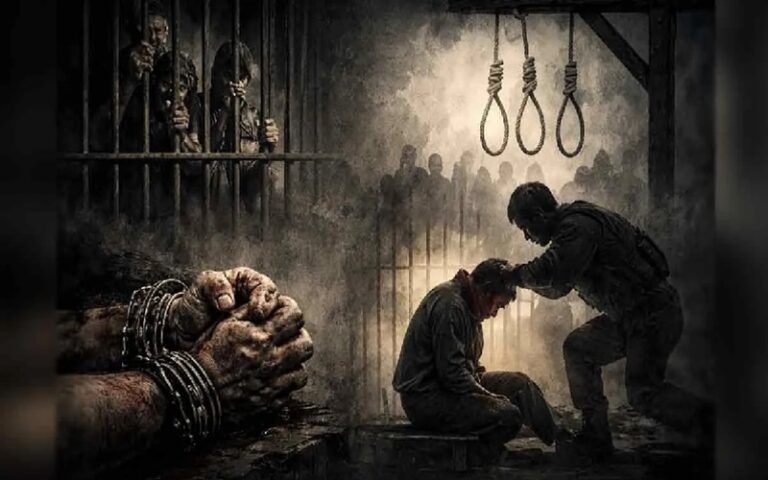
Iran Human Rights (IHR), a Norway-based human rights organization, on Monday, July 6, expressed concern over the growing wave of executions of political prisoners in recent months and stressed that halting executions must be one of the main conditions of any agreement with the Iranian regime.
In a report, the human rights organization warned of an escalation in executions in Iran in the coming months and said officials of the Iranian regime have accelerated the execution of prisoners, particularly political activists, following the ceasefire with the United States and Israel. According to the report, at least 101 Iranians were executed in June alone.
Iran’s ‘No to Executions Tuesdays’ Campaign Marks 125th WeekAt the same time, HRANA News Agency, an Iranian human rights news outlet, reported that Kamal Khan-Babaei, who was arrested during the January 2026 protests and is being held in Choobindar Prison in Qazvin, has been sentenced to death by Branch One of the Qazvin Revolutionary Court on the charge of “moharebeh” (“waging war against God”). According to HRANA, one of the allegations cited against Mr. Khan-Babaei was “breaking two surveillance cameras.” Kamal Khan-Babaei was arrested on January 15 and spent 10 days in a detention center operated by Iran’s Ministry of Intelligence, where he was interrogated and beaten in an effort to extract a forced confession. The Human Rights Center in Iran also reported that Mohammad Moayedi-Shakib, a political prisoner held in Tehran’s Evin Prison who suffers from multiple medical conditions, including heart disease, a prostate disorder, and cervical and lumbar disc problems, began a hunger strike on Sunday, July 5, to protest the continued denial of transfer to medical facilities outside the prison. According to the human rights organization, after beginning his hunger strike, the political prisoner was threatened by the prison warden that he would be transferred to Razi Psychiatric Hospital if he continued his protest. Human rights sources also expressed concern over the life-threatening condition and deteriorating health of Rezvaneh Sadeghi, who was arrested during the January protests. According to these sources, shotgun pellets that remain lodged in the political prisoner’s head have shifted over time, with one pellet moving beneath her eye and close to the optic nerve. The movement of the pellet has caused blood clotting, severe swelling extending from the corner of her eye to above her eyebrow, persistent pain, and significant vision loss. It is reported that despite warnings from a prison guard, medical staff at Evin Prison have deemed her condition normal and are preventing Ms. Sadeghi from being transferred to a hospital. Meanwhile, in a separate report, the Human Rights Center in Iran said that Rashed Emami, an artist from Paveh and one of those arrested during the 2022 protests, was violently arrested on Monday, July 6, along with his wife, Sheler Modirzadeh, by regime forces and taken to an undisclosed location. No reliable information is currently available regarding the reasons for their arrest, the charges against them, their place of detention, or their whereabouts.
British Couple Imprisoned in Evin Prison Remain on Hunger Strike
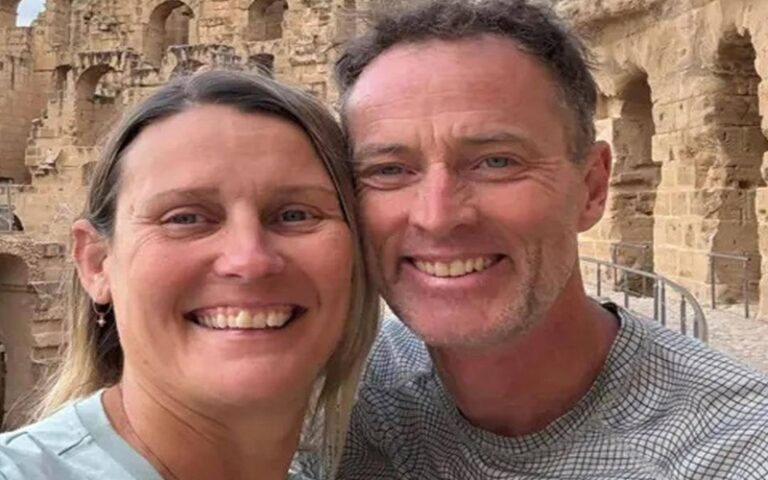
Lindsay Foreman and Craig Foreman, two British citizens imprisoned in Tehran’s Evin Prison, are continuing their hunger strike in protest against their detention conditions and being denied contact with their family.
According to HRANA, the Human Rights Activists News Agency, Lindsay has been on hunger strike for 49 days and Craig for 58 days. The physical condition of both has reportedly deteriorated. Lindsay has lost more than 14 kilograms, while Craig has lost about 16 kilograms.
British Couple Imprisoned in Iran Sentenced to 10 Years in Prison on Espionage ChargesLindsay Foreman is suffering from severe weakness, dizziness, body tremors, low blood sugar, and fluctuating blood pressure. To reach the prison clinic, she must walk a long route that includes a corridor and about 30 steps. She has not received a medical checkup for about 10 days. The two prisoners have been denied access to essential medication, eyeglasses, books, and hygiene supplies sent by the British Embassy, despite the prison clinic and ward officials having confirmed receipt of these items. Craig and Lindsay have only been allowed to communicate with their lawyer. They are still not permitted to contact their family members, their children, or even each other. According to the source, pressure on the couple increased after they gave an interview to BBC World, during which Lindsay Foreman referred to executions in Iran. During his imprisonment, Craig Foreman has also shared a cell with prisoners sentenced to death and has witnessed some of them being taken away for execution. Craig and Lindsay Foreman were arrested in January 2025 in Kerman by the intelligence organization of the Islamic Revolutionary Guard Corps (IRGC) while traveling around the world by motorcycle. Branch 15 of the Tehran Revolutionary Court, presided over by Judge Abolghassem Salavati, sentenced them to 10 years in prison on charges of “espionage.” The sentence was upheld by the appeals court in June 2025. The British couple have said that no evidence was presented against them during the court proceedings and that they were not given the opportunity to mount an effective defense.
Khamenei’s Burial Becomes Stage for Power Struggles Among Regime Factions
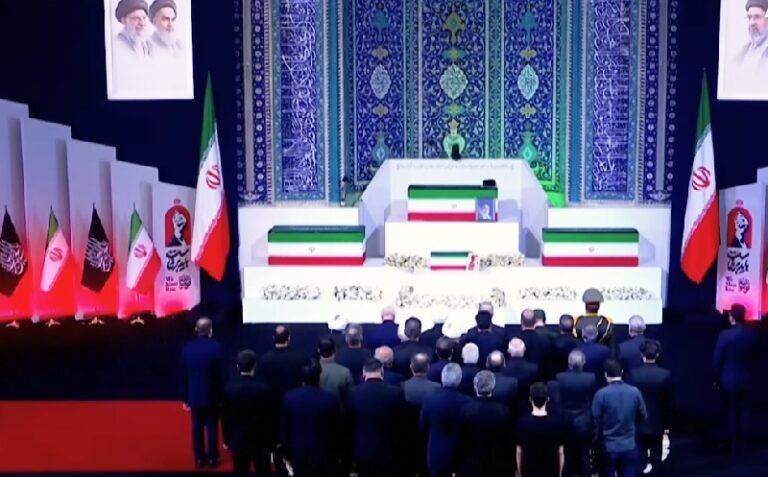
On the second day of the funeral ceremonies for former regime supreme leader Ali Khamenei, the event became a venue exposing divisions and internal rivalries among power factions within the Iranian regime. Contradictory slogans, warning placards, and open displays of support for certain regime figures reflected the intensifying power struggle at the highest levels of the regime following Khamenei’s death.
During the July 4 ceremony, participants repeatedly chanted slogans including “Revenge, revenge,” “Death to the infiltrator,” “Death to the compromiser,” and “This is the final message, negotiations are forbidden,” expressing their opposition to the regime’s current negotiations with the U.S. over Tehran’s nuclear program.
Alongside these chants, some attendees repeatedly shouted “Labbaik, Seyyed Mojtaba,” a slogan indicating efforts by certain regime factions to express support for Khamenei’s son, who was appointed as the new supreme leader.
A leaflet circulating among the crowd read: “In principle, I held a different opinion; return to the Leader’s position.” The appearance of such a message, at a time when competition over the regime’s new power structure has intensified, is viewed as a sign of internal disagreements and attempts by one faction of the ruling establishment to impose its preferred policies.
This was a statement made by the new leader of the Iranian regime regarding opposition to the current negotiations with the United States. Despite his warning, other factions within the regime proceeded with those negotiations.
In various parts of the ceremony, regime eulogists and speakers emphasized “revenge” and opposition to any negotiations, urging attendees to chant slogans against the United States and Israel. Among the repeated slogans were “Our only slogan is revenge, revenge” and “We will kill, we will kill those whom our Imam killed.” These chants above all reflected the radical atmosphere and factional rivalries within the ruling establishment.
Mojtaba Khamenei’s Notable Absence from the Funeral Prayer Ceremony
The funeral prayer for Ali Khamenei was held on Sunday morning and led by Grand Ayatollah Jafar Sobhani, a senior Shiite cleric. The ceremony took place more than four months after Khamenei’s death. However, the most notable aspect of the event was the absence of Mojtaba Khamenei. Mojtaba Khamenei was not only absent from his father’s funeral prayer, but no audio or video recording of him has been released during the more than four months since Khamenei’s death that would indicate an active public role at the top of the regime. Although the authorities may seek to justify his absence on security grounds, the attendance of nearly all senior regime officials—including the heads of the three branches of government, commanders of the Islamic Revolutionary Guard Corps (IRGC), and commanders of the IRGC Quds Force—raises serious questions about that explanation. By contrast, Ali Khamenei’s three other sons—Mostafa, Massoud, and Meysam Khamenei—who had not appeared in public since the outbreak of the war on February 28 of last year, attended the ceremony and stood beside their father’s coffin. The combination of events, slogans, and notable absences during Ali Khamenei’s burial ceremonies appears less indicative of unity and a smooth transfer of power than of intensifying infighting and competition among the Iranian regime’s rival factions in the post-Khamenei era.New Uncertainty Surrounding Iran’s Underground Nuclear Facilities
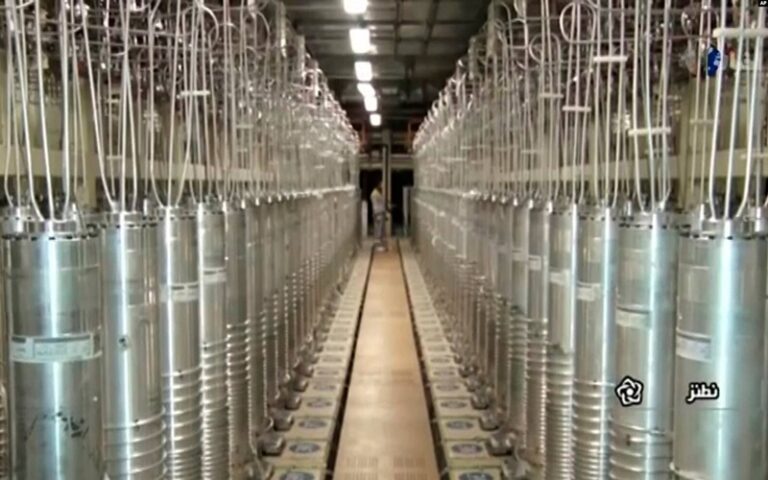
According to the latest assessment by the U.S.-based Institute for Science and International Security (ISIS), headed by nuclear expert David Albright, satellite imagery of the Iranian regime’s nuclear facilities indicates that uranium enrichment activities have not resumed at the three main sites of Natanz, Fordow, and Isfahan. At the same time, however, signs of ongoing construction work and vehicle traffic have been observed at the underground Kolang Gaz La mountain facility near Natanz, a site whose exact purpose remains unclear.
Iranian Regime Parliament Speaker: No Access Will Be Granted to Bombed SitesThe facility, Pickaxe Mountain (or Kuh-e Kolang Gaz La), is located south of the Natanz complex. According to the Albright Institute’s report, it remains accessible, open, and under construction. However, the institute emphasized that there is currently no indication that it is ready for operational use. At Natanz, satellite imagery shows that large sections of the complex remain devastated, with no significant repair work observed at the main entrances or in areas associated with uranium enrichment. The electrical infrastructure and industrial systems also remain damaged, and according to the institute, there is no indication that enrichment operations are being restored at the site. At Fordow, the entrances to the main tunnels are also reported to remain blocked. However, the Iranian regime has constructed earthen and rock barriers along the access roads leading to the tunnels. According to the Albright Institute’s analysis, these barriers are intended to prevent the rapid movement of vehicles and slow any potential operation against the facility. At Isfahan, the tunnel entrances also remain covered with earth, and satellite imagery shows no signs that the access routes have been reopened or that equipment has been removed from inside the tunnels. The main uncertainty now lies not at Natanz, Fordow, or Isfahan, but at Kolang Gaz La—a concealed, deeply buried facility lacking official transparency, where it remains unclear what the Iranian regime has hidden or what stage of its nuclear activities it is preparing for.
Iranian Regime Moves to Resume Oil Sales to Japan
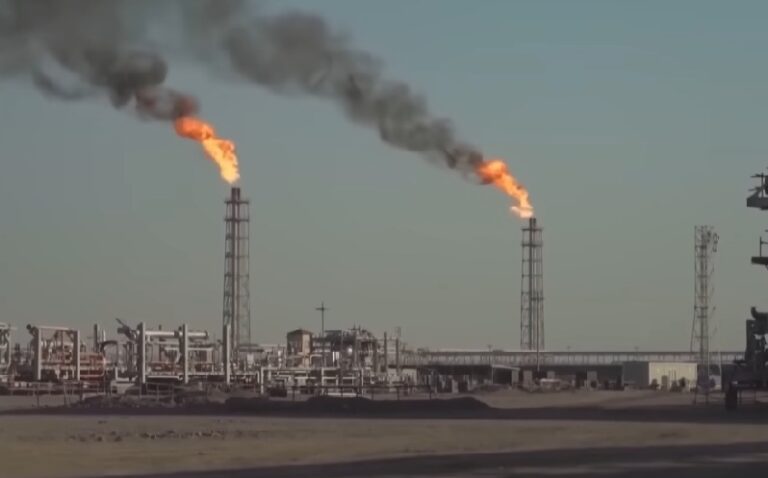
Reuters reported on Friday, July 3, citing three Iranian and Western sources, that Iran has begun negotiations to sell oil to Japanese companies.
The sources said that potential Japanese buyers of Iranian oil are seeking a longer exemption from U.S. sanctions and guarantees for safe shipping conditions in the Persian Gulf.
Under its recent memorandum of understanding with the Iranian regime, the United States authorized Iranian oil sales for a period of 60 days. Before this agreement, Iran’s oil exports were subject to U.S. sanctions. Those sanctions prompted many Asian buyers of Iranian oil, including South Korea, India, and Japan, to halt their imports. In recent years, China had been the only major buyer of Iranian oil.
Escalating Iran-US Conflict Cuts Strait of Hormuz Traffic, Lifts Oil PricesThe current U.S. Treasury Department exemption allowing the sale of Iranian crude oil, petrochemicals, and petroleum products remains valid until August 22, and it is still unclear whether it will be extended or allowed to expire. Reuters said that Japan’s Ministry of Foreign Affairs and the U.S. Treasury Department did not respond to its requests for comment on the report.
Oil exports from the Persian Gulf increased last month
At the same time as the Reuters report, data from several global shipping intelligence firms showed that oil exports from the Persian Gulf increased by more than 3 million barrels per day in June compared with the previous month, reaching more than 10 million barrels per day. However, that figure remains 40% below the average monthly level before the recent war in the Middle East. Before the recent war involving the United States, Israel, and the Iranian regime, about 16.5 million barrels per day of oil and condensates were exported from the Persian Gulf. Data from Kpler show that combined exports of crude oil and condensates from Saudi Arabia, the United Arab Emirates, Kuwait, Iraq, and Iran increased by more than 3.5 million barrels per day in June, reaching 10.07 million barrels per day. Vortexa, another maritime intelligence company, estimated exports of oil and petroleum products from the Persian Gulf at 10.2 million barrels per day in June. Reuters said that the United Arab Emirates led the increase in Persian Gulf oil exports by allowing millions of barrels of stranded crude oil in the Persian Gulf to reach international markets, helping reduce oil prices to pre-war levels. Data from Kpler and Vortexa show that the United Arab Emirates’ exports in June were more than 1 million barrels per day higher than in May. According to Kpler, Saudi Arabia’s crude oil exports increased by 768,000 barrels per day in June, reaching more than 4.5 million barrels per day. During the war, Saudi Arabia and the United Arab Emirates routed part of their exports through pipelines that bypass the Strait of Hormuz. Vortexa’s data showed that exports from Iraq and Kuwait increased to about 800,000 barrels per day. Vortexa estimated Iran’s oil exports in June at 640,000 barrels per day, representing an increase of more than 70% in the country’s oil exports. The increase in Middle Eastern oil exports followed the recent memorandum of understanding between Iran and the United States. Under the agreement, Iran has committed to guaranteeing the safe passage of commercial vessels through the Strait of Hormuz for 60 days. In return, the United States lifted its blockade of Iranian ports. Before the 40-day war, the Strait of Hormuz carried about 20% of the world’s crude oil and liquefied gas consumption. Following its closure by Iran, energy prices surged and a number of countries experienced supply shortages.Air And Ground Alert in Tehran as Khamenei’s Funeral Begins
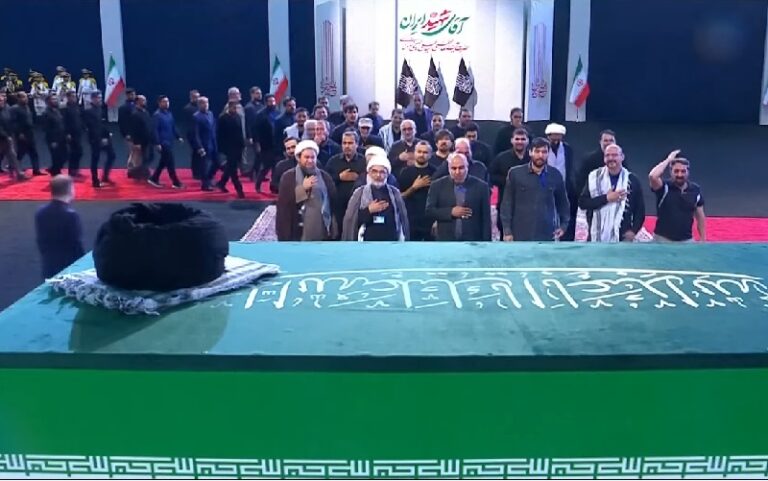
The second day of the funeral ceremonies for Ali Khamenei, the slain supreme leader of the Iranian regime, began at dawn on Saturday, July 4, at the Tehran Mosalla, a large prayer complex in the Iranian capital.
According to the schedule announced by the organizers, the public farewell ceremony began at 6:00 a.m. on Saturday, July 4, and will continue until 8:00 p.m. on Sunday. After the farewell ceremony in Tehran concludes, Ali Khamenei’s body will be transferred to the city of Qom for funeral prayers and another procession, followed by a ceremony in Iraq, before he is ultimately buried in Mashhad.
During Saturday’s ceremony, some participants chanted “O avengers of the martyred leader” and other slogans calling for vengeance. Elegies also included themes of revenge against the enemies of the Iranian regime. A red flag bearing the phrase “Kill Trump” was also seen among the crowd. Iran’s regime’s Ministry of Intelligence also issued a statement on Saturday marking the state funeral and burial ceremonies for Ali Khamenei, declaring that it would take “revenge” against the United States and Israel for the killing of the former leader of the Iranian regime. The statement said, “The wounded hearts of the people” will only find peace through “revenge against the perpetrators of this crime.” It also accused the United States and Israel of committing “the greatest crime and terrorist conspiracy in contemporary history.” The multi-day ceremony is being held after a four-month delay, as Iranian officials have warned of possible attacks ahead of what they describe as a gathering of millions of mourners. Meanwhile, Israeli threats against Mojtaba Khamenei, the current leader of Iran’s regime, along with concerns over crowd congestion, have significantly heightened security measures. Iran’s military has declared that any “miscalculation” would be met with a decisive and unprecedented response. These warnings came after Israeli Defense Minister Israel Katz again threatened that Mojtaba Khamenei, the current leader of Iran’s regime, remains on Israel’s assassination target list, according to the Israeli news outlet Ynet. At the same time, senior Iranian regime officials who have appeared in public ceremonies in recent days face an increased risk of assassination. Whether Mojtaba Khamenei will attend these ceremonies remains uncertain. He has not appeared in public since his father and several members of Ali Khamenei’s family were killed on February 28, 2026, coinciding with the start of the war between Iran’s regime on one side and Israel and the United States on the other.#Iran’s supreme leader Ali Khamenei had repeatedly warned of an uprising in 2019 and predicted that this uprising, which he interpreted as a "sedition"….https://t.co/WvKtjKahwH#IranProtests #IranRegimeChange #iranfreedom pic.twitter.com/g1z4BLic3c
— Iran Focus (@Iran_Focus) December 9, 2019
The Succession Crisis of Ali Khamenei and the Prospect of OverthrowThe threats facing Tehran are not limited to the United States and Israel. Inside the country, the regime also faces opposition groups that have clashed with regime forces in recent years. Nevertheless, the appearance of several senior officials, including Ahmad Vahidi, an IRGC commander, at Friday’s July 3 ceremony may indicate a degree of confidence in the security arrangements, although potential threats are still considered serious. U.S. President Donald Trump said on Saturday that he had given Tehran one week to hold the funeral ceremonies for the former leader of the Iranian regime. His remarks could be interpreted as indicating that Washington has asked Israel to refrain from taking hasty action during this period. The Associated Press reported that the start of Khamenei’s funeral ceremonies was accompanied by street closures and restrictions in Tehran’s airspace, disrupting daily life in parts of the capital. Concerns over crowd control are also part of Tehran’s security calculations. During the funeral procession for Qassem Soleimani in Kerman in January 2020, a crowd crush resulted in hundreds of deaths and injuries. Meanwhile, Tehran has entered an unprecedented situation that, according to dozens of residents, resembles a large-scale propaganda and security operation aimed at demonstrating public support for the regime more than it does a religious or state ceremony. While Iranian regime officials speak of massive public participation in the funeral ceremonies, accounts from residents of Tehran and other provinces present a different picture from that portrayed by state-run media. These accounts describe widespread government office closures, disruptions to daily life, the organized transfer of regime personnel from across Iran to Tehran, and the coercion of large numbers of government employees and even some private-sector workers to attend the ceremonies. Under the current circumstances, the Iranian regime is in urgent need of a large turnout by its supporters at these ceremonies so that it can present the event as a demonstration of its strength.
