

UN Special Rapporteur Expresses Concern About Human Rights Conditions in Iran
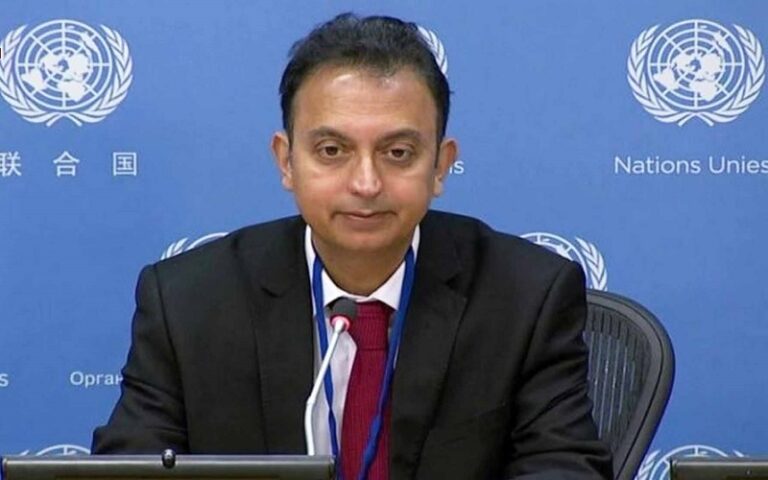
UN Special Rapporteur on Human Rights in Iran Javaid Rehman has expressed concern about “broader human rights issues” and the “worsening situation” of individuals attempting to exercise their civil rights in Iran.
In his report to the United Nations General Assembly on October 25, Rehman highlighted the high number of arrests, executions, and arbitrary killings carried out by the Iranian regime, targeting lawyers, human rights defenders, and anyone using their right to freedom of expression.
He expressed concern about the situation of women’s rights in Iran, stating that individuals protesting against mandatory hijab have been arrested and sentenced to long imprisonments, regardless of their gender.
Rehman also stated that Iranian women and girls face gender apartheid and systematic discrimination, while ethnic minorities face discrimination, persecution, and harassment, as they are excluded from all platforms of dialogue or democratic reforms.
Referring to the problems with the Iranian regime’s Constitution, the UN Special Rapporteur stated that these laws are subject to politically engineered standards or the application of state ideology.
He further stated that this situation has led to “widespread mistrust and extensive public protests” in Iran, and the regime responds to peaceful protests in Iran with injuries, killings, arrests, torture, and executions.
Javaid Rehman also mentioned the increase in executions in Iran, with 419 citizens executed this year, stating that as long as fundamental freedoms are not guaranteed by law, the pattern of human rights violations will not change.
Since the summer of 2018, Javaid Rehman has been appointed as the UN Special Rapporteur on Human Rights in Iran and has repeatedly highlighted widespread human rights violations by the regime in his reports. The Iranian regime has consistently described his reports as politically biased and denied all the issues he raised.
The killing of Mahsa Amini by the Morality Police in 2022 sparked a wave of nationwide protests in Iran that called for the overthrow of the regime. This nationwide uprising, centered around women in Iran, also received widespread and unprecedented support from the international community. The Iranian regime responded to this movement with violent suppression of any gathering and demonstrations, and according to reports, over 750 protesters were killed and 30,000 were arrested.
Armita Garavand Passes Away After a Month of Being in a Coma

Iran’s state-run media announced on Saturday that Armita Garavand, a teenage girl who was transferred to the hospital in a comatose state after losing consciousness in the Tehran metro, has passed away.
The official news agency IRNA wrote on October 28 that this 16-year-old schoolgirl “passed away after the failure of extensive medical treatments and 28 days of being in the intensive care unit.”
The news agency further stated, “The brain injury suffered by the victim caused her to spend some time in a coma and she passed away a few minutes ago.”
Other news agencies close to the government, including Tasnim, Fars, and Donya-e-Eqtesad, have also published the same report as their own news.
Armita Garavand, 16 years old, became unconscious on October 1st in Tehran’s Shohada metro station after entering a subway car, and later it was reported that she had fallen into a state of coma.
A video released by the Tehran Subway company shows that shortly after Armita Garavand entered the subway car, she was transferred outside by several individuals while she was unconscious. However, news circulating on social media suggests that security agents pushed her because she was not wearing a hijab, resulting in her head hitting a metal bar and becoming unconscious. After the incident, she was transferred to Tehran’s Fajr Hospital under severe security measures, and no one was allowed to approach her.
The regime’s officials attributed her loss of consciousness after entering the subway car to “a drop in blood pressure,” but human rights sources had raised the possibility of a similar incident to the encounter between the Morality Police and Mahsa Amini.
Immediately after the incident was reported, a journalist who had gone to investigate the matter was detained for several hours, and afterward, state security forces isolated Armita Garavand’s family and blocked all avenues for journalists and reporters inside the country.
Such actions by the government, have raised concerns that the authorities, due to the similarity of Armita’s situation to that of Mahsa Amini, are worried about the emergence of another protest in the country, especially since this new event occurred less than a month after the anniversary of protests that erupted after Amini’s death.
It is said that several non-governmental media outlets in Iran have been “prohibited” from following up on Armita Garavand’s situation and publishing reports about her.
Prior to this, news agencies had announced that this teenage girl had not undergone any surgical procedures since the first day due to her critical condition.
Last week, some Iranian media outlets, without citing the source of the news, claimed with certainty the “brain death” of Armita Garavand.
Last Monday, following the publication of this news, two sources close to Armita Garavand’s family, denied reports of her “brain death” quoting medical sources at Fajr Hospital in Tehran which means that they are banned from discussing Armita’s situation.
The IRNA news agency wrote on Saturday that “according to the official theory of the doctors, Armita Garavand has suffered a sudden drop in blood pressure, resulting in a fall, a blow to the head, followed by continuous seizures, reduced cerebral oxygenation, and cerebral edema.”
Earlier, Amnesty International issued a statement that the regime’s authorities should allow an independent international delegation, including UN experts, to investigate the circumstances that led to the hospitalization of Armita Garavand. Tehran has left this request unanswered.
Regime Change in Iran: A Prerequisite for Peace and Stability in the Middle East
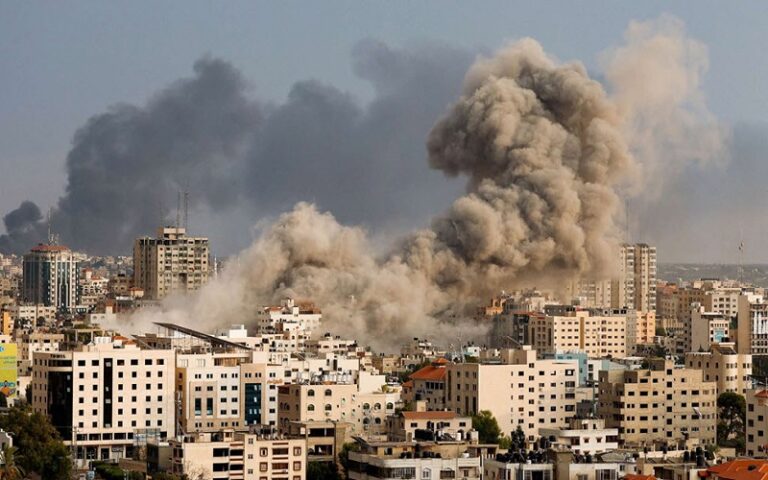
In recent days, the world has witnessed events that unfolded in Gaza, leaving everyone shocked at the sight of the massacre of innocent people. There is no doubt that the Iranian regime supports terrorist groups in the region, but when it comes to addressing the destructive role of the Iranian regime, all parties hesitate and express doubt. The reason for this hesitation is not the lack of awareness of the Iranian regime’s detrimental activities in the region, but rather the prevailing policy of indecisiveness and appeasement towards it.
There is no doubt the the Iranian regime actively fans the fires of war in the region, including the most recent episode that we’re seeing today. Khamenei and his Revolutionary Guards take advantage of the devastating war in the Middle East to escape the regime’s overdue overthrow.
Last year, during these very days, a major uprising took place in more than 280 cities across Iran. The regime’s security forces killed at least 750 people, injured many, and arrested 30,000 individuals.
According to regime officials, during this uprising, 5,000 members of the Revolutionary Guards were wounded, and around 200 of them were killed. Thus, the regime realized that it was on the verge of collapse.
In the face of the regime’s brutal repression, the people of Iran continued their protests, posing a serious threat to the religious tyranny ruling over Iran. In these circumstances, the Iranian regime must take action to escape overthrow and future uprisings. Terrorism sponsorship and destabilizing the Middle East and beyond have been key elements in the Iranian regime’s playbook to ensure its survival and control over the country. Senior regime officials have admitted that if the regime does not fight in Iraq, Syria, Yemen, Palestine, and Lebanon, it would have to fight for its survival in Tehran.
The Iranian regime’s Foreign Minister, in his latest remarks on national television on October 16, stated, “If today we do not defend Gaza, tomorrow we will have to defend against these bombs in our own cities.”
This is the policy that the Iranian regime has pursued for years. The regime’s atomic bomb project, which was revealed by the National Council of Resistance of Iran (NCRI), awakened the world to the existence of such a project. The regime’s ballistic missiles now have the range to reach European capitals. IED bombs in Iraq and the regime’s interference in that country have resulted in the loss of thousands of lives. The regime’s interventions in Yemen and Syria, the massacre of people, the hostage-taking of foreign nationals in Iranian prisons, and its interference in Lebanon through Hezbollah are just a fraction of this regime’s policies.
And we have not forgotten that Iranian-made drones kill innocent Ukrainian people every day.
However, the international community has largely remained indifferent to this regime. It cannot be said that international sanctions have been ineffective in restraining this regime, but it can certainly be said that these sanctions have only slowed down the regime’s pace in sponsoring terrorism and have failed to target the heart of the issue.
Just recently, the United States released $6 billion of seized Iranian regime assets in exchange for the release of five of its hostages. If you think that this money will be spent on the Iranian people, you are greatly mistaken. Therefore, the prevailing policy of the West towards the Iranian regime has been appeasement and rapprochement.
This misguided policy allows the Iranian regime to continue its interventions in the region and further suppress its own people. When it comes to dealing with the mullahs, appeasement only sends a signal of weakness and emboldens the regime to further expand its provocative actions.
As Winston Churchill once said: “An appeaser is one who feeds a crocodile, hoping it will eat him last.”
If you look for the greatest enemy of the Iranian regime, you will find it among the people and their resistance movement. This is what the regime fears more than a military attack. In 1988, the regime executed 30,000 members and supporters of the People’s Mojahedin Organization of Iran (PMOI/MEK), its principal opposition. But the MEK survived and continued to thrive in the following decades. In the past year alone, the supporters of the MEK inside Iran carried out more than 3,000 anti-regime activities across the country and proved once more that the Iranian Resistance is the true alternative to the mullahs’ regime.
Regime change in Iran is the prerequisite for peace, security, and stability for the hundreds of millions of people living in the Middle East. Unfortunately, as long as the West’s policy of appeasement towards the Iranian government persists, peace and stability in the region will not be achievable.
Fortunately, regime change does not require a foreign conflict or an outside invasion. There is already great potential for it inside Iran. Over the past year, the people of Iran have taken to the streets once again, rejecting all forms of dictatorship, whether monarchy or religious rule. The people of Iran demand a regime change and the establishment of a democratic republic based on the separation of religion and state.
Unfortunately, pursuing the wrong policies towards the Iranian regime comes at the cost of losing thousands of lives in the region and Iran itself. Western governments are well aware of the destructive role of the Islamic Revolutionary Guard Corps (IRGC) and its proxies in the region, their involvement in terrorism and warmongering abroad, as well as their suppression at home.
The National Council of Resistance of Iran (NCRI) has long stated that the religious and terrorist dictatorship ruling Iran is the epicenter of tension and the exporter of terrorism and fundamentalism in this region of the world. Today, everyone can see this reality.
Any anti-terrorism policy pursued by Western governments that does not target the source of terrorism in Tehran will ultimately have no effect and will only buy time for the mullahs ruling Iran.
However, the solution does not lie in foreign military intervention. The mistakes made by the United States in its invasions of Afghanistan and Iraq make this option highly risky and ineffective, and it may even advance the sinister goals of the Iranian regime in the region.
Mr. Masoud Rajavi, the leader of the Iranian Resistance, said thirty years ago that the head of the snake in Tehran should be the target, and this can only be achieved with support for the opposition.
On October 24, in her message to a conference in the British Parliament, Mrs. Maryam Rajavi said:
“Unfortunately, the western governments have ignored three decades of warning and revelations of the Iranian Resistance about the regime’s warmongering, particularly the role of the IRGC and the terrorist Quds Force and its proxies.
“Since two decades ago, we have insisted that the IRGC must be designated as a terrorist entity. Any delay in this regard will enable the IRGC to increase its influence, pursue its nuclear projects using European facilities, export terrorism and warmongering, and have access to equipment used for suppression in Iran. Therefore,
“First, it is time for the UK parliament to ask its government to designate the IRGC as a terrorist group as soon as possible.
“Second, it should recognize the Iranian people’s struggle to overthrow the regime and the legitimate fight of Iranian youths against the IRGC.
“In recent days, the regime has been warned to stay away from the conflict. These warnings are ineffective. The regime must be held accountable for stoking the war.
“To put out the fire, the world must stand against the party that fuels the fire. Otherwise, the regime will restart the war in another place and in another way. Any form of killing of innocent civilians provides fuel to religious fascism in Iran. It gives them a shield and cover to contain the uprising and avoid being toppled.”
The solution is solely in the hands of the people and their resistance.
Iranian Authorities Destroy Graves of Political Prisoners Executed in the 1980s
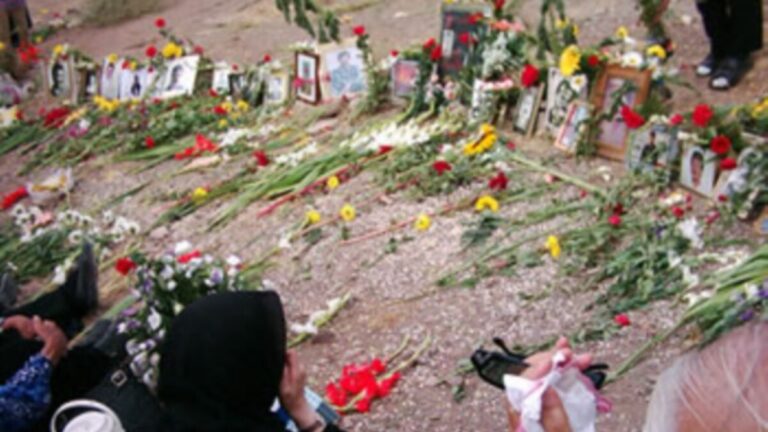
Security forces have reportedly demolished a section of the Behesht-e Reza Cemetery in the city of Mashhad, Iran, which was the burial site of political prisoners executed in the 1980s. According to social media reports, the recent demolitions in Mashhad began in early September and have continued since then.
While the policy of destroying the burial sites of executed political prisoners in the Behesht Reza Cemetery and Salam Hill in Mashhad has been in place since 2016, recent days have witnessed an intensification of these actions.
Similar inhuman actions have also been carried out in the cities of Ahvaz, Tabriz, and Babol. In Ahvaz, it is reported that mass graves containing the remains of 44 political prisoners, buried in a piece of remote land, three kilometers east of Behesht Abad Cemetery, were destroyed, and construction work was carried out there to eradicate the evidence of crimes.
According to the report, during excavation work in the outskirts of Phase 2 of Padadshahr and Bonakdar Boulevard, several bodies were discovered in a mass grave covered with cement. The security forces eventually covered the grave with dirt and continued the street widening project to conceal these graves.
In the past, more than 75 graves of the executed prisoners from 1980s, particularly from the year 1988, in the Vadi Rahmat Cemetery of Tabriz, were destroyed.
In the city of Babol, numerous graves of executed political prisoners from the 1980s, especially in 1988, which were buried in the Baha’i Cemetery and Jewish Cemetery, were also destroyed by agents of the Ministry of Intelligence and the Islamic Revolutionary Guard Corps (IRGC).
A large housing project of multistory buildings was constructed on some of these execution graves, and all of the residential units were allocated to the agents of the IRGC and the police.
May 6, 2021, Amnesty International said in its account: “In recent years, Iranian authorities have repeatedly engaged in the destruction of mass graves of the victims of the 1967 massacre. These actions are criminal in nature and are carried out with the aim of eradicating evidence and traces of crimes against humanity. They also deprive the families of the victims and the society of accessing truth and justice. #Khavaran_Historical_Memory” Over the past decades, the Iranian regime has repeatedly attempted to erase the evidence of its crimes in the Khavaran Cemetery and other cemeteries across the country using various methods. Last year, the regime tried to restrict access to the families of the victims of the 1988 massacre, especially the families of the victims of the summer 1988 massacre, by digging up the Khavaran Cemetery, installing security cameras, and building concrete walls. The alteration of the Khavaran Cemetery’s structure through the creation of new graves is a common method employed by the government to destroy evidence of their own crimes. This tactic is used as a means of eradicating the traces of past atrocities. Thousands of political prisoners, especially during the 1980s, particularly during the summer of 1988, were executed due to their affiliation with groups and organizations such as the People’s Mojahedin Organization of Iran (PMOI/MEK) or their support for these groups. The executions of the summer of 1988 were carried out by a committee with the fatwa and approval of Ruhollah Khomeini, the founder of the Islamic Republic, who appointed its members. Ebrahim Raisi, the current President of the Iranian regime, was also a member of the committee responsible for the summer 1988 massacre.1) مقامات ایران طی سالیان گذشته بارها اقدام به نابودی گورهای جمعی قربانیان #کشتار67 کردهاند. این اقدامات مجرمانه هستند و با هدف حذف شواهد و آثار جنایات علیه بشریت و محروم کردن خانوادههای قربانیان و جامعه از دستیابی به حقیقت و عدالت صورت میگیرند. #خاوران_حافظه_تاریخی pic.twitter.com/Xht16WlWxB
— Amnesty Iran (@AmnestyIran) May 6, 2021
Iran: Oil Sale Goals Not Achieved, Official Says
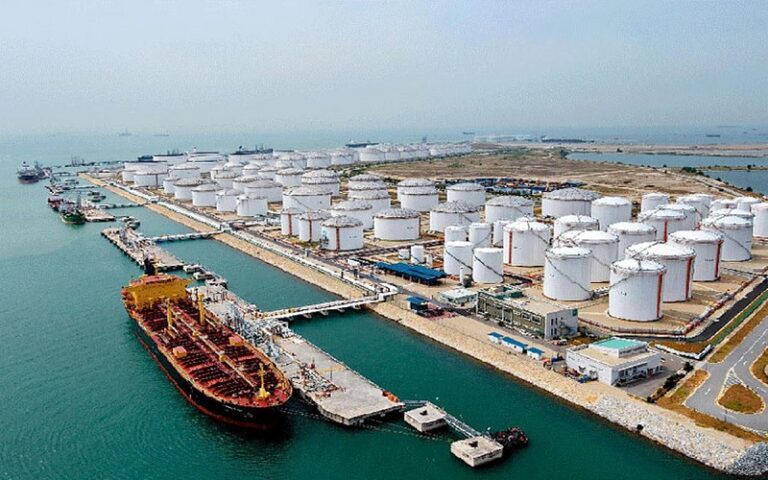
During the first seven months of the current Persian calendar year (March 21-October 23), only “approximately 70 percent” of the government’s projected revenues had been realized, according to Davoud Manzour, the head of the Iranian Planning and Budget Organization, who spoke at a press conference on October 23. This indicates a significant budget deficit.
This government official also stated that the government has failed to achieve the goal of “daily oil exports of 1.5 million barrels.”
The head of the Planning and Budget Organization, in an explanation of the reasons for the “non-realization” of the projected budget for the current year, rejected the statements of senior government officials regarding Iran’s oil exports surpassing 1.8 million barrels per day and stated that the volume of oil exports “falls short of what was predicted in the budget law.”
According to Davoud Manzour, the reason for the non-realization of 30 percent of the projected resources and revenues for the current year is that the oil revenues in the budget law were overestimated.
He mentioned that the budget law had predicted oil revenues of 6,200 trillion rials (approximately $12.156 billion) and added, “It was assumed that we could sell oil at $80 per barrel and export 1.5 million barrels per day,” but these figures were determined with an “overestimation.”
The head of the Planning and Budget Organization stated that practically, “for most months of the current year, the selling price of oil has been less than $80” and that the “daily oil exports” have been less than 1.5 million barrels, especially considering the domestic market’s demand, particularly during the summer when there was an increase in the consumption of oil products. As a result, the projected oil revenues specified in the budget law were not realized.
Davoud Manzour also highlighted another item determined in the budget law that has not been realized after seven months of the year, which is the “revenue from asset divestitures and asset generation” that was set at 1,040 trillion rials (approximately $2.309 billion). He stated that the revenue achieved from divestitures and asset generation in the first seven months of the current year is “less than 100 trillion rials” out of the projected 1,040 trillion rials.
According to the head of the Iranian Planning and Budget Organization, the failure to achieve the projected oil exports and the non-realization of revenues from “asset divestitures and asset generation” have resulted in only 70 percent of the planned revenues being realized.
His statement indicates that 30 percent of the projected revenues for the first seven months of the current year have not been achieved, leading to a significant budget deficit for the government.
The government had set the general budget at 20,820 trillion rials (approximately $40.823 billion) for the current year and expected to generate 12,140 trillion rials (approximately $23.803 billion) of revenue in the first seven months. However, according to the head of the Planning and Budget Organization, 30 percent of this amount has not been realized, resulting in a budget deficit of 3,640 trillion rials (approximately $7.137 billion).
On the other hand, the regime’s officials and the Ministry of Oil have not provided precise figures on Iran’s oil exports. However, Javad Oji, the Minister of Oil in the Ebrahim Raisi’s administration, had previously stated that Iran had exported “at least 190 million barrels more oil than in 2020 and 83 million barrels more than in 2021” in the year 2022. He also mentioned that a new record would be set in Iran’s oil exports this year.
Furthermore, on October 8, Javad Oji announced “increased oil exports” from Iran and stated, “With the efforts of my colleagues in the Ministry of Oil, the statistics of crude oil, condensates, and petroleum product production and exports are increasing every day.”
Mousa Mousavi, a member of the regime’s Majlis (parliament), stated on October 13, “The increase in oil exports and the return of its revenue to the country amidst the peak of sanctions is a miracle, and in the past two years, oil production has increased from over 2 million barrels to over 3 million barrels per day.”
On September 4, the official Iranian news agency, IRNA, reported that “Iran exported 1.7 million barrels of crude oil and 152,000 barrels of condensates daily in the month of August” and that “the total exports of oil and gas condensates from Iran in that month were 1.85 million barrels per day.” It was stated that this figure represents the highest level of Iran’s oil exports in the past five years since the United States’ withdrawal from the Joint Comprehensive Plan of Action (JCPOA), also known as the Iran nuclear deal.
It’s worth noting that different sources and officials may provide varying information or interpretations regarding Iran’s oil exports and revenues.
However, Davoud Manzour, the head of the Planning and Budget Organization, announced that the volume of Iran’s oil exports over the past seven months was “less than 1.5 million barrels per day.”
Iran: Journalists Sentenced To Prison For Reporting Death Of Mahsa Amini
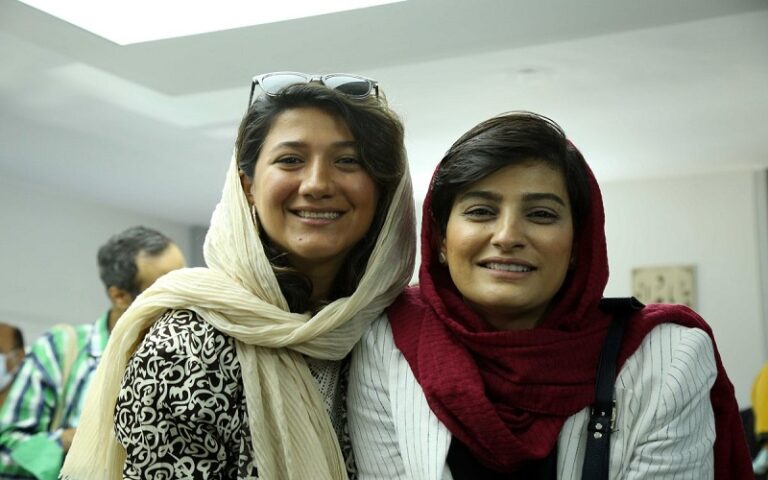
The Iranian regime’s Judiciary has sentenced two imprisoned journalists to seven and six years of imprisonment.
After more than a year of detention, Niloufar Hamedi and Elaheh Mohammadi, two journalists who had reported on the death of Mahsa Amini, were sentenced to seven and six years of imprisonment, respectively, by Branch 15 of the Revolutionary Court in Tehran.
Mizan News Agency, run by the judiciary, wrote about the details of Elaheh Mohammadi’s charges: “Ms. Elaheh Mohammadi has been sentenced to six years of imprisonment on charges of collaborating with the hostile government of the United States, five years of imprisonment for conspiracy and collusion to commit crimes against national security, and one year of imprisonment for anti-establishment propaganda activities against the Islamic Republic of Iran.”
According to this report, Niloufar Hamedi was also sentenced to “seven years of imprisonment on charges of collaborating with the hostile government of the United States, five years of imprisonment for conspiracy and collusion to commit crimes against national security, and one year of imprisonment for anti-establishment propaganda activities against the Islamic Republic of Iran.”
According to the regime’s “Islamic Penal Code,” the maximum punishment of seven years of imprisonment is applicable to Niloufar Hamedi, and six years for Elaheh Mohammadi.
The court also sentenced these two journalists to a two-year ban from membership in political parties and groups, as well as activities in online platforms, media, and press, as supplementary punishment on charges of “anti-security measures.”
Mizan News Agency provided separate reports detailing the charges against these two journalists. The reports mention the collaboration of Niloufar Hamedi and Elaheh Mohammadi with a foreign website, and their production of content for this website has been classified as “collaboration with a hostile government.”
Mizan News Agency states: “Mohammadi was involved in activities related to the project of the mentioned website, such as formulating guidelines for the website’s members, distribution in cities and universities, preparing multiple reports, translation, designing the questions posed about the website Dideban-e Azar (harasswatch), collecting Instagram polls, and collaborating in the compilation of a book, among others. In general, Mohammadi has played a pivotal role in all content-related and executive matters of the project within the country.”
Finally, the Judiciary has also mentioned Niloufar Hamedi’s communication with several Persian-language media reporters outside the country, as well as her connection with civil and media activists and non-profit organizations as part of her charges.
Regarding the communication of his client’s verdict, Parto Borhanpour, Niloufar Hamedi’s lawyer, told Shargh website on Sunday: “We have heard news through the media about the issuance of our clients’ verdicts. However, according to the Civil Procedure Law and the Criminal Procedure Law, if a lawyer has announced representation in a case, the verdict must be officially communicated to the lawyer by law.”
Niloufar Hamedi was detained on September 22, 2022, by the State Security forces at her home due to her reporting on Mahsa Amini’s situation from the hospital.
One week later, Elaheh Mohammadi, a journalist for Ham-Mihan newspaper, was also arrested for publishing reports on Mahsa Amini’s funeral in the city of Saqqez.
These two journalists came under pressure and were targeted by security institutions due to their reporting on the death and funeral of Mahsa Amini, and the security agencies of the Islamic Republic issued statements against them.
Iran Multi-pronged Education Crisis And Its Destructive Effects
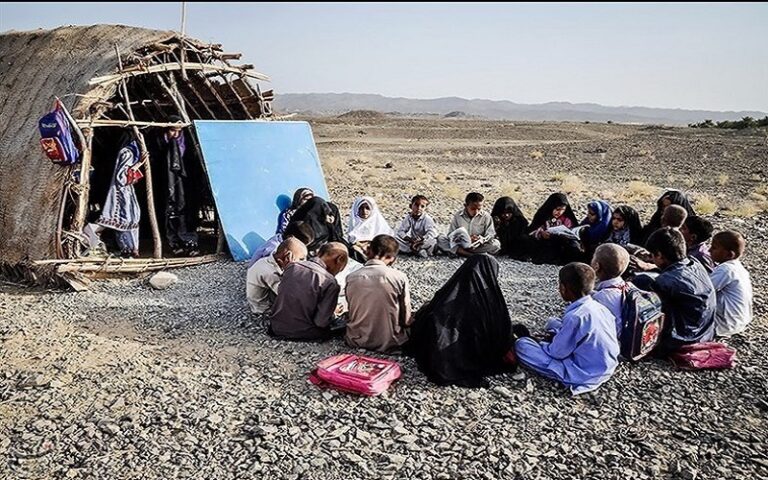
The Statistical Center of Iran, in its “Report on the Social and Cultural Situation of Iran, Spring 2023,” announced that in the academic year 2022-2023, over 556,000 children between the ages of 15 and 17 dropped out of high school, including 295,000 boys and 261,000 girls. This statistic does not include those who have dropped out of high school altogether. Economic deprivation and poverty are the main reasons for this situation.
Furthermore, according to the statement by Masoumeh Najafi Pazuki, the Deputy of Elementary Education at the regime’s Ministry of Education, in the current year, 160,000 individuals have not registered for elementary school and have remained out of education. Although she claims that this figure has remained constant over the past five years, the statistical report indicates an increasing trend.
The country’s student population, from grade one to grade twelve in the current academic year, has been evaluated at 16 million individuals, which is close to 19 percent of the total population of the country.
These figures were at 15,159,000 and 15,376,00 in 2020 and 2021, respectively. Considering the ratio of the number of students to the total population of the country, this statistic indicates a decline in the enrollment of students.
The country’s student population has also experienced a declining trend in recent years. Approximately 3.2 million individuals were students in the academic year 2023-2024 throughout the country. The percentage of male and female students is 51 and 49 percent, respectively.
In the 2023 university entrance exam, 1,119,436 individuals participated, of which only about 583,000 individuals were able to choose their major. The competition in the university entrance exam is only for fifteen percent of the country’s capacity, and the rest are accepted into universities without a nationwide exam.
The peak of the country’s student population was in the academic year 2014-2015, with more than 4.8 million students. Now, after almost a decade, it has experienced a decrease of 33 percent. The country’s student population had an upward trend until the mid-2000s since the establishment of Tehran University in 1934.
The imbalanced growth of specialized fields, particularly in the doctoral level, and the prevalence of commercial relationships that did not match the university facilities and the country’s job market needs, laid the foundation for a crisis in the education system and led to negative social and economic consequences in subsequent periods.
The imbalance between the education system and the job market needs, and the disregard of this issue, have overshadowed some of the positive aspects of increasing the student population and resulted in a reverse trend since the second half of the 2010s. Now, the number of university students and individuals with at least a bachelor’s degree has decreased. The employment crisis for graduates and the high rate of emigration are important factors contributing to this negligence towards education.
The significant decline in the popularity of universities (from 2 percent of the country’s population to 0.4 percent) and the increasing number of school dropouts pose a serious threat to the sustainable and comprehensive development of the country. Moreover, this phenomenon has serious negative consequences for the job market, the survival of non-profit higher education institutions, the level of awareness in the country, and the social status of universities and the higher education system in Iran.
The mutual impact of the decrease in the student population and the high rate of emigration by specialists and individuals with university degrees will result in a shortage of skilled professionals in the coming years, necessitating the import of skilled labor from abroad.
The decline in the specialized expertise of professors, especially in technical and medical fields, has compromised the quality of university-educated professionals and created difficulties in their employment in the job market.
The Iranian regime, for political and ideological reasons, insists on disregarding scientific and specialized criteria. This reverse trend, which began during the presidency of Mahmoud Ahmadinejad and reached its peak during the Ebrahim Raisi administration, has expanded with the self-interest of the institutions under the control of the Supreme Leader’s apparatus, where regime loyalists are appointed as professors without merit. Ali Khamenei, the Supreme Leader of the regime, recently called for disregarding the requirement of publishing articles in reputable international journals for the promotion of university professors.
The situation in schools is even worse. Inefficiency in the education system, outdated curriculum content, lack of teaching methods based on fostering creativity and initiative, commercialization of education, the proliferation of private schools, and the systematic injection of religiosity through religious teachers have lowered the quality of education. The average grade of high school students last year was eleven out of twenty.
The expansion of profit-oriented majors and the focus of universities on selling degrees to secure financial resources, along with the influence of the university entrance exam mafia, have increased the role of wealth in obtaining seats in the country’s top universities.
According to official statistics, over 80 percent of the top three thousand candidates in various fields in the university entrance exam come from the top three deciles of income in society. This upward trend in recent years has effectively made money the determining factor for studying at reputable universities in the country.
The role of wealth is not only seen in classes, exam preparation courses, and studying at private schools but also in the performance of universities. All top universities in the country have special programs that accept students without requiring the university entrance exam but with the payment of tuition fees.
Unfortunately, not only is there no clear outlook for addressing or mitigating the multiple education crises in Iran, but the future prospects are also bleak. With the continuation of this situation, specialized, professional, and comprehensive educational structures will suffer serious damages, disrupting the path of comprehensive development of the country and the creation of human capital.
Iran: 26,000 girls under 15 married in the past year
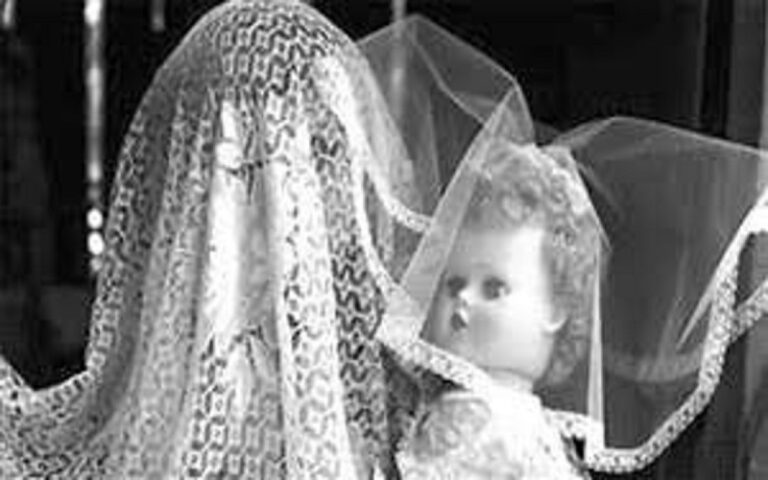
According to a report by the Statistical Center of Iran 25,900 child girls have married from last winter until now. Based on this report, over 1,300 infants have been born to mothers under the age of 15, which is higher than the previous year’s statistics.
Hammihan Newspaper, citing the report of the Statistical Center on October 19, reported that over 200 girls under the age of 15 have registered for divorce in the past winter.
Previously, the state-run Etemad newspaper reported in May that at least 27,000 children under the age of 15 had married in one year, citing data from the Statistical Center of Iran. According to the data, 27,448 cases of girls under the age of 15 getting married were registered in various parts of Iran from winter 2021 to autumn 2022.
According to these statistics, an average of 135,000 marriages of girls under 18 are registered annually in Iran, with about 1,700 of those marriages involving girls under 13.
Internationally, marriage under the age of 18 is considered child marriage, but according to the laws of the Iranian regime, marriage of girls under 13 only requires “parental consent” and “court approval based on the best interests of the child.”
The promotion of marriage and childbearing by the government has always been a subject of controversy among children’s rights activists in recent years.
In this regard, Simin Kazemi, a physician and sociologist, mentioned the high statistics of child marriages in an interview with Khabar Online website on April 15, stating that “the decision to marry children is not considered an important issue at the macro level and is defended in line with the population increase policy.” She was referring to the “Family and Youth Support Act.”
In November 2021, the regime’s president, Ebrahim Raisi, communicated this law, which was passed by the regime’s parliament, to the Ministry of Health for implementation.
The purpose of this law is to increase marriage, childbearing, and the growth of the Iranian population, stemming from the directives of Ali Khamenei, the Supreme Leader of the Iranian regime.
Simin Kazemi warned Khabar Online, stating, “Some officials, without considering social changes and disregarding research results, based on their own experiences or, for example, their relatives who got married as children and claim to have had no problems, deny the dangers and consequences of child marriage.”
Kazemi cautioned that “this unscientific and mistaken view about an important social issue has put the future and the physical, mental, and social well-being of girls at risk.”
Amnesty International has previously accused the Islamic Republic of violating children’s rights in Iran, considering child marriage a violation of human rights, and has called for the guarantee of children’s rights by increasing the minimum age of marriage to 18.
One of the other violations of women’s rights in Iran is forced marriage. The existing laws in Iran place it among the countries with the lowest minimum age for girls’ marriage. These marriages primarily occur through the coercion of families.
Forced marriage is an oppressive tradition that came to light after the 1979 revolution in Iran and is justified under the name of religion, cultural beliefs, economic and political problems. This inhuman phenomenon, whose primarily victims are girls, is carried out in Iran with the complete backing of the clerical regime’s leaders due to their misogynist laws.
The UN Special Rapporteur on Contemporary Forms of Slavery has announced forced marriages a type of slavery.
In the legislative reform initiative published in 2007, UNICEF writes, “Most of all, the human rights perspective helps to frame child marriage as a crime against women and the girl child”. And adds, “Child marriage violates a panoply of interconnected rights, including, the right to equality on grounds of sex and age, the right to marry and found a family, the right to life, the right to the highest attainable standard of health, the right to education and development and the right to be free from slavery.”
New sanctions against Iran’s missile program
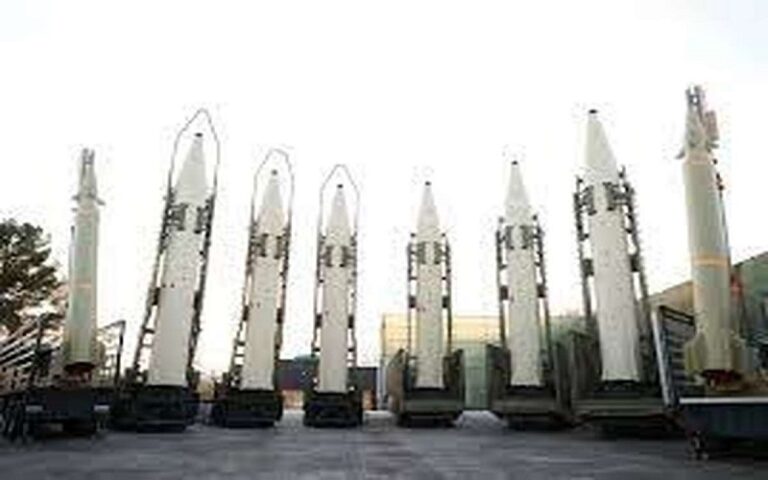
Forty-six countries simultaneously called for the continuation of missile sanctions against the Iranian regime, following the end of Iran’s arms sanctions based on UN Security Council Resolution 2231, which was passed in 2015.
According to a joint statement released by the US State Department on October 18, these countries stated that the lifting of Iran’s missile sanctions was contingent on the regime’s adherence to the Joint Comprehensive Plan of Action (JCPOA), which the regime has been violating for several years.
The statement highlights that Iran’s missile program remains one of the greatest international challenges to prevent the proliferation of weapons of mass destruction. It further emphasizes that Iran currently possesses the largest stockpile of ballistic missiles in the Middle East, and its missile program continues to pose a threat to regional countries and beyond.
The statement also asserts that Iran’s transfer of missile and drone technology to its proxies and surrogate groups jeopardizes international stability and exacerbates regional tensions.
Referring to Iran’s non-compliance with the JCPOA as a basis for keeping the missile sanctions in place, these countries have stated that it is essential for all nations to continue countering Iran’s destabilizing missile activities.
The joint statement underscores the need for effective measures to prevent the transfer of missile and drone-related equipment to Iran or from Iran to other countries. It emphasizes the importance of swift information exchange on this issue, along with the examination and deterrent efforts of each country to counter Iran’s missile and drone program.
The European Union and the United States had previously announced that these sanctions would remain due to Iran’s non-compliance with the JCPOA.
On Wednesday, Australia and the United States also imposed sanctions on dozens of individuals and entities in Iran that were previously under UN Security Council sanctions.
Meanwhile, Russia and Iran have declared that the missile restrictions against the Iranian regime, based on UN Security Council Resolution 2231, have “ended.”
On Wednesday, the regime’s Ministry of Defense and Armed Forces Support referred to the end of missile sanctions as an “opportunity to demonstrate authority and strengthen defense capabilities” in a statement.
The statement further asserts that Iran’s Ministry of Defense is determined to pursue the enhancement of missile and armament capabilities in accordance with the requirements of the country’s national security doctrine.
The US government took new actions to intensify efforts to counter Iran’s missile program and drone production despite the expiration of the United Nations Security Council sanctions on Iran’s missile program.
The expiration date of the Security Council resolution regarding Iran’s missile program was one of the complementary measures to the JCPOA. The JCPOA, signed between Iran and world powers in July 2015, lifted part of the international sanctions against Iran in exchange for strict limitations on its nuclear activities.
The US Treasury Department announced on October 18 that it has imposed sanctions on 11 individuals, eight companies and entities, and one vessel based in Iran, Hong Kong, China, and Venezuela for assisting the Islamic Republic in “the production of ballistic missiles and drones.”
In addition to pressuring Iran’s missile and drone programs, these sanctions will make arms trade between Iran and countries such as Russia and Venezuela, including the sale of drones to Russia used against civilians in Ukraine, more difficult.
A US official stated that despite the expiration of the Security Council resolution, it can be observed that Russia and Iran are perceived as odious and isolated by many countries worldwide.
The Biden administration has faced criticism from Republican opponents for the prisoner exchange with Iran that took place a few weeks before Hamas’s attack on Israel, with some accusing President Biden of using the freed Iranian assets to fund attacks by proxy groups such as Hamas.
In September, six American citizens were released in exchange for the unfreezing of $6 billion of Iranian assets in South Korean banks. The money was transferred to Qatar, and Washington states that it can only be used for humanitarian purchases.
Youth Account For 70% Of Unemployed Population In Iran
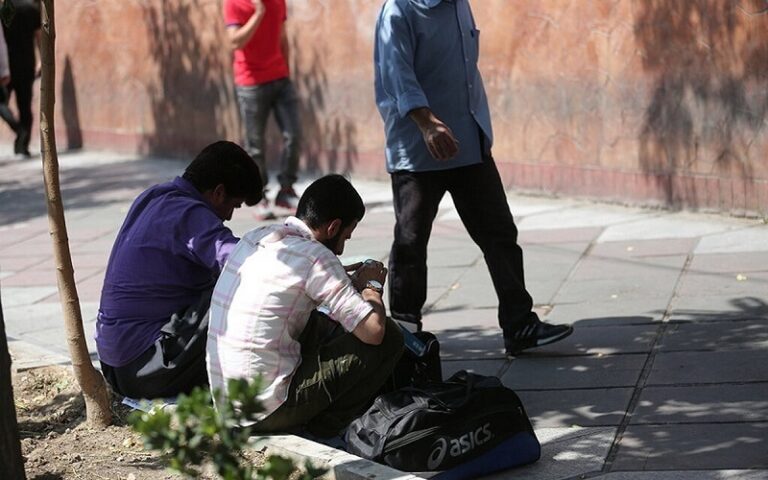
A report from the Iranian Statistical Center shows that over 70 percent of the country’s unemployed population falls within the age group of 18 to 35 years old.
According to the Eco Iran website, the active population in the summer of 2023 reached approximately 26.8 million people. The analysis indicates that during this summer, 2.115 million individuals were unsuccessful in finding employment and were considered as unemployed.
This economic website, based on available statistics, states that in the summer of 2022, there were 1.643 million unemployed individuals aged 18 to 35 in the Iranian job market.
Meanwhile, a review of official statistics shows that the unemployment rate for women is 9 percentage points higher than that of men.
The Etemad newspaper has also emphasized, in its analysis of these statistics, that since the outbreak of the COVID-19 pandemic, over three million individuals have been added to the “working-age population” in Iran. However, an equal number of jobs have not been created, and a significant portion of the new job seekers remain unemployed.
The regime’s Etemad newspaper also emphasized the unacceptable labor force participation rate in Iran and stated: “In recent years, the participation rate was around 50 percent, which dropped to 41.5 percent in the summer.”
To better understand Iran’s situation in this indicator, Etemad referred to the participation rates in neighboring countries. According to the newspaper, in 2020, the economic participation rate was 86 percent in Qatar, 63 percent in the Republic of Azerbaijan, and 50 percent in Turkey.
Another issue in the Iranian job market is the excessive working hours beyond the specified standards. Based on this, an examination of the share of workers aged 15 and above with more than 44 hours of work per week shows that 40 percent of workers typically work 49 hours or more per week. This indicator, which is one of the indicators of decent work, shows that in Iran, a significant number of workers exceed the standard working hours.
The narrative of the Statistical Center regarding employment represents the government’s perspective, while field reports and videos shared on social networks represent the public’s perspective, which indicates a different situation than the government’s narrative.
Unemployment in small cities, especially in border cities, as well as the departure of a portion of the job-seeking population from the market, which has improved the statistics in favor of the government, indicates the failure of Ebrahim Raisi’s promises to create one million jobs annually.
In the April to June 2023 quarter, the share of unemployed individuals with higher education degrees accounted for 40.8 percent of the total unemployed. An analysis of the changes in this indicator shows a 1.1 percent increase compared to the same period last year.
Analysis of statistics in this field shows that the share of unemployed individuals with higher education degrees from the total unemployed population in the country was approximately 40.2 percent in the spring of 2021, which had decreased to 39.7 percent in the spring of 2022. However, in the current year, this trend has once again increased.
The term “active population” refers to the total number of employed and unemployed individuals in the country.
Examining the statistics related to the labor force situation for the entire year of 2022, as presented by the Statistical Center of Iran, indicates that 938,461 individuals of the country’s graduates were unemployed. This means that in the past year, 12.9 percent of the total active population with higher education degrees were unemployed.
According to official reports, there are currently 2,348,957 unemployed individuals in Iran. Analyzing the share of “educated unemployed population from the total unemployed population of the country” indicates that 40 percent of the unemployed individuals in the country have higher education degrees.
Despite various policy measures taken in different periods, employment and unemployment remain one of the most significant challenges in the Iranian society, alongside high inflation and persistent increases in the costs of living, which have created difficult conditions for Iranian families.
