

Number of Water Wells in Iran 2.5 Times Greater Than All Middle Eastern Countries CombinedThe state-run Shargh newspaper warned in a report that dozens of Iran’s plains have reached a critical stage and that a large portion of the country’s groundwater resources has been lost. The state-run Mehr News Agency also quoted water officials as saying that many of Iran’s dams are facing significant declines in water reserves and that some cities are on the verge of severe water shortages.
Iran’s Water Crisis: Women on the Front Lines of a Silent Disaster
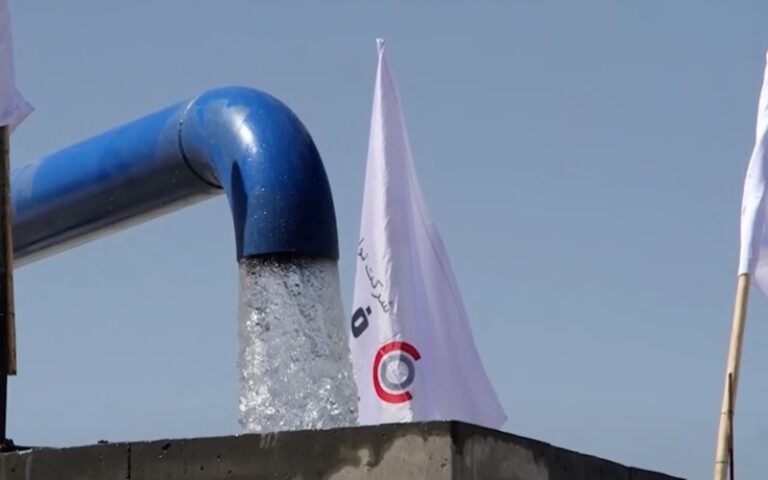
Iran’s water crisis is no longer merely an environmental or economic challenge; it has become one of the country’s most serious social and humanitarian threats. Experts have warned for years about the consequences of mismanagement of water resources, excessive extraction from groundwater reserves, climate change, and ineffective policies. Today, however, the effects of this crisis are more visible than ever in people’s daily lives, especially among women.
Iran is now among the countries experiencing severe water stress. According to the World Resources Institute, Iran is one of the 25 countries facing the highest levels of water stress in the world. This means that a large share of the country’s renewable water resources is consumed each year, a trend that seriously threatens the sustainability of its water supplies.
According to official statistics, Iran’s rainfall has declined significantly over recent decades. At the same time, excessive extraction of groundwater has caused many of the country’s plains to experience land subsidence, a phenomenon experts consider irreversible.
Child Laborers: The Silent Victims of Poverty and Inflation in Iran
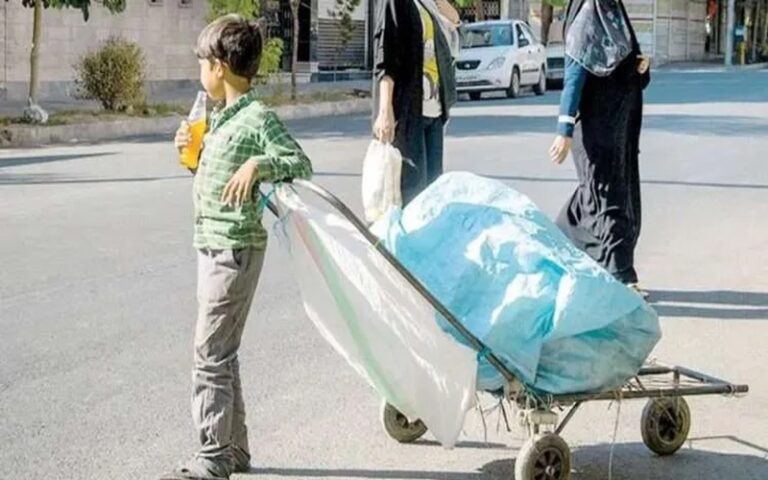
On June 15, the state-run Shargh newspaper published a report on child labor titled “Childhood on a Work Shift,” highlighting the painful conditions faced by child laborers in Iran. At the same time, on the occasion of the World Day Against Child Labour, a conference titled “Red Card to Child Labor” was held in Tehran. Unlike many official ceremonies, the event presented a bleak and alarming picture of the situation of child laborers in Iran. Statistics and remarks by experts attending the conference indicate that child labor is not merely a limited social problem but one of the most widespread manifestations of poverty, inequality, and the failure of support structures under Iran’s regime.
According to estimates presented at the conference, approximately 2 million children in Iran are engaged in labor. Even the speakers described this figure as a conservative estimate. The lack of transparent and reliable statistics has left the true scale of the child labor crisis shrouded in uncertainty. While a report by the Statistical Center of Iran in 2017 estimated that about 410,000 children between the ages of 10 and 17 were employed, social activists argue that this figure represents only a small fraction of reality, as many working children—especially those without identity documents or those who are migrants—are not recorded in any official statistics.
Millions of Iranians Living Below the Poverty Line
Child Laborers: The Hidden Face of Structural Poverty
Experts emphasized that the issue of child labor is not limited to a few children working on the streets. The phenomenon is a direct result of widespread household poverty, declining purchasing power, unemployment, migration, and the gradual collapse of social support systems. According to studies cited at the conference, more than 60% of the fathers of working children are employed, yet their income is insufficient to meet the minimum needs of their families. Many of these families work in low-income and informal sectors and are compelled to send their children into the labor market to help support the household. One of the most shocking statistics presented showed that 38% of working children began economic activity between the ages of five and seven—a period that should be devoted to education, play, and healthy childhood development.The Identity Crisis Among Child Laborers
Another issue highlighted at the conference was the lack of identity documents among a large proportion of working children. According to the statistics presented, tens of percent of these children do not possess birth certificates, national identity cards, or residency documents. This situation not only restricts their access to education, healthcare, and social support services but effectively renders them invisible within the country’s official system—children who exist and work, yet remain absent from many statistics and policy discussions. Reports also indicate that a significant proportion of working children are migrants. However, experts noted that under international conventions to which the Iranian regime is a party, access to fundamental children’s rights should not depend on nationality or immigration status.Many Laws, Almost No Enforcement
One of the main themes of the conference was the deep gap between existing laws and reality. Although Iran has adopted dozens of laws, regulations, and policy documents concerning children’s welfare over the past decades, the situation of child laborers continues to deteriorate. Experts believe that the primary problem is not a lack of legislation but rather the absence of political will and effective enforcement mechanisms. Various institutions—including the State Welfare Organization, the Ministry of Labor, the Ministry of Education, municipalities, and the Ministry of Interior—each bear part of the responsibility, yet in practice there is little accountability, and responsibility is continually shifted among agencies. A clear example of this situation is child waste-picking. Although existing laws classify such work as a hazardous condition and among the worst forms of child labor, thousands of children continue to work in waste collection and sorting operations, while the profits generated by this system flow to contractors and affiliated economic networks. A significant portion of public awareness regarding child labor is the result of efforts by non-governmental organizations. However, the absence of a national strategy, the lack of dedicated funding, and the shortage of transparent data have undermined effective efforts to address the crisis. While official institutions speak of implementing various programs, no transparent reports have been released regarding their results. Even the targets set in development plans for reducing the number of child laborers remain unsupported by baseline data and cannot be meaningfully evaluated.Iran’s Regime Executes Political Prisoners Javad Zamani and Abolfazl Saedi

Iran’s regime hanged two young men, Javad Zamani and Abolfazl Saedi, in the early hours of Tuesday, June 16, continuing its wave of executions and repression against opponents.
The judiciary of Iran’s regime justified the executions by citing charges such as “corruption on earth,” “waging war against God,” “disrupting public order and security,” and “gathering and colluding against national security.” Mizan, the judiciary’s news agency, claimed that the two prisoners had confronted regime forces with firearms and bladed weapons during the January 2026 uprising in Shahroud.
Iran’s ‘No to Executions Tuesdays’ Campaign Marks 125th WeekThe head of the judiciary in Semnan Province announced the implementation of the death sentences and claimed that the cases had gone through all judicial procedures. However, human rights organizations have repeatedly warned about the lack of fair trials, the denial of effective access to legal counsel for political defendants, and the use of forced confessions in security-related cases. Iran’s regime also released a video presented as the “confessions” of Javad Zamani and Abolfazl Saedi, in which the individuals’ faces were blurred and their voices altered. Human rights organizations have long criticized this practice as a tool used to legitimize predetermined verdicts. The two prisoners were among those arrested during the January 2026 uprising, which Iran’s regime responded to from the outset with mass arrests, harsh sentences, and violent repression. Now, amid an intensified security atmosphere and the use of wartime conditions, the issuance and implementation of death sentences against protesters and opponents have accelerated. The United Nations announced yesterday that Iran’s regime has executed at least 40 people since the beginning of 2026, including 18 protesters, on charges related to “national security.” Volker Türk, the United Nations High Commissioner for Human Rights, expressed concern over the intensifying repression and rising number of executions, describing them as part of an increasing effort to restrict political opponents. Previously, the United Nations Special Rapporteur on the situation of human rights in Iran had warned that Iran’s regime uses the death penalty as a tool to silence dissent and suppress political opponents, particularly during periods of crisis and conflict. While judicial officials of Iran’s regime have called for accelerating the prosecution and sentencing of those arrested during the 2026 uprising, human rights activists view the trend as evidence of escalating political repression and an effort to create an atmosphere of fear and intimidation in society.
Iran’s Healthcare System on Verge of Crisis as Nurses Migrate En Masse

The crisis of nursing staff shortages in Iran, driven by the migration of nurses, has once again come into focus following the release of official statistics by officials from the Iranian regime’s Ministry of Health. The published figures show that the trends of nurses leaving their jobs, retiring, and emigrating continue, while regime officials are warning about the consequences for the healthcare system. At a time when medical centers across the country face shortages of personnel, the migration of nurses has become one of the most significant challenges in the healthcare sector.
According to remarks by Abbas Ebadi, Deputy Minister for Nursing Affairs at the Iranian regime’s Ministry of Health, published on June 13 by the state-run IRNA news agency and the state-run Asr Iran news website, 1,800 nurses left their jobs during the past year. In addition, 800 nurses resigned and 380 nurses left the country. These figures, combined with the retirement of 1,600 nurses and 2,400 recorded cases of deferred nursing service obligations, present a troubling picture of the healthcare system’s workforce situation.
Nurses’ Migration and Growing Staff Shortages
The Deputy Minister for Nursing Affairs described staff shortages as the most significant challenge facing the sector. According to him, the shortage of nurses has contributed to burnout, job abandonment, and nurse migration. He emphasized that the low nurse-to-hospital-bed ratio, retirements, resignations, and an increase in unpaid leave have placed additional pressure on healthcare personnel. The issue of nurses’ migration has been raised repeatedly in recent years by various institutions. Many nurses choose to leave the country due to difficult working conditions, professional pressures, and career limitations. This trend continues while healthcare centers face severe staffing shortages, and many hospital wards are operated through mandatory overtime and extensive workloads. Ebadi stated that the departure of each nurse from the country results in an annual loss of approximately 40 billion rials. This figure includes educational costs and investments made in training specialized personnel who ultimately leave the country’s healthcare system due to migration.Warning About the Security of the Healthcare System
One of the most significant aspects of the deputy minister’s remarks was his warning about threats to the security of the healthcare system. He stated that nursing shortages could lead to increased mortality rates, more medical and nursing errors, and higher healthcare costs for citizens. The Health Ministry official emphasized that nursing is no longer merely a professional labor issue but has become a matter directly linked to the quality of healthcare services and public health security. He added that the decline in the number of active nurses places greater pressure on the remaining workforce and may negatively affect the quality of patient care. In this context, the Ministry of Health announced that it received authorization to hire 12,000 nurses during the past year. However, healthcare experts believe that recruitment alone cannot solve existing problems, as the migration of experienced nurses continues simultaneously.Changing the Approach to Workforce Management
In another part of his remarks, the Deputy Minister for Nursing Affairs stressed the need to change the approach toward nurses’ professional demands. He said that international experience shows nurse retention does not depend solely on financial factors and that professional, organizational, and social factors also play a decisive role. Nevertheless, the release of official statistics on resignations, retirements, and nurse migration indicates that the workforce crisis in the healthcare sector remains one of the most significant challenges facing the country’s healthcare system. If this trend continues, it could place greater pressure on hospitals and medical centers and make access to healthcare services more difficult for citizens. Official statistics published by the Ministry of Health indicate that nurses’ migration and the departure of skilled professionals from the healthcare system have reached a stage where even regime officials describe it as a threat to the security of the healthcare system. The continued staff shortages, occupational burnout, and loss of human capital from the country paint a picture of a deepening crisis whose consequences will directly affect patients and the quality of healthcare services.Volker Türk: At Least 40 People Executed on Security-Related Charges in Iran
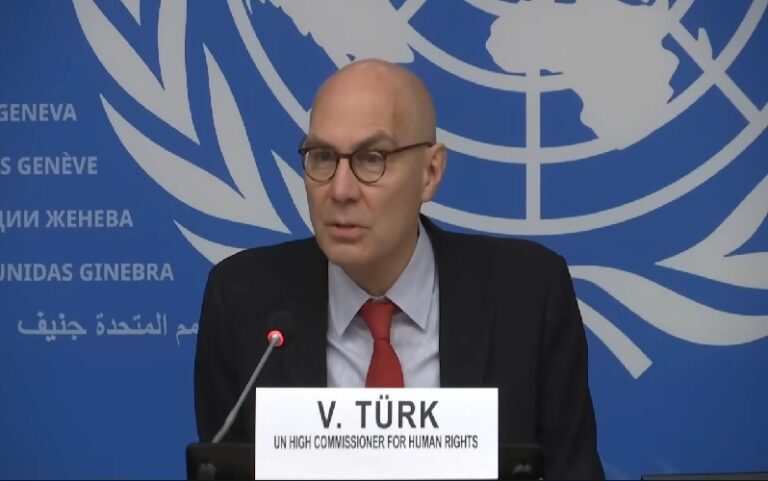
Recent remarks by Volker Türk, the United Nations High Commissioner for Human Rights, have once again drawn international attention to the human rights situation in Iran. Speaking at a session of the UN Human Rights Council, he stated that authorities ruling Iran have executed at least 40 people on security-related charges since the beginning of the current year, including 18 protesters. The senior UN official also warned about increasing arrests, growing restrictions on civil liberties, and intensified repression of citizens.
What Did Volker Türk Say About the Human Rights Situation in Iran?
In his speech at the UN Human Rights Council on Monday, June 15, Volker Türk presented a troubling picture of the current situation in Iran. He stated that since the beginning of 2026, at least 40 people have been executed on charges related to national security, including 18 protesters. Referring to the prevailing security environment in the country, Türk said that the ruling authorities have not only failed to halt executions but have also intensified domestic repression amid rising regional tensions. He emphasized that thousands of people have been arrested and that further restrictions have been imposed on civil activities, freedom of expression, and citizens’ rights.Why Is the United Nations Warning About the Increase in Executions?
The UN High Commissioner for Human Rights stated that the widespread use of the death penalty, particularly in political and security-related cases, remains one of the international community’s primary concerns regarding Iran. According to human rights organizations, Iran has the second-highest number of executions in the world after China. In recent years, death sentences issued against protesters, political prisoners, and defendants in security-related cases have drawn widespread criticism from international institutions. Türk stressed in his remarks that the people of Iran are facing difficult circumstances in which domestic security pressures are intertwined with regional crises and conflict. The UN High Commissioner’s comments come as human rights organizations have repeatedly warned in recent months about the aftermath of the nationwide protests of January 2026. According to published reports, the protests were followed by a broad wave of arrests, summonses, harsh sentences, and the opening of security-related cases. Dozens of citizens faced charges such as “enmity against God,” “corruption on earth,” “acting against national security,” and “cooperation with opposition groups.” Many of these cases have been criticized by human rights organizations because, in numerous instances, insufficient information has been made public regarding legal proceedings, defendants’ access to independent counsel, and the judicial process.Reports and Developments Related to Human Rights Violations in Iran
In recent months, numerous reports have emerged regarding the issuance or confirmation of death sentences for political prisoners and individuals detained during protests. Human rights activists warn that the use of security-related charges to impose the harshest punishments has increased the risk of political executions. This concern is heightened by the fact that many defendants in these cases are still awaiting review by Iran’s Supreme Court or the implementation of their sentences.Legal Review of Security-Related and Political Executions
One of the most significant legal concerns in security-related cases involves the manner in which charges are substantiated and whether fair trial standards are observed. In many protest-related cases, limited information has been released regarding the evidence supporting the charges, the judicial process, and defendants’ access to lawyers of their choice. The issuance of death sentences in cases with political or security dimensions has also consistently raised questions about whether all legal guarantees necessary for a fair and impartial trial have been fully observed.Iran’s ‘No to Executions Tuesdays’ Campaign Marks 125th Week
On Tuesday, June 16, the “No to Executions Tuesdays” campaign entered its 125th week, once again demonstrating the determination of Iran’s resistant prisoners not to surrender to the rule of executions and torture.
On this occasion, the “No to Executions Tuesdays” campaign issued a statement, listing numerous human rights violations during the past week and calling for the immediate halt of executions.
The statement reads:
“In the critical conditions facing Iranian society, while the Iranian regime and its repressive and judicial apparatus have hanged more than 177 prisoners since March 21, we continue to witness the issuance and implementation of inhumane death sentences. This is a desperate attempt to contain the explosion of public anger from people exhausted by oppression, injustice, and soaring prices.”NCRI Reports At Least 72 Executions in Iran Between January 28 and February 3“According to reports published during the past week, in addition to hundreds of prisoners convicted of ordinary crimes who are sentenced to death without public attention and many of whose sentences are carried out, the death sentences of political prisoners Ali Fattah and Mohammad Naghizadeh have at least been upheld by the Supreme Court, and they have been transferred to solitary confinement in Ghezel Hesar Prison. Two other political prisoners, Ali Kamali and Peyman Ganji, have also been transferred from Greater Tehran Prison to Ghezel Hesar Prison. Peyman Ganji is a 23-year-old man who was arrested during the January uprising and sentenced to death by Branch 26 of the Revolutionary Court in Tehran.” “As we have repeatedly pointed out before, Ghezel Hesar Prison serves as the main execution center in Tehran Province and is one of the regime’s execution sites. It holds many prisoners sentenced to death, and inmates transferred there after receiving death sentences face the risk of imminent execution.” “Amnesty International, in response to the wave of executions of political prisoners and the threat to the lives of five prisoners—Alireza Merdasi, Masoud Jamei, Reza Abdali, Farshad Etemadifar, and Hassan Maslavi—has called for the suspension of the executions of these five individuals and other prisoners in Iran.” “We, the members of the ‘No to Executions Tuesdays’ campaign, demand the immediate cessation of executions and call upon all conscientious individuals and political, human rights, civil, labor, and social activists to condemn executions in every possible way and take serious action to stop them.” “The realization of freedom, equality, and the preservation of human dignity is impossible without safeguarding the right to life. We call on all opponents of the death penalty to unite in solidarity and collective action to dismantle the structure of despotism and the cycle of taking human life.” Prisoners participating in the “No to Executions Tuesdays” campaign are on hunger strike on Tuesday, June 16, during the campaign’s 125th week, in 56 prisons across the country.
Cyberattack on Iranian Regime Banks Causes Widespread Disruptions in Banking Services
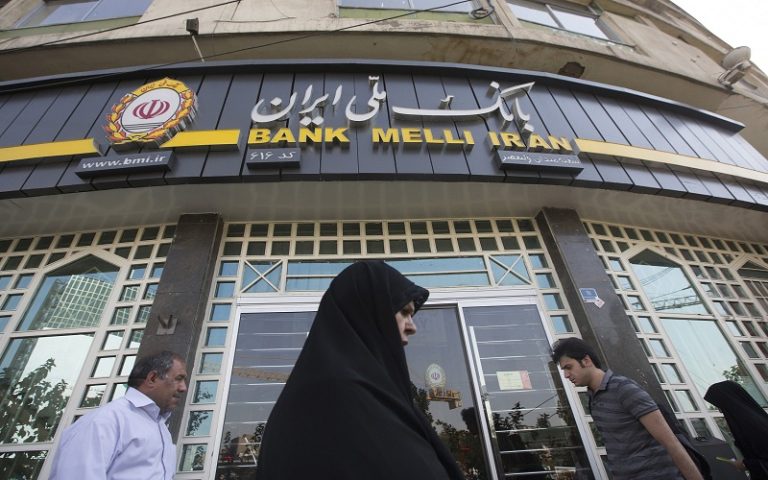
A cyberattack seriously affected the financial resources of the Iranian regime. A widespread disruption in Iran’s banking network beginning in the early hours of Saturday, June 13, caused the suspension of part of the country’s banking services nationwide. Reports indicate that the disruption resulted from a cyberattack and affected four of the country’s largest banks.
According to state-run media reports, the services of Bank Melli Iran (National Bank), Bank Saderat Iran, Tejarat Bank, and Export Development Bank of Iran have experienced widespread problems since the early hours of the morning. As a result of the disruption, many customers have been unable to access mobile banking, online banking, and other electronic services.
Reports also indicate disruptions in point-of-sale payment terminals and difficulties in processing financial transactions across various parts of the country, causing confusion among citizens and disrupting routine commercial activities.
Cyberattack Spreads Disruptions to Fuel Stations and Retail Stores
The disruption has not been limited to the banking network and has also affected certain services dependent on electronic payment systems. Published reports indicate problems at a number of fuel stations and retail stores that rely on electronic payment platforms. In some areas, this situation has slowed commercial transactions and created difficulties for citizens seeking to meet their daily needs. This incident has once again brought the cybersecurity of the country’s financial infrastructure into focus. Experts believe that the scale of the disruptions has exposed the vulnerability of critical systems and the extensive dependence of public services on centralized networks. According to observers, the continuation of such attacks could have significant economic and social consequences and further highlight the need to strengthen security infrastructure and improve the resilience of the country’s financial networks.Livelihood Protests Erupt Across Iran Again
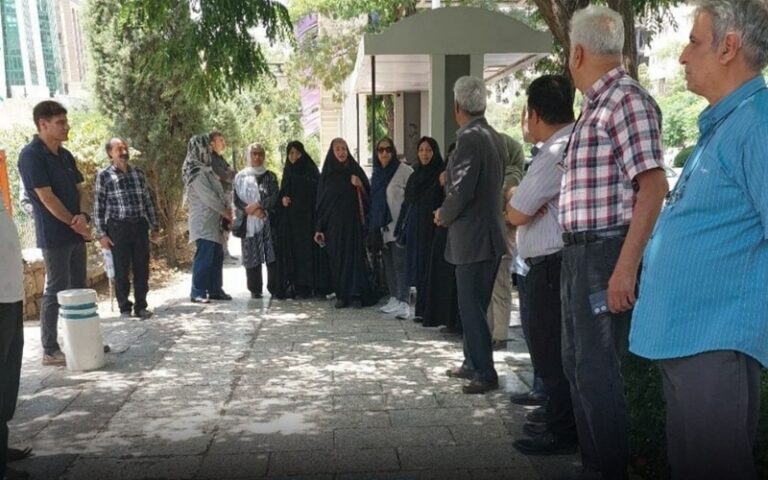
Protests once again flared up in cities across Iran. As economic crises deepened and livelihood pressures increased, various Iranian cities witnessed protest gatherings by different social and occupational groups on Sunday, June 14. Retirees, bakers, motorcycle delivery drivers, and victims of an economic fraud case took to the streets with different demands but a common underlying grievance, protesting the authorities’ failure to address their concerns. The breadth of these protests once again demonstrated that livelihood-related protests have become one of the most significant expressions of public dissatisfaction in the country.
Livelihood Protests by Financial Victims; Six Years of Waiting for Justice
A group of victims of the “Fardadkar Amitis” company gathered in front of the Tehran Prosecutor’s Office to protest the prolonged handling of their case. The protesters say that despite six years having passed since the case was opened, it has still not been referred to court.Renewed Protests Erupt in IranAccording to the protesters, the delay in judicial proceedings has not only imposed heavy financial losses on them but has also caused significant emotional and psychological hardship for the families involved. They called for an immediate resolution of the case and the start of judicial proceedings.
Bakers; When Bread Becomes a Crisis
In North Khorasan Province, bakers gathered in front of the governor’s office to protest reductions in flour allocations, unfulfilled promises by officials, and the lack of results from their follow-up efforts. The protesters said that production costs have risen steadily in recent months. Higher energy costs, workers’ wages, rent, and other expenses have made it difficult for many bakeries to continue operating. Under such conditions, reductions in flour quotas have placed additional pressure on the sector. The bakers also criticized the performance of the responsible trade bodies and called for immediate action to address flour supply problems and reform distribution policies.Livelihood Protests by Retirees in Several Cities
Retirees from the Social Security Organization, retired teachers, and retired telecommunications employees once again held protest gatherings in different cities across the country. These protests took place in Tehran, Shush, Ahvaz, Mashhad, and Kermanshah. In Shush, retirees gathered in front of the Social Security Office and demanded the immediate payment of overdue adjustments related to pension equalization, increases in pensions in line with living costs, improved healthcare services, and expanded welfare benefits. In Tehran, Social Security retirees, retired teachers, and retired telecommunications workers gathered outside the Social Security Organization, demanding payment of overdue claims, full implementation of pension equalization measures, and improvements in healthcare services. Through chants protesting the gap between incomes and living expenses, the demonstrators expressed their dissatisfaction. In Ahvaz and Mashhad, retirees also gathered outside Social Security offices with similar demands. They called for pension increases in line with inflation, payment of overdue benefits, and improvements in insurance and healthcare coverage. In Kermanshah, retirees chanted slogans about rising prices, healthcare problems, and living conditions, demanding immediate attention to their concerns. The protesters emphasized that increasing living costs and declining purchasing power have created difficult circumstances for this segment of society.Motorcycle Delivery Drivers; Lower Income, Higher Costs
In Shiraz, motorcycle delivery drivers working with Snapp, Iran’s largest ride-hailing and delivery platform, joined the protests. The drivers protested high commissions, heavy taxes, low delivery fees, the removal of fuel subsidies, and the lack of insurance coverage. According to the drivers, living expenses and work-related costs continue to rise while their incomes have not increased proportionately. The protesters stressed that under these conditions, covering even basic living expenses has become difficult for many of them.Livelihood Protests; A Common Voice Across Different Social Groups
The common thread among all of these gatherings was opposition to economic pressures and the failure to address occupational and livelihood-related demands. From financial victims who have waited years for judicial action, to retirees complaining about declining purchasing power, and bakers and drivers struggling with rising costs, all described conditions that have made everyday life increasingly difficult.The United States and Iran’s Regime Reach Agreement to End War
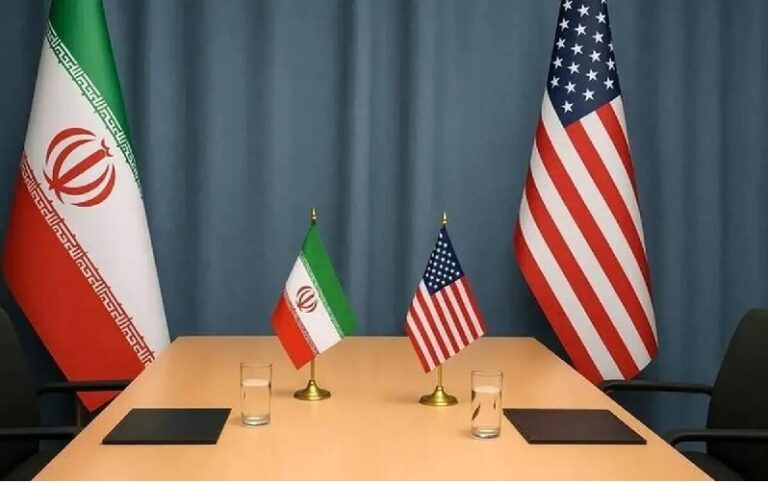
U.S. President Donald Trump has announced that the agreement with the Iranian regime has been completed. The oil market immediately reacted to the understanding, and prices fell by 4%.
The two countries had been in a state of war or a fragile ceasefire since the joint U.S.-Israeli attacks on Iran on February 28, which resulted in the death of Iranian regime supreme leader Ali Khamenei and a number of other senior commanders.
After weeks of negotiations and military confrontation, U.S. and Iranian regime officials announced that they had agreed on a framework to end the war between the two countries, halt the U.S. naval blockade against Iran, and reopen the Strait of Hormuz. The preliminary agreement led to lower oil prices, but leaves the future of Iran’s nuclear program to subsequent negotiations.
At around 1:00 a.m. on Monday, June 15, Donald Trump wrote on Truth Social:
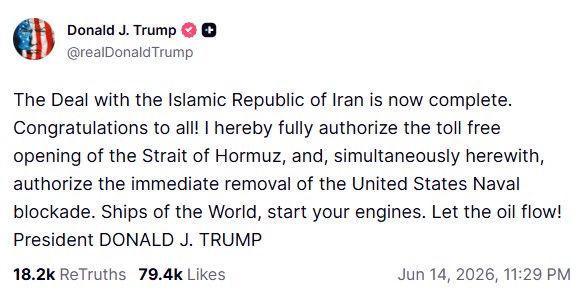 “The Deal with the Islamic Republic of Iran is now complete. Congratulations to all!”
He added:”I hereby fully authorize the toll free opening of the Strait of Hormuz, and, simultaneously herewith, authorize the immediate removal of the United States Naval blockade. Ships of the World, start your engines. Let the oil flow!”
U.S. President Donald Trump said in a statement on Sunday evening that the agreement with the Iranian regime had been completed. Meanwhile, the official signing ceremony is scheduled to take place in Switzerland on Friday. In another development, according to market data, Brent crude oil prices fell by about 4% during the early hours of Asian trading.
Mrs. Maryam Rajavi, the President-elect of the National Council of Resistance of Iran (NCRI), said in a message that the Iranian Resistance has sought peace and freedom for the people of Iran for nearly five decades and welcomes this ceasefire.
“The Deal with the Islamic Republic of Iran is now complete. Congratulations to all!”
He added:”I hereby fully authorize the toll free opening of the Strait of Hormuz, and, simultaneously herewith, authorize the immediate removal of the United States Naval blockade. Ships of the World, start your engines. Let the oil flow!”
U.S. President Donald Trump said in a statement on Sunday evening that the agreement with the Iranian regime had been completed. Meanwhile, the official signing ceremony is scheduled to take place in Switzerland on Friday. In another development, according to market data, Brent crude oil prices fell by about 4% during the early hours of Asian trading.
Mrs. Maryam Rajavi, the President-elect of the National Council of Resistance of Iran (NCRI), said in a message that the Iranian Resistance has sought peace and freedom for the people of Iran for nearly five decades and welcomes this ceasefire.
“The Deal with the Islamic Republic of Iran is now complete. Congratulations to all!”
He added:”I hereby fully authorize the toll free opening of the Strait of Hormuz, and, simultaneously herewith, authorize the immediate removal of the United States Naval blockade. Ships of the World, start your engines. Let the oil flow!”
U.S. President Donald Trump said in a statement on Sunday evening that the agreement with the Iranian regime had been completed. Meanwhile, the official signing ceremony is scheduled to take place in Switzerland on Friday. In another development, according to market data, Brent crude oil prices fell by about 4% during the early hours of Asian trading.
Mrs. Maryam Rajavi, the President-elect of the National Council of Resistance of Iran (NCRI), said in a message that the Iranian Resistance has sought peace and freedom for the people of Iran for nearly five decades and welcomes this ceasefire.
The Iranian Resistance, which for nearly five decades has sought freedom and peace, welcomes any understanding to end the war and the suffering of the Iranian people. In Iran, no one except the remnants of the mullahs and the Shah has wanted or wants war.
— Maryam Rajavi (@Maryam_Rajavi) June 14, 2026
The effort to produce… pic.twitter.com/KAzWfRlbW7
Pakistan Welcomes the Understanding Between the United States and the Iranian Regime
Following the announcement of the understanding between the United States and the Iranian regime, Pakistani Foreign Minister Mohammad Ishaq Dar described the development as an important step and a sign of the effectiveness of diplomacy. He also expressed appreciation for the trust placed by the American and Iranian sides in Pakistan’s mediating role and praised the diplomatic efforts of regional countries, including Saudi Arabia, Qatar, Turkey, and Egypt, as well as the United Nations, in facilitating the negotiation process. Earlier, Pakistani Prime Minister Shehbaz Sharif had announced that the official signing ceremony of the agreement would take place in Switzerland on June 19.Oil Prices Fall Following the Announcement of the Understanding
Oil prices declined in Asian markets following news that the United States and the Iranian regime had reached a preliminary understanding. According to trading data, Brent crude oil fell by about 4% to $83.88 per barrel. U.S. crude oil also declined by 4.6% to $80.96 per barrel. Energy market analysts believe that the price decline is driven by reduced concerns over disruptions to oil exports and maritime transportation in the region. However, uncertainty regarding the implementation timeline of the agreement, the full reopening of shipping routes, and the outcome of future negotiations remain factors influencing market trends.Deadlock and the Necessity of Difficult Diplomatic Decisions for Iran’s Regime
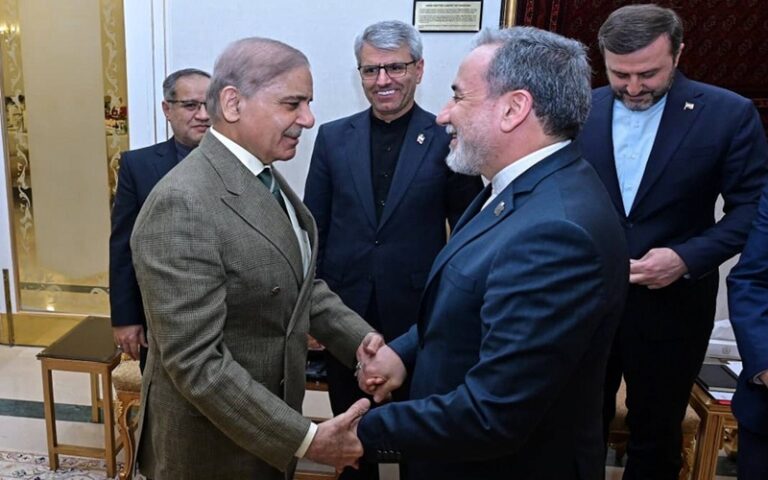
Iran’s regime in 2026 is in a situation that can be described as the intersection of accumulated crises. While in previous years foreign policy served as a tool for the temporary management of tensions, in 2026 diplomacy became the only means of survival for the country’s struggling economy.
Imbalances in the budget, energy sector, pension funds, and environment no longer allow foreign policy to proceed independently of economic realities. These imbalances have placed the regime before the test of making difficult decisions. Difficult decisions are no longer merely a political term but an unavoidable necessity for overcoming accumulated deadlocks. At this juncture, the regime faces new realities in the international arena, including the Trump administration in the United States and shifting power dynamics across the region. In 2026, the regime’s foreign policy can no longer be based on “buying time.” The nuclear issue stands at a crossroads between decline and renewal. A large portion of the technical restrictions imposed under the Joint Comprehensive Plan of Action (JCPOA) are nearing expiration under the timetable established by United Nations Security Council Resolution 2231. This situation has placed Iran’s regime before a difficult choice: accepting a new comprehensive agreement extending beyond nuclear issues to include missile and regional matters. Such a decision would require substantial consensus at the highest levels of the regime’s ruling establishment.
