

In COP26, Attentions Turn to Iran’s Environmental Issues
While the United Nations Climate Change Conference (COP26) in its last day, discussions about the increasing number of storms, floods, and wildfires around the world have been high on the agenda. The impacts of climate change are devastating, affecting the lives of tens of millions of people annually.
There are several advances to tackle climate change which are leading to cleaner air and restoring nature but it’s a slow process. If the countries of the world join forces to help each other, the sooner we can see bigger improvements.
Iran is a disaster-prone country due both to its geological and climatic situation, facing both flooding and drought. The variation of these pressures reflects the wide diversity of climatic and geophysical zones in the country.
Mass deforestation, deteriorating ecosystems, and the rapid desertification of agricultural land are placing significant pressures on Iran’s environment. Disaster planning is greatly needed to overcome the impacts of natural disasters in the country, as well as a reduction in the actions causing deforestation and desertification. An important task is to provide education and training for all citizens to help them respond better to natural disasters. As Iran is prone to relatively frequent earthquakes, there is a need to improve the research and monitoring of these events to allow for better earthquake prediction technology, as well as improving and implementing earthquake-proof building regulations throughout the country.
Population density and its distribution is a major pressure factor along with transportation, mainly in urban areas, also issues such as vehicle age, numbers, and fuel use.
With so many people packed into cities, great pressures are placed on resources. The effects of such urbanization include poor air quality, light pollution, noise, encroachment on green spaces, and excess pressure on waste disposal and recycling. The worse the conditions are, it can lead to serious the public health situations and sanitation issues. With the majority of Iran’s landmass mountainous, and the environmental issues causing rapid desertification, the remaining arable land is scarce at best, so the cities have seen a mass influx of people migrating to them.
Despite promises of reform, human rights violations are still “rife” in Iran. Among the groups that have been targeted are environmental campaigners, with more than 60 activists and researchers arrested in 2018.
Widespread unrest across Iran has been building in recent years, with the environmental issues faced by citizens as one of the causes, with the other issues being the severe economic decline and the regime’s rule overall.
The most serious environmental issue currently faced in Iran is droughts. However, this is not a naturally occurring situation. The severe water shortage has been created by the Iranian government due to the Islamic Revolutionary Guard Corps (IRGC) dam construction projects, along with the regime’s institutionalized corruption and the mismanagement of already scarce water resources.
This crisis has led to thousands of villages being abandoned as the land becomes unsustainable. Predictions have suggested that millions of people will end up being displaced as the problems worsen.
Natural climate variabilities, climate change, droughts, and economic sanctions have had undeniable impacts on Iran’s environment and its water resources. Yet Iran’s environmental and water problems are mostly manmade, which is the product of decades of absolutely poor management coupled with lack of foresight, uncoordinated planning, and the wrong perception of development.
Iran’s Projection on the Terror Attack Against Al-Kadhimi in Fear of Accountability
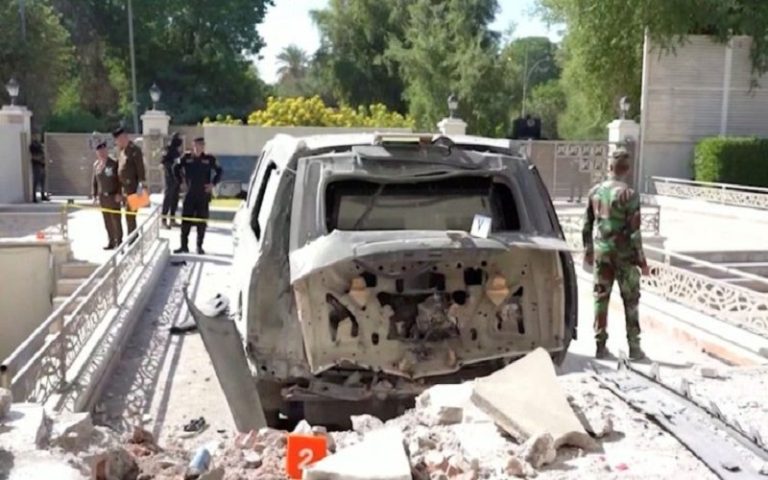
The news of the drone attack on the Iraqi Prime Minister’s residential house, after the initial global coverage, has now received a lot of attention in Iran’s state-run media.
Most of the international media and even some of the officials of the countries pointed their fingers at the Iranian regime and its proxy forces in Iraq as the main culprit behind this terror attack.
Over the past years as many of the analysts are saying the main source of nearly all the terror attacks is the Iranian regime. Destabilizing this country to hide its domestic weaknesses.
A look at the situation of the regime’s mercenaries in Lebanon, Syria, Yemen, and Iraq confirms this fact. The comfort, tranquility, stability, and security of the people of the Middle East have been taken away from them by the interventions and crimes of the regime’s proxy forces who are die-hard loyalists of the Velayat-e-Faqih (regime of supreme religious rule) in Iran.
The regime’s supreme leader is performing these crimes with the excuse of his regime’s ‘strategic depth’ and is even proud of it, as many of its officials announced that many times in their speeches.
But now this has become a problem for the regime because they have poisoned the atmosphere so much that it has become for themselves toxic.
And in the light of the people’s awareness and protests, the ground for their destruction has been created. This is something that many of the regime’s officials are speaking about.
The humiliating defeat of the regime’s affiliated factions in Iraq’s recent election is also the manifestation of the demands of the people who are tired of the crimes and looting of the regime’s groups and will undoubtedly change the political sphere of Iraq.
Thus, the regime’s attack against Iraq’s prime minister has become a crisis that is reflecting the regime’s other crises. The media affiliated with the regime’s supreme leader’s faction were forced to describe this terrorist act as a show and fabrication and the work of the Iraqi Prime Minister himself.
Kayhan newspaper, the main mouthpiece of Supreme Leader Ali Khamenei, wrote an article about this issue with a strange title, “The unprofitable terror of Iraq’s prime minister, real or show?”
The state-run daily Resalat labeled, “Al-Kadhimi’s assassination alleged by Iraqi security sources.” Meanwhile, the state-run daily Siasat Rooz, with the title, “Foreign think tank sedition with the suspected attack on Iraqi Prime Minister’s house”, questioned the principle of the assassination.
Media outlets from the regime’s so-called reformist faction have shown the same reaction more or less. For example, Hassan Danaeifar, the regime‘s former ambassador to Iraq, claimed in the Etemad newspaper that the incident was a conspiracy against the regime and implicitly referred to the United States and Saudi Arabia. Ali Shamkhani had the same reaction which was reflected by the state-run daily Aftab-e-Yazd.
Now the wave of this terror act is moving back to the regime. The examples are very clear. For example, the state-run daily Arman in an article entitled, ‘Consequences of the assassination attempt on the Iraqi Prime Minister’, pointed to the disarming of the regime’s proxy forces in Iraq and wrote:
“What seems important is the consequences of today’s drone strikes; even considered as a show as the allies (of the regime) say, or if it was real; as the Iraqi government and other political currents emphasize, it is usually the official narrative that is accepted by the region and the international community.
“One of the most important consequences could be the serious consideration of the issue of ‘unbridled weapons’ and its conversion into a national demand. The mean of the government and its allies are the weapons of Hashad al-Shaabi.”
It also emphasized: “The plan of the Iraqi, regional and international opponents to the system, is preventing the Hashad al-Shaabi to become another Hezbollah in the region.”
“Kazemi’s failed assassination and potential crisis for Iran’ is the title of another article in the state-run Arman daily that highlights other dimensions of this crisis for the regime. It also said:
“In my opinion, the story of the ‘field’ (so-called the regime is military actions) in Iraq has reached its final stages and calls for the arrival of ‘diplomacy’. Is the system ready for this scenario in Iraq? Apparently seems that it is not. From the conscience, only God is aware! So, is the instability of Iraq and the entry of the (system) into its possible quagmire certain?”
Iran: Record Number of Protests Took Place Within a Two-Week Period Between September and October
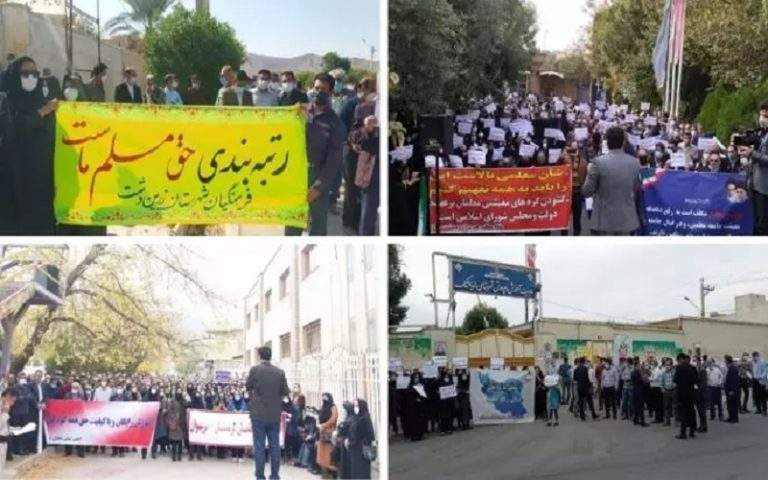
Across Iran, there have been a reported number of 253 protests that have taken place between September 23 and October 7 with people coming from all walks of life to take to the streets and voice their concerns over Iran’s current social and economic crises.
The crises are a result of the Iranian regime’s institutionalized corruption and their malign activities that have had devastating consequences for the Iranian people, with the majority of them being pushed below the poverty line and struggling to provide for their families. As the regime has yet to address any of the socio-economic problems, there is no end in sight for society’s tension and outrage.
On Monday, farmers in the city of Isfahan held a demonstration outside of the local Water and Electricity organization to protest for their right to water irrigation. The angry farmers managed to storm the office in the building, despite a large anti-riot unit presence at the scene.
In the last few years, farmers in Isfahan have been holding protests and demanding their right to water irrigation. Eastern parts of Isfahan province have been deprived of natural water of Zayanderude river following the redirection of its water to other regions.
Monday also saw a protest in the city of Larestan in the Shiraz province. A group of locals gathered outside of the Ministry of Roads and Urban Development office to protest the poor conditions of the Jahrom-Lae-Bandar Abbas transition road that runs through the area.
In Khuzestan, a demonstration took place for the third consecutive day with retirees of the Hafttappeh Sugarcane Factory in Shush demanding the payment of their long-overdue pensions and the wrong calculations of their bonuses.
On Sunday, several workers of Machine Sazi Arak held a protest gathering, demanding the immediate return of their fired co-workers, and an increase of salary in accordance with the current economic situation.
Four more protests took place on Sunday also. In Tabriz, retirees were demanding that their pensions should be adjusted to match the skyrocketing inflation rate in the country and the high costs of basic needs, while Miners of the Kerman Coal Company in southeast Iran demonstrated against the plans to privatize the mines and transfer their ownership to the Dalahu Company.
Another protest consisted of a group of nurses who work for Iran’s Social Security Organization. They rallied outside the regime’s Majlis (parliament) in Tehran with a number of demands, including the number of legal provisions commensurate with the Ministry of Health to be increased, and the law on Hard and Harmful Occupations to be enforced.
According to the protesting nurses, the regime has increased pressure on them, despite their difficult working conditions during the Covid-19 pandemic. These nurses had also held a protest gathering on Saturday in front of the regime’s Program and Budget Organization and Parliament.
Simultaneous protests were held in both Tehran and Mashhad on Sunday also by defrauded investors of the Caspian credit institution. The institution, which is affiliated with the notorious Islamic Revolutionary Guard Corps (IRGC), has been scamming clients since 2016 by looting their deposits. Over the past few years, hundreds of protests have taken place by angry investors who have lost their life savings.
On Saturday, a number of teachers, who work in the most deprived areas of the East Azerbaijan province in Iran, took to the streets to demand their wages that have been delayed for 14 months. Despite the Covid-19 pandemic, the teachers still had to work but have been devoid of any payment of their salaries for almost a year and a half. As their usual salaries are around 3 million tomans, many teachers are living way below the poverty line.
On November 9, the state-run Jahan-e Sanat daily warned that the, “Lack of economic security, increasing financial problems, the severe decline in people’s livelihoods, growing inequalities, discrimination and the people’s distrust of officials with their consequences, growth and expansion lead in the long run to the system’s collapse.”
Banking Corruption in Iran
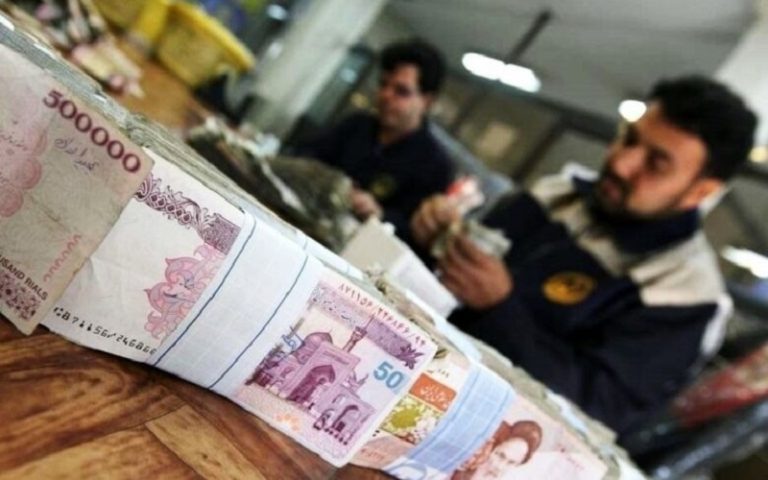
Iranian President Ebrahim Raisi in a conference on the Ardabil Administrative Council regarding the duty of the banking system said:
“No bank is allowed to shut down any production unit. The production unit should be always operational. If a bank seeks a demand, there is no problem, but why is a production shut down? Why are the workers becoming unemployed? This is not right at all.
None of the production units should be shut down because the banks are pursuing their demands nationwide.” (State-TV, October 22, 2021)
Iran watchers say the Iranian President knows that he is lying, and he has absolutely no control over the banks.
Saeed Leylas, a state-affiliated expert, said: “We handed over the money to the esteemed investors. Immediately they have invested it outside the country in Real estate, gold, dollars. The official expert of the judiciary has committed officially robbery with the help of the bank’s administration. The reason for all these problems of corruption is the banking network.
“Especially private banks. They are the institutional looting mechanism of plundering Iran’s people. They printed banknotes to confront the coronavirus and inject it into the market. This is robbery. I know the banking network as the biggest source of corruption in Iran.” (Etemad Online)
Thus, this state-affiliated expert is showing the main address of the corruption in the country which is the government itself. So, the speeches of Raisi are meaningless.
Adel Peyghami, an economist and professor at Imam Sadegh University, said on State TV Channel 5:
“Where is this rent going? That money is created by banks. And banks are one of the institutions that must be corrected seriously in this surgery.”
“Moderator: ‘In these twenty years, where were those periods when the big rents were won by some groups and became a colony of power?’
“Adel Peyghami: ‘I said that a major part of it is in the field of the banking system and money creation.” (State TV Channel 5, October 29, 2021)
Meanwhile, Hossein Raghfar, another economist, about the corrupt banking system said: “While with this corrupt structure that exists in our banking system and our tax system, that is, we do not tax the rich, we do not tax the wealthy, our banking system equips the resources of the people, puts in the pocket of the car importer, who said that in the current situation of the country, we should import cars?” (State TV Channel 4, October 27, 2021)
Alireza Salimi, an MP, about the consequences of the banking system corruption, said: “It is necessary to reform the monetary and banking system and change the course of banks from entrepreneurship on the one hand and usurious banking operations on the other. Delay in reforming this process will ignite a fire that will turn the hegemony of the government and the nation to ashes.” (Parliament session, October 31, 2021)
Iran’s Government Agrees To Resume Nuclear Talks in Vienna Later This Month
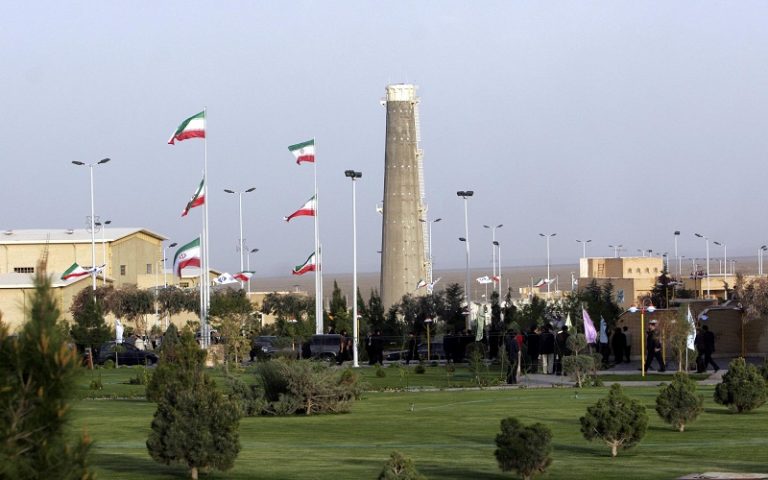
The Iranian regime has finally agreed to resume nuclear talks in Vienna on November 29, following months of delaying and buying time for them to continue their malign activities unquestioned.
The date of the talks has been conveniently placed just days after scheduled sessions for the Board of Governors of the United Nation’s nuclear watchdog, the International Atomic Energy Agency, seemingly the regime’s plan to force the Board of Governors to avoid passing any resolutions regarding their commitment violations of the 2015 nuclear deal, also known as the Joint Comprehensive Plan of Action (JCPOA).
Despite numerous efforts from the international community to bring the regime to comply with the JCPOA terms, the regime has blatantly carried on with the acceleration of their nuclear program, enriching uranium far beyond the limits allowed per the nuclear deal terms, and carrying out malign terrorist activities across the Middle East through their proxy groups.
It is clear beyond the shadow of a doubt that if the talks have been stalled, it is because of the regime’s lack of cooperation and its drive to extort the international community.
Sanctions that have been placed on Iran by the United States for their terrorist activities and human rights abuses were imposed by the U.S. Congress, so while the regime consistently calls for the sanctions to be lifted, this action is way beyond the power of the current presidential administration to lift them. U.S. legislators continue to agree that the Iranian regime still poses great threats to the international community.
The 2015 JCPOA was an agreement, and there was no legal or legislative force behind it because a considerable percent of U.S. lawmakers believed that it did not do enough to curb the regime’s terrorist threat.
While the regime has agreed to new talks, their main focus is to obtain further concessions from Western powers regarding their nuclear program. By continually stalling previous talks, they have bought time to quietly advance their uranium enrichment program in the hope that they will reach a level that will give them an upper hand in future negotiations.
Currently, the regime’s main issue in Iran is concerning the upcoming second anniversary of the November 2019 uprising that almost brought them to the brink of collapse. With the state of the economy and social crises in Iran now, the Iranian people are outraged and becoming more restive daily and consistently call for regime change at their protest rallies.
The mullahs have held on to power only through brute force, gunning down protesters in the streets, carrying out public executions, imprisoning and torturing dissidents, and appointing a mass murderer as president.
The mullahs are desperately clinging on to power as any sign of fragility on their part will cause them catastrophic consequences. If another wave of nationwide protests is triggered, leading to another uprising, the complete collapse of the regime would be inevitable.
This is a regime that only responds to firmness and strength. Any concessions to the ayatollahs will only aid and abet terrorism and destruction without addressing any of the threats they pose.
Iran’s Education System Remains Closed Down
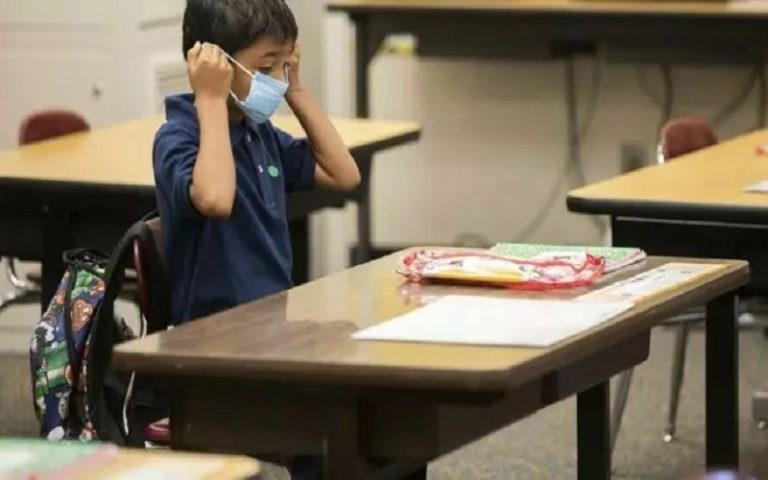
Caring about other priorities, Iran’s government puts the country’s education system in such a situation that until now no one is introduced as the education minister, and everything is uncertain, and the choices seem not to be desirable.
More than one and half months have been passed since the start of the new school year, and everyday news and rumors are published about the regime’s decision to reopen schools, while the number of cities being a subset of the red cities because of the coronavirus is increasing.
This is something that has raised even the concerns of the regime’s health officials who are warning the government about the consequences of such a decision.
Ali Sharafi Zarchi, Director of the Statistics Center of the Ministry of Health, fearing the consequences of this decision, was forced to confess about the danger of this decision and said:
“In November, in some cities, the coronavirus trend increased, and some cities have turned red. Now I can’t imagine that schools will open in red cities, and we should prevent vigilantly the sixth peak from spreading across the country because it may not threaten the student, but their families are in danger.
“In August, at the highest peak of the coronavirus, the number of red cities had reached 359, which decreased to seven cities until October 9, but now it has reached 33 red cities again, and at the same time the number of blue cities has increased because the overall trend of the country is downward, on the other hand, in some places we have an increase in the number of coronavirus cases, and that’s why the number of red cities has increased.” (State-run daily Entekhab, November 7, 2021)
On the other hand, the virtual education system (Shad System), started by the government to cover the school closures, did not have the desired result, and its outcome was that many students have suffered from a noticeable academic failure, and many of the students were forced to drop out because of not having access to the virtual system.
The supervisor of the Education Ministry said:
“Currently, statistics show that we have about 210,000 primary school students and about 760,000 secondary school students who dropped out, which is serious harm, and we need to plan for it and focus on it. One of the most important challenges is dropping out of school in some areas.” (State-run news agency Tasnim, November 6, 2021)
Something very sad that is happening now in the country’s schools is the fund collections of the schools from the parents of the students to buy hygiene products for the disinfection of the schools. This is while this subject is one of the duties of the Ministry of Education, and they must provide the financial conditions so that the schools can provide hygiene facilities.
This rejection of the Ministry of Education will increase the risk of coronavirus expansion undoubtedly. On the other hand, the country’s school enrollment system is facing serious problems so that many registrations are done with delays and many of the students were not able to register regular time.
Statistics show that more than one million students at different levels have completely quit, which will be a serious challenge for the education system to return them to the classroom. Television lessons have also been much less noticed this year. Realistically, the regime’s Ministry of Education has not achieved any success in virtual and visual education, and most students have faced academic failure.
This is one of the results of the regime’s refusal to import the coronavirus vaccine and to start the country’s vaccination at the proper time, analysts say.
A month and a half have passed since the beginning of the Iranian school year, but even online many students don’t have teachers, which means it is not yet clear who is going to teach them. This has become a circle of endless problems for the country’s youth and children, in which the country’s future is being sacrificed.
Iran’s Government Creates a Smokescreen To Hide Its Retreat
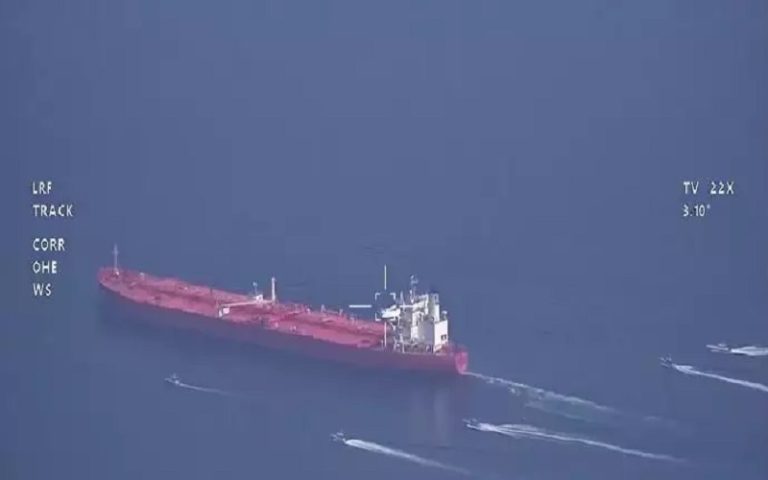
On November 5, the Iranian Friday Prayer leaders tried to introduce the story of the Revolutionary Guards (IRGC)’s oil tanker retake as a victory for the regime. One of them, cleric Mohammad Ali Al-Hashem, called this incident a victory by ‘hitting seven targets with one bullet.’
Meanwhile, cleric Hassan Ameli called it an ‘exceptional humiliation of the US military and defeat of the American awe.’
These dictated speeches by the regime’s Friday Prayer Leaders were with the goal of a ‘smoke screen’ to protect the regime and distract the public opinion from the regime’s main problem, analysts say. The question is what is the regime’s main problem? It does not take much research to understand the regime’s motivation to trumpet the news about an oil tanker capture in the Gulf of Oman.
The state-run news agency Fars the next day after this event in a note entitled, ‘Crossing the twofold subject of the field and diplomacy/ Why was Raisi’s praise about the IRGC’s power important?’ revealed the reality about the regime’s goal in this event.
“In the new administration, the first military incident was the collision of IRGC speedboats with American piracy. This is significant because on Wednesday (November 3), Ali Bagheri, the Deputy Foreign Minister for Political Affairs, announced that the Vienna talks would resume on November 29 this year.”
Easily translated, this smokescreen (confronting the US Army) was to hide the regime’s retreat, better said the retreat of the new Hezbollahi government who all are the regime supreme leader’s beloved people, accepting to negotiate with the US government about its nuclear case.
Previously, before every strategic decision whose outcome would be against the regime, Tehran attacked its opposition, the People’s Mojahedin Organization of Iran (PMOI/MEK), whose members were stationed in Iraq and who are now in Albania, to compensate for its weakness.
Now, losing this opportunity, they are forced to show their fake power in such James Bond-style theatrics- But who are they trying to scare?
This answer is given by the Fars: “Negotiations may have a tortuous path, but as long as the negotiators have the thought that the negotiations are not about life-and-death, there is a possibility of a diplomatic victory. In war, that one who fears more will lose sooner.”
So, the purpose of this drumming is not to intimidate the other side. It is to encourage its hopeless forces. In addition, to create this image that its new Hezollahi government is going to the negotiation desk with courage and power.
Amazingly, before this event and the regime’s acceptance to sit behind the negotiation desk, Supreme Leader Ali Khamenei defined negotiations with the United States as concessions and said that they would not negotiate with the United States.
“I have been repeating for years that we do not negotiate with the United States. [If] you take a step back, they will take a step forward. That we keep saying we do not negotiate, [but] some say, sir, there is nothing wrong with negotiation, the wrong thing about negotiation is this:
“It diverts you from the right path, it takes one concession from you. When you negotiate, it means giving a concession and taking another. This is the meaning of negotiation; Negotiation is not sitting and chatting and talking and laughing and joking, negotiation means giving something, taking something. Then it takes what he owes you, he does not give you what he owes. This is bullying.” (Khamenei.ir, August 1, 2016)
Now according to the speeches of the regime’s supreme leader, accepting the negotiations is due to the regime’s weakness, giving concession and accepting to be bullied.
Before Ebrahim Raisi’s government, he said that the JCPOA was not his real choice, and his inner circle said that accepting the ‘Heroic flexibility’ was because of the insist of the then officials and he would new retread in front of the USA. But what about now? Now Khamenei’s desired government has the power.
The truth is that the regime has no cards to play with, Iran watchers say. And on every occasion, it is calling for negotiations but with a ‘humiliating flexibility.’ But in an invert way.
“The Americans are constantly impatient to negotiate with Iran, we have made our decision, you are still hesitant. We did not leave the JPCOA at all, you have disturbed the JCPOA, now if you won’t come back and negotiate, Islamic Iran will not accept erosive negotiations.”
Corruption and Nepotism Rife Throughout the Iranian Government
As the Iranian economy is in ruins, and more and more people are falling below the poverty line, instead of finding solutions to rectify the problems, the Iranian regime is too busy with internal disputes over who has the bigger share of power.
The top officials are focused on ensuring that key posts in the government are filled with people they know and trust to push forward with the same ideologies. As a result, family members and close friends are often preferred than people who hold genuine qualifications for the roles.
officials are appointed to many ministries, governorates, and other high-ranking government positions simply because they actively contributed to the regime’s suppression of protesters and dissidents.
Currently, the ministers and governors who have been appointed to the administration of the regime’s president Ebrahim Raisi are either loyalists to supreme leader Ali Khamenei, officials who have served in cabinets of previous presidents, or have strong ties to the Revolutionary Guards (IRGC).
The Minister of Cooperatives, Labour and Social Welfare, Hojatollah Abdolmaleki spoke to the state-run Keyhan daily on November 3 and accused the heads of previous governments of many security and economic crimes. He claimed many were involved in cases of corruption, with some already having convictions against them.
Corruption and looting in the Food and Drug Administration of the Ministry of Health are also some of the cases acknowledged by government officials.
In a quote from Abdolreza Mesri, the former Minister of Cooperatives, Labor and Social Welfare, in the Aftab-e Yazd daily last month, it was revealed that a former manager of the Food and Drug Administration was also the CEO of a state-owned company, which he used to conduct his crimes through. He imported medicine through his pharmaceutical companies, but then through his state-owned companies purchased the medicine from his private companies at 1,050 times the price.
The fact is that cases of corruption and looting of the Iranian people’s property, as well as nepotism and comradeship in government positions, are common. They are not limited to one administration and have become a common denominator of all administrations.
The state-run Jomhouri-e Eslami daily stated in their November 3 publication that this culture adopted by the regime ‘has dominated appointments in significant sectors of the Islamic Republic for many years’.
Corruption and nepotism are completed institutionalized when it comes to the regime. These factors, along with the inhumane repression of Iranian society are what binds the regime officials and leaders together in their desperate attempt to seize and hold onto power in an already fragile regime.
This is what meritocracy means under the rules of the mullahs, where Khamenei and institutions linked to him are sitting at the top and continue to loot the country’s wealth. And it is this corrupt nature of the regime that is backfiring against it, manifested by continued protests across the country by all walks of life.
Iran’s Officials Claim To Run an Independent Oil Industry, but It Is Bankrupted
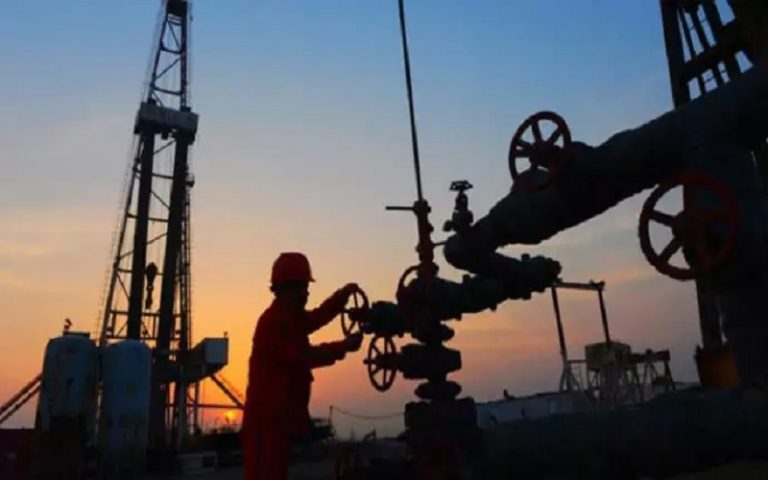
Iran’s oil industry is the bottleneck of the country’s economy. This is something that the regime has not been able to change over the past 43 years, and 85 percent of the country’s income relies on oil.
Therefore, the country’s economy is struggling to survive because of the sanctions, as many regime experts are saying. This industry in addition to the sanctions is also facing other challenges, which of course it due to the sanctions too, and are enough to collapse the economy.
There is a conflict in the speeches of the regime’s officials. On the one hand, they claim that despite the sanctions the oil industry is facing a boom, and on the other hand, they are forced to confess that this industry is so outdated and wracked that in the future Iran is forced to import gas while having the second most gas resources in the world.
The regime’s claim of self-sufficiency in the oil industry is something like that: “The Chairman of the Board of Directors of the Association of Oil Industry Equipment Manufacturers announced 85% self-sufficiency in the oil industry in the manufacture of equipment for the oil, gas, and petrochemical industry.”
Javad Oji, the regime’s oil minister, increased this number and claimed that the oil industry has become 100 percent independent, something that did not happen even in the best years of the regime in Rafsanjani’s and Khatami’s presidencies.
Oji in an interview with the state-TV News Channel on October 29, 2021, said: “We have a 100% readiness in the upstream sector to produce gas and our refineries, which their overhaul has been fulfilled. With the liquid fuel reserves we have in power plants and industries; Inshallah we will overpass the winter unchallenged.”
This claim is at the time, that this minister before said that because they did not prepare the South Pars gas fields and several other projects in due time, they are suffering irreparable losses.
What the regime’s oil minister has generally called ‘irreparable losses’ has been explained more explicitly by the regime’s oil experts and circles. Although the Iranian regime ranks third in the world in terms of natural resources for oil and gas, it was removed from the list of the world’s 20 largest oil and gas companies due to U.S. sanctions and regime mismanagement, and lack of proper infrastructure.
The State-run news agency ILNA on November 2, 2021, exposed that the regime is not able to invest in the country’s oil industry and wrote:
“Unfortunately, in the past years, the necessary investment in the oil and gas industry has not been made, while we need $160 billion in investment in this area to respond to the country’s needs,’ Oji said Sunday (October 31) at a meeting to coordinate the 2021 budget bill.
“He stated that if there is no investment for development, we will become importers of these products in the future, he added: ‘Projects that do not have economic justification will make trouble for the government, parliament, the economy, and the whole country.’”
The dark prospect for Iran’s oil industry has become obvious even just with these few confessions which reveal the regime’s lies. The truth is that the regime has destroyed the people’s assets due to insufficient attention and exploiting more than the capacity of the oil pits.
Iran’s Government Unable To Create Even One Million Jobs

In the latest meeting of Iran’s Supreme Employment Council, the main resolution that was approved was the creation of 1.85 million new jobs until the spring of 2023.
This resolution is facing skepticism in the government because many government economists say that the government does not have the opportunities for such a decision according to the country’s economic situation.
One thing adding to this skepticism is that over the past two years because of the expansion of the coronavirus, while Iran is one of the worst-hit countries in the world, according to the government’s statistics more than two million jobs have been lost.
Over the past decade, about 54 percent of the jobs in the country belong to the service sector, and this sector was the worst hit because of the coronavirus. The tourism and service sectors are not working properly, and most of the stores and supermarkets are facing lower visits because of the coronavirus protocols. Thus, most of the jobs that have been lost belong to the service sector.
Not having an acceptable vaccine outcome, this situation is getting worse without any progress, while many of Iran’s healthcare officials are warning the government about the sixth peak of the coronavirus pandemic.
Analysts expect some of these jobs to start again if the coronavirus crisis ends, but this has nothing to do with the government’s claim about the creation of about 2 million jobs, and it is strange but not unexpected from Iran’s government to use these numbers for its success of the creation of 2 million jobs.
The government is not able to create 2 million jobs, because they do not have the facilities, equipment, tools, and fields, and space in the country, according to Hamid Haj Esmaili, a market expert.
The reason for this is clear: in the tenth government, they tried it without any success. Therefore, they cannot claim that the previous government has created even one million jobs each year, to use it as an indicator for the success of the new government, and over the past decade, this did not happen in Iran at all.
The calculation about jobs created and lost shows exactly that the government was not able to create even one million jobs. In addition, the increasing number of people under the poverty line and the migration are other indicators of this reality.
The other question is with which capital will the government realize this. This is while the country is facing a huge budget deficit, and in the budget of this year nothing has been considered as the fund for job creation, and most of the budget’s destinations are not clear.
Accordingly, there is no budget to be invested in construction work, nor any investment to create employment.
The second important subject that should be considered for job creation is foreign investment. For a country like Iran, this reality is undeniable that without foreign investment they are not able to create jobs. Due to the regime’s policies, this is impossible in the coming decade.
The sanctions and the regime’s refusal to accept the condition of the FATF have made international money transfer for the regime impossible, therefore no one can make any investment in the country’s economy. Something that could be used but is not possible too is the use of the country’s private sector because in Iran there is no real private sector, and the only thing that exists is the so-called ‘government-run private sector,’ which is not in favor of the country’s economic interests.
The other two subjects that are making such a thing impossible are the imbalance of the banks which is one of the causes of the increasing inflation and the liquidity which has reached an unbelievable number. Something that is happening due to the regime’s wrong economic policies and a brokerage system that has created uncontrollable corruption.
