

- “Khavaran, the enduring document of crime against humanity in Iran, the 1988 massacre”
- “Until the prosecution of, and accountability for the criminals, we will neither forgive, nor forget.”
NCRI Women: Report on Women’s Protest in Iran in May
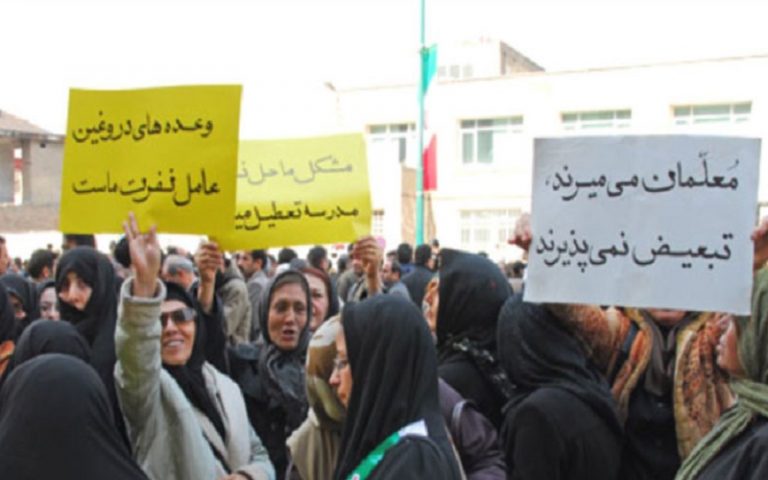
The Women’s Committee of the National Council of Resistance of Iran (NCRI) has released a report into the increased levels of protest by Iranian women during May, with a particular focus on encouraging others to boycott the election.
They advised that women from all classes and employment sectors have been taking to the streets in most cities and villages over everything from power outages, water shortages, house demolitions, non-payment of wages, and a massive number of other issues. The problems that these women are facing have increased the protests and the number of people who want to boycott the presidential election.
Protests by Iranian women were at least 127 in May, with 29 by teachers who want to be officially employed with the benefits that come along with that, 42 by students who want to avoid in-person exams during the pandemic, and many more by hospital staff over salary non-payment.
Brave women have also been taking part in resistance units activities to encourage people to boycott the elections. They’ve been putting up posters, handing out flyers, and writing graffiti, all with slogans like “Election boycott is a patriotic duty” and “My vote is overthrowing the Regime”. They’ve even made videos that are published on social media, like the mothers of the November 2019 martyrs, who declared that “We want the overthrow of this regime. We vote for the regime’s overthrow”.
One woman said: “Those who vote in this election are just as guilty as the regime officials who ordered the killing of our children. We will never forgive. Anyone who casts a ballot and participates in this election commits a crime and treason.”
In addition, the mothers of the victims of the 1988 massacre gathered in Tehran’s Khavaran Cemetery on May 13 to condemn the authorities for destroying the mass graves containing the remains of the martyrs. During their protest, they held placards and chanted slogans against the regime, particularly Judiciary head and presidential candidate Ebrahim Raisi.
Raisi was on the notorious Tehran Death Committee during the 1988 massacre and was responsible for sending thousands of political prisoners to their deaths, for which the United States has blacklisted him due to human rights violations.
The signs that they held up included:
Iran’s Election Boycott Looks Certain
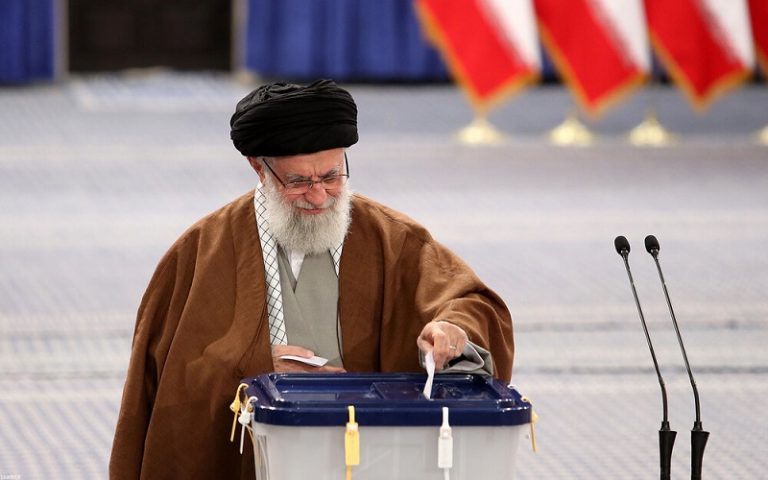
Iranians at home and abroad came together on Sunday to take part in a social media campaign where they spread their anti-regime messages under the hashtag #BoycottIranShamElections, which got tens of thousands of shares in just the first day.
The Iranian opposition, has been calling on the people to boycott the elections for years, citing that nothing has ever changed under the rulling theocracy or will ever change.
Over the past year, the opposition’s internal network have been leading a rigorous and well-supported campaign advocating an all-out election boycott, by putting up posters of opposition leaders on highways and anti-regime graffiti on public walls in the city. There were at least 250 demonstrations in April alone.
It’s no wonder that so many people wish to boycott the elections because voting will not only make no difference to the Iranian people’s everyday lives, it won’t make a difference to the eventual winner either.
Supreme Leader Ali Khamenei has already made it clear that he supports judiciary head Ebrahim Raisi for president, which means the rest of the establishment support him too. In fact, the Guardian Council disqualified over 500 candidates, including many high-profile ones like former Parliament Speaker Ali Larijani, to pave the way for Raisi’s victory.
Mohammad Mohaddessin, the chair of the National Councill of Resistance of Iran’s (NCRI) Foreign Affairs Committee, said Wednesday that this was Khamenei’s attempt to consolidate power as social unrest increases in the face of the various crises that Iran is facing.
This social unrest resulted in three nationwide protests over the past four years, with the people calling for regime change each time. The anger of the people toward the regime even led to the widespread boycott of the parliamentary elections in February 2020, despite the authorities attempt to play down the pandemic to get people out to vote.
That boycott was driven in part by the major protests, but also because of the opposition’s campaigns, so it stands to reason that after the officials’ botched handling of the pandemic, more people will boycott the elections.
Mohaddessin said: “The nationwide call for the boycott of the sham election has gained momentum, and people are openly calling for the regime’s overthrow. [This indicates that there is a] looming nationwide uprising waiting in the wings [that is] far more intense and widespread than in previous years.”
Alongside this online conference, there are many facts that this time the regime’s presidential election will be faced with the people’s boycott.
According to a video published on the Internet, in a free tribune that was held in the second square of Naziabad, Tehran, one of the youths from behind the tribune said, ‘Everyone who votes has oppressed the 1,500 killed in November (2019).’ There is no difference between the candidates and ‘all of them are looters.’ (Internet June 2, 2021)
Mark Dubowitz, the CEO of the Foundation for Defense of Democracies (FDD) in his tweet on June 1 about the regime’s election said: “Reminder: Frontrunner for IRI president sanctioned by US Treasury for “executions of individuals who were juveniles at time of their crime; torture, other cruel, inhuman, degrading treatment punishment of prisoners in Iran, including amputations.”
Attacking the regime’s sham-election Struan Stevenson former MEP in a tweet quoted his article about this election: “My article on Iran’s so called elections. Iran’s mullahs choose executioner as front-runner for president.“
He pointed: “Raisi’s fast track to the presidency is the clearest sign yet that the supreme leader is panicking. Since 2018, there have been three nationwide uprisings, with daily protests continuing in towns and cities across Iran. The economy has collapsed. More than 75% of the population now struggle to survive on daily incomes below the international poverty line. Children rummage through trash cans for scraps of food.” (UPI, June 1, 2021)
The situation for the regime is becoming so critical this time one the regime’s officials Hassan Abassi regrets about the regime’s decision to holing elections and said: “We have a problem that started from Mr. Khatami’s term in 1997. Before that, in the fifth parliament we approved and accepted the model of Western democracy in the elections. We made a mistake.
“Now, the UAE, which does not have elections, are not its people more relaxed? Qatar does not have elections, Oman does not have elections, this Turkmenistan above us does not have elections, are they not more relaxed? We made a mistake in holding the elections, we should not have elections like in the UAE and Qatar so that the people’s nerves are calmer.” (State-run daily Ghatreh, June 2, 2021)
Then Ali Sufi, government expert admitted: “We do not see any electoral excitement, the election atmosphere is not political, it is security. This planning (elimination of candidates) based on expediency is considered more important than elections.” (ILNA, June 2, 2021)
Iran Media Admits to Economic Problems Being Caused by Mullahs

Over the past few days, Iranian state media has been admitting to some of the economic crises that the country is facing. Given that these outlets are linked to the mainstream factions, this is a major admission.
The newspapers and websites already reveal the infighting that goes on between the factions, but their latest pieces highlight that the Iranian people are suffering under the yoke of the mullahs on all levels because of the authorities’ corruption and policies.
The Tabnak News Agency wrote on May 23: “Economists believe that the country is currently facing many challenges such as structural inflation, low economic growth, coronavirus pandemic and lack of rapid vaccination, nuclear negotiations and sanctions, demographic window and the employment problem, social security and pension funds, improving the business environment, water resources crisis, capital outflow in the country, and privatization.”
One of the major problems for the Iranian people in terms of the economy is the sky-rocketing inflation rate, which is making everything from food to housing more expensive.
The Sharq daily said that this had resulted in $350 billion stagnant capital in the housing sector, $650 billion in gold and coins, and $20 billion in the foreign exchange market, adding up to $1 trillion. They also noted that the point-to-point inflation rate from March 2020 to 2021 is 48.7%.
The Arman daily wrote: “The current issue of Iranian society, especially on the eve of the elections, is the livelihood of the people. People are facing challenges in daily life, and there is an employment crisis. On the other hand, salaries are not only not strengthened but also weakened. People’s purchasing power has dropped dramatically.”
The article then posited about how the economy got here, before explaining that the issue was “structural” and that while the economy is not an issue for the officials, it is for the people who experience homelessness, unemployment, and poor living conditions. The paper wrote that the authorities only care about the economy when it causes the people to revolt.
While officials often try to blame international sanctions for economic issues, the media and economists know that the true reason is institutionalized and systematic corruption.
Economist Hossain Raghfar said: “One of the issues today in the case of power outages is the issue of currency codes. China, India, Turkey, and Poland are [mining bitcoin] in Iran because of cheap electricity. Or the scarcity of meat. On the one hand, livestock is smuggled to the countries of the southern Persian Gulf, and on the other hand, meat is imported.”
The mullahs have a plan titled “Empowerment and sustainability of the Social Security Organization” but the ILNA has said that this actually “fundamentally changes” how pensions are calculated, reduces the benefits, and harms workers’ rights.
About this reality the head of Iran’s Chamber of Commerce Gholam Hossein Shafei stated in a meeting of economic activists with Mohsen Rezaei, one of the presidential candidates on June 1 said:
“Fortunately, in this period, the approach of all candidates is the economic approach. But it should be noted that we have witnessed this in the past.”
The head of the Iranian Chamber of Commerce continued: “Today, it is embarrassing that the share of the Iranian economy in the world economy has halved compared to 40 years ago, but we do not compare ourselves with the world. These are all the results of meaningless promises.
“Despite the mineral resources, and with the manpower capacity which is almost enough, but the question is, why are we now in such a situation?” (Sepehr News daily, June 1, 2021)
In an interview with ISNA, Kambiz Norouzi a juristic said that the plan to ‘ban officials from leaving Iran after the end of their responsibilities’ which is on the agenda of the Parliamentary Judiciary Commission, does not show the fight against corruption, but it shows the depth of corruption in the country. The dimensions of corruption in rent-seeking management have become so complex, widespread, organized, and deep that such plans have unfortunately been relied upon to combat it.” (Khabar Khoy website, June 1, 2021)
How the West Should Respond to Iran’s Presidential Election
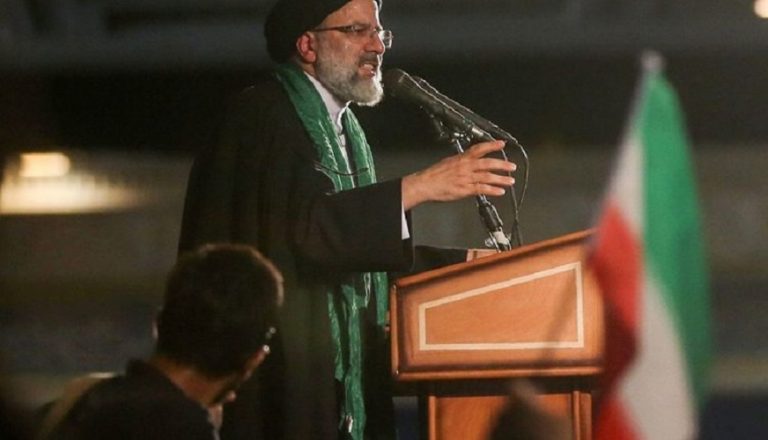
Iran’s Guardian Council, which supervises elections, announced last Wednesday the final list of approved candidates for the presidential election on June 18.
In a move that shocked many, the Council disqualified several prominent officials, including former parliament speaker Ali Larijani, but this is believed to be a way for supreme leader Ali Khamenei, who directly or indirectly appoints every Council member, to consolidate power amid the people’s rising discontent.
With Larijani out of the race, the frontrunner is judiciary chief Ebrahim Raisi, a long time high-ranking official, who was personally responsible for the deaths of hundreds of political prisoners during the 1988 massacre, where 30,000 dissidents were murdered in just a few weeks after show trials presided over by the so-called Death Commissions.
The simple fact is that elections in Iran are not about democracy; they’re a mere façade that only serves to legitimise the rulling theocracy to the Western world while crushing the people. Given the current situation in Iran, thanks to the failing economy, the pandemic, and increased human rights abuses, the government is in the weakest place it’s ever been and officials believe that this is the single most important election since the mullahs took power in 1979. Khamenei needed to consolidate power to maintain control for a little bit longer, which is why the Council disqualified all of the reformist candidates who stood a chance at winning.
After all, the people have already made their feelings clear about the current rulling system in two nationwide protests since the 2017 presidential elections, as well as the boycott of the parliamentary elections last year. It is believed that the people will be boycotting this election on a scale not yet seen; rejecting the idea that there is any difference between moderates and hardliners.
Maryam Rajavi, the president of the National Council of Resistance of Iran (NCRI) said: “There is no longer any excuse to appease and engage with this regime. Any interaction and cooperation with the mullahs will be in service of the regime’s repression and killing of the Iranian people and its obtaining of nuclear weapons and inciting warmongering in the region.”
The West must end its appeasement of Tehran, take a tough stance on the mullahs, admit that the elections are illegitimate, hold Tehran to account for its crimes against the Iranian people and the rest of the world, and stand with the Iranian people in their fight for freedom.
Goals of Iran’s Warmongering in the Middle East
“I bet if Biden warns he is pulling out of Iran deal negotiations if Hamas doesn’t stop the air strikes, the war would suddenly come to an end.”
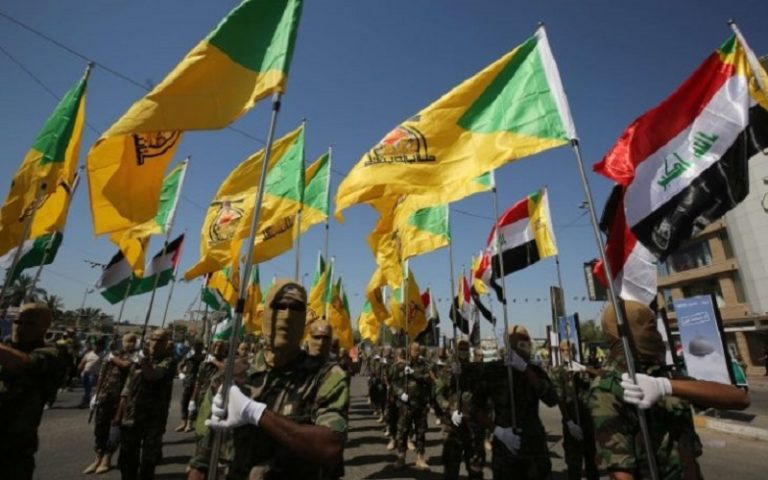
This meaningful sentence was expressed by Nikki Haley, the former U.S. Ambassador to the UN, about the recent 11-day Gaza war in which Iran was the first and the main beneficiary and had started this escalation to overshadow its two crises, its presidential election and the international nuclear deal known formally by the acronym JCPOA. Iran’s regime is known to use blackmailing, terrorizing, and starting proxy wars to reach its goals. Now the regime’s state-run daily Shargh is implying this, quoting Kayhan Barzegar, an expert of International Relations, speaking about the JCPOA and its relationship with regional affairs, which does not need any accurate explanations and by itself is eloquent enough, and the only remark by reading this text is just changing the name of Iran the country with Iran’s regime, because the country’s people do not have stand to gain anything in this at all. “One of the main roots of pessimism, beyond the technical issues of how to lift sanctions all at once, goes back to the West’s repeated demand that Iran accept that the nuclear talks include a wider range of regional issues and the limitation of Iran’s missile program. “But the West must understand that the successful revival of the JCPOA will itself lead to regional negotiations, because when the sense of strategic threat to Iran from the United States and the West is partially resolved by the revival of JCPOA, our country ‘naturally’ enters meaningful regional talks to resolve the current crisis. “This is because it has the upper hand in the fields in the region and is not worried about losing, and at the same time is aware that regional stability is necessary for the country’s economic growth and strengthening neighborly relations as a major principle of the country’s foreign policy. “The conclusion of the JCPOA goes beyond the lifting of economic sanctions, but also a testing ground for Iran to build trust and further dialogue with the West to resolve current geopolitical problems, including stabilizing Iran’s position and role in the post-Arab Spring vacuum and resolving the current crisis in Syria. Iraq, Yemen, etc. were within the framework of the country’s interests. “This point has been emphasized several times by the officials of our country on various occasions because our country itself suffers the most from instability and the presence of foreigners in the region. “Iran also increased its bargaining power and deterrence to achieve its larger goal of maintaining the country’s survival by reducing its nuclear commitments in several stages. Of course, unlike regional talks, which have the necessary capacity to enter a win-win equation, the issue of limiting Iran’s missile program is more of a win-lose equation and to the detriment of our country. “The West’s insistence on the issue of missile restraint has always been useless and the only disruption to the negotiation process. Indeed, the successful revival of the JCPOA is a ‘precondition’ for lasting regional stability. “The successful revival of the JCPOA and Iran’s relative withdrawal from the strategic distrust of the West and the United States is an important step toward Iran’s constructive and meaningful entry into resolving regional disputes. “Iran’s geopolitical superiority in West Asia allows the country to use its field role and diplomatic influence to achieve the larger goal of regional stability, which is undoubtedly in the national interest of the country. But what is needed is for the West to get out of the misconception of connecting the JCPOA triangle, regional issues and missiles, which in turn could deepen the existing process of mutual distrust and even lead to the instability of possible future nuclear agreements.” (State-run daily Shargh, May 30, 2021)I bet if Biden warns he is pulling out of Iran deal negotiations if Hamas doesn’t stop the air strikes, the war would suddenly come to an end. #IranSupportsHamas
— Nikki Haley (@NikkiHaley) May 17, 2021
70-Percent Increase in Price of Food in Iran
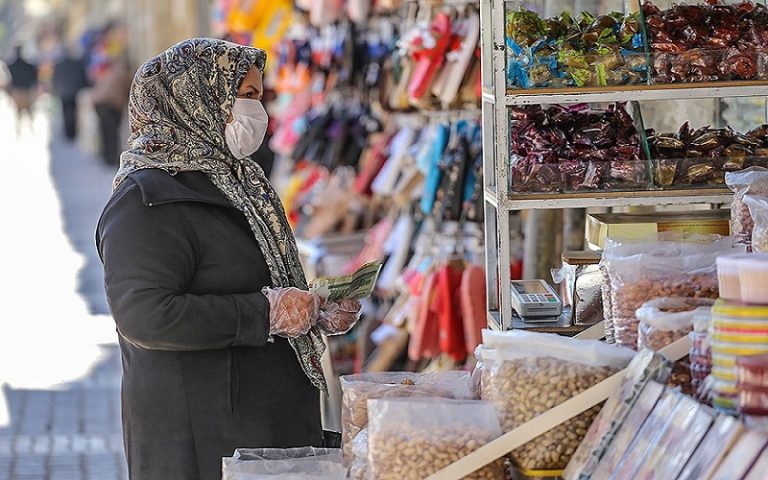
On May 23, the semiofficial ISNA news agency reported an over-70 percent increase in the prices of six foodstuff in Iran since the beginning of the new Persian year on March 21.
“The new Persian year began with an increase in inflation in three indicators of monthly, annual, and point-to-point,” ISNA wrote, adding, “This increase in the point-to-point inflation, which shows the increase in households’ expenditures in comparison to the similar period in the past year, reached 50 percent.”
Already, the Ministry of Industry, Mine, and Trade announced that the edible oil price has risen by 30 percent. Aside from edible oil, other items of the Iranian people’s food basket have seen major price jump.
For instance, citizens have witnessed a 78.4-percent increase in prices of the group of tea, coffee, cacao, soft drink, and juices; 75.3-percent increase in prices of the group of milk, cheese, and eggs; 73.1-percent increase in the group of fish and shellfish; 72.9-percent increase in the group of red and white meat, poultry, and their products.
Furthermore, officials have recently raised the price of the group of sugar, jam, honey, chocolate, and sweet, by 69.9 percent. They have also increased the price of furniture and home appliances by 67.7 percent.
Meanwhile, regarding the annual inflation, the group of transportation, oil and lipid, and furniture and home appliances faced the highest inflation with 65.1 percent, 61.3 percent, and 53.7 percent, respectively.
These unprecedented leaps in the inflation rate have driven the majority of society, particularly working families, to more difficulties. “More than 90 percent of workers do not have job security and live below the poverty line,” the semiofficial ILNA news agency quoted Habib Sadeghzadeh, deputy chief of the Labor Council in East Azarbaijan province, as saying on February 7.
On the other hand, the Iranian government refuses to practice the resolution 98 and 87 of the International Labor Organization. In such circumstances, workers do not have any choice except enduring backbreaking pressure.
“There is not independent, democratic, and worker-reliant union because temporary contracts and a fear about the future have silenced laborers and blocked their path for demanding,” quoted Sobh Eqtesad daily Faramarz Tofighi, the chief of wage committee of the Labor Council, as saying on May 23.
In response to people’s grievances, in an interview with the TV Channel Two on March 11, Deputy Minister of Industry, Mine, and Trade Abbas Ghobadi suggested people to avoid purchasing and consuming fruits due to their high prices.
Indeed, the government does not have any approach toward people’s growing demands except oppressive measures and ridiculous methods avoiding people of consumption.
“Should you be the deputy of a great ministry to provide such solution for the expensive prices of chicken, red meat, or other essential goods?” Mostaghel daily mocked Ghobadi, leaking parts of the real sentiments of society against Iran’s leaders.
A Massive Blow to Iran’s Agricultural Sector
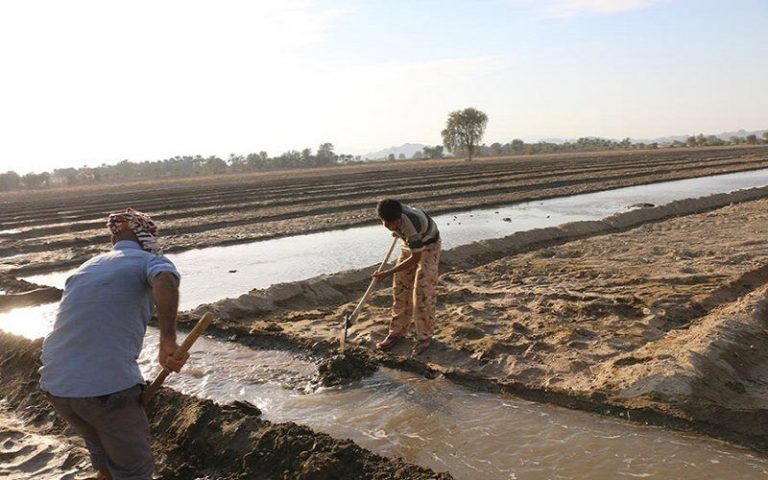
With less than a month left to the June 18 Presidential election in Iran, opponents of President Hassan Rouhani reveal surprising details about the administration’s horrible performance in the past eight years.
In its May 22 edition, Sepehr newspaper, affiliated with Supreme Leader Ali Khamenei’s faction, criticized the Rouhani administration for its failures in the agricultural sector. “The Rouhani administration made three mistakes in the agricultural sector leading to chaos in the market and loss of national resources,” Sepehr wrote. “The next administration has a heavy duty to revive farmers’ lost trust.”
Given the wrong infrastructures of production management, incorrect financial-exchange policies, absolute reliance on Iran’s 2015 nuclear deal with major world powers known officially as the Joint Comprehensive Plan of Action (JCPOA), and lack of export destinations, the agricultural products had the worst market in the past decades.
Farmers have been selling their products ten times lower than the market price. Mind-blowing expenditures compelled them to leave their products, and there are many videos circulating on social media showing tons of onion, tomato, potato, apple, orange, and watermelon left besides roads or in depots.
In his term in office, Rouhani suspended the abstraction law, which contrary to its name had focused on marketing tasks and responsibilities in the Agriculture Jihad Ministry. This suspension drove the market to much more chaos and instability. Based on the law, the ministry had burdened all tasks of production chain, which has partially improved farmers’ conditions and balanced the market.
Indeed, Rouhani suspended the law for two years following objections by the Parliament (Majlis) to establishing the Trade Ministry. In this context, neither the Industry, Mine, and Trade Ministry nor the Agriculture Jihad Ministry admitted the production chain’s obligations.
Rouhani practically laid the blame of economic dilemmas, including disorders in the market and above-40-percent inflation, on the Majlis’s failure to establishment of the Trade Ministry.
On the other hand, livestock farmers faced massive disadvantages. Systematic corruption rendered to shaping giant importers, which hoard feed. Whenever the feed became scarce, these importers sold their cargoes at five-fold prices, causing an astronomical rise in the price of protein products in the market. This is while livestock farmers have to spend 70 percent of their revenue for just feed.
Farmers and orchardists also deal with numerous dilemmas and difficulties, including high price of seeds, water shortage, and lack of government support. In this respect, farmers’ costs are far higher than their incomes.
“Here, farmers had produced significant amount of onion but there is no consumer. The government does not export, and farmers have to leave their products or stockpile in warehouses to decay,” said a farmer from the southeastern province of Kerman.
“Recently, the Rural Cooperative Organization buys each kilo of onion for 6,000 rials [$0.26]. This price does not cover farmers’ harvesting costs,” he added.
Watermelon farmer Alireza Dejkameh pointed to the dramatic distinction between the prices in farms and in the market. “In farms, dealers purchase each kilo [of watermelon] for 5,000 rials [$0.21] while they sell it for 50,000 rials [$2.17] in the market,” he said. “Once I sent a 25-ton truck of watermelon to Mahabad city [in northwestern province of West Azarbaijan]. The transportation cost was 13 million rials [$56.52]. I had to give the cargo instead of the rent.”
Notably, there are around 250,000 tons of apple and orange in Tehran’s depots and cold storages, according to the chief of grocers’ union. “These fruits are on the cusp of decay,” he added. However, the government neither distributes them among needy people, who have not eaten fruits for months, nor exports them to gain revenue.
The Challenges of Iran’s Next President
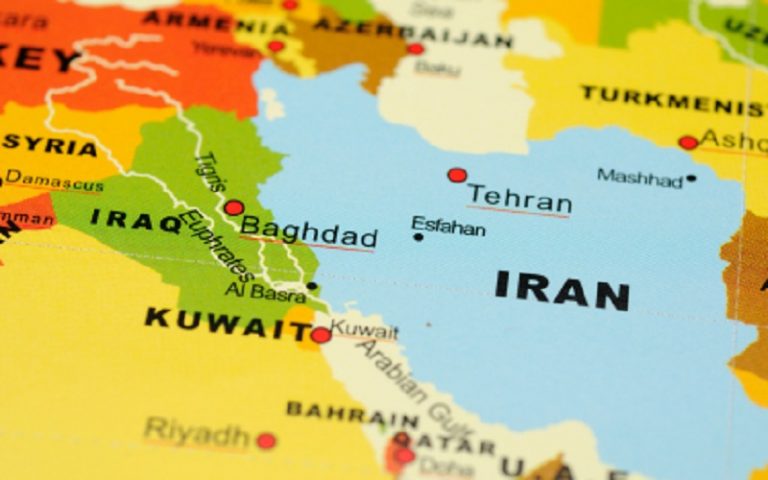
Iran’s next president will face an ocean of challenges, some of which are long-standing, some of which are inherited from the former government, and some of which have recently been added to the ocean of problems that have affected Iran’s economy, politics, and society.
Iran’s governments due to the rule’s wrong policies and the existence of the supreme leader phenomenon never had a bright prospect. And the next president, regardless of who it will be, will face the same fate and will inherit, then add, to the country’s ‘super challenges,’ as many of the state-run media are reporting.
Challenges like the coronavirus outbreak, the economic crises, the country’s budget deficit and the instability in the Middle East which the rule in Iran playing the role of the main source of all the wars in the that region.
Droughts and environmental crises
Iran will experience the driest summer in 2021 in the last 50 years. This is not the first time that environmental crises have threatened the country. Lack of a codified and accurate plan for natural resource management. Lack of programs to manage environmental crises such as water scarcity or air pollution in the country. Adding to this, forecasts indicate a decrease in rainfall in the new water year. In such a situation, if the new government does not see environmental issues in the form of a crisis, it will face a great challenge to formulate a comprehensive plan to deal with these crises, especially drought, and practical management of water resources in the country.The JCPOA and nuclear negotiations
Iran has been involved in international nuclear negotiations related to the JCPOA since 2013, and now, with the inauguration of the new US administration, negotiations on returning to the JCPOA and the lifting of sanctions have resumed since April this year. But this challenge is more complicated than it predicts. Iran’s government struggling to become a nuclear and an international community with the world powers at the forefront who are trying to prevent this Iran’s goal which is important for the existence of the mullahs’ rule. In between this crisis Iran’s government is trying to use the political gap between the world powers to reach its goal by weakening radical and decisive voices with the support of its lobbies and blackmailing with the help of proxy wars like the 11-day conflict between Hamas and Israel.Economic and social damage to the coronavirus
Iran’s dead economy because of the government’s long year corruption, looting and investigations in non-sense and non-economic activities has become worse with the coronavirus outbreak the rule’s intentionally ignorance of this danger for the people and the country’s economy. According to the statistics of Iran’s Coronavirus Economic Impact Monitoring Base in March 2019, the value of the country’s gross national product compared to 2018 had a negative growth of 1.2 units. Other details of the extent of this damage have also been published: Financial loss of about 202 trillion tomans of union units in Iran and damage of about 1.450 million union units. In addition to economic damages, the coronavirus pandemic has left deep social ills such as rising domestic violence, suicide, and depression in Iran.Unemployment
As Iran’s economic growth rate picked up negatively in 2020, the Statistics Center of Iran reported a 1.1 percent drop in the unemployment rate in the spring of 2020 compared to the previous year. Further analysis of the labor market by the Research Center of the parliament showed that the reason for the decrease in the unemployment rate was the decrease in the rate of the active population in the labor market, not the increase in employment. According to the statistics of the Ministry of Cooperatives, there were about 2.4 million unemployed people in the country until February 2020, which is a deterioration due to the continuation of the coronavirus and the beginning of the fourth wave at the beginning of 2021.Inflation
This well-known crisis is not Iran’s new problem, and the country has been involved in its increasing trend for many years. Inflation has always been on the rise in the 2000s, except for a few years. According to the Statistics Center of Iran, the inflation rate has jumped from 2019 to the end of 2020, and this trend has continued in the first months of 2021. The annual inflation rate, according to the Statistics Center, was 36.4 percent in 2020 and the point-to-point inflation rate was 48.7 percent. Also, the headline inflation rate in 2020 increased by 1.6 percent compared to the previous year. The trend of inflation jumping continues in 2021, the monthly inflation rate of goods and services group has increased by 2.7 percent and the annual inflation has reached 38.9 percent. Until the monetary policies and fiscal indiscipline of governments as well as the huge corruption are not reformed, the inflation crisis will be on the list of crises in the country at the beginning of each new government.Government budget deficit
The 100-day debates between the government and parliament over the 2021 budget had one main axis: the non-realization of the resources mentioned in the budget and the budget deficit of 320 trillion tomans of the government. Eventually, the government and parliament agreed to make changes to the budget in general, but this agreement did not prevent the formation of a budget deficit, and the head of the parliament’s economic commission recently estimated a budget deficit of 350 trillion tomans for 2021. Shortly after announcing the government’s budget deficit, the country’s treasury announced its decision to issue Islamic securities with government guarantees from the capacity of the 2021 budget law from May 22, marking the resumption of the government’s efforts to offset the budget deficit.The crisis of pension funds and the increase in the population of retirees
The number of retirees in the country is increasing year by year. The increase in the retirement population comes at a time when equalizing and balancing pensions has put more financial pressure on pension funds, which have been facing financial crises and resource shortages for years. Most of the country’s pension funds are on the verge of crisis or bankrupt and provide their resources from the government, and perhaps only the social security fund is providing a small part of its resources from government commitments and 70 percent of its resources from insurance. However, none of the funds have been able to invest their assets to cover their expenses due to wrong policies and are turning into unresolved crises.Housing market
The housing market, like other major markets in the country, has been plagued with problems such as price spikes and shortages of land and newly built units, because of the government official’s corruption and looting, rising material prices and land hoarding. Particularly in 2019, the market fluctuated sharply to the point where housing transactions in the capital reached their lowest level in 32 years, reaching 2,855. Housing prices also fell 3.5 percent this year but grew to 11.4 percent in the first months of 2020. Rising housing prices in 2020 widened the gap between household purchasing power and housing prices, making the housing market inaccessible to consumer buyers. The year 2020 was also a stagnant year in the field of housing construction, and the amount of construction in the capital reached the lowest possible level in the last 17 years.Population aging and reduced fertility
Iran has become 10 years older in the last 60 years. This is an overview of the aging population of Iran, which was raised by the Senior Advisor to the Ministry of Health in 2020. A serious crisis that is set to make Iran the world’s oldest country for the next 30 years, fueled by declining marriage and childbearing rates, especially during the coronavirus pandemic. People are afraid of marriage or childbearing due to issues such as fear of the future, despair, economic problems, insufficient income, lack of housing and other problems, and this issue caused the birth rate in 2019 to be about 170,000 less than the previous year. A trend which is continuing and none of the government’s baseless, worthless, and unprofessional plan due to its fundamental nature will solve this problem.Meddling in the Middle East and terror
Iran’s government has a long history in interference in other countries affairs, which has started with the foundation of the Islamic Republic by Ruhollah Khomeini, the Iran-Iraq as the first alibi and detonator of all the crises in the Middle East. This trend continued with formation of the Hezbollah in Lebanon, the support of the Houthis in Yemen. Then founding many other proxy groups in all the Middle East countries, especially Iraq after 2003 with the invasion of Iraq by the United States-led coalition. But that is not all. Another case which is mostly unseen but obvious are the regime’s extraterritorial terror activities which has led to many conflicts and chaos like the assassination of Rafic Hariri, which since then Lebanon has not a stable government. Or the assassinations of many of Iraq’s popular faces which weakened its society and paved the way for the rise of fundamental and extremist groups. But now Iran’s government is facing with a JCPOA+ in which these cases along with its missile case are included, which shows that the world cannot tolerate this regime’s destructive activities anymore.Eight Executions in Iran Within Two Days

In only two days, May 24 and 25, authorities in Iran hanged at least eight inmates in the prisons of Isfahan and Birjand, human rights defender association No to Prison – No to Execution reported.
Two Executions in Isfahan Prison
At dawn on Monday, May 24, authorities quietly executed two prisoners on drug-related charges in Isfahan Central Prison. Activists identified them Kianoush Ali-Moradi, 50, and Ahmad-Ali Qodrati. Mr. Ali-Moradi was married and had several children. The official media have yet to report these executions as of this report. The Iranian government continues to implement death sentences against inmates who have been convicted on drug-related charges while relevant officials have frankly admitted that the executions are fruitless. They say that not only are these executions ineffective in combatting drug smuggling, but they have brought reverse effect. Furthermore, it was supposed that the issuance of death penalty be limited based on new reforms in the Islamic Republic’s constitution applied in 2017. Judges were expected to consider one degree alleviation in drug-related cases. Nevertheless, authorities still hang inmates for insignificant charges.Execution of Six Baluch Inmates
At dawn on Tuesday, May 25, Iranian authorities mass executed six Baluch inmates in Birjand Prison on drug-related charges. They were from Zabol city, in the southeastern province of Sistan and Baluchestan. However, the judiciary had exiled them to Birjand Prison, in the northeastern province of South Khorasan. Activists identified one executed inmate as 34-year-old Javad Nakhaei, the son of Ali. There is no further information about the other executed persons. Their families had reportedly been banned from a last visit with their loved ones. These executions were also implemented silently, and state media avoided covering the news. However, an eight-second video obtained from a morgue shows the lifeless bodies of the executed inmates. Meanwhile, at dawn on May 19, authorities had hanged two other Baluch inmates identified Younes Totazehi and Abdollah Totazehi based on similar allegations in the same prison. In this respect, since the beginning of the new Persian year on March 21, at least 40 prisoners have been hanged in Iran. Human rights organization reported most of executions are carried out in secret meaning that the actual number of executions is far higher. According to Amnesty International’s 2020 report, rights organization and activists registered the implementation of at least 283 death sentences across the globe, aside from China. Out of this number, at least 246 cases were implemented in Iran indicating that well over half of worldwide executions were applied in the country. The Islamic Republic is also the record-holder of executions per capita, based on official stats. In such circumstances, Judiciary Chief Ebrahim Raisi is running in the Presidential election scheduled for June 18, which forecasts much more human rights violations to come in Iran.Mass Disqualifications in Iran’s Presidential Election
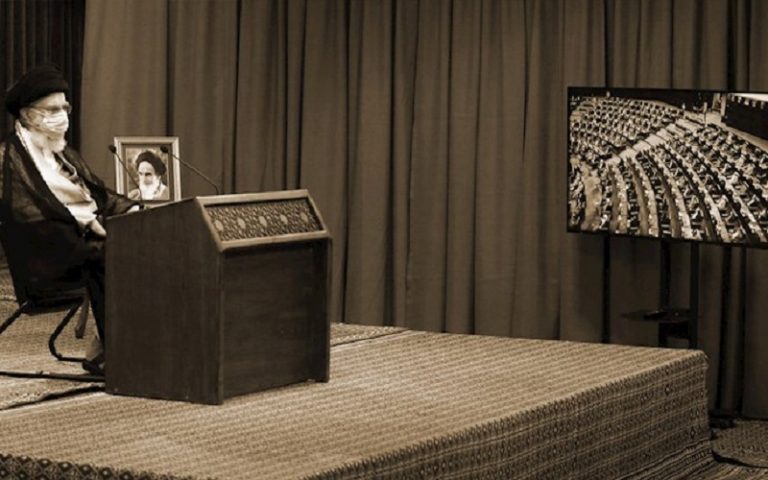
The mass disqualification of the presidential candidates in Iran has become a very serious event for the regime’s officials. Many of them fear the consequences of such an act by the Guardian Council, which is controlled and directed by the regime’s supreme leader Ali Khamenei, and warn about the people’s frustration, despair, and protests.
This time Khamenei decided to sort out the so-called reformist candidates and even people who were accused not to be loyal enough to the supreme leader, which were not even in the reformist wing, showing the critical and fragile situation of the regime, that cannot tolerate anyone anymore, except people like the mass murderer Ebrahim Raisi.
A regime cleric Mohammad Javad Hojjati Kermani, in response to the repression and elimination of the candidates by the Guardian Council, said in a message: “This was a coup de grace to the coffin of the republic of the system. The announcement of mostly one-color candidates for the presidency of 2021 is unbelievable.”
Wwarning about the people’s reaction, he said: “The discouragement and indifference of the whole people, as well as the large number of experts and observers, is very dangerous and is becoming more dangerous every day.”
This person in July 2019 declared the regime’s situation in one sentence and said: “Cancer has taken over the system; from the cultural and moral collapse to the spread of hypocrisy.”
The regime’s Assembly of Teachers and Researchers of Qom Seminary about this situation in a statement on May 27 said:
“The Constitution of the Islamic Republic of Iran introduces the ruling system of Iran after the revolution as a system that emerged from the will of the people, a system whose affairs and mechanisms proceed with the participation of the people in decision-making. Restricting the vote of the people and the republic of the system began when the Guardian Council resorted to approving oversight and made it its dominant practice.
“The indifference of the people has reached the point where in the last few days the spokesman of the Guardian Council has separated the legitimacy of the system from the participation of the people in the elections and has openly stated that the low participation of the people does not affect the legitimacy of the system. The words of the spokesman of the Guardian Council show that the Guardian Council does not recognize the republic and the votes of the people and puts its tastes and desires before the votes of the people.
“Why should the fate of this large country be tied to the tastes of a few people? Given the widespread disqualification of the candidates for the 2021 presidential election, everyone knows that this sham election will be unpopular, with no competition and with minimal participation, and it is the responsibility of the Guardian Council which has lost its legal legitimacy by trying to weaken the republic of the system.”
The state-run ILNA news agency quoting Parvaneh Salahshouri, one of the so-called reformists, on May 27 wrote: “Apparently, people think that whoever becomes president is not important for them, and all presidents have to follow certain orders, so their presence is meaningless.”
Fearing the people’s carelessness which can lead to protests, she added: “When a sense of meaninglessness is formed among the people, they withdraw from participating in the elections, and this withdrawal will gradually lead to social events, which we are more or less witnessing in society.” (ILNA, May 27, 2021)
Even the regime’s former president Mohammad Khatami, who is famous to be one of the heads of the so-called reformist faction but who as president repressed student protests in 1999, frustrated about this event, playing the role of someone who cares about the people, said:
“Real elections are a symbol of systems that have embraced democracy and, in turn, strengthen the golden principle of ‘the people’s right to self-determination.’
“What has happened these days during the introduction of the presidential candidates is the result of an approach, perception and action that has already narrowed the field for the people’s choice, and this time it has appeared more openly and unequivocally.”
Finally warning the regime about the consequences of such a decision, he added: “The republic of the system, which is based on the free vote of the nation and has become less and is fading, and is under more serious threat, and no current, with any affiliation and approach, can and should not be indifferent to this great danger.” (Information base of the head of the reform government, May 27, 2021)
Finally, the excluded candidate Ali Larijani about his exclusion and the dangers facing the entire regime after this event, said the regime will be ripped apart: “We must take internal harmony seriously, else we must rely to an external force. Good governance is impossible without a good economy. People should have a predictable life. The government must speak clearly to the people.” (State-run website Khabar Online, May 27, 2021)
