

US Congress Mounts Pressure on Khamenei and Rouhani
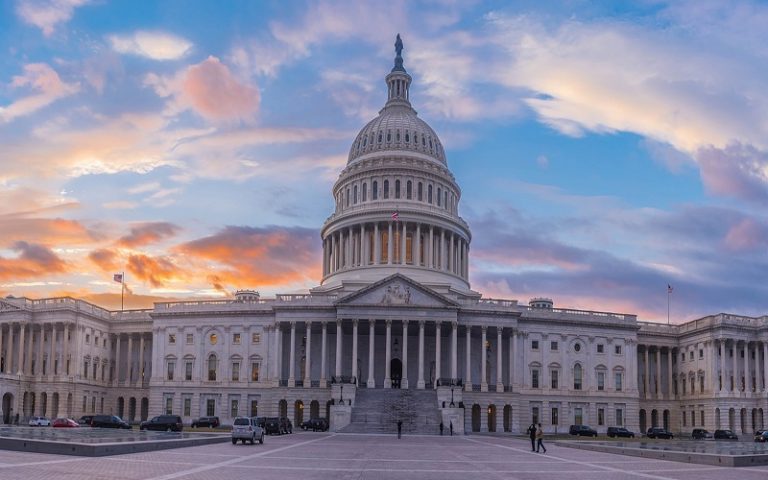
Recent news suggests that developments in the United States are rapidly turning against Iran’s Supreme Leader Ali Khamenei and President Hassan Rouhani.
Michael McCaul, ranking Member of the US House of Representatives Foreign Affairs Committee and Josh Gottheimer, a Democratic representative of Congress from New Jersey, sent a bipartisan letter to Secretary of State Antony Blinken. They asked the US Administration to use leverage to achieve a better and comprehensive agreement with Iran, including access to all Iranian nuclear sites by the International Atomic Energy Agency (IAEA).
The letter also pointed to some of the clauses of the 2015 Iran nuclear deal known as the JCPOA which from the view of lawmakers must be corrected. Also, Iran’s recent violation of the JCPOA was reminded in this letter.
The bipartisan letter’s signatories included a total of 12 Republicans and 12 Democrats.
Iran Keeps Students Illiterate and Teaches Them the Culture of Martyrdom
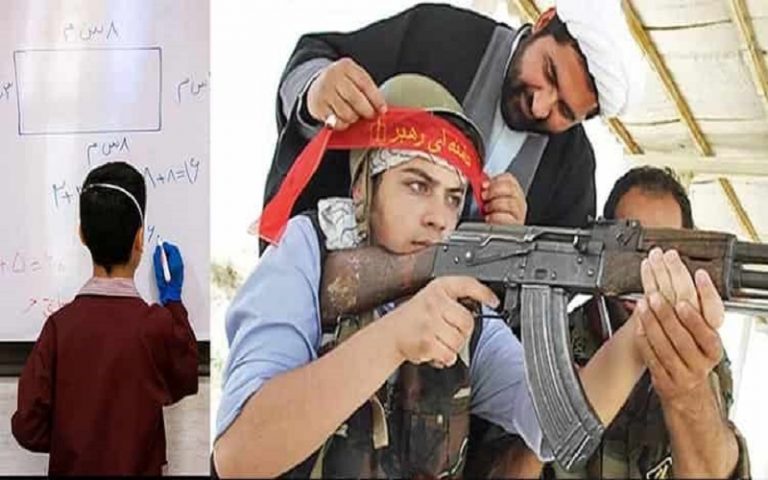
Iran’s state-run news agency Tasnim quoted an education authority as saying “that 30 percent of Iranian students will not be at least literate.
“He said that one third of Iran’s students do not meet the expected results from a student at his/her base. Of course, this is not a strange thing. For example, in the mathematical lesson, they should know the elementary arithmetic, but they do not even that too.”
Promoting death and superstition between students
Tasnim added that the results obtained by Iranian students in an international math contest tests are very weak. The poor results of Iran among participating countries of the Middle East region are because of the false policies in the educational system of the country. If we want to understand the origin and nature of this false policy, it is best to pay attention to the message of the Minister of Education to March 12, 2021, the day of commemoration of the martyrs. He wrote: “The Ministry of education (MEDU) is to institutionalize the ‘culture of martyrdom’ in the children of our dear Iran.” Therefore, it should not come as a surprise that one-third of the students of Iran are illiterate. The goal and strategy of Iran’s Ministry of education is not teaching science and the cultivation of human talent in the students. But instead, its strategy which is aligned with the regime’s main strategy, is spreading fundamentalism in the world, to brainwash the Iranian students, pinning its so-called ‘martyrdom’ in the brains of Iran’s students, as it did it with the many other nationalities and use them in its proxy wars in the Middle East. In Iran under the mullahs’ rule, such ‘martyrdom’ is nothing else than a culture of death worshipping and falling in the black hole of individual sins. The Minister of Education Mohsen Haji then emphasized that the Ministry of Education “in the direction of his intrinsic mission” is diligently to “culture martyrdom” more than ever in the institutions of the children of Iran, this “peaceful land of oppressed” and institutionalize it. One third of the students While this so-called Minister of Education sees his final goal in the spread of ‘martyrdom’, Massoud Kabiri, a faculty member of the Education Research Institute, said: “In the past, they said that a student would at least know the literacy of writing, but now some of the students are even not at this level, and do not reach it.” He added: “So much that Iran is in this area has trouble, we are not seeing such a situation in other countries. That is, if we consider a country that is weaker in terms of scores than Iran, its situation in this indicator may be better than Iran’s student’s abilities. This is very regrettable.” It should be remembered that during the Iran-Iraq war, more than 500,000 students were sent to the frontlines. And at least 33,000 students were killed in the war.Iranian State Media: 20 Million Iranians Have Contracted COVID-19
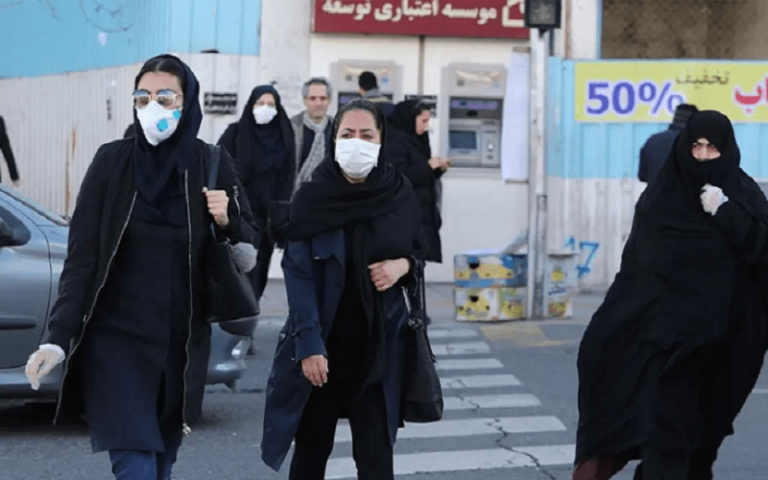
According to a survey carried out by an institute affiliated with Iran’s Ministry of Culture and Islamic Guidance on March 13, around 20 million Iranian citizens have contracted the novel coronavirus in the past year. Furthermore, amidst the fourth wave of Covid-19 in Iran, many citizens are concerned about being infected with the mutated strains of the illness.
“Fifty-two percent of people are seriously concerned about the infection of themselves or their family members with this disease. Eighteen percent have announced that they themselves have contracted the virus. However, this percentage is for people above 18 years old who account for 72 million of Iran’s population,” wrote Etemad daily, affiliated with ‘reformist’ faction, on March 13.
“If we calculate this percentage for the entire population, 15 million people are probably infected with the virus across the country. Of course, the real number is likely higher than these stats, which is consistent with the latest assessments that have declared around 20 million people to have contracted the coronavirus so far,” the daily added.
Furthermore, the official survey revealed that 1.5 percent of people had lost at least one of their family members due to Covid-19. “It can be said that the real coronavirus death toll is around 150,000 people, that is 2.4 times more than figures announced by the Health Ministry,” Etemad ended.
A day earlier, on March 12, the Iranian opposition Mojahedin-e Khalq (MEK/PMOI) stated that more than 230,000 Iranian citizens had lost their lives to the coronavirus across Iran. “Over 230,100 people have died of the novel coronavirus in 518 cities checkered across all of Iran’s 31 provinces, according to reports tallied by the Iranian opposition People’s Mojahedin Organization of Iran (PMOI/MEK) as of Friday afternoon local time, March 12,” wrote the MEK on its official website.
Previously, on April 28, 2020, Mohammad Reza Mahboub-Far, a member of the National Covid-19 Task Force, had challenged official statistics. “The current stats of the coronavirus illness are 20 times higher than what is being announced by the Health Ministry. This has resulted in the people not taking this lethal illness seriously… To this day, only six percent of the patients infected with COVID-19 have been identified across the country,” Vatan-e Emrouz daily quoted Mahboub-Far as saying on the same day.
Notably, in a mid-July 2020 cabinet session, President Hassan Rouhani announced that around 25 million Iranians had contracted the coronavirus, and 30 to 35 million others are exposed to the virus.
“The Health Ministry’s Research Center is reporting, ‘Until now, 25 million Iranians have been infected with the novel coronavirus and between 30 to 35 million others will be exposed to contract the virus in the upcoming months,’” Rouhani said.
Meanwhile, Massoud Mardani, a member of the National Covid-19 Task Force, announced 28 million people had been infected with the virus in an interview with Fars news agency, affiliated with the Islamic Revolutionary Guard Corps (IRGC) on July 19, 2020.
“Now, 28 million Iranians have contracted the novel coronavirus, 85 percent of whom are without symptoms. Given the health apparatus’ weakness, there will be many deaths if 35 million people become contracted,” he said.
Despite these facts, which have put Iran among the world’s most affected countries based on John Hopkins University’s August 23, 2020 coronavirus update, the Iranian government still refuses to procure reliable Covid-19 vaccines. Regarding the outbreak of the UK strain in all of Iran’s 32 provinces—according to Deputy Health Minister Qassem Janbabaei, the government’s policy toward the health crisis may result in much more fatalities.
In such circumstances, the international community must pressure Iranian authorities to procure Covid-19 vaccines from reliable companies and spare Iranians’ lives. Ignorance about the ayatollahs’ harrowing policies over the coronavirus crisis in Iran may drastically affect global efforts for eradicating the pandemic.
Sale of Inmates, a New Form of Trade by Iran’s Government
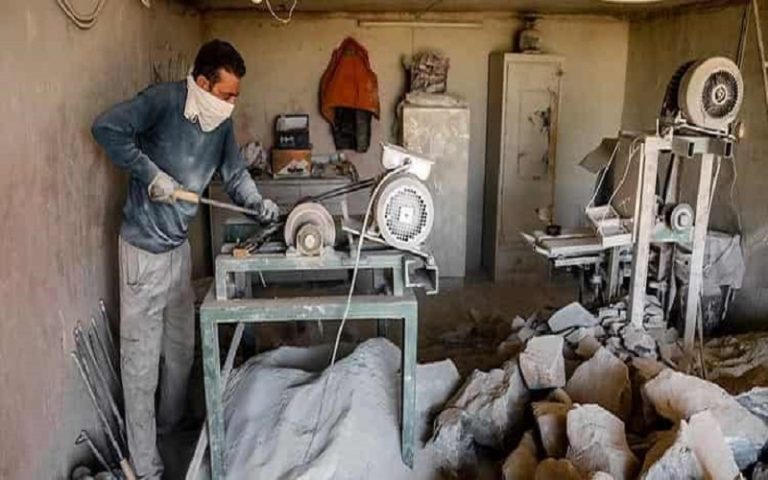
Mohammad Mehdi Haj Mohammadi, chairman of the Iranian state Prisons Organization, in a meeting with the Governor of East Azarbaijan, said something that was later harshly criticized in cyberspace. Referring to the shortage of prisons and problems faced by the construction of a new prison, he addressed the private sector: “The prisoners in Iran are cheap forces, which if used by the private sector, both would gain something.”
The meaning of this approach and this suggestion is nothing but the sale of prisoners at a low price to the looters of the private sector which are the Revolutionary Guards (IRGC) officers. This private sector is nothing else than the IRGC or the foundations under the command of Iran’s supreme leader Ali Khamenei.
This official said in another interview that “prisons should reach self-sufficiency and not be reliant on the budget of the government.”
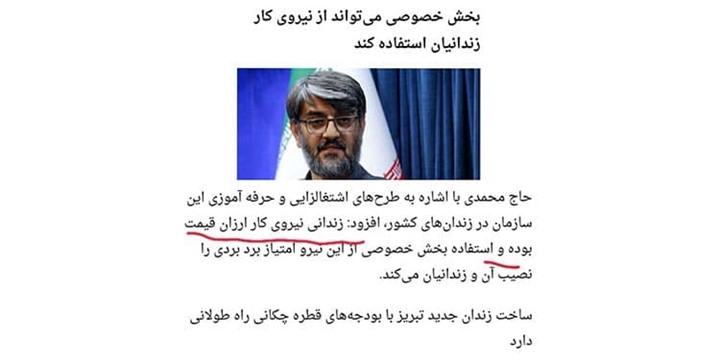 According to official statistics, more than 200,000 official prisoners are held in Khamenei’s prisons. Although the real number is thought to be far higher. These statistics do not include detainees with an unclear situation. According to the head of the Prisons Organization, more than 50 percent of prisoners have been used in prisons. That is, a population of 100,000 people are working, and the prison economy spins with the suffering of these prisoners.
The benefit from the slave work of the prisoners is entirely in the pocket of the state Prisons Organization. As an example, we read a report on Isfahan Prison:
“The prisoners working in Isfahan’s prisons are treated like slaves. In different factories with high profitability, they are exploited. The profit derived from the prisoners work in the is going to pockets of the prison organization and their agents in the relevant factories.”
Prisoners in the Ghale Shur camp and other places are subject to mistreatment and threat of return to prison. They treat the prisoners based on slavery laws. The prisoners are taken for forced labor. They are forced to tolerate insults and humiliation daily.
These prisoners receive 17,000 Tomans per day for at least 8 hours of work, and even that petty sum is not paid for months.
The owners of the work, which are usually stone factories in Isfahan, pay 80,000 Tomans for the prisoners’ daily work. But from this amount, for each prisoner, 63,000 Tomans is deducted by the Prisons Organization and a small amount of 17,000 Tomans is given to the prisoners.
Another example from Karaj’s central prison: At 5 km of Karaj’s Atashagah road to the Chalous road, which is under construction, the government uses 300 to 350 prisoners to build this highway. Without any payment. All money is poured into prison account. These prisoners are given furlough for just 2-3 nights.
Astonishingly, the number of judicial cases in Iran has reached 14 million annually. That is, one sixth of all Iranians are dealing with jail and court and the judiciary yearly. Is this not the result of anything other than poverty and unemployment?
When government officials use the public tribune and say something that many of the audiences of the virtual network describe as slavery and forced labor, it is clear that what is behind this thought is much worse.
According to official statistics, more than 200,000 official prisoners are held in Khamenei’s prisons. Although the real number is thought to be far higher. These statistics do not include detainees with an unclear situation. According to the head of the Prisons Organization, more than 50 percent of prisoners have been used in prisons. That is, a population of 100,000 people are working, and the prison economy spins with the suffering of these prisoners.
The benefit from the slave work of the prisoners is entirely in the pocket of the state Prisons Organization. As an example, we read a report on Isfahan Prison:
“The prisoners working in Isfahan’s prisons are treated like slaves. In different factories with high profitability, they are exploited. The profit derived from the prisoners work in the is going to pockets of the prison organization and their agents in the relevant factories.”
Prisoners in the Ghale Shur camp and other places are subject to mistreatment and threat of return to prison. They treat the prisoners based on slavery laws. The prisoners are taken for forced labor. They are forced to tolerate insults and humiliation daily.
These prisoners receive 17,000 Tomans per day for at least 8 hours of work, and even that petty sum is not paid for months.
The owners of the work, which are usually stone factories in Isfahan, pay 80,000 Tomans for the prisoners’ daily work. But from this amount, for each prisoner, 63,000 Tomans is deducted by the Prisons Organization and a small amount of 17,000 Tomans is given to the prisoners.
Another example from Karaj’s central prison: At 5 km of Karaj’s Atashagah road to the Chalous road, which is under construction, the government uses 300 to 350 prisoners to build this highway. Without any payment. All money is poured into prison account. These prisoners are given furlough for just 2-3 nights.
Astonishingly, the number of judicial cases in Iran has reached 14 million annually. That is, one sixth of all Iranians are dealing with jail and court and the judiciary yearly. Is this not the result of anything other than poverty and unemployment?
When government officials use the public tribune and say something that many of the audiences of the virtual network describe as slavery and forced labor, it is clear that what is behind this thought is much worse.
According to official statistics, more than 200,000 official prisoners are held in Khamenei’s prisons. Although the real number is thought to be far higher. These statistics do not include detainees with an unclear situation. According to the head of the Prisons Organization, more than 50 percent of prisoners have been used in prisons. That is, a population of 100,000 people are working, and the prison economy spins with the suffering of these prisoners.
The benefit from the slave work of the prisoners is entirely in the pocket of the state Prisons Organization. As an example, we read a report on Isfahan Prison:
“The prisoners working in Isfahan’s prisons are treated like slaves. In different factories with high profitability, they are exploited. The profit derived from the prisoners work in the is going to pockets of the prison organization and their agents in the relevant factories.”
Prisoners in the Ghale Shur camp and other places are subject to mistreatment and threat of return to prison. They treat the prisoners based on slavery laws. The prisoners are taken for forced labor. They are forced to tolerate insults and humiliation daily.
These prisoners receive 17,000 Tomans per day for at least 8 hours of work, and even that petty sum is not paid for months.
The owners of the work, which are usually stone factories in Isfahan, pay 80,000 Tomans for the prisoners’ daily work. But from this amount, for each prisoner, 63,000 Tomans is deducted by the Prisons Organization and a small amount of 17,000 Tomans is given to the prisoners.
Another example from Karaj’s central prison: At 5 km of Karaj’s Atashagah road to the Chalous road, which is under construction, the government uses 300 to 350 prisoners to build this highway. Without any payment. All money is poured into prison account. These prisoners are given furlough for just 2-3 nights.
Astonishingly, the number of judicial cases in Iran has reached 14 million annually. That is, one sixth of all Iranians are dealing with jail and court and the judiciary yearly. Is this not the result of anything other than poverty and unemployment?
When government officials use the public tribune and say something that many of the audiences of the virtual network describe as slavery and forced labor, it is clear that what is behind this thought is much worse. Iran’s Government and Its Fear of “A Virus Worse Than COVID-19”

The skyrocketing prices of livelihood have put Iran’s people in such a predicament that officials, state media, and government affiliates are constantly acknowledging it these days.
Among them is Abdol Reza Rahmani Fazli, the Minister of Interior, who said: “Expensiveness has caused many problems for people.” (Tasnim, March 11)
Mohammad Bagher Ghalibaf, the speaker of the parliament, also acknowledged the “Instability of prices”, and acknowledged the high cost of primitive goods, including chicken, and promised to control prices next year. Hosseini Eshkevari, a member of the assembly of experts, also said: “People are in need of livelihood. This unbridled expensiveness is not a joke. What is this for?” (State TV, Channel 5, February 19)
Meanwhile, as usual, Iran’s President Hassan Rouhani has attributed the dire economic situation and the high cost of goods to sanctions and said: “The high price of some goods is a consequence of the country’s widespread sanctions.” (President.ir, March 9)
He mentioned only ‘some goods’, while the price of all the necessities of life is constantly increasing, and the high price has taken people’s breath away.
And who does not know that the current inflation is on the one hand due to the institutionalized plundering by the regime and on the other hand due to the spending of people’s property for the anti-national nuclear project and foreign interference and export of terrorism to countries in the region.
Mohsen Rezaei, Secretary of Expediency Discernment Council, also said about this situation: “This inefficient state of the country’s economic management must really end. From 2014 to this year, people’s purchasing power has fallen sharply.
“Now an important part of the problems is not related to sanctions, but to poor management; with inadvertently, they have drastically devalued the currency against foreign currencies. You can also see the status of the stock market. Economic executives claim that both the wheel of the centrifuge and the wheel of people’s lives are circulating. Such words are strange and sad in this situation.” (Fars, March 7)
The Supreme Leader’s representative in the city of Mashhad, Ahmad Alam al-Hoda, while acknowledging the skyrocketing prices of goods and the scarcity of people’s livelihood, attacked the Rouhani government and said: “Today, we have many livelihood and economic problems in the country, and the issue of these problems and high prices has reached a point where the leadership has raised this as a high point of their concern.
“Are livelihood problems due to US sanctions? Sanctions may be effective, but our problems are not because of it. Our problems in the social arena today are mainly due to the fact that those in the country who became responsible are not jihadists. If the officials of this system and the country were jihadists, today, not a single bit of these problems, worries and livelihood worries would exist.” (Fars, March 11)
The spread of poverty among the people has caused the poor to remove meat from their table and the middle class to reduce its consumption. According to the report of the Parliamentary Research Center, in 2019, the amount of meat consumption by the middle class has decreased by more than 30 percent compared to 2017.
The Aftab-e-Yazd acknowledged on March 4: “Unfair distribution of resources not only makes it impossible for a section of society to enjoy the desired well-being, but also affects other individual and social aspects of their lives. How can a worker not suffer from complications when he or she is unable to support himself / herself?”
Earlier, Mohammad Mehdi Farvardin, a member of the parliament from Firoozabad in Fars province, had inevitably admitted: “In addition to the coronavirus, we are witnessing far worse viruses such as high costs, discrimination, rampant inflation and the devaluation of the national currency, which have disrupted people’s livelihoods and targeted the souls of our loved ones.” (ICANA, January 19)
And finally, the state media conclude:
“When survival is at stake, one example can be fury.” (Resalat, March 2)
Or “when the waves of dissatisfaction move and quickly turn into a not expected violent storm, it will not leave anything behind itself.” (Mardom Salari, March 7)
Iran: An Ocean of Disarray
“A brief study shows that there is no theory in any of the world’s five continents that creates different kinds of mess like economic, social, management, and other disarray as big as our country, which use as topic for writing articles and press notes,” wrote Iran’s state-run SMT News daily on March 7.
The author portrayed current dilemmas, crises, and disorders in Iran as an ocean. However, he only shed light on the approaches, remarks, positions, and performances of the Health Minister Saeed Namaki and his aides in the National Covid-19 Task Force.
Nonetheless, as he mentioned, it is possible to estimate numerous impacts on people’s lives and psyches through the eyes of a Tehran resident observing daily traffic. This is merely a drop of citizens’ ocean of problems, and officials do nothing except rubbing salt on people’s wounds.
The horrible situation in bus stations and metros has left no way to obey health protocols and social distancing in such places. This status quo is the outcome of harrowing inconsistency in policymaking and planning for containing the coronavirus outbreak and decreasing the toll between health and administrative officials.
Such circumstances have become regular in Iran while President Hassan Rouhani looks at citizens from inside his vehicle, describing people as happy and satisfied. However, the people realize that even municipal officials in Tehran do not implement anti-coronavirus decisions made by the President and his aides.
Hollow Predictions
Today, many former officials explicitly admit they ignored research and inquiry of dilemmas since the beginning of the Islamic Republic regime when rooting society’s grave crises and catastrophes. “No one of our slogans was about improvement. Instead, we chanted many ideological slogans. However, it is impossible to pursue ideological slogans when the people are hungry,” SMT News added.The FATF Crisis and the Incurable Pain of Iran’s GovernmentThey surprisingly declare their regret about forgetting science, saying that scientific works have become worthless. They bluntly say, “Most university theses are either fabricated, purchased, or copied of others’ works.” In reality, unscientific methods and decisions have brought enormous dilemmas to the people, breaking society’s back. For instance, people have to struggle hard to achieve one bottle or package of edible oil, which is among essential needs. While health professionals warn about the fourth wave of the coronavirus outbreak, impoverished people should spend a lot of time in crowded queues for edible oil while its price has increased by 100 percent compared to the past year. “Experts say that [the government’s] refusal to allocate adequate foreign exchange currency during recent months and an increase in smuggling of goods are the most important reasons for the shortage of goods and high prices. The approved price of one package of edible oil is 610,000 rials [$2.44]. However, the people have to purchase each package for more than 1,200,000 rials [$4.80],” wrote Bazar website on March 7. This is while no day goes by without people’s protests against rampant poverty and miserable conditions. In response, officials conceal this horrific situation with fabricated statistics. However, some media and officials have leaked parts of the truth during political rivalries. “According to latest reviews, Iranian workers are among the poorest annuitants in Mideast countries. Countries whose workers were already working in Iran have better conditions. In a country like Iran, many people suffer from livelihood dilemmas, and the middle class is shrinking every day,” wrote Ebtekar daily on March 8.
What is the Solution for Iran’s Confused Economy?
Last week, Supreme Leader Ali Khamenei ordered officials to resolve high prices. He said that the solution is in experts’ methods. However, he seemed to intentionally show himself unaware of what is going in the country. In recent months, all experts had frequently provided details and statistics about the root of economic dilemmas, which all end up pointing to the Supreme Leader’s Office and his imprudent officials. “Since 2018, economic challenges had drawn out the country’s economy to a stormy sea. With a glance at the market and public services, we realize a confusion in economic decision-making and confronting the situation,” wrote Akhbar-e Sanat daily on March 8. However, Ali Shamkhani, the Supreme National Security Council (SNSC) secretary, implicitly mentioned the country’s critical situation. “Imprudence is the greatest problem of the Islamic Republic of Iran… Until now, the government covered up or balanced out this problem with oil revenues,” said Shamkhani in an interview with Radio France Internationale on March 8. Such dilemmas are merely parts of the government’s disarray and hyper challenges. However, each one is likely to ignite a major crisis for officials, which goes to public distrust and hatred toward the entire ruling system. In the past four decades, the government resorted to violence to silence society’s cries and demands. However, it just fueled public ire and placed more nationwide protests on the horizon.Pressure on Biden Could Also Effect EU Policy Toward Iran’s Regime and Its Opposition

This week, 140 US lawmakers joined in sending a letter to President Biden which urged him to pursue a more comprehensive agreement with Iran. Biden has previously stated that his administration’s long term goal is to secure concessions from Tehran with respect to not only its nuclear program but also its penchant for destructive regional intervention, its support of international terrorism, its domestic human rights abuses, and so on. But the letter seems to reflect skepticism on both sides of the aisle regarding the prospect of Biden achieving that goal with the tactics that are presently on the table. Half of the signers were Republicans and half were Democrats.
Similar bipartisanship was on display the previous week when the Organization of Iranian-American Communities hosted an online conference to discuss the issues raised by a House resolution that is currently under consideration and has acquired more than 150 co-sponsors from both parties. H. Res. 118 focuses on human rights abuses and crackdowns on dissent inside Iran, but notes that those crackdowns are driven by the Iranian regime’s anxiety over an ascendant opposition movement that demonstrates “the Iranian people’s desire for a democratic, secular, and non-nuclear Republic of Iran.”
The resolution and subsequent letter stop short of dismissing the sort of diplomacy that is apparently favored by the Biden administration. But in highlighting the notion that the Iranian people and the Iranian regime are at odds over the country’s nuclear program, the resolution hints at an idea that was endorsed by a number of the lawmakers in the OIAC conference: that the only means of conclusively preventing Iran from obtaining a nuclear weapon is by facilitating a change of government in Tehran.
None of the lawmakers in question intended this idea to be an endorsement of policies that would lead to another war in the Middle East. Rather, they referenced it in support of one of the central objectives of the House resolution, namely encouraging the US and its allies to stand with “the people of Iran who are continuing to hold legitimate and peaceful protests against an oppressive and corrupt regime.”
Those protests have been taking place on a particularly large scale since the end of 2017. In December of that year, a protest over worsening economic indicators broke out in the city of Mashhad and helped to spark a nationwide uprising that encompassed well over 100 other cities and towns. As the movement spread, its participants laid the blame for the economic situation at the feet of the theocratic regime, arguing that the system that created those problems could never be the system that fixed them. With slogans like “death to the dictator,” protesters clearly endorsed the platform of regime change that had long been embodied by the country’s main opposition group, the People’s Mojahedin Organization of Iran (PMOI-MEK).
Even the Iranian regime’s supreme leader acknowledged in the midst of those protests that the MEK had played a leading role in planning and staging them. His statement served both as a warning about the prospect of further uprisings and as a call for widespread crackdowns by institutions like the Islamic Revolutionary Guard Corps. Both of these things ultimately came to pass. Before the initial uprising ended in January 2018, dozens of protesters were killed and thousands were arrested and placed at risk of torture, multi-year prison sentences, and even execution. Yet Iran’s activist community soon responded favorably to a call from NCRI’s President-elect Maryam Rajavi for a “year full of uprisings,” and in November 2019 there was another nationwide outbreak of protests, this one at least 50 percent larger than its predecessor.
Warnings persist about further MEK-led demonstrations. The coronavirus pandemic has served to limit the opportunities for organizing those demonstrations on a very large scale, but it has also provided still more fuel for the Iranian people’s deep resentment toward the regime’s mismanagement of domestic affairs and its tendency to place self-serving objectives – such as the furtherance of the Iranian nuclear program – ahead of the dire needs of the civilian population. In the meantime, protests have periodically flared up in specific regions, and some of them have been very serious.
On Monday, as she delivered her keynote speech at a virtual conference marking International Women’s Day, Maryam Rajavi described the event as taking place “amidst the blazing flames of the blood-drenched uprising of the people of Baluchistan.” She went on to say that the protests in question, which were sparked by the Islamic Revolutionary Guard Corps killing several fuel porters in the border region who had complained of the regime’s interference with their only available source of income, were “the continuation of the volcanic eruptions in November 2019.”
Unfortunately, the implications of both movements are similar, in that regime authorities promptly responded with unrestrained violence, driven no doubt by their fears over the threat those movements posed to their very hold on power. During the November 2019 uprising, the IRGC opened fire on crowds of protesters in various cities and, according to a report from Amnesty International, aimed their weapons with fatal intent. Consequently, about 1,500 participants and innocent bystanders are estimated to have been killed in the space of only a few days.
Dozens of people have reportedly been killed in the past week or so in the province of Sistan and Baluchistan, but authorities have also cut off access to the internet in the region, thereby slowing the release of information to the wider world. The death toll may prove to be much greater than initial reports have suggested, but regardless of the specific numbers, they might have been avoided if Western leaders had been more willing to listen, over the past several years, to calls for a different set of tactics aimed at a broader set of goals in dealing with the Islamic Republic.
The potential impact on Iran’s human rights situation might have been realized regardless of whether these appeals were aimed specifically at addressing prior abuses or just at the nuclear issues that are much closer to the center of the international community’s attention. In the US, House Resolution 118 represents one of these categories, while direct appeals to President Biden tend to represent the other. And both categories are well-represented among America’s European allies, as well, even though there is arguably less grounds for optimism regarding the response from officials representing the European Union and its member states.
The EU’s head of foreign policy, Josep Borrell, made a point of visiting Iran within days of taking on his role. That happened to be only about a month after the November 2019 uprising and the resulting crackdown, and Borrell’s effort to expand relations with the Islamic Republic seemed to convey Western indifference to the plight of the Iranian people, as well as to Iran’s nuclear commitments, which were then on the verge of being violated in their entirety.
This message can still be reversed, but in light of the differences between Borrell’s Iran policy and Biden’s, the latter will surely have to take the lead. He can do so by continuing to exert pressure on the Iranian regime over its full range of malign activities, rather than reentering the deeply flawed nuclear agreement that his predecessor exited in 2018. In this way, the US can begin to express support for the Resistance movement that stands ready to transform Iran into a peaceful and non-nuclear state. And once the EU sees the value of that policy, it may finally follow suit.
Iran’s Refusal To Vaccinate People Against COVID Is Backfiring
Since late last year, countries all over the world have been doing their best to ramp up the vaccination effort and achieve some sort of normal for their citizens, hopefully before mutated strains can increase the danger.
But one exception to that is Iran, a country that did not institute a lockdown and is now refusing to buy any of the World Health Organisation-approved vaccines, which is putting the entire world at risk, not to mention Iranians.
Health officials are openly worrying about the problem, with Tehran Covid-19 Task Force chief Alireza Zali saying that the new wave of the coronavirus is “inflaming” on March 1, and National Covid-19 Task Force spokesperson Alireza Raisi saying on February 20 that the “pace of virus spread is very high”.
Things have gotten so bad that even the state-run media has criticised the government’s mishandling of vaccinations, with Arman daily saying that global vaccinations are effective, even against mutated strains, and criticised the mullahs for failing to protect the people.
The ISNA news agency stated that this vaccination campaign has so far protected 225 million people in 100 countries, while Mostaghel daily pointed out that even war-torn Afghanistan has got half a million doses, compared with Iran’s 0.
This is all because Supreme Leader Ali Khamenei banned the import of the vaccine for no logical reason, which means that other officials are having to promise that a domestic vaccine will be out later this year, subject to testing.
The truth is that Iranian officials are terrified that a Covid-19 vaccine would allow the Iranian people to once again gather in large crowds, which would mean increased protests against the system and the overthrow of the mullahs. For the past 12 months, the government has used the pandemic as a way to suppress protests and keep its shaky grip on power.
Before the pandemic, the Iranian government was facing multiple protests each day and had only barely suppressed three major protests in two years. It would not at all be surprising that another one would happen again so soon.
The coronavirus allowed Khamenei and President Hassan Rouhani to divert attention away from their disastrous rule, with Khamenei even describing it as a “blessing”. But they couldn’t even manage that because the attention is back on them now and the Iranian people are furious at being used as cannon fodder against the virus.
The Hamdeli daily wrote: “Officials’ behaviours seem that they missed the increase in coronavirus death toll and new cases, and cannot tolerate a decrease in Covid-19 patients.”
Two Iranian Fuel Porters Killed; Three Injured Last Week
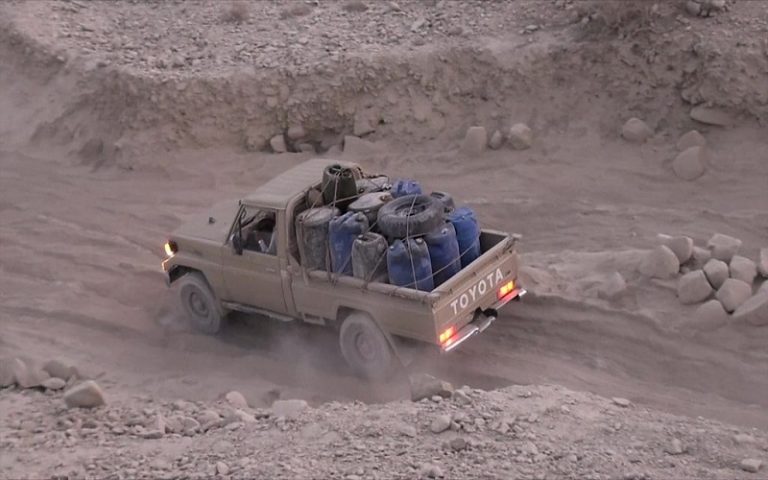
Two Iranian fuel porters have been killed by security forces in the past week, while three others, including a child, were injured in arbitrary shootings.
In Mirjaveh, south-eastern Iran, on March 8, the Iranian police began shooting at a car that was driving away, causing the car to overturn. The crash killed fuel porter Attallah Gazouie and seriously wounded his father Mazar, with reports circulating that he’s in a coma.
On March 7, in Minab, the police also shot at the car of fuel porter Ahmad Qasemi, who died because of the seriousness of his injuries.
On March 6, 16-year-old Mehdi Kolahizadeh Mameghani was shot by police in East Azerbaijan Province, north-western Iran. An informed source told the Human Rights News Agency that police had stopped Mameghani and asked for his license, but because the boy was young and scared over not having a drivers’ license, he drove off.
The police fired three shots before the car stopped and now doctors at the Shohada Hospital in Tabriz are worried that Mameghani may never walk normally again.
The previous day, police opened fire on border porter Hojat Ghezavat without warning in Kermanshah, western Iran. Ghezavat was taken to the hospital.
The Iranian government has a long history of arbitrarily shooting and killing porters carrying goods across the borders. In fact, it’s something that happens almost daily, with the authorities claiming that they are cracking down on smuggling.
But the truth is that the Revolutionary Guards (IRGC) control a major smuggling network and they actually want to stop people from taking away business from them.
The border porters in Iran carry heavy loads across mountainous terrain on their backs for little money. They wouldn’t do all this, risking not just murder at the hands of Iranian police, but also avalanches, falls, hyperthermia, and hypothermia, if they weren’t desperate.
There are so few jobs there that they have no choice if they want to continue putting food on the table. This is a direct consequence of the Iranian’s 42-year corruption binge, whereby Iranians in border provinces face unrivalled unemployment.
The 2020 report by a human rights group stated that at least 204 Iranians were directly or indirectly killed or wounded by state security forces that year alone, with 74 killed – including 36 border porters, 5 fuel carriers and 33 other citizens – and 130 injured. How can this continue to happen without consequence?
Where Have the Wages of Iran’s Workers Gone?
“Our salary is 2 million, the poverty line is 10 million.”
This cry reflects the dimensions of pain and suffering that have now gripped most Iranians. Indeed, why, when the poverty line in Iran is at least 10 million tomans, is the minimum wage about 2 million and set to be just 3.5 million next year? To answer this question, we first review Article 41 of the government’s labor law.
“Workers’ wages, salaries, benefits and holidays should be calculated based on the real inflation rate in the country.
Every year, the Supreme Labor Council is obliged to determine the minimum wage for different parts of the country or different industries according to the following criteria:
- The minimum wage for workers according to the percentage of inflation announced by the Central Bank of the Islamic Republic of Iran.
- The minimum wage, without taking into account the physical and mental characteristics of the workers and the characteristics of the work assigned, must be sufficient to support a family, the average number of which is announced by the authorities.”
Iran’s Army of Starving People Like a Volcano Waiting To ExplodeMeanwhile, the Revolutionary Guards (IRGC) and companies affiliated with the supreme leader Ali Khamenei, which control about 60 percent of the country’s economy and labor force, are making huge profits. Last year, the price of a Pride (Iran’s car) increased from 25 million tomans to 105 million tomans. But have the salaries of the workers of Iranian machine-building factories also quadrupled? Has a more than 100 percent increase in housing prices led to a more than 100 percent increase in the wages of construction workers? The answer is no. The reason why workers’ wages are not increasing is the astronomical looting that the regime and Khamenei’s affiliated institutions are taking away from them. The state-run Etelaat newspaper wrote on April 11 about the approval of the Supreme Labor Council of the regime: “The minimum wage for workers in the new year (2020) was set at 1.835 million tomans.” Of course, this figure was so scandalous that they had to add another 100,000 tomans a few weeks later to silence the protests. The state news agency ILNA on July 30, 2020, in a report, acknowledged that: “It is always the government that opposes raising workers’ wages.” “The government has always opposed a fair and adequate increase in workers’ wages, claiming that wages are inflationary; This is while the government itself has been one of the biggest generators of inflation by injecting liquidity under the name of subsidy. This fact is clearly seen even in the published official reports.” As for the minimum wage in 2021, the situation has not changed much, and it is many times at risk of poverty. The government website of Eqtesad-e-24 in this regard wrote: “At present, the government has set a minimum of 3.5 million tomans for its employees next year, and it seems unlikely that government representatives will pay more than this amount.” But where do the rights that are denied to workers and other disadvantaged sections of society really go? The state-run newspaper Arman on February 17 gave an indication, writing: “If today people are forced to borrow even in the field of “bread”, one should look for the money that is spent and forgiven by the children of officials.” The next example is related to the burdensome situation of the retirees in Iran, as the state-run daily Gostaresh News on January 27 admitted: “A sum of money was taken from Shasta (Iran’s Social Security Investment Company), and this was apparently given to the national team coach, and this number, which was the money of the retirees, by order of the First Vice President to give the debts of the Ministry of Sports and Youth in some way.” The next example is the regime’s proxy forces. Former member of parliament Heshmatollah Falahatpisheh on May 20, 2020 said: “We gave 20 to 30 billion dollars to Syria.” And the last example was given by the regime’s parliament speaker Mohammad Bagher Ghalibaf as he said: “When the country has $100 billion in revenue, we have inflation and high costs, and our oppressed people become weaker, and speculators, rent-seekers, and profiteers get fatter. When the country earns $15 billion, we still have inflation and high prices, again, rent-seekers become fatter, the underprivileged become more and weaker. This is the fact.”
