

Iran’s Economy Beneath the Rubble of War and Structural Collapse
The Collapse of Investment in Iran, the Shutdown of Production, the Downward Spiral of Life
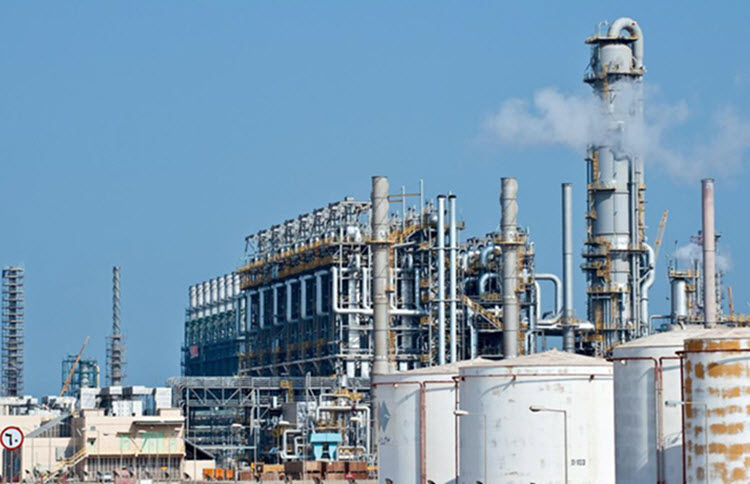
The collapse of investment in Iran means the halt of production, widespread unemployment, capital flight, the destruction of job security, and the decline in the quality of life for millions of citizens. Official statistics and statements by economic activists show that the Iranian regime is not only incapable of rebuilding the engine of production but has also pushed the economic environment into a stage of chronic instability through ineffective policies.
Lack of investment causes businesses to first reduce production capacity, then lay off workers, and ultimately shut down. Reports published in recent months provide a clear picture of this downward spiral.
Inflation, Economic Crisis, and the Silent Collapse of Iran’s Middle Class
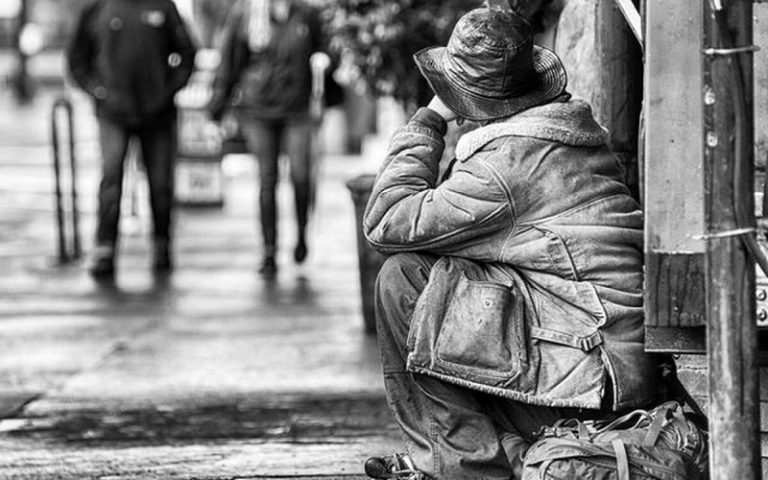
The state-run Khabar Fori website wrote on May 22 that the phenomenon of “poor billionaires” has become one of the latest signs of the economic crisis in Iran. Economists say the uncontrolled rise in asset prices, alongside the collapse of people’s purchasing power, has created a society in which many citizens appear wealthy on paper but in practice are unable to manage their daily lives.
In recent years, chronic inflation and the collapse of the national currency’s value have caused housing, automobiles, and durable goods prices to increase severalfold. These price increases have turned millions of people into owners of billion-rial assets. Nevertheless, a large portion of these same individuals face financial crises when trying to pay for basic living expenses, car repairs, home maintenance, or even essential goods.
40 million Iranians Below Poverty LineEconomists describe this situation as the rise of “poor billionaires,” a term that reflects the obvious contradiction in today’s Iranian economy — a society in which the apparent value of assets has expanded while the real ability to live has collapsed. Amir Hossein Khaleghi, an economist, told the state-run Fararu media outlet on May 14: “We are now facing a type of poverty that cannot be measured solely by income or wealth indicators. A phenomenon gradually revealing itself is the emergence of poor billionaires — people who may appear to own cars or homes, but cannot afford their maintenance, repairs, and ongoing expenses.” The sharp rise in housing prices is one of the most important factors behind the emergence of the poor billionaire class. Today, even a small apartment in Tehran is worth tens of billions of rials. However, many owners of these homes have incomes that do not even cover ordinary living expenses. The same situation can be seen in the automobile market. Cars that until a few years ago were among the cheapest products on the market now carry billion-rial price tags. Yet the owners of these vehicles struggle to pay for insurance, repairs, or even replacement of consumable parts. The economic crisis has also spread to household appliances and consumer goods. Many families can no longer afford to replace worn-out appliances. Repairing a refrigerator, washing machine, or air conditioner has become a heavy expense for part of society. Experts say the phenomenon of poor billionaires is the direct result of structural inflation and failed economic policies. Under such conditions, the increase in the nominal value of assets not only fails to create prosperity but also imposes greater psychological and economic pressure on people.
The Erosion of the Middle Class Under the Pressure of Crisis
At the same time as poverty expands, Iran’s middle class is rapidly eroding. A social group that once played an important role in cultural, social, and economic activities now spends a large portion of its income merely on survival. Many teachers, engineers, office employees, doctors, and professionals who until a few years ago were considered part of the middle class are now crushed under the costs of housing, food, healthcare, and transportation. Living expenses have risen so sharply that a large segment of society no longer has the ability to participate in cultural and social activities. Economists warn that the destruction of the middle class confronts any society with deep political and social crises. This class usually plays a balancing and reformist role. However, economic pressure has pushed it closer to the lower classes. Meanwhile, many analysts speak of the emergence of a state of social suspension in Iran — a situation created by the regime in which people neither have hope for the future nor see any clear prospect for change.The Regime’s Economic Deadlock
Experts trace the roots of the current crisis to decades of structural corruption, mismanagement, ineffective policies, and heavy government spending. Chronic inflation, the collapse of the national currency’s value, sanctions, and political crises have pushed Iran’s economy to a point where even asset owners feel poor. Alongside these problems, uncertainty and regional crises have also pushed the economy into a deep recession. Many businesses remain in a state of limbo, and people have stopped making non-essential purchases. It must be emphasized that a structure which for decades has spent the country’s resources on corruption, repression, and political projects has now brought society to a stage where even owning assets is no guarantee of a quality life. Under such conditions, millions of citizens are struggling merely to preserve the minimum necessities of life.40 million Iranians Below Poverty Line
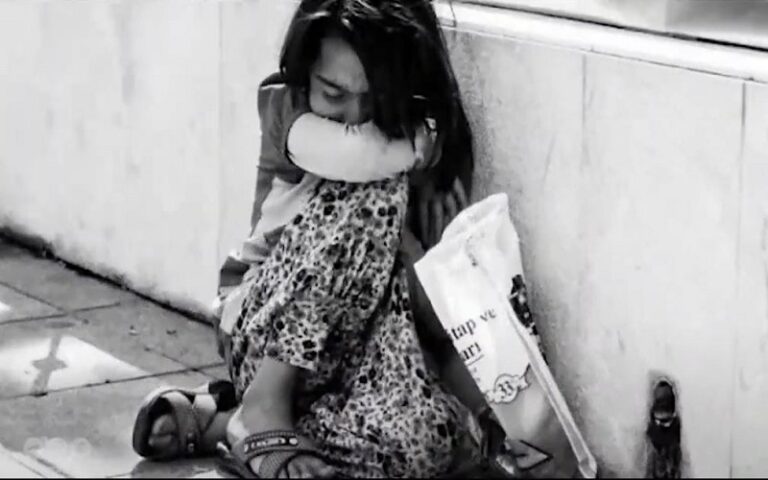
Iran’s economy entered the year 2026 while many economists and regime-affiliated research institutions warned that the country has entered an unprecedented stage of livelihood crisis, chronic inflation, and expanding poverty. According to experts, this situation would not be easily controlled even if conflict were to stop and external pressure were to decrease.
At the “Iran Economy Outlook 2026” conference, reported by the state-run daily Donya-e-Eqtesad, economists presented a bleak picture of the country’s economic future, in which recession, inflation, unemployment, and the collapse of household purchasing power have reached a dangerous level.
Gasoline Price Hikes in Iran Trigger a New Battle Over People’s LivelihoodsMasoud Nili, a regime-affiliated economist and former government economic advisor, warned that Iran’s economy has moved beyond chronic crisis and has now entered a stage where crises are openly emerging. Citing official data from the Statistical Center of Iran, he said inflation in some sectors has exceeded 100%, and even if conflicts end and political tensions ease, Iran’s economy will not return to normal conditions any time soon. According to Nili, Iran’s inflation structure has entered a phase in which controlling it is far more difficult than in previous periods. He stressed that reducing inflation from very high levels is no longer possible through conventional monetary and fiscal policies, and that Iran’s economy is entering a dangerous cycle of inflationary expectations and continuous devaluation of the national currency. At the same time, the labor market crisis has taken on new dimensions. Nili stated that in a country with a population of about 87 million, the number of employed people is less than one-third of the population, and between 2019 and 2025, despite an increase of nearly five million people in working age, net employment has remained almost unchanged. He added that more than 5.5 million people have joined the inactive population, a figure indicating widespread despair in finding jobs and the withdrawal of a portion of society from the labor market. In the same meeting, Hojjat Mirzaei warned about Iran’s economic growth outlook and predicted that the country’s economic growth in 2026 would be between -8.8% and -10%, a figure that could worsen further if oil exports decline further. He emphasized that intensified sanctions, disruption in foreign trade, currency shocks, import restrictions, government budget deficits, rising transportation costs, and internet outages have all led to a new wave of inflation and unemployment—a wave that directly targets Iranian households’ livelihoods. Mirzaei also warned that if the current situation continues, between 3.5 million and 4.5 million more people will fall below the poverty line, and the number of poor people in Iran will exceed 40 million—a figure that could involve nearly half of the country’s population in poverty. Official reports and economic studies in recent months have also provided clear signs of worsening living conditions. Continuous increases in food prices, housing rent, medicine, and healthcare services have pushed a large part of the middle class toward poverty. In many cities, the cost of renting a small apartment exceeds the average wages of workers and employees, forcing households to spend most of their income on necessities. At the same time, the depreciation of the rial and the continuous rise in exchange rates have imposed a new wave of price increases on markets. Experts say that continuing this trend could lead to the closure of more production units, rising unemployment, and a deeper economic recession. Meanwhile, the situation of informal labor has also been described as critical. According to statistics presented at the conference, about 39% of Iran’s workforce is employed in the informal sector—a group without insurance, job security, or social protection, and more vulnerable than others to economic shocks. Hossein Rajabpour also stated at the meeting that after the 12-day war in June last year, the positive trend in the labor market stopped, and the industrial sector experienced the largest decline in employment. Taken together, these indicators show that Iran’s economy is no longer facing a temporary recession or ordinary crisis but has entered a stage of structural crisis whose consequences are visible in the daily lives of millions of citizens—from shrinking household livelihoods and rising labor migration to expanding poverty, inequality, and social despair.
Telecommunications Employees in Tehran Protest Four Years of Unpaid Claims
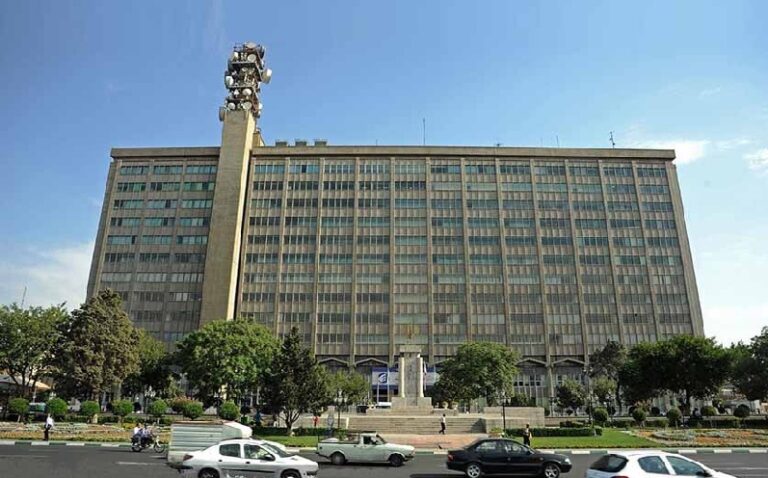
Four years of non-payment of overdue telecommunications wages have pushed employees’ livelihoods to the brink of collapse. According to a report by the state-run ILNA news agency on May 21, the Tehran Province Telecommunications Workers’ Association, in a letter addressed to the CEO of the Telecommunications Company of Iran, requested payment of the frozen monthly and annual welfare benefit differences from the past four years and their full, unconditional payment based on personnel employment regulation 89/24 from the beginning of the year. Continuing the wave of labor protests across various worker and service sectors, telecommunications employees in Tehran Province demanded payment of overdue claims and the full implementation of employment regulations.
Urban Poverty in Iran: The Collapse of the Economy of Life in Major CitiesThe issue of overdue telecommunications wages has repeatedly become one of the main subjects of protests by the company’s employees in recent years. Workers say that part of their legal compensation has not been paid over the past four years, and company management has not provided a clear answer regarding when these claims will be settled. The association’s letter referred to the difficult living conditions of employees. Rising living costs, severe inflation, and declining purchasing power have caused many telecommunications employees to face serious economic hardship. This is while a significant portion of their benefits and welfare payments remain unpaid.
Overdue Telecommunications Wages and the Livelihood Crisis of Employees
Telecommunications employees say their income does not even match minimum living expenses. According to published reports, the salary ceiling of many workers and employees in private and state companies is several times below the poverty line. Nevertheless, even those limited wages are often paid late or incompletely. The protests over overdue telecommunications wages come as various labor groups in the oil, steel, education, transportation, and telecommunications sectors have repeatedly protested their wage conditions in recent months. Many of these protests have centered on unpaid wages, elimination of benefits, and declining job security. The protesting employees believe that the Telecommunications Company has refused to fully implement its legal obligations. They emphasize that welfare payments and wage benefits are part of employees’ legal rights, and eliminating or freezing them violates employment regulations. Meanwhile, labor activists say the absence of independent labor unions and restrictions on the right to strike are among the reasons this situation continues. According to them, many workers and employees lack the ability to independently pursue their demands, allowing employers and managers to ignore wage rights.Protests Over Overdue Telecommunications Wages Continue
Tehran telecommunications employees have warned that continued disregard for wage demands will create broader dissatisfaction. They are demanding the immediate payment of all overdue claims and the full implementation of employment regulations. The protest over overdue telecommunications wages is not merely a labor demand. It is part of the broader livelihood crisis among workers and salaried employees in Iran. Economic crisis, inflation, and structural corruption have placed heavy pressure on the lives of millions of families. In recent years, labor protests have become one of the most important manifestations of social discontent. Many employees and workers believe that the country’s resources, instead of being used to improve people’s livelihoods, are being spent on networks of power and government corruption. This issue has further deepened the divide between society and the ruling structure.US Prepares for Another War with the Iranian Regime
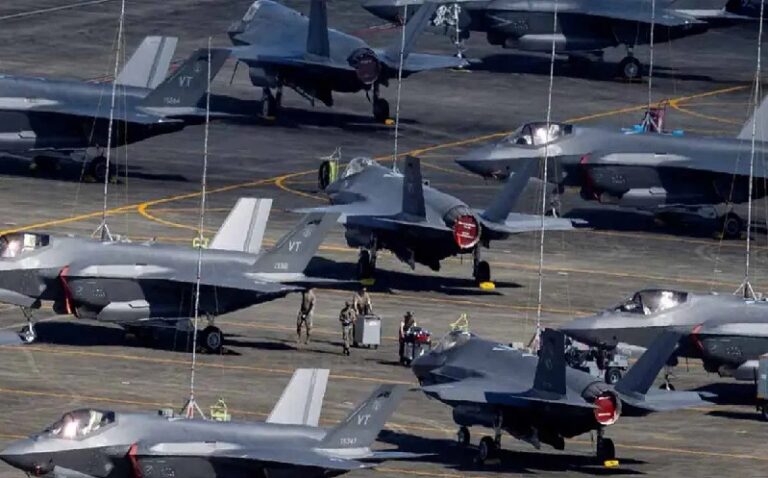
Images released from the U.S. Navy’s Carrier Strike Group 11, led by the aircraft carrier USS Nimitz, show that the strike group has been deployed in the Persian Gulf, a move that comes amid rising tensions between Washington and Tehran.
Axios news website and CBS reported that U.S. President Donald Trump held a confidential meeting on Friday, May 22, with his closest advisers in the Oval Office at the White House.
Axios, citing sources who have been in direct contact with Trump, wrote that the U.S. president is seriously considering the option of new attacks against Iran’s regime unless progress is achieved in negotiations at the last moment.
According to the report, the meeting reviewed the latest status of talks with Iran and possible scenarios in the event that negotiations fail.
CBS also reported, citing several informed sources, that a number of members of the U.S. military and intelligence agencies have canceled their vacation plans, a move that according to these sources could be related to preparations for possible new operations.
It is also reported that U.S. defense and security officials are reviewing and updating the list of standby forces at military bases outside U.S. territory.
Trump had previously written on Truth Social that due to the current situation, he might not be able to attend the wedding ceremony of his son, Donald Trump Jr.
Referring to the ongoing conflicts and the Iran issue, he said that he is trying to attend the private ceremony, but his packed schedule and political and security developments have made his attendance difficult.
Meanwhile, Axios, citing a Pakistani security source, reported that Asim Munir’s trip to Tehran took place within the framework of efforts to achieve an agreement between the United States and Iran, reduce tensions, and begin broader negotiations.
More Than 300 Global Figures Urge UN Action Over Rising Executions in Iran
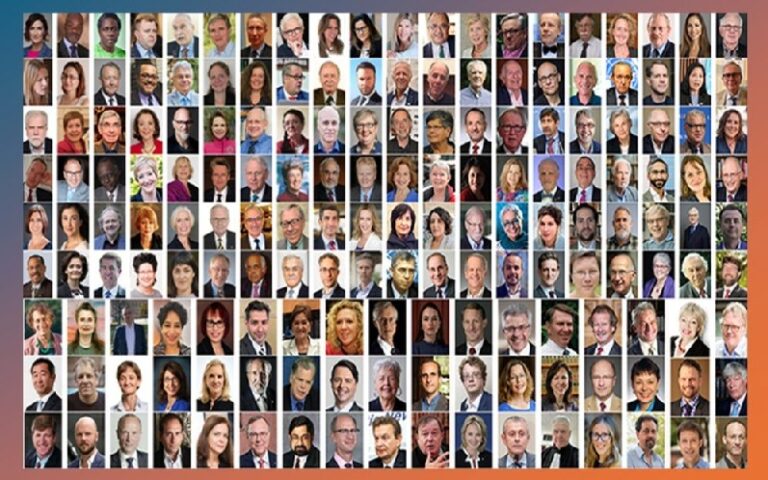
A coalition of more than 300 international legal experts, former United Nations officials, Nobel Prize laureates, judges, and human rights advocates has issued an open letter calling on the United Nations to take immediate action over what they describe as a sharp escalation in executions and political repression in Iran.
The letter, dated May 18, 2026, was addressed to UN Secretary-General António Guterres and warns that Iranian authorities are increasingly using capital punishment as a means of suppressing dissent. The signatories include several internationally known figures, among them former President of the UN Human Rights Council Joachim Rücker, former International Criminal Court President Sang-Hyun Song, former UN Special Rapporteur on Iran Javaid Rehman, and Nobel Peace Prize laureates Oleksandra Matviichuk and Jody Williams.
“We write to express grave concern over the accelerating use of the death penalty in Iran as an instrument of political repression,” the signatories stated in the letter.
The appeal comes amid a broader crackdown that the signatories say has intensified since regional tensions escalated on February 28, 2026. According to the document, Iranian authorities have expanded arrests, executions, and restrictions on civil liberties during the period of unrest. The letter alleges that the Iranian government has launched what it describes as a coordinated campaign involving “mass arrests, torture, and state-sanctioned killing,” while also restricting internet access across the country in an effort to contain dissent and limit the flow of information. At the same time, the signatories warned that the pace of executions has accelerated significantly. “The scale of executions has reached levels not seen in nearly four decades,” the letter stated. Particular concern was raised over the treatment of political prisoners and detainees accused of connections to opposition groups. The document specifically referred to individuals linked to the People’s Mojahedin Organization of Iran (PMOI/MEK). “At least eight political prisoners have been executed solely due to affiliation with the People’s Mojahedin Organization of Iran (PMOI/MEK), while at least 11 others currently face execution on similar grounds,” the signatories wrote. The letter also highlighted the cases of protesters who were reportedly sentenced to death after expedited judicial proceedings. According to the document, some detainees were executed on charges such as baghi (“armed rebellion”) following what the signatories described as summary trials. The appeal drew attention to statements attributed to senior Iranian judicial officials, citing findings from the Independent International Fact-Finding Mission on Iran. According to the signatories, those statements reflected official support for harsher punishment against demonstrators and political dissidents. “The Prosecutor General declared that all protesters had committed moharebeh (‘enmity against God’), a capital offence, while the Head of the Judiciary instructed judges to show ‘no mercy’ in protest-related cases,” the letter stated. The document also referenced estimates from the Fact-Finding Mission indicating that more than 50,000 protesters have been arrested during recent unrest across Iran. Beyond the current wave of arrests and executions, the signatories argued that the situation reflects a longer pattern of impunity inside the Iranian system. The letter connected recent developments to the 1988 mass executions of political prisoners, which remain a central focus of international human rights concerns related to Iran. “This wave of executions cannot be separated from Iran’s long-standing culture of impunity, rooted in the 1988 massacre,” the letter stated. The comparison to the events of the late 1980s was presented as part of a broader warning that the absence of accountability over past abuses has contributed to the continuation of severe punishments against political opponents and protesters. The signatories urged the United Nations and member states to pursue concrete measures aimed at halting the current crackdown. Their demands included an immediate suspension of executions, the release of political prisoners, the restoration of unrestricted internet access, and the establishment of international accountability mechanisms to investigate alleged violations. The appeal concluded with a warning directed at the international community. “Silence in the face of these atrocities only reinforces impunity,” the letter stated. The intervention by the group of international figures comes as Iranian judicial authorities continue to call for faster implementation of sentences in security-related cases. The letter was released following months marked by executions, widespread arrests, and internet disruptions in the aftermath of anti-government unrest across the country. In recent years, international human rights organizations and UN experts have repeatedly raised concerns about Iran’s use of the death penalty, particularly in cases involving political detainees and protesters. The latest appeal places renewed pressure on the United Nations to address allegations of systematic repression and to consider additional mechanisms aimed at monitoring and investigating developments inside Iran. The involvement of former UN officials, international judges, and Nobel laureates has added further international visibility to the issue, while the letter itself reflects growing concern among human rights advocates over the direction of Iran’s internal security policies and judicial response to dissent. As calls for accountability continue to grow, the letter signals an effort by prominent international figures to place the issue of executions and political repression in Iran more firmly on the agenda of the United Nations and the broader international community.🚨 Former presidents of the UN General Assembly, Human Rights Council, and Security Council & @IntlCrimCourt and former UN Special Rapporteur on Iran @JavaidRehman are among +300 signatories of new letter urging @antonioguterres & @volker_turk to act now to #StopExecutionsInIran. https://t.co/0grzneH6vG pic.twitter.com/5ac0izK3TD
— M. Hanif Jazayeri (@HanifJazayeri) May 18, 2026
Iranian Citizens Struggle to Cover Expenses as Housing Crisis Deepens

In recent months, the housing crisis has become one of the country’s most important economic and social concerns. Continuous price increases, declining purchasing power, and surging construction costs have pushed this crisis to a point where many families no longer have hope of becoming homeowners. What is seen today is a deep and structural crisis that is affecting people’s daily lives.
In recent years, the decline in the national currency’s value has played an important role in intensifying the housing crisis. With the currency’s depreciation, land and housing prices have surged dramatically. This has turned the issue of homeownership from an economic problem into a widespread social issue. Many young people who until a few years ago had some hope of buying a home now feel trapped in the face of this housing crisis.
Iran’s Housing Market Under the Rubble of WarIn fact, the housing catastrophe in Iran has reached an acute stage in which runaway growth in purchase prices and rents has pushed a large part of society below the housing poverty line, to the point that phenomena such as living in small rooms, shared rentals, and forced migration to city outskirts have sharply increased.
The crisis of rising construction material prices
The increase in construction material prices has also put additional pressure on the market. Builders complain about rising costs, and this has directly affected the final price of housing units. As a result, the housing crisis has intensified not only on the demand side but also on the supply side. The higher construction costs rise, the greater the gap between people’s incomes and housing prices becomes, meaning a deepening of the crisis. On the other hand, the role of speculation in the land and housing market cannot be ignored. A significant portion of housing units are held as investment assets. This trend has led to a reduction in real supply and an artificial increase in prices. In such conditions, the housing crisis has moved out of an economic cycle and turned into a speculative one.Migration to city outskirts
In large cities, the situation is more severe. Rents have risen unprecedentedly, and many families have been forced to move to city outskirts. These relocations have themselves created new social consequences. The housing crisis in these areas is not only about high prices but also about lifestyle changes and widespread psychological pressure on families. The important point is that the homelessness crisis is no longer limited to lower income deciles. Even the middle class has gradually been pushed out of the housing market. This situation shows that the crisis has become a widespread issue and has crossed class boundaries.Housing crisis and social hope
From a social perspective, the consequences of this situation are very extensive. An increase in marriage age, a decline in birth rates, and growing psychological insecurity are among the direct results of this crisis. When access to housing becomes difficult, planning for the future is also disrupted. In fact, the housing catastrophe has directly affected social hope. Alongside these conditions, the continuous increase in prices in other markets such as food and services has doubled the pressure. However, among all these pressures, the housing problem has a special place, as housing is considered the most basic human need. Lack of access to adequate housing means weakening the economic security of families. In conclusion, what is seen today is not a simple housing crisis, but a deep and structural housing crisis rooted in a combination of economic, managerial, and speculative factors. If this housing crisis continues, it will widen the class gap and confront society with even greater challenges.Top of FormIran: Death Sentence of Political Prisoner Manouchehr Fallah Reconfirmed

As pressure against political prisoners in Iran intensifies, reports indicate that a court in Rasht has once again confirmed the death sentence of Manouchehr Fallah, a political prisoner accused of membership in the People’s Mojahedin Organization of Iran (PMOI/MEK).
According to the report, the relevant branch of the regime’s court in Rasht, presided over by Ahmad Darvish Goftar, reconfirmed the death sentence of the 36-year-old prisoner during the third week of May. This comes despite the fact that the regime’s Supreme Court had previously returned the case to the lower court for reconsideration.
Manouchehr Fallah Sentenced to Death on the Pretext of Causing Damage to the Rasht Courthouse BuildingManouchehr Fallah was arrested in June 2023 and has since been held in the Mithaq ward of Lakan Prison in Rasht. Human rights sources say the handling of his case has been accompanied by extensive ambiguity and heavy security pressure. In another case, Roozbeh Alipour, the brother of Babak Alipour, a member of the PMOI/MEK who was executed on March 31, has reportedly been subjected to pressure and mistreatment in Ghezel Hesar Prison and deprived of access to medical care. Reports indicate that he is in poor physical condition and continues to face medical restrictions in prison. At the same time, the Iranian regime’s judiciary has also increased pressure on female political prisoners. Forough Taghipour, a 30-year-old political prisoner and accounting graduate, has once again been targeted with a new fabricated case in the regime’s Revolutionary Court in Tehran. According to published information, Judge Sharifi Nasab sentenced her to an additional one year in prison for publishing a message marking Student Day in 2025. Forough Taghipour, who was arrested in August 2023, had previously been sentenced to 15 years in prison and is now facing retrial and new sentences. The increase in heavy sentences, denial of medical treatment, and fabrication of new cases against political prisoners have once again heightened concerns in recent weeks about the intensifying repression of political opponents by the Iranian regime.
Iran’s Regime Forms New Headquarters for Repression and Control of Cyberspace Amidst Internet Blackouts
As widespread internet disruptions and blackouts continue across Iran, reports indicate the formation of a new body called the Headquarters for the Organization and Guidance of Cyberspace. This development comes as internet shutdowns and restrictions have entered their 83rd day, with millions of citizens still facing severe limitations in accessing the global internet.
On Tuesday, May 19, the state-run Shargh newspaper revealed the formation of this new headquarters in a report. According to the report, government officials and cabinet members have been prohibited from speaking to the media about the details of this structure. This official silence has increased uncertainty regarding the objectives and powers of the new body. Reports indicate that the headquarters includes a broad combination of regime, security, and military institutions. Members include the attorney general, members of the Majlis (parliament), the ministries of communications, intelligence, culture and Islamic guidance, and science, the presidential vice presidency for science and technology, secretaries of the Supreme Council of Cyberspace and the Supreme National Security Council, the IRGC Intelligence Organization, and several representatives from the private sector.📢 Metrics show the internet blackout in #Iran has now entered its 83rd day with international networks largely barred for over 1968 hours. A free and open internet is central to the protection of life, liberty and public accountability. pic.twitter.com/XZoRnRiXoF
— NetBlocks (@netblocks) May 21, 2026
Internet Blackout and Expansion of Parallel Security Structures
The formation of this headquarters comes despite the fact that various institutions have been responsible for internet and cyberspace policymaking in recent years. The creation of another structure has once again raised concerns about overlapping authorities and the lack of transparency in internet governance. Some domestic media outlets have written that the timing of the formation of this headquarters alongside the continuing internet disruptions and shutdowns has intensified concerns about the growing role of security institutions in controlling online space. Technology activists have also warned about the further concentration of power in internet management. In recent weeks, users in various cities have reported constant internet outages, severe speed reductions, and disruptions in access to social media platforms and messaging applications. Many online businesses have also spoken of heavy losses caused by the situation. Meanwhile, internet monitoring organization NetBlocks announced that the internet blackout in Iran has entered its 83rd day after 1,968 hours. The organization emphasized that public access to the global internet remains at its lowest level.Tiered Internet and Increasing Restrictions
At the same time as the widespread restrictions and internet blackout, reports have emerged about special internet access being granted to certain institutions and select individuals. According to these reports, tiered internet access has been established for some companies, organizations, and figures close to the regime, an issue that has sparked widespread reactions among social media users. Critics say the Iranian regime has restricted public internet access while providing stable and unrestricted access routes for select sectors. This situation has created a new divide between ordinary citizens and regime institutions. In recent months, alongside widespread protests and an increasingly securitized atmosphere, pressure on media activists and social media users has also intensified. Reports indicate that dozens of citizens in various cities have been arrested due to online activity, use of anti-filtering tools, or publishing content on social media platforms. Human rights organizations have repeatedly warned that internet shutdowns in Iran are not merely technical measures, but tools for controlling protests, restricting the free flow of information, and intensifying media repression. While officials of the Iranian regime have not yet provided a clear explanation about the duties of this headquarters, many observers view the move as part of the broader policy of the mullahs’ regime to establish full control over the internet and further restrict online space, a policy that has expanded significantly in recent years alongside popular protests.Secret Execution of Two Kurdish Political Prisoners in Naqadeh Prison, Iran
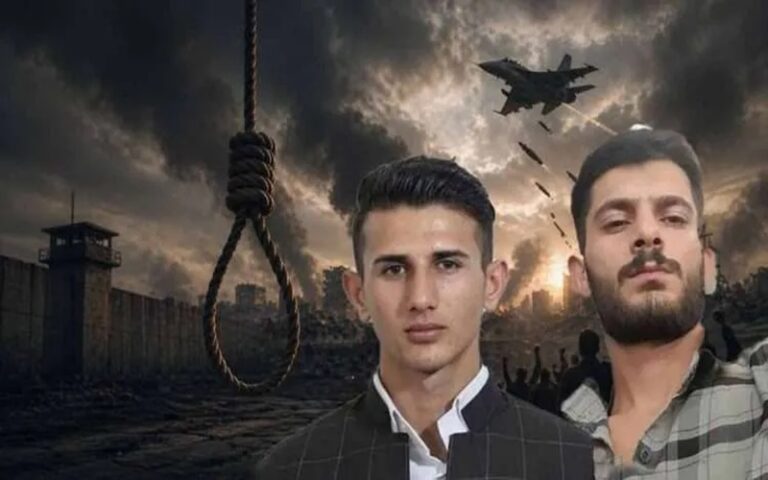
In the early hours of Wednesday, May 20, the death sentences of two Kurdish political prisoners, Ramin Zeleh and Karim Maroufpour, were secretly carried out in Naqadeh Central Prison. According to human rights sources, the executions were conducted without informing their families and while depriving them of the right to a final visit.
According to published reports, the two prisoners, both from Naqadeh County, had previously been sentenced to death in a joint case by Branch One of the Revolutionary Court in Mahabad on charges of baghi (“armed rebellion against the state”) through membership in the Kurdistan Democratic Party of Iran (KDPI).
Iran’s ‘No to Execution Tuesdays’ campaign marks 121st weekAt the same time as the executions, Mizan News Agency, the official media outlet of the regime’s judiciary, confirmed the executions in a statement and accused the two prisoners of membership in Kurdish groups, armed uprising, and attempted assassination. However, human rights organizations have once again expressed concern about the use of forced confessions and opaque judicial procedures in political cases, especially in Kurdish regions. Ramin Zeleh was arrested by Intelligence Ministry forces in August 2024 and, after approximately 507 days of detention and legal limbo, was sentenced to death. According to reports, his court hearing lasted only a few minutes and was held without the presence of his chosen lawyer. His death sentence was formally delivered to him in prison in December 2024. Karim Maroufpour, 29, from Naqadeh, had previously been arrested in the city of Sardasht in April 2021. He was reportedly severely beaten at the time of arrest and held for a long period incommunicado and without contact with his family. He was ultimately sentenced to death alongside Ramin Zeleh in the same joint case. It should be noted that the Iranian regime, amid war and instability in the region, has resorted to the widespread execution of political prisoners in preparation for confronting potential uprisings and protests by the Iranian people.
