

Aftermath of the War: Iranian Workers’ Lives in Grip of a Livelihood Crisis
Food Inflation and the Erosion of the Middle Class in Iran’s Economy
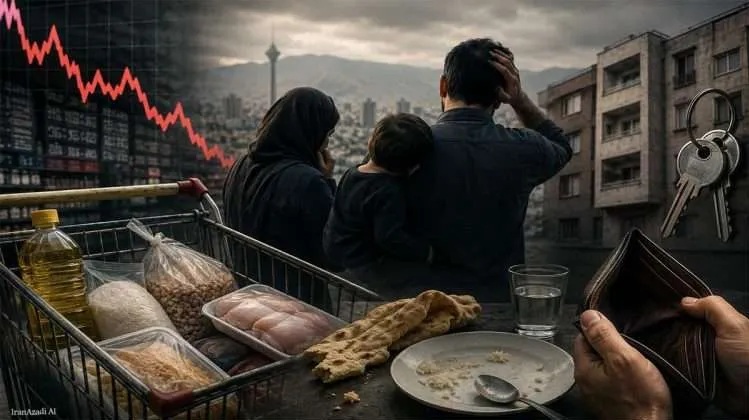
Iran’s market no longer experiences stability. Prices are rising at a pace that wages cannot even begin to match. Food inflation has surpassed 110%, and many essential goods have multiplied in price in less than a year. Under such conditions, a collapsed economy is not merely a media expression; it is an accurate description of a reality that millions of Iranians experience every day.
For years, the Iranian regime concealed the economic crisis through manipulated statistics, repetitive promises, and staged meetings, but now the gap between the official narrative and the reality of people’s lives has become too deep to deny. Even media outlets close to the power structure have been forced to speak about record-high inflation and the collapse of living standards. When essential food items rise in price by 148% within a single year, the issue is no longer merely “high prices”; the issue is the collapse of the ability to live.
Infighting Intensifies Among the Iranian Regime’s Factions
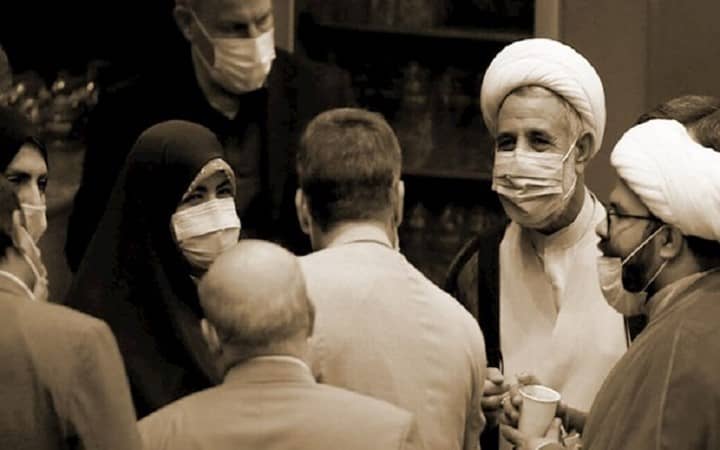
Infighting among the Iranian regime’s ruling factions has entered a new phase. At a time when economic crisis, social discontent, and international isolation placed the regime under pressure, the power struggle among regime factions is now more visible than ever. The Tehran Prosecutor’s Office filing charges against Abbas Abdi and Sadegh Zibakalam is a new example of this deep rift within the regime’s structure.
Mizan news agency, affiliated with the Iranian regime’s judiciary, announced that charges had been filed against the two regime-affiliated figures because of an article by Abbas Abdi published in Etemad newspaper and an interview by Sadegh Zibakalam with ANA news agency. The move is not limited to individuals alone. The prosecutor’s office has also opened cases against the media outlets that published the materials. This shows that infighting among the regime’s factions has moved beyond hidden disputes.
Infighting among regime factions over war and crisis
In his article, Abbas Abdi referred to the role of hardline factions. He wrote: “Some forces close to power, without a real understanding of the country’s situation, are pushing for the continuation of tension-producing policies. The people are no longer willing to pay the price for the decisions of a rent-seeking minority.”On the other hand, Sadegh Zibakalam, in an interview with ANA, a state-run news agency affiliated with Islamic Azad University, referred to the existence of organized pressure in regime-organized gatherings. He described some of these gatherings as attempts to push the regime toward extremist policies. Zibakalam also told the state-run ANA news agency: “Your indictment against America is always one-sided; meaning you only look at the ugly things Americans have done … You say the Americans shot down the Airbus, but you never ask why the Airbus was shot down?” These remarks angered hardline factions and once again brought infighting among regime factions into the media spotlight. The escalation of these conflicts is not unrelated to the Iranian regime’s political and economic deadlocks. As crises deepen, power factions turn against one another to preserve their own share of influence. In recent years, regime figures have repeatedly exposed one another. Now, however, the severity of the crisis has reached a point where even longtime regime insiders no longer enjoy political security.Le retour de l’infâme police secrète royale du Shah la SAVAK dans les rues d’Europe#FreeIran2026 #FreeIran10PointPlan #IranWarhttps://t.co/NsZo3VRjJM
— Iran Focus (@Iran_Focus) May 11, 2026
A rift that deepens every day
Infighting among the regime’s factions is not merely a simple political dispute. These conflicts are signs of the structural decay of a regime that for decades has been built on repression, censorship, and the elimination of opponents. Today, that same mechanism of elimination has also engulfed forces within the regime itself. Today, infighting among the regime’s factions has become one of the clearest signs of crisis within the rule of the Supreme Leader. A regime that for years preserved its survival through repression of society is now embroiled in an internal war among power factions; a conflict that every day exposes deeper fractures in the decaying structure of the regime of oppressive mullahs.120th Week of ‘No to Execution Tuesdays’: Political Prisoners Launch Hunger Strike in 56 Iranian Prisons Amid Escalating Crackdown
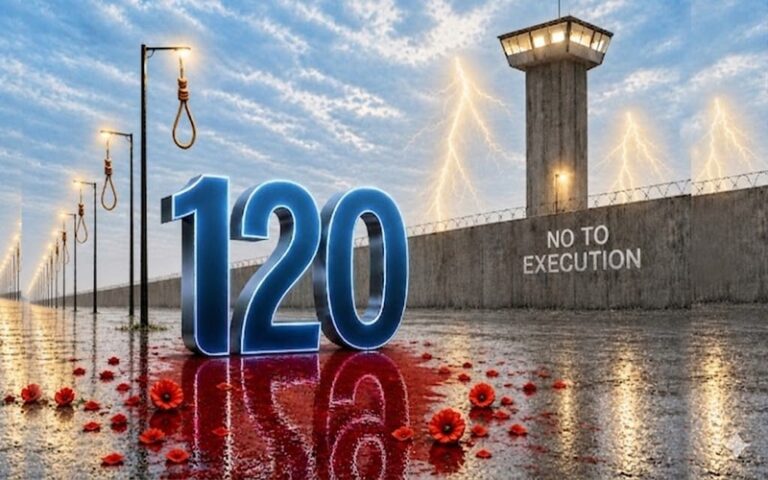
On Tuesday, May 12, 2026, political prisoners across 56 prisons in Iran launched a renewed hunger strike, marking the 120th consecutive week of the “No to Execution Tuesdays” campaign.
Despite mounting security pressures and severe restrictions imposed by prison authorities, the inmates continue their resistance. The campaign views every strike day as a testament to the collective conscience, breaking the deadly silence to amplify the cry for “life” and human rights to the global community.
Iranian Political Prisoner Naser Bakrzadeh’s at Risk of Execution
War as a Smokescreen for Executions
The campaign’s latest statement highlights how the Iranian regime has exploited recent external conflicts as a smokescreen to intensify its domestic crackdown. As the Iranian people pushed for systemic regime change in late March, the state accelerated its execution machine. Under the shadow of war, authorities have executed 23 political and security prisoners since the start of the current Iranian calendar year (March 20, 2026). Adding to the torment of grieving families, the regime continues to weaponize grief by refusing to hand over the bodies of executed prisoners. This includes six campaign members—Vahid Bani-Amerian, Pouya Ghobadi, Babak Alipour, Akbar (Shahrokh) Daneshvarkar, Mohammad Taghavi, and Abolhassan Montazer—whose bodies remain withheld 40 days after their executions. Furthermore, security forces arrested Shahrokh Daneshvarkar’s two sisters, Azam and Akram, on April 18, 2026, simply for inquiring about their brother’s body at forensic and judicial offices. The campaign condemned their transfer to an undisclosed location as a blatant instance of enforced disappearance, a long-standing tactic of the regime.Imminent Threat to Protesters and Minority Inmates
The deadly wave of executions shows no signs of slowing. Last week, authorities in Mashhad’s Vakilabad Prison hanged three political prisoners from the January 2026 uprising: Ebrahim Dolatabadi, Mehdi Rasouli, and Mohammad Reza Miri—an outcome the campaign had urgently warned about on May 5. Additionally, another prisoner, Erfan Shakourzadeh, was executed in Ghezel Hesar Prison on espionage charges. The campaign issued an urgent plea to save the lives of other political prisoners, particularly recent protesters and Baloch minority inmates.Iran’s Regime Ramps Up Execution of Baluch Political Prisoners to Control SocietyIndividuals such as Amir-Mohammad Zare and Mohammad-Reza Abdollahpour in Ghezel Hesar, Ali Pishevarzadeh in Lakan (Rasht), and Baluch prisoners Adham Naroui, Farshid Hassan-Zehi, Hossein Shahouzehi, Nasimeh Eslam-Zehi, and Soleiman Shahbakhsh face imminent execution following opaque and grossly unfair trials.
Overcrowding and State Confiscations
Recent reports indicate that at least 100 detained protesters were recently transferred to Ward 37, Unit 3 of Ghezel Hesar Prison. They face severe overcrowding, a lack of basic living necessities, and heavy charges that put their lives at grave risk. Meanwhile, state media reports that the regime has confiscated the properties of dozens of protesting citizens. The campaign asserts that these desperate measures of terror are futile attempts to prolong the regime’s survival, as the resilience of the Iranian youth proves that the dawn of freedom and equality is closer than ever. Campaign members reiterated that true justice is not born in execution chambers, but in awakened hearts, education, and fair trials. The “No to Execution Tuesdays” campaign stands firmly with the Iranian people until the death penalty is abolished. On May 12, 2026, inmates in 56 prisons in Iran participated in the hunger strike.Strait of Hormuz: Show of Power or Beginning of New Tensions

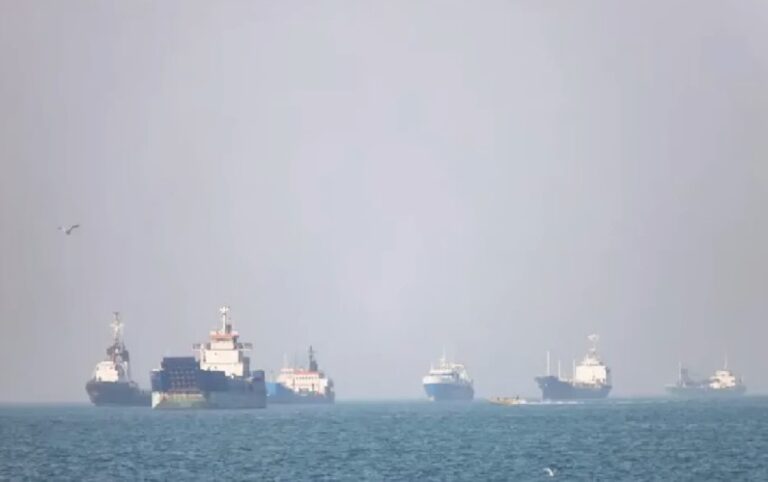
At the same time as tensions in the Middle East are increasing, the British government has announced its readiness to deploy the HMS Dragon destroyer to the region. This move is being carried out within the framework of multinational plans to protect maritime security in the Strait of Hormuz. British officials stated that the decision is part of London’s military and security planning to participate in a joint coalition with France.
Britain’s planning for a presence in the Strait of Hormuz
Britain’s Ministry of Defense announced that the forward deployment of the HMS Dragon destroyer is part of cautious planning. The aim of the plan is described as preparing London for participation in possible maritime security operations in the Strait of Hormuz.CENTCOM Announces Launch of Plan For Safe Passage of Ships Through the Strait of HormuzA spokesperson for Britain’s Ministry of Defense told Agence France-Presse that the destroyer would operate within a multinational coalition jointly led by Britain and France. He said London is trying to be prepared at the appropriate time to ensure the security of shipping routes. In recent weeks, British and French officials have repeatedly warned about the necessity of protecting trade routes in the Strait of Hormuz. They stated that disruption to the passage of ships could directly affect the global energy market and international trade.
France’s role in the Strait of Hormuz security plan
France, alongside Britain, has been introduced as one of the main architects of this naval mission. Paris announced that the goal of the plan is to restore the normal flow of trade through the Strait of Hormuz. French officials also said that the security of this passage is of strategic importance for Europe’s economy. According to reports, London and Paris are drafting the operational details of the mission. The two countries are also seeking broad support from Western countries and regional allies. At a two-day meeting held in London in April, representatives from more than 44 countries attended. During the meeting, practical details of a multinational mission to protect navigation in the Strait of Hormuz were reviewed. Reports indicate that around 40 countries have expressed readiness to participate in the plan.What capabilities does the HMS Dragon destroyer have?
The HMS Dragon destroyer is considered one of the most advanced air defense vessels in the British Royal Navy. The vessel is equipped with the Sea Viper missile system. Britain’s Ministry of Defense stated that the system is capable of intercepting and destroying small, high-speed targets. British military officials say the presence of this destroyer can increase the confidence of commercial ships. They also announced that the vessel would play a supporting role in clearing naval mines after any potential conflict ends. Military experts believe the deployment of such vessels reflects growing concern among Western powers over the insecurity of maritime routes in the Strait of Hormuz. This passage is considered one of the world’s most vital routes for transporting oil and goods.The Strait of Hormuz; crossroads of regional crises
In recent years, the Strait of Hormuz has repeatedly become the scene of military and security tensions. Any conflict or threat in this region could affect global trade. For this reason, Western countries are seeking to increase their military presence in this waterway. The declaration by dozens of countries of their readiness to participate in new security plans shows that concerns about the future of the Strait of Hormuz continue to grow. At the same time, many analysts believe that the intensified foreign military presence in the region could also increase the risk of new confrontations. The deployment of a British destroyer to the Middle East is a sign of increasing military and security competition in the Strait of Hormuz. Over the past years, the Iranian regime, through its tension-producing policies, has turned the region into one of the centers of global crisis. The broader presence of foreign forces in regional waters is now the direct result of policies that have sacrificed security and stability for ambitious objectives.The Return of the Shah’s Infamous Royal Secret Police to the Streets of Europe
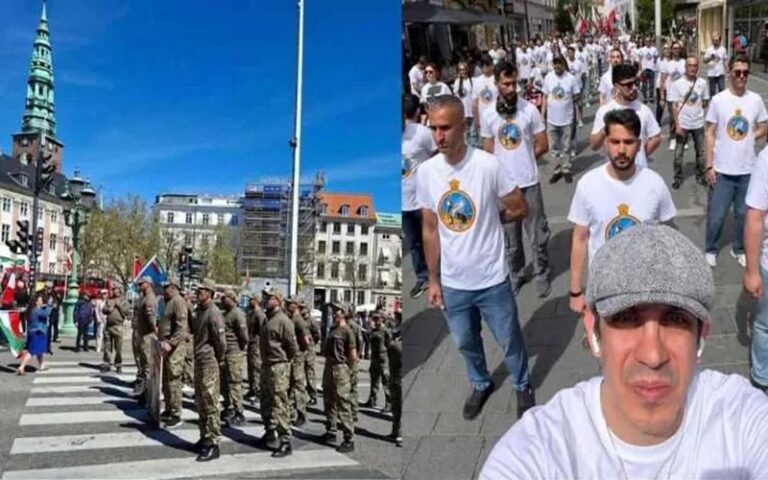
Eighty years after World War II and the fall of Hitler’s fascism in Germany, the use of Nazi symbols such as the swastika and the denial of the Holocaust are considered crimes. This crime and its model must remain in the memory of contemporary humanity and even future generations so that no one can repeat it under any name or pretext.
In 1979, Iran witnessed a major revolution in which the people overthrew the hereditary monarchy. Although Ruhollah Khomeini later exploited the people’s emotions, rode this wave, and committed crimes far more horrific than those committed during the monarchy, the intention of the revolution was to dismantle the royal regime, which until then had deprived people of all freedoms.
The Shah’s secret police, SAVAK, was among the most feared security forces of its time. SAVAK became notorious for its medieval and inhumane torture methods.
The German Government Will Not Receive the Son of Iran’s Last ShahWhipping with cables, beatings, electric shocks, the “Apollo” torture device, pulling out fingernails, and forcing political prisoners to sit on electric stoves and heated metal plates were among SAVAK’s known methods, documented by Amnesty International. It should be noted that members of SAVAK either fled Iran or played a major role in shaping and organizing the repressive apparatus of the mullahs’ dictatorship. All methods of repression used by the Iranian regime are derived from and developed out of methods originally created by SAVAK. By banning the activities of all political parties and permitting only the Rastakhiz Party, which supported the Shah, the monarchy effectively denied any political activity to others. This was the same policy later carried out and completed by Khomeini through establishing a one-party system and suppressing all other ideologies and ethnic groups. Now, years after the Pahlavi monarchy and after uprisings such as the January 2018 protests, the former Shah’s son, Reza Pahlavi, through extensive propaganda and media hype, is calling for a return to the past and the restoration of his father’s monarchy, which was overthrown by the Iranian people nearly 50 years ago. This group is spending enormous sums trying to revive a corpse that the people of Iran buried years ago. What is noteworthy, however, is the sound of fascism echoing through the streets of Europe. Royalist groups are openly calling in European streets for the killing of other opponents, including members and supporters of the People’s Mojahedin Organization of Iran (PMOI/MEK). The PMOI played an active role in overthrowing the Shah’s regime, and afterward Iran’s regime executed nearly 120,000 of their members and supporters. Now, even before reaching power, this group is openly calling for the death and massacre of other opponents. Their slogan is the same fascist slogan, “Ein Volk, ein Reich, ein Führer,” which was chanted at all Nazi gatherings during Hitler’s era. Yesterday, Sunday, May 10, a group of people held a gathering in the city of Regensburg in Bavaria, Germany, while wearing the SAVAK emblem on their chests. This act constitutes a crime, complicity in, and defense of the crimes committed by the Shah’s SAVAK secret police. Such actions cannot whitewash the crimes of the former monarchy. The hysterical actions of royalist fascism are the other side of the coin of the religious fascism ruling Iran and resemble the actions carried out by the current Iranian regime for its own survival. During the Iranian people’s uprising in January 2026, we saw how individuals affiliated with the regime killed many Iranians. This group has not yet come to power, yet they already promise the same kinds of actions. Unfortunately, in Western countries, nostalgia for returning to the past and portraying that era as a dreamlike country has managed to dress the monster of monarchy in the image of a beautiful angel in some minds. The American magazine The Atlantic, in an article titled “The Iranian Royalists’ Thuggish Edge,” exposed the deep contradictions within a movement struggling with authoritarian tendencies. The article begins by referring to the killing of an outspoken Iranian exile named Masood Masjoody in Canada. He was a fierce critic of Reza Pahlavi, and shortly afterward Canadian police charged Razavi and Soltani, two Pahlavi supporters, with premeditated murder. The author of the article adds: “The murder, in other words, appears to have been part of a war within the Iranian opposition—one that pits Pahlavi against a growing host of critics who see him and his movement as dangerously autocratic.” The author further notes:”This is the man who told an interviewer back in 2023: ‘My life has been for the past 40 years here in America. My children live here, my friends live here, everybody that I know is here. If I was to go back, what do I go back to?'” Pahlavi and his supporters have built their palace of dreams on the prospect of a foreign attack against Iran, and with the ceasefire between the United States and the Iranian regime, this icy palace has begun to melt. No honorable Iranian has ever called for a foreign attack on their own country. Pahlavi’s supporters, however, see foreign war and the destruction of Iran as the only path to placing the former Shah’s son on the throne. Yet everyone knows that although the Iranian regime is very weak and fragile, it will never be overthrown through foreign military attack. If Western governments seek regime change similar to what occurred in Iraq, the consequences of which continue to this day, then this is certainly the worst possible path for changing the regime. This war proved that the rule of the mullahs cannot be overthrown through airstrikes, but that such attacks only push the region toward permanent chaos. The solution for Iran is overthrow through organized resistance. The people of Iran have repeatedly proven that they can confront the regime of the mullahs. Regional and global powers must recognize the Iranian people’s right to freedom and democracy and support this solution. In fact, peace and stability in the region, free trade, security, and mutual respect between governments can only be guaranteed through this path. For years, the National Council of Resistance of Iran (NCRI) has viewed pluralism, secularism, and the overthrow of the mullahs’ regime as the solution for Iran. In this regard, Mrs. Maryam Rajavi has presented a 10-point plan explaining what a future Iran would look like. After the 40-day war by the United States and Israel against the Iranian regime, the world witnessed firsthand that foreign war is not the solution for the region and, on the contrary, only increases the complexity of the situation.
Tehran Responds to U.S. Proposal After Trump’s Threat
The state-run IRNA news agency reported on Sunday, May 10, that the Iranian regime had sent its response to the latest U.S. proposal aimed at reaching an agreement and ending the war to Washington through Pakistan, acting as a mediator in the negotiations.
Without providing details of the response, IRNA wrote that the negotiations at the current stage are focused on ending the war in the region. This comes as U.S. officials in recent days had repeatedly warned that if the talks fail, they will consider other options.
U.S. President Donald Trump said on Friday that Washington would likely receive Tehran’s response by that evening. Speaking to reporters at the White House, he warned that if something positive does not happen from the Iranian regime, America may once again carry out the freedom project.
Trump also stressed last week that the United States would not allow the Iranian regime to obtain nuclear capability and would take Iran’s enriched uranium. At the same time, U.S. Secretary of State Marco Rubio expressed hope that Tehran’s response would pave the way for serious negotiations.
Meanwhile, conflicting reports have emerged regarding the contents of the U.S. proposal. Axios and Reuters reported that Washington and Tehran are close to a one-page memorandum of understanding to end the war. According to Reuters, the understanding does not mention the complete halt of the regime’s nuclear activities or the reopening of the Strait of Hormuz.
However, The Wall Street Journal reported that the United States is demanding the dismantling of the Fordow, Natanz, and Isfahan facilities, a halt to underground nuclear activities, and a 20-year suspension of uranium enrichment—conditions that could deepen the disagreements between the two sides.
Tensions escalated following a war that began on February 28 with U.S. and Israeli strikes on the Iranian regime’s military and nuclear centers. After about 40 days of fighting, the two sides reached a ceasefire on April 9, but negotiations have so far failed to produce a final agreement.
375% Increase in Food Prices in Iran
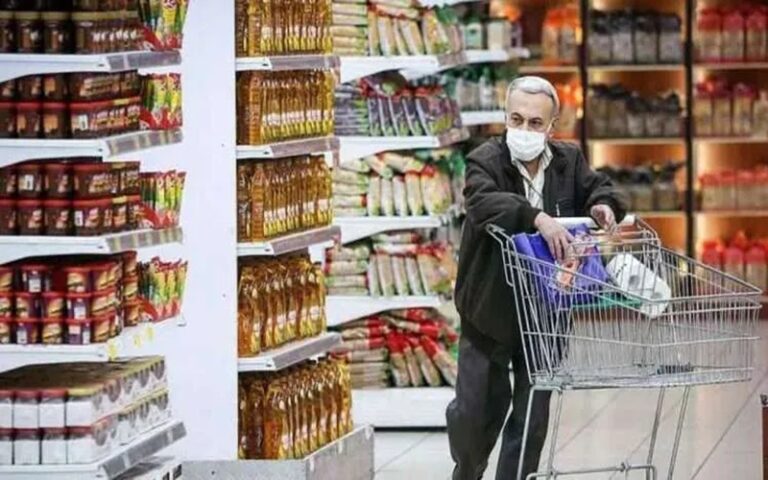
State-run media outlets reported on Saturday, May 9, a new wave of price increases for essential goods and basic necessities; a wave affecting bread, sugar, oil, rice, chicken, and eggs, further intensifying economic pressure on Iranian households.
The state-run Etemad newspaper, in a report on rising bread prices, wrote that increased production costs—from insurance and workers’ wages to energy, yeast, and rent—have led to the implementation of new bread prices. Based on the new rates, the price of lavash bread has reached 20,000 rials, sangak bread 80,000 rials, plain barbari bread 165,000 rials, and taftoon and local bread 350,000 rials.
Iranians Struggle to Afford Basic Food Basket as Prices SurgeAt the same time, sugar prices have also increased. The state-run IRNA news agency, quoting the deputy minister of agriculture of the Iranian regime, stated that rising production costs in the new year are the main reason for the price hikes. Under the new rates, each kilogram of bulk sugar at the factory gate has been set at 950,000 rials, while a 900-gram package of sugar is priced at 1.25 million rials. At present, the price of one U.S. dollar is around 1.9 million rials, while the minimum monthly salary of a worker is approximately $127. Meanwhile, statistics released by the regime’s Statistical Center indicate an unprecedented surge in food prices. Solid vegetable oil, with a 375% increase compared to April of last year, has become the record-holder for food inflation, with its price rising from about 810,000 rials to more than 3.85 million rials. Liquid cooking oil follows with more than a 308% price increase, as the cost of a 900-milliliter bottle has risen from about 740,000 rials to more than 3 million rials. Additionally, first-grade imported rice with a 209% increase, industrial chicken with a 191% increase, mayonnaise with a 190% increase, and industrial eggs with more than a 170% increase are among other goods that have experienced massive price surges over the past year; a trend that continues to shrink the tables of millions of Iranian families every day.
The Shadow of Iranian Regime Assassination Squads in Germany

As political and security tensions rise across Europe, German security officials have warned about an escalating security threat in the country. Germany’s Interior Ministry announced that the country’s intelligence agencies have received specific signs and information regarding the possible planning of terrorist operations by the Iranian regime and its affiliated forces. This warning comes as the Iranian regime’s name has repeatedly surfaced in recent years in cases involving the assassination of political opponents and the activities of proxy networks in Europe.
Elena Singer, spokesperson for Germany’s Interior Ministry, said during an emergency press conference that “the country is currently facing a high-threat situation.” She stated that German security and intelligence agencies are working around the clock to review and monitor information related to this security threat. According to her, the intelligence gathered indicates that the danger of terrorist operations is not limited to one specific target and involves several groups and centers.
Singer emphasized that American centers and individuals, Jewish facilities and institutions, as well as political opponents of the Iranian regime and Iranian refugees living in Germany are exposed to this security threat. She explained that Germany’s federal and state agencies are operating in full coordination and that the alert level at many sensitive locations has been raised.
Growing Concern Over the Security Threat of Proxy Groups
Germany’s Interior Ministry also described the role of proxy groups affiliated with the Iranian regime as part of the country’s core security assessments. The ministry’s spokesperson stated that the activities of organizations such as Hezbollah and other Tehran-backed groups are considered an inseparable part of Berlin’s security calculations. German security agencies have been monitoring the movements of these networks more closely in recent months. This security threat is being raised while Germany’s judicial and security institutions had previously investigated several cases related to espionage, intelligence gathering, and planning attacks against opponents of the Iranian regime. In some cases, agents and operatives linked to the Iranian regime were accused of attempting to identify political activists, journalists, and opposition figures. German officials announced that if the threat level rises further, additional physical and cyber protective measures will be implemented to safeguard sensitive sites. According to Singer, the German government is at the highest level of alertness, and the country’s security forces are prepared to confront any potential security threat.Opponents of the Iranian Regime Under the Shadow of Security Threats
In recent years, many political activists and opponents of the Iranian regime who sought refuge in Germany had repeatedly warned about the activities of networks linked to the Iranian regime. Some of these activists said they had been surveilled or received direct and indirect threats. The German government’s official warning has now heightened concerns about the safety of these individuals.Foreign Militia in Iran: A Show of Power or a Sign of Crisis?Security analysts in Europe believe that over past decades, the Iranian regime has repeatedly used diplomatic structures, front networks, and proxy forces to advance intelligence and security operations outside Iran. Assassination cases involving opposition figures in European countries, including Germany, France, and the Netherlands, have repeatedly brought this issue into the public spotlight. The German government stated that confronting this security threat will not be limited to police measures and that intelligence cooperation with European countries and Western allies will also increase. At the same time, some German media outlets reported that protection levels for Jewish and American centers in several major cities have been heightened. Berlin’s official warning regarding a security threat linked to the Iranian regime has once again brought the issue of the regime’s overseas operations in Europe to the forefront of the news. Many political observers believe that the continuation of domestic repression and the regime’s growing crises, alongside the expansion of its security and proxy networks outside Iran, have projected an increasingly tense image of the Iranian regime on the global stage.
Iranian Citizens Face Drug Shortages and Health Crisis
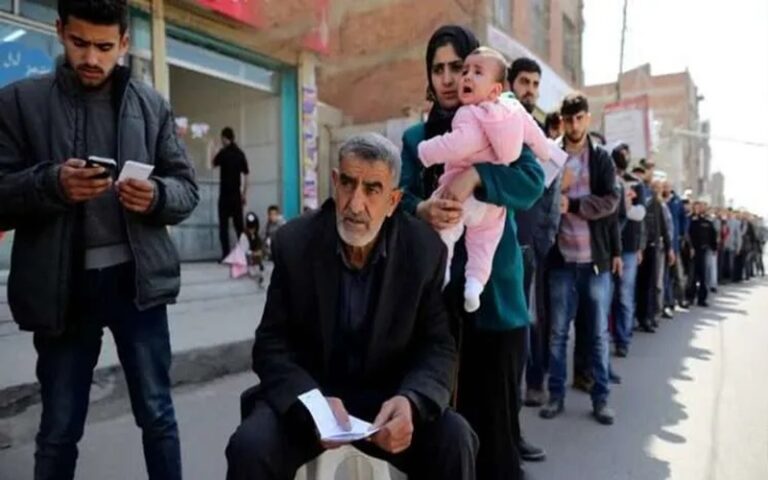
Turmoil in the pharmaceutical and medical supply market and the emergence of brokers on the streets of the capital reflect the depth of the crisis. Securing foreign currency and importing foreign products for patients with special illnesses has become an unsolvable problem that has destabilized the market. This situation has caused vital medical items either to become scarce or to be sold at astronomical prices in unofficial markets.
Production Challenges and the Deadlock in Drug Pricing
Mohammad Jamalian, a member of the Health Commission in the Iranian regime’s parliament, stressed on May 2 the necessity of choosing between higher prices or the absence of medical supplies. He believes that rising prices of raw materials and plastic have created serious difficulties for manufacturers in continuing operations. Jamalian stated: “Today, one of the main concerns is the sharp increase in the price of plastic, raw materials, and other pharmaceutical necessities. To preserve the ability to continue production, we have no choice but to increase drug prices.”Born Addicted: The Tragic Tale of Drug Abuse in IranHe warned that imposing price controls would certainly intensify shortages and create severe dependence on imports. In the past two weeks, out of 1,030 reviewed items, 800 failed to receive permits due to objections. This lack of economic viability has gradually pushed manufacturers out of the production cycle and created secondary shortages. Jamalian emphasized: “An increase in drug prices is unavoidable, and if we try to suppress prices through pressure, production will certainly stop and we will be forced to import at much higher prices.” According to him, under current conditions, having products available at higher prices is more vital for patients than their complete disappearance. The provision of foreign currency resources and fluctuations in exchange rates have severely affected distribution capacity and destabilized the market. In addition to currency-related problems, phenomena such as hoarding and profiteering in provincial centers have led to the distribution of expired products in the market. This situation creates crushing additional costs for residents of smaller cities who must travel to Tehran to obtain a single medication. The pressures of travel, lost time, and the possibility of missing critical treatment opportunities have endangered the health of many families.
The Removal of Subsidized Currency and Its Consequences for the Supply Chain
Distrust in the ability of insurance providers to respond and their failure to settle payments with pharmacies have turned access to medical supplies into a catastrophe. On May 2, Homayoun Najafabadi reported the complete disappearance of products that were previously easy to obtain in the market. He described the current situation as follows: “Many medicines that were essential and previously very easy to obtain and abundant like خاک are now unfortunately unavailable even in a single unit. There is now a severe shortage in cardiac, ophthalmic, and injectable products.” The main reason for the price surge is due to budget legislation and the complete removal of subsidies and preferential currency rates for importing raw materials. Previously, raw materials were obtained using currency valued at one-fifth of the current rate, but they must now be purchased at the free-market rate. This currency policy change has sharply increased production costs and transferred the burden to consumers. Mohammadreza Zafarghandi, the health minister of the Iranian regime, stressed on May 1 that the country’s conditions are akin to wartime and that meeting needs requires comprehensive cooperation. Fluctuating currency policies and ineffective management have transformed the pharmaceutical crisis from an economic challenge into a serious threat to patients’ lives. The regime’s promises of free healthcare are made while patients with special illnesses now remain stuck in long lines just to receive minimum treatment services. The government’s 300 trillion rial debt to the industry, approximately $158 million, has pushed the healthcare system to the brink of collapse and restricted access to treatment.Shocking Statistics on Price Increases and Risks for Rare Disease Patients
Reports show that out of every 10 pharmacy customers, three refrain from purchasing medicine after seeing the prices. This abandonment of treatment means the spread of disease and an increase in silent deaths across different layers of society. Prices of seizure-related medications have risen by 220%. Domestically produced insulin has also experienced a price increase of more than threefold. Supplement syrups such as Vitamin D3 and zinc have become 3.2 times and 286% more expensive, respectively. Anesthesia-related items such as propofol, with a 122% increase, and betadine, with a 161% increase, have raised hospitalization and surgery costs. Even simple products such as clopidogrel and stroke-treatment syrups have not escaped inflationary increases of 116% and 37%, respectively. Major companies such as Zahravi have increased the prices of some products by as much as 415%, reflecting the depth of the crisis in the private sector. Hamidreza Edraki, CEO of the Rare Diseases Foundation, warned about interruptions in medication use and described them as a cause of disruption in treatment. He believes continuous access to medicine for the 560 identified rare diseases in Iran is absolutely vital and cannot be ignored. In a letter to the Iranian regime’s Supreme National Security Council, the Pharmacists Association warned about the complete collapse of the supply chain and its security risks. The theft of chemotherapy drugs from hospitals is also a symbol of the regime’s disorder and incompetence in protecting the country’s limited medical resources.Iranians Struggle to Afford Basic Food Basket as Prices Surge
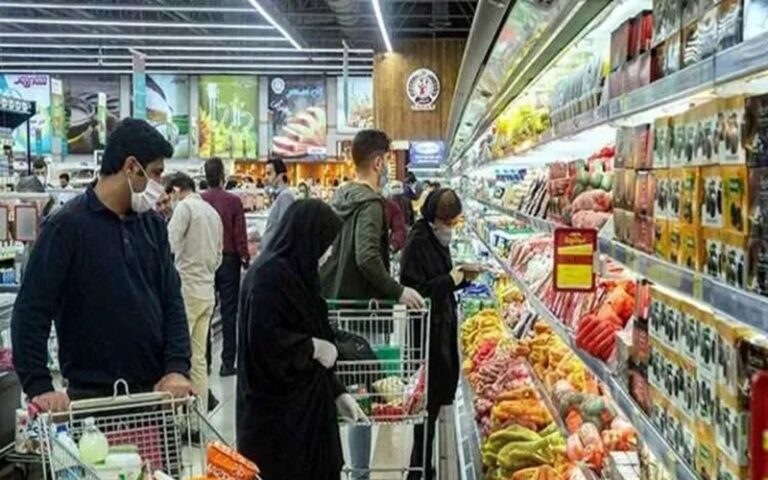
While only about five months have passed since the implementation of the plan to remove subsidized foreign currency rates for some essential goods, the latest economic reports show that the cost of the basket of goods covered by the electronic coupon program has risen sharply and far exceeded the amount of government support being paid.
According to statistics published by economic media outlets affiliated with Iran’s regime, the total price of items included in the electronic coupon basket, which was around 21.8 million rials before the removal of subsidized currency rates, has now reached approximately 37.8 million rials. Meanwhile, the amount of support paid to eligible households has remained fixed at 10 million rials with no increase. It is worth noting that the U.S. dollar exchange rate has surged in recent months to an unprecedented 1.9 million rials per dollar, while a worker’s salary is approximately $126.
The Rising Cost of Food in Iran; Hidden Pressure on Large FamiliesAt the same time as food prices have risen, the foreign exchange rate has also experienced an unprecedented jump. The price of the U.S. dollar on the open market, which stood at around 820,000 rials before the 12-day Iran-Israel war in June 2025, has now reached approximately 1.9 million rials. As a result, the value of the dollar has increased by more than 120% over roughly 10 months, and the collapse of the national currency has imposed a new wave of price hikes on consumer and food markets. When implementing the plan to remove subsidized currency rates, the Iranian regime had promised that the resources generated from the measure would be directly returned to the public through electronic coupons and that the value of the credit would increase in line with inflation. Ahmad Meydari, head of the Planning and Budget Organization, had also promised that the coupon credit would be reviewed every three months based on the inflation rate. However, no increase has so far been applied to the amount of this subsidy. On May 6, Fatemeh Mohajerani, spokesperson for the government of Iranian regime president Masoud Pezeshkian, referring to the government’s financial limitations, said that the government wanting to increase the coupon amount and actually having the ability to do so are two different matters. Meanwhile, official reports and data published in domestic media indicate the continued upward trend in food inflation. Some estimates show that inflation in food items has surpassed 70%. A recent assessment also shows that in April 2026, the cost of a household food basket was equivalent to 85% of the minimum income of a married worker with two children, highlighting the severe decline in purchasing power and the deepening livelihood crisis in Iran.
