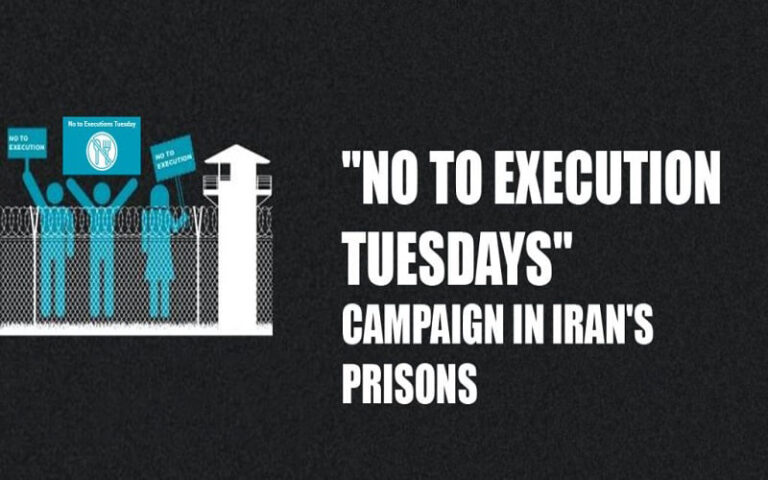
Iran Marks 99th Week of ‘No To Executions Tuesdays’ Campaign in 55 Prisons NationwideAccording to the statement, Amnesty International researchers learned that interrogators subjected Baluchi Razi to “beatings” and forced him to contact his family and tell them that his father must surrender in order to secure his son’s release. Amnesty International noted that Baluchi Razi has been denied access to a lawyer and stated that he is being held in a juvenile detention center in Kerman province, about 800 kilometers away from his family’s place of residence. The organization called for him to be protected against torture and any further ill-treatment and to be granted immediate access to his family and a lawyer. The human rights organizations had previously reported that the arrest of Baluchi Razi, a sixteen-year-old Baluch child, was carried out by forces of the Intelligence Department of Kerman province through a raid on his school in the village of Chanf, located in Nikshahr County. The organization added that the arrest was carried out “without presenting a judicial warrant.” According to the reports, security institutions of the Iranian regime have repeatedly used the arrest of children and relatives of wanted individuals or dissidents as a means of pressure, and this practice has a long history in Sistan and Baluchestan province and has consistently raised concern among human rights organizations. Iran’s regime repeatedly uses pressure on the families and children of political activists and opponents as a tool of repression. This method has intensified in recent years and is employed to force detainees into cooperation or televised forced confessions.
Amnesty International Calls for Immediate Release of Imprisoned 16-Year-Old Baluch Child
Amnesty International urged the authorities of Iran’s regime to immediately release Mahmoud Baluchi Razi, a sixteen-year-old child. According to the human rights organization, he was arbitrarily arrested about two weeks ago and subjected to torture and other ill-treatment in order to force his father to surrender.
In a statement issued on Friday, December 19, Amnesty International referred to the arrest of Baluchi Razi at his school in Nikshahr County in Sistan and Baluchestan province by agents of the Ministry of Intelligence, Iran’s main intelligence agency, on December 7, writing that by refusing for several days to disclose his fate and place of detention to his family, the authorities exposed him to enforced disappearance.
Grossi Rejects Tehran’s Claim That Nuclear Facilities Are Out of Reach
The director general of the International Atomic Energy Agency questioned Tehran’s claim that Iran’s nuclear facilities are “unsafe” and stated that IAEA inspectors must determine whether access to these facilities is possible or not. At the same time, the spokesperson of Iran’s Atomic Energy Organization said the agency’s demand in this regard is “unreasonable.”
In an interview with the Russian news agency RIA Novosti published on Saturday, December 20, the director general of the IAEA said Iranian regime officials claim that “the facilities are unsafe and cannot be accessed,” but in that case, inspectors must be allowed to verify whether access is truly impossible.
Trump Threatens to Destroy Tehran’s Nuclear Weapons Capabilities If It Rebuilds ItRafael Grossi added that this issue is now the subject of discussions between the agency and Tehran, and he expressed hope that a certain degree of progress could be achieved. The issue of Iran’s enriched uranium has become a serious challenge for the IAEA following the 12-day war. In August, Fatemeh Mohajerani, spokesperson for the government of Iranian regime president Masoud Pezeshkian, stressed during her weekly press conference that the enriched uranium was “buried somewhere” and that there is no access to it. Abbas Araghchi, the foreign minister of the Iranian regime, also said in an interview with the regime’s state broadcaster on September 12 that Iran’s stockpile of enriched uranium is “under the rubble of bombed nuclear facilities.” Sergey Lavrov, Russia’s foreign minister, said on Friday, December 19, that Moscow wants the director general of the IAEA to adopt a “professional and impartial approach” in assessing the Iranian regime’s nuclear program.
The agency’s emphasis on the need for access to all of Iran’s nuclear facilities
In another part of the interview with RIA Novosti, Grossi said that first of all, Iran possesses far more than these three facilities. While these three sites are very important in terms of reprocessing, conversion, and uranium enrichment, Iran’s nuclear program is not limited to them. He continued that Iran has a very advanced nuclear program with a strong research and scientific component and numerous other facilities across the country. There is also a nuclear power plant in Bushehr, and plans have been discussed for building new plants as well, including, if he was not mistaken, jointly with Russia. Therefore, work continues in all these areas.Kamalvandi: Inspecting sites is an unreasonable demand
At the same time as Grossi’s remarks, Behrouz Kamalvandi, spokesperson and deputy head of Iran’s Atomic Energy Organization, described the agency’s request to inspect the Iranian regime’s nuclear facilities as “unreasonable.” He told the state-run ISNA news agency on December 19: “We need to take measures and see whether it is possible to carry out material accountancy through other means and inform the agency, without inspectors going to the site in question. Some ideas and methods are coming to mind, but these issues need to be negotiated.” This senior Iranian regime official added: “The agency’s insistence that Iran must allow access and inspections of materials and sites or report to the agency strictly in accordance with the safeguards agreement, which was written for non-war conditions, is an unreasonable demand.” While Tehran has announced that the agreement reached with the agency in Cairo has been canceled, Kamalvandi warned: “Whether they like it or not, conditions have changed, and if we want to resume serious negotiations with the agency, Iran’s considerations must be taken into account.” In recent months, a number of Iranian regime officials have labeled Grossi a “Mossad agent,” and the state-run Kayhan newspaper, overseen by a representative of Iranian regime supreme leader Ali Khamenei, even called for his execution on charges of “spying” for Israel. The Ynet news website reported on December 19 that prior to the 12-day war with Israel, the Iranian regime was researching the development of a fourth generation of nuclear weapons based on pure fusion. According to the report, published on Friday, December 19, research in Iran has focused on a completely new type of nuclear weapon that no country has yet managed to produce. The report stated that this type of fusion does not require uranium or plutonium and leaves almost no radiation or radioactive contamination behind. The report was published amid rising speculation in recent days about the fate of the Iranian regime’s nuclear program and the potential reactions of the United States, Israel, and the European troika.Cities Across Iran Face Severe Pollution
Media outlets in Iran reported the return of air pollution to Tehran, writing that based on air quality indices, the capital’s air has entered an unhealthy condition for sensitive groups. At the same time, six cities in Khuzestan province have also been affected by this crisis.
According to a report by the Tehran Air Quality Control Company, the average air quality index on Friday, December 18, reached 116, indicating an orange status, meaning unhealthy for sensitive groups.
This comes as the average air quality index in Tehran over the past 24 hours was 83, which corresponds to a yellow, or acceptable, status.
Air Pollution in Late November Sent 170,000 People to Emergency in IranSince March 2024, Tehran has experienced only six days of clean air. In the current year, the capital has recorded 130 acceptable days, 113 days unhealthy for sensitive groups, 20 unhealthy days, two very unhealthy days, and two days classified as hazardous. IRNA, the official news agency of the Iranian regime, wrote on December 19, referring to the renewed air pollution in Tehran: “Heart and lung patients, children, pregnant women, and the elderly should stay at home and avoid unnecessary travel.” Air pollution in Iran, especially in recent years, has become one of the most serious environmental and public health crises, with major cities such as Tehran, Isfahan, Mashhad, and Ahvaz continuously facing unhealthy air. The Iranian regime’s inability to manage this crisis, alongside policies such as burning mazut fuel at power plants, has played a direct role in intensifying air pollution and has placed the health of millions of citizens at serious risk. Akbar Nouralizadeh, a faculty member at Shahid Beheshti University of Medical Sciences, warned on December 18 that air pollution, alongside tobacco use, is considered one of the main factors contributing to bladder cancer.
Continuation of air pollution in Khuzestan province
Data from the country’s Air Quality Monitoring Center show that as of nine a.m. on December 19, the air quality index in the cities of Khorramshahr reached 153 and in Mollasani reached 152 micrograms per cubic meter, figures that indicate red status and unhealthy conditions for all population groups. The air quality index was also reported at 133 in Abadan, 108 in Shushtar, 119 in Karun, and 136 in Haftkel micrograms per cubic meter, all of which fall within the orange range. The Young Journalists Club, a media outlet affiliated with the Islamic Revolutionary Guard Corps, wrote with reference to air pollution in some cities of Khuzestan that under such conditions, individuals with heart or lung diseases, the elderly, and children are advised to avoid heavy or prolonged outdoor activities.357 Dead From Air Pollution In Tehran In One WeekAt the same time as the intensification of the influenza wave and the increase in air pollution in Iran’s major cities in recent days, citizens have been facing a new wave of respiratory infections. In August, Abbas Shahsouni, deputy head of the Air Quality and Climate Change Research Center at Shahid Beheshti University of Medical Sciences, said that in 2024 alone, more than 35,000 deaths attributed to air pollution were recorded in the country.
UN General Assembly Adopts Resolution Condemning Human Rights Violations In Iran
The United Nations General Assembly adopted its annual resolution on the human rights situation in Iran with 78 votes in favor, 27 votes against, and 64 abstentions.
According to the voting results, which took place during a Thursday afternoon session on December 18 in New York, the number of votes in favor slightly decreased compared to last year, and the number of abstentions also declined.
Last year, the proposed resolution was adopted with 80 votes in favor, 27 votes against, and 68 abstentions. A comparison with the vote in the UN General Assembly’s Third Committee last month also shows that most of the differences stem from the absence or presence of certain countries.
Iran’s Regime Upholds Death Sentence of Political Prisoner Mohammad Javad Vafaei SaniEarlier, the Third Committee of the United Nations General Assembly approved the resolution condemning human rights violations in Iran on Wednesday morning, November 19, with 79 votes in favor and 28 against; a text that this year placed broader emphasis on executions, women’s rights, the repression of protesters, and transnational repression.
Transnational repression; an unprecedented reference in an official UN document
One of the most significant parts of this year’s resolution is the direct reference to “transnational repression,” an issue recorded for the first time in a General Assembly document concerning Iran. The text states that dissidents, journalists, human rights defenders, and even their families abroad are subjected to pressure, threats, cyberattacks, and surveillance. The resolution stresses that the families of these individuals inside Iran are harassed and intimidated as a means of silencing critics abroad. It also expresses serious concern over threats against the families of victims of Flight PS752 and the survivors of the 2022 protests.Executions; grave concern over sharp increase and lack of fair trials
A major portion of the resolution is devoted to executions. The text expresses concern over the “alarming and significant increase in executions” in Iran, particularly executions carried out based on forced confessions and without respect for due process rights. The resolution emphasizes that executions in Iran are disproportionately applied against Baluch, Kurdish, and Arab minorities, and that the number of executions of Afghan citizens is also rising. The execution of juveniles, secrecy surrounding executions, failure to return bodies to families, and the use of the death penalty as a tool to suppress protests are among the other key issues in this section. The resolution calls on Iran’s regime to move toward an official suspension of the death penalty.Deteriorating Conditions of Two Political Prisoners in Iran
Women’s rights; from compulsory hijab to femicide and structural violence
The situation of women and girls occupies a special place in this year’s text. The resolution explicitly condemns the targeted repression of women—both in public spaces and online—and considers laws related to compulsory hijab, including the “Chastity and Hijab” law, a serious threat to fundamental freedoms. Concerns are also highlighted regarding the extensive use of facial recognition technology to control students, as well as the imposition of punishments such as fines, property confiscation, academic suspension, travel bans, and even death sentences. The text also refers to phenomena such as femicide, so-called “honor killings,” child marriage, and domestic violence, and calls for the adoption of comprehensive legislation to protect women and the complete abolition of compulsory hijab policies.Ethnic and religious minorities; emphasis on structural discrimination
In the sections concerning minorities, concerns are raised about widespread discrimination against Baluch, Kurdish, Ahvazi Arab, and Azerbaijani Turk populations, noting that a larger number of protest victims came from minority regions. The resolution also expresses concern over the situation of religious minorities, including Baha’is, Christian converts, Dervishes, Jews, Sunnis, Yarsanis, and Zoroastrians, and refers to enforced disappearances, arbitrary arrests, and the destruction of religious sites.Repression of protests; arbitrary arrests and widespread violence
The 2022 protests and their aftermath form another part of the resolution. This section criticizes the use of lethal force against protesters, torture—including sexual violence—mass arrests, and the issuance of harsh sentences against demonstrators. The resolution calls on Iran’s regime to release all individuals detained in connection with the protests and to conduct swift, independent, and transparent investigations into the violations. It also stresses the need to end the harassment of protesters’ lawyers, journalists, human rights defenders, and protesters’ families.Gap with international standards and calls for cooperation with the United Nations
In the final section, the resolution urges Iran’s regime to increase its cooperation with UN human rights mechanisms, including accepting the special rapporteur and the fact-finding mission, aligning domestic laws with international obligations, and establishing an independent national human rights institution in accordance with the Paris Principles. Implementing the recommendations of the Universal Periodic Review (UPR) is also among the key demands of the resolution.Pressure Mounts on UK Government Over Tehran’s Shadow Fleet
According to The Times, a major British daily newspaper, Conservative Party members of the UK parliament have urged the government to take tougher measures to confront the “Iranian shadow fleet,” which helps finance Iran’s regime by evading international sanctions.
According to the report, despite the reimposition of sanctions against the Iranian regime in September, British Conservative politicians consider the existing measures to curb the regime’s oil revenues to be insufficient.
Priti Patel, a British member of parliament from the opposition Conservative Party and a former UK home secretary, has accused ministers of dragging their feet in confronting threats against Britain by failing to follow the United States’ approach toward vessels carrying Iranian regime oil.
An Island Nation in the Pacific Ocean Enables Iran’s ‘Shadow Fleet’ to Evade SanctionsCritics of the government have warned that Iran’s regime can still rebuild its economy and weapons programs through oil exports, particularly to China. The Times quoted Patel as saying that the Iranian regime exports millions of barrels of oil to China every day. The US government has sanctioned a far greater number of vessels involved than Britain, and the government must explain this discrepancy. Britain should apply snapback sanctions to the fullest extent possible. According to estimates by The Times, the Iranian regime exported about 67 million barrels of oil in October alone. According to the newspaper, the bulk of these exports were carried out using tankers known as the “shadow fleet”—vessels specifically designed to evade international sanctions and avoid tracking. Since Donald Trump returned to power in the United States, Washington has sanctioned more than 180 oil tankers linked to the transport of Iranian oil and petroleum products. By contrast, The Times wrote that Britain has so far sanctioned only two tankers out of dozens of vessels involved in oil transport in recent months. This difference in approach is the main reason for sharp criticism by Conservatives against the government. According to The Times, directly sanctioning oil tankers is considered one of the most effective tools for limiting oil exports from countries such as Russia and Iran, as it blocks vessels’ access to ports, maritime services, and international insurance, disrupting their operations. Meanwhile, the US government announced on Thursday, December 18, that it had sanctioned 29 additional tankers from the shadow fleet and their associated management companies for transporting hundreds of millions of dollars’ worth of Iranian petroleum products. John K. Hurley, the US Treasury’s deputy assistant secretary for terrorism and financial intelligence, said that Washington will continue to deprive Iran’s regime of oil revenues that are used to fund military and weapons programs.
As Iranians Mark Yalda Festivities, They Are Buying Nuts and Sweets in Installments
On the eve of Yalda Night, the longest night of the year in Iranian culture, a 40% to 100% increase in the prices of nuts, dried fruits, and sweets has significantly reduced demand, to the point that some sellers are offering installment purchases and even accepting checks as a way to attract customers.
The state-run website Didban Iran wrote on Thursday, December 18, citing “official reports,” that the prices of various types of nuts and dried fruits have risen by 40% compared to last year, and by up to 100% for some items such as pistachios and cashews.
The website, quoting figures from the nut-selling trade, identified rising production costs, currency fluctuations, and higher packaging expenses as the main factors behind the price surge.
Iran: Rising Gasoline Prices and the Unprecedented Collapse of the RialAccording to the report, sellers say demand has declined noticeably compared to last year. Mehdi Bakhtiari-Zadeh, acting head of Tehran Municipality’s Fruit and Vegetable Markets Organization, said on Wednesday, December 17, that the price of Yalda Night nuts has increased by 40% to 45% compared to last year. According to him, the final price of sweet nut mixes with baslouq this year is 6.66 million rials per kilogram, while last year people bought the same amount for about 4 million to 4.5 million rials. At present, one US dollar is worth about 1.31 million rials, and the base monthly wage of a worker with two children barely reaches 115 dollars. Didban Iran noted that following rising prices and declining purchasing power, some shops and nut sellers have been forced to adopt alternative methods to attract customers, such as “installment sales” and even “accepting checks” for nut purchases.
Sweets in boxes that grow smaller by the day
Rising prices and economic hardship have also changed the true taste of “sweets.” For many, sweets are no longer sweet but instead a reminder of the bitterness of being unable to afford even simple items. The state-run ILNA news agency quoted the head of the Tehran Confectioners, Pastry Sellers, and Café-Confectioners Union as saying: “We have no shortage of raw materials for sweets, but due to high prices, purchases have been reduced to half-kilogram boxes.” From Ali Bahramand’s remarks to ILNA, it can be concluded that the prices of oil and eggs—two essential ingredients for baking sweets—have increased by about 167% and 200%, respectively, compared to the same period last year, causing sweet purchases to drop by half compared to last year. The price hikes ahead of Yalda Night come as the prices of essential goods have risen in recent months with government approval. The prices of dairy products, which are key ingredients for many Yalda sweets and snacks, have increased significantly. In recent days, dairy prices have seen sudden and sharp increases, and in the absence of effective market oversight, livelihood pressures on families have intensified. Dairy products have long been removed from the food basket of low-income groups, making malnutrition a common condition for them. This comes as Iranian regime officials have repeatedly spoken of supporting the public and controlling prices, while the daily experience of citizens shows that prices in Iran rise on a daily basis and living costs are no longer affordable for many families.Iran’s Regime Upholds Death Sentence of Political Prisoner Mohammad Javad Vafaei Sani
The Iran Human Rights Center reported that the death sentence of Mohammad Javad Vafaei Sani, a thirty-year-old boxer and political prisoner held in Vakilabad Prison in Mashhad, was once again upheld by the country’s Supreme Court after his request for a retrial was rejected.
Announcing this news, the Iran Human Rights Center wrote that the rejection of Vafaei Sani’s retrial request had been formally communicated to him.
Quoting an informed source, this human rights website wrote: “After this notification, in a call from the prison, Vafaei Sani’s family was informed that his case had been sent to the Mashhad Office for the Enforcement of Sentences. The mother of this political prisoner was unexpectedly granted permission for an in-person visit.”
Vitali Klitschko Calls for Urgent Intervention to Stop Execution of Iranian Political PrisonerThe informed source added: “Taken together, these developments, along with the final confirmation of the sentence and the transfer of the case to the enforcement office, indicate that this political prisoner’s situation has reached a worrying stage.” Earlier, on November 27, Vitali Klitschko, the mayor of Kyiv and a former world boxing champion, had called in a letter for the halt of the execution of this political prisoner. On November 6, a group of well-known foreign and Iranian athletes, in a joint statement addressed to the United Nations, international sports federations, and governments, warned of the imminent execution of Vafaei Sani and called for saving the athlete’s life. Vafaei Sani’s death sentence had previously been overturned twice by the Supreme Court, but in recent months it was upheld by Branch Nine of the court. Following this decision, his defense attorney, Babak Paknia, submitted another request for a retrial, which according to HRANA, a human rights news agency, was ultimately rejected. On December 7, Paknia wrote on the social media platform X: “Given the finality of the verdict, we will use all our efforts to obtain approval for a renewed review in the Supreme Court, and these efforts will not stop; from the bottom of my heart and with full conviction, I say that this young man deserves a second chance at life.” Security forces of the Iranian regime arrested Vafaei Sani in March 2020 following the bloody November protests in Mashhad and transferred him to Vakilabad Prison. This protesting citizen was sentenced to death about two years later, in January 2022, by the Mashhad Revolutionary Court on the charge of “corruption on earth through arson and destruction of public property.”
Iranian boxing champion Mohammad Javad Vafaei faces imminent execution as regime accelerates crackdownAt present, in addition to prisoners convicted of ordinary crimes who are executed daily in Iran’s prisons, about 70 prisoners across the country are facing confirmation or implementation of death sentences on political charges. Additionally, more than 100 other individuals face the risk of receiving death sentences on similar charges, among whom 18 people have been sentenced to death for alleged cooperation with the People’s Mojahedin Organization of Iran, the largest opposition group.
Iran’s Highway Tolls For Heavy Vehicles Up 100%
Milad Doosti, deputy of the Iranian regime’s Company for Construction and Development of Transportation Infrastructures, said that following the increase in highway tolls in Iran, the rate of increase for heavy vehicles has been set between 80% and 100%, while for passenger cars it has been capped at around 50%.
State-run Fars News Agency, on Wednesday, December 17, citing Doosti’s remarks and a report by the construction and development company, wrote that tolls on the Tehran–North highway have increased by about 43%, while tolls on the Pardis highway have risen by about 51%.
The Tehran–North highway, as one of the country’s main transportation routes, plays an important role in travel between the capital and the northern provinces.
The Iranian Rial Continues to Collapse Against the US DollarThe new toll rates on this route are being implemented while many Iranian families use this highway for their trips, a factor that has doubled concerns over rising travel costs. According to Fars, the Pol-e Zal–Andimeshk, Andimeshk–Khorramabad, and Khorramabad–Borujerd highways have also seen changes in toll rates, and the Lake Urmia causeway is among the routes whose tolls are now calculated at the new rates. The state-run news agency added that some reports claiming a 120% increase in tolls on 10 highways across the country are not accurate. While a 120% increase is being denied, the currently announced figures are already burdensome and worrying for many citizens, especially at a time when income levels do not keep pace with rising costs. Critics say that even this level of change in tolls, without considering the economic pressure on households and transportation sector workers, reflects the continuation of policies whose main burden falls on the public, with no sign of fundamental reforms or effective accountability by responsible institutions. Earlier, in Aban, Doosti had announced that “according to the law,” the average highway tolls had increased in the range of 37% to 43%, but on some highways that had not seen any rate changes in recent years, the increase had reached as high as 60%. In an effort to justify the sharp rise in toll prices, he said the increase “could have been higher than this, but the government and the Ministry of Roads and Urban Development tried to keep it at a level that would not put pressure on the people while also improving service quality.” In recent months, the deepening economic crisis, runaway inflation, and repeated record highs in foreign currency exchange rates have placed unprecedented pressure on people’s livelihoods. At the same time, the government, unable to control these conditions, has shifted the costs of the crisis in various areas, including gasoline, onto citizens. Previously, numerous reports had also been published about the increasing share borne by the public in paying healthcare costs.
Iran: Rising Gasoline Prices and the Unprecedented Collapse of the Rial
Iran’s rial continues to fall and has reached the lowest level in its historical record. As a result, the U.S. dollar exchange rate in the open market has surpassed 1.32 million rials.
This sharp decline comes less than two weeks after the rial crossed the 1.2 million thresholds against the dollar for the first time, a trend that has accelerated under the pressure of sanctions and escalating regional tensions.
In a report, the Associated Press news agency addressed the unprecedented decline in the value of Iran’s national currency, writing that currency traders in Tehran on Thursday, December 18, quoted rates higher than 1,320,000 rials per dollar, indicating the rapid pace of the rial’s depreciation since December 3, the date when it reached a historic record.
Runaway Price Increases and the Shadow of Hyperinflation Over Iran’s Economy
Additional pressure on household livelihoods
The rapid decline of the rial has intensified inflationary pressures and fueled higher prices for food and essential daily goods, a trend that economists warn could worsen following recent changes in gasoline prices. Iran’s government introduced a new price cap for gasoline on Saturday, marking the first major change to the fuel pricing system since 2019, the year when gasoline price hikes sparked nationwide protests that were reportedly met with a crackdown leaving more than 1,500 people dead. Under the new system, drivers still receive 60 liters of gasoline per month at the subsidized price of 15,000 rials and another 100 liters at a rate of 30,000 rials, but consumption beyond this quota is now calculated at a price more than three times the initial subsidized rate. Although gasoline in Iran remains among the cheapest in the world, experts warn that this change, amid the rapid collapse of the rial, could further drive up prices. It should be noted, however, that the base salary of a person with two children is around 115 dollars per month, which is also among the lowest rates in the world.Diplomatic deadlock and the shadow of renewed conflict
The collapse of the rial has coincided with the halt of efforts to revive negotiations between Tehran and Washington over Iran’s nuclear program. At the same time, concerns persist about the possibility of renewed conflict following the 12-day war in June between Iran and Israel. Many Iranian citizens are worried about the expansion of tensions and the potential involvement of the United States in a larger confrontation, a factor that analysts say has fueled greater uncertainty in the markets.Sanctions and the historic collapse of the national currency
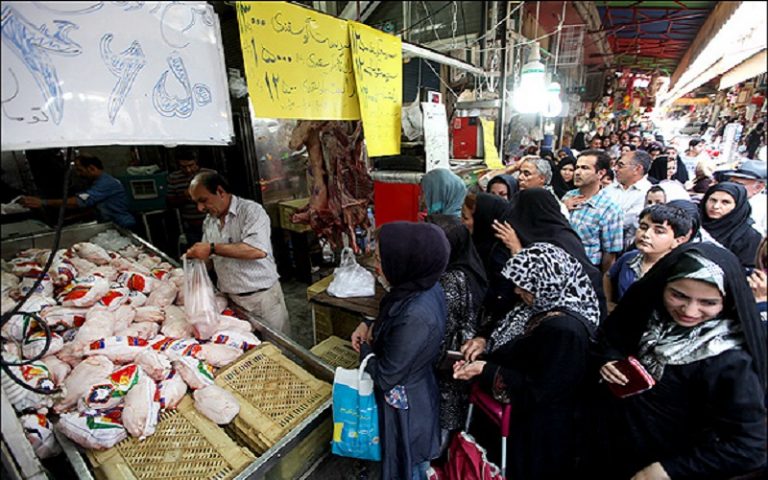
Iran’s economy has been under international sanctions for years, especially after Donald Trump withdrew from the 2015 nuclear agreement in 2018. At the time the deal was implemented, which led to the lifting of some sanctions in exchange for strict limits on uranium enrichment, the dollar rate was around 32,000 rials. With Trump’s return to the White House for a second presidential term in January, his administration revived the “maximum pressure” policy and imposed broader sanctions on Iran’s financial sector and energy exports. U.S. officials have said that Washington has once again targeted companies involved in Iran’s oil trade, including discounted sales to Chinese buyers. Pressure also increased in late September, when the United Nations Security Council used the so-called “snapback” mechanism to reimpose sanctions related to Iran’s nuclear program. Although U.S. sanctions against Iran had already been in place, the psychological impact of the reactivation of UN sanctions has had significant economic consequences for Iran and its national currency. Economists warn that the continued fall of the rial could create a vicious cycle of rising prices and declining purchasing power, particularly for essential goods such as meat and rice that play a key role in Iranian households’ food baskets. For many people, the rial reaching this new record is a sign of how distant any economic relief remains amid ongoing diplomatic deadlock and intensified sanctions.Runaway Price Increases and the Shadow of Hyperinflation Over Iran’s Economy
The continuous rise in food prices in recent months has not only placed growing pressure on households’ cost-of-living baskets and their limited monthly budgets but has also raised experts’ concerns about emerging signs of potential hyperinflation in Iran.
Official data released by the Central Bank of the Iranian regime show that Iran’s economy has faced an average annual inflation rate of 43% over the past eight years. It should be noted that these figures are provided by the regime’s own domestic institutions, which attempt to portray conditions more favorably than reality.
Calculating the cumulative increase in the general price level based on inflation rates over the past eight years shows that average prices of goods and services have risen by slightly more than 17 times, while the purchasing power of money has declined by 94%.
The Price of Essential Goods Spike in Iran
The Dollar Outpaces Inflation
Meanwhile, over the same period—from March 2018 to mid-December 2025—the dollar exchange rate rose from 47,730 rials to 1,300,000 rials, increasing by just over 27 times. As a result, the surge in the dollar’s value has been about 60% higher than the rise in inflation.Unprecedented Pressure on Household Livelihoods
A comparison of commonly consumed food items by Iranian households shows that food price increases have exceeded even the 17-fold rise in the general price level, placing heavier pressure on household consumption. An examination of 20 selected food items between spring 2018 and autumn 2025 indicates that their prices, based on averages reported by the Statistical Center of Iran, have increased by an average of 20 times.What Awaits the Economy Eight Years From Now?
If this trend continues and prices rise in the same way as over the past eight years, what should be expected? Since inflation in Iran has experienced significant volatility over the past four decades, making precise forecasts is very difficult. However, by using average annual growth and the overall inflation trend, an approximate projection can be made based on the continuation of a linear trend.Gasoline Price Increase Begins Across IranIn this simple linear model, the average growth rate of inflation over the past eight years is estimated at 3.23%, indicating an inflation rate of about 52.5% in 2033. In other words, purchasing power over this period would decline by about 94%. For example, if in 2025 one could buy roughly 400 grams of ordinary Iranian rice with 1,000,000 rials, in 2033 that same amount of money would buy only about 23 grams—an amount effectively less than a small handful, clearly illustrating the potential emergence of hyperinflation in Iran’s economy.
The Future of the Dollar Exchange Rate
If the trend of the past eight years continues, the dollar exchange rate could rise another 27.25 times, which would place it at around 35 million rials in 2033. If, in addition to high inflation, issues such as the government’s growing budget deficit, political risk, sanctions, restrictions on currency transfers, capital flight, and declining foreign investment remain unresolved, the exchange rate will continue to rise much faster than overall inflation, leading to an even sharper collapse in the rial’s purchasing power against the dollar.Why Hyperinflation Is Likely in Iran
The reasons behind the likelihood of hyperinflation in Iran’s economy can be traced to the following factors:- Budget deficits and monetary policies: Due to poor financial management and the printing of money without backing, inflation has become a chronic and long-term phenomenon.
- Sanctions and political tensions: Escalation in foreign policy tensions, economic sanctions, and international restrictions have had a severe impact on inflation and have sharply driven up the exchange rate.
- Inflationary expectations: Negative expectations among the public and economic actors about the future have pushed investments toward the dollar and non-rial assets. For example, over the past eight years, the price of a full gold coin—driven by inflationary expectations, the collapse of the rial, and rising global gold prices as a safe haven—has risen from 18,000,000 rials to 1,400,000,000 rials, increasing by more than 77 times.