

Four More Protesters from Iran’s January Uprising Sentenced to DeathThe head of the judiciary of Iran’s regime emphasized: “In handling the cases of these elements, while observing the letter of the law and the principle of justice, we exercise the utmost decisiveness and speed, and we do not consider this matter subject to the usual procedures and rules governing normal conditions.” According to the annual report by Iran Human Rights, at least 1,639 people were executed, and the number of executions in Iran in 2025 compared to the previous year shows a 68% increase.
Iran Regime’s Judiciary in Wartime Posture, 68% Rise in Executions in 2025
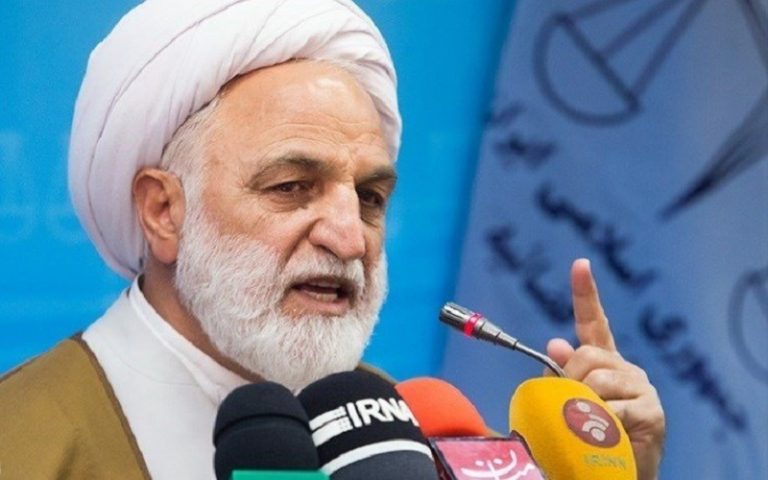
The head of the judiciary of Iran’s regime, Gholamhossein Mohseni Ejei, threatened Iran’s citizens by stating that this institution, in handling political cases related to the war and recent developments, will maintain a wartime posture until further notice.
On Monday, April 13, Gholamhossein Mohseni Ejei told a number of members of the Supreme Judicial Council: “The judiciary, in accordance with its legal duties and obligations and within the framework of its authority and operational sphere, has adopted a completely wartime and jihadist posture since the beginning of the third imposed war.”
He did not provide further explanation about the special conditions of this wartime posture, but added: “In dealing with spies, traitorous elements, and the foot soldiers of the invading enemy, our posture is completely wartime and in line with the requirements of the wartime period.”
Four More Protesters from Iran’s January Uprising Sentenced to Death
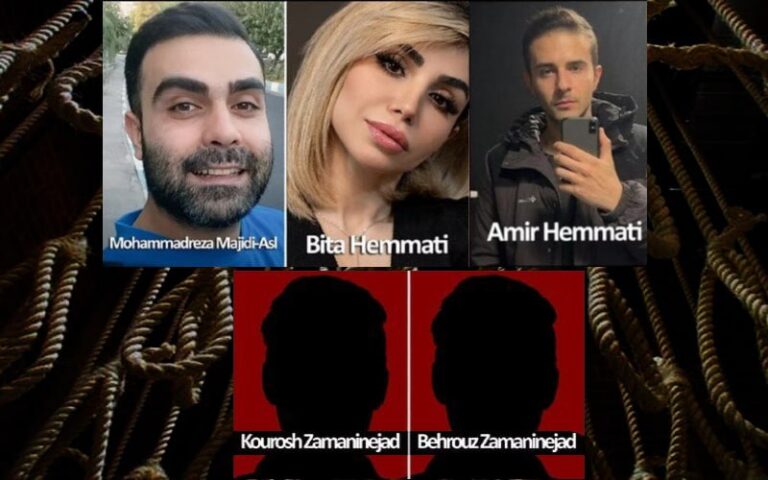
Mohammadreza Majidi Asl, Bita Hemmati, Behrouz Zamani-Nejad, and Kourosh Zamani-Nejad, who had been arrested on January 9 on protest-related charges, were sentenced to death on charges of carrying out operational actions for Israel or hostile governments. A fifth defendant in the same case was also sentenced to five years and eight months in prison.
On the evening of Monday, April 13, that Branch 26 of the Tehran Revolutionary Court, presided over by Iman Afshari, in addition to the death sentences, sentenced the four main defendants in this case to five years in prison and confiscation of all property on charges of assembly and collusion against national security.
Iran’s ‘No to Executions Tuesdays’ Campaign Enters 116th WeekThe examples of charges listed in the court ruling include participation in protest gatherings on January 8 and 9, chanting protest slogans, throwing objects such as bottles, cement blocks, and incendiary materials from building rooftops, and destruction of public property. The ruling also claims that these actions were carried out with the aim of disrupting national security and in connection with hostile groups. Afshari in another section of his ruling referred to the use of explosive materials and an unspecified weapon, injury to forces stationed at the scene, and sending content with the aim of weakening security. According to the text of the ruling, the details of these claims and the precise attribution of each charge to each defendant were not presented separately and transparently. Mohammadreza Majidi Asl, 34, a mobile phone repair technician, was violently arrested on Friday, January 9, in the Republic Street area of Tehran by forces of the IRGC Intelligence Organization. According to informed sources, the arrest of this citizen was accompanied by beatings, and after being transferred to detention he was placed under pressure and tortured to extract a confession. According to an informed source close to the families of these prisoners, Mohammadreza Majidi Asl and Bita Hemmati are a couple living in Tehran, and Amir Hemmati is also a relative of the two. Kourosh and Behrouz Zamani-Nejad also lived in the same residential building and were arrested simultaneously. The defendants were under pressure during interrogation to make forced confessions against themselves. Hours before this news was announced, Gholamhossein Mohseni Ejei, the head of the judiciary of Iran’s regime, declared that in handling political cases related to the war and recent developments, this institution will maintain a wartime and jihadist posture until further notice, and that courts will decide on what he called spies, traitorous elements, and the foot soldiers of the invading enemy based on the requirements of wartime conditions. In Iran’s current legal system, wartime conditions are not explicitly defined in law, and in the field of criminal law there is also no provision under which criminal procedure changes during wartime or grants special and additional powers to the judiciary. In the law passed in October last year under the title “Intensification of Punishment for Espionage,” Article 6 explicitly states that if the crimes covered by this law occur under wartime conditions, the individual’s punishment is increased by up to three degrees. Iran’s regime has in recent weeks increased the pace of carrying out death sentences and intensified the repression of citizens by citing special wartime conditions. Ali Fahim was executed on April 6, Mohammadamin Biglari and Shahin Vahedparast on April 5, Amirhossein Hatami on April 2, 2026, and Saleh Mohammadi, Mehdi Ghasemi, and Saeed Davoudi on March 19. All of these individuals had been arrested during the nationwide protests in January. Iran’s regime had previously also executed Abolhassan Montazer and Vahid Bani-Amerian on April 4, 2026, Pouya Ghabadi Bistouni and Babak Alipour on March 31, and Akbar Daneshvarkar and Mohammad Taghavi Sangdehi on March 30, on charges of membership in the People’s Mojahedin Organization of Iran (PMOI/MEK) and armed rebellion. On March 18, 2025, the death sentence of Kourosh Keyvani, an Iranian-Swedish dual national citizen, was also carried out on charges of “espionage” for Israel.
Why Can Reza Pahlavi Not Learn to Remain Silent?
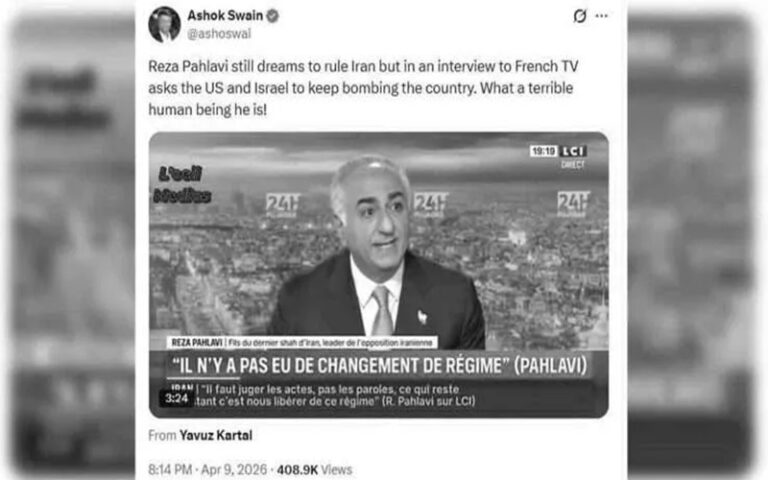
Reza Pahlavi, who is commonly referred to in Iranian political discourse as the “shah’s son,” claimed in remarks delivered at the Swedish parliament on April 13 that what has happened in Iran is a revolution against the 1979 revolution. In other words, Reza Pahlavi claims that in their recent uprisings from 2022 to 2025, the people of Iran are pursuing demands and ideals that stand in direct opposition to those of 1979. From a scientific and sociological standpoint, can such a claim even be valid? What does a revolution actually mean? Has sociology ever identified such a phenomenon in its historical record?
A revolution is always an action formed against the existing order and political system, and in reaction to current crises—not a reaction to a historical revolution that occurred in the past and has already concluded.
Why Reza Pahlavi’s Closest Allies Are Abandoning the CrownFrom this perspective, the phrase revolution against a revolution is conceptually contradictory. A revolution is a historical event and cannot itself become the direct subject of political action; what can become the target of protest or revolution is the political system that emerged from that revolution. This distinction is of central importance in analyzing many historical transformations. For example, in the French Revolution, developments after 1789—including the Reign of Terror or even the restoration of the monarchy—are never interpreted as a revolution against the revolution, but rather as different phases of the revolution’s consolidation or deviation from its course. The same pattern can be seen in the Russian Revolution, where developments after 1917, from the civil war to Stalinism, are understood not as a negation of the revolution but as its reinterpretation and at times its deviation.
Historical Analysis of the 1979 Revolution
If we extend this theoretical framework to Iran, it becomes clear that the 1979 revolution must also be understood as a historical process involving a set of demands and social coalitions, not as a closed and static point that can be treated as the object of absolute negation or affirmation. However, one of the important characteristics of revolutions is the gap between their original ideals and their institutional outcomes. Many theorists of revolution have pointed out that revolutions often face a return to concentrated power or a restriction of freedoms during the process of consolidating authority. This phenomenon is not exceptional but part of the internal logic of revolutions, because under unstable conditions political forces turn to centralization to preserve order. Under such circumstances, the gap between society’s expectations and the political system’s performance widens, creating the basis for new protests. As was seen in Iran’s revolution, Khomeini exploited a historic opportunity created by the shah’s repression of radical and revolutionary social forces, stole the people’s revolution and the democratic forces’ movement, and imposed a medieval dictatorship over Iran’s people—a dictatorship that had no relation whatsoever to the people’s revolution. Within this framework, the uprisings and social transformations in contemporary Iran can be analyzed as a reaction to this very historical betrayal by Khomeini and the surviving elements of his political system. The demands raised in Iranian society today—from civil liberties and citizenship rights to democracy and women’s liberation—not only are not in conflict with the initial slogans of the 1979 revolution, but in many cases reflect those same demands under new conditions. From the perspective of historical sociology, social transformations occur cumulatively and in layers. No revolution takes shape in a vacuum, and no movement is ever completely severed from its past. Even movements that define themselves in opposition to the past are, in practice, nourished by previous concepts, experiences, and discourses.Why Does a Revolution Against a Revolution Never Occur?
Another important point is that revolutions usually form against perceived injustice and the loss of legitimacy in the existing political system. These concepts relate to the present condition, not to the historical past. When the gap between society’s expectations and the government’s performance widens, the capacity for social mobilization rises, making protest movements or even revolutionary movements possible. Here too, the main issue is the existing order. Even if that order has roots in a revolution, what is challenged is the current structure and performance of a fascistic dictatorship, not the revolution itself as a historical event. Therefore, it can be said that Reza Pahlavi’s description of a revolution against the 1979 revolution is a form of simplification and even conceptual distortion that ignores the complexity of social transformations. He either fundamentally lacks any understanding of social change or is deliberately feigning ignorance. By ignoring the distinction between a revolution and the post-revolutionary system, this expression tries to imply a complete rupture, while theoretical and historical evidence points instead to a form of continuity and reinterpretation between the people’s current demands and the demands of 1979. From the perspective of political science and sociology, revolutions are understood not as endpoints but as the beginning of long-term processes of social transformation. These processes may include periods of progress, regression, deviation, or reconstruction, but they always remain connected to one another. On this basis, the current developments in Iran should also be understood as part of this historical process—a process that began in 1979 and is still evolving.Iran’s ‘No to Executions Tuesdays’ Campaign Enters 116th Week
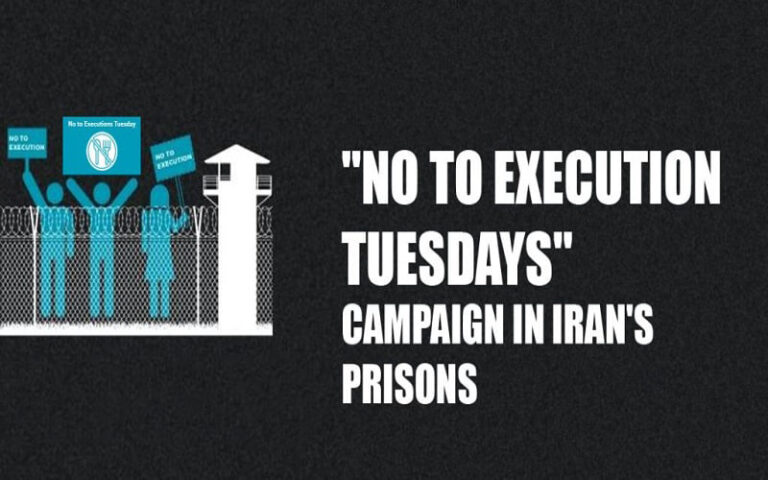
The “No to Executions Tuesdays” campaign, which is held through weekly hunger strikes by prisoners in dozens of prisons across Iran, has entered its 116th week. The campaign continues as communication restrictions, security pressure, and harsh prison conditions have affected the flow of information and the situation of prisoners.
The “No to Executions Tuesdays” campaign, centered on prisoners’ weekly hunger strikes, has now become one of the longest-running protest movements inside prisons. The campaign, held every Tuesday, continues with the participation of prisoners in at least 56 prisons.
Participants in the campaign have announced that despite the existing pressure and restrictions, they remain committed and continue the weekly hunger strike. The continuation of this process indicates the persistence of protest inside prisons.
Details of the Execution of six PMOI MembersAccording to published reports, this hunger strike has taken place under conditions in which internet shutdowns and communication restrictions have severely reduced the ability to send statements and provide public information. Nevertheless, the prisoners have stated that the hunger strike has not stopped, and even without the ability to communicate with the outside world, this protest movement continues. The continuation of this campaign under such conditions is seen as a sign of its organization and resilience inside prisons.
Continued solitary confinement of prisoners after the Ghezel Hesar events
At the same time as the continuation of the “No to Executions Tuesdays” campaign, reports have emerged that some political prisoners remain in solitary confinement cells. According to received information, four political prisoners — Saeed Masouri, Sepehr Emamjomeh, Loghman Aminpour, and Meysam Dehbanzadeh — are still being held in solitary after 25 days. These individuals were removed from Ward 4 of Ghezel Hesar Prison following a raid by prison guard forces, beaten, and transferred to unknown locations. This took place at the same time that execution sentences were being carried out in the prison. According to informed sources, the transfer of political prisoners to solitary confinement before the implementation of execution sentences has been observed as a recurring pattern in this prison.The simultaneity of repression and execution sentences
Reports show that security measures in prisons, including transfers to solitary confinement and pressure on prisoners, often occur simultaneously with the implementation of execution sentences. This overlap has increased concerns about prison conditions and the manner in which sentences are carried out.Failure to return the bodies of the executed; continuation of a troubling pattern
Alongside these developments, reports have emerged that the bodies of some executed political prisoners have not been returned to their families. According to these reports, more than 15 days after the execution sentences were carried out, the bodies of several prisoners — including Vahid Bani Amerian, Mohammad Taghavi, Babak Alipour, Pouya Ghobadi, Abolhassan Montazar, and Akbar Daneshvarkar — still have not been handed over to their families. This campaign, now in its 116th week, continues under conditions in which the prison atmosphere is marked by security pressure, communication restrictions, and recent developments. Nevertheless, the participating prisoners have emphasized that this process has not stopped and will continue.U.S. Naval Blockade of Iran Begins on Monday
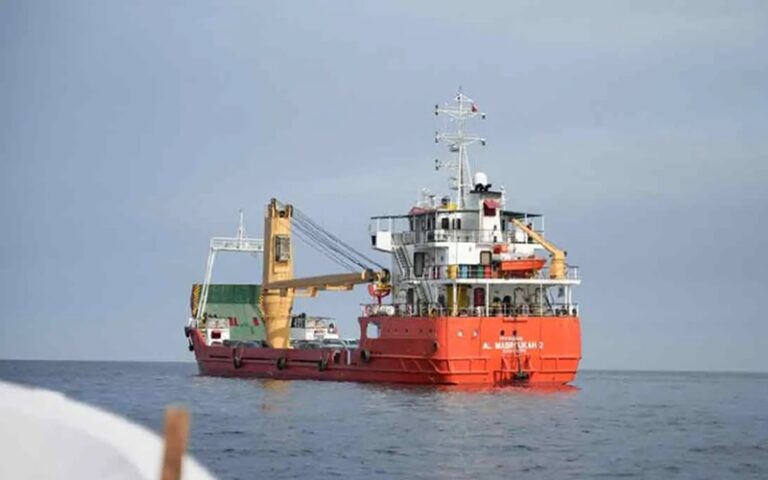
U.S. Central Command (CENTCOM) announced that starting Monday, April 13, it will begin enforcing a broad naval blockade against Iran’s ports, a move that comes after the collapse of recent negotiations between the United States and Iran’s regime and rising tensions in the region. According to the statement by the U.S. Central Command (CENTCOM), this blockade will include all ships traveling to Iranian ports or departing from them.
CENTCOM stated that this operation will begin at 10 a.m. U.S. Eastern Time and will cover all maritime traffic to Iranian ports in the Persian Gulf and the Gulf of Oman. The statement emphasized that the blockade will be enforced without discrimination regarding the flag or nationality of the ships, while at the same time the passage of vessels whose destination is not Iranian ports through the Strait of Hormuz will not be restricted.
The Importance of the Strait of Hormuz as a Vital Artery of the Global EconomyAs the time for implementing this decision approaches, signs of disruption in maritime traffic in the region are becoming visible. Reports indicate that some oil tankers have changed course or refrained from approaching the Strait of Hormuz. Shipping data shows that a few vessels have anchored in the Gulf of Oman or remained waiting for the new conditions. In response to this move, officials of Iran’s regime have taken a harsh stance. The commander of the navy described the U.S. threats as baseless and claimed that all movements of American forces in the region are under surveillance. The spokesperson for the regime’s Defense Ministry also stressed that control of the Strait of Hormuz will remain in Iran’s hands and that any military action will be met with a response. The Islamic Revolutionary Guard Corps (IRGC) also issued a statement warning that military presence in the Strait of Hormuz area could be considered a violation of the ceasefire and would face a severe reaction. At the same time, some political officials accused the United States of testing Iran’s resolve and emphasized confronting any threat. The announcement of this blockade has increased concerns about energy security and regional stability. Analysts warn that continuation of this trend could lead to an escalation of the crisis in the Persian Gulf, disruption in oil exports, and rising international tensions—a situation that would affect not only the region, but also the global economy.
Iran’s Economy Beneath the Rubble of War and Structural Collapse
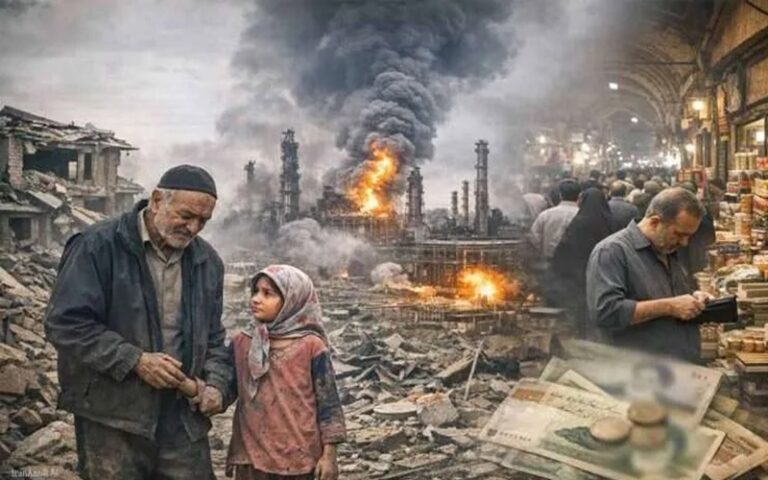
The recent war between the United States, Israel, and Iran’s regime was not merely a military confrontation; rather, it acted as a structural blow to an already exhausted economy. This war made the deep fractures within the economy under the regime’s control more visible and accelerated the process of collapse. Severe economic contraction, rising poverty, and setbacks in human development are only part of the consequences of this situation.
The burden of war on the economy
The war directly targeted the economy’s vital infrastructure. The destruction of power plants, disruption of trade routes, and stoppage of industrial production were the three main channels through which the crisis was transmitted into the economy. As a result, gross domestic product faced an unprecedented decline, one that according to estimates could exceed a 10 percentage-point drop.Mass Worker Layoffs in Iran’s Industries Under the Shadow of WarThis decline is not merely a number; it means a collapse in the living standards of millions of people. In conditions where chronic inflation and the devaluation of the national currency had already weakened the economy before the war, the wartime shock further intensified this trend. The inflation rate, which had remained above 40% for years, has now reached levels close to 55%. On the other hand, the devaluation of the rial (Iran’s national currency) caused a sharp increase in import costs. This placed additional pressure on households, especially regarding essential goods. The result of this trend has been a severe decline in purchasing power and a shrinking of people’s ability to afford basic necessities. At the macro level, the dependent and inefficient economic structure of Iran’s regime lacked the capacity to absorb this shock. An economy already under pressure from sanctions and mismanagement is now facing deeper disruption.
The expansion of poverty and social collapse
The war, more than anything else, struck the lower income deciles. Historical experience shows that in military crises, these groups suffer the most. In Iran as well, this pattern is clearly visible. Estimates show that before the war, about 36% of the population lived below the poverty line. Now this figure has approached more than 40%. This increase involving several million people is not merely a statistical shift; it indicates the widespread fall of the middle class below the poverty line. At the same time, population displacement and housing destruction have worsened living conditions. Thousands have been forced to leave their homes, and access to essential services such as education and healthcare has been disrupted. This situation reinforces a cycle of poverty and inequality that will be extremely difficult to escape. Food inflation has also played a decisive role as one of the most important pressure factors. Rising food prices, which have a regressive effect, have inflicted the greatest damage on low-income households. Under such conditions, food security has become a serious challenge.Setbacks in human development
The war has pushed back not only the economy but also human development indicators. The decline in per capita income, disruption in education, and pressure on the healthcare system are the three main dimensions of this regression. The destruction of schools and closure of educational centers have disrupted the learning process. This disruption will have long-term consequences for human capital. A decline in educational quality means lower workforce productivity in the future. In the health sector as well, pressures have sharply increased. Rising casualties and damage to medical infrastructure have placed the healthcare system in a critical condition. As a result, access to treatment services has become limited for a large part of society. On the other hand, the destruction of the environment and productive infrastructure threatens livelihood security in the long term. Together, these factors have reduced the human development index and erased years of progress.A war-stricken economy and structural deadlock
The war showed that the economy under the control of Iran’s regime is not only fragile against external shocks, but itself becomes a factor intensifying the crisis. Heavy dependence on energy revenues, structural weakness in production, and lack of transparency have made this economy highly vulnerable. Attacks on the petrochemical industry, which is one of the main sources of foreign currency earnings, are one example of this vulnerability. Disruption in this sector has not only reduced exports but also created a chain of production stoppages in dependent industries. At the same time, the destruction of industrial infrastructure and widespread business closures have created a wave of unemployment. This unemployment, in turn, has reduced domestic demand and intensified the economic recession. The tourism industry, as one of the vulnerable sectors, has also suffered heavy losses. Reduced travel and the destruction of facilities have pushed this industry to the brink of shutdown. Overall, in the aftermath of this war, Iran’s economy has entered a phase of structural collapse—a phase in which even a return to the previous condition is met with serious doubt.Mass Worker Layoffs in Iran’s Industries Under the Shadow of War
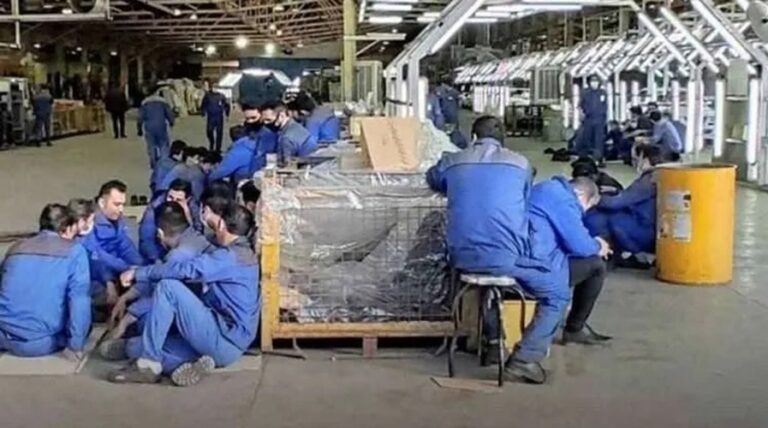
As tensions escalate and the heavy shadow of foreign war falls over Iran’s economy, signs of collapse in the country’s key industries have become more visible. Reports of mass layoffs at one of the country’s largest automotive holding companies reveal new dimensions of the consequences of foreign war. This is happening while workers, as the most vulnerable social group, are bearing the greatest pressure from the consequences of the foreign war.
According to Farshad Esmaeili, a legal expert and labor law adviser, one of the country’s major automotive mega-holdings began large-scale layoffs of its workforce in mid-March. This move has taken place in the heart of the crisis caused by the foreign war, and according to him, about 70% of the company’s employees have been dismissed. These layoffs span a wide range of staff, from production-line workers to specialists and even middle managers.
Iran’s Youth Are Selling Their Kidneys as the Economy Continues to PlungeThe report states that the number of dismissed individuals has reached about 7,000. Such a figure shows the depth of the crisis in an industry that had already been struggling with numerous problems. Now, with the intensifying effects of the foreign war, this industry has become one of the first victims. Many of these laid-off workers now face conditions with no financial support or job security.
Foreign war, the collapse of the production chain, and workers as victims
The state-run daily Donya-e-Eqtesad also pointed out a report to the direct consequences of the foreign war on the automotive industry. The report emphasizes that over the past month, shortages of raw materials, especially steel, have sharply increased. Disruptions in parts imports, disorder in transportation, and customs clearance problems have disrupted the production chain. These disruptions are occurring while the automotive industry had already been facing structural crises. State-imposed pricing, liquidity shortages, and severe dependence on imports had already made this industry fragile. Now, the foreign war has pushed these problems to an unprecedented level. Many production lines have effectively stopped, and factories no longer have the capacity to continue operating. The continuation of this trend could lead to the complete shutdown of some production units. This situation affects not only workers but the entire economy dependent on this industry.Workers; the first victims of foreign war
Among all social groups, workers are suffering the greatest damage from the consequences of the foreign war. Mass layoffs without payment of overdue wages or benefits have created a critical situation for this group. Many laid-off workers do not even have access to unemployment insurance. This situation comes as living costs have risen in an unprecedented way. Inflation, the devaluation of the national currency, and shortages of essential goods have placed additional pressure on working-class families. What is happening today under the shadow of foreign war is not merely an economic crisis, but a sign of structural collapse built over years on corruption and inefficiency. Iran’s regime, through four decades of warmongering and destructive policies, has placed the Iranian people in the harshest living and social conditions. Now, in what is portrayed as the final phase, as people demand peace and freedom, the streets are playing the main role in the overthrow of this corrupt government.Tunnel Entrances at Isfahan Nuclear Site Blocked, According to The Telegraph
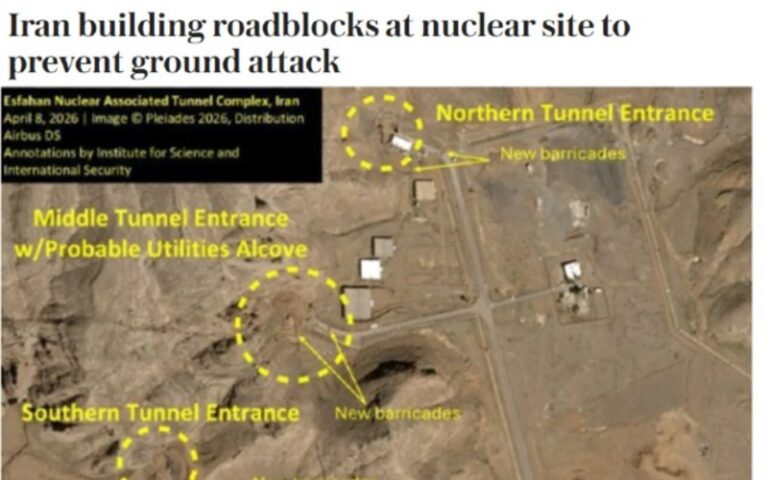
The Telegraph reported in a new article, citing satellite imagery, that the Iranian regime has moved to block three tunnel entrances at the Isfahan nuclear complex. According to the report, these entrances have been sealed using a combination of compacted earth berms, protective barriers, and piles of debris—an action that appears aimed at increasing the security level and reducing the vulnerability of the facility.
The “Institute for Science and International Security” also reviewed the same images and confirmed that construction of these barriers likely began on March 18 or shortly thereafter. The institute, which specializes in monitoring developments related to nuclear programs, emphasized that the speed of these measures indicates growing security concerns surrounding the site.
21-Hour Negotiations Between United States and Iranian Regime End with No ResultsAccording to military analysts, such measures are usually assessed within the framework of passive defense strategies. Blocking tunnel entrances can make direct penetration into underground sections more difficult and increase the time required for any offensive operation. These barriers can also place attacking forces in a more vulnerable position, especially when defensive and missile systems are active. Another part of the Telegraph report states that the Isfahan site is likely one of the key centers for storing highly enriched nuclear material. Estimates indicate that at least half of Iran’s approximately 400-kilogram stockpile of highly enriched uranium is kept at this complex—materials that, if enriched to higher levels, could play a role in the nuclear weapons production cycle. These developments come as Iran’s nuclear program remains at the center of attention for international bodies and global powers, and any change in its infrastructure is being followed with high sensitivity.
21-Hour Negotiations Between United States and Iranian Regime End with No Results
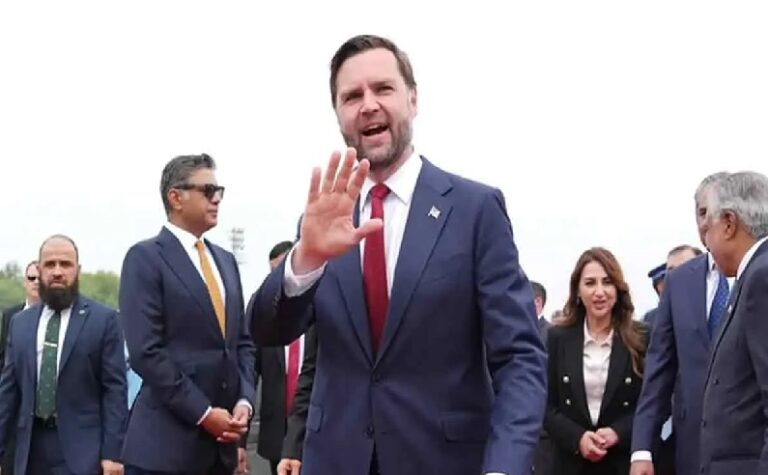
According to Reuters, after 21 hours of intensive talks between representatives of the United States and the Iranian regime in Pakistan, the negotiations ended without reaching an agreement, and the American delegation left the country. U.S. Vice President J.D. Vance said in a brief press conference Sunday morning Islamabad time that the talks had been detailed and substantive but ultimately failed to produce a result.
He emphasized that this lack of agreement would have more negative consequences for Iran than for the United States. Referring to Washington’s position, Vance said that “our red lines were completely clear; we made clear where we have flexibility and where we do not.” According to Vance, the Iranian regime refused to accept the terms proposed by the United States, while the American side had entered the negotiations in good faith. He also added that the best and final U.S. offer remains on the table, and it now depends on Iran’s decision whether to accept it.
Iran in A Bottleneck Over Restoring Infrastructure After CeasefireRaising the key question of whether Iran is committed in the long term to not developing nuclear weapons, Vance said that “we have not yet seen such a commitment, but we hope to witness it in the future.” On the other side, Esmail Baghaei, spokesperson for the foreign ministry of the Iranian regime, announced that the two sides had reached understandings on some issues, but disagreements over two or three major issues prevented a final agreement. He added that contacts and consultations would continue through Pakistan. Oil movements coinciding with the negotiations: at the same time as the start of these talks, data from tanker-tracking companies reported the passage of three large oil tankers through the Strait of Hormuz, the first such case since the ceasefire between the two sides was established. According to these reports, each of these tankers was carrying about 2 million barrels of oil from Iraq, Saudi Arabia, and the UAE, and flying Liberian and Chinese flags, they entered the waters of the Gulf of Oman after passing the Hormuz transit anchorage route and circling Larak Island. The destination of these shipments was reported to be Malaysia. Meanwhile, Bloomberg reported that two empty tankers that had intended to enter the Persian Gulf changed course after news of the failed negotiations and returned to the Gulf of Oman.
A Fresh Wave of Arrests and Judicial Repression in Iran

As the widespread repression of citizens continues across different parts of Iran, the intelligence and law enforcement bodies of Iran’s regime have announced the arrest of dozens more citizens; allegations once again raised with accusations such as ties to enemies and espionage.
The IRGC Intelligence Organization announced that 123 people have been arrested in the provinces of Hamedan, Semnan, and Gilan on charges of links to anti-government networks, Israel, and foreign-based media outlets.
According to this claim, 18 people were arrested in Hamedan as part of several networks that were allegedly involved in collecting and transmitting information from sensitive sites and planning sabotage operations, and weapons and ammunition were also reportedly discovered from them.
Repression and Human Rights Violations in Iran – February 2026In Semnan, two people were also arrested on charges of links to Israel’s intelligence service, and according to this institution’s claim, they had been in contact with intelligence officers and transmitting information during the 12-day war. In Gilan, 102 people were also arrested, whom the IRGC claims intended to create insecurity and carry out sabotage acts, and IRGC Intelligence says it detained them before any action took place. It is also claimed that four of these individuals, in addition to sending information, were providing online instruction on violent acts. The report also claims that about 100 other newly recruited individuals linked to opposition groups have been subjected to what are described as “guidance measures.” At the same time, the Law Enforcement Command of Iran’s regime also announced the identification of another network and the arrest of 50 people; individuals who, according to police claims, were facilitating targeting and attacks by sending the locations of sensitive sites including infrastructure facilities, inspection checkpoints, and troop deployment positions. Police also stated that communication equipment, satellite devices, weapons, and ammunition were discovered and confiscated during these operations. The Office of the Prosecutor General in East Azerbaijan province has also reported the filing of 10 cases on charges of espionage for the benefit of the United States and Israel during the recent events. As this security atmosphere continues, the Social Affairs and Crime Prevention Department of Tehran Province’s Judiciary also warned that any direct or indirect cooperation with countries described by this body as hostile could be met with severe punishments.
