

Iran: Behrouz Ehsani Said; I Have Never Bargained Over My Life with AnyoneMohammad Taghavi stood calmly and with dignity. When they were moved, Pouya Ghobadi, while his hands were handcuffed, raised them in a gesture of farewell. After taking away those six, the rest of the prisoners were also transferred to solitary confinement on the accusation that they had caused too much commotion and noise. PMOI members Behrouz Ehsani and Mehdi Hassani, like many others, were also sent to the gallows by these same executioners. Allah-Karam has repeatedly been present at and participated in execution scenes.
Details of the Execution of six PMOI Members
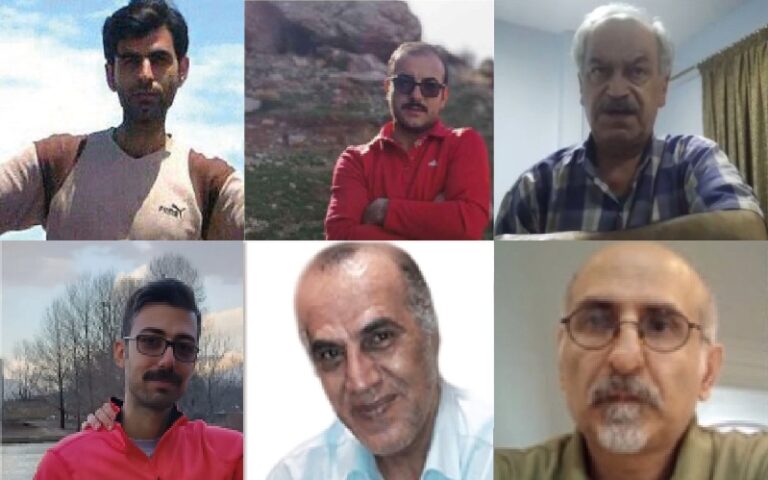
Following the execution of six prisoners affiliated with the People’s Mojahedin Organization of Iran (PMOI/MEK) by Iranian regime security agents at Ghezel Hesar Prison, new information has emerged about the circumstances and method of the executions.
At around 9:30 p.m. on Sunday night, March 29, more than 20 guards from Ghezel Hesar Prison stormed the political prisoners’ hall in Unit 4 to transfer and execute six members of the PMOI. The agents were led by a man named Hassan Ghobadi.
At that hour, all prisoners were in their cells, and at first no one realized the agents had arrived because this is not normally the time when prison guards enter the units and halls.
Two agents stood beside each cell and moments later entered and told the prisoners, “Come out of your rooms without touching anything. It’s an inspection.”
The purpose of this was to deceive the prisoners so they would leave their cells and then the hall without resistance.
To reassure the prisoners, Hassan Ghobadi twice shouted loudly that there was no problem and it was only an inspection. The prisoners came out of their cells and gathered in the corridor.
The agents began asking the prisoners’ names, and it became clear that they intended to take six prisoners for execution.
When they tried to handcuff Vahid Bani Amerian’s hands behind his back, he resisted. As a result, several agents attacked him and repeatedly struck his head and face, leaving him bloodied.
Long-standing political prisoner Saeed Masouri, who had not yet come into the corridor, shouted: “Kill all of us—death to Khamenei.”
Qasem Sahraei (the prison duty officer) asked Ali Younesi, “What’s your name?” Ali said, “Ali.” Sahraei then asked for his surname, and when Ali gave it, he punched him hard in the face, causing it to swell immediately.
After that, 21 prisoners were handcuffed and taken to Ward 8, from where they were to be transferred to solitary confinement.
There, the six condemned prisoners were separated from the rest.
One by one, the handcuffed prisoners kissed these six men, said goodbye, and emphasized continuing their path.
Even the agents were astonished by the morale of these six, because as they were being taken to execution, there was no sign of fear or terror in any of them.
One of the prisoners could not contain himself and, overwhelmed with emotion, began to cry and kissed the faces of all six.
When Vahid Bani Amerian, Mohammad Taghavi, and Akbar Daneshvar saw him crying, they rebuked him, telling him not to cry and not to let the enemy see his tears.
With his usual smile, Vahid said, “Why are you crying? We are going to Behrouz (Ehsani) and Mehdi (Hassani).” (These two were PMOI members who had been executed in the same prison last August.)
International Conference Condemns Rise in Iran Executions, Voices Support for NCRI
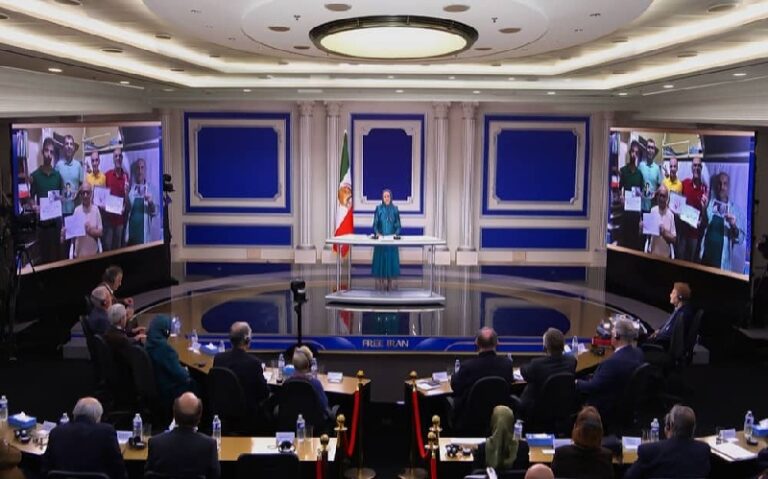
An international conference was held near Paris on April 10 to protest the recent rise in executions in Iran. The event brought together European political and legal figures, former political prisoners, and members of the Iranian diaspora.
Titled “A Call for Immediate Action to Halt the Executions of PMOI and Dissident Political Prisoners,” the gathering focused on the execution of six members of the People’s Mojahedin Organization of Iran (PMOI/MEK) and seven young protesters. Speakers presented the cases as part of a broader pattern of repression against political dissent.
Maryam Rajavi, the NCRI’s President-elect, opened the conference by describing the executions as evidence that the Iranian authorities continue to regard organized domestic opposition as their principal adversary. She pointed to the spread of “Resistance Units” across provinces, from Tehran to Zahedan, as a sign of growing opposition networks inside the country. Rajavi said Iran’s future depends on internal organization rather than foreign military action or diplomatic bargaining. She also called for the issue of executions to be included in any future international engagement with Tehran. The legal focus of the conference was reinforced by Prof. Dr. Herta Däubler-Gmelin, former German Minister of Justice. She said the executions require an international legal and moral response and described political prisoners and street protesters as the “voice of a society that refuses to be silenced.” She warned that silence from the international community risks becoming complicity. Däubler-Gmelin also referred to the NCRI’s Ten-Point Plan as a framework for democratic governance based on the rule of law. Several speakers contrasted the NCRI’s platform with both the current political system and monarchist alternatives. Former UK House of Commons Speaker John Bercow said “the idea of freedom cannot be executed,” arguing that the persistence of opposition activists would outlast the machinery of repression. Bercow also dismissed the political relevance of Reza Pahlavi, presenting monarchist narratives as disconnected from developments inside Iran. Former German Federal Minister Franz Josef Jung similarly endorsed the NCRI’s Ten-Point Plan, highlighting its emphasis on free elections, press freedom, and political pluralism. French participants widened the discussion to international policy. Jean-François Legaret, former mayor of Paris’s 1st district, cautioned against assumptions that diplomatic shifts or foreign strikes alone could bring change in Iran. He argued instead that domestic uprising remains central. Jean-Pierre Béquet, former mayor of Auvers-sur-Oise, made a similar point. He said the Iranian people are often overlooked in geopolitical calculations and stressed that democratic change must come through their continued struggle rather than external force. Former prisoners gave the conference some of its most personal testimony. Nasrollah Marandi, a survivor of the 1988 prison “death corridors,” linked the recently executed PMOI members to earlier generations of prisoners who resisted under both the Shah and the Islamic Republic. Reza Shemirani, who said he spent more than 4,000 days in prison, described Evin and Gohardasht as symbols of continuity in Iran’s repressive institutions. Both speakers portrayed today’s Resistance Units as heirs to that earlier legacy of prison resistance. Representatives of the Iranian diaspora added an external perspective. Minoosh Mashhadi, speaking from the Netherlands, described the state’s confrontation with its own people as a four-decade conflict and called for the closure of Iranian embassies in Europe, alleging they are used to monitor exiles. Mohsen Kasechi focused on the participation of younger generations, saying the involvement of Gen Z and millennials in Resistance Units shows the movement’s message continues to resonate despite the risks. Overall, the conference delivered a consistent message: condemnation of the recent executions, emphasis on organized internal resistance, and repeated endorsement of the NCRI’s Ten-Point Plan as a democratic alternative. Through legal arguments, political speeches, and firsthand testimony, the gathering sought to place Iran’s executions at the center of international attention.Commemoration of Executed PMOI Members and Protesters
— Maryam Rajavi (@Maryam_Rajavi) April 10, 2026
The price paid for freedom and lasting peace in Iran and the Middle East
Members of the PMOI—Mohammad Taghavi, Akbar Daneshvarkar, Babak Alipour, Pouya Ghobadi, Abolhassan Montazar, and Vahid Bani Amerian—who at the time of… pic.twitter.com/6VbpnMtXz7
Amnesty International: Internet Access Is a Fundamental Human Right and Must Be Restored Immediately
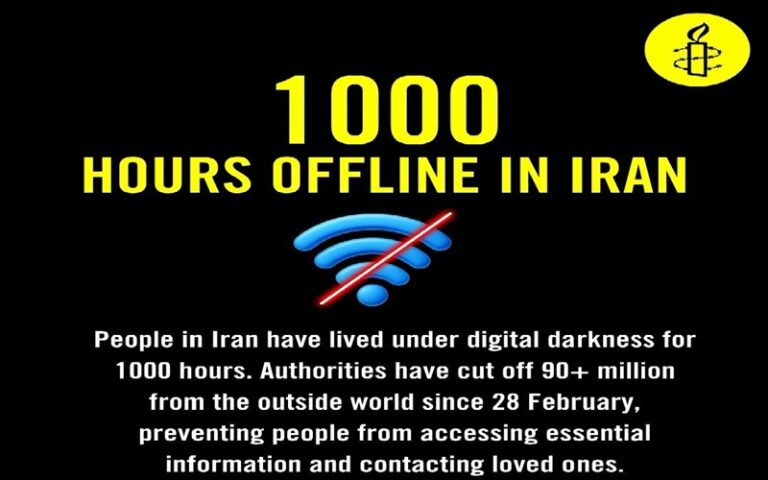
As Iran continues to experience one of its longest internet disruptions, Amnesty International on Friday, April 10, pointed to the regime’s repeated history of restricting internet access in the country and called for an immediate end to the situation.
In a statement, the organization said that as the internet shutdown approaches nearly 1,000 hours, officials of Iran’s regime must “immediately restore internet access.” The message emphasized that Iranian citizens have been living in digital darkness during this period and reminded that internet access is a fundamental human right and critically important in times of crisis.People in Iran have lived under digital darkness for 1000 hours. Authorities have cut off 90+ million from the outside world since 28 February, preventing people from accessing essential information and contacting loved ones. Authorities must immediately restore internet access. pic.twitter.com/iP5Z68NOFu
— Amnesty Iran (@AmnestyIran) April 10, 2026
With the Launch of “Pro” SIM Card Sales, Tiered Internet Access Becomes Official in IranAccording to data published by NetBlocks, the internet disruption in Iran has entered its 42nd day and has exceeded 984 hours; a figure that places this event among the longest internet shutdowns in the world and once again highlights Iran’s position among countries with severe internet restrictions.
Widespread internet shutdowns in Iran have repeatedly occurred in the past and are recognized as one of the regime’s control tools in dealing with crises and protests. The previous record for such restrictions dates back to January 2026, during which access to the free internet was completely blocked for 21 days. Amnesty International also warned that cutting people off from the outside world, in addition to blocking the free flow of information, can expose citizens’ safety and lives to serious threats. The continuation of this situation comes as reports indicate widespread damage to online businesses and the digital economy. At the same time, many citizens have been forced to use circumvention tools to access the internet—an action that, in addition to economic costs, also carries significant security risks.1000 hours. pic.twitter.com/9nr87aSycJ
— NetBlocks (@netblocks) April 10, 2026
French Lawmakers in “La Tribune”: Change is in the Hands of the Iranian People, and the Resistance’s Plan is the Alternative to the “Velayat-e-Faqih” Regime
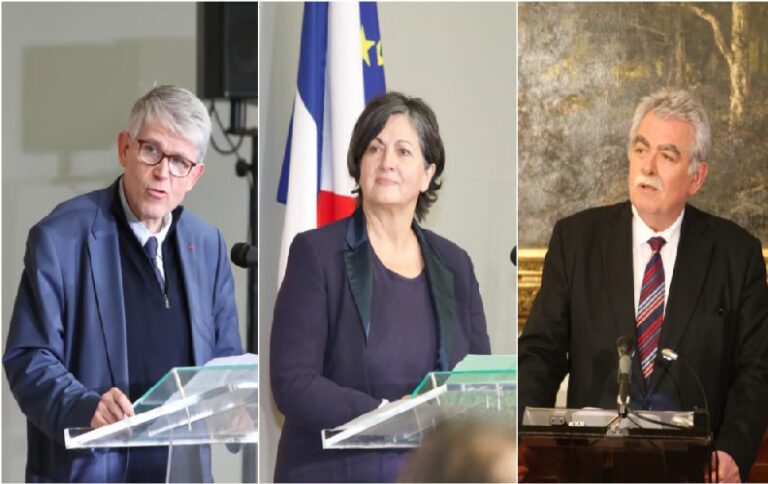
In a comprehensive and analytical op-ed published by the French newspaper “La Tribune Dimanche“, French parliamentarians Philippe Gosselin, Christine Arrighi, and André Chassaigne outlined a strategic vision for the future of Iran on behalf of nine current and former lawmakers from the Parliamentary Committee for a Democratic Iran (CPID). The authors asserted that ending the dictatorship of the “Velayat-e-Faqih” will not be achieved through foreign wars or interventions, but by supporting the organized democratic opposition. They issued a stark warning against attempts to impose artificial coalitions from abroad, strongly criticizing the exclusionary stances of the pro-Shah faction, which they argued threaten to tear Iran’s social fabric apart.
La machine à exécuter du régime iranien tourne sans relâche #FreeIran2026 #FreeIran10PointPlan #NCRIAlternative #IranWarhttps://t.co/1HEaPJddHC
— Iran Focus (@Iran_Focus) April 9, 2026
The Failure of Appeasement and Foreign Wars
The French parliamentarians noted that the Iranian people—led by courageous citizens facing down a theocracy, resilient women challenging institutionalized misogyny, and resistance fighters enduring domestic repression and foreign bombs—have been defying one of the most obscurantist regimes of our time for nearly five decades. The lawmakers stressed that neither the policy of “appeasement” succeeded in changing the sectarian nature of the ruling clerics, nor have recent wars and bombings brought about radical transformation. Even in its weakened state, the regime continues its reckless flight forward. Therefore, the authors concluded that the solution rests entirely in the hands of the Iranian people in all their diversity. They emphasized that dialogue must be held with the true representatives of the people, not with the dictatorial regime.The Ten-Point Plan: National Consensus vs. Pro-Shah Exclusion
The op-ed delved into the political dynamics of the opposition, affirming that the “Ten-Point Plan” proposed by the National Council of Resistance of Iran (NCRI) is increasingly uniting Iran’s pluralistic political forces. A crucial element of this plan is its recognition of autonomy for Iranian Kurdistan, as well as for other components of Iran such as the Baluchis and Arabs, serving as a powerful catalyst for “national reconciliation.” In sharp contrast, the lawmakers explicitly criticized the pro-Shah faction, pointing out that by labeling ethnic components aspiring to political and cultural autonomy as “separatists,” this faction is paving a direct path to future civil conflicts. The parliamentarians also praised other core tenets of the NCRI’s program, which include the separation of religion and state, gender equality, and the abolition of the death penalty. They highlighted that the transitional period envisioned by the NCRI is limited to no more than six months, further reinforcing the democratic credibility of the plan.The Price of Blood and Systematic Executions
The article pointed out that the “Velayat-e-Faqih” regime fully grasps the danger posed by this democratic coalition, which is why it constantly subjects it to demonization and defamation campaigns—some of which occasionally echo in France. Alongside media smears, the regime continues its physical elimination tactics; over the past four decades, it has executed tens of thousands of members and sympathizers of the People’s Mojahedin Organization of Iran (PMOI/MEK). The lawmakers drew attention to the most recent atrocities, citing the executions of four PMOI activists—Babak Alipour, Pouya Ghobadi, Mohammad Taghavi, and Akbar Daneshvarkar—who were hanged in Tehran in the final days of March 2026. They added that, by the Iranian judiciary’s own admission, many other PMOI activists are currently on death row.A Call for an Inclusive Democratic Front
Concluding their op-ed, and against the backdrop of the dramatic tragedies the Iranian people are enduring—marked by thousands of deaths, tens of thousands of arrests, and an overwhelming war—the nine signatory parliamentarians called for the unity of all democratic components of the Iranian opposition. They urged the formation of an inclusive framework dedicated to establishing a secular, democratic republic in Iran. They firmly rejected any positions that serve the interests of an authoritarian regime, declaring that the Iranian people alone aspire to freedom, democracy, and sovereignty, and no one has the right to falsely claim to speak on their behalf.Iran in A Bottleneck Over Restoring Infrastructure After Ceasefire
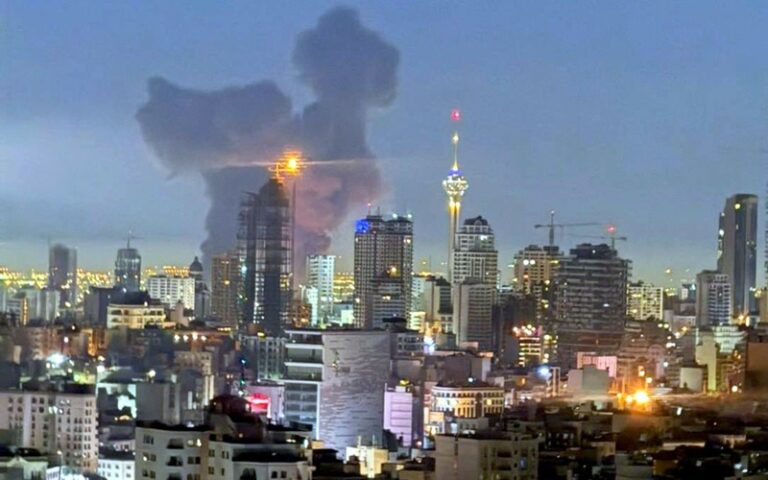
A few weeks after heavy U.S. and Israeli attacks, and under the shadow of a fragile ceasefire, Iran is facing a level of destruction incomparable to any past experience. Unlike the Iran-Iraq war, when damage was largely confined to border regions, this time the country’s main economic, energy, and technology centers have been targeted; what some experts describe as “the neutralization of vital infrastructure.”
Although preliminary figures indicate the destruction or severe damage of more than 93,000 residential and commercial units, the main damage has occurred in key base industries; a sector whose reconstruction is not compatible with the country’s current resources.
Mahshahr; a blow to the country’s foreign currency lifeline
The greatest concern centers on the Mahshahr petrochemical region, where Bandar Imam and seven other major complexes accounted for 60% of the capacity of this strategic hub. During the years that the regime was under sanction, Mahshahr was one of the most important sources of immediate liquidity for importing essential goods.U.S.–Iranian Regime Talks in UncertaintyIf these complexes are completely taken offline, Iran’s petrochemical exports will fall from 13 billion dollars to less than 6 billion dollars; meaning the loss of half of its foreign currency resources. The physical reconstruction of these eight complexes alone will cost about 20 billion dollars. At the same time, damage to the Fajr one and two power plants, which supply electricity to the petrochemical industries, carries at least 1 billion dollars in restoration costs. Without this infrastructure, even undamaged units are effectively shut down. The main difficulty is replacing control equipment and precision instruments, access to which has become extremely limited under sanctions.
Asaluyeh; paralysis through the destruction of support facilities
In Asaluyeh, the focus of the attacks was not on the main structures, but rather on auxiliary facilities such as electricity, water, and oxygen. Nevertheless, these same damages have effectively paralyzed the petrochemical units because of the interconnected production chain. In the upstream sector, there is also major uncertainty regarding phases 3 to 14 of South Pars; facilities that process 100 million cubic meters of gas per day. If completely destroyed, their restoration will require at least 5 billion dollars.Logistics collapse; the main obstacle to reconstruction
One of the most serious post-ceasefire crises is the collapse of the country’s transit network. Attacks on strategic bridges, rail lines, and transportation infrastructure have disrupted the goods movement network; this in conditions where the sector was already in poor shape before the war due to deterioration and sanctions. The sharp rise in transportation costs is now also creating problems for the reconstruction of other sectors. Even if heavy power plant parts and raw materials are secured, the absence of safe and functional routes causes them to be stranded in customs and delays reconstruction.Steel and refining; added pressure on the economy
The damage to Mobarakeh Steel and Khuzestan Steel, which together hold 70% of Iran’s steel capacity, is another major challenge. Iran previously exported 11 million tons of steel annually worth 6 billion dollars, but now, with the vast needs of reconstruction projects, it not only loses this income but is also forced to spend 8 to 10 billion dollars annually on steel imports. Alongside this sector, the Lavan refinery has also been damaged and requires at least 700 million dollars in funding for restoration.Technological reconstruction; a multi-year path
The damage is not only physical. Rebuilding research-and-development-based institutions and complex industries will be a time-consuming process. Restoring management sections may be completed within a few months, but reviving the supply chain, manufacturing, testing, and operational deployment will require between one and five years. For this reason, returning to pre-war production quality and capacity will be a project of at least five years.Post-ceasefire economy; a battle for survival
With declining foreign currency revenues, a logistics crisis, and the destruction of industrial hubs, infrastructure reconstruction in Iran has now turned into a battle for survival. Estimates show that the full restoration of damages inflicted on Mahshahr, Asaluyeh, Isfahan, and Ahvaz will require more than 100 billion dollars over a five-year period; this while blocked trade and banking routes have severely weakened the country’s foreign exchange reserves. In such a situation, without the normalization of international relations and access to global markets, Iran may remain in an emergency repair phase for decades, striving only to return to its pre-war position.U.S.–Iranian Regime Talks in Uncertainty
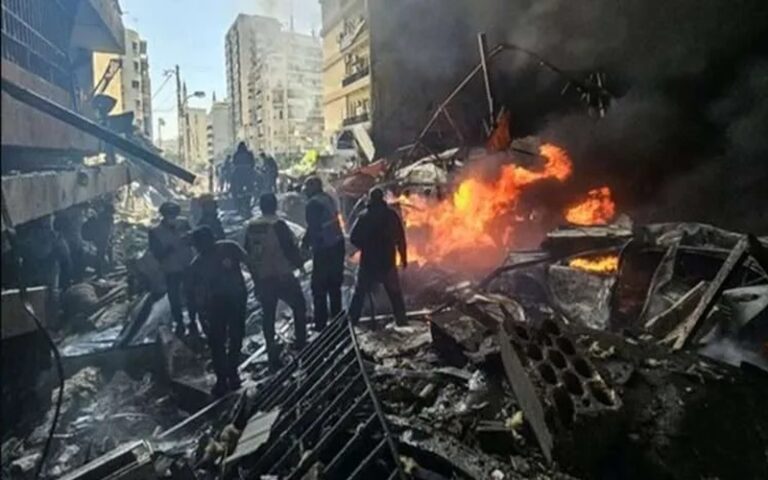
On the second day of the ceasefire between the United States and Iran’s regime, with continued transit restrictions in the Strait of Hormuz and rising tensions between Lebanon and Israel, stock markets in Asia scaled back their optimism about the ceasefire and turned downward.
In the early hours of trading, the overall Asian market index fell by about 0.7%, with Japan’s stock exchange remaining unchanged, while China recorded a 0.6% decline and South Korea a 0.4% drop.
In India as well, markets turned negative after initial optimism, and some indices experienced declines of up to one percent. This drop came despite the fact that just a day earlier, in response to the two-week ceasefire, India’s stock index had risen 4%; however, growing concerns over Middle East tensions and doubts about the durability of the ceasefire reversed the market trend.
The concerns were not limited to East Asian markets, and in West Asia Saudi Arabia’s stock index also fell by 0.2%,
The Israeli military announced that Ali Youssef Harshi, the nephew and secretary of Naim Qassem, the secretary-general of Lebanon’s Hezbollah group, was killed in the army’s strike on the Beirut area.
An Israeli military spokesperson said on Thursday that the strike had taken place on Wednesday and that he had played a key role in managing Qassem’s office and protecting him.
On Wednesday, Israel carried out extensive strikes against Hezbollah positions in Lebanon, and according to the Israeli military, overnight it targeted two main crossings that Hezbollah used to move from north to south of the Litani area in Lebanon and transport thousands of weapons, rockets, and launchers.
Hezbollah began another round of clashes with Israel by attacking it on March 2 in support of Iran’s regime. Israel said it would respond forcefully, and since then it has carried out airstrikes that have killed more than 1,000 people.
Israel had already weakened Hezbollah’s military capabilities through strikes on its positions since the start of the Gaza war on October 7, 2023.
Regime ambassador deletes news of Iranian delegation’s trip to Islamabad
Iran’s regime ambassador to Pakistan deleted, without any explanation, his post on the social media platform X about the imminent trip of an Iranian delegation to Islamabad for talks with the United States. Reza Amiri-Moghaddam wrote in a post on X on Thursday, April 9, that the delegation would arrive in Islamabad tonight. He made no reference to the composition of the Iranian regime’s negotiating delegation. This came as Mohammad Bagher Ghalibaf, speaker of the regime’s parliament (Majlis), had earlier claimed that the ceasefire had been violated and said that under such circumstances, “neither a bilateral ceasefire nor negotiations have any meaning.” These talks are scheduled to be held in Islamabad on Saturday.The Execution Machine of Iran’s Regime Runs Without Pause
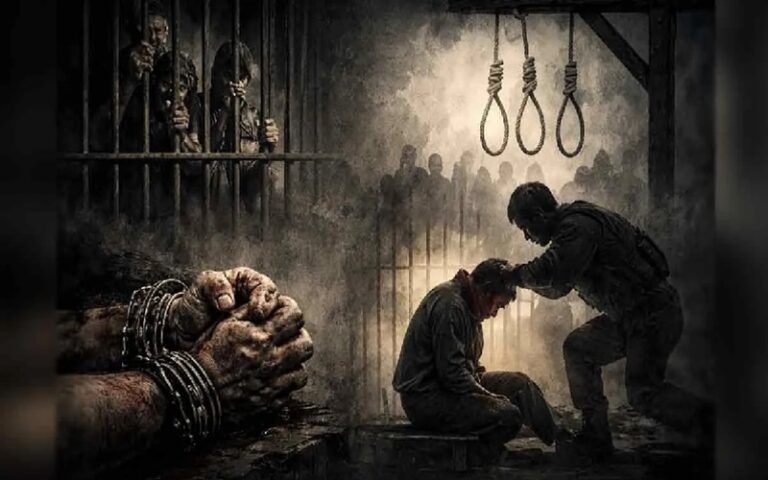
Less than three weeks after the start of U.S. and Israeli attacks on Iran, a wave of executions of political prisoners began with the hanging of an Iranian Swedish dual national, Kourosh Keyvani, on charges of espionage. He was executed on March 18, two days before the Iranian New Year (Nowruz).
One day later, the day before Nowruz, three detainees from the nationwide January protests in Qom—Mehdi Ghasemi, Saleh Mahmoudi, and Saeed Davoodi—were executed.
With the start of the Nowruz holidays, the execution machine did not stop. On March 30, while cities continued to be bombarded and people were spending Nowruz holidays without internet and satellite access under a rain of bombs and missiles, two political prisoners and members of the People’s Mojahedin Organization of Iran (PMOI/MEK), Mohammad Taghavi Sangdehi and Ali Akbar Daneshvar, were executed. One day later, two other members of this organization, Pouya Ghobadi and Babak Alipour, were also executed.
Iran’s regime executes political prisoner Ali FahimThe death machine did not pause even on Sizdah Be-dar (April 2); Amirhossein Hatami, another youth arrested during the January protests, was hanged. On April 4, Vahid Bani-Amirian and Abolhassan Montazar, two other members of the PMOI/MEK, were executed. On April 5, Mohammad Amin Biglari and Shahin Vahedparast, and on April 6, Ali Fahim, all arrested during the January protests, were hanged. Currently, at least dozens of protesters and political opponents face the threat of execution. These individuals include protesters arrested during the January protests, those whose cases have been ongoing since the 2022 protests, individuals arrested for links with Kurdish parties or the PMOI/MEK facing vague and illegal charges such as moharebeh (waging war against God), baghi (rebellion), and “corruption on Earth,” as well as those accused of espionage in cases filled with torture and violations of fair trial principles. About ten days before the U.S. and Israeli attacks on Iran, Amnesty International warned in a statement that at least 30 prisoners connected to the January protests were at risk of execution, two of whom were under 18 years old.
“Iran’s regime’s ‘therapeutic killings’ and ‘execution therapy.'”
What does this insistence on killing mean, under bombings and missile attacks, in the middle of a war that has set the region on fire, and at a time when, according to all analysts, Iran’s regime is in its weakest political and economic position? The acceleration of executions is due to the regime’s fear of society, fearing that the compressed spring of a free society may suddenly be released, as the war has entered more sensitive stages that could cause social explosions similar to past years. Although killings and executions have always existed in Iran’s regime, these days they carry a specific meaning. This intensification of executions is aimed at controlling society. Given that regime officials operate while the people are under bombardment and society is highly agitated, with calls for fundamental change louder than ever, the authorities use repression tools—and above all, execution as a weapon to consolidate their power, instill fear, and deepen despair in a society simultaneously under bombardment and deadly suppression. As noted, of the 14 people executed for political reasons since the start of the war, six were members of the PMOI/MEK. In 1988, Iran’s regime executed 30,000 members of this organization within a few weeks. Since the beginning of the Iranian regime’s rule, 72 UN General Assembly resolutions condemning human rights violations in Iran and 17 UN Human Rights Council resolutions have been issued. The latest UN Human Rights Council resolution on the suppression of opponents in Iran was issued in January 2026, following the bloody crackdown on the January protests. In the UN General Assembly, the most recent resolution condemning widespread human rights violations in Iran was approved by majority vote in December 2025. We are facing a regime that uses executions and the elimination of opponents to consolidate power and extend its survival. Therefore, it is willing to eliminate human beings at any cost to silence dissent and spread deep despair in society. When a government uses capital punishment to instill terror—while people are simultaneously under bombardment—it becomes entirely clear that the right to life and the most basic principles of humanity hold no value for the authorities in Iran’s regime.Political Prisoner Maryam Akbari Monfared Released from Prison After 17 Years
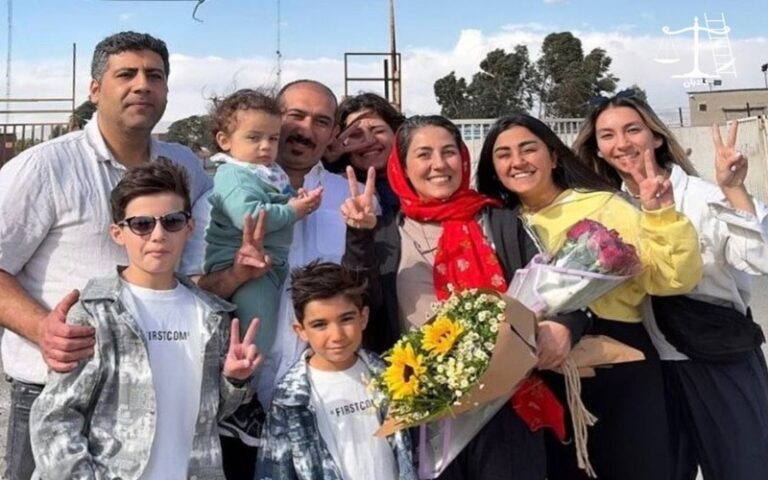
Maryam Akbari Monfared, a political prisoner, was released after serving 17 years in prison, even though under the Iranian regime’s own laws she should have been freed three years ago.
She was arrested during the January 2010 protests in Tehran and sentenced to 15 years in prison on charges including “acting against national security,” “propaganda against the regime,” and “enmity against God through membership in the People’s Mojahedin Organization of Iran (PMOI/MEK).” Akbari Monfared has three children.
In January 2024, after serving 13 years of her sentence, a new case was opened against her and she faced charges such as “propaganda against the regime,” “assembly and collusion against the country’s security,” “spreading falsehoods,” and “insulting the supreme leader.” As a result of this case, three more years were added to her sentence, and she was also sentenced to internal exile and confiscation of property.
The Head of the Iranian Regime’s Judiciary Called for Accelerating and Increasing Death SentencesDuring her imprisonment, Maryam Akbari Monfared was held in Evin, Semnan, and Qarchak prisons, and over the course of 17 years she did not receive even one day of furlough. Her pursuit of justice over the massacre of political prisoners in the 1980s, including members of her own family, has been one of the main reasons for the judicial pressure against her. Alireza and Gholamreza Akbari Monfared were executed in 1981 and 1985, and her sister Roghiyeh and another brother, Abdolreza, were executed in the summer of 1988 during the massacre of steadfast PMOI political prisoners.
Repeated case-building against Maryam Akbari
In January 2024, judicial authorities opened a new case against her. In this case, charges including assembly and collusion against the country’s security, spreading falsehoods, and insulting the supreme leader were raised. As a result of these charges, another three years were added to her sentence. Maryam Akbari’s release under such circumstances has raised questions about contradictions in the implementation of judicial rulings. Throughout her imprisonment, she was held in various prisons including Evin, Semnan, and Qarchak. During this period, she did not receive even a single day of leave. This issue has repeatedly been raised by human rights organizations. Her prolonged separation from her children has also been one of the major dimensions of this case. Her release after all these years marks the end of one of the longest prison terms for a female political prisoner who remained steadfast to the very end. Maryam Akbari Monfared’s family has also faced severe repression over past decades. Several members of her family were executed in different years. This issue was also taken into account in the handling of her case. Judicial authorities had cited alleged ties to the People’s Mojahedin Organization of Iran (PMOI/MEK) as one of the core accusations.Prison conditions and reactions to her release
Maryam Akbari Monfared’s imprisonment was accompanied by numerous reports of physical and psychological pressure. Repeated transfers between prisons, communication restrictions, and deprivation of basic rights were among the reported issues. Her release after these conditions has prompted widespread reactions on social media. Users have described her release as the result of years of steadfastness and resistance. Others, however, have pointed to the delay in enforcing the law. The release of this resilient woman has once again raised discussion about the condition of other political prisoners.Iran War Tensions Escalate as US Deadline Approaches
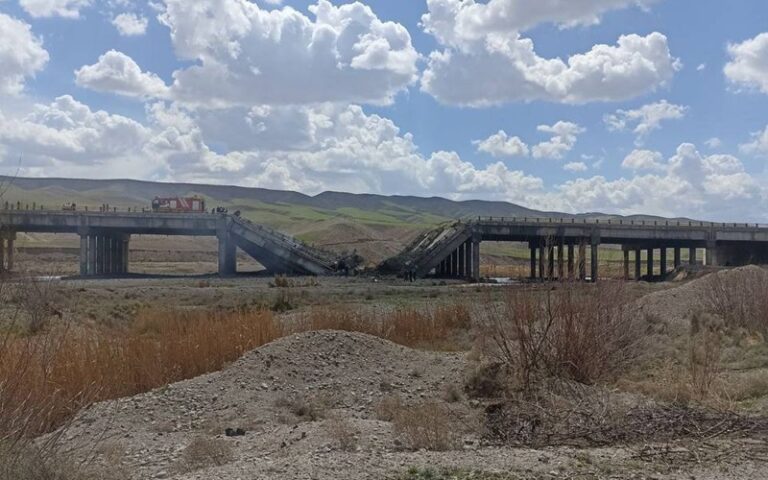
Donald Trump has once again warned Iran’s regime and called for a resolution to the conflict. He said he insists that the Strait of Hormuz be reopened by Tuesday. Trump also warned that if no agreement is reached to end the fighting, then, in his words, all civilization could be wiped out tonight.
Referring to the 1979 revolution in Iran, Trump wrote that 47 years of threats, corruption, and death will finally come to an end.
Trump had earlier threatened Tehran that if no agreement is reached to end its nuclear program and reopen the Strait of Hormuz, large-scale attacks would be carried out against the country’s infrastructure.
The Head of the Iranian Regime’s Judiciary Called for Accelerating and Increasing Death Sentences
Explosions Reported on Kharg Island
Iranian regime’s state-run Mehr News Agency reported explosions on Kharg Island, the strategic oil export island in the Persian Gulf. According to the report, the island—which handles a large portion of Iran’s oil exports—has come under attack. Earlier, in mid-March, U.S. military forces had conducted airstrikes on this island.Two Killed in Shooting Near Israeli Consulate in Istanbul
According to reports, following an armed clash with police near the Israeli consulate building in Istanbul, at least two attackers were killed, and another person was seriously wounded. A Reuters video shows police officers drawing their weapons and taking cover after hearing gunfire. The shooting reportedly continued for about 10 minutes. In the footage, one person can be seen lying on the ground covered in blood. Another video appears to show one of the attackers moving among police and security forces while shots are being fired. Two bodies are also visible near the scene of the clash.Attack on Petrochemical Hub in Jubail, Saudi Arabia
Overnight attacks targeted the Jubail region in eastern Saudi Arabia and reportedly caused a fire at a major petrochemical complex. An eyewitness told Agence France-Presse that explosions were heard at facilities belonging to the Saudi Basic Industries Corporation (SABIC), and workers were evacuated from nearby residential areas. Iran’s state-run Fars News Agency also reported on Tuesday that the attack targeted a petrochemical complex. The city of Jubail in eastern Saudi Arabia hosts one of the world’s largest industrial cities, where products such as steel, gasoline, petrochemicals, lubricants, and chemical fertilizers are produced. As of the time of publication, there has been no official response from Saudi Arabia’s government or SABIC.Israel Warned People in Iran to Avoid Train Travel
The Israeli military issued a warning urging Iranian citizens to avoid using trains and stay away from railway lines, saying their lives would be at risk. In a post on X, the Israeli military asked people in Iran to avoid all train travel nationwide until 9:00 p.m. local time. The warning said that being on trains or near railway infrastructure could place civilians in danger. Iran’s regime has restricted internet access in recent weeks, preventing many citizens inside the country from directly seeing this message. However, Persian-language satellite news networks based abroad have rebroadcast the warning.As Trump’s Deadline for Infrastructure Strikes Nears, Iran’s Regime Rejected the Ceasefire Proposal
Iran’s regime rejected the U.S. ceasefire proposal, which had been presented through Pakistani mediation with the aim of reopening the Strait of Hormuz and beginning peace talks in the coming weeks. Informed sources say Tehran opposed the 45-day ceasefire and instead demanded a complete and permanent end to the war. Iran’s regime official IRNA news agency reported that Tehran’s response included 10 conditions, including the lifting of sanctions, reconstruction, and guarantees for safe passage through the Strait of Hormuz. Meanwhile, Donald Trump warned that if Iran’s regime refuses the agreement, it could be destroyed overnight. He threatened that if no agreement is reached, large-scale attacks against bridges, power plants, and other infrastructure would be carried out by early Wednesday.The Head of the Iranian Regime’s Judiciary Called for Accelerating and Increasing Death Sentences
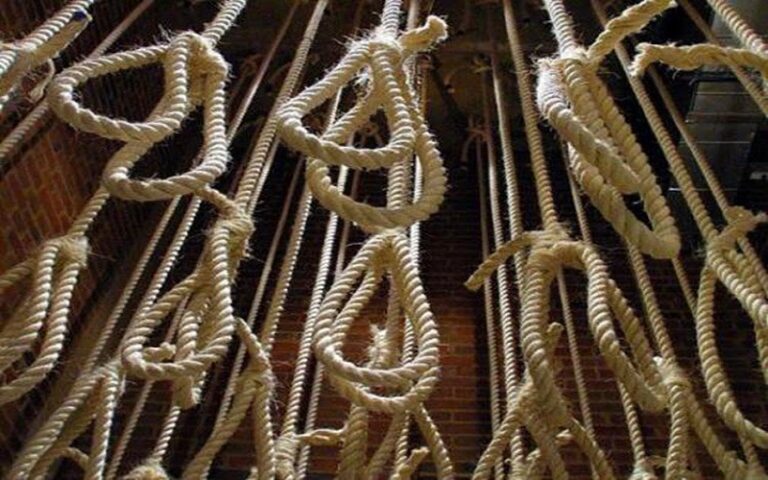
On Tuesday, April 7, Gholamhossein Mohseni Ejei, the head of the Iranian regime’s judiciary, called for accelerating and increasing death sentences. The regime judiciary chief emphasized speeding up rulings against what he called “enemy elements and agents,” while reports indicate a sharp increase in pressure on political prisoners and the implementation of death sentences in recent days.
Mohseni Ejei called for accelerating and increasing death sentences. In a meeting with members of the judiciary’s high council, he called for the maximum use of laws, including the law intensifying punishment for espionage, to speed up the issuance of rulings. He also stressed the rapid implementation of punishments such as asset confiscation and executions in cases where the law permits and called for these rulings to be publicized in the media.
These remarks come as, over the past few days, at least 10 political prisoners have been executed, 6 of whom were members of the People’s Mojahedin Organization of Iran (PMOI/MEK). There have also been reports that dozens of other prisoners are awaiting execution.
Iran’s regime executes political prisoner Ali FahimEjei’s emphasis on accelerating the issuance and implementation of heavy sentences and executions comes as concerns over fair trial procedures and judicial transparency have increased. In another part of his remarks, Mohseni Ejei described the country’s conditions as an all-out war and stressed the need for decisive confrontation with opponents, as well as intensified market monitoring and action against what he called disruptors. He also claimed that despite these conditions, the daily lives of the people have not been disrupted. At the same time, the coincidence of these remarks with the recent wave of executions and reports of increasing heavy sentences has further heightened concerns about the intensification of security and judicial approaches in the country.
