

Iran’s Economy Beneath the Rubble of War and Structural CollapseThe regime official added that the assessment of damages is being carried out at multiple levels and, based on current reviews, U.S. and Israeli attacks have inflicted such losses on Iran’s economy. Meanwhile, the state-run Fararu website reported on April 14 that the head of the Business Commission revealed the heavy losses caused by internet shutdowns. He stated that each day internet disruption inflicts between $70 million and $80 million in damage on the country’s economy. To better illustrate the scale of this damage, he said that the cost of building a “B1-level” bridge is about $15 million to $20 million, while each megawatt of power plant capacity costs between $1 million and $3 million. Based on this, the daily loss caused by internet shutdowns is equivalent to losing several bridges or multiple medium-sized power plants every single day. The official also explained that the direct damage from internet shutdowns is estimated at about $30 million to $40 million per day, but when indirect losses are considered, the figure at least doubles, reaching $70 million to $80 million.
Iran’s Economy Under Pressure from War and Internet Shutdowns
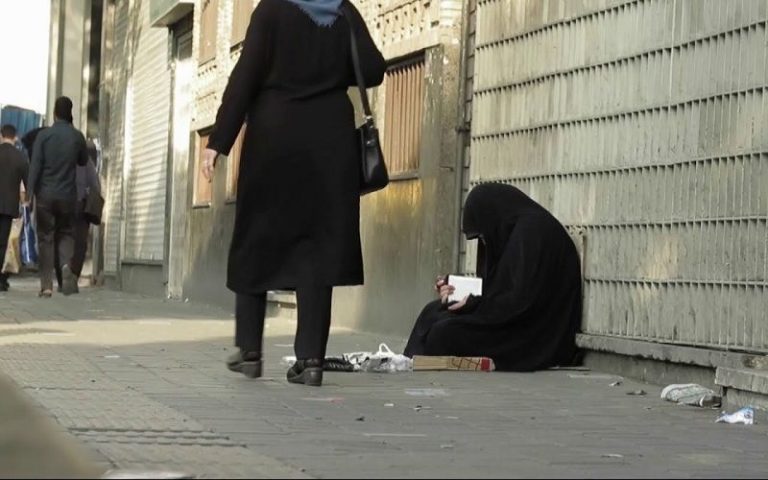
As the true dimensions of Iran’s economic crisis become more evident each day, regime officials are acknowledging the heavy damage caused by war as well as the widespread losses resulting from domestic policies.
The government spokesperson announced that the preliminary estimate of war-related damage is about $270 billion.
He stressed that this figure is not yet final and may increase. According to him, one of the key issues being pursued by the Iranian regime’s negotiating team in international talks, including the negotiations held in Islamabad, is securing war reparations.
U.S. Treasury Sanctions Shamkhani Oil Network
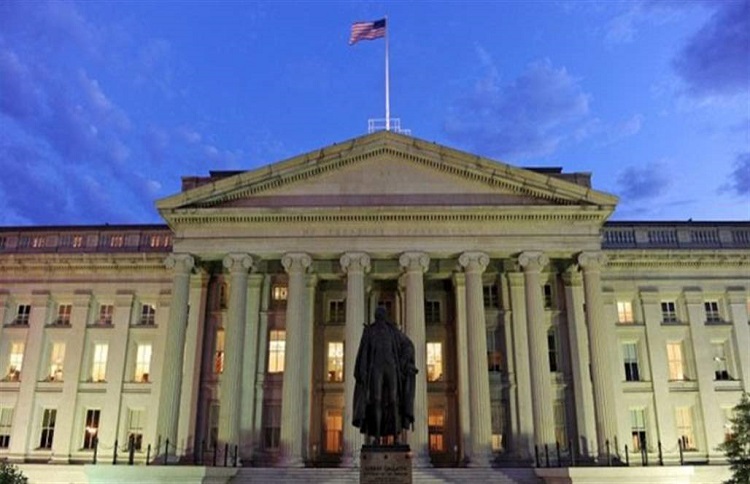
The United States Department of the Treasury imposed a new package of sanctions against 3 individuals, 17 companies, and 9 tankers linked to the Iranian regime. In this action, a network affiliated with Mohammad Hossein Shamkhani, the son Ali Shamkhani, the slain senior adviser to former regime supreme leader Ali Khamenei, as well as a financing structure tied to Hezbollah in Lebanon, was targeted.
According to the U.S. Treasury Department, Mohammad Hossein Shamkhani’s network has used front companies in the United Arab Emirates, India, and the Marshall Islands to evade sanctions and has generated billions of dollars in revenue through the sale of Iranian and Russian oil and liquefied gas. The department stated that Shamkhani oversees a multibillion-dollar oil sales empire that serves the interests of the Iranian regime.
Children of Iranian Regime Officials Enjoy Luxury Lives in Dubai and EuropeIn another part of this action, Seyed Badr al-Din Naeimai Mousavi, an Iranian national and one of Hezbollah’s financial facilitators in Lebanon, was also sanctioned. Three companies linked to a complex network involved in selling Iranian oil in exchange for Venezuelan gold were also placed on the sanctions list. According to the U.S. Treasury Department, this network ultimately operated for the benefit of Hezbollah in Lebanon and the Quds Force of the Islamic Revolutionary Guard Corps (IRGC). Fresh Washington Warning: Buyers of the Iranian Regime’s Oil and Cooperating Banks in the Crosshairs of Secondary Sanctions The U.S. Treasury Secretary announced that Washington is prepared to enforce secondary sanctions against oil buyers and financial institutions cooperating with the Iranian regime in order to intensify economic pressure. Under this position, any bank involved in transferring the regime’s money and any party that continues purchasing oil from this government could face direct U.S. penalties. This latest warning comes as pressure on the Iranian regime’s oil sales and transportation network is also increasing simultaneously.
CENTCOM Announced a Complete Naval Blockade of Iran
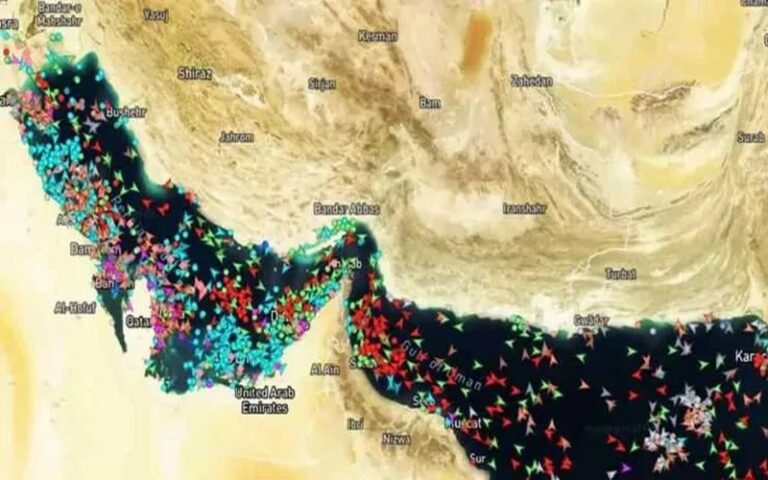
The United States Central Command (CENTCOM) announced that the plan to block the ports of the Iranian regime has been fully implemented. In a statement, the command said that within just 36 hours of the start of the operation, U.S. forces had succeeded in halting all maritime commercial exchanges to and from Iran.
CENTCOM emphasized maintaining U.S. naval superiority in the Middle East region and added that the operation was carried out with the aim of full control over maritime traffic related to Iran and is still ongoing.
Iran’s Regime Prioritizes Its Repressive Apparatus over People’s Lives During CeasefireMeanwhile, military analysts assess this move as one of the lower-risk options compared with more aggressive scenarios. According to Mark Montgomery, a retired U.S. admiral, enforcing a naval blockade carries fewer risks for American forces than actions such as military escort of ships through the Strait of Hormuz or seizing strategic points. In alternative scenarios, U.S. forces could have been exposed to threats such as missile attacks, drone strikes, fast boats, and even naval mines; whereas under the current situation, American warships are stationed at a safe distance in the Gulf of Oman, monitoring ship traffic and stopping vessels when necessary. CENTCOM commander General Brad Cooper also pointed to the Iranian regime economy’s high dependence on maritime trade, stating that about 90% of the country’s economic exchanges are conducted by sea, and disruption of this route would create significant pressure. CENTCOM also reported that U.S. Navy guided-missile destroyers are participating in the operation and that the blockade applies to all ships regardless of their country of origin or destination. These destroyers, each carrying more than 300 crew members, are trained for complex offensive and defensive operations. In another development, U.S. Vice President JD Vance, after recent talks in Islamabad with the Iranian delegation led by Mohammad Bagher Ghalibaf, speaker of Iran regime parliament, stated that in his view Ghalibaf effectively holds control over Iran’s affairs. He also emphasized that despite some progress in the talks, the level of distrust between the two countries remains high, and resolving the disputes in the short term appears unlikely.
Iran’s Regime Prioritizes Its Repressive Apparatus over People’s Lives During Ceasefire
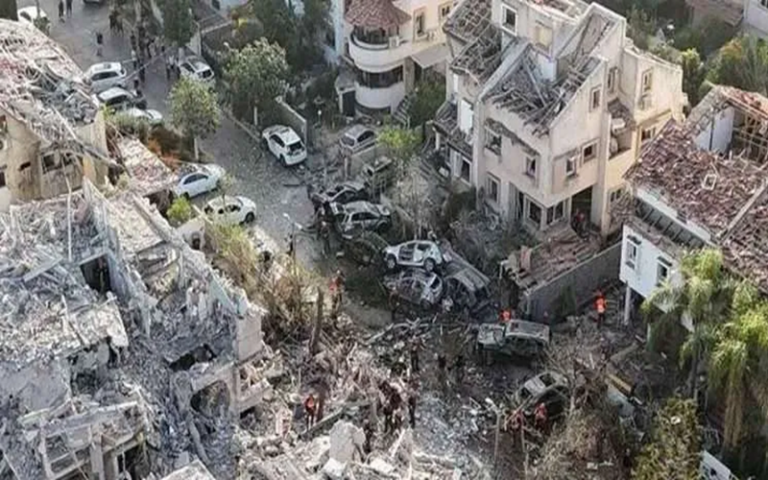
The state-run Tabnak media outlet published a piece on April 11 titled “The Wounded but Living Brain; Command Rises Again from Beneath the Rubble.” The state-run outlet examines the extent of the blow to the command force and how the Iranian regime was thrown into convulsions after the killing of Ali Khamenei, the supreme leader of Iran’s regime, and senior regime commanders during a foreign war.
And its key message is that the regime’s priority is not to address the needs of the war-stricken people but to maintain its hold on power against a restive population that demands regime change.
The state-run Tabnak writes: “Now supposedly there is a ceasefire, supposedly America and Israel are not attacking Iran, but right now is the time for the recovery and restoration of the central command forces, the thinking brains that were deep in the war and have become exhausted and wounded.”
U.S. Naval Blockade of Iran Begins on MondayAccording to the state-run Tabnak: “War is always recognized by smoke and fire, but the place where its fate is truly written is in rooms no one sees. In days when a ceasefire exists only on paper, inside those same rooms, a wounded brain is being repaired; a brain that, if it functions properly again, can turn the entire battlefield around.”
Tabnak unintentionally reveals the realities of the foreign war
The outlet continues: “In the first days of the war, everything happened quickly. So quickly that some decisions were made even before information was complete. The pressure was intense. Not only on the forces, but on the very network that had to decide, coordinate, and respond. The command-and-control network is the place where even a few minutes of disruption spreads its effects across the entire field.” This issue more directly reflects the killing of Khamenei in the very first minutes of the war and how the targeting of the leader of Iran’s regime affected the entire body of the system; until now the government, and this media outlet as well, have tried to keep this wounded brain hidden. Tabnak continues: “America and Israel understood this well. For this reason, their focus was not only on physical destruction. They were after the brain. Cyberattacks, attempts at infiltration, disruption of communications, and pressure on key network nodes. The goal was to slow decision-making, or worse, make it wrong. But that is what war is; it never waits for everything to be complete.”Is Iran’s regime preparing itself for the continuation of war?
By publishing tactical themes, Tabnak raises the line and direction for the post-ceasefire period and writes: “Now in this ceasefire, what is happening is not a simple reconstruction; it is a redefinition. It is as if the system is sitting down and rewriting itself. If that same blow comes again, what should it do this time? Where should it be flexible, where should it act independently, and where should it not wait for orders at all?” Tabnak further writes: “One of the most important changes taking shape in this phase is moving away from absolute centralization. Centralized systems are powerful, but they are also fragile. It only takes one key point to fail for the entire chain to shake. That is why the move toward distributed structures has now become more serious. It means units should not be merely executors. It means that if communications are cut, if orders do not arrive, if conditions change, they should be able to make decisions themselves based on a defined framework. Alongside this, the issue of communications is like an open wound that must be repaired. In a war where the enemy has invested in surveillance and disruption, every signal is a risk. Every message may be seen, heard, or cut off. That is why networks must be multilayered, flexible, and pass through routes that are not predictable.”The Wounded but Living Brain; Command Rises Again from Beneath the Rubble
The phrase “wounded but living brain” analytically refers to the regime’s command system, which collapsed in the early stages of the war, especially since Khamenei, the regime’s leader, was killed in the first military blow. But after the 12-day war, because Khamenei knew another war was on the way, he launched the January massacre to close the gap created by internal uprisings, in which thousands of Iran’s youths lost their lives. Also, according to some regime sources and regime commanders, the IRGC had already moved command out of centralized form and had delegated authority at provincial or regional levels so that under any circumstances they would not wait for orders and would strike pre-designated targets.A look behind the scenes and the use of the ceasefire for repair
Tabnak concludes: “These days, behind the scenes, teams are sitting and simulating different scenarios. If this happens, what do we do? If that node fails, what replacement do we have? If communication is cut, who decides? These are not questions that can be considered in the moment of war. They must be answered beforehand. For this wounded brain, the ceasefire is an opportunity. An opportunity to breathe, to repair, to become stronger; and if this repair is done correctly, the next round of war will no longer resemble the previous one. This time, decisions will be faster. Errors fewer, and reactions more precise—and in war, sometimes just a few seconds of difference is everything.” Tabnak deliberately does not address the painful condition of the Iranian people, who are paying the price of this treacherous war that the regime needs for its survival and that burns away people’s lives; and for this reason it must be said that the slogan of peace and freedom is the only powerful weapon against a fascistic and warmongering dictatorship. Of course, this entire scenario written by Tabnak seeks to portray the ceasefire as a tactic designed by the regime to prepare for the next phase of war. It has deliberately tried to omit the weakness and the depletion of the regime’s forces.Iran Regime’s Judiciary in Wartime Posture, 68% Rise in Executions in 2025
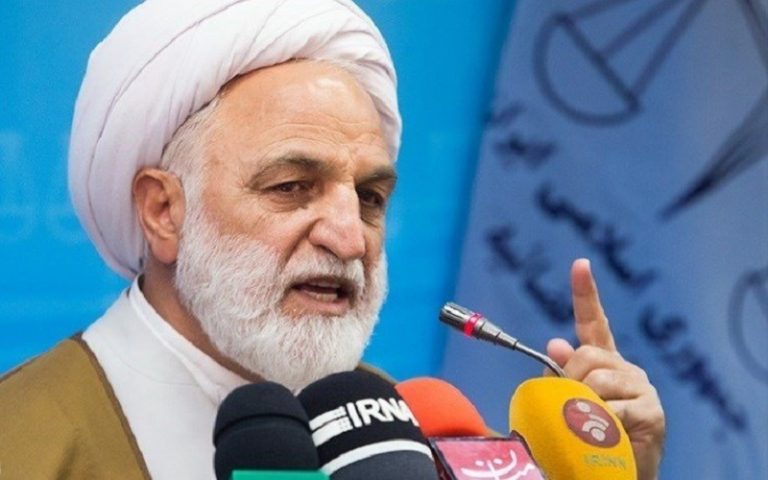
The head of the judiciary of Iran’s regime, Gholamhossein Mohseni Ejei, threatened Iran’s citizens by stating that this institution, in handling political cases related to the war and recent developments, will maintain a wartime posture until further notice.
On Monday, April 13, Gholamhossein Mohseni Ejei told a number of members of the Supreme Judicial Council: “The judiciary, in accordance with its legal duties and obligations and within the framework of its authority and operational sphere, has adopted a completely wartime and jihadist posture since the beginning of the third imposed war.”
He did not provide further explanation about the special conditions of this wartime posture, but added: “In dealing with spies, traitorous elements, and the foot soldiers of the invading enemy, our posture is completely wartime and in line with the requirements of the wartime period.”
Four More Protesters from Iran’s January Uprising Sentenced to DeathThe head of the judiciary of Iran’s regime emphasized: “In handling the cases of these elements, while observing the letter of the law and the principle of justice, we exercise the utmost decisiveness and speed, and we do not consider this matter subject to the usual procedures and rules governing normal conditions.” According to the annual report by Iran Human Rights, at least 1,639 people were executed, and the number of executions in Iran in 2025 compared to the previous year shows a 68% increase.
In 2024, at least 975 people had been executed
This figure means that in 2025, Iran’s regime executed on average more than four people per day. France 24, citing Iran Human Rights, wrote that this figure represents the minimum confirmed number of executions, because most of these cases are not reported in the regime’s official media. Mahmood Amiry-Moghaddam, director of Iran Human Rights, said in this regard: “The authorities, by creating fear through an average of four to five executions per day in 2025, tried to prevent the formation of new protests and prolong their decaying rule.”Wartime status is not defined in Iran’s legal system
In Iran’s current legal system, wartime conditions are not explicitly defined in law, and in the field of criminal law there is also no provision under which criminal procedure changes during wartime or grants special and additional powers to the judiciary. In the law passed in October last year under the title “Intensification of Punishment for Espionage,” Article 6 explicitly states that if the crimes covered by this law occur under wartime conditions, the individual’s punishment is increased by up to three degrees. If we assume that for one of the criminal titles under this law—such as operational action in support of a hostile state—a sentence of 2 to 5 years of imprisonment is prescribed, then if committed under wartime conditions, the 2-to-5-year prison sentence can increase to more than 20 years. In the law governing punishment for crimes of the armed forces, committing an offense during wartime is also considered an aggravating factor, and crimes such as disobeying command orders, espionage, or abandoning one’s post will face harsher punishment if committed under wartime conditions. Even before the emergence of wartime conditions, full compliance with these procedural formalities was already doubtful, and it appears that under the current conditions, disregard for due process has become even more severe. Iran’s regime has intensified repression over the past year, and two human rights organizations reported that the regime’s authorities executed at least 1,639 people in 2025, a figure unprecedented in the past 36 years. According to the annual report by Iran Human Rights, 48 women were also among the executed. The number of people executed in Iran in 2025, compared to the previous year, shows a 68% increase. In 2024, at least 975 people had been executed. In recent months, especially after the January protests, Iran’s regime has even used the label of terrorist against protesters. Ali Fahim was executed on April 6, Mohammadamin Biglari and Shahin Vahedparast on April 5, Amirhossein Hatami on April 2, 2026, and Saleh Mohammadi, Mehdi Ghasemi, and Saeed Davoudi on March 19. Iran’s regime had previously also executed Abolhassan Montazer and Vahid Bani-Amerian on April 4, 2026, Pouya Ghabadi Bistouni and Babak Alipour on March 31, and Akbar Daneshvarkar and Mohammad Taghavi Sangdehi on March 30, on charges of membership in the People’s Mojahedin Organization of Iran (PMOI/MEK) and armed rebellion. In June 2025, following the 12-day war with Israel, the head of the judiciary of Iran’s regime also announced that more than 2,000 people were arrested in various cities across Iran. He said that some of the detainees are accused of organized collaboration with the enemy and may face lengthy imprisonment or execution.Four More Protesters from Iran’s January Uprising Sentenced to Death
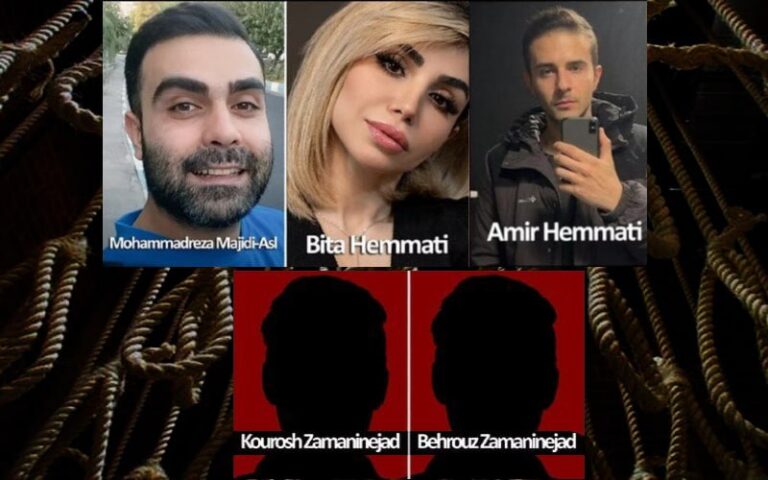
Mohammadreza Majidi Asl, Bita Hemmati, Behrouz Zamani-Nejad, and Kourosh Zamani-Nejad, who had been arrested on January 9 on protest-related charges, were sentenced to death on charges of carrying out operational actions for Israel or hostile governments. A fifth defendant in the same case was also sentenced to five years and eight months in prison.
On the evening of Monday, April 13, that Branch 26 of the Tehran Revolutionary Court, presided over by Iman Afshari, in addition to the death sentences, sentenced the four main defendants in this case to five years in prison and confiscation of all property on charges of assembly and collusion against national security.
Iran’s ‘No to Executions Tuesdays’ Campaign Enters 116th WeekThe examples of charges listed in the court ruling include participation in protest gatherings on January 8 and 9, chanting protest slogans, throwing objects such as bottles, cement blocks, and incendiary materials from building rooftops, and destruction of public property. The ruling also claims that these actions were carried out with the aim of disrupting national security and in connection with hostile groups. Afshari in another section of his ruling referred to the use of explosive materials and an unspecified weapon, injury to forces stationed at the scene, and sending content with the aim of weakening security. According to the text of the ruling, the details of these claims and the precise attribution of each charge to each defendant were not presented separately and transparently. Mohammadreza Majidi Asl, 34, a mobile phone repair technician, was violently arrested on Friday, January 9, in the Republic Street area of Tehran by forces of the IRGC Intelligence Organization. According to informed sources, the arrest of this citizen was accompanied by beatings, and after being transferred to detention he was placed under pressure and tortured to extract a confession. According to an informed source close to the families of these prisoners, Mohammadreza Majidi Asl and Bita Hemmati are a couple living in Tehran, and Amir Hemmati is also a relative of the two. Kourosh and Behrouz Zamani-Nejad also lived in the same residential building and were arrested simultaneously. The defendants were under pressure during interrogation to make forced confessions against themselves. Hours before this news was announced, Gholamhossein Mohseni Ejei, the head of the judiciary of Iran’s regime, declared that in handling political cases related to the war and recent developments, this institution will maintain a wartime and jihadist posture until further notice, and that courts will decide on what he called spies, traitorous elements, and the foot soldiers of the invading enemy based on the requirements of wartime conditions. In Iran’s current legal system, wartime conditions are not explicitly defined in law, and in the field of criminal law there is also no provision under which criminal procedure changes during wartime or grants special and additional powers to the judiciary. In the law passed in October last year under the title “Intensification of Punishment for Espionage,” Article 6 explicitly states that if the crimes covered by this law occur under wartime conditions, the individual’s punishment is increased by up to three degrees. Iran’s regime has in recent weeks increased the pace of carrying out death sentences and intensified the repression of citizens by citing special wartime conditions. Ali Fahim was executed on April 6, Mohammadamin Biglari and Shahin Vahedparast on April 5, Amirhossein Hatami on April 2, 2026, and Saleh Mohammadi, Mehdi Ghasemi, and Saeed Davoudi on March 19. All of these individuals had been arrested during the nationwide protests in January. Iran’s regime had previously also executed Abolhassan Montazer and Vahid Bani-Amerian on April 4, 2026, Pouya Ghabadi Bistouni and Babak Alipour on March 31, and Akbar Daneshvarkar and Mohammad Taghavi Sangdehi on March 30, on charges of membership in the People’s Mojahedin Organization of Iran (PMOI/MEK) and armed rebellion. On March 18, 2025, the death sentence of Kourosh Keyvani, an Iranian-Swedish dual national citizen, was also carried out on charges of “espionage” for Israel.
Why Can Reza Pahlavi Not Learn to Remain Silent?
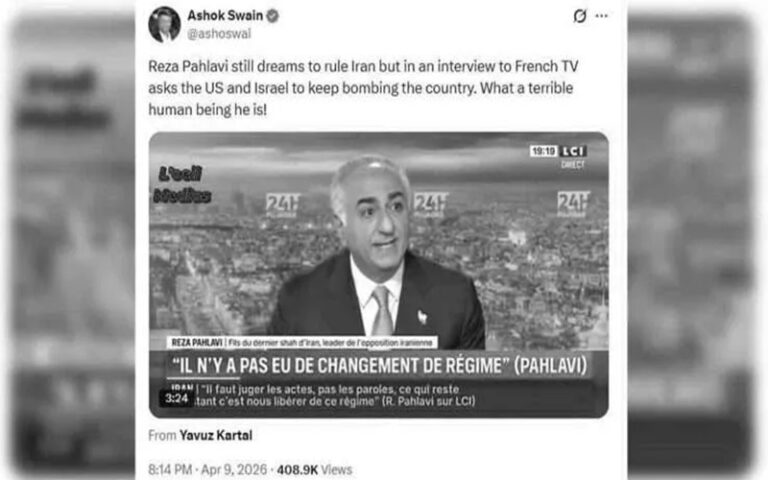
Reza Pahlavi, who is commonly referred to in Iranian political discourse as the “shah’s son,” claimed in remarks delivered at the Swedish parliament on April 13 that what has happened in Iran is a revolution against the 1979 revolution. In other words, Reza Pahlavi claims that in their recent uprisings from 2022 to 2025, the people of Iran are pursuing demands and ideals that stand in direct opposition to those of 1979. From a scientific and sociological standpoint, can such a claim even be valid? What does a revolution actually mean? Has sociology ever identified such a phenomenon in its historical record?
A revolution is always an action formed against the existing order and political system, and in reaction to current crises—not a reaction to a historical revolution that occurred in the past and has already concluded.
Why Reza Pahlavi’s Closest Allies Are Abandoning the CrownFrom this perspective, the phrase revolution against a revolution is conceptually contradictory. A revolution is a historical event and cannot itself become the direct subject of political action; what can become the target of protest or revolution is the political system that emerged from that revolution. This distinction is of central importance in analyzing many historical transformations. For example, in the French Revolution, developments after 1789—including the Reign of Terror or even the restoration of the monarchy—are never interpreted as a revolution against the revolution, but rather as different phases of the revolution’s consolidation or deviation from its course. The same pattern can be seen in the Russian Revolution, where developments after 1917, from the civil war to Stalinism, are understood not as a negation of the revolution but as its reinterpretation and at times its deviation.
Historical Analysis of the 1979 Revolution
If we extend this theoretical framework to Iran, it becomes clear that the 1979 revolution must also be understood as a historical process involving a set of demands and social coalitions, not as a closed and static point that can be treated as the object of absolute negation or affirmation. However, one of the important characteristics of revolutions is the gap between their original ideals and their institutional outcomes. Many theorists of revolution have pointed out that revolutions often face a return to concentrated power or a restriction of freedoms during the process of consolidating authority. This phenomenon is not exceptional but part of the internal logic of revolutions, because under unstable conditions political forces turn to centralization to preserve order. Under such circumstances, the gap between society’s expectations and the political system’s performance widens, creating the basis for new protests. As was seen in Iran’s revolution, Khomeini exploited a historic opportunity created by the shah’s repression of radical and revolutionary social forces, stole the people’s revolution and the democratic forces’ movement, and imposed a medieval dictatorship over Iran’s people—a dictatorship that had no relation whatsoever to the people’s revolution. Within this framework, the uprisings and social transformations in contemporary Iran can be analyzed as a reaction to this very historical betrayal by Khomeini and the surviving elements of his political system. The demands raised in Iranian society today—from civil liberties and citizenship rights to democracy and women’s liberation—not only are not in conflict with the initial slogans of the 1979 revolution, but in many cases reflect those same demands under new conditions. From the perspective of historical sociology, social transformations occur cumulatively and in layers. No revolution takes shape in a vacuum, and no movement is ever completely severed from its past. Even movements that define themselves in opposition to the past are, in practice, nourished by previous concepts, experiences, and discourses.Why Does a Revolution Against a Revolution Never Occur?
Another important point is that revolutions usually form against perceived injustice and the loss of legitimacy in the existing political system. These concepts relate to the present condition, not to the historical past. When the gap between society’s expectations and the government’s performance widens, the capacity for social mobilization rises, making protest movements or even revolutionary movements possible. Here too, the main issue is the existing order. Even if that order has roots in a revolution, what is challenged is the current structure and performance of a fascistic dictatorship, not the revolution itself as a historical event. Therefore, it can be said that Reza Pahlavi’s description of a revolution against the 1979 revolution is a form of simplification and even conceptual distortion that ignores the complexity of social transformations. He either fundamentally lacks any understanding of social change or is deliberately feigning ignorance. By ignoring the distinction between a revolution and the post-revolutionary system, this expression tries to imply a complete rupture, while theoretical and historical evidence points instead to a form of continuity and reinterpretation between the people’s current demands and the demands of 1979. From the perspective of political science and sociology, revolutions are understood not as endpoints but as the beginning of long-term processes of social transformation. These processes may include periods of progress, regression, deviation, or reconstruction, but they always remain connected to one another. On this basis, the current developments in Iran should also be understood as part of this historical process—a process that began in 1979 and is still evolving.Iran’s ‘No to Executions Tuesdays’ Campaign Enters 116th Week
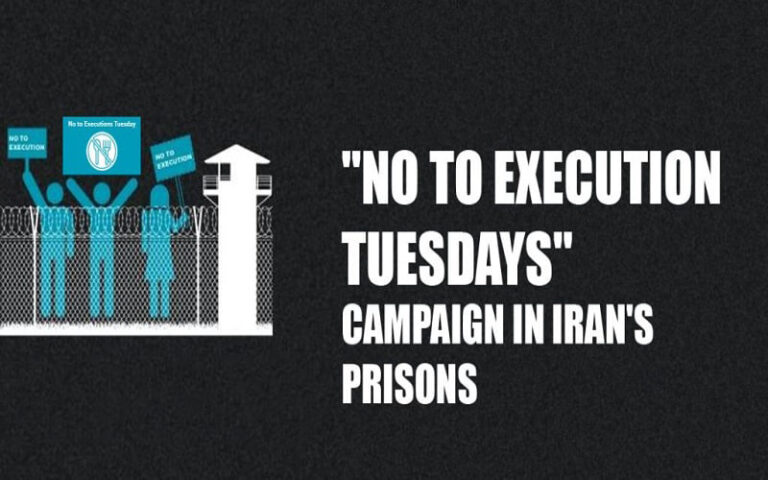
The “No to Executions Tuesdays” campaign, which is held through weekly hunger strikes by prisoners in dozens of prisons across Iran, has entered its 116th week. The campaign continues as communication restrictions, security pressure, and harsh prison conditions have affected the flow of information and the situation of prisoners.
The “No to Executions Tuesdays” campaign, centered on prisoners’ weekly hunger strikes, has now become one of the longest-running protest movements inside prisons. The campaign, held every Tuesday, continues with the participation of prisoners in at least 56 prisons.
Participants in the campaign have announced that despite the existing pressure and restrictions, they remain committed and continue the weekly hunger strike. The continuation of this process indicates the persistence of protest inside prisons.
Details of the Execution of six PMOI MembersAccording to published reports, this hunger strike has taken place under conditions in which internet shutdowns and communication restrictions have severely reduced the ability to send statements and provide public information. Nevertheless, the prisoners have stated that the hunger strike has not stopped, and even without the ability to communicate with the outside world, this protest movement continues. The continuation of this campaign under such conditions is seen as a sign of its organization and resilience inside prisons.
Continued solitary confinement of prisoners after the Ghezel Hesar events
At the same time as the continuation of the “No to Executions Tuesdays” campaign, reports have emerged that some political prisoners remain in solitary confinement cells. According to received information, four political prisoners — Saeed Masouri, Sepehr Emamjomeh, Loghman Aminpour, and Meysam Dehbanzadeh — are still being held in solitary after 25 days. These individuals were removed from Ward 4 of Ghezel Hesar Prison following a raid by prison guard forces, beaten, and transferred to unknown locations. This took place at the same time that execution sentences were being carried out in the prison. According to informed sources, the transfer of political prisoners to solitary confinement before the implementation of execution sentences has been observed as a recurring pattern in this prison.The simultaneity of repression and execution sentences
Reports show that security measures in prisons, including transfers to solitary confinement and pressure on prisoners, often occur simultaneously with the implementation of execution sentences. This overlap has increased concerns about prison conditions and the manner in which sentences are carried out.Failure to return the bodies of the executed; continuation of a troubling pattern
Alongside these developments, reports have emerged that the bodies of some executed political prisoners have not been returned to their families. According to these reports, more than 15 days after the execution sentences were carried out, the bodies of several prisoners — including Vahid Bani Amerian, Mohammad Taghavi, Babak Alipour, Pouya Ghobadi, Abolhassan Montazar, and Akbar Daneshvarkar — still have not been handed over to their families. This campaign, now in its 116th week, continues under conditions in which the prison atmosphere is marked by security pressure, communication restrictions, and recent developments. Nevertheless, the participating prisoners have emphasized that this process has not stopped and will continue.U.S. Naval Blockade of Iran Begins on Monday
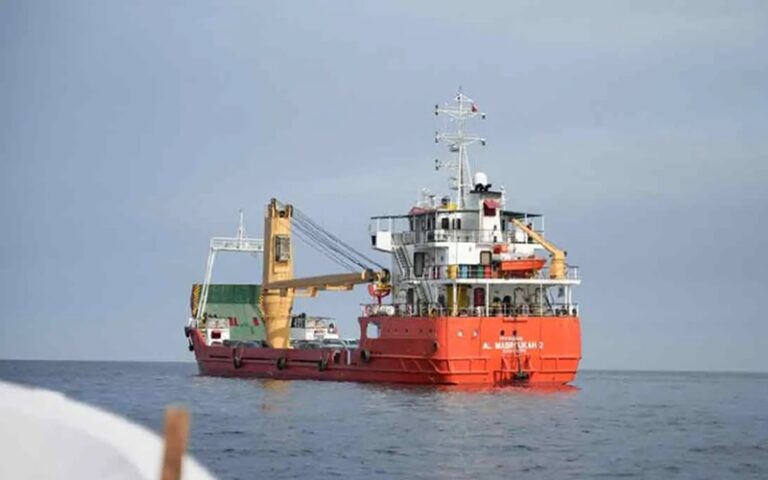
U.S. Central Command (CENTCOM) announced that starting Monday, April 13, it will begin enforcing a broad naval blockade against Iran’s ports, a move that comes after the collapse of recent negotiations between the United States and Iran’s regime and rising tensions in the region. According to the statement by the U.S. Central Command (CENTCOM), this blockade will include all ships traveling to Iranian ports or departing from them.
CENTCOM stated that this operation will begin at 10 a.m. U.S. Eastern Time and will cover all maritime traffic to Iranian ports in the Persian Gulf and the Gulf of Oman. The statement emphasized that the blockade will be enforced without discrimination regarding the flag or nationality of the ships, while at the same time the passage of vessels whose destination is not Iranian ports through the Strait of Hormuz will not be restricted.
The Importance of the Strait of Hormuz as a Vital Artery of the Global EconomyAs the time for implementing this decision approaches, signs of disruption in maritime traffic in the region are becoming visible. Reports indicate that some oil tankers have changed course or refrained from approaching the Strait of Hormuz. Shipping data shows that a few vessels have anchored in the Gulf of Oman or remained waiting for the new conditions. In response to this move, officials of Iran’s regime have taken a harsh stance. The commander of the navy described the U.S. threats as baseless and claimed that all movements of American forces in the region are under surveillance. The spokesperson for the regime’s Defense Ministry also stressed that control of the Strait of Hormuz will remain in Iran’s hands and that any military action will be met with a response. The Islamic Revolutionary Guard Corps (IRGC) also issued a statement warning that military presence in the Strait of Hormuz area could be considered a violation of the ceasefire and would face a severe reaction. At the same time, some political officials accused the United States of testing Iran’s resolve and emphasized confronting any threat. The announcement of this blockade has increased concerns about energy security and regional stability. Analysts warn that continuation of this trend could lead to an escalation of the crisis in the Persian Gulf, disruption in oil exports, and rising international tensions—a situation that would affect not only the region, but also the global economy.
Iran’s Economy Beneath the Rubble of War and Structural Collapse
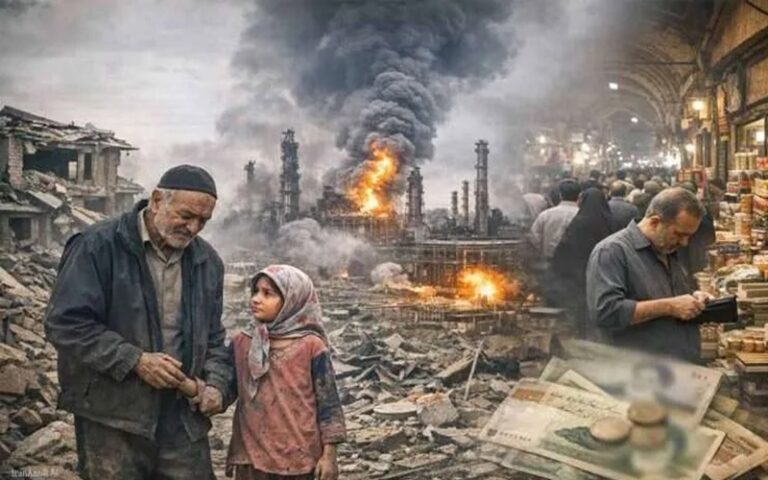
The recent war between the United States, Israel, and Iran’s regime was not merely a military confrontation; rather, it acted as a structural blow to an already exhausted economy. This war made the deep fractures within the economy under the regime’s control more visible and accelerated the process of collapse. Severe economic contraction, rising poverty, and setbacks in human development are only part of the consequences of this situation.
The burden of war on the economy
The war directly targeted the economy’s vital infrastructure. The destruction of power plants, disruption of trade routes, and stoppage of industrial production were the three main channels through which the crisis was transmitted into the economy. As a result, gross domestic product faced an unprecedented decline, one that according to estimates could exceed a 10 percentage-point drop.Mass Worker Layoffs in Iran’s Industries Under the Shadow of WarThis decline is not merely a number; it means a collapse in the living standards of millions of people. In conditions where chronic inflation and the devaluation of the national currency had already weakened the economy before the war, the wartime shock further intensified this trend. The inflation rate, which had remained above 40% for years, has now reached levels close to 55%. On the other hand, the devaluation of the rial (Iran’s national currency) caused a sharp increase in import costs. This placed additional pressure on households, especially regarding essential goods. The result of this trend has been a severe decline in purchasing power and a shrinking of people’s ability to afford basic necessities. At the macro level, the dependent and inefficient economic structure of Iran’s regime lacked the capacity to absorb this shock. An economy already under pressure from sanctions and mismanagement is now facing deeper disruption.
