

Head of the Iranian Regime’s Judiciary Emphasizes Accelerating Executions
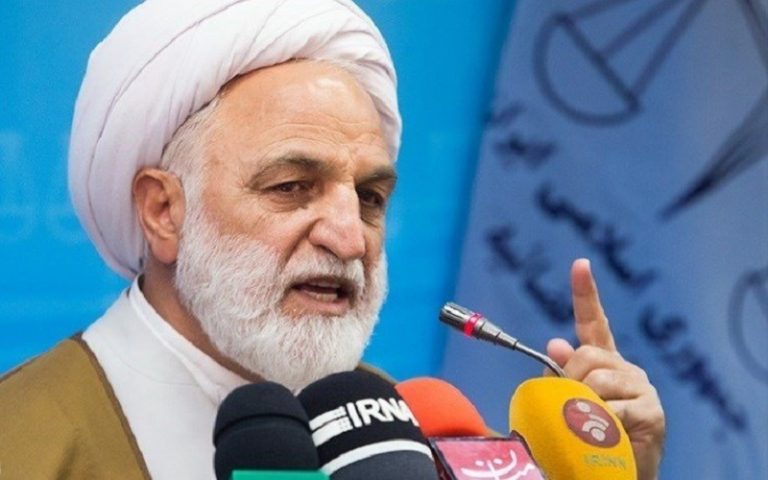
Gholamhossein Mohseni Ejei, the head of the Iranian regime’s judiciary, has once again, in a commanding tone, called on courts to review cases at an abnormal speed and outside standard frameworks—an approach that effectively amounts to eliminating minimum standards of fair trial. In his latest remarks, he went even further and labeled detainees in advance as foot soldiers of the enemy, a designation that indicates many of these individuals have effectively been sentenced before any judicial process has taken place.
Ejei’s continued insistence on speeding up proceedings comes as a wave of executions has unfolded in recent weeks, raising serious concerns among human rights organizations. In such a climate, emphasizing the abandonment of normal procedures not only fuels suspicion but presents a clear picture of a rushed and non-transparent process.
On the other hand, widespread arrests based on stereotypical accusations such as espionage and treason—without disclosing the identities of the accused or details of the cases—reinforce the question of whether anything resembling an independent judiciary still exists, or whether everything serves a predetermined scenario.
Ejei’s recent statements—from demanding that case files be delivered within a matter of hours to call for interrogations inside prisons to expedite indictments—resemble managing an assembly line of verdicts more than administering justice.
Iran’s War-Stricken Economy and Structural Deadlock
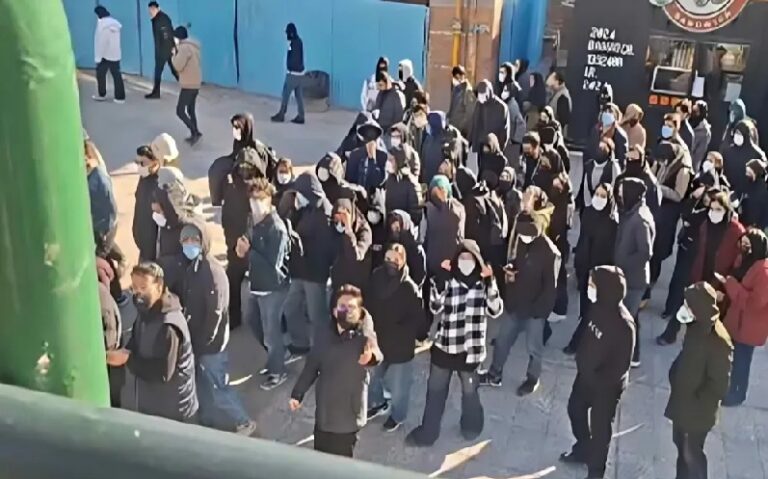
Iran’s war-stricken economy is now in a condition where economic growth has effectively reached zero, while inflation and unemployment have simultaneously risen to unprecedented levels. This situation is not a temporary phenomenon but the result of decades of inefficient policymaking within the structure of Iran’s regime, where development plans have largely become propaganda tools rather than genuine roadmaps.
Historic Failure of Economic Planning
The 20-year vision document, drafted in 2005, was intended to turn Iran into the region’s leading economic power. However, by 2026, not only has this goal not been achieved, but many indicators have worsened compared to the starting point. Today, Iran’s war-stricken economy is faced with a sharp devaluation of its national currency, declining investment, and rising uncertainty.Rental Crisis in the Shadow of War; Livelihood Deadlock for Iranian TenantsThe five-year development plans, which were supposed to pave the way for achieving this vision, have effectively become ineffective documents. In the economic structure of Iran’s regime, policymaking is driven by ideological and security considerations rather than economic principles. This has made even minimum goals such as sustainable growth or full employment unattainable. Declining economic participation, increased migration of the workforce, and expanding corruption are clear signs of the failure of this planning. A war-stricken economy built on rent-seeking and monopolies lacks the capacity for regional competition. Under such conditions, talk of becoming the top economic power resembles an empty slogan. On the other hand, external tensions and international isolation have imposed heavy costs on the economy. These tensions have not only limited access to global markets but have also disrupted the flow of capital and technology. The result is reduced productivity and structural backwardness in Iran’s war-stricken economy.
Zero Growth and Exploding Inflation; Signs of Collapse
Estimates indicate that economic growth in 2025 has fallen to around zero. This means a complete halt in the engine of production in the war-stricken economy. While the population grows and needs increase, the economy is effectively stagnant. This deep recession is the result of a combination of sanctions, mismanagement, and extensive state intervention in the economy. Alongside this recession, inflation has exceeded 50%. This level of inflation has severely reduced people’s purchasing power and expanded poverty. In Iran’s war-stricken economy, even rising wages have failed to prevent this decline in purchasing power. The gap between income and expenses continues to widen. The labor market is also under severe pressure. Many businesses, due to uncertainty and declining demand, have been forced to lay off workers. In such conditions, unemployment and underemployment have increased. A war-stricken economy that cannot create sustainable jobs gradually loses its human capital. Moreover, recent war and military tensions have pushed uncertainty to its peak. Even after the cessation of hostilities, fear of a return to conflict has disrupted economic decision-making. Investors avoid entering such a market, and economic actors prefer to limit their activities. Ultimately, the combination of zero growth, high inflation, and instability paints a picture of an economy on the verge of collapse. Iran’s war-stricken economy has not only failed to achieve its development goals but has moved in the opposite direction. This situation shows that the problem lies not only in economic policies but in the structure of power itself. As long as this structure does not change, Iran’s war-stricken economy will remain trapped in a cycle of crisis.Hollow Show of Power by Supporters of Iran’s Regime in the Streets
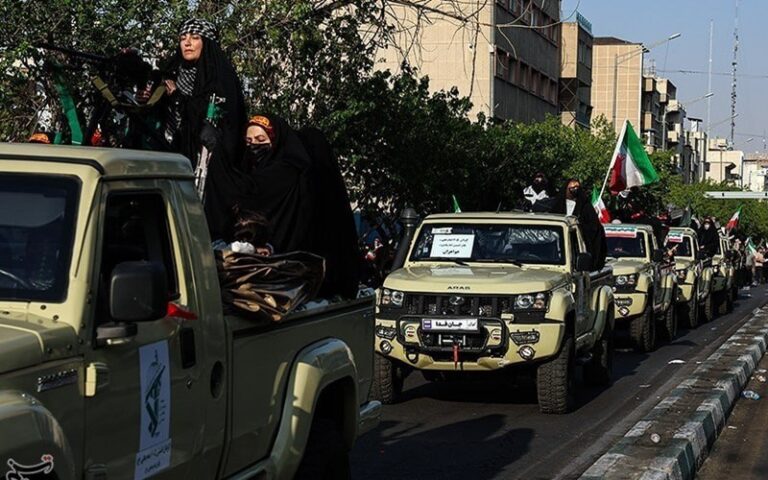
While the consequences of around 50 days of conflict between Iran, the United States, and Israel have left the country’s infrastructure facing a serious crisis, and the situation—caught between a fragile ceasefire and the possibility of renewed war—has left society in uncertainty, different scenes are emerging in some major Iranian cities. At the same time as indirect negotiations between Tehran and Washington began in Islamabad with Pakistan’s mediation, Iran’s regime has attempted to present an image of strength and popular support by organizing coordinated gatherings.
Rental Crisis in the Shadow of War; Livelihood Deadlock for Iranian TenantsState-run media outlets, including the Student News Agency, described these gatherings in a report from Mashhad as a sign of “steadfastness” and spoke of people presenting over consecutive nights and praying for frontline forces. In these narratives, participation by different segments of society—even in unfavorable weather conditions—is portrayed as a symbol of national unity. However, field reports present a different picture. According to various sources, at a time when the country is facing one of its most severe economic crises, significant costs have been spent on organizing these gatherings. In cities such as Tehran and Mashhad, incentives such as cash payments (around 50 million rials per passenger in flag-bearing vehicles, equivalent to 33 dollars and one-third of a worker’s monthly wage), as well as distribution of fuel and food, have been reported to attract participants. Alongside this, while many citizens face internet restrictions or disruptions, in some gathering points such as Valiasr Square and Enghelab Street in Tehran, temporary communication facilities—including high-speed internet—have been provided to participants so they can publish related content on social media. Reports also indicate a form of administrative and educational coercion; from indirect pressure on students through disciplinary grades to pressure on employees to attend gatherings under threat of losing benefits. In some areas such as Varamin, images have also been published showing individuals with militia symbols and cold weapons, which contrasts with the public atmosphere of concern in society. Some analysts consider these actions an attempt to create a “parallel reality”; an image of public support that is far removed from the living conditions of a large part of society. At the same time, users on the social media platform X have shared images of the distribution of essential goods such as meat and rice at gathering sites, pointing to shortages of these items in the open market. Participation in these gatherings, which had declined in recent years, this time has even included some non-ideological segments of the population. It appears that wartime conditions, while creating a degree of solidarity, have also intensified the gap between the regime and society, as well as within social layers. In this environment, the regime, in addition to external conflict, has also sought to control domestic protests. In this context, the National Council of Resistance of Iran had previously emphasized that external war alone will not lead to regime change and could serve as a pretext for suppressing opponents. In recent days, the regime has also executed several dissidents, including members of the People’s Mojahedin Organization of Iran (PMOI/MEK). At the analytical level, the question arises whether these street mobilizations indicate that the predictions of some opposition groups, especially those advocating change through external military pressure, are incorrect. Experience shows that relying on external attacks and expecting a general uprising under wartime conditions is accompanied by serious uncertainties. On the other hand, the nature of slogans and the atmosphere of these gatherings show that hardline factions have not only not weakened but have found more opportunity to manifest themselves in this environment. These groups, through active presence in the streets, seek to play a more prominent role in the political and cultural field. Overall, these gatherings can be seen as part of the regime’s effort to reproduce legitimacy and maintain an ideological presence in the public sphere; an effort that, in the context of crisis and emergency conditions, has become one of the main tools for managing society.
Rental Crisis in the Shadow of War; Livelihood Deadlock for Iranian Tenants
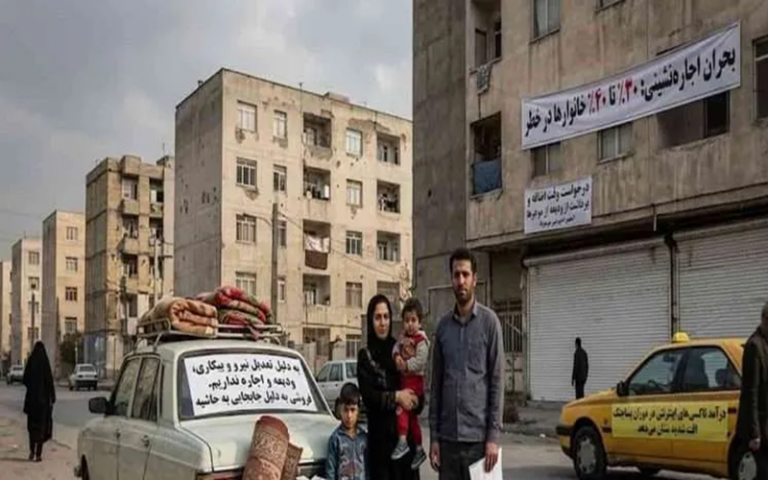
The end of military conflict and the ceasefire between the United States and Iran’s regime have not restored calm to the economic environment; instead, it has imposed a new wave of crushing pressure on vulnerable groups. While it was expected that relative stability would improve living conditions, the cost-of-living crisis driven by widespread unemployment and workforce reductions in companies has placed tenants in a far more difficult position. According to official statistics for 2024, about 30% of all households in the country and nearly 60% of residents of the capital, Tehran, rely on renting as their only housing optional population now trapped between the two blades of unemployment and securing shelter.
Intensification of the rental crisis following the war and collapse of incomes
Workforce reductions in February and March marked a turning point in the rental crisis. The shutdown or reduced activity of companies under wartime conditions has eliminated the income of many households. This situation has left tenants facing a severe cost-of-living crisis, with many households now struggling to pay even the base rent.The Collapse of Iran’s Economy; How Long Can People Endure?According to 2024 data, about 30% of households in the country are tenants. This share rises to around 40% in major metropolitan areas. Considering a population of approximately 28 million households, nearly 8 million households are renters. These figures indicate the nationwide scale of the crisis. Although rent increased by about 30% over the past year, the main issue now is the base rent amount. Tenants who have lost their jobs have reached a deadlock in covering housing costs. At the same time, uncertainty in the labor market has created severe stress for those still employed. In March, the average rent in Tehran reached 90 million rials per month, with a deposit of 12 billion rials (approximately 600 dollars and 80,000 dollars, respectively). Such cost levels have placed unprecedented pressure on households.
Survival strategies amid the collapse of tenants’ livelihoods
Studies show that renter households have turned to emergency coping strategies. The first response is requesting extra time to pay rent. Some also use their deposits to cover rent, a move that reduces their minimal financial reserves. Many tenants have decided to move to smaller housing units. Migration to cheaper areas or city outskirts has also increased. Some households have been forced to return to their parents’ homes. This trend reflects a severe decline in economic capacity. Paying the rent for Esfand (March) with the salary from Bahman (February) is a sign of widespread financial pressure. Cutting essential expenses and adopting extreme saving measures have also become common. Selling cars to secure housing deposits is another notable response. Receiving unemployment benefits is possible for some, but the amount is insufficient. Working in ride-hailing services has also resulted in low income due to reduced demand. Meanwhile, landlords are increasingly choosing tenants with stable jobs, making access to housing more difficult. In southern areas of Tehran, the inability to pay rent is extremely high. In these areas, even deposits are used to cover rent. Under such conditions, renting has become a multidimensional crisis.Housing poverty and unprecedented pressure on household budgets
Nearly half of the country’s tenants are experiencing housing poverty. This concept refers to cutting essential expenses in order to pay rent. Households have been forced to reduce spending on healthcare, education, and even food. This trend has wide-ranging social consequences. Housing costs account for about 43% of household expenses nationwide. In Tehran, this figure reaches approximately 59.9%. Such a share eliminates the ability to manage other expenses, making renting a primary driver of poverty. A decline in rental housing supply combined with rising demand has created market imbalance. Households relocating from high-risk areas have added to this demand. At the same time, signs of further price increases are emerging. Economic disruptions and declining incomes have changed the behavior of both sides of the market. Landlords have become more selective in choosing tenants, while tenants face stricter constraints. This situation has intensified the rental crisis.Policy gaps and ineffective support in the rental crisis
In the policy domain, the measures taken have not adequately addressed the crisis. Although housing deposit loans have been offered with an interest rate of around 4%, the repayment installments are heavy. Many households cannot afford to repay these loans. In the legal sphere, existing laws lack sufficient flexibility. Even under wartime conditions, tenants are required to meet their obligations, which has placed additional pressure on them. Some households have been forced to pay rent for two units simultaneously due to forced relocation during the war. At the same time, direct support for tenants has been limited. Experts emphasize the need for immediate intervention. Proposals such as extending rental contracts and preventing evictions have been raised. However, implementing these policies faces challenges. Overall, renting under current conditions requires serious reconsideration of housing policies. The set of recent developments shows that the rental crisis has reached an unprecedented stage. The combination of war—driven by the policies of regime supreme leader Ali Khamenei—along with unemployment, inflation, and weak government support has multiplied the tenants’ crisis far beyond a simple escalation.Iranian Protester Dies Under Torture by Regime Agents
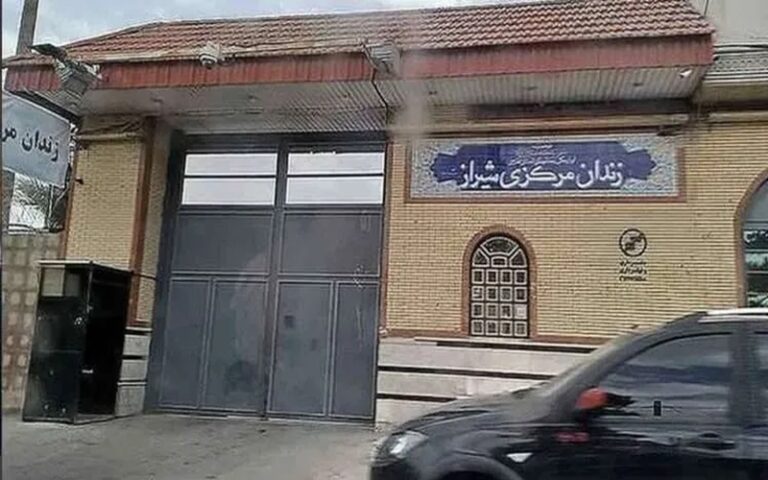
Abbas Yavari, a 31-year-old and one of the protesters in the January protests, was killed under systematic and organized torture by the henchmen of Iran’s regime in a detention center in Shiraz; a crime that once again lays bare the repressive and inhumane nature of this ruling system.
Abbas, a young Arab from Ahvaz, was arrested after participating in public protests in Shiraz and transferred to the city’s central prison. But this was not the end of the story; on March 26, he was moved to an undisclosed detention center, where he died under brutal torture. Security agents of the regime, following their usual script, claimed three days later that he had committed suicide; a repetitive lie used to cover state killings that deceives no one.
Iran’s Regime Sentences Two Young Protesters to DeathReports indicate that the interrogators’ aim in carrying out this torture was to extract forced confessions about his role in the protests. Confessions they never managed to obtain, and for that reason, Abbas Yavari was killed under torture. At the same time, in another case, two other political prisoners, Manouchehr Vafaei, 28, and Navid Naghdi, 32, who have been sentenced to death on charges of killing two Basij militia members affiliated with the Islamic Revolutionary Guard Corps (IRGC) in Shiraz in 2024, are at risk of execution. International and human rights institutions must be the voice of these young rebels. This is an organized killing machine that for years has sought, through torture and executions, to suppress the uprising and movement of the Iranian people for overthrow. The continuation of this situation without accountability amounts to a green light for ongoing crimes. The پرونده of these crimes must be immediately referred to the United Nations Security Council. The leaders of Iran’s regime must be held accountable before international justice for decades of crimes against humanity. Silence and inaction amount to complicity with criminals. Now is the time for action, not observation.
Strait Of Hormuz Declared Open Again; Trump: Naval Blockade Against Iran’s Regime Will Continue
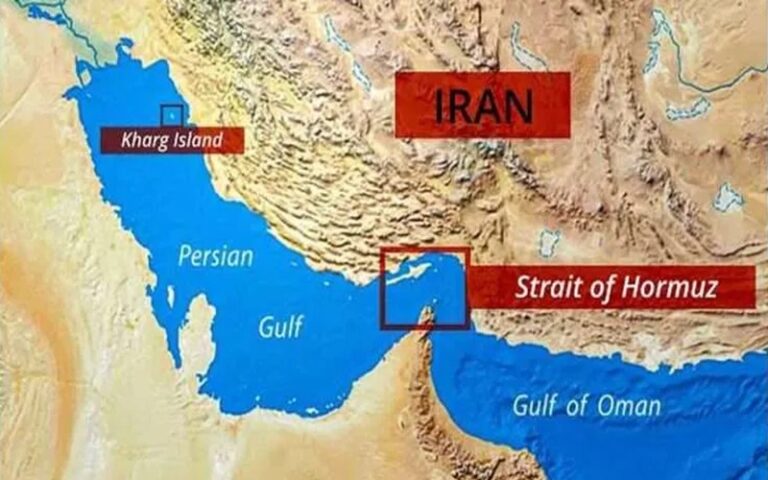
Abbas Araghchi, the foreign minister of Iran’s regime, announced in a post on the social media platform X that following the establishment of a ceasefire in Lebanon, the passage of all commercial vessels through the Strait of Hormuz will be fully open until the end of the ceasefire period. According to him, this decision was made within the framework of recent agreements and will be implemented until the specified deadline.
The ceasefire between the United States and Israel on one side and Iran’s regime on the other began on April 7 and is set to last for two weeks. However, Araghchi emphasized that vessel traffic must take place only through pre-designated routes coordinated with the Ports and Maritime Organization, a state body overseeing Iran’s shipping and port operations.
The Importance of the Strait of Hormuz as a Vital Artery of the Global EconomyMinutes after the message was published, U.S. President Donald Trump responded on his social media platform Truth Social, stating that Iran has just confirmed the strait is fully open and ready for free navigation. Since the start of U.S. and Israeli attacks, maritime traffic through the Strait of Hormuz had been disrupted, making it one of the central issues in negotiations and conditions for establishing the ceasefire. Reopening this strategic waterway had been one of the key conditions in the recent agreement between the parties. In contrast, the United States, which had previously launched a naval blockade against the southern ports of Iran’s regime in response to continued restrictions in the Strait of Hormuz, announced that this measure will continue. Donald Trump stated that despite the reopening of the strait, the blockade will remain in place until a full agreement is reached with Tehran. On Friday, April 17, Trump wrote on Truth Social: THE STRAIT OF HORMUZ IS COMPLETELY OPEN AND READY FOR BUSINESS AND FULL PASSAGE, BUT THE NAVAL BLOCKADE WILL REMAIN IN FULL FORCE AND EFFECT AS IT PERTAINS TO IRAN, ONLY, UNTIL SUCH TIME AS OUR TRANSACTION WITH IRAN IS 100% COMPLETE. THIS PROCESS SHOULD GO VERY QUICKLY IN THAT MOST OF THE POINTS ARE ALREADY NEGOTIATED. THANK YOU FOR YOUR ATTENTION TO THIS MATTER! PRESIDENT DONALD J.TRUMP He also emphasized that the process of reaching the agreement must move quickly, as much of its content has already been negotiated. The naval blockade of Iran’s regime ports began by order of the U.S. president after the first round of negotiations between Iranian and American delegations in Pakistan, which was described as “unsuccessful,” and has been used as leverage to advance further talks. Following these developments, global energy markets reacted sharply, and oil prices experienced a significant decline. The price of oil in global markets fell by more than 10% to around 89 dollars per barrel. Meanwhile, West Texas Intermediate crude also dropped by 11% to 84.11 dollars per barrel, a decrease that reflects the direct impact of geopolitical developments on the energy market.
Foreign Militia in Iran: A Show of Power or a Sign of Crisis?
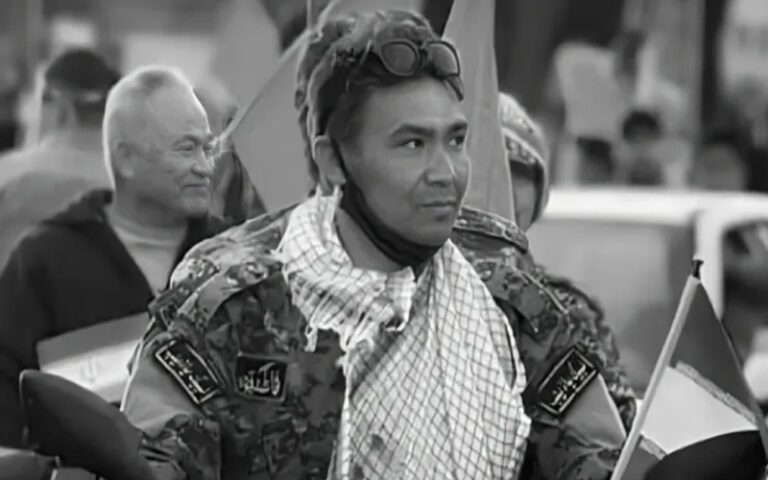
As economic and social crises in Iran have expanded, multiple reports from various cities indicate that proxy forces in Iran have appeared openly in public spaces. This situation, occurring alongside increasing livelihood pressures, has fueled public discontent.
Expansion of Proxy Forces in Iran’s Major Cities
Reports indicate that from Tehran to Mashhad, the presence of proxy forces in Iran has significantly increased. In Tehran’s Moniriyeh Square, witnesses report armed individuals controlling citizens’ movement on the streets. Similar conditions have been reported on Vakilabad Boulevard in Mashhad. These forces have been deployed in cities while many citizens consider them alien to the country’s social structure.Iran’s Economy Under Pressure from War and Internet ShutdownsAccording to statements from some Tehran residents, proxy forces in Iran have made public spaces more difficult for citizens by imposing new restrictions. One citizen said that encountering armed individuals giving orders to people has increased feelings of insecurity and anger in society. This situation comes as economic problems continue to place additional pressure on the population. In addition to major cities, proxy mercenary forces have also been observed in other parts of Iran, including Sistan and Baluchestan province, where a large number of Pakistani forces referred to as the Zeynabiyoun Brigade are reportedly operating in cities across the province.
Coincidence of Proxy Forces in Iran with Economic Crisis
In the economic sphere, alongside the increased presence of proxy forces in Iran, a widespread recession in businesses has been reported. Many economic actors report a sharp decline in income. Some reports indicate that millions of people have not earned even one rial over the past two months. These conditions have pushed dissatisfaction over living standards to its peak. At the same time, the medicine crisis has intensified. Shortages of essential drugs and sharp price increases have created serious problems for patients. Under such conditions, the presence of proxy forces in Iran’s cities has increased public anxiety rather than reducing tensions. Many families now face security concerns in addition to economic worries.Change in the Pattern of Using Foreign or Proxy Forces in Iran
A review of historical trends shows that the use of proxy forces in Iran to control protests began in the 2000s. However, what has occurred in recent months differs significantly from the past. In earlier periods, efforts were made to keep such presence less visible, but now these forces are deployed openly and extensively. The open display of these mercenary forces in Iran is part of a policy aimed at instilling fear in society. Their presence on the streets, especially in busy areas, sends a clear message to citizens. This situation continues while memories of violent events in recent months remain fresh in the public mind.Psychological Impact of Proxy Forces in Iran on Society
Alongside these developments, the psychological state of society has also been affected. Many citizens report increased anxiety and psychological insecurity. The combination of economic crisis, medicine shortages, and the presence of proxy forces in Iran has created conditions that make daily life more difficult for people. The expansion of proxy elements in Iran, alongside deep economic and social crises, indicates a structure that relies on instruments of repression for survival. This trend intensifies public protests against the government and suggests that paths to reform within this structure are effectively closed, with public dissatisfaction reaching a stage that strengthens the prospect of fundamental change and the overthrow of the ruling system.The Collapse of Iran’s Economy; How Long Can People Endure?
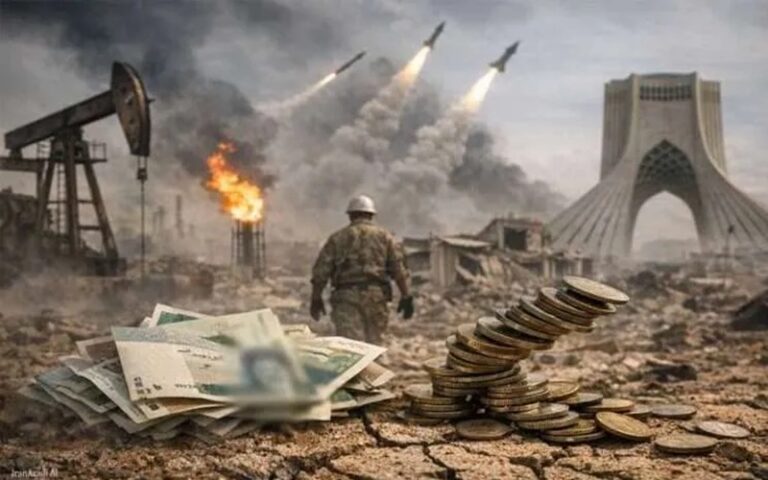
As economic crises continue to intensify across the country, field reports from various cities indicate that people’s livelihood crisis has reached an unprecedented level. The simultaneous occurrence of economic recession, internet shutdowns, and rising unemployment has made signs of Iran’s economic collapse evident in people’s daily lives.
The intensification of the livelihood crisis amid the collapse of Iran’s economy
According to information received on Thursday, April 16, on the ninth day after the announcement of a ceasefire, economic conditions in many parts of the country have been reported as severely deteriorated. Local sources report a sharp decline in incomes and the shutdown of many businesses. This situation has further exposed the trend disintegration of Iran’s economy.Iran’s Economy Under Pressure from War and Internet ShutdownsIn Tehran, as one of the main centers of economic activity, signs of this crisis are more severe. The sudden rise in prices of essential goods, declining purchasing power, and loss of job opportunities have placed additional pressure on households. These conditions have caused the severe economic situation to penetrate everyday life for citizens.
Selling assets; a tangible image of the collapse of Iran’s economy
A Tehran resident told local sources: “The psychological and financial condition of people is far worse than what is visible. The internet is shut down, and many people have lost their jobs.” He added: “Many people are now forced to sell their gold or household items just to be able to obtain food.” These statements present a tangible picture of the painful state of people’s livelihoods. Reports indicate that internet shutdowns, alongside the economic recession, have been one of the factors intensifying this crisis. Many jobs dependent on online platforms have effectively come to a halt. This issue has created a new wave of unemployment and has significantly impacted people’s living conditions.The role of internet shutdowns in deepening economic collapse
Similar conditions have been reported in other cities as well. Rising living costs alongside declining incomes have pushed many families toward difficult decisions. Selling personal assets, including household items, has become a common solution to meet basic needs. At the same time as this economic crisis, reports have also emerged of increased security pressures and arrests. Some local sources describe a heavy psychological atmosphere in society. This situation has intensified feelings of despair and exhaustion among citizens and expanded the social dimensions of this crisis among the people of Iran.The social consequences of the collapse of Iran’s economy
Independent economic experts believe that the continuation of these conditions could have long-term consequences for the country’s economic and social structure. Declining social capital, widening class gaps, and the spread of poverty are among the consequences observable in the wake of Iran’s economic collapse. The economic crisis has passed the warning stage and entered a deeper phase. The continuation of this trend has increasingly affected people’s daily lives and revealed signs of Iran’s economic collapse in various dimensions. What is seen in society today is not just an economic crisis. Signs of a structural collapse are clearly visible. The collapse of Iran’s economy is the result of years of corruption and repression, and as long as this structure remains in place, this trend will continue.The Pahlavi Restoration: A Legacy of Torture and Revisionism
1924: A poet is murdered for his verses, silenced by a rising military strongman.
1941: A monarch abdicates on the orders of a foreign power, leaving behind a fortune stolen from the peasantry.
1953: A democratically elected prime minister is toppled in a coup to restore an absolute ruler.
1975: A king declares a one-party state and tells dissenters to leave the country or rot in jail.
To claim pride in this timeline is not to honor a nation’s history, but to endorse the very machinery of its oppression.
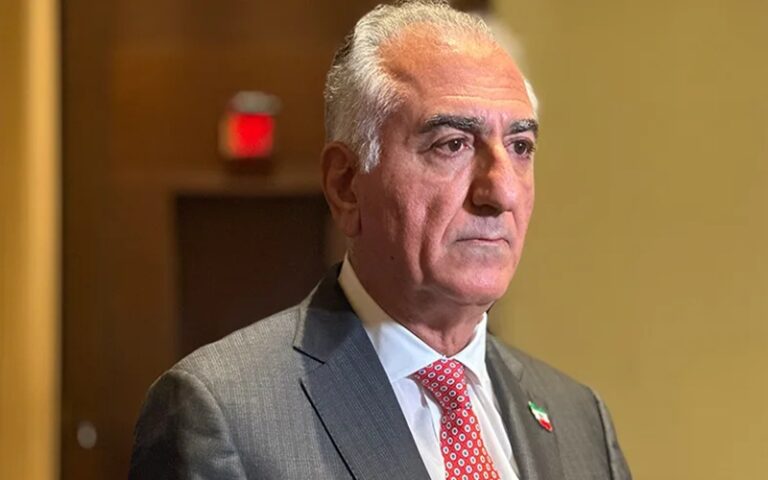
Why Can Reza Pahlavi Not Learn to Remain Silent?For years, Reza Pahlavi, the son of the late Shah of Iran, has carefully cultivated the image of a soft-spoken democrat. Living in exile since the 1979 Revolution, he has presented himself as a unifying figure—a “coordinator” for a future democratic Iran. However, during a series of recent media appearances in Stockholm, the mask of the modern democrat slipped, revealing a deep-seated devotion to the authoritarian methods of his father and grandfather. On April 13, 2026, at a press conference in the Swedish capital, Pahlavi was asked if he had any grievances with his father’s record. His response was deflection and historical revisionism. “I do not know why you are so fixated on something that happened decades ago,” he told reporters, before pivoting to a defense of his heritage. “I am in fact very proud of it… proud of this generation that has never even seen my father with their own eyes yet has fallen in love with him.” One day earlier, speaking to the Swedish state broadcaster Agenda, he was even more explicit: “Regarding my family background, I am proud of my heritage and I support their actions.” By framing the Pahlavi era as a lost golden age of “progress,” he effectively dismissed the decades of systemic torture, corruption, and political suppression that defined his family’s rule. To understand why these statements are so alarming to human rights advocates, one must look beyond the nostalgia and examine the documented record of the Pahlavi dynasty. The legacy Reza Pahlavi “proudly represents” began with his grandfather, Reza Shah, who rose to power through a military coup and spent his reign consolidating personal wealth and crushing dissent. By the time he was forced to abdicate by the British in 1941, he had forcibly seized 44,000 real estate properties from Iranian citizens, becoming one of the wealthiest men in the world while his subjects lived in poverty. His reign was marked by the deaths of thousands; at Qasr Prison alone, an estimated 24,000 people—mostly intellectuals, ethnic minorities, and activists—were killed. When his son, Mohammad Reza Pahlavi, took the throne, the methods of control became even more sophisticated. Following the 1953 CIA-backed coup that ousted Prime Minister Mohammad Mossadeq, the Shah transformed Iran into a surveillance state. At the heart of this system was SAVAK, the National Intelligence and Security Organization. According to Amnesty International reports from the 1970s, torture in the Shah’s prisons was a “national pastime.” The methods described by survivors and international observers are harrowing: prisoners were whipped, burned with hot irons, subjected to electric shocks, and had their nails and teeth pulled out. In 1975, Martin Ennals, then the Secretary General of Amnesty International, noted that the Shah maintained a “benevolent image” despite having the highest rate of death penalties in the world and a history of torture “beyond belief.” Reza Pahlavi’s current rhetoric often emphasizes “freedom” and “human rights,” yet his father’s record on these issues was one of open contempt. In a 1973 interview with the Italian journalist Oriana Fallaci, Mohammad Reza Shah ridiculed the very concept of democracy, dismissing it as a system for “five-year-olds.” By 1975, he had abolished all political parties in favor of a single entity, the Rastakhiz (Resurgence) Party. In a televised address that year, he gave the Iranian people an ultimatum: join the party, go to prison, or leave the country. The misogyny inherent in the Pahlavi court is another historical reality that Reza Pahlavi’s modern rebranding attempts to obscure. While the Shah’s supporters often point to the “White Revolution” as a period of women’s liberation, the Shah’s own words suggested a deep-seated belief in female inferiority. In a 1977 interview with Barbara Walters, when asked if women were equal to men, the Shah paused and replied, “On the average, no.” He told Fallaci that women only counted if they were “beautiful and graceful,” and famously asserted that women had never produced a Michelangelo, a Bach, or even a “great cook.” When Reza Pahlavi tells a modern audience that he “supports their actions,” he is supporting a regime that held between 25,000 and 100,000 political prisoners at its peak. He is supporting a system where, in the slums of Tabriz, there was only one school for 100,000 children, while the royal family funneled billions into the secretive Pahlavi Foundation. The danger of Pahlavi’s recent comments lies in their dismissal of the “lessons learned.” He claims that Iranians want to “resume that good path once again,” but the “good path” he refers to ended in a popular revolution precisely because it was built on the suffering of the many for the benefit of the few. By refusing to condemn the crimes of the past, Pahlavi signals that his vision for the future is not a democratic departure, but a restoration of the status quo ante—a system where the monarch’s “mystical force” and secret police take precedence over the rule of law. For a political figure who seeks to lead a movement for “freedom,” the refusal to acknowledge the victims of SAVAK or the corruption of the Pahlavi estates is a disqualifying omission. A true democrat does not evade questions about state-sponsored torture by calling them a “fixation” on the past. As Iran stands at a crossroads, the need for a clear, democratic alternative to the current theocracy is undeniable. However, history suggests that replacing one form of autocracy with another—especially one that refuses to repent for its previous crimes—is a recipe for continued instability. Reza Pahlavi’s pride in his family’s legacy is a warning. It suggests that if the Pahlavis were to return to power, the “lessons” they have learned are not about the value of liberty, but about the necessity of more effective rebranding. For those who remember the screams in the cells of Evin and the absolute silence of the one-party state, “pride” is the last thing this legacy should evoke.
Internet Shutdown in Iran: 48 Days of Blackout and $80 Million in Daily Losses
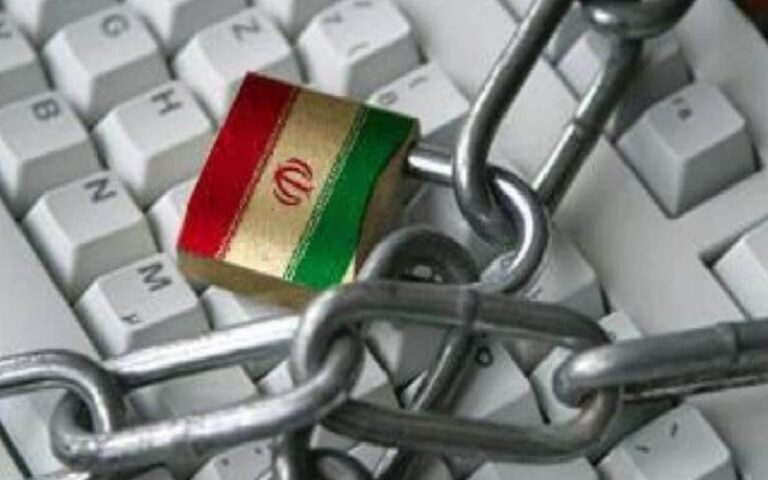
With the continued widespread disruption in internet access, the communications crisis in the country has entered a new phase. Reports indicate that the internet shutdown in Iran has reached one of the longest periods of nationwide blackout, and its consequences have become visible across many aspects of people’s lives.
According to the latest report by internet watchdog NetBlocks, the internet shutdown in Iran has entered its 48th consecutive day. The report stresses that the total hours of disruption have reached about 1,128 hours and are still continuing.
📉 Metrics show the internet blackout in #Iran is ongoing into its 48th day after 1128 hours. The censorship measure, unsurpassed in scale and severity in a connected society, has had an economic impact of ~$1.8bn to date per COST methodology in addition to human rights harms. pic.twitter.com/ypsMJusyIz
— NetBlocks (@netblocks) April 16, 2026
Internet Shutdown in Iran and Deprivation from Global Connectivity
The continuation of this situation has deprived a large portion of citizens of access to the international internet. This deprivation has severely restricted communication with the outside world. Many users have lost access to basic communication services.The Impact of Internet Shutdowns on the Daily Lives of People in IranAt the same time, access to free information has also faced serious disruption. The NetBlocks report shows that the internet shutdown in Iran has extensively disrupted the free flow of information. This situation has intensified concerns about increasing censorship. Meanwhile, many people’s daily activities have been disrupted. Online services, virtual education, and work communications have been severely damaged. Users report extreme slowness or complete loss of access.
