On Wednesday, March 11, as clashes in the region continued, new developments occurred in the military and security sphere. The United States Central Command (CENTCOM) warned in its latest statement that Iran’s regime is using civilian ports along the Strait of Hormuz for military activities, a move that the command says could place civilian lives at serious risk.
According to a statement released by the United States Central Command, known as CENTCOM, the naval forces of Iran’s regime have stationed their ships and military equipment inside ports that are normally used for commercial shipping traffic. The command emphasized that such actions could expose civilians and port workers to the risk of military attacks.
In this context, CENTCOM urged Iranian civilians to immediately distance themselves from all port facilities where the regime’s naval forces are present.
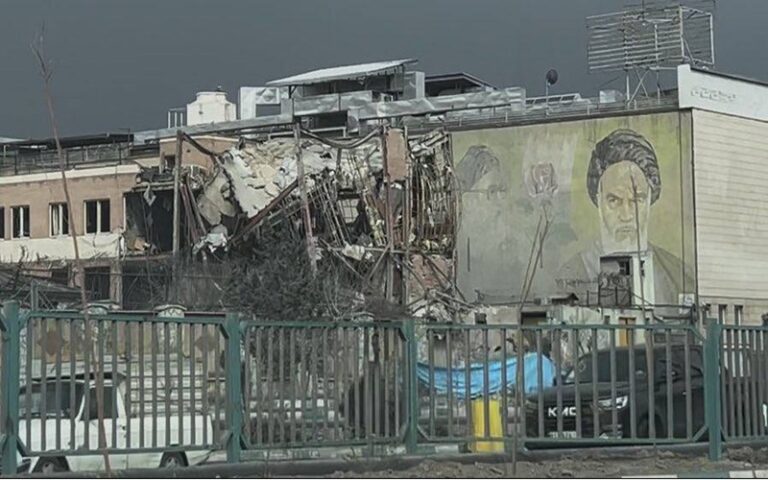
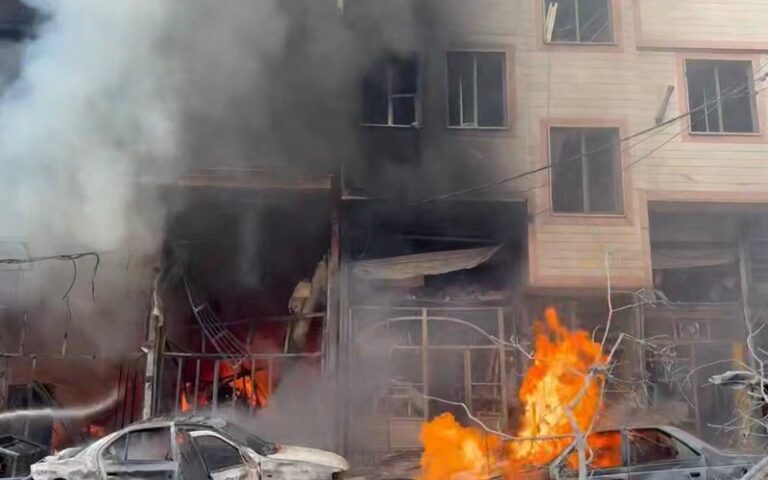
At the same time as this warning, reports emerged of airstrikes inside Iran. Images released on Wednesday show that several locations in northern Tehran were targeted by air attacks. Reports accompanying these images refer to areas including Pasdaran, Dowlat, and Qolhak neighborhoods. Precise details about the extent of damage or possible casualties have not yet been released, but the strikes indicate the continuation of military operations against targets linked to the regime’s security and military structures in Iran’s capital.
In another development, U.S. President Donald Trump said in a brief interview with the news website Axios that the war with Iran’s regime may soon come to an end. In the five-minute interview, he said that almost nothing remains to be targeted and added that whenever he decides, the war could end. Trump also emphasized that some smaller targets remain in different locations, but according to him the course of military operations is approaching its final stage.
According to U.S. officials, in recent days several targets linked to the presence of foreigners in Iraq—including hotels, foreign businesses, and diplomatic facilities—have come under attack. It has also been reported that the U.S. Embassy building in Baghdad was targeted by a rocket attack in recent days.
At the same time, the U.S. government has increased political pressure on the Iraqi government to curb the activities of militias affiliated with Iran in that country and to push Baghdad to distance itself further from Tehran’s policies.
Tensions in the Strait of Hormuz and the Sinking of 16 IRGC Mine-Laying Vessels
As airstrikes against the regime’s military targets continued, serious threats and warnings about the possibility of minelaying in the Strait of Hormuz—one of the world’s most strategic waterways—became one of the main focuses of recent developments.
In the most significant development, Donald Trump issued a warning to Iran’s regime in a message on Truth Social, stating that any mines placed in the Strait of Hormuz must be removed immediately. He emphasized that if such actions have been carried out and the mines are not removed, Tehran will face unprecedented military consequences.
This warning came as the United States Central Command, known as CENTCOM, announced that its forces had destroyed several vessels belonging to the naval forces of Iran’s regime, including 16 mine-laying boats near the Strait of Hormuz.
Meanwhile, the Ministry of Defense of the United Arab Emirates announced that the country’s air defense systems intercepted and destroyed missiles and drones launched from Iran. These developments indicate that the scope of tensions has extended to other countries in the region.
The Islamic Revolutionary Guard Corps (IRGC) announced the continuation of its missile operation called “True Promise 4” and said that new waves of attacks had been carried out. However, U.S. military officials say the intensity of Iran’s missile attacks has decreased in recent days. A senior Pentagon spokesperson stated that about 140 American soldiers have been wounded since the start of the war.
Inside Iran, the security atmosphere has also intensified. The regime’s prosecutor general warned that “any cooperation with the enemy” abroad would be met with confiscation of property and heavy punishments and called on citizens to report suspicious cases to the prosecutor’s reporting system. At the same time, the commander of the regime’s Law Enforcement Force threatened that any protest gathering during wartime conditions would face severe crackdowns.
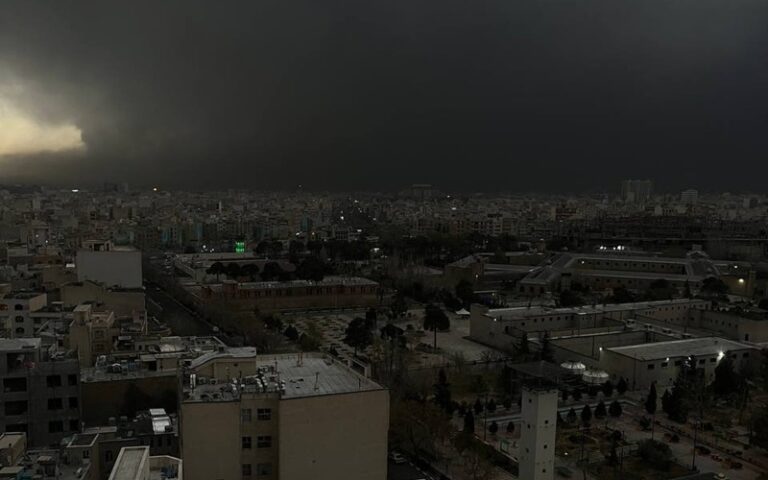
On the other hand, the World Health Organization warned that attacks on oil facilities could cause a phenomenon known as “black rain,” which could create serious respiratory problems for residents of affected areas.
Meanwhile, some diplomatic sources at the United Nations reported that the representative of Iran’s regime has claimed that in the recent bombings about ten thousand civilian locations were destroyed and more than 1,300 civilians were killed figures that have not yet been confirmed by independent sources.
After images were released by the Israeli army showing underground tunnels linked to Ali Khamenei, the former supreme leader of Iran’s regime, rumors that had circulated for years about the existence of such a shelter once again drew attention. The images show a network of tunnels stretching several kilometers and passing beneath various areas, including medical centers, schools, and residential buildings.
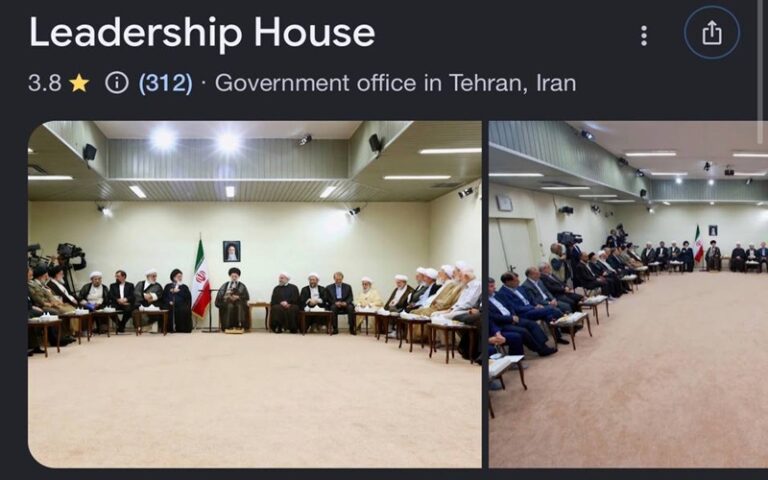
On March 6, shortly after heavy strikes on central areas near the Pasteur government complex in Tehran—where key offices of the Iranian regime, including the presidential office, are located—the Israeli army released a video of this underground shelter. In the video, a structure resembling an underground city can be seen; a shelter that is reportedly intended to remain in use by remaining regime officials even after Khamenei’s death.
Analysis of the released images using online tools suggests the length of these tunnels is about five kilometers. According to Alireza Zakani, the mayor of Tehran, and members of the Tehran City Council, the cost of constructing each kilometer of metro tunnel in Tehran at current prices is estimated on average between 50 to 60 thousand billion rials (about 31 to 36 million dollars). However, this amount only covers basic construction work and does not include interior finishing, equipment, internal landscaping, or underground facilities.
Based on these figures, the cost of excavating five kilometers of underground tunnels is estimated at roughly 250 to 300 thousand billion rials (approximately 150 to 188 million dollars). Given the classified nature of the project and its security requirements, the real cost may have been several times higher than that of building a normal tunnel.
Under normal conditions, tunneling contractors in Tehran are able to excavate about 10 meters of tunnel per day. Therefore, constructing such a complex would require at least about 500 days, which is roughly equivalent to 17 months. Considering the project’s level of secrecy and additional equipment requirements, the actual construction time was likely longer.
Estimates indicate that the central facilities of this tunnel network are located at a depth of 40 to 50 meters, and this section lies directly beneath the Shahid Shorideh Medical Center.
The central core; beneath a medical center
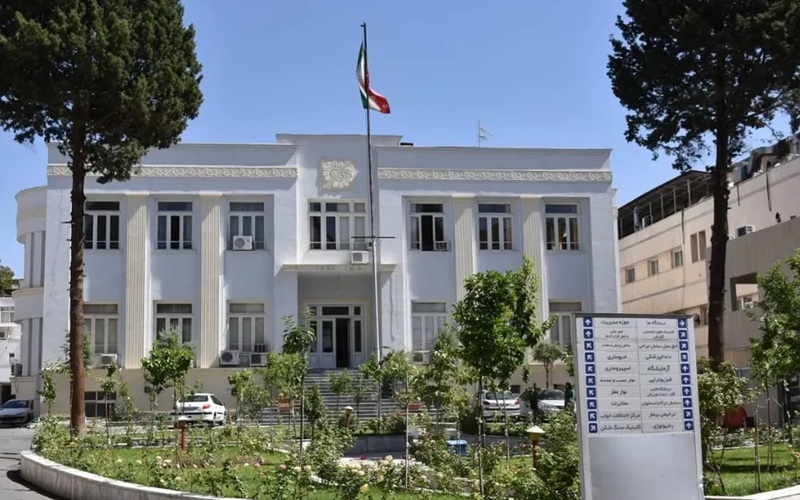
In the released video, the central section of this shelter complex appears southwest of the presidential building. The location lies directly beneath the “Shahid Shurideh” Medical Center, a facility affiliated with the Ministry of Agriculture Jihad of the Iranian regime that began operating in 1985. In practice, this medical center is considered part of the Pasteur government complex.
From the northwest, this section connects to another entrance of the complex at the end of Rajabi Street, a point located about 200 meters from Shahid Shurideh Hospital.
Shahid Shurideh Hospital
One of the entrances is also located beneath a building opposite the Karimeh Ahl al-Bayt Clinic, near Hor Square in central Tehran.
The easternmost entrance; beside a girls’ elementary school
The easternmost entrance of this tunnel network is located in the Sheikh Hadi neighborhood on Valiasr Street beneath the Jami multi-story parking structure. This parking facility is built next to the Hejrat Girls’ Elementary School, and about 100 meters away is the Saheb-al-Zaman Boys’ Elementary School.
At the northernmost point of the network is the 12 Farvardin multi-story parking structure, located on Jomhouri Street at the corner of 12 Farvardin Street and Danesh Street.
An entrance beneath a mosque beside a school
Another entrance to these tunnels is located west of Pasteur Square, between the Hor Metro Station and Pasteur Square. This entrance is situated beneath a mosque called Tawhid Mosque. Next to the mosque there is a building, and behind it stands the Kadkhodaei Boys’ Elementary School.
About 200 meters from this location, another entrance lies on the southwest side of Pasteur Square along Daneshgah-e-Jang Street. Nearby are the Karimeh Ahl al-Bayt dental clinic and the Karimeh Ahl al-Bayt medical clinic across from it. The “2 Farvardin” pharmacy belonging to the Iranian regime’s army is also located close to this point.
Entrance beside a football school
The westernmost entrance of this tunnel network is located beneath a small building next to the office responsible for issuing hunting firearm permits. On the eastern side of this building, a football training school has been constructed directly adjacent to it, and the surrounding area contains densely packed residential complexes.
This area is located near the intersection of Sepah and Kamali streets, on Kashan Street at the end of Fourth Street. These tunnels are also located close to the Yas and Namjoo residential complexes, which are affiliated with the Iranian regime’s army.
Amid growing public discontent and the looming threat of nationwide protests, the Iranian regime has intensified its security measures, combining a near-total internet blackout with heavy militarization of the streets in a desperate bid to prevent a new uprising.
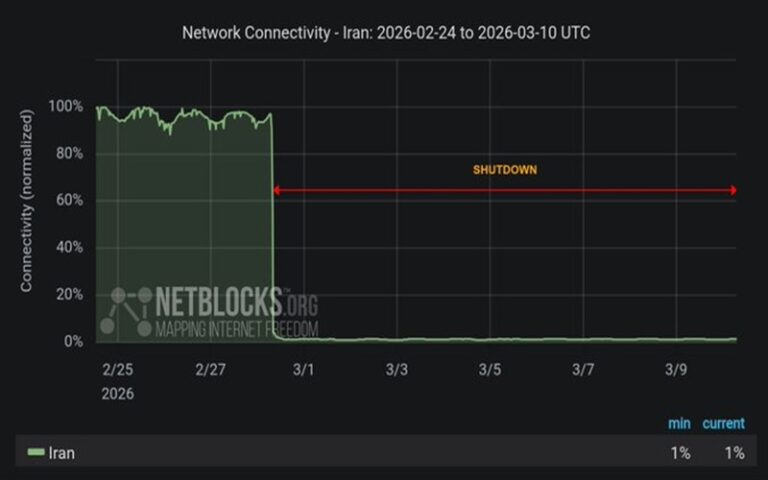
According to NetBlocks, a global internet monitor, Iran is currently experiencing one of the most severe internet disruptions recorded globally. The organization reported that the country has been largely offline for nearly a third of 2026. Since the onset of the recent conflict on March 9th, ordinary citizens’ access to the global internet has plummeted to roughly 1%, with over 240 hours of continuous blackout.
⚠️ Update: At 240 hours, #Iran's internet blackout is now among the most severe government-imposed nationwide internet shutdowns on record globally, and the second longest registered in Iran after the January protests, with the country having spent a third of 2026 offline. pic.twitter.com/LPoVkOI9MM
Highlighting this deliberate digital isolation, government spokesperson Fatemeh Mohajerani admitted that internet access is being selectively provided only to those who can “deliver the voice to the world”—a clear indication that the regime is monopolizing the narrative through its state-approved propaganda channels while keeping the public in an information blackout.
To further suppress any organizing efforts, state security forces have launched a sweeping wave of arrests. Ahmad-Reza Radan, the commander of the regime’s police force, announced on the evening of March 10th the arrest of 82 citizens accused of “sending materials to and communicating with foreign media.” Simultaneously, the notorious Ministry of Intelligence claimed the arrest of 30 others on fabricated charges of “espionage and collaborating with the enemy.”
Acknowledging the heavy militarization of urban areas, Radan confirmed that security forces are deployed around the clock. He issued a direct, lethal warning to deter citizens from protesting, stating explicitly: “If anyone wants to come to the streets, all our forces are ready with their fingers on the trigger.”
These threats coincide with widespread reports of heavy security presence, multiple checkpoints, and a suffocating atmosphere across major cities. Activists and the Coordinating Council of Iranian Teachers’ Trade Associations have described the atmosphere in Tehran as that of a “military barracks” filled with intimidation and fear.
International observers note that this dual strategy—imposing total digital isolation coupled with the explicit threat of lethal force—exposes the Iranian regime’s deep-seated panic and vulnerability over the prospect of a popular revolution aimed at ending the dictatorship.
A classified intelligence assessment in the United States, prepared only one week before the start of the war, indicates that even if a large-scale military operation against Iran were carried out, the likelihood of the collapse of the country’s governing structure would be low and the main power institutions in Iran’s regime might remain intact.
Doubts among U.S. intelligence agencies about the ability of opponents of Iran’s regime to take power had also been raised in reports by The New York Times, Reuters, and The Wall Street Journal. However, the assessment of the U.S. National Intelligence Council and its analysis of the possible consequences of both small and large attacks against Iran had not previously been reported.
The National Council of Resistance of Iran (NCRI), led by Maryam Rajavi, has repeatedly stated that the overthrow of the mullahs’ regime in Iran will not be achieved through a foreign war. According to this position, the regime can only be brought down through a popular uprising and the organization of armed groups by the Iranian people themselves. The National Council of Resistance of Iran and the People’s Mojahedin Organization of Iran (PMOI/MEK), the largest organized opposition group, have been engaged in struggle against Iran’s regime since 1981 and have lost many of their members and supporters in this conflict.
Last week, Maryam Rajavi announced a provisional government intended to transfer sovereignty to the people of Iran. This government would step down within six months after the establishment of a Constituent Assembly.
In this process, attempts to manufacture an opposition for Iran—such as replacing the current system with the son of the former dictator, Reza Pahlavi—will not help bring freedom to the Iranian people but will instead become an obstacle to democracy, peace, and stability in the region.
The experiences of Iraq and Afghanistan demonstrate that only through free and popular elections can a stable government be established in Iran, and only through such a process can regional stability be guaranteed.
According to The Washington Post, citing senior U.S. intelligence sources, a report prepared by the U.S. National Intelligence Council (NIC) concluded that the power structure in Iran—composed of clerical and military institutions—is so deeply entrenched that even a large-scale military attack by the United States would likely not be able to overthrow it.
According to the classified report, U.S. intelligence analysts assessed that even if Washington launched either a short-term or long-term military campaign, it would be unlikely that forces opposing Iran’s regime could take power.
This assessment contradicts the publicly stated positions of U.S. President Donald Trump. Trump had previously declared that Washington could purge Iran’s leadership structure and replace it with a new governing authority.
Which scenarios had been examined?
The report was prepared about one week before the start of the joint U.S.–Israel military operation on February 28.
The document examined several scenarios, including a limited attack targeting Iran’s leaders or a broader attack against the leadership structure and government institutions.
The U.S. National Intelligence Council consists of a group of senior and experienced intelligence analysts responsible for producing classified assessments. Their evaluations reflect the collective conclusions and shared views of the 18 intelligence organizations based in Washington.
The White House has not specified whether the U.S. president was aware of this assessment before authorizing the military operation.
However, the intelligence report does not appear to have examined other possible scenarios, including deploying U.S. ground troops inside Iran or arming opposition forces to trigger an uprising.
It is also unclear whether the large-scale military campaign examined in the classified document is the same as the operations currently underway.
Trump has also suggested that he should have a role in selecting Iran’s next leader. He emphasized that he does not want leaders to come to power in Iran who would simply rebuild the country’s nuclear infrastructure and ballistic missiles.
In response, Mohammad Bagher Ghalibaf, the Speaker of Iran’s parliament (Majlis), rejected the notion that Trump would have any role in determining Iran’s next leader.
“Continuation of exerting dominance inside the country”
Current and former U.S. officials say that so far, they see little sign of a large-scale popular uprising in Iran or a serious split within the regime or the security forces that could lead to the formation of a new system.
The security forces of Iran’s regime killed thousands of protesters during the January protests, which emerged due to the country’s severe economic conditions. Meanwhile, Trump advised the Iranian people to remain sheltered in their locations until the end of the U.S. and Israeli bombing campaign.
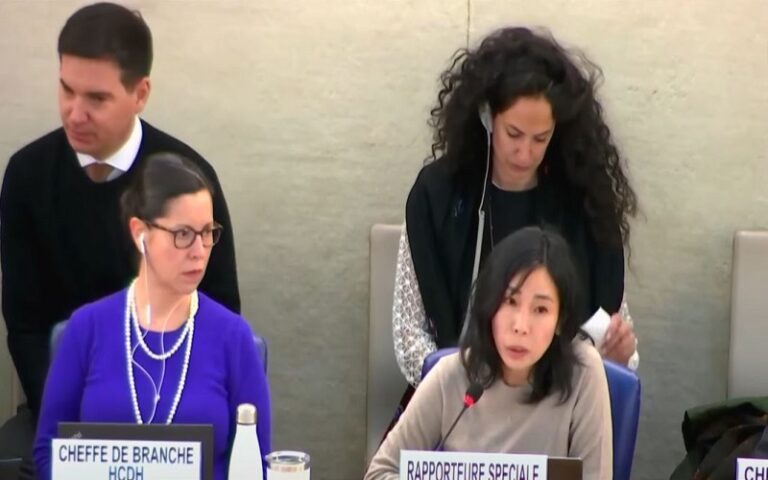
A newly released United Nations report by Special Rapporteur Mai Sato has brought international attention to the severe human rights violations in Iran, particularly in the context of the 2025 nationwide protests. The comprehensive document highlights how broadly defined security offenses are being weaponized by the state to silence political dissent. Notably, the report exposes the alarming cases of three female activists currently facing the death penalty, including one whose capital charge is based on nothing more than possessing a piece of cloth featuring a popular protest slogan.
The advance unedited version of the report, dated March 9, 2026, was prepared for the sixty-first session of the UN Human Rights Council. Titled “Situation of human rights in the Islamic Republic of Iran in 2025 and the nationwide protests,” the document rigorously examines the regime’s suppression of the rights to freedom of expression, peaceful assembly, and association during the nationwide unrest that began in late December 2025.
A critical section of the Special Rapporteur’s findings details the application of capital punishment under the guise of security-related offenses. The report states that beyond espionage, authorities continue to use other broadly defined security offenses to effectively silence dissent. Specifically, the document names three women who are currently on death row facing the severe charge of baghy, which the state defines as armed rebellion against the foundations of the Islamic Republic.
The three women facing imminent execution under this charge are identified as Kurdish humanitarian worker Pakhshan Azizi, Kurdish activist Varisheh Moradi, and Zahra Shahbaz Tabari.
The arbitrary and disproportionate nature of these capital charges is starkly illustrated in the specific case of political prisoner Zahra Shahbaz Tabari. Highlighting the lack of due process and the criminalization of basic expression, the report outlines the astonishingly trivial basis for her death sentence. According to the Special Rapporteur’s findings, the evidence against her consisted of a piece of cloth bearing the slogan “Woman, Resistance, Freedom”, a popular slogan from the 2022 protests.
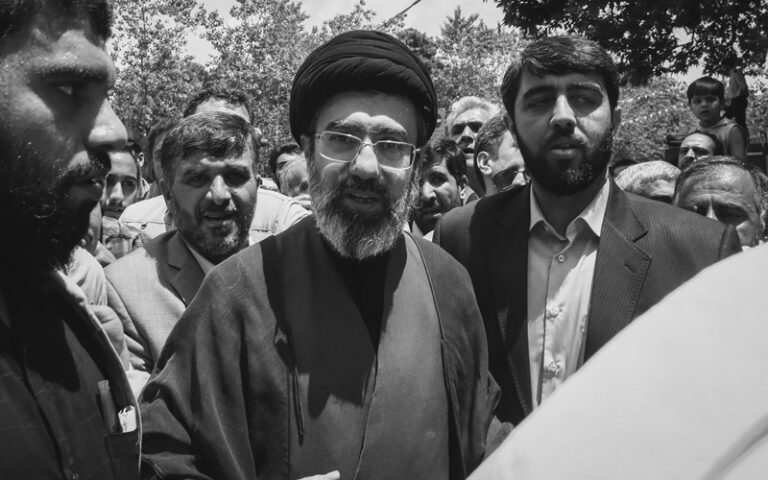
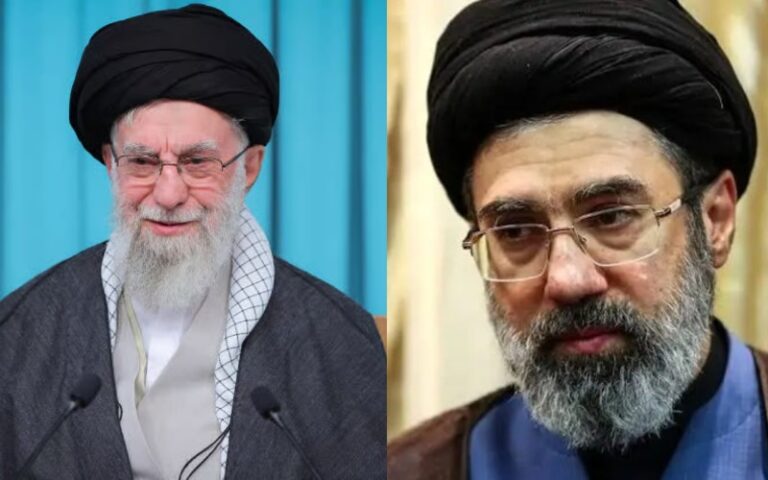
Mojtaba Khamenei, the second son of Ali Khamenei, was introduced on Sunday evening, March 8, as the third leader of the Iranian regime. A figure who for years had been one of the most influential unofficial actors within Iran’s ruling system and played an important role in the regime’s hardline power core has now officially succeeded his father.
Although he rarely appeared in public and for years tried to remain a mysterious behind-the-scenes figure, he was the key person in a network structure that connected security institutions and the project of transferring power. He operated “in the shadows” for many years, but his influence could be traced during moments of crisis, from the disputed 2009 presidential election to periods of war.
Mojtaba Hosseini Khamenei was born in 1969 in Mashhad and is the second son of Ali Khamenei. His family belonged to the Shiite clerical establishment and rose from the margins of religious seminaries and politics to the center of power in the Iranian regime after the 1979 revolution.
Ali Khamenei’s elevation to the position of leader of the Iranian regime in 1989 marked a turning point in Mojtaba’s life. He went from being the son of a president and well-known cleric to the son of the regime’s supreme leader. During those years he continued his seminary studies in Tehran and Qom, the main centers of the regime’s religious education, and became known as a cleric.
Political Influence Without an Official Position
Mojtaba Khamenei never held an official position in the government or the formal power structure of the Iranian regime. He was neither a minister, nor a member of parliament, nor a publicly recognized commander in the Islamic Revolutionary Guard Corps (IRGC).
Nevertheless, Western media have described him as a behind-the-scenes power broker and one of the most influential figures within the ruling clerical establishment. Despite his very limited public presence, he influenced decision-making processes through the inner circles of the office of the supreme leader.
In analytical discussions, he has been portrayed as a figure without an official signature but a gateway to the regime’s leader, the coordinator between the leader and security institutions, and transmitting messages at critical moments.
Who could meet Ali Khamenei, at what time, and with what agenda often affected the outcome of many decisions. Reports indicate that Mojtaba Khamenei played a significant role in managing this access and the behind-the-scenes coordination.
Alongside figures such as Mohammad Mohammadi Golpayegani, the chief of staff of the leader’s office, and Vahid Haghanian, a senior executive figure in that office, he was considered part of the shadow network surrounding the leadership. This network of clerics and security-administrative managers served as a channel through which many of the regime’s main domestic and foreign policy lines passed.
This position led many accounts to compare him with the role played by Ahmad Khomeini, the son of regime founder Ruhollah Khomeini, during the early years of the government. Ahmad Khomeini was also known for acting as a liaison between the leader’s household and political and security institutions, although the network Mojtaba Khamenei built over the years has been described as broader in its connections with military and economic institutions.
Ties With the IRGC and Security Institutions
Almost all credible reports about Mojtaba Khamenei share one common point: his close, deep, and long-term relationship with the Islamic Revolutionary Guard Corps (IRGC), particularly its security branches. Over two decades, he developed strong relationships with IRGC commanders—from the Quds Force, responsible for foreign operations, to the Basij militia and the IRGC Intelligence Organization—and these ties increased his influence within the country’s political and security structure.
When the U.S. Department of the Treasury sanctioned him in 2019, it stated that Ali Khamenei had delegated part of his responsibilities to Mojtaba and that he acted on behalf of the leader. The official statement referred to his cooperation with commanders of the IRGC Quds Force and the Basij in advancing the regime’s regional objectives and its domestic repressive goals.
Elections and Internal Power Struggles
Mojtaba Khamenei’s name became linked to presidential elections and internal power struggles within the ruling system from the mid-2000s.
He was widely seen as one of the behind-the-scenes actors involved in the unexpected rise of Mahmoud Ahmadinejad in the 2005 presidential election. Mehdi Karroubi, one of the candidates, wrote an official letter to Ali Khamenei complaining about Mojtaba’s role in supporting Ahmadinejad—an allegation the leader rejected but one that remained in the political memory of critics.
During the disputed 2009 election and the subsequent crackdown on protests, some media reports claimed that Mojtaba coordinated with the IRGC and the Basij militia and played an active role in managing the response against protesters.
During the 2022 protests following the death of Mahsa (Jina) Amini in the custody of the regime’s morality police, his name again appeared in slogans and analyses by critics and became a symbol of the role of the IRGC and the security apparatus in suppressing demonstrations.
U.S. Sanctions and the Formal Recognition of an Unelected Role
In the fall of 2019, the U.S. Treasury Department sanctioned a network of individuals close to Ali Khamenei. In its official statement, the group was described as a shadow network of the leader’s military and foreign policy advisers.
Regarding Mojtaba, it was clearly stated that although he had never held any government position and had no elected or appointed office, he acted on behalf of the leader and had been entrusted with some of Ali Khamenei’s responsibilities.
Succession and the Problem of “Crown-Prince Rule”
Years before Ali Khamenei’s death, the scenario of his succession had become a central focus for analysts, and Mojtaba’s name repeatedly appeared at the top of the list of possible successors—especially after the death of Iranian regime president Ebrahim Raisi in a helicopter crash in 2024, which changed the balance among potential contenders.
However, these same factors highlighted another problem: the accusation of establishing a hereditary succession in a system that was founded with anti-monarchy slogans.
The issue of his clerical rank also stood alongside this political sensitivity. He was mostly known by the clerical title “Hojjat-ol-Eslam,” and although some seminary-affiliated media in recent years began referring to him as “Ayatollah,” this title remained controversial among parts of the clergy and the public. Similar debates had also existed regarding Ali Khamenei’s religious authority in 1989.
A similar claim is also contested regarding the former Shah of Iran and his son. The son of the former Shah, like the son of the former leader of Iran, claims the right to reclaim the throne and has highlighted this issue in the political arena while supporting foreign war.
Some compare Mojtaba Khamenei and his rise to leadership after his father with the son of the Shah.
However, all of this will only have meaning if he and the government he now heads survive attacks by the United States and Israel, manage to emerge from shelters, and appear in practice as the leader of the Iranian regime.
Amid continuing concerns about the future of the global energy market, Reuters reported, citing a source in the French government, that member countries of the Group of Seven (G7) plan to review a proposal for the coordinated release of strategic emergency oil reserves.
A meeting of finance ministers from the G7 countries— the United States, the United Kingdom, Canada, Japan, France, Italy, and Germany— is scheduled to take place on Monday, March 9.
Reuters wrote that following production cuts by major oil producers and the introduction of Mojtaba Khamenei as the new leader of the Iranian regime—seen as a sign of the continued dominance of hardliners in power—oil prices have experienced an unprecedented surge.
Under these conditions, various countries are trying to adopt measures to contain the consequences of rising oil prices for their economies and consumers.
A spokesperson for the European Commission said the Iran crisis has pushed oil prices to more than 100 dollars per barrel.
Meanwhile, the European Union announced that its oil and gas supply coordination groups will hold a meeting on March 9.
During the meeting, the impact of Middle East conflicts on the energy market will be reviewed, along with the latest assessments by member states regarding the status of their oil reserves.
The military campaign against the Iranian regime and the regime’s retaliatory attacks have caused the Strait of Hormuz—one of the world’s most vital shipping routes—to become nearly closed.
The Strait of Hormuz is a narrow waterway between Iran and Oman through which about one-fifth of the world’s crude oil and liquefied natural gas passes.
U.S. President Donald Trump downplayed the rise in oil prices on Sunday evening, March 8, saying the situation would be temporary and that prices would quickly decline after the destruction of the Iranian regime’s nuclear program.
He added that the rise in oil prices is a very small price to pay for the security and peace of the United States and the world.
Decline of Stock Indexes in Asian Financial Markets
Reuters added in its report that as concerns intensified about a prolonged disruption in energy supply, stock indexes in Asian financial markets declined and the value of the U.S. dollar increased.
Asian countries obtain about 60% of their required oil from the Middle East. The figure is about 70% for South Korea and nearly 95% for Japan.
Lee Jae-myung, the president of South Korea, announced that the government will set a cap on fuel prices for the first time in about 30 years.
Lee said in an emergency government meeting that this crisis is placing significant pressure on the country’s economy because it is highly dependent on global trade and energy imports from the Middle East.
A senior member of Japan’s parliament also said the government has instructed one of the country’s strategic petroleum reserve facilities to prepare for a possible release of crude oil.
However, Japan’s Chief Cabinet Secretary later stated that no decision has yet been made to draw from the country’s oil reserves.
Reports indicate that the Iranian regime continues its attacks against countries in the region.
On the morning of March 9, a drone attack by the Iranian regime targeted the BAPCO oil refinery in Bahrain and caused damage.
BAPCO is Bahrain’s main oil refining facility and one of the key centers of the country’s energy sector.
Qatar had previously warned that oil prices could rise to as high as 150 dollars per barrel.
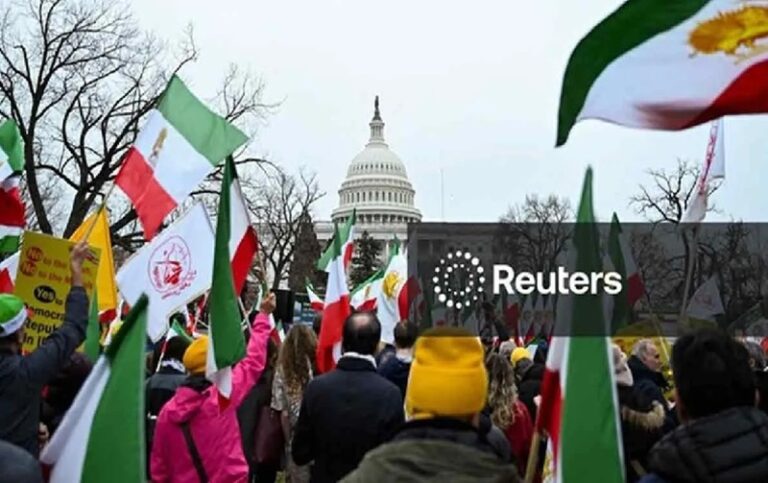
A large group of supporters of the Iranian resistance movement held a demonstration on Saturday, March 7, in front of the United States Congress, calling on the international community to support the people of Iran and to recognize the transitional government announced by the National Council of Resistance of Iran (NCRI). Participants in the gathering chanted the slogan “Neither Shah nor mullahs,” emphasizing the establishment of a democratic republic in Iran based on the separation of religion and state.
At the demonstration, several American political figures, human rights activists, representatives of Iranian organizations in the United States, and members of the National Council of Resistance of Iran delivered speeches. The central theme of their remarks was support for the ten-point plan proposed by Maryam Rajavi, the president-elect of the NCRI, for the future of Iran and an emphasis on the role of the Iranian people and organized resistance in determining the country’s destiny.
The National Council of Resistance Plan for the Transitional Period
Soona Samsami, the representative of the National Council of Resistance of Iran in the United States, referring to the sacrifices made by the Iranian people for freedom, said: “Thousands of people have paid a heavy price for freedom, and these sacrifices show that the people of Iran are determined to bring about change and establish a democratic republic.”
Referring to previous revelations by the Iranian resistance about the regime’s nuclear program, she said these disclosures prevented the Iranian regime from surprising the world with a sudden acquisition of nuclear weapons.
Samsami also referred to the transfer-of-power plan within the ten-point program and said: “The transitional government is tasked with transferring sovereignty to the people of Iran and within six months preparing the conditions for free elections to form a constituent assembly.”
She also emphasized that the plan includes the dissolution of repressive institutions such as the Islamic Revolutionary Guard Corps (IRGC) and the Basij militia, guarantees the rights of Iran’s various nationalities, and establishes full equality between women and men.
Remarks by a Former Member of the U.S. Congress
At the gathering, Ted Poe, a former member of the U.S. House of Representatives, referred to the widespread repression in Iran and said the world should know that thousands of Iranian citizens have been killed by the regime over past decades.
He described the Iranian regime as an enemy of the Iranian people and also a threat to the world, adding that dictatorships remain in power through weapons and repression, but such a situation will not last forever.
The former congressman referred to Maryam Rajavi’s ten-point plan and said many of its principles, including the separation of religion and state and equality between women and men, align with widely recognized democratic values around the world. He emphasized that the people of Iran must decide their country’s future themselves.
The Role of Youth and Women in the Freedom Movement
In another part of the program, Melody Mohammadi, a young Iranian activist, referred to the struggles of women in Iran and said: “For 47 years, women in Iran have been subjected to misogynistic laws, but they have never surrendered and today they stand on the front lines of the freedom movement.”
Emma Valibeygi, another speaker at the rally, also emphasized the role of the younger generation, stating: “We are not only thinking about the end of this regime, but also about a democratic future in which sovereignty returns to the people.” She called on the international community to support Iranian women and youth who are on the front lines of the struggle for freedom.
Emphasis on Nationalities’ Rights; Remarks by the Representative of the Kurdistan Democratic Party of Iran
One of the notable speeches at the gathering was delivered by Arash Saleh, the representative of the Kurdistan Democratic Party of Iran (KDPI) in the United States. Referring to Iran’s ethnic and national diversity, he said: “We are here today to be the voice of the people of Iran with all their social groups, nationalities, and ethnic minorities.”
He emphasized that the experience of two dictatorships in Iran has shown that without genuine acceptance of pluralism, democracy will not take shape in the country. Saleh said: “We cannot have democracy if the rights of nationalities and ethnic minorities are ignored or if they are labeled as separatists.”
The Kurdish political activist also stressed that preserving Iran’s territorial integrity would be strengthened by recognizing the rights of nationalities and creating mechanisms of autonomy within a democratic system.
Referring to the slogans of protesters inside Iran, he said: “The message of the people in Iran’s streets is clear; they want neither a return to monarchy nor the continuation of clerical rule, but rather a democratic republic.”
Emphasis on the Role of Organized Resistance
At the end of the gathering, Iranian activist Sina Saeidian referred to recent developments in Iran and said: “Real change in Iran will only come through the people and their organized resistance.”
He emphasized that the international community must recognize the right of the Iranian people to struggle against dictatorship and to strive for the establishment of a democratic system.
Today, the Assembly of Experts of Iran’s regime, the clerical body responsible for selecting the supreme leader, announced that Mojtaba Khamenei, the son of former regime supreme leader Ali Khamenei, has been chosen as his father’s successor. In previous years, his name had repeatedly been at different stages as a possible successor to Ali Khamenei, and it was widely known that he was one of the main candidates for this position
Over the past four decades, the power structure of the regime has been shaped more than anything around a single individual. Since the death of Ruhollah Khomeini in 1989, all power dynamics have gradually become concentrated in the hands of his successor, Iranian regime supreme leader Ali Khamenei.
Khamenei was not only a political leader; he was the final arbiter among all factions within the regime. Disputes among governments, security commanders, clerics, and economic networks were ultimately settled in his office. For this reason, he was described as the “pillar of the regime’s tent.”
But the main question is this: When this pillar is removed, will the tent remain standing?
The succession crisis; a knot that will not easily be untied
Unlike in 1989, today the regime faces a series of simultaneous crises:
A deep divide between the government and society, internal economic and political pressures, intense rivalries within the ruling establishment, and a lack of political legitimacy in public opinion.
Can Khamenei be replicated?
Khamenei had more than three decades to eliminate his rivals and build his own power network—an opportunity that his potential successor will never have. Nevertheless, the regime will be forced to find a successor for its deceased Supreme Leader.
However, the regime does not have a figure who is acceptable to all factions and internal groups of the system and the hierarchy of clerics, even though several figures are being floated as candidates behind the scenes. For them, Mojtaba Khamenei—Ali Khamenei’s son—is considered the best option because, in addition to carrying the Khamenei name, he has effectively held influence over the country’s military, intelligence, and economic power structures and the administration of the Supreme Leader’s office in recent years.
But neither he nor anyone else will ever be able to fill the leadership vacuum of the regime, because Iranian society and the people of Iran—continuing the path of the January uprising—will not allow the regime to rebuild itself.
We, as the people of Iran—especially after the turning point of the January uprising that has placed the overthrow of the regime within reach and the death of Khamenei has sealed it—have never looked to foreign war. We believe that
The overthrow will only be achieved in the streets through an organized uprising and in continuation of the January uprising.
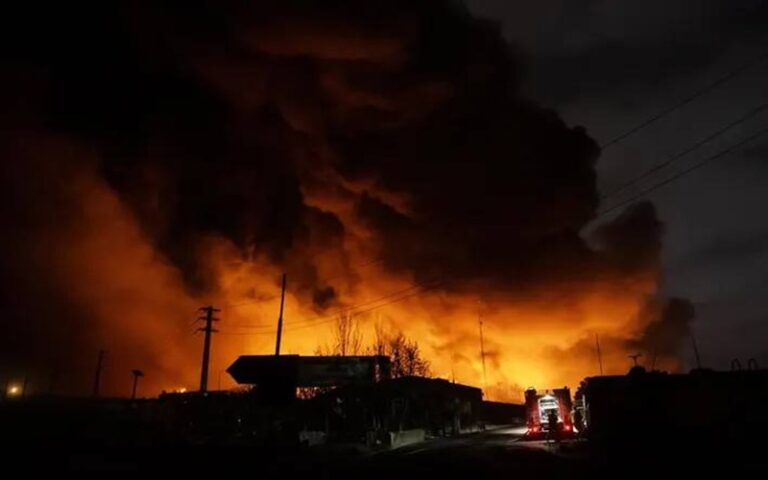
Amid ongoing clashes and reciprocal attacks in the region, early Sunday, March 8, reports emerged of airstrikes targeting several fuel storage facilities in Tehran and Karaj. Images and videos published on social media and by some media outlets show that several oil depots in different areas were hit, leading to extensive fires at these facilities.
According to the received images, the Fardis oil depot in Karaj was targeted around 23:00 last night. The footage shows large flames and thick smoke rising into the sky from the site of the incident and spreading over a large part of the area. At the same time, other videos showing severe fires at the Shahran oil depot in western Tehran and the Aghdasieh oil depot in the Sohanak area at the end of Artesh Highway have also been published, indicating the scale of the damage at these fuel storage facilities.
In this regard, the Israeli military announced in a statement that it had targeted several fuel storage complexes belonging to the Islamic Revolutionary Guard Corps (IRGC) in Tehran. The statement said the attacks were carried out with intelligence guidance and that these complexes had been used as fuel distribution centers for some military institutions of Iran’s regime. The Israeli military also stated that the operation was part of a new wave of attacks against the military infrastructure of Iran’s regime.
While the images released from Tehran and Karaj show widespread fires at fuel storage facilities, state-run media outlets have presented different narratives about the incident. The state-run Fars News Agency, quoting a source in the Oil Ministry, reported that three oil depots in the areas of Kouhak, Shahran, and Karaj were targeted by Israeli fighter jets. Meanwhile, the state-run ISNA news agency reported that an attack occurred around 22:20 last night near the Tehran refinery but said that “no damage has been inflicted on the refinery facilities and all refining units remain in operation.”
At the same time, a reporter from the regime’s state television news channel reported that due to the intensity of the fires around the Tehran refinery, it is currently not fully possible to conduct firefighting and rescue operations. Meanwhile, some domestic media outlets have reported that a fuel storage tank in southern Tehran was also targeted. As of the time of writing this report, no precise information has been released about the extent of the damage or possible casualties, and further details remain under review.
Escalation of political tensions
Alongside the developments on the ground, political tensions have also increased significantly. Mohammad Bagher Ghalibaf, the Speaker of the Majlis (parliament) of Iran’s regime, stated: “As long as U.S. bases exist in the region, the countries of the region will not see peace.” Ali Larijani, a senior regime figure and former parliament speaker, also reacted to the recent developments, saying: “If regional countries provide bases to the United States, we will strike those bases.” He emphasized: “There is no disagreement in the fight against America and Israel, and we will not allow them to escape this predicament.”
Larijani also spoke about the possible consequences of the war, saying: “We have not closed the Strait of Hormuz, but no one can pass through it, and the consequences of this war will not be limited to Iran.” He added: “We had already told the Europeans that if they participate in the war, we will inevitably confront them. We are not seeking to expand the war, but if they assist in it, we will have no choice but to retaliate.”
At the regional level, reactions to the recent developments have also emerged. Nawaf Salam, the Prime Minister of Lebanon, stated: “We will not allow Lebanon’s fate to be tied to the interests of Iran’s regime.” The U.S. State Department also condemned a drone attack by Iran’s regime on the Republic of Azerbaijan.
Meanwhile, Sean Parnell, a spokesperson for the U.S. Department of Defense, said confusion within Iran’s military is intensifying. The Israeli military also announced that 16 aircraft belonging to the IRGC’s Quds Force were targeted during the recent attacks.
International reports have also indicated growing concern about the expansion of the conflict. Reuters reported that more than 150 Iranian nationals, including diplomats and their families, left Lebanon on Saturday.