Water Inflow into Dams in 21 Iranian Provinces Down 39% Compared to Last YearParsa stressed that five consecutive years of drought have put severe pressure on Tehran Province’s water resources, and if water consumption in the capital is not controlled, serious challenges in providing drinking water will emerge. This Tehran Regional Water Company official cited public participation in “saving water and modifying consumption patterns” as the only way to overcome the crisis. In recent months, as the water crisis has worsened, officials of the Iranian regime have repeatedly blamed the public, warning about declining dam reserves and urging citizens to “save water.” Isa Bozorgzadeh, spokesperson for Iran’s Water Industry, announced on November 2 that a special meeting on managing Tehran’s drinking water crisis was held with the participation of the Minister of Energy and the Tehran governor. He said that, given the “very short endurance time” of the Latyan, Mamloo, Lar, and Amir Kabir dams, special measures have been adopted to reduce the capital’s water consumption. He added that the planned reduction must be achieved through the joint management of the Energy Ministry and the citizens. Bozorgzadeh also said on October 31 that a “pessimistic scenario” had been developed for Tehran’s autumn water supply and, given the current situation, the reduction in water pressure would continue until the stability of water resources is restored.
The Karaj Dam’s Reservoir Can Only Supply Tehran’s Drinking Water for Two Weeks
Amid growing warnings about the worsening water crisis and the Iranian regime’s inability to manage its resources, the CEO of Tehran Regional Water Company announced that currently only 14 million cubic meters of water remain stored behind Karaj (Amir Kabir) Dam, which can supply Tehran’s drinking water for just two more weeks.
On Sunday, November 2, Behzad Parsa said that the inflow of water to Tehran’s dams has decreased by 43% compared to the previous water year.
He added that at the same time last year, the Karaj Dam reservoir held around 86 million cubic meters of water, and this unprecedented decline is the result of a 100% decrease in rainfall in Tehran Province compared with the long-term average.
Mashhad Residents Burying Their Deceased in Villages Due to High Price of Graves
The state-run newspaper Shargh published a report on the sharp rise in grave prices in Mashhad, writing that residents of the city are burying their deceased in nearby villages because they cannot afford the soaring costs.
In its report titled “Class-based Death,” published on Sunday, November 2, the Tehran-based daily wrote that the price of graves inside the shrine of the eighth Shiite Imam—administered by Astan Quds Razavi, one of the richest religious and economic institutions in Iran—is “in the billions of rials,” while in the “Behesht Reza” cemetery, managed by Mashhad Municipality, prices are “skyrocketing.”
Inflation Rate in Iran to Exceed 60% By the End of the YearShargh added: “These astronomical figures, along with the poor economic situation, have forced many people to turn to village cemeteries to bury their loved ones so they would not have to pay exorbitant sums.” According to the newspaper’s investigation, grave prices in cemeteries managed by Mashhad Municipality range from 60 million to 18 billion rials (approximately $52 to $15,652). The monthly salary of a worker with two children is about $130. Graves in cemeteries managed by Astan Quds Razavi are even more expensive, ranging from 1 billion to 12 billion rials (approximately $870 to $10,435). Shargh quoted a resident of a nearby village as saying that the influx of Mashhad residents burying their dead in rural cemeteries has caused a shortage of burial space for local villagers themselves. Hassan, another resident of a village near Mashhad, confirmed these remarks and described the “migration of the dead to village cemeteries,” saying: “Our village is very small and has a local cemetery. Recently, outsiders have been bringing their deceased here at night to bury them. We fenced off the cemetery, but it kept happening. Together with the village head, we decided to stop this at any cost and are following up on the matter.”
The expanding cemetery crisis in Iran
In recent years, numerous reports have emerged about the shortage and rising cost of graves across Iran. In May 2025, Mehdi Pirhadi, head of the Urban Services Commission of Tehran’s City Council, warned that due to delays in constructing a new cemetery and the nearing full capacity of Behesht Zahra—the capital’s largest cemetery—there would be no burial space left in Tehran starting in October 2025. Pirhadi stated that if the decision on the construction of a new cemetery in Tehran was not finalized by the end of that month, there would be no burial space available from the beginning of autumn, as only a few limited plots remain in Behesht Zahra. According to him, in 2024, members of Tehran’s City Council had designated five potential sites for a new cemetery, and construction in southern Tehran was scheduled to begin in March 2025. Based on a May 2024 resolution of Tehran’s City Council, the price of a “reserved grave” in Behesht Zahra for families with a deceased member increased from 39 million rials in 2023 to 150 million rials in 2024.Iranian Regime President Vows To Rebuild Destroyed Nuclear Facilities ‘With Even Greater Power’
A few months after the unprecedented U.S. attacks on the Iranian regime’s nuclear facilities, Massoud Pezeshkian, the regime’s president, announced that Tehran will rebuild the destroyed sites “with even greater power.”
Pezeshkian made these remarks on Sunday, November 2, during a visit to an exhibition organized by Iran’s Atomic Energy Organization.
The Iranian regime has repeatedly claimed that its nuclear activities are purely peaceful, but Western countries and Israel, citing certain activities and undeclared enriched uranium in Iran, accuse the regime of seeking to build a nuclear bomb.
IAEA: Iran Has Enough Material for 10 Nuclear BombsPezeshkian said: “The [nuclear] knowledge is in the minds of our scientists, and destroying the buildings and factories will not cause any problem; we will rebuild again, and with greater power.” He referred to the fatwa (religious decree) issued by Ali Khamenei, the supreme leader of the Iranian regime, which declares nuclear weapons “forbidden,” and said Tehran will not pursue such weapons based on that decree. The United States has previously stated that it has never accepted Khamenei’s fatwa against nuclear weapons as a basis for trust. Pezeshkian’s remarks about rebuilding Iran’s nuclear facilities come as U.S. President Donald Trump had earlier warned that if the Iranian regime seeks to resume its nuclear program, the United States will once again take action against it. In recent months, Trump has repeatedly stated that Iran’s nuclear sites were destroyed during U.S. strikes. He also described the bombing of Iran’s nuclear facilities by B-2 bombers as one of the most beautiful military operations in history, saying that the destruction of Iran’s nuclear capabilities ensured the regime would no longer be the bully of the Middle East. The U.S. president has said that if America had not attacked the Iranian regime’s nuclear facilities, a dark cloud would have hung over the agreement to end the Gaza war.
Pezeshkian’s contradictory remarks about rebuilding nuclear facilities
In recent months, Pezeshkian has made contradictory statements about rebuilding the Iranian regime’s nuclear facilities. Before the 12-day war with Israel, he had said that if Iran’s nuclear facilities were targeted, “we will rebuild them again.” But after the Israeli and U.S. attacks on these facilities, he said during a cabinet meeting: “Well, they came and hit it; if we rebuild it again, they’ll come and hit it again.” On October 31, Rafael Grossi, Director General of the International Atomic Energy Agency (IAEA), emphasized that the Iranian regime’s centrifuges were completely damaged and stated that the U.S. attacks had significantly halted Iran’s nuclear activity. Grossi told Al Arabiya television that Iran’s centrifuges were completely damaged but the capacities still exist.Inflation Rate in Iran to Exceed 60% By the End of the Year
Statistics indicate that Iran’s year-on-year inflation rate is approaching 50%. An economist warned that if Masoud Pezeshkian’s government fails to control economic tensions, Iran will face a “major stagflation,” predicting that inflation may surpass 60% by the end of the year (March 21, 2026).
The state-run Khabar Online website reported on Saturday, November 1, that official data indicate a “deteriorating situation” in Iran, noting that inflation in essential consumer goods such as food and beverages is far higher than general inflation in other goods and services.
The report emphasized the “expanding scope of poverty,” stating that while the regime’s parliamentary research center had previously reported that 30% of the population lived in poverty, new estimates show that the number of people living below the poverty line has risen to 36%.
Iran’s Regime on The Brink of Economic Collapse as Oil Sanctions Close InIn this context, Rahmatollah Norouzi, a member of parliament representing Aliabad-e-Katul, said on Saturday: “Today, if a worker or an employee living in a rented house earns 45 million tomans (450 million rials / about 392 dollars), it means they are living below the poverty line.” Earlier, some official labor unions had estimated the cost of living in Iran at about 50 million tomans (500 million rials / around 435 dollars). Fatemeh Mohajerani, the spokesperson for Pezeshkian’s government, said on October 21 that the poverty line in 2024 was estimated at 6,128,739 tomans (61,287,390 rials / about 54 dollars) per person. Her remarks sparked widespread criticism, especially since Mohammad Reza Tajik, a member of the regime’s Supreme Labor Council, had told the state-run Tasnim News Agency on February 19, 2025, that the council’s wage committee had set the workers’ monthly living basket at 23.4 million tomans (234 million rials / about 204 dollars). Currently, the base monthly wage for workers covered by the labor law is less than 11 million tomans (110 million rials / about 96 dollars), and with benefits included, around 15 million tomans (150 million rials / about 130 dollars). Khabar Online also referred to the ongoing “hunger crisis,” adding that given the current high inflation, “both the severity of hunger and the number of hungry people are likely to increase in the coming years.”
The Iranian Regime’s Mafia, Khamenei’s Wealth, and the IRGC’s Smuggling OperationsIn this regard, Morteza Afghah, an economist and a faculty member at Ahvaz University, expressed concern over the current situation, telling Khabar Online that he considers this crisis “the result of right-wing economic policies” that some continue to recommend to the government. According to him, the result of these policies and “this black hole of poverty” is that hundreds of thousands of people do not have enough income to afford even the basic food they need. Afghah warned that unless the government eliminates unnecessary expenditures and reforms the tax system “so that the wealthy shoulder the tax burden,” and instead continues “to prey upon people’s livelihoods,” the situation will become even worse. According to estimates by Iran’s Ministry of Health, at least 10,000 people die annually due to omega-3 fatty acid deficiency, another 10,000 from inadequate fruit and vegetable consumption, and about 25,000 more due to a lack of whole grains and bread in their diets. Between 50% and 70% of Iran’s population also suffers from vitamin D deficiency — a crisis that directly results in weakened immune systems and an increase in bone-related diseases. As a result of the Iranian regime’s failed economic, domestic, and foreign policies over recent decades, skyrocketing inflation has severely affected the lives of citizens, especially low-income groups, and the prices of essential goods have risen to unprecedented levels.
Iranian Political Prisoner Suffering from Worsening Cancer and Heart Disease
Recent reports from Evin Prison indicate that political prisoner Marzieh Farsi is in a concerning condition and has been denied essential medical treatment for her severe illnesses.
According to sources close to her family, Ms. Farsi, who has a history of cancer and heart disease, has recently suffered from severe dizziness, chronic headaches, and general weakness. Despite repeated recommendations from prison doctors for her immediate transfer to a specialized medical facility, Evin authorities have refused to issue the transfer permit and have left her in the women’s ward without medical care.
According to human rights activists, this negligence is a clear example of “white torture,” a method in which political prisoners are tormented without physical violence through psychological pressure, denial of medical care, or being kept uninformed about their health condition.
Iran’s Regime Raises Pressure on Families of Political PrisonersInformed sources said that Marzieh Farsi’s physician had previously prescribed medication to control her cancer symptoms and prevent the disease from progressing. However, prison officials have blocked the entry of these medications under various pretexts. As a result, her physical condition has worsened, and there is now a risk of a full relapse. One of her relatives told human rights media: “Marzieh has to wait weeks even for the simplest medical need. A hospital transfer requires approval from several authorities, and in the end, it either goes unanswered or gets canceled at the last minute. Her family fears these delays may permanently destroy her health.” According to the same source, she has suffered several episodes of heart palpitations and severe dizziness in recent months, but no adequate medical attention has been provided. Marzieh Farsi, born in 1967 and a mother of several children, was first arrested in February 2020 in the city of Rey. After months of interrogation and torture, she was sentenced to five years in prison. Having served three years, she was released in March 2023, but only a few months later, on August 21, 2023—coinciding with the anniversary of nationwide protests—she was re-arrested and transferred to Ward 209 of Evin Prison. The Tehran Revolutionary Court, presided over by Judge Iman Afshari, sentenced her to 15 years in prison on charges of “rebellion” and “connection with the People’s Mojahedin Organization of Iran (PMOI/MEK).” The sentence was later reduced to five years upon appeal. Nevertheless, since her second arrest, Ms. Farsi has been in poor physical condition with no effective access to medical care. Human rights activists state that this pattern is part of the regime’s systematic repression of women dissidents—those arrested for civic activism, journalism, or political protest—who now face deliberate medical neglect in prison. According to a prisoners’ rights advocate, “Female political prisoners in Evin are not only deprived of proper medical facilities but even visits to the infirmary have become a tool of political pressure. Prison guards selectively grant medical transfers, and any protest can lead to solitary confinement as punishment.”
Concern of Activists and Calls for Urgent Action
Human rights organizations, including Amnesty International, have repeatedly stressed that denying prisoners access to medical care and medication is a clear violation of Article 10 of the International Covenant on Civil and Political Rights, to which the ruling dictatorship is a signatory. Finally, Marzieh Farsi’s family expressed deep concern about her health and called on international bodies and the UN Special Rapporteur on Human Rights in Iran to intervene for her immediate transfer to a specialized hospital and to end the practice of white torture in Evin Prison.The Iranian Regime’s Mafia, Khamenei’s Wealth, and the IRGC’s Smuggling Operations
Jonathan W. Hackett, a former U.S. Marine Corps intelligence officer, said that the Islamic Revolutionary Guard Corps (IRGC) controls the entire black market—from iPhone and car smuggling to luxury imports—making it its primary source of income. This shadow economy has not only boosted the financial empire of regime supreme leader Ali Khamenei and the IRGC but has also placed additional pressure on the Iranian people.
Hackett, who has worked with the National Security Agency (NSA), Defense Intelligence Agency (DIA), and U.S. Special Operations Command, said in a podcast by the Baykam Institute that the U.S. withdrawal from the 2015 nuclear deal (JCPOA) and the reimposition of sanctions concentrated financial resources in the IRGC’s hands. He noted that Ali Khamenei, the supreme leader of Iran’s regime, is now among the wealthiest individuals in the world.
A look into the background of Ali Shademani, commander of the IRGC Central HeadquartersAccording to Hackett, the sanctions, contrary to their intended purpose, strengthened the mafia-like structure of the IRGC and the supreme leader’s office. The Iranian people are the main victims of this corrupt and sanctions-ridden system. Hackett added that the IRGC plays a central role not only in military affairs but also in macroeconomics, foreign trade, infrastructure, and even national financial policymaking. He stated that Iran’s regime has designed its economic system to exploit the sanctions, maximizing profits while transferring the financial burden to the population. He added that the IRGC benefits from sanctions rather than suffering from them, calling the system deeply corrupt and driven by favoritism. Hackett said that officials such as Qassem Soleimani and Esmail Qaani held two and three black diplomatic passports, respectively, allowing them to travel freely across countries. Many other IRGC commanders also use fake identities but official documents to conduct intelligence and financial operations under diplomatic cover. Hackett added that high-ranking officials, including the governor of Iran’s Central Bank, travel to Western countries such as the United States using diplomatic passports to maintain their financial networks under the guise of diplomacy. He said that in visa-free countries such as Indonesia, Singapore, Thailand, and Ecuador, Iranian intelligence operatives easily meet with their operational units to maintain informal connections. According to this former intelligence officer, a number of Iranian agents operate in European countries including Sweden, Denmark, the United Kingdom, and others. He claimed that until a few years ago, France and Germany had secret agreements with Tehran allowing it to carry out operations on their soil, provided that such actions did not target French or German citizens. Hackett stated that the IRGC, through its intelligence operatives, has established a network of front companies across the United Arab Emirates, Turkey, South America, and Africa. He added that these companies serve as tools for money laundering, capital transfer, smuggling, and tax evasion, operating under a legal façade while serving the IRGC’s intelligence and economic activities. The former intelligence officer emphasized that the patronage-based structure dominating Iran’s economy has effectively destroyed many independent private companies.
World Bank: Iran’s Economy Continues to ShrinkAccording to Hackett, companies operating under the IRGC’s umbrella neither pay taxes nor undergo audits, yet they control billion-rial contracts, import monopolies, and major infrastructure projects. Khatam al-Anbiya Headquarters is only one of the IRGC’s economic arms, active in the oil, construction, infrastructure, and petrochemical sectors. In another part of his interview with the Baykam Institute, Hackett pointed out that many Iranian “diplomats” sent abroad are actually trained intelligence operatives tasked with conducting covert missions, coordinating with proxy militias, and transferring weapons and cash. These agents exploit diplomatic immunity to freely carry out their illicit operations. He stated that since the killing of Qassem Soleimani, the Quds Force has increasingly focused on cyber and espionage operations targeting regime opponents in Europe and the United States. “There is evidence that some abduction or assassination plots against dissidents in Western countries have been coordinated through embassies and using these diplomatic passports.” Hackett further discussed the profit cycle of the black market, saying that much of Iran’s illegal imports—from iPhones to Audi and Mercedes vehicles—are conducted through underground networks linked to the IRGC. Car parts are imported separately and assembled inside Iran to bypass import restrictions. Hackett said that sanctions alone are insufficient to confront this complex system. The supply chains and financial networks must be identified and exposed, front companies revealed, and regional links severed. Effective pressure will only occur when both the IRGC’s internal structure and its external networks are simultaneously weakened. He concluded by emphasizing that Iran’s regime is no longer merely a government, but a multilayered structure built on military, intelligence, and economic institutions, led by the IRGC and the office of the supreme leader.
Amnesty International Calls for Immediate Cancellation of Death Sentence for Iranian Political Prisoner
Amnesty International calls for the immediate cancellation of the death sentence of Zahra Shahbaz Tabari, a 67-year-old political prisoner.
Amnesty International issued a statement calling for the immediate annulment of the death sentence of Zahra Shahbaz Tabari, a 67-year-old political prisoner held in Lakan Prison in Rasht, northern Iran. The organization emphasized that she was sentenced to death following a “grossly unfair trial” that lasted only ten minutes at the Revolutionary Court of Rasht.
In its statement, Amnesty International said that during the first month of her detention, security agents interrogated and threatened Shahbaz Tabari to extract a “forced confession” on charges such as “taking up arms” and “membership in an opposition group,” but she rejected all accusations. According to the human rights organization, Shahbaz Tabari’s trial was conducted via video call from inside Lakan Prison, and she met her court-appointed lawyer for the first time during that single hearing. The organization stressed that Iranian regime authorities continue to use the death penalty as a tool to suppress dissent and must immediately halt all executions.Iranian authorities must immediately quash Zahra Shahbaz Tabari’s conviction and death sentence. In mid-Oct 2025, a Revolutionary Court in Rasht sentenced her to death following a grossly unfair trial over alleged links to an opposition group according to an informed source. 1/3 pic.twitter.com/8r5dsvX24n
— Amnesty Iran (@AmnestyIran) October 30, 2025
Iranian Political Prisoner Sentenced to DeathAccording to the Iran Human Rights Society website, Ahmad Darvish-Goftar, the head of Branch 1 of the Revolutionary Court of Rasht, sentenced Shahbaz Tabari to death on the charge of “collaboration with opposition groups,” specifically the People’s Mojahedin Organization of Iran (PMOI/MEK). The case file reportedly contains only “a piece of fabric bearing the slogan ‘Woman, Resistance, and Freedom'” and “an unpublished voice message,” with no evidence of organizational ties or armed activity.
Zahra Shahbaz Tabari’s son: The regime fears women like my mother
Soroush Samak, the son of the political prisoner who lives in Sweden, told the British newspaper The Sun that his mother has only ten days to appeal her death sentence, and the family is urgently seeking a lawyer willing to take on her case. He added: “As long as our mother remains in the custody of this regime, we have no peace of mind. Each day is spent hoping for her release and fearing her loss. She is an intelligent individual with wide-ranging knowledge and professional experience — a bold, informed, and conscious woman whose bravery is unmatched. That is why they want to break her, because the clerical regime fears women like her.” Addressing Western governments, including the UK and Sweden, Samak said that all trade and diplomatic relations with the Iranian regime should be conditioned on halting executions and the immediate release of political prisoners. He stressed that only international pressure can compel the regime to stop committing crimes. Shahbaz Tabari is a graduate of Isfahan University of Technology, an electrical engineer, and a member of Iran’s Engineering Organization. She earned her master’s degree in “Sustainable Energy” from the University of Borås in Sweden. On April 17, Iranian security forces raided Shahbaz Tabari’s home, searched the premises, arrested her, and transferred her to Lakan Prison in Rasht. Mai Sato, the United Nations Special Rapporteur on human rights in Iran, stated during the UN General Assembly’s Third Committee session in New York on October 30 that the Iranian regime, through its widespread executions, is on a path toward “crimes against humanity.” Sara Hossain, chair of the UN Fact-Finding Mission on Iran, also told the session that the Iranian regime continues to repress and execute its citizens while severely restricting civil space.UN Rapporteur: Iranian Regime’s Executions and Cross-Border Repression Amount to Crimes Against Humanity
The United Nations Special Rapporteur warned of the “unprecedented deterioration of the human rights situation” in Iran, stating that following Israel’s military strikes in June, the Iranian regime has embarked on a path of “crimes against humanity” through widespread executions, extraterritorial repression, and the severe restriction of civil society.
Mai Sato, the UN Special Rapporteur on human rights in Iran, told the UN General Assembly’s Third Committee session in New York on October 30 that the Iranian people are victims on two fronts — foreign military attacks and intensified domestic repression by their own government.
UN Rapporteur Expresses Concern Over Possible Enforced Disappearance Of Evin Prison DetaineesShe strongly criticized the large-scale executions, the adoption of a “new espionage law,” and the “surge in mass arrests” across Iran. In her remarks presented at the UN on Wednesday evening, Sato described the human rights situation in Iran as “worse than ever before.”
Human suffering and repression after the war
Sato noted that while the war between Iran’s regime and Israel has ended, the suffering of the Iranian people continues. Millions have fled their homes, pregnant women lack access to healthcare, and sexual and gender minorities face heightened risks and discrimination. She added that instead of protecting its people, the Iranian regime responded to the war by launching mass arrests. According to her, more than 21,000 people — including journalists, activists, social media users, and minorities — have been detained in recent months.The New Espionage Law and a New Wave of Executions
The Special Rapporteur criticized the new espionage law, saying it broadens the range of activities punishable by death, even including contact with foreign media or sharing information online. She added that in the first ten months of 2025, more than 1,200 people were executed in Iran — an average of four per day — indicating that the regime is carrying out executions on a massive scale. Sato noted that only 8% of executions are officially reported, and the actual number is likely much higher. She stressed that since 2015, there has been no evidence that the death penalty has any deterrent effect, and it is merely a tool for “control and instilling fear.” The UN human rights rapporteur also warned that families of victims of the downed Ukrainian flight continue to face harassment and intimidation.Torture, Amputations, And Deaths in Prisons
Sato’s report also highlights the continued use of torture and corporal punishment in Iran. Flogging, amputation of fingers by guillotine, and coerced confessions under torture still occur in prisons. Moreover, suspicious deaths in detention centers — particularly due to denial of medical treatment — remain deeply concerning. She said families are often forced into silence or compelled to accept “false causes of death” out of fear of retaliation in order to retrieve their loved ones’ bodies.The situation of women and the withdrawal of the domestic violence prevention bill
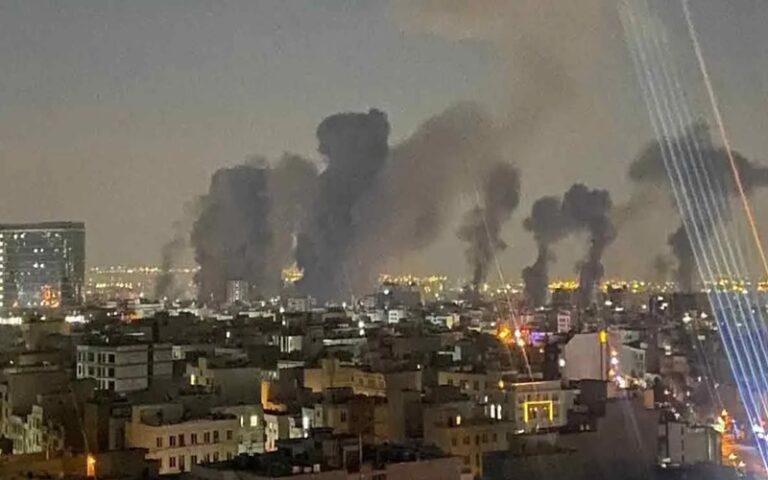
In part of her remarks, Sato noted the official withdrawal of the domestic violence prevention bill in June 2025, calling it a step backward in protecting women. She also emphasized that although enforcement of compulsory hijab has decreased in some areas, the law remains in place, and under Article 638 of the regime’s so-called Islamic Penal Code, women without hijab still face imprisonment or fines. Sara Hossain: The attack on Evin Prison and post-war repression may constitute crimes against humanity At the same session, Sara Hossain, chair of the UN Independent Fact-Finding Mission on Iran, referred to Israel’s June 23 strike on Evin Prison, which killed at least 80 people. She criticized the failure to protect prisoners’ lives and acknowledged that preliminary investigations show that civilian sections of the prison were directly targeted and that the attack may have been deliberate. She added that after the attack, Iranian regime authorities kept prisoners’ families in the dark for weeks, some detainees were beaten, and at least one woman died after being transferred to Qarchak Prison due to lack of medical care. Hossain called on Iranian authorities to conduct an independent and transparent investigation into the Evin Prison incident and to ensure that those responsible for violations committed before, during, and after the attacks are held accountable.Iranian Oil Discounts to China Reach Highest Level in Over a Year
Reuters reported that Iran’s oil discounts to China have reached their highest level in more than a year. As the United States, the United Kingdom, and the European Union tighten sanctions against Russia and Iran, independent Chinese buyers facing a shortage of crude import quotas have reduced their purchases.
In recent weeks, the United States, the United Kingdom, and the European Union have imposed a new series of trade restrictions on major Russian oil producers and other industry players to pressure Russian President Vladimir Putin to end the war in Ukraine.
These sanctions have caused some Chinese and Indian buyers—two of Russia’s main oil customers—to halt purchases, leading to a sharp decline in Russian oil prices and an accumulation of unsold Russian shipments in a market already saturated with Iranian oil.
Iranian Regime Puts Iran’s Oil on Sale in China with Bigger DiscountsReuters had previously reported on September 17, citing six trade sources, that the Iranian regime was offering larger discounts to small Chinese refineries. According to that report, Iranian oil inventories in China have reached a record high. At the same time, import quota restrictions toward the end of the year have tightened, prompting the Iranian regime to auction its oil at even deeper discounts.
Disruptions in Shipping and Growing Concerns
The new measures build upon previous U.S. sanctions against companies accused of participating in Iran’s oil trade. Four Chinese refineries and several related ports and vessels are among those targeted. According to traders, the combined effect of these sanctions has disrupted the shipping process and heightened buyers’ fears of breaching sanctions. A China-based trader told Reuters that “supply is excessive, and the market lacks any clear direction.” According to market data, Iranian light crude for December delivery is now being offered at more than $8 per barrel below the international Brent benchmark—compared with about $6 in September and $3 in March. Meanwhile, bids have fallen to roughly $10 below Brent, as buyers demand lower prices to offset sanction-related risks and potential unloading problems at Chinese ports. Data from the analytics firm Kpler shows that Iran’s oil exports—which account for about 14% of China’s total crude imports—fell to 1.2 million barrels per day in September, the lowest since May and below this year’s average of 1.38 million barrels per day. China’s government strictly regulates crude oil imports by independent refineries through a quota system. According to market sources, most refineries had nearly exhausted their 2025 quotas by the end of September and are now waiting for Beijing to allocate new quotas next month—a process that, in past years, typically occurred in November. During his recent trip to China, Iranian regime president Masoud Pezeshkian claimed that “good agreements” were reached with the Chinese side.Iran’s Regime Imported 2,000 Tons of Missile Fuel Material from China
CNN reported that despite the reimposition of United Nations sanctions banning arms sales and missile-related activities with Iran, the Iranian regime is rebuilding its missile program with the help of China. European sources have reported several shipments of sodium perchlorate from China to the southern Iranian port city of Bandar Abbas.
According to CNN, European intelligence sources said that several shipments of sodium perchlorate, the key ingredient in producing solid fuel for Iran’s medium-range missiles, have been sent from China to Bandar Abbas. These shipments began on September 29, coinciding with the activation of the UN “snapback” mechanism, and in total, they include two thousand tons of sodium perchlorate purchased by Iran from Chinese suppliers following the twelve-day war with Israel in June 2024.
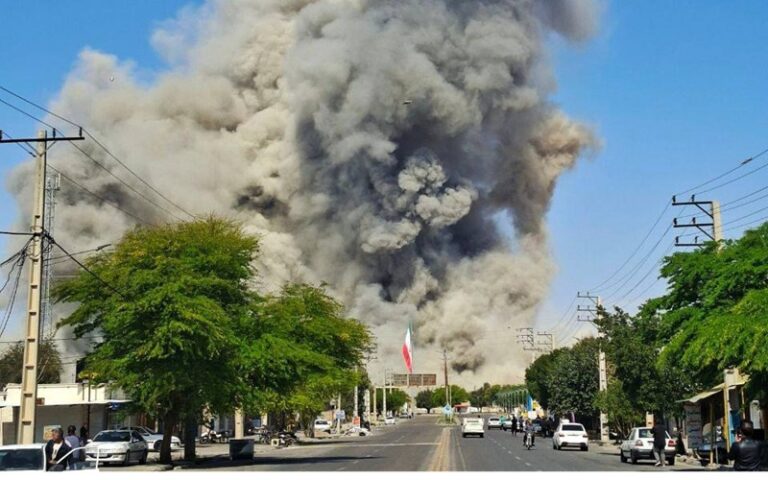
Iran’s Regime Begins Rebuilding Destroyed Missile Production FacilitiesIntelligence sources emphasized that these purchases are part of the Iranian regime’s effort to rebuild its depleted missile stockpiles. Several Chinese ships and companies involved in this process have previously been sanctioned by the United States. On April 26, a powerful explosion occurred at Rajaee Port. Initial evidence and footage of the blast revealed similarities to the Beirut port explosion. These similarities led experts to conclude that the likely cause was the ignition of a shipment of chemicals used in missile production. However, regime officials immediately denied any connection between the explosion and missile fuel. Three months later, it was revealed that the shipment which caused the explosion belonged to a military institution. Using maritime tracking data and social media accounts of ship crews, CNN traced the routes of several vessels transporting these materials from Chinese ports to Iran. These included ships traveling from Zhuhai, Gaolan, and Changjiangkou ports to Bandar Abbas. In some instances, the ships’ tracking systems were deliberately turned off to conceal their movements. In response to CNN’s inquiry about these shipments, China’s Foreign Ministry spokesperson said they were not aware of the details but added that Beijing enforces export controls on dual-use items in accordance with its international commitments and domestic regulations. On September 24, satellite images analyzed by the Associated Press showed that the Iranian regime had begun rebuilding its missile production sites that were targeted during the twelve-day war with Israel.
Bandar Abbas Explosion Exposes Regime’s Deadly Cover-UpHowever, experts interviewed by the Associated Press emphasized that rebuilding would not be possible without large industrial mixers used for producing solid missile fuel. The so-called “planetary mixers” have blades that rotate around a central axis and are essential for uniformly blending solid fuel. In the past, Iran has purchased some components and materials related to missile fuel from China, and experts believe that the regime may once again resort to the same suppliers. On June 22, shortly before the ceasefire announcement, Israel targeted a key Islamic Revolutionary Guard Corps (IRGC) site located in the desert south of Shahroud in Semnan Province. This was the same facility used by the IRGC to produce solid missile fuel and where planetary mixers were installed. The site had also been targeted earlier by Israel in November 2024.