On Monday, the official IRNA news agency reported that Iran had conveyed its position on the ceasefire proposal to the United States via Pakistan in the form of a 10-point response. In this way, the Iranian regime gave a negative response to the U.S. proposal.
According to the report, Tehran has opposed a temporary ceasefire and instead emphasized the necessity of a full and permanent end to the war. In this response, a set of demands was raised, including halting regional hostilities, establishing a mechanism for safe passage through the Strait of Hormuz, reconstruction of damages, and the lifting of sanctions.
Meanwhile, some Western media outlets, including Axios, described this position as maximalist and assessed the likelihood of its acceptance by the Trump administration as low.
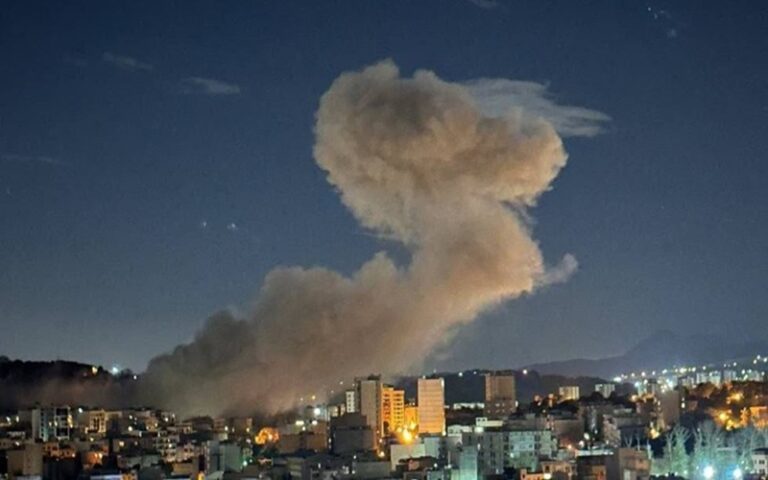
Major attack on Asaluyeh petrochemical facilities
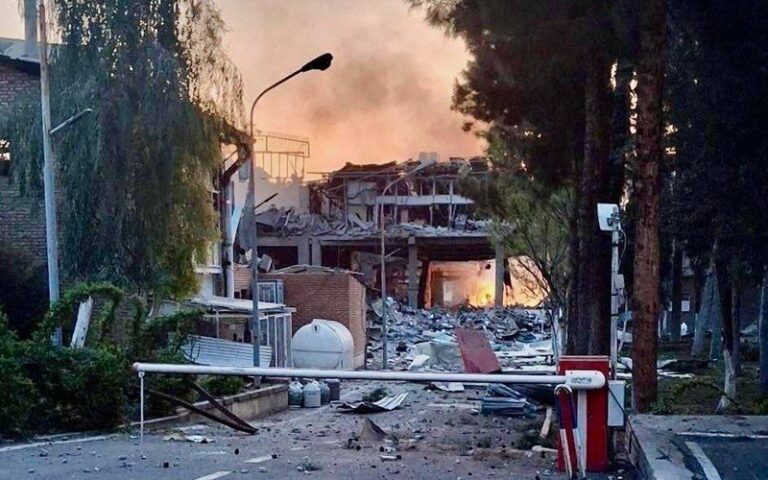
Israel confirmed that it targeted petrochemical facilities in the South Pars region of Asaluyeh today.
Israel Katz, Israel’s defense minister, described the airstrike on Iran’s petrochemical facilities in Asaluyeh as a severe economic blow worth tens of billions of dollars. In a statement, he said the Israeli military had targeted Iran’s largest petrochemical complex in Asaluyeh, which he said is responsible for producing about 50% of the country’s petrochemical products.
According to the Israeli defense minister, two main facilities through which about 85% of Iran’s petrochemical exports are processed have been put out of operation following these attacks.
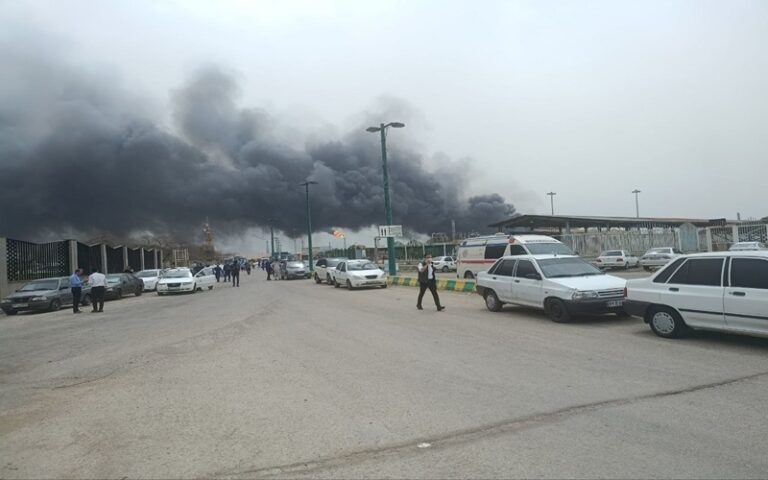
Meanwhile, the state-run Fars News Agency reported that several explosions were heard in the South Pars petrochemical zone in Asaluyeh. Domestic media also reported that Mobin Energy and Damavand Energy petrochemical plants in Asaluyeh were targeted.
Drone attack on Komala headquarters in Sulaymaniyah; escalating tensions and widespread condemnation
Early Monday, April 6, the representative office of the Komala Party of Iranian Kurdistan Toilers in the city of Sulaymaniyah, located in Iraq’s Kurdistan Region, was targeted in a drone strike. According to local sources, the attack was carried out using two drones within a short interval.
Local sources also said that Shahed-136 drones were used in the operation, drones that have previously been used in similar attacks.
At the same time, fresh reports indicate that on Monday afternoon, another base belonging to the Kurdistan Freedom Party was also targeted in a drone strike, further raising concerns about the expansion of these attacks and increasing regional tensions.
These developments come as Iraq’s Kurdistan Region has repeatedly witnessed similar attacks in recent years, and the repetition of such actions poses serious threats to regional security and civilian residents.
Majid Khademi, head of IRGC Intelligence Organization, killed
The Islamic Revolutionary Guard Corps (IRGC) announced on Monday, April 6, that Majid Khademi, head of the intelligence organization of this military body, was killed during the early morning U.S. and Israeli attacks.
In the IRGC statement, Khademi was described as one of the veteran figures in the regime’s security structure who, according to the force, had been active in intelligence and security fields for nearly half a century and had played an influential role.
Majid Khademi was appointed head of the IRGC Intelligence Organization last summer after the killing of Mohammad Kazemi during Israeli strikes in the 12-day war. Before that, he headed the Intelligence Protection Organization of the Ministry of Defense and Armed Forces Logistics.
The U.S. Treasury Department had also placed him on its sanctions list last February and identified the IRGC Intelligence Organization as one of the main pillars in imposing security pressure, carrying out arrests, and suppressing protests in Iran.
The IRGC Intelligence Organization is considered one of the key institutions in the Iranian regime’s security structure, tasked with duties such as counter-espionage within the IRGC, preventing infiltration by opposition currents, protecting classified information, and maintaining security-political oversight over the force’s personnel.
Early Monday, April 6, amid the continued execution of political prisoners in recent days, another crime was carried out by the Iranian regime, and political prisoner Ali Fahim was executed.
According to the judiciary-affiliated Mizan News Agency, this criminal act was justified by the charge of participating in an operation attacking a restricted military site in order to seize the armory and steal military weapons.
The judiciary, continuing its official narrative, has claimed that during the January protests, protesters used firearms and incendiary materials, causing the deaths of regime forces and material damage.
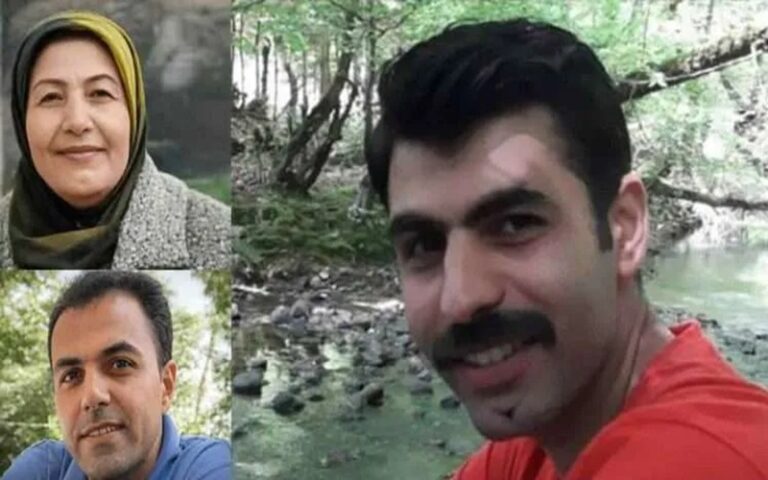
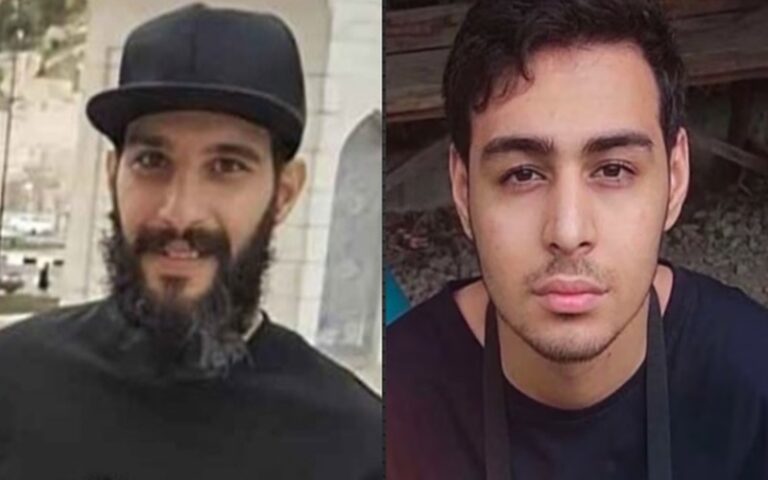
The execution of Ali Fahim comes after three other prisoners—Amirhossein Hatami, Mohammadamin Biglari, and Shahin Vahedparast—were previously sentenced to death and executed on the same charges in courts presided over by the notorious judge Abolghasem Salavati. A process that, more than showing any sign of justice, reflects the ruling structure’s vindictiveness.
Ali Fahim, who had been arrested on the evening of January 8, was also subjected to an asset confiscation order in addition to execution. However, no details were ever released regarding his interrogation process, access to legal counsel, or the manner of his defense.
In the same case, Abolfazl Salehi Siavashani remains at risk of execution; he is the last remaining member of this 5-person case whose sentence has not yet been carried out.
As the wave of execution continues at an alarming pace, international bodies have repeatedly warned about this trend. The United Nations High Commissioner for Human Rights has called for the immediate halt of all executions, and human rights organizations have also urged the international community to apply effective pressure to end this bloody cycle.
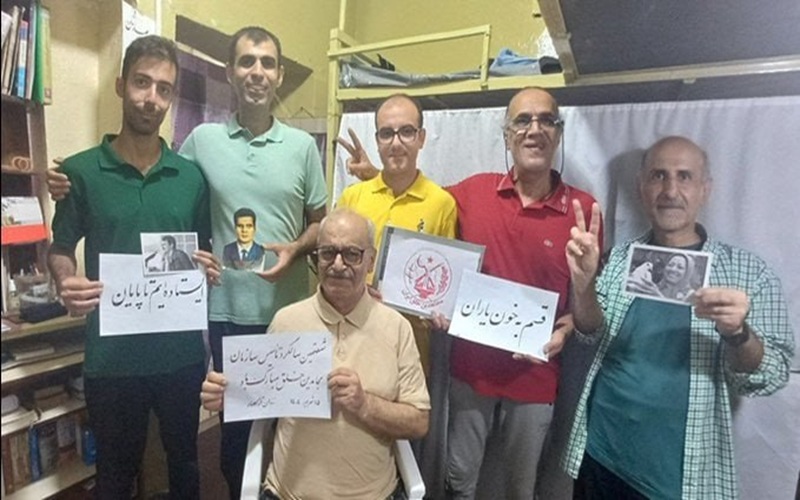
In addition to these four young, executed prisoners, 6 members of the People’s Mojahedin Organization of Iran (PMOI/MEK)—namely Mohammad Taghavi, Akbar Daneshvarkar, Pouya Ghabadi, Babak Alipour, Vahid Bani Amerian, and Abolhassan Montazer—were also executed between March 30 and April 4. These criminal executions are taking place while the country is in a wartime atmosphere and the lives of the people, especially prisoners, are in danger due to the bombardments.
The continued detention of the family and the concealment of the body have revealed new dimensions of pressure and organized deprivation of information against those close to Babak Alipour.
Weeks after the arrest of members of the family of Babak Alipour, a member of the PMOI executed by the regime, reports indicate that three of his relatives remain in detention. This comes while Babak Alipour’s death sentence was carried out on March 31, and his family were not only deprived of a final visit with him, but his body has also not been returned to them after the execution.
According to published information, Ommolbanin Dehghan (his mother), Roozbeh Alipour (his brother), and Maryam Alipour (his sister) have been detained since January 26. The three were arrested in Tehran by security forces while returning from a visit with Babak Alipour.
According to sources close to the family, the only official communication during this period was a text message sent by Branch 5 of the Evin Prosecutor’s Office investigative unit to Roozbeh Alipour, informing him that a case had been opened against him on charges of assembly and collusion. However, no clear information has been published regarding the legal status or charges against his mother and sister.
Reports show that Ommolbanin Dehghan and Maryam Alipour are being held in Qarchak Prison in Varamin, while Roozbeh Alipour is under interrogation in Ward 209 of Evin Prison. Qarchak Prison has previously been criticized by human rights organizations for its poor detention conditions.
Ommolbanin Dehghan, the 63-year-old mother of this prisoner, has been an activist in the “No to Executions Tuesdays” campaign, a protest movement formed in opposition to the death penalty and continued with the participation of prisoners’ families and civil activists. Roozbeh Alipour had also previously been sentenced to two years in prison on charges of insulting the supreme leader of Iran’s regime, and had been released after completing his sentence, but was rearrested in late January.
At the same time, Babak Alipour’s family were denied the right to a final visit before his execution, and even after the execution his body was not handed over to them for burial. This issue has also been reported in some other political prisoner cases and is regarded as a factor intensifying psychological pressure on families.
Martyr Babak Alipour, a member of the People’s Mojahedin Organization of Iran (PMOI/MEK), had been tried in a joint case alongside five other PMOI members—Vahid Bani Amerian, Mohammad Taghavi, Pouya Ghabadi, Abolhassan Montazer, and Akbar Daneshvarkar—and sentenced to death. All of these PMOI members were executed on March 30, March 31, and April 4.
The swift implementation of these sentences and the lack of transparent notification regarding the timing of their enforcement have raised concerns about the judicial process and the observance of defendants’ rights in these cases. In some instances, families have said they were unaware of the timing of the executions and were suddenly confronted with the reality of their loved ones’ deaths.
In the early hours of Sunday, April 5, the Iranian regime carried out the execution sentences of Mohammadamin Biglari and Shahin Vahedparast, two protesters detained in connection with the January protests. Mizan News Agency, the judiciary-affiliated media outlet of the Iranian regime, reported the news and said the charges against the two included acting against national security and attempting to gain access to military weapons.
According to the official statement released by the regime, the two were accused of attempting to storm the armory of a military center in Tehran during the January protests. The statement claimed that they entered a classified military site, took part in damaging and setting fire to the location, and tried to gain access to weapons and ammunition. It also said that during the same period, a group of protesters had allegedly tried to infiltrate military centers, including police stations and Basij bases—the Basij being the regime’s paramilitary force used for domestic repression—to obtain weapons.
The case of Mohammadamin Biglari and Shahin Vahedparast was heard in Branch 15 of the Tehran Revolutionary Court, presided over by Judge Abolqasem Salavati, a judiciary figure widely known for handling political, protest-related, and so-called security cases. Their death sentences had been issued on February 7.
Reports indicate that on Tuesday, March 31, the two prisoners were transferred to solitary confinement along with several other defendants, including Amirhossein Hatami, Ali Fahim, and Abolfazl Salehi. Amirhossein Hatami, a teenager tried in the same case, was executed three days before the implementation of these two sentences. He had also faced similar charges, including participation in operational acts against national security, attempting to obtain weapons, and destruction of state property.
Earlier this week, six political prisoners affiliated with the People’s Mojahedin Organization of Iran (PMOI/MEK) had also been executed.
With the implementation of these sentences, Mohammadamin Biglari and Shahin Vahedparast are now identified as the eighth and ninth individuals executed over the past week. This trend has drawn widespread reactions from human rights organizations. Amnesty International had previously announced that at least 30 people, including two 17-year-old teenagers, are at risk of receiving death sentences in connection with the January protests.
In recent days, alongside rising military tensions and foreign airstrikes, reports have emerged of an increase in executions, a development that has heightened concerns among human rights activists about the possible intensification of this trend under the current crisis conditions.
Chinese private companies, some of which are linked to military institutions, have begun offering information that exposes details of the movement of U.S. forces in the region. This comes while Beijing has officially tried to maintain its distance from developments in the Iran war.
The Washington Post reported on Saturday, April 4, that since the start of the Iran war, users active on Western and Chinese social media platforms have encountered widely viewed posts containing information about U.S. military activities.
Among the information published in these posts are details about equipment deployed at U.S. bases, the movement of American aircraft carriers, and precise analyses of the process of preparing military aircraft for strikes against the Iranian regime.
The Washington Post added that this information has emerged from a new and rapidly growing market: Chinese companies, some of which have ties to the military, combine artificial intelligence with open-source data to offer information that, by their own account, can “expose” the movement of U.S. forces.
Analysts believe the activity of private companies could provide an opportunity for Beijing to support its partners indirectly. In this way, China does not become officially involved in the conflicts and preserves its distance from the fighting.
The Iranian regime is one of China’s longstanding allies and an important oil supplier for the country. However, Beijing has refrained from direct entry into the Iran war and is trying to preserve its position as a peace mediator.
On March 11, CNN, citing a Western intelligence official, reported that Russia had provided the Iranian regime with advanced drone tactics so they could be used to attack U.S. interests and the Gulf states.
On March 6, The Washington Post also wrote that Moscow was providing intelligence assistance to Tehran for targeting American forces.
The intelligence competition between China and the United States
The Washington Post went on to write that U.S. officials and intelligence analysts differ in their assessment of the real threat level posed by Chinese private companies.
Some believe such tools can be effectively placed at the disposal of U.S. rivals, while others question their practical effectiveness.
Private companies have long relied on open-source data—such as flight trackers, satellite imagery, and maritime shipping data—to produce analytical intelligence.
The rapid advancement of artificial intelligence capabilities in Chinese companies has made these tools far more powerful and has made it harder to conceal U.S. military movements.
On April 3, The Telegraph wrote that five sanctioned ships had transported a cargo of sodium perchlorate from Zhuhai Port in China to Iran. This material can be used in the production of hundreds of ballistic missiles.
About one month ago, The Washington Post had also reported that two ships belonging to the Iranian regime, accused by the United States of supplying materials for Tehran’s ballistic missile program, had departed from a Chinese port toward Iran.
“MizarVision” and satellite image processing using artificial intelligence
The Washington Post then introduced one of the Chinese private companies active in the field of military intelligence services. The company, called MizarVision, was established in 2021 in the city of Hangzhou.
Using a combination of Western and Chinese data processed by artificial intelligence, MizarVision records the activity of U.S. military bases in the Middle East, tracks naval movements, and identifies the location and number of aircraft and missile defense systems.
Images published by the company on social media have provided details of the increase in U.S. forces in the Middle East before the start of the war, including the transit of the aircraft carriers USS Gerald R. Ford and USS Abraham Lincoln.
The company has also published precise information on the number and type of aircraft stationed at Israel’s Ovda Air Base, Saudi Arabia’s Prince Sultan Air Base, and Qatar’s Al Udeid Air Base.
It appears that MizarVision’s satellite imagery includes part of the commercial visual data supplied by American and European companies, including Ventor and Airbus.
In addition, Chinese state media previously reported that MizarVision also uses imagery from the reputable company Planet Labs.
A person working in the private sector of China’s defense industry told The Washington Post that the company uses artificial intelligence to analyze publicly available satellite imagery in the West but does not have access to real-time images from American sources.
U.S. officials and some former intelligence analysts, in interviews with The Washington Post, expressed doubt about the ability of Chinese companies to penetrate America’s classified communications systems.
At the same time, they warned that the growth and expansion of such companies could be cause for concern.
As tensions escalated, on Saturday, April 4, a wave of massive explosions shook the Mahshahr Special Petrochemical Economic Zone in southwestern Iran, and several major complexes—including Karoun, Marun, Takht-e Jamshid, Fajr 1 and 2, Rejal, and Amir Kabir—were reportedly hit in aerial bombardments. According to local reports, dozens of successive explosions occurred within a short period, triggering widespread fires in parts of this industrial zone. Some sources said the number of blasts exceeded 50 and reported heavy damage to the facilities. At the same time, the emergency evacuation of workers from these complexes began, and the situation in the area was described as “critical.” During the same period, reports also emerged of fighter jets being heard over Kermanshah in western Iran, heightening concerns about a broader expansion of the attacks.
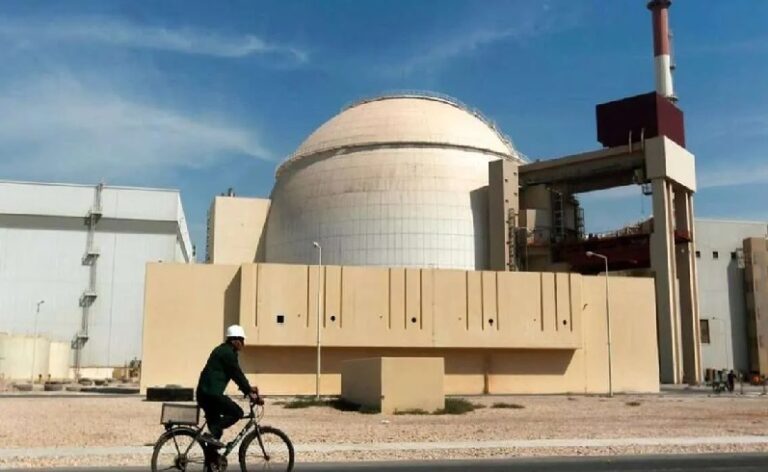
Bushehr, home to Iran’s only operational nuclear power plant on the Persian Gulf coast, also came under attack today. According to internal sources, the impact of a projectile near the Bushehr nuclear facility damaged one of the auxiliary buildings in the complex. The blast wave and shrapnel killed one member of the protection forces, but reports indicate that the main sections of the plant and its operational process have not been disrupted. This comes as, in recent days, the evacuation of foreign personnel—including Russian staff involved in the plant’s operations—has reportedly been underway.
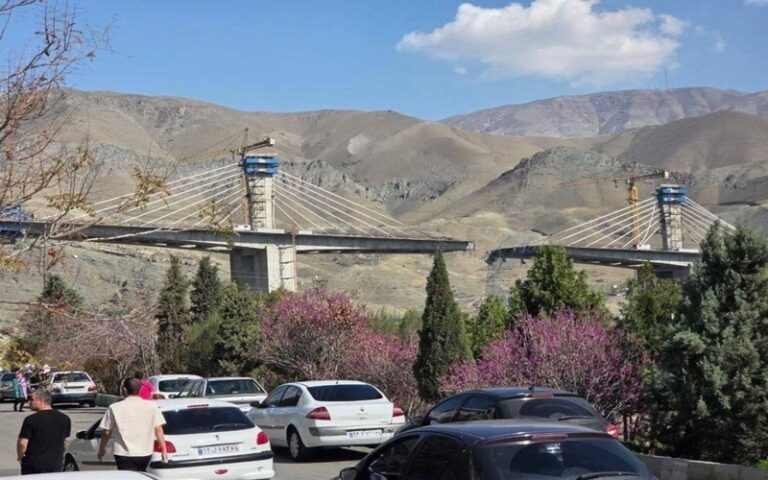
Karaj’s B-1 Bridge was supposed to hold the record as the tallest bridge in the Middle East; a massive and complex project whose construction took years and cost tens of trillions of rials. The bridge, with a length of 1,050 meters and a height of 136 meters, had been built in the city of Karaj in Alborz Province, and it was said that it would significantly reduce traffic congestion in the area.
On April 2, the B-1 Bridge was targeted twice in airstrikes, and parts of it collapsed. The bridge had been scheduled to become operational in the coming months.
According to reports, at the time of the attack, many people were in the green spaces beneath and around the elevated bridge, spending Sizdah Bedar, Iran’s traditional Nature Day outing.
The deputy governor of Alborz Province said that 8 people were killed and 95 injured in the attack. Ghodratollah Seif said the victims were passing travelers and people who had been present in the area for Nature Day.
Reactions of the countries involved in the war to the attack
Hours after part of the B-1 Bridge in Karaj collapsed, U.S. President Donald Trump posted images of the strike on Truth Social and wrote, “The biggest bridge in Iran has collapsed and will never be used again. More is on the way!”
Mr. Trump also repeated in his speech last night that he would intensify attacks on Iran over the next two to three weeks and target the country’s infrastructure.
Abbas Araghchi, the foreign minister of the Iranian regime, said in response to the attack that targeting civilian infrastructure would not force Iran to surrender.
The deputy minister of roads and urban development of the Iranian regime also said that reconstruction of the B-1 Bridge would begin soon. Houshang Bazvand said the extent of the damage had not yet been assessed, but rebuilding operations would begin in the coming days.
Reactions from social media users
After the B-1 Bridge was struck, reports emerged of power outages on Chalus Road and in parts of Karaj.
Social media users have shown mixed reactions to the destruction of parts of the B-1 Bridge following the attacks. The strike has stirred different emotions among users and once again raised the question of war: yes or no.
Some have condemned the destruction of the country’s infrastructure and say rebuilding it may take years, while its loss directly affects citizens’ lives. They are concerned about Trump’s threat to send Iran back to the Stone Age and say rebuilding the country’s infrastructure—especially given the critical state of the economy—would be extremely difficult even in the event of regime change.
Some are worried that if the Iranian regime remains after the war and the infrastructure has also been destroyed, conditions will become even worse than before the protests and the war.
The National Council of Resistance of Iran (NCRI), led by Maryam Rajavi, has emphasized for the past 20 years that the solution for Iran is neither appeasement nor war with this regime, but rather recognizing the legitimate resistance of the Iranian people against it.
The Iranian regime will not be overthrown by aerial bombardment, and the only solution for the Middle East is to support the people of Iran and arm the opposition to this regime.
Iranian authorities have carried out the executions of two political prisoners identified as members of the People’s Mojahedin Organization of Iran (PMOI/MEK), Vahid Bani Amerian and Abolhassan Montazer, in what marks the latest development in a rapidly escalating wave of executions targeting political detainees. The hangings followed closely on the heels of the execution of four other PMOI members during a 48-hour period on March 30 and 31, underscoring the speed and scale of the current campaign.
According to the provided report, the executions of Bani Amerian and Montazer came immediately after the deaths of Mohammad Taghavi, Akbar Daneshvarkar, Babak Alipour, and Pouya Ghobadi. The sequence of six executions within days has drawn renewed attention to the treatment of political prisoners in Iran and the use of capital punishment in politically sensitive cases.
Iran’s regime executed 6 PMOI members this week
State-affiliated media sought to frame the case as a national security matter. The Islamic Revolutionary Guard Corps (IRGC)-linked Tasnim News Agency described the two men as part of a “terrorist team,” stating that they had been convicted on charges of baghi—armed rebellion—and actions against internal security. The regime claimed that Montazer had allegedly used cryptocurrency to rent safe houses and assemble explosives, while Bani Amerian was reportedly arrested in possession of four rocket launchers. Tasnim also linked Montazer to Mohammad Taghavi, one of the four PMOI members executed days earlier.
Abolhassan Montazer, 66, was described as an architect and a former political prisoner from the 1980s. Vahid Bani Amerian, 33, held a master’s degree in management and had reportedly spent four years in prison since 2017. Their cases reflect both generational continuity and the persistence of long-running confrontations between the Iranian state and organized opposition networks.
The legal process leading to the executions were deeply irregular. Following their arrests in January 2024, both men were reportedly held for months in Ward 209 of Tehran’s Evin Prison, where they were subjected to severe physical and psychological pressure. These measures were used to extract forced confessions.
Their death sentences were later issued by Judge Iman Afshari of Branch 26 of Tehran’s Revolutionary Court. During a retrial on November 16, 2025, defense lawyers reportedly requested that all six co-defendants be tried together. That request was denied, and instead separate hearings were held for each defendant, each lasting only a few minutes. Iran’s Supreme Court subsequently upheld the sentences in December 2025.
The final days before the executions were also marked by reports of heightened prison pressure. On the night of March 29, anti-riot guards allegedly raided Ward 4 of Ghezel Hesar prison, where Bani Amerian and Montazer were being held. Political prisoners in the ward were beaten, and all phone lines were cut, leaving detainees without contact with the outside world shortly before the executions began.
The hangings proceeded despite mounting international concern. Amnesty International had warned days earlier that both prisoners were at imminent risk of execution following a “grossly unfair torture-tainted trial,” while also noting that authorities had concealed their whereabouts from family members.
A WEEK OF SLAUGHTER IN IRAN
Six political prisoners and PMOI members from a single case were executed in less than a week. All were victims of notoriouse Judge Iman Afshari’s Branch 26: Mon: Mohammad Taghavi & Akbar Daneshvarkar Tue: Babak Alipour & Pouya Ghobadi Sat: Abolhassan… pic.twitter.com/tEUIvfGmA2
Political reactions also emerged from the United States and Europe. U.S. Congressman Brad Sherman, who said the men were executed after torture and a sham trial. U.S. Representative Laura Friedman described the timing as an acceleration of repression during ongoing conflict, while UK MP Jim Shannon called the executions a moral outrage. Members of the European Parliament, including Petras Auštrevičius and Milan Zver, similarly warned of a broader pattern involving PMOI-affiliated prisoners.
The timing of the executions is especially notable within the broader political context outlined in the report. The hangings follow months of domestic unrest, including nationwide uprisings between December 2025 and January 2026, and come amid continued instability after the reported death of Supreme Leader Ali Khamenei in a February 28 airstrike. Within this setting, the executions are part of a rapidly unfolding sequence of state actions inside the prison system, particularly against detainees accused of links to organized opposition groups.
There is also concern about additional prisoners facing similar charges of baghi, suggesting that more executions may be imminent. The combination of communication blackouts, rapid legal proceedings, prison raids, and closely timed executions has intensified scrutiny from observers concerned about the fate of other political detainees.
This case offers a stark window into the current intersection of domestic unrest, prison policy, and the judiciary’s handling of opposition-linked cases. With six PMOI prisoners executed in a matter of days, this pattern is likely to continue and the response of international institutions will be pivotal to saving the lives of political prisoners.
Day 35 of the full-scale conflict witnessed an unprecedented intensification of strikes targeting military, scientific, and economic infrastructure inside Iran, with the fallout increasingly spilling over into neighboring nations. Today’s developments underscore a complex, multi-front war. On one hand, precision bombings in the Iranian capital and at military bases across various provinces have caused extensive damage and casualties. On the other hand, retaliatory strikes and falling debris from intercepted projectiles have ignited energy facilities in the United Arab Emirates and Kuwait.
In the diplomatic and economic arenas, the Strait of Hormuz has become the focal point of an international crisis. Tehran’s implementation of a “toll booth” system has drawn fierce condemnation from the UK and its allies, while the UN Security Council failed to bring a resolution on maritime security in the vital waterway to a vote. Furthermore, recent intelligence reports indicate that despite weeks of bombardment, a significant portion of the regime’s offensive capabilities remains fully operational.
Relentless Strikes Target Domestic Infrastructure and Military Bases
Field reports indicate a heavy concentration of strikes on the capital and its scientific-military infrastructure. On Friday afternoon, April 3, the Velenjak neighborhood in Tehran, near the National University (Beheshti), was hit. The strike completely destroyed the university’s optics laboratory and an adjacent warehouse. This followed earlier reports of multiple explosions in the Mosalla area of Tehran.
The scope of the bombardment has expanded significantly across other provinces. In Hormozgan Province, the governor confirmed that an attack on the Bandar Charak pier damaged four landing crafts, shattered windows in the vicinity, and resulted in the death of an individual named Behnam Tarari. Meanwhile, airstrikes in Khorramabad, Lorestan Province, killed Mohammad Hossein Soufi, a senior commander of the Islamic Revolutionary Guard Corps (IRGC). In Fars Province, the “Sarallah” base in Shiraz—specifically the Imam Hossein Basij unit—was struck by several missiles early Friday morning and caught fire.
The southern island of Qeshm has also sustained heavy damage. Satellite imagery released on Thursday revealed that the Bahman commercial port and the Doha fishing pier were hit between Wednesday and Thursday noon. Although state media denied any casualties, the deputy of the Qeshm Free Zone condemned the attack on the commercial port as a violation of international law. A major seawater desalination plant on the island, hit in the early days of the war, remains offline with officials stating short-term repairs are impossible.
Regional Spillover Impacts the UAE, Kuwait, and Iraq
The flames of the conflict have reached the critical infrastructure of neighboring states. In the United Arab Emirates, Abu Dhabi authorities reported that debris from successfully intercepted missiles fell onto the Habshan gas facility, sparking a fire. Operations at the facility have been temporarily suspended, though no casualties were reported. The UAE also noted a separate incident involving falling missile debris in the Ajban area.
In Kuwait, the state news agency reported an early Friday attack on the Mina Al-Ahmadi refinery, owned by the Kuwait National Petroleum Company. Several drones struck operational units at the site, causing significant damage and fires, though there were no reported casualties. Similarly, in Iraq, the headquarters of the Popular Mobilization Forces’ (PMF) 57th Brigade faced heavy bombardment in the city of Haditha, located in Al Anbar Province.
Intelligence Assessments and International Naval Movements
Despite five weeks of extensive airstrikes by the US and Israel, CNN reported—citing US government sources—that roughly half of Iran’s missile launchers and a significant portion of its offensive drone fleet remain intact. According to the assessment, thousands of suicide drones and coastal cruise missiles are still operational and pose a severe threat to the region, particularly the Strait of Hormuz. This report starkly contrasts with earlier claims by Donald Trump, who asserted that the bulk of the regime’s weapons infrastructure had been obliterated.
On the logistics front, the US Navy announced that the world’s largest aircraft carrier, the USS Gerald R. Ford, is ready to rejoin military operations. Following its deployment to the Mediterranean on February 28 ahead of the strikes, the carrier suffered an onboard fire on March 12 and was sent to a naval base in Crete. It has now returned to action after a mysterious five-day resupply stop at a port in Croatia. Meanwhile, the Austrian Defense Ministry announced that it has denied all US requests to use its airspace for military operations, citing the country’s strict policy of neutrality.
Diplomatic Deadlock and the Strait of Hormuz Crisis
The de facto closure of the Strait of Hormuz since late February has paralyzed oil and gas shipments, causing global energy prices to skyrocket. According to a Daily Mail report published on April 3, 2026, the IRGC has established a highly restricted “toll booth” system, charging vessels over £1 million—payable in Chinese Yuan or stablecoins—for safe passage. In a Thursday summit of over 40 nations chaired by UK Foreign Secretary Yvette Cooper, Britain and its allies comprehensively rejected and condemned this extortion scheme.
Efforts to resolve the maritime crisis at the United Nations have stalled. A Bahrain-drafted UN Security Council resolution aimed at securing commercial shipping in the Strait was abruptly pulled from Friday’s agenda. The draft, initially framed under Chapter VII of the UN Charter, faced pushback from Russia and China, raising the persistent threat of a veto. Concurrently, the regime’s Foreign Minister, Abbas Araghchi, issued a stark warning to the Security Council on Friday, stating that any “provocative actions” by hostile nations regarding the Strait of Hormuz would only further complicate the volatile situation.
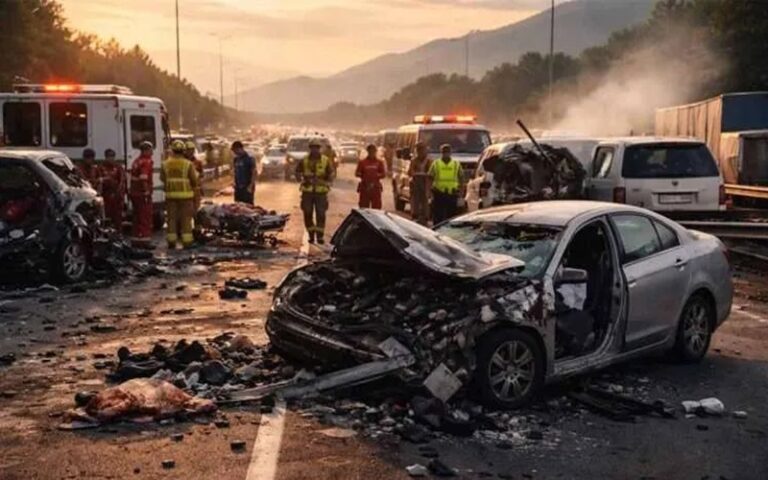
Road fatalities in Iran are no longer an accident; they are a structural trend. Statistics show the country ranks among the worst in the world. According to data from the Insurance Research Center, Iran ranks 188th out of 190 countries in road safety. This is the result of decades of rent-seeking policymaking and lack of accountability.
Approximately 800,000 accidents occur annually. Every day, 40 people are killed. That means one person dies every 36 minutes. Road fatalities are the second leading cause of death in the country after air pollution. These figures reflect a national catastrophe that has been normalized.
Statistics that speak volumes
According to official reports, during a nine-month period (from March 21 to December 22, 2025), more than 15,513 people lost their lives in accidents. This figure shows an increase compared to the previous year. The annual average stands at about 19,800 deaths. Over 20 years, 396,000 people have died. This number exceeds the casualties of many wars.
More than 6.3 million people have also been injured or disabled during this period. About 10% to 15% of them suffer from permanent disabilities. 62% of those killed are of working age. The highest number of fatalities is among those aged 20 to 30.
Estimates show that about 7% of the gross national product is spent on the consequences of accidents. The cost of each fatality is estimated at more than 220 billion rials (approximately 137,000 dollars). These figures are not just about money. They represent lost lives, shattered families, and destroyed futures.
During the Iranian New Year holidays (March 21, 2025), 747 people lost their lives and more than 16,000 were injured. This scenario repeats every year.
Unsafe vehicles; rent-seeking industry and people’s lives
The commander-in-chief of the Iranian regime’s Law Enforcement Force announced that 50% to 60% of fatal accidents are linked to unsafe vehicles. Some domestic cars have been called “chariots of death.” The share of domestic vehicles such as Pride and Peugeot in accidents is reported to be over 50%.
The Research Center of the Iranian regime’s parliament has also spoken of an inherent decline in the quality of the automotive industry. The number of technical defects in the first three months of use is three times the global average. In many accidents, airbags have failed to deploy. Reports indicate that safety equipment either does not activate or lacks adequate quality.
Nevertheless, the rent-seeking structure of the automotive industry remains protected. Monopoly, lack of competition, and political connections prevent accountability. Whenever the issue of imports is raised, power networks block it. Road fatalities are pushed to the margins in the process.
Worn-out roads and superficial oversight
A significant portion of road fatalities is linked to inadequate infrastructure. Many roads have worn-out asphalt. Lane markings have faded. Lighting is insufficient. Guardrails are missing. Accident-prone areas have not been repaired. In some provinces, the lack of highways has concentrated danger on main routes.
In the city of Tehran, 47% of fatal accidents involve motorcyclists. Many of them do not wear helmets.
Campaigns such as “No to accidents” or promotional slogans have had no meaningful impact. A propaganda structure has replaced real reform. The focus on the human factor often serves as a cover to evade institutional responsibility.
A tragedy that has become normalized
Road fatalities have become part of everyday life. Society is confronted with numbers, not people. Yet each number represents a grieving family, an orphaned child, and a lost worker.
In a country that claims to provide security, roads have turned into killing fields. This situation is not the result of mere managerial weakness. It is the outcome of a closed and unaccountable structure—a system in which citizens’ lives are not a priority.
Comparison with countries such as Japan or the United Kingdom reveals a deep gap. Despite having more vehicles, their fatalities are significantly lower. The difference is not in culture; it is in governance. In a system that is accountable, safety standards become mandatory. In a rent-seeking structure, profit prevails over human life.
This crisis is not accidental. It is the logical result of years of non-transparent management and rent-seeking policymaking. When citizens’ lives have no place in power equations, roads will not be safe either.