

UN Rapporteur Warns About Execution of Six Iranian Political PrisonersFull text of the “No to Execution Tuesdays” campaign statement Continuation of the “No to Execution Tuesdays” campaign in its ninety-fifth week across 54 different prisons In this week of the “No to Execution Tuesdays” campaign, we once again reaffirm our commitment to standing against the machinery of repression and state-sanctioned killing. By remembering the martyrs of the November uprising—more than 1,500 women, men, and teenagers who gave their lives for freedom, the oppressed who refused humiliation and rose up against tyranny—we insist on continuing their path until executions are entirely abolished and freedom and equality are achieved. As long as oppression and injustice continue, Aban (November) lives on. We enter the ninety-fifth week of this campaign as news emerges of the renewed confirmation of death sentences for three political prisoners in Ahvaz’s Sheiban Prison—Alireza Mardasi, Farshad E‘temadi-far, and Masoud Jame‘i. This once again reveals the depth of cruelty and the normalization of judicial-security violence against protesters and ordinary citizens. In the past week, a prisoner was executed in public in a medieval manner, and since October 23 (beginning of the Persian month Aban) the number of executions has exceeded 250—an alarming figure that reflects the catastrophic scale of repression and state violence in Iran. The “No to Execution Tuesdays” campaign, which has so far amplified the voices of families, activists, and death-row prisoners across 54 prisons in Iran, once again emphasizes: We, the people, are the only supporters and shield protecting prisoners from the gallows. We call on all freedom-seeking people of Iran—in every city, every neighborhood, and with any means at their disposal—not to remain silent in the face of this horrifying wave of executions and to raise their voice of protest in every possible form and at every level against the implementation of death sentences. We must support the families who, every week, stand with courage, grief, and hope outside prisons and judicial institutions to protest the impending execution of their loved ones. And once again, we emphasize that only through solidarity and collective protest can this machinery of killing be stopped. Political prisoners participating in the “No to Execution Tuesdays” campaign are on hunger strike on Tuesday, November 18, in the ninety-fifth week of the campaign across 54 prisons in the country.
Iran’s ‘No To Execution Tuesdays’ Campaign Marks Ninety-Fifth Week
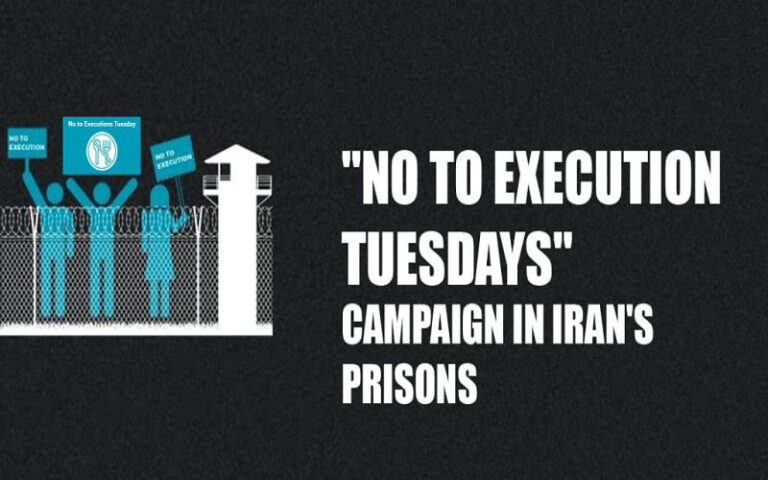
As part of the ongoing protests and hunger strikes by prisoners against the Iranian regime’s brutal executions, the “No to Execution Tuesdays” campaign has continued this week, entering its ninety-fifth week and taking place across 54 prisons in the country.
Participants in this week’s campaign released a statement honoring the 1,500 people killed during the November 2019 uprising and wrote: “By remembering the martyrs of the November uprising—more than 1,500 women, men, and teenagers who sacrificed their lives for freedom, the oppressed who refused humiliation and rose up against tyranny and despotism—we insist on continuing their path until the complete abolition of executions and the achievement of freedom and equality. As long as oppression and injustice exist, Aban (November) continues.”
(Aban is the Iranian month during which the November 2019 uprising took place.)
Iranian Regime Deputy FM: Our Nuclear Program Is ‘Untouched’ And We Protect It
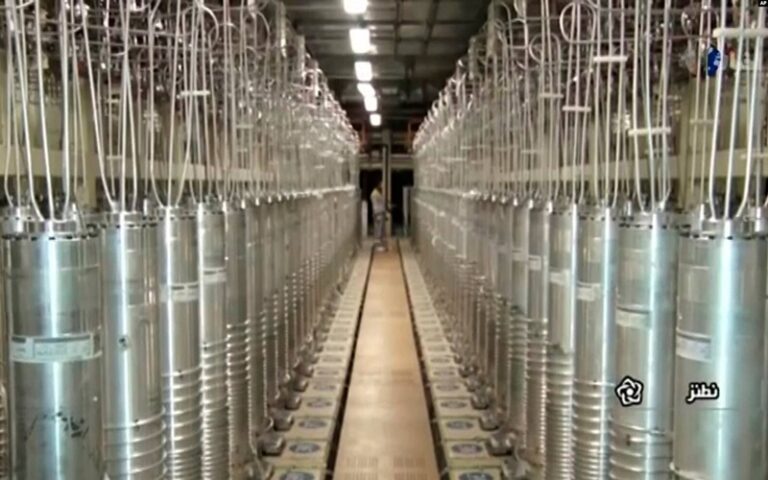
Saeed Khatibzadeh, the deputy foreign minister of Iran’s regime, stated that although U.S. and Israeli attacks have inflicted heavy damage on nuclear facilities in Iran, the regime’s nuclear program remains “untouched.” (Khatibzadeh is a senior diplomat and spokesperson of Iran’s regime; his comments were made to a foreign audience via CNN.)
On Sunday, November 16, in an interview with CNN, Khatibzadeh said that Iran’s so-called peaceful nuclear program “at this moment as I speak to you, is untouched, and we will protect it.”
Iranian Regime Nuclear Chief: They Tell Us If You Touch Anything, We Will Attack AgainHe added that Israeli and U.S. strikes have destroyed many infrastructures, buildings, and equipment tied to nuclear activities, but the regime’s nuclear program is “completely based on indigenous knowledge” and dispersed “across our vast country.” He said this is not a country you can bomb and think everything will be eliminated. U.S. President Donald Trump has repeatedly claimed that following U.S. strikes on the Natanz, Fordow, and Isfahan sites during the twelve-day war, the Iranian regime’s nuclear program has been destroyed. (Natanz and Fordow are major enrichment sites; Isfahan hosts nuclear conversion facilities.) However, speculation continues about the fate of the regime’s nuclear program, particularly its stockpile of enriched uranium. CNN reported on November 16 that, according to preliminary assessments by U.S. intelligence agencies, three of the regime’s nuclear sites have been severely damaged, but Tehran’s nuclear program has likely been set back only by about two years.
Iranian regime’s insistence on continuing enrichment
Khatibzadeh, repeating the regime’s previous positions, told CNN that the regime’s nuclear program has a “completely peaceful nature” and is pursued “only for energy production.” According to him, any potential negotiations between Tehran and Washington will only make sense if “Iran’s right to continue enrichment” is recognized. The deputy foreign minister of the regime added that the illusion of zero enrichment in Iran, or attempts to deprive Iran of its basic rights, will not be an acceptable option for Iran. He declined to answer whether Tehran is currently enriching uranium. Before the twelve-day war, five rounds of nuclear talks were held between Tehran and Washington, but the negotiations reached a deadlock due to the regime’s insistence on continuing enrichment on Iranian soil. Bloomberg reported on November 15 that after the war, the regime’s “nuclear ambiguity” has increased because Tehran has for months denied inspectors access to its facilities. The International Atomic Energy Agency (IAEA) stated in a confidential report on November 12 that since the Iran–Israel war, it has lost the ability to verify the regime’s stockpile of uranium enriched close to weapons-grade levels.Praise for Iran’s “very close relations” with Russia and China
In another part of the CNN interview, Khatibzadeh stressed that Iran’s regime has “legitimate military programs” to “defend its national interests and security.” Answering a question about the fate of the regime’s missile program, he said the program is in a phase of “repair and recovery” after the twelve-day war. The deputy foreign minister added that Tehran has “very close relations” with Moscow and Beijing, relations that formed “long before recent developments.” (Russia and China have long been political and military partners of the Iranian regime.) On October 29, CNN reported that despite the return of UN sanctions banning the sale of weapons and missile equipment to Iran, Tehran is rebuilding its missile program with Beijing’s assistance. According to this report, a total of 2,000 tons of sodium perchlorate—the main component used to produce solid fuel for medium-range missiles—was shipped from China to Bandar Abbas after the twelve-day war.At Free Iran Convention 2025, Mr. Mike Pompeo Calls for Firm Support to Iran’s Democratic Alternative
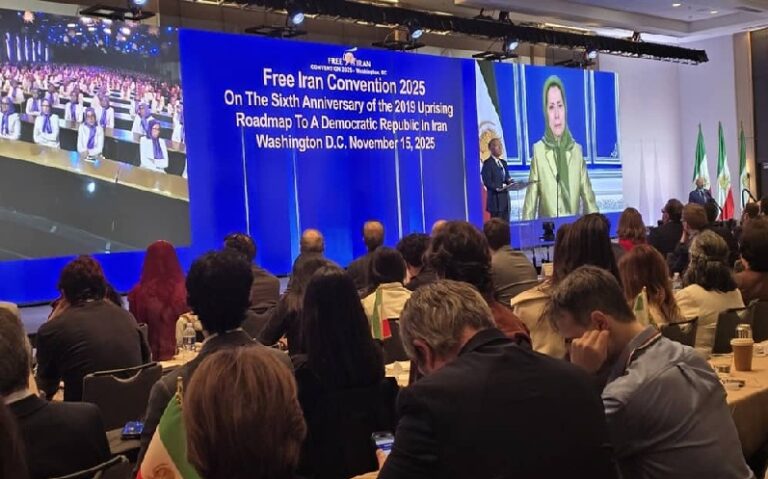
At the Free Iran Convention 2025 in Washington, D.C., former U.S. Secretary of State Mr. Mike Pompeo delivered a sweeping address outlining why he believes Iran’s path to freedom will come from within. Speaking to Iranian activists, scholars, and community leaders gathered to assess the growing momentum for political change, he described the moment as one defined by weakening authoritarianism, expanding internal resistance, and an emerging democratic alternative.
Mr. Mike Pompeo opened by praising the event’s keynote speaker, calling Mrs. Maryam Rajavi’s remarks “inspiring,” and adding that he intended to pick up “precisely where she left us all.” The task ahead, he said, was “about forward.”
He framed his remarks around two themes: Iran’s deteriorating situation under clerical rule and the capacity of its internal opposition to chart a different course. “This regime is weak,” he said. “It is more internationally isolated than ever.” He pointed to testimonies from Iranians inside the country about the “difficult” conditions they face and described a government that now relies almost entirely on fear. The “brutal suppression in 2022,” he noted, illustrated how deeply repression had become embedded in the state’s survival strategy.
Mr. Mike Pompeo described an economy plagued by “mismanagement” and “poisonous corruption,” led by officials who “would simply rather take wealth than build it.” He also discussed the regime’s regional setbacks, noting that Hezbollah had become “a shadow of what it once was” and that in Syria, Bashar al-Assad was “no longer in control.” In this context, he said, the people of Syria now face a decisive choice between a future built on equality or a return to a model that had “so poorly served them for so many years.” He also highlighted the diminished capacity of Iran’s nuclear program. While stopping short of calling it fully defeated, Mr. Mike Pompeo said it was “absolutely fair” to assert that its ability to regenerate and function under air defense protection was now “massively diminished.” Reflecting on his years of government service, he addressed the recurring question: When will the regime fall? “These questions are impossible to answer,” he cautioned, comparing the uncertainty to his time patrolling the East German border during the Cold War. “Nobody could answer the central question… When will it fall?” Yet authoritarian regimes, he noted, often collapse “with unbelievable speed.” Mr. Mike Pompeo stressed that internal resistance—not external intervention—determines the timing. Change happens through “dedication and hard work,” he said, and through the efforts of those who build the capabilities the Resistance needs “for the moment that that day comes.” He warned sharply against appeasement, calling it “failure.” “If you appease tyrants, they will grow in power,” he said. Shipments of cash from Western countries, he argued, enable repression, fund terrorism, and strengthen the Revolutionary Guards. He reiterated the importance of starving the regime of money, credibility, and moral authority. Mr. Mike Pompeo also urged European leaders not to accept claims that no alternative exists. “Everyone in this room knows precisely that there is an alternative,” he said, describing it as a “free and independent, sovereign Iran delivered to it by its own people.” He noted that the democratic alternative supported by Mrs. Maryam Rajavi and the NCRI had shown its capability over more than four decades. He contrasted the NCRI’s approach with calls for foreign intervention. “It didn’t ask for American boots on the ground,” he said. “It didn’t ask for an external change of regime.” Instead, it sought support for the opposition and increased pressure on the ruling system. Mr. Mike Pompeo closed by urging unity and perseverance. “Hang together. Stay together,” he told attendees, emphasizing the need to support those resisting inside Iran. He expressed confidence that the Iranian people’s “God-given right” to a free society would eventually take root and predicted that one day he would stand with them to welcome a leadership “duly selected, elected by the people of Iran.” He ended his speech with a call to action and hope: “May God bless Madam Rajavi and God bless the great people of Iran.”Secretary Mike Pompeo: The NCRI didn't ask for American boots on the ground or external regime change; it didn't ask the West to do anything more than support the Iranian opposition.
— Ehsan Eghbal Eslami (@Ehsaneghbale) November 16, 2025
Full quote from @mikepompeo's speech at the #FreeIranConvention2025:
"I have observed the NCRI in… https://t.co/9h4CubJJP3 pic.twitter.com/9wXXM2VEld
At Free Iran Convention 2025, Mrs. Maryam Rajavi Outlines Roadmap for Democratic Change
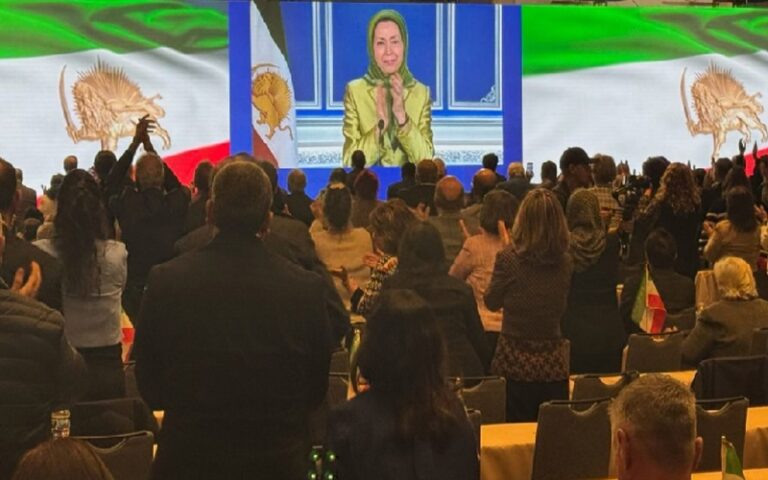
At the Free Iran Convention 2025 in Washington, D.C., Mrs. Maryam Rajavi delivered the keynote address to an audience of Iranian activists, scholars, and community leaders gathered to examine Iran’s rapidly shifting political landscape. Her speech centered on a single overarching question: How can meaningful change be realized in Iran?
Mrs. Maryam Rajavi opened by marking the sixth anniversary of the November 2019 uprising, calling it a turning point that “shook the very foundations of the religious dictatorship.” She saluted the protesters who were killed and described the moment as a reminder of the “grave and sensitive circumstances” Iran now faces.
FreeIran2025: Convention in Washington, D.C.Throughout her remarks, Mrs. Maryam Rajavi returned repeatedly to one premise: the overthrow of the ruling system is “both necessary and timely.” She argued that the regime has reached “the final phase of its winter,” after years of prioritizing “repression, plunder, and warmongering.” According to her, these same tools have now trapped the state, leaving it weakened “from every angle.”
She pointed to wide-ranging social pressures building across the country. Mrs. Maryam Rajavi described women and young people facing chronic unemployment and low wages, millions living in shantytowns forming “a powder keg poised to erupt,” and a labor force pushed to the limit by inflation, shortages, and collapsing infrastructure. The tragic self-immolation of Ahvaz resident Ahmad Baledi, she said, offered “a stark illustration of the explosive state of Iranian society.” Mrs. Maryam Rajavi cited thousands of annual protests by workers, teachers, nurses, and retirees as evidence of “a surging river, driving inexorably toward the overthrow of the clerical regime.” She referenced the “sea of blood” resulting from more than 100,000 executed members of the Resistance, framing this as the backdrop against which the current wave of unrest has taken shape. A core section of her speech focused on the regime’s inability to enact reforms. Mrs. Maryam Rajavi listed three points: the state cannot make political or social changes, the economic decline is “uncontrollable,” and despite the costs of regional interventions and the nuclear program, its leadership “is unable to change course.” She challenged the notion that the system could be moderated, noting that the MEK attempted reforms during the regime’s early years, only to face killings and later mass executions. Mrs. Maryam Rajavi warned that figures branded as “reformists” had roots in earlier waves of repression, saying these labels masked the continuation of the same hardline policies. Turning to foreign policy, she sharply criticized decades of Western engagement. The “policy of appeasement,” Mrs. Maryam Rajavi argued, enabled the regime’s expansion, facilitated its nuclear progress, and “blocked the path to democratic change.” She highlighted the blacklisting of the MEK, the bombing of its bases, and the disarming of the National Liberation Army as steps “carried out at the direct request of the clerical regime.” Mrs. Maryam Rajavi then restated what she called the “Third Option,” first presented in the European Parliament: “neither appeasement nor war,” but the overthrow of the regime “by the Iranian people and their organized Resistance.” She said recent regional conflict underscored that appeasement had failed and demonstrated that foreign military intervention would not bring change. Emphasizing the role of Iran’s younger generation, Mrs. Maryam Rajavi recalled how the 2019 uprising revealed “hundreds of thousands of bold, courageous young fighters.” She described the Resistance Units as an expanding force inside Iran and noted the executions of MEK supporters, including Behrouz Ehsani and Mehdi Hassani in July, as proof of the regime’s fear of this network. She credited the PMOI’s decades of organization and sacrifice as “an invaluable asset in paving the way to liberty,” saying the future depended on “self-sacrificing individuals unafraid to give their lives.” Mrs. Maryam Rajavi closed by outlining the NCRI’s program for a future Iran: a democratic republic, free elections, separation of religion and state, gender equality, and autonomy for nationalities. She stressed, “We are not fighting to seize power. Our goal is to return sovereignty to the people of Iran.” After the regime’s fall, she said, a provisional government would oversee elections for a Constituent Assembly to draft a new constitution. Calling on governments to recognize the Iranian people’s struggle and the actions of “rebellious youth against the Revolutionary Guards,” Mrs. Maryam Rajavi ended with a clear message: “Victory be yours.”#FreeIran2025Convention in Washington, D.C.
— Maryam Rajavi (@Maryam_Rajavi) November 16, 2025
Convening this assembly to examine the current grave and sensitive circumstances is both timely and indispensable.
The war that erupted a few months ago demonstrated unequivocally that the policy of appeasement has failed, and it has… pic.twitter.com/qTcdWKsZQo
Iranian Regime Nuclear Chief: They Tell Us If You Touch Anything, We Will Attack Again
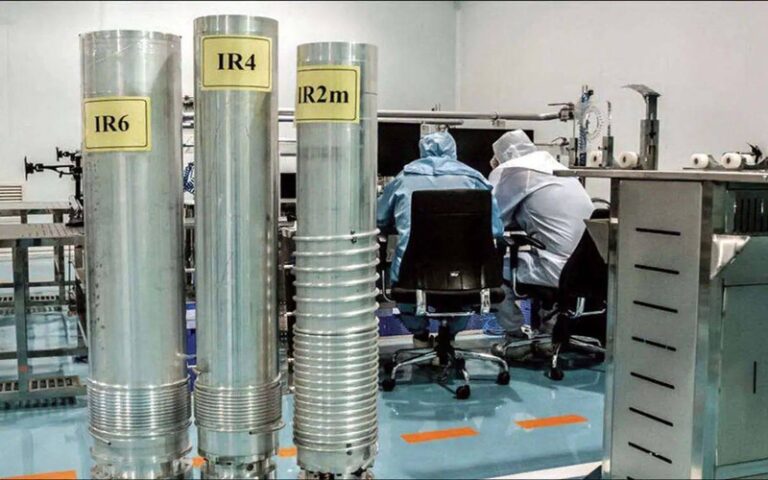
Mohammad Eslami, head of the Atomic Energy Organization of Iran (AEOI)—an official appointed by the Iranian regime—again repeated the regime’s accusations against the International Atomic Energy Agency (IAEA). He said Iran remains under pressure and is told that if it takes any action, it will be attacked again. For non-Iranian readers: the AEOI is the regime’s nuclear authority responsible for all nuclear facilities.
On Sunday, November 16, at a state-run conference titled “International Law Under Attack, Aggression and Defense,” Eslami said: “We are constantly facing threats. Every day we are threatened that if you take any action, we will attack again.”
The United States and Israel have repeatedly emphasized that they will not allow Iran’s regime to acquire a nuclear weapon.
IAEA Director: Iran Must Improve Cooperation to Prevent Tensions with WestDuring the 12-day war between Israel and Iran’s regime, seven B-2 bombers took off from Whiteman Air Force Base in the United States as part of “Operation Midnight Hammer” and targeted the regime’s nuclear sites.
Repeated criticism of the IAEA
Eslami also repeated his criticism of the IAEA on Sunday, saying: “The first place Israel bombed in the 12-day war was a factory that produced plate fuel for the Tehran reactor, and the information about this location was only in the possession of the International Atomic Energy Agency.” In the latest round of meetings of the G7 foreign ministers, the group called on Iran’s regime to fully cooperate with the IAEA. But Eslami said: “Before seeking to prepare a new modality, the Agency must first redefine itself and determine its position and responsibility regarding conditions in which a military attack has taken place and facilities have been damaged, and on that basis engage in dialogue with us.” He added that unless a procedure for the Agency’s inspections is defined, political pressure on Iran’s regime will have no effect. At the same time, Mohammad Marandi, a former adviser to Tehran’s nuclear negotiating team under Ebrahim Raisi, announced that Iran’s regime “will not provide any unnecessary information” to the IAEA. For non-Iranian readers: Marandi frequently appears in state-run media as a commentator defending regime nuclear policies.Araghchi: We are in dialogue with the Agency
At the same time, Abbas Araghchi, the current foreign minister of Iran’s regime, said on Sunday that there are rules for working with the IAEA, and cooperation will continue as long as those rules are respected. Araghchi reported that the ambassadors of Iran’s regime, Russia, and China met with the IAEA director-general, saying that dialogue is ongoing between Tehran and the Agency. He said there are no undeclared enrichment facilities in Iran and that enrichment is currently not taking place because the facilities were attacked. On November 12, the International Atomic Energy Agency stated in a confidential report that since the U.S. and Israeli attacks on nuclear facilities in Iran during the 12-day war, it has lost the ability to verify Iran’s stockpile of uranium enriched close to weapons-grade levels. According to the Agency’s latest official report in September, Iran’s regime possesses 440.9 kilograms of uranium enriched up to 60%, a level only one technical step away from 90% weapons-grade enrichment. The director-general of the IAEA has warned that this amount of uranium could be sufficient to produce up to ten nuclear bombs if Iran decided to build such weapons, although he emphasized that no such decision has been made.Iran’s regime concerned about a new resolution at the IAEA Board of Governors
Kazem Gharibabadi, a deputy foreign minister of Iran’s regime, expressed concern on Sunday at the margins of the state-run conference about a possible new resolution against the regime at the IAEA Board of Governors. For non-Iranian readers: Gharibabadi previously served as Iran’s ambassador to the IAEA. He said: “If a resolution is presented and adopted at the Board of Governors meeting, our situation will be different, and we will fundamentally reconsider our approach, and Iran must re-examine its policies regarding interaction with the Agency and issues related to the Non-Proliferation Treaty.” He added: “It is not that this resolution has an effect, but rather the message it sends, and this resolution sends the message that interaction and cooperation are not important to them.” Earlier, Iran’s regime’s permanent mission to the UN in Vienna wrote on X on Friday night that the United States and three European countries intend to present a draft resolution against Tehran at next week’s IAEA Board of Governors meeting. The IAEA Board of Governors is expected to address issues including Iran’s regime’s nuclear file in its upcoming meeting next Wednesday.Iranians Are Giving Up Visiting Doctors Due To High Cost of Treatment and Medicine
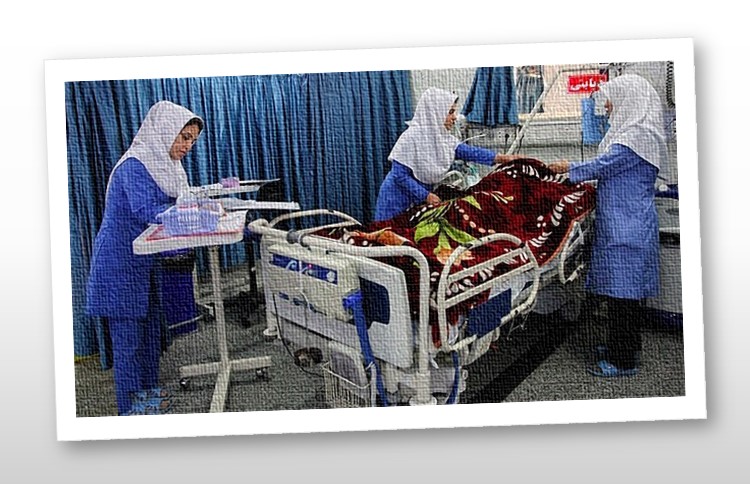
Ahmad Arianeyad, a member of the Health Commission in Iran’s regime Majlis (parliament), told the website didbaniran that with the rising cost of medicine and doctor visits, some people with limited financial means are giving up on seeing doctors or taking prescribed medication and are forced either to endure their illnesses or turn to herbal remedies. For non-Iranian readers: the Health Commission is the parliamentary body overseeing medical and pharmaceutical policies.
He added: “In 2025, we have faced unbelievable and unaffordable increases in the price of medicine.”
Drug and Medical Equipment Prices Jump 70% in IranFollowing the activation of snapback sanctions against Iran’s regime and the return of international sanctions, medicine prices in Iran—from specialized drugs to basic cold tablets and syrups—have multiplied several times, and citizens often have to visit multiple pharmacies to obtain what they need. Nevertheless, officials of Iran’s regime attempt to downplay the impact of the sanctions’ return in their statements. Arianeyad emphasized that if herbal medicines are provided without proper knowledge and awareness, they will create many problems for patients. He also referred to the quality of domestically produced medicines in Iran, saying that at times local pharmaceutical products may lack the necessary quality. This member of the Health Commission called for an investigation into the “poor quality” of products from certain pharmaceutical companies and brands. Salam Sotoudeh, another member of the Health Commission, told didbaniran on November 10 that the shortage and high cost of medicine affects the entire country, especially deprived regions where essential medicines are scarce and prices extremely high. He added: “At present, patients’ worry is not only their illness, but the cost of the medicine.” This regime parliament member warned that unless serious solutions are implemented to supply medicine and reduce prices, the consequences will be extremely severe. In August, the state-run newspaper Resalat reported that based on the results of a national study, about 40% of Iranians—especially low-income groups—visit a dentist only when the pain becomes unbearable and extraction is the only option. The state-run website Rouydad24 previously reported that the implementation of the so-called “Daroyar” plan and the removal of the preferential 4,200-toman exchange rate (equivalent to 42,000 rials) caused the cost of medicine, medical equipment, and healthcare services to increase by an average of 70%. Currently, the price of each U.S. dollar is about 1,130,000 rials, and the monthly wage of a worker with two children barely reaches 130 dollars. On October 4, the Health Commission of Iran’s regime parliament warned of potential “human catastrophes,” citing delays by the Central Bank in allocating foreign currency for medicine. Reports from the parliament’s Research Center and official statistics show that patients’ share of healthcare expenses in Iran has risen to 70%, and more than 83% of the pharmaceutical market is controlled by fifty-five quasi-state companies. A 2020 study by the Ministry of Cooperatives, Labor, and Social Welfare showed that about 16% of Iran’s population—around 13.5 million people—had no health insurance. This figure rises to 21% in Tehran Province. Before the COVID-19 pandemic, Iranians personally paid about 35% of their medical expenses, nearly twice the global average. According to the Ministry of Welfare, in the same year about 2.4 million Iranians fell below the poverty line due to heavy medical expenses. International studies also show that surgical costs in Iran are higher than in ninety-three countries worldwide.
Iranian Authorities Confirm Death Sentence of Three Political Prisoners in Ahvaz
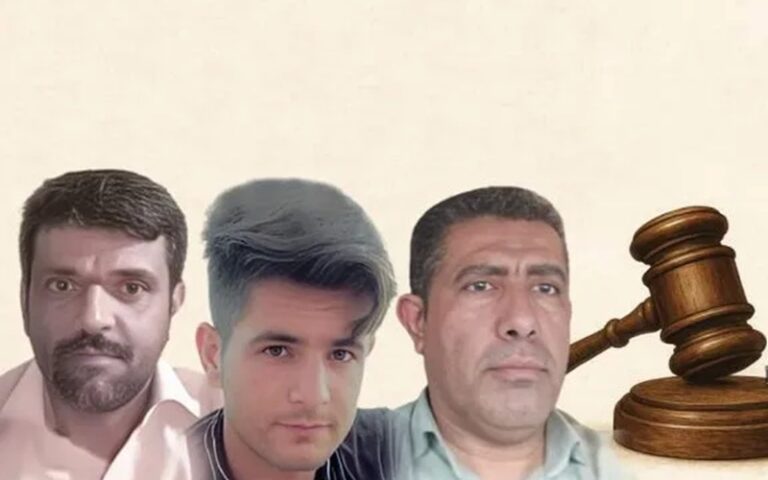
The death sentences of three political prisoners—Farshad Etemadifar, Masoud Jamei, and Alireza Merdasi—have been confirmed and officially communicated to them in Sheiban Prison in Ahvaz.
The death sentences of the three political prisoners were confirmed and conveyed to them after months of detention, torture, illness, and legal limbo in Sheiban Prison in Ahvaz. These three political prisoners are now at imminent risk of execution.
According to received reports, the death sentences of political prisoners Farshad Etemadifar, Masoud Jamei, and Alireza Merdasi have been confirmed and delivered to them in Sheiban Prison in Ahvaz. On July 10, 2025, they were sentenced to death by Judge Adibi-Mehr, the head of Branch One of the Revolutionary Court in Ahvaz, on charges of “spreading corruption on earth,” “membership in the People’s Mojahedin Organization of Iran (PMOI/MEK),” and “propaganda against the regime.” Revolutionary Courts operate under Iran’s regime and are used extensively for political cases.
Iran’s ‘No To Execution Tuesdays’ Campaign Marks 94th WeekFarshad Etemadifar: Eighteen Months of Detention, Torture, and Uncertainty Political prisoner Farshad Etemadifar, born in 1996, was arrested on June 15, 2023, along with two other young men named Saman and Davood Hormatnejad by intelligence agents and transferred to the detention center of the Ministry of Intelligence in Yasuj. From the moment of their arrest, the three young men were subjected to intense security pressure, prolonged interrogations, and physical and psychological torture inside the IRGC Intelligence detention facility. The IRGC (Islamic Revolutionary Guard Corps) is the main military-security arm of Iran’s regime. According to the indictment, they were charged with serious offenses, including “armed rebellion due to membership in the PMOI/MEK,” “propaganda against the regime,” and “assembly and collusion against national security.” After fifteen months of detention and uncertainty, the three prisoners were summoned to court in September 2024. Masoud Jamei: Father of Four, Suffering from Life-Threatening Illnesses and Denied Treatment Political prisoner Masoud Jamei, son of Moalla, born in 1977 and a resident of Ahvaz, worked as a guard at oil wells and is the father of four children. He was arrested on August 1, 2023, and after extensive interrogations, transferred to Sheiban Prison. In the winter of 2025, he was tried along with his wife and three young children in the Revolutionary Court of Bavi on the charge of “links with groups opposing the regime.” The process placed immense pressure on the entire family. Masoud Jamei suffers from advanced stomach cancer and multiple other conditions, including severe internal infection, neurological headaches, liver and kidney failure, high blood pressure, and fatty liver disease caused by prison malnutrition. According to informed sources, torture during interrogations and the hardships of prison have worsened his illnesses. His condition is reported as “very critical.” Alireza Merdasi: Beloved Ahvazi Teacher and Political Prisoner Denied Medical Care Political prisoner Alireza Merdasi, a well-known teacher with twenty-five years of experience in Ahvaz elementary schools, was arrested by intelligence agents on August 3, 2023, and after interrogations was transferred to Ward Five of Sheiban Prison. He was born in 1973 and holds a bachelor’s degree. His students and colleagues have always described him as “a kind, caring, and beloved teacher.” This political prisoner suffers from respiratory illnesses and severe allergies, but despite his urgent need for specialized treatment, prison authorities have prevented his transfer to outside medical facilities. His relatives describe this as white torture and systematic pressure. The confirmation of the death sentences for these three political prisoners comes amid the fact that all three have faced intense security pressure, prolonged detention, denial of independent legal counsel, torture, serious illnesses, and widespread violations of basic rights. The imminent risk of the executions has created widespread concern among families, human rights activists, and the broader community.
UN Rapporteur Condemns Destruction of Iranian Political Prisoners
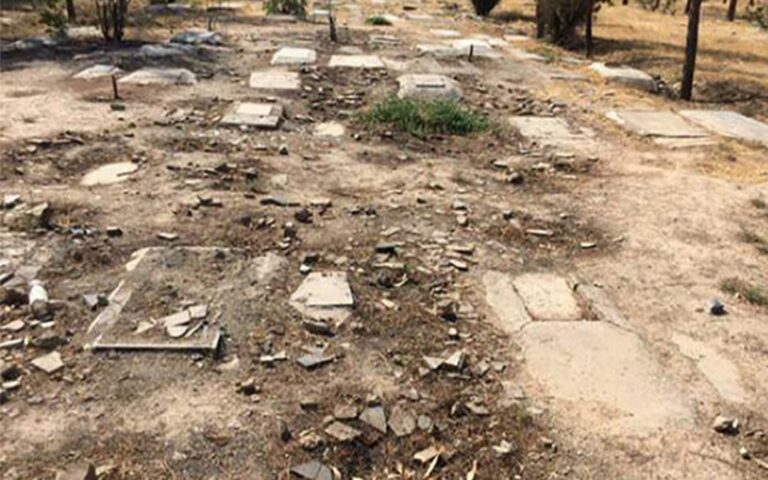
Mai Sato, the UN Special Rapporteur on human rights in Iran, once again condemned the destruction of Section 41 of Behesht-e Zahra Cemetery in southern Tehran and rejected the explanations offered by officials of Iran’s regime to justify the act.
Sato wrote on X on Friday, November 14, that she and other UN experts had condemned the destruction of Section 41 of Behesht-e Zahra in a letter addressed to officials of Iran’s regime.
She added that reports also indicate the destruction of the graves of those killed during the 2022 protests and the victims of the downing of the Ukrainian airliner.
The letter, dated October 30, was signed not only by Sato but also by Alexandra Xanthaki, Special Rapporteur on cultural rights; Gabriella Citroni, from the Working Group on Enforced Disappearances; Morris Tidball-Binz, Special Rapporteur on extrajudicial, summary or arbitrary executions; and Bernard Duhaime, Special Rapporteur on the promotion of truth and justice. On August 19, Davoud Goodarzi, deputy to Tehran’s mayor Alireza Zakani, announced that the municipality had turned the burial site of political prisoners executed in the 1980s into a parking lot in Behesht-e Zahra Cemetery. This section is the burial site of hundreds of members and supporters of the People’s Mojahedin Organization of Iran (PMOI/MEK), the largest opposition group. The UN Special Rapporteur on human rights in Iran continued in her message on X: “As explained in our correspondence with the Government of Iran, international law obliges states to investigate potentially unlawful deaths, preserve evidence, and ensure respectful treatment of human remains.” Sato added: “Destroying these sites erases not only individual stories but also collective memory. The destruction of such places constitutes a violation of international law and deepens the suffering of families.” Section 41 of Behesht-e Zahra is one of the most well-known burial sites of opponents and critics of Iran’s regime; a place where many political prisoners executed over the past decades, especially members of the People’s Mojahedin Organization of Iran, are buried. This section is referred to as the “execution section,” and it is said that in addition to MEK members, several individuals connected to the Nojeh coup attempt as well as some business owners executed in the early years after the 1979 revolution are also buried there. From the early years following the 1979 revolution, this site has continuously faced destruction, desecration, and severe restrictions imposed on families and survivors. Before the latest wave of destruction, graves in this area and in similar cemeteries had been repeatedly subjected to damage, desecration, and successive cycles of destruction over past decades.به همراه سایر کارشناسان سازمان ملل تخریب قطعهٔ ۴۱ بهشتزهرا در تهران را محکوم کردیم.
— Mai Sato (@drmaisato) November 14, 2025
در اوت ۲۰۲۵ (مرداد ۱۴۰۴) ، گزارش شد که مقامات این بخش را تخریب کردهاند و قصد دارند آن را به پارکینگ تبدیل کنند؛ با این توجیه که این قطعه «رها شده» است، ادعایی که خانوادهها بهشدت آن را رد می…
IRGC Seizes Oil Tanker in Persian Gulf Waters
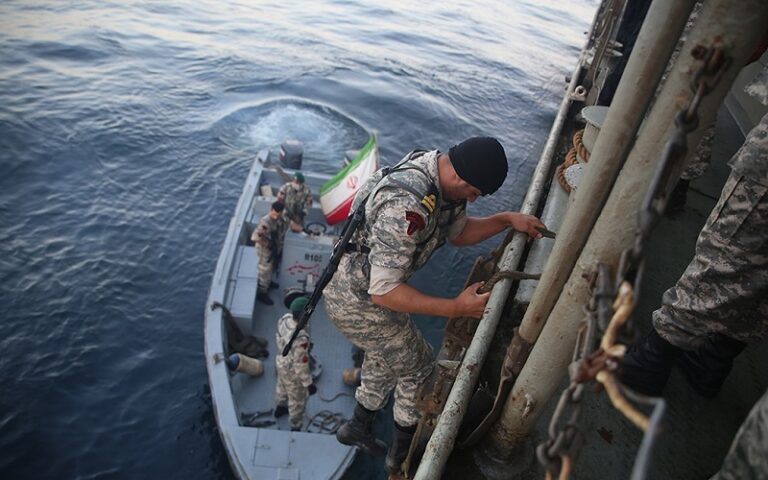
Reuters reported that the IRGC directed the Talara oil tanker toward the shores of Iran. The Colombian company that owns the Talara also confirmed that it has lost contact with the vessel.
A U.S. official said on Friday, November 14, that Iran’s regime seized the Talara oil tanker, which sails under the Marshall Islands flag, in the Strait of Hormuz and transferred it into its territorial waters.
The United States Fifth Fleet also announced in a post on the social platform X that it is aware of the incident involving the Talara vessel. The Fifth Fleet is responsible for U.S. naval operations in the Persian Gulf region.
This military body emphasized that commercial vessels have the right to unobstructed navigation and trade in international waters.
The Associated Press wrote that a U.S. Navy drone patrolled for hours over the area where the tanker was present and witnessed its seizure.
Earlier, Ambrey, a maritime security company based in the United Kingdom, stated that an oil tanker near Khor Fakkan in the United Arab Emirates suddenly deviated from its route and was heading toward Iranian territorial waters.
The company also reported that the tanker had been traveling from Ajman in the UAE toward Singapore and had previously been attacked by three small boats while passing through the Strait of Hormuz.
On November 11, Ali Abdollahi, commander of the Khatam al-Anbiya Central Headquarters—a key military command within Iran’s regime—said during a visit to the Naza’at islands in the Persian Gulf that the purpose of the trip was to “assess the readiness of the IRGC Navy,” adding that “good measures” had been taken in several areas.
Iran’s regime has repeatedly seized foreign vessels in the Gulf of Oman and the Persian Gulf in recent years.
On July 16, the chief justice of Hormozgan Province announced the seizure of a foreign oil tanker in the Gulf of Oman on charges of “fuel smuggling.”
Mojtaba Ghahremani stated that the vessel was first inspected “due to incomplete legal documentation related to its cargo,” and was later seized for allegedly “carrying 2 million liters of smuggled fuel.”
He did not specify the owner of the ship or the country whose flag it was sailing under.
On July 29, 2024, the IRGC announced the seizure of the Pearl G oil tanker, sailing under the flag of Togo, and the arrest of its nine crew members in northern Persian Gulf waters near the Arash oil field, accusing the vessel of carrying “more than 700,000 liters of smuggled oil.”
A week earlier, on July 21, Ambrey, the British maritime security company, announced that the IRGC had seized another Togo-flagged tanker managed by the United Arab Emirates near the port of Bushehr.
On April 13, 2024, the IRGC Navy seized a Portuguese-flagged cargo ship named MSC Aries in regional waters. Shortly afterward, the foreign ministry of Iran’s regime claimed that the vessel belonged to Israel in an attempt to justify the action.
Meanwhile, for decades, officials of Iran’s regime have repeatedly threatened to close the Strait of Hormuz, which is one of the world’s main energy arteries and a critical route for global oil shipments.
Has Tehran Begun Rebuilding Its Uranium Enrichment Facilities?
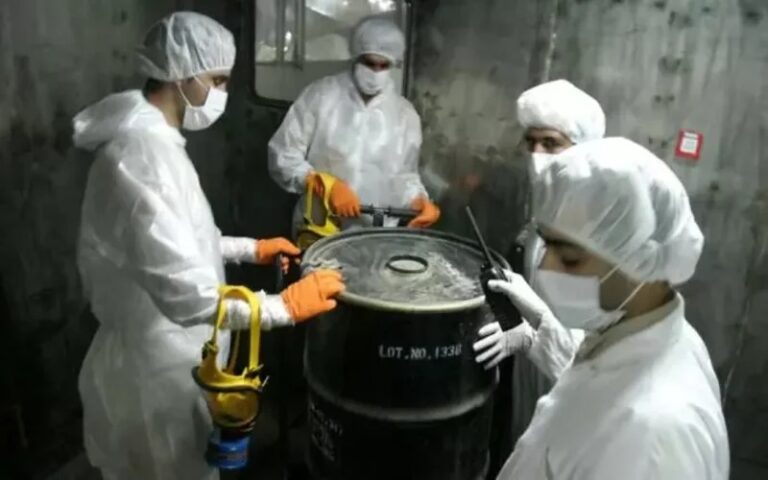
Masoud Pezeshkian, the president of Iran’s regime, recently announced a major reconstruction of the country’s nuclear industry. His statement, made after visiting nuclear facilities in Tehran, has intensified speculation about the resumption of nuclear activities.
Background of the Uranium Enrichment Crisis and the JCPOA
For more than two decades, uranium enrichment has been the central point of conflict between Iran’s regime and global powers. After the “12-day war” and a U.S. military strike on Iran’s nuclear facilities, the U.S. president claimed that Iran’s nuclear capability had been completely destroyed.UN Watchdog Unable to Verify Tehran’s Uranium Stockpiles for MonthsDespite the damage to its facilities, Iran’s regime has declared it will rebuild them. Regime officials have emphasized resuming uranium enrichment and nuclear fuel production. It remains unclear whether the revival of enrichment will take place at the same sites or through newly built facilities. A U.S. think tank has reported that construction has resumed at one of Iran’s facilities damaged during the 12-day war. These reports come as U.S. President Donald Trump has repeatedly hinted at possible military action, warning that if Iran restarts its nuclear program, the United States “will deal with it.”
