

Iranian Regime MP: The Government No Longer Has Money To Import GasolineThese fluctuations come as the pace of foreign-currency appreciation has accelerated since the beginning of the week. The dollar, which traded at 1.08 million rials on November 8, has now risen by more than 50,000 rials—an increase of about 5.2%. The euro and British pound also continued their upward trajectory on November 13, trading at 1.305 million rials and 1.495 million rials respectively in the free market. Gold prices continued rising as well. The new-design gold coin reached 1.2 billion rials, the half-coin 625 million rials, the quarter-coin 368 million rials, and the price of one gram of 18-karat gold surpassed 116 million rials. In recent weeks, runaway inflation and the steep rise in foreign-currency rates have intensified concerns about the deterioration of Iran’s economy. This trend has accelerated following the activation of the “snapback mechanism” and the reinstatement of United Nations sanctions against the country. For non-Iranian readers: the snapback mechanism refers to a process defined in UN Security Council Resolution 2231, allowing previous UN sanctions to be automatically restored if Iran is deemed non-compliant with nuclear-related commitments. On November 6, Farid Mousavi, a member of the economic committee of Iran’s regime parliament, warned that with ongoing inflation growth, “a 1.3-million-rial dollar in winter is not unlikely.” For non-Iranian readers: Mousavi is a lawmaker within the regime’s parliament, an institution tightly controlled by the ruling establishment. The latest report from the regime’s Central Bank shows that capital flight in the spring of this year reached a historic record, highlighting the depth of Iran’s financial crisis. On Wednesday, November 12, the state-run news website Rouydad24 reported on findings from a recent confidential survey conducted by the Iranian Students Polling Agency (ISPA), details of which were recently leaked to the media. The survey shows that public dissatisfaction with the state of the country has reached about 92%.
Renewed Surge in Dollar and Gold Prices in Iran
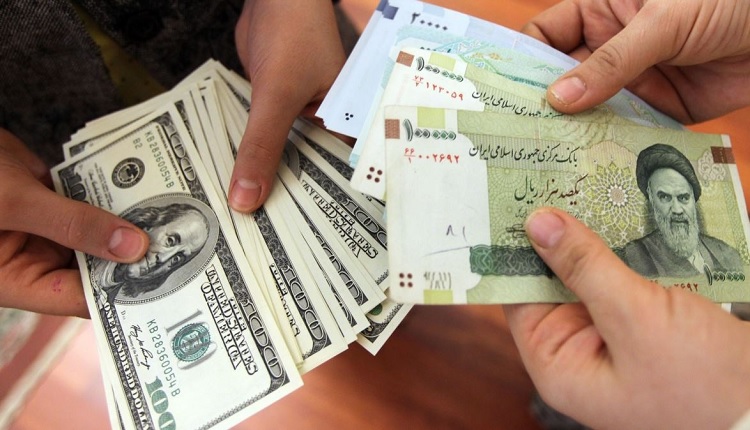
A renewed surge in the price of the US dollar and gold in Iran has deepened public concern about the future of the country’s economy.
As foreign currency rates continue to climb alongside the worsening economic situation in Iran, the price of the US dollar in the free market surpassed 1.13 million rials. Gold prices also rose following this upward trend.
On Thursday, November 13, the price of the dollar reached 1.136 million rials, about 10,000 rials higher than Wednesday’s peak, before pulling back slightly to 1.128 million rials.
U.S. Sanctions 32 Individuals and Entities Linked to Iran’s Missile and Drone Programs
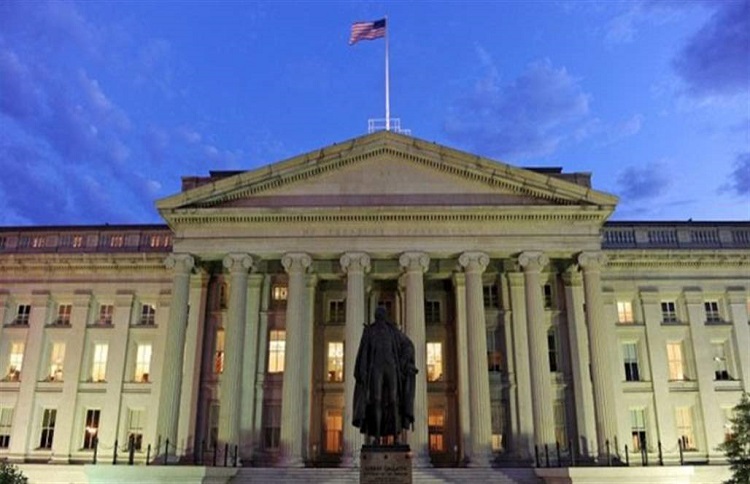
The U.S. Department of the Treasury’s Office of Foreign Assets Control (OFAC) sanctioned 32 individuals and entities based in Iran, the United Arab Emirates, Turkey, China, Hong Kong, India, Germany, and Ukraine for operating procurement networks supporting the Iranian regime’s ballistic missile and drone production.
John K. Hurley, U.S. Under Secretary of the Treasury for Terrorism and Financial Intelligence, announced the sanctions on Wednesday, November 12, saying that the Iranian regime abuses global financial systems to launder money, purchase components for its nuclear and weapons programs, and support its proxy groups worldwide.He said: “At the direction of President Trump, we are putting maximum pressure on Iran to end its nuclear threat.”
The Trump administration official added: “The United States also expects the international community to fully implement UN snapback sanctions on Iran to cut off its access to the global financial system.”
Washington Sanctions 26 Companies Linked To Tehran, Including U.S. Chipmaker SubsidiariesAccording to the Treasury Department’s statement, the newly sanctioned individuals and companies pose a threat to commercial shipping in the Red Sea and to U.S. forces and their allies in the Middle East.
Purchase of missile fuel raw materials
In its latest action, OFAC sanctioned a multinational network known as “MVM Partnership” for supplying chemical materials to the Iranian regime’s missile program. Since 2023, this network, in coordination with Parchin Chemical Industries (PCI)—a subsidiary of Iran’s Defense Industries Organization—has been purchasing sodium chlorate, sodium perchlorate, and sebacic acid from China. These materials are used to produce solid-fuel propellants and resins used in ballistic missiles. Since its establishment, the MVM network has purchased and transferred hundreds of tons of these materials from China to Iran. The U.S. Treasury also sanctioned Marco Klinge, based in the United Arab Emirates, and Majid Dolatkhah and Vahid Qayumi, based in Iran and Turkey, respectively, for their roles in this network. Klinge conducted purchases from China and India and collaborated with the Chinese company China Chlorate Tech; Dolatkhah acted as the liaison between Parchin and Klinge, while Qayumi managed domestic chemical operations and communications with Iranian companies. Additionally, the companies EVA, Framlane, MVM Amici, Zagros Shimi Far, Furqan Novin Pars, and VGGW were added to the sanctions list for being owned by or cooperating with these individuals. In a February report, the Financial Times revealed that two Iranian vessels carrying over 1,000 tons of solid rocket fuel materials were en route from China to Iran, with the shipment destined for delivery to the Islamic Revolutionary Guard Corps (IRGC) in Bandar Abbas.Supplying critical drone components for the IRGC Quds Force
OFAC also sanctioned several individuals and companies linked to the Iranian firm Kimia Part Sivan (KIPAS), which has cooperated with the IRGC Quds Force in its drone program. The Iranian company Bespar Pouya (Pardo), a subsidiary of KIPAS, has produced and repaired drone components through early 2025 and maintained contact with personnel affiliated with KIPAS and the Quds Force. Pars Novandishan (ARIAPA), another KIPAS front company, provided technical support for drone production, including the development of electronic systems. Both Bespar Pouya and Pars Novandishan were sanctioned.UN Watchdog Unable to Verify Tehran’s Uranium Stockpiles for Months

In a confidential report, the International Atomic Energy Agency announced that since the U.S. and Israeli attacks on Iran’s nuclear facilities during the 12-day war, it has lost the ability to verify Iran’s uranium stockpiles enriched close to weapons grade.
The Associated Press wrote on Wednesday, November 12, that in this confidential report—shared with member states—the Agency emphasized that the continuation of this situation prevents assessment of the peaceful nature of Iran’s nuclear program, and rebuilding a complete picture of Iran’s uranium stockpiles will be a long and difficult process.
Reuters also reported on Wednesday, citing the same confidential document, that the Agency has had no access to Iran’s nuclear material for five months.
Iran’s Regime Leader: Negotiation Is Useless and Uranium Enrichment Will ContinueThe confidential report stresses that the amount of highly enriched uranium produced and stockpiled by Iran is “a matter of serious concern.” According to the IAEA’s last official report in September, Iran’s regime possesses 440.9 kilograms of uranium enriched up to 60%, a level only one technical step away from the 90% weapons-grade threshold. However, Esmail Baghaei, spokesperson for Iran’s regime foreign ministry, stated on November 10 that Iran remains a member of the Nuclear Non-Proliferation Treaty (NPT) and that IAEA inspectors visited several nuclear facilities in Iran last week. IAEA Director General Rafael Grossi had warned that this amount of uranium, if Iran decided to build a nuclear weapon, would be enough for up to 10 nuclear bombs, although he emphasized that such a decision has not yet been made.
IAEA’s request for a special report
According to the safeguards agreement between Iran’s regime and the IAEA, Tehran is obligated to submit a special report following incidents such as attacks or earthquakes, detailing the condition and location of its nuclear materials, including highly enriched uranium stockpiles. This report must also describe the condition of facilities damaged during the June war. The Agency stated that receiving this report is “essential and irreplaceable” to ensure that nuclear materials remain within peaceful activities and are not diverted for military use. Nevertheless, on November 11, Tehran informed the Agency in a letter that “any cooperation with this body will depend on the decision of Iran’s regime Supreme National Security Council.” The report also confirms that Tehran has not yet allowed IAEA inspectors access to damaged facilities, although following Rafael Grossi’s agreement with Iran’s regime foreign minister Abbas Araghchi—known as the Cairo Agreement—visits were carried out at several undamaged sites, including the Bushehr nuclear power plant, the Tehran research reactor, and several other centers. The Agency added that its inspectors would travel to Iran on Wednesday to inspect the Isfahan Nuclear Technology Center, located about 350 kilometers southeast of Tehran. The facility employs thousands of nuclear specialists and hosts three China-built research reactors and several laboratories linked to Iran’s nuclear program.Sanctions and Iran’s further isolation
After the end of the 12-day war, Iran suspended its cooperation with the Agency, and the United Nations Security Council reimposed extensive sanctions on Iran by activating the “snapback” mechanism. This move angered Tehran and ultimately prevented the implementation of the Cairo Agreement. Under the Nuclear Non-Proliferation Treaty (NPT), Iran is legally obligated to cooperate with the International Atomic Energy Agency. However, the return of UN sanctions has frozen Iran’s assets abroad, halted arms transactions with Tehran, and imposed new penalties on the regime’s missile program. According to the Associated Press, as a result of these developments, Iran is now more isolated than ever, and the crisis of trust between Tehran and international institutions over the true status of its nuclear program has intensified to an unprecedented degree.Seven Million Hungry People in Iran
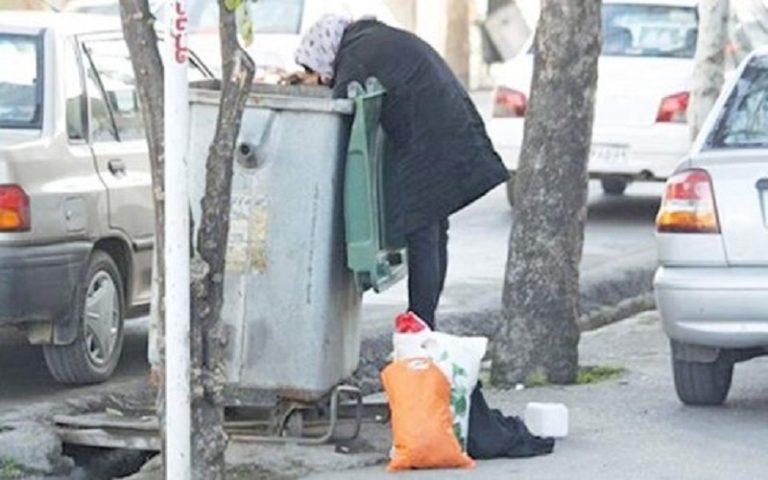
Hossein Raghfar, a state-affiliated economist, stated that currently around 10% of Iran’s population is suffering from malnutrition and hunger. He warned that if current trends continue, “the poor population” will reach about 40% of the total population.
On Tuesday, November 11, in an interview with the state-run news website Khabar Online, he described the malnutrition that affects seven million people in Iran, saying: “Even if these individuals spend all their income on food, they still cannot get enough calories.”
Raghfar blamed this situation on the “discriminatory system of resource and opportunity allocation,” adding: “Today we see that the closer someone is to the power structure, the greater resources or opportunities they have captured.”
The university professor also pointed out another social observation: “On one side, poverty is growing, and on the other, a small but extremely wealthy class has emerged, which is influential within the system and manipulates policymaking in its favor.”
Iranian Regime’s Failure to Curb Inflation Fuels Economic Anxiety and DistrustHe compared the current hunger situation to the famine during the British occupation of Iran in World War I, saying: “That disaster resulted from the deliberate actions of the British, but the current hunger is caused by stupidity and greed combined with betrayal.” The state-affiliated economist described the notion of people “waiting forever” as “a hollow and naive idea,” warning: “It is wrong to think that people will just sit by and watch themselves grow hungrier. The continuation of this situation will ultimately lead to severe social reactions.”
Growing hunger and wages that cannot fill dinner tables
In mid-October, domestic Iranian media reported that about 35% of all registered deaths in Iran are due to malnutrition. According to estimates by the Ministry of Health, at least 10,000 people die each year due to omega-3 fatty acid deficiency, about 10,000 due to inadequate fruit and vegetable consumption, and another 25,000 from a lack of whole grains and bread in their diet.Millions of Iranians Living Below the Poverty LineBetween 50% and 70% of Iran’s population also suffers from vitamin D deficiency—a crisis that directly results in weakened immune systems and increased bone diseases. Majid Mirlatafi, a faculty member of Tarbiat Modares University, recently warned that “the price of yogurt will soon double, and people will no longer be able to afford even bread and yogurt.” In this regard, labor activist Faramarz Tofighi, a former member of the wage committee of the Supreme Labor Council, told the state-run ILNA news agency on Sunday, November 9: “The cost of the so-called living basket, even based on official calculation standards, has now reached around 580 million rials.” This figure comes while the Supreme Labor Council had set the base wage for workers covered by labor law in March 2025 at less than 110 million rials (about $100). With benefits included, the total is around 150 million rials.
Frozen meat has become a dream
Mansour Pourian, head of the Livestock Supply Council, told the state-run news site Didban Iran on Tuesday, November 11, that prices have risen so sharply that “a significant portion of society can no longer afford Brazilian frozen meat.” Pourian added about frozen meat: “The real price of such meat should not exceed 4 million rials (about $3.6), but it is currently being sold in the market for as much as 6.5 million rials (about $6).” Raghfar also referred to car imports under the fourteenth government, noting that the regime had spent about $4 billion over the past year on importing cars, while lacking sufficient foreign currency to import medicine and other essential goods. He considers such decisions the result of “prioritizing the interests of super-capitalists” over people’s needs, stressing that the policies are designed so that “a tiny minority” benefits while leaving millions hungry. As the Iranian regime continues to fail in addressing the demands of various groups, workers, employees, and retirees across Iran have staged strikes and protests in recent weeks and months. On Tuesday, the Coordinating Council of Teachers’ Trade Associations reported nationwide protests by employees of the Welfare Organization, noting that staff in over 20 cities held signs at their workplaces protesting poor working conditions, injustice, and their deteriorating livelihoods.Gathering of three thousand contract oil workers in Asaluyeh
Simultaneously, more than 3,000 contract workers from the South Pars Gas Complex gathered in front of the central building in Asaluyeh, demanding wage equalization, changes to the work schedule model, and the complete elimination of contractors.Continuing protests by permanent oil workers
Permanent employees of the Offshore Oil Company in Siri and Lavan regions also held gatherings as part of their ongoing labor protests. They demanded “the correction of base salaries for minimum-wage employees, removal of wage caps for operational staff, and elimination of fictitious job titles” in operational areas. The employees also demanded “full payment of retirement bonuses, reimbursement of excess taxes collected, full implementation of Article 10 of the law concerning official employees along with its back pay, and complete independence of the Oil Pension Fund.” Gathering of retirees in Kermanshah and continued protests by nurses in Mashhad A group of government and Social Security retirees gathered in front of the National Pension Fund building in Kermanshah province.Thousands of Oil Workers in Iran Demand Removal of Contractors and Equalization of WagesThe retirees protested their poor living conditions and demanded implementation of the wage equalization plan, improvements to their insurance coverage, and fulfillment of other pending demands. Other demands included the release of political prisoners and an end to execution sentences. Meanwhile, a group of nurses and healthcare workers in Mashhad gathered and marched for the second consecutive day in the courtyard of Imam Reza Hospital.
Iran’s Regime Executes 12 Prisoners in Three Days
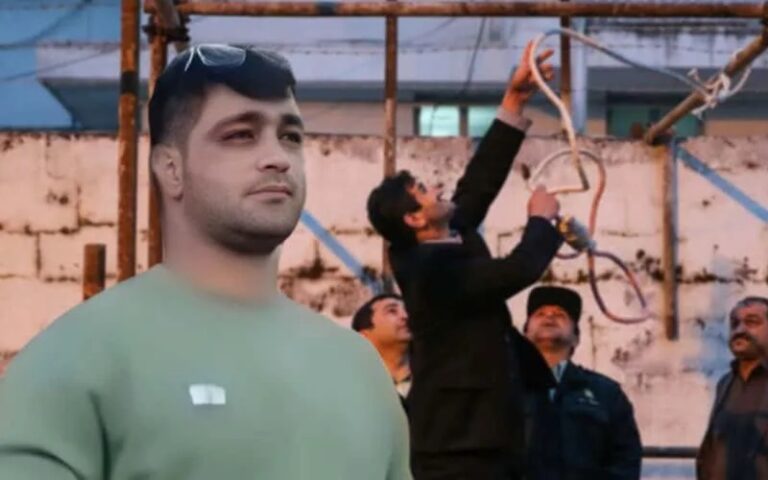
welve prisoners were executed in Birjand, Yasuj, Yazd, Sabzevar, Shiraz, Sanandaj, Jiroft, Borazjan, and Dezful prisons. One prisoner in Yasuj was executed in public. The executions took place between Sunday, November 9, and Tuesday, November 11.
Execution of Khodayar Jaghatai in Sabzevar Prison
On the morning of Tuesday, November 11, Khodayar Jaghatai was executed in Sabzevar Prison. The charge against this prisoner is under investigation.Iran’s ‘No To Execution Tuesdays’ Campaign Marks 94th Week
Execution of two prisoners in Birjand Prison
At dawn on Tuesday, November 11, two prisoners were executed in Birjand Prison. Both were convicted of murder. One of the executed prisoners was identified as Shahin Saleh, while the identity of the second prisoner is still under investigation.Public execution of Mahmoud Ansari in Yasuj
At dawn on Tuesday, November 11, Mahmoud Ansari was executed in public in Yasuj. He had previously been arrested and sentenced to death on charges of murder.Execution of three prisoners in Yazd Prison
On the morning of Tuesday, November 11, three prisoners were executed in Yazd Prison. One of them was identified as Shah-Hossein Farhadi, who had previously been arrested and sentenced to death on charges of murder. The identities of the other two prisoners are still under investigation. Their charges were reportedly related to drug offenses. Execution of Hassan Kalami in Adelabad Prison, Shiraz At dawn on Tuesday, November 11, Hassan Kalami was executed in Adelabad Prison in Shiraz. He had been convicted of murder.Execution of Sasan Mehrani in Sanandaj Prison
At dawn on Tuesday, November 11, Sasan Mehrani was executed in Sanandaj Prison. He had previously been arrested and sentenced to death on charges of murder.Execution of Nima Hemmati in Borazjan Prison
On the morning of Monday, November 10, Nima Hemmati, a native of Mamasani, was executed in Borazjan Prison. He had previously been arrested and sentenced to death on charges of murder.Execution of Milad Ne’mati in Jiroft Prison
At dawn on Monday, November 10, Milad Ne’mati was executed in Jiroft Prison. He had been convicted of murder.Execution of Allahkaram Nazari in Dezful Prison
At dawn on Sunday, November 9, Allahkaram Nazari was executed in Dezful Prison. He had been convicted of murder.Thousands of Oil Workers in Iran Demand Removal of Contractors and Equalization of Wages
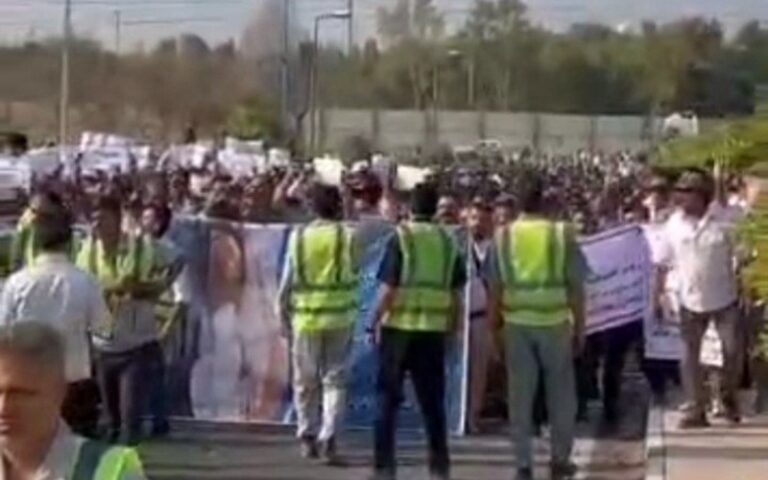
More than three thousand contract workers at the South Pars Gas Complex gathered in front of the central building of the complex in Asaluyeh, demanding the implementation of the wage equalization plan, a change in the work pattern, and the complete removal of contractors.
A large group of contract workers from the twelve South Pars refineries gathered on Tuesday, November 11, in the streets leading to the headquarters of the South Pars Gas Complex in Asaluyeh, calling for their labor demands to be addressed.
These workers, including third-party, company-based, and contractual employees from various phases of South Pars and the Fajr Jam refinery, carried placards calling for wage justice and the removal of contractors.
Nurses, Workers, Army Retirees, And Poultry Farmers Hold Protests In Cities Across IranIn a statement, the workers demanded a review of the job classification plan to equalize the wages of contract workers with those of permanent employees. Other demands included changing the work schedule for administrative and support staff to two weeks of work followed by two weeks of rest, organizing the employment conditions of non-owner drivers of leased vehicles, paying air travel allowances to contract workers, and restoring welfare facilities and camp benefits. For years, despite repeated promises, the job classification plan in South Pars has not been properly implemented, and there remains a significant gap between the wages of contract and permanent employees. According to one employee from Phase 12 of South Pars, “The presence of contractors has led to the violation of workers’ rights, and there is insufficient oversight over how payments are made.” As Iran’s regime continues to fail to address the demands of various social groups, different groups of workers, employees, and retirees across the country have gone on strike and staged protests in recent days and weeks. On November 3, retirees from the Telecommunications Company of Iran held protests in various cities. Nurses from the Kermanshah University of Medical Sciences, workers from the Makian Alvan slaughterhouse in Rey (south of Tehran), and a group of offshore oil employees in Lavan also gathered to protest the neglect of their demands.
Number of Water Wells in Iran 2.5 Times Greater Than All Middle Eastern Countries Combined
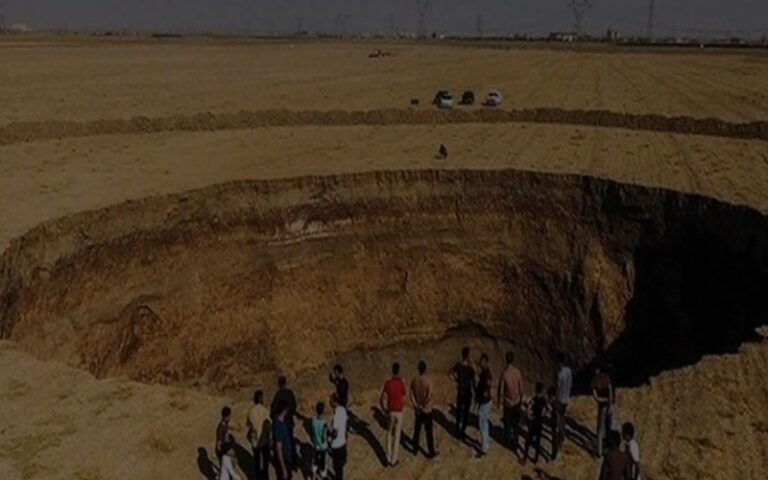
As Iran’s water crisis intensifies and the regime fails to address it, the number of domestic media reports examining the causes of the crisis has increased. According to one such report, the number of water wells in Iran is 2.5 times that of all other Middle Eastern countries combined.
The state-run Rokna news agency reported on Monday, November 10, that while Middle Eastern countries collectively have about 400,000 water wells, the number of active and semi-active wells in Iran exceeds one million.
Iranian Regime President Issues Belated Water Shortage Warning—The Reality Is Even More TerrifyingAccording to the report, half of Iran’s wells—about 500,000—have been dug illegally. Rokna wrote that these figures indicate the country’s remaining groundwater reserves are being destroyed, and there is no serious plan to halt this process. In recent days, new dimensions of Iran’s water shortage crisis have come to light, sounding a serious alarm for people’s daily lives and the continuation of many industries. Masoud Pezeshkian, the president of Iran’s regime, said on November 6 that if it does not rain in November, water in Tehran will be rationed, and if the drought continues, plans must be made to evacuate the city.
Thousands of Liters of Hidden Water in Fruit Exports
Despite being in the midst of one of the most severe water crises in its history, Iran continues to export water-intensive agricultural products. Rokna added that behind every kilogram of watermelon, cucumber, or orange exported from Iran lies thousands of liters of hidden water. According to the outlet’s estimates, for every one dollar earned from fruit and vegetable exports, about 5,800 liters of groundwater are depleted—meaning that Iran is, in effect, “selling water instead of fruit.” Rokna further stated that Iran’s water crisis is no longer just an environmental issue but also a security, economic, and social crisis, as the drying of land signals the collapse of livelihoods and leads to forced migration. The outlet warned: “With every new illegal well, the future of a village—and perhaps a part of ancient Iranian civilization—collapses.” The Iranian regime is in dire need of foreign currency from fruit exports to Persian Gulf countries because, under international sanctions, it can no longer finance its regional proxy groups as it once did.31% Decline in Renewable Water Resources
Abdoljalal Eiry, spokesperson for the regime’s parliamentary Civil Engineering Commission, warned on November 10 that the country’s renewable water resources have declined by about 31%. He explained that the country’s renewable water resources, previously around 130 billion cubic meters, have now fallen to less than 90 billion cubic meters. Eiry added that the consumption-to-resource ratio has risen to about 90%, whereas, according to global standards, it should not exceed 40%. Despite years and decades of repeated warnings from experts, Iran’s water governance system has focused on dam construction and digging deep wells instead of investing in infrastructure, while blaming the crisis solely on reduced rainfall.Student Protests
As water cuts and rationing continued in Al-Zahra University dormitories, a group of students held a protest on the evening of November 8. Chanting slogans such as “We are waiting for our rights, we won’t leave, we are staying right here,” the students demanded the lifting of restrictions on access to water. According to student reports, water in the dormitory showers is available only between 8 and 10 p.m. and is cut off for the rest of the day. Before the protest, images had circulated showing students lined up in the university dormitory courtyard to receive bottled water. The Amir Kabir student newsletter reported that following the water outage, each student was allocated a limited quota of bottled water. Abbas Aliabadi, the regime’s Minister of Energy, announced on November 9 that there would be nightly water outages across the country and urged citizens to install domestic water storage tanks. However, many Iranians cannot afford the cost of purchasing and installing water storage equipment, and previous reports have indicated that prices for such equipment have risen sharply following the government’s recommendation to buy them.‘Red Alert’ Level Air Pollution in Tehran and Several Other Provinces
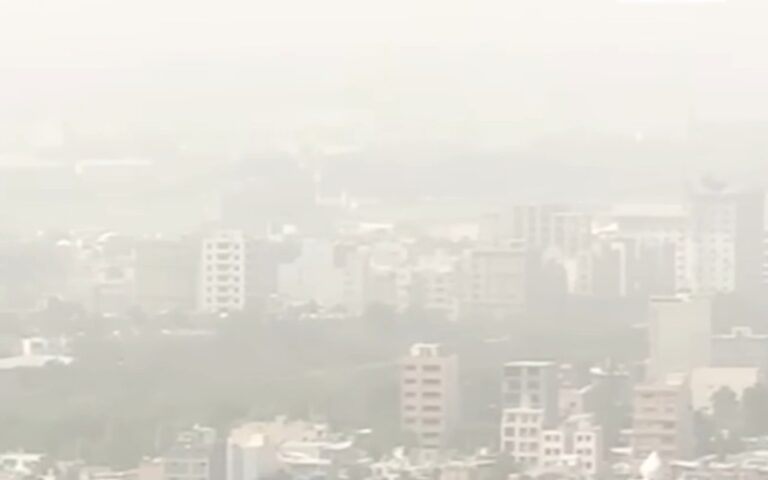
Iranian media reported that air pollution levels in Tehran and several other major cities, including Isfahan and Ahvaz, have risen sharply, reaching the “red alert” level.
The state-run IRIB news agency reported on Monday, November 10, that air quality in several cities across the provinces of Tehran, Alborz, Isfahan, and Khuzestan had reached levels classified as “unhealthy and very unhealthy for all groups.”
According to the report, the air pollution index in Mahshahr, Khuzestan, exceeded 200—classified as “very unhealthy” for all population groups.
Air Pollution In Khuzestan Caused More Than 1,600 Deaths In Past YearAir quality was also reported as “red and unhealthy for all” in the cities of Eshtehard and Fardis in Alborz Province; Eslamshahr, Baghestan, and Baharestan in Tehran Province; Khomeinishahr and Qahjavarestan in Isfahan Province; and in Ahvaz, Aghajari, Andimeshk, Baghmalek, Behbahan, Khorramshahr, Dezful, Dasht-e Azadegan, Shadegan, Shushtar, Karun, and Hoveyzeh in Khuzestan Province. The report added that in some areas of these provinces, the air quality index was at the “orange” level, meaning “unhealthy for sensitive groups.”
Ban on Issuing Traffic Permits in Tehran
The state-run Shargh daily reported on Monday that due to the continued unhealthy air conditions, Tehran’s Emergency Air Pollution Committee has announced a ban on issuing daily traffic zone permits until the situation improves. As a result, Tehran residents will not be able to obtain daily permits to enter the city’s traffic-restricted zones until air quality improves. In July, Mehdi Chamran, head of Tehran’s City Council, stated that the worsening air pollution in the capital was not solely due to traffic or temperature inversion but was partly caused by water shortages and drought. He added: “We must combat pollution through green spaces and efficient water use.”Air Pollution Covers “Half the Country”
The Tabnak news website quoted meteorologist Mohammad Asghari as saying that “air pollution has covered half the country,” noting that industrial and major cities such as Tehran, Alborz, Khuzestan, Isfahan, Markazi, East Azerbaijan, West Azerbaijan, and Semnan are currently struggling with severe air pollution. On Sunday, November 9, Alireza Raeisi, the Deputy Health Minister, stated that around 58,975 people in Iran died due to air pollution in 2024. He added: “This figure equals the death of 161 citizens per day, or about seven every hour.” According to the Deputy Health Minister, estimates show that deaths attributed to air pollution in 2024 caused about 17.2 billion dollars in economic losses to the country.Drug and Medical Equipment Prices Jump 70% in Iran
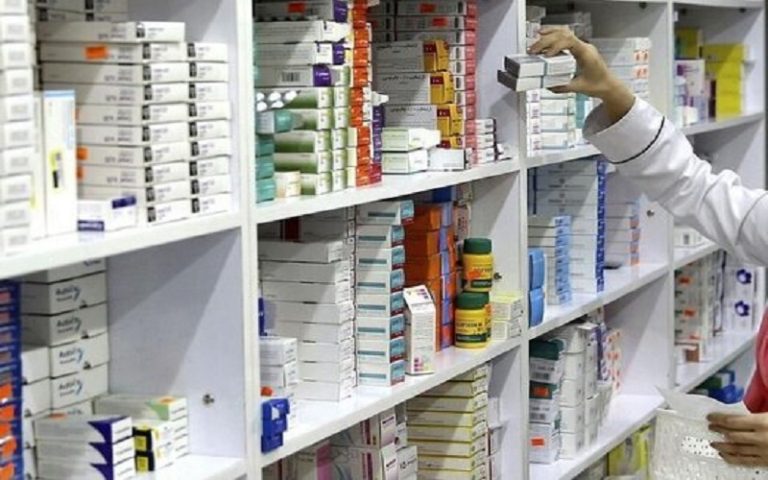
The news website Rouydad24 reported that the implementation of the so-called “Daroyar” plan and the removal of the 42,000-rial preferential exchange rate have led to an average 70% increase in the cost of medicine, medical equipment, and healthcare services.
Rouydad24 wrote on Monday, November 10, that the Daroyar plan—intended to offset drug price increases through insurance reimbursements—has failed to meet its main goal, leaving the financial burden directly on the people.
The outlet added: “In practice, the rising exchange rate and the liquidity shortage among pharmaceutical and medical importers—along with overall inflation and growing costs of packaging, transportation, and energy—have made it impossible for medical centers to consistently meet their needs, forcing patients to buy drugs and medical supplies directly from the market.”
Pharmacists and Doctors Concerned Over the Impact of Rising Drug Prices and Shortages in IranAccording to the report, the surge in drug prices stems from three key factors, each playing a decisive role in the disorder of Iran’s pharmaceutical market. First, the failure of the Daroyar plan has caused the price difference to be paid by citizens instead of being covered by insurance. Second, financial imbalances within the Social Security Organization and insurance companies, combined with fixed service tariffs, have prevented real compensation for costs. Third, profiteering networks and the pharmaceutical mafia—through hoarding and black-market sales—have kept prices artificially high. The state-run Khorasan newspaper also addressed the crisis of rising drug prices on November 10, writing: “Certain companies, through monopolies on import and distribution, are keeping prices artificially high.” This is not the first time reports of drug price hikes have surfaced in Iran. Previously, following the activation of the “Snapback” mechanism and the reinstatement of UN sanctions, drug prices in Iran—from specialized medications to basic cold tablets and syrups—multiplied several times, forcing citizens to visit multiple pharmacies to find what they need. After the expiration of the 30-day period set under the UN Security Council’s Snapback resolution, all previous sanctions against the Iranian regime were reimposed on September 28, and their effects quickly appeared across Iran’s economy. On October 4, the regime’s parliamentary Health Commission warned of potential “humanitarian catastrophes” due to delays by the Central Bank in allocating foreign currency for drug imports. Salman Es’haghi, spokesperson for the regime’s Health and Treatment Commission in Majlis (Parliament), said at the time that the Central Bank’s delay in providing foreign currency for medicine stemmed from its “lack of understanding of the importance of public health,” adding: “The Central Bank assumes this currency is like that allocated for goods such as cell phones, cars, and similar items.”
Iranian Student Ahmad Baledi Dies from Self-Immolation in Protest of His Stall’s Demolition by Regime Authorities

Ahmad Baledi, a 20-year-old young man, died after setting himself on fire in protest against the demolition of his family’s food stall.
Iranian media reported that Ahmad Baledi, a 20-year-old student in Ahvaz, died after setting himself on fire in protest against the demolition of his family’s food stall by municipal authorities. He had been hospitalized at Taleghani Hospital in Ahvaz with 70% burns.
The state-run Mehr News Agency reported that the young man passed away on the morning of Tuesday, November 11, despite medical staff’s efforts to save his life.
Amir Khalafian, the public and revolutionary prosecutor of Ahvaz, announced on November 10 the temporary arrest and subsequent release on bail of the city’s mayor and the head of municipal enforcement, as well as arrest warrants for three other individuals in connection with Baledi’s self-immolation.
Khalafian added: “Several individuals who sought to cause tension and unrest on social media have also been temporarily released on bail.”
The Karun Human Rights Organization earlier reported that on November 2, agents from District 3 of the Ahvaz municipality, accompanied by police officers, went to the food stall of Mojahed Baledi, the owner, in Zeytun Park and demolished it without prior notice or his presence.
At the time, Baledi’s wife and his student son were present and staged a sit-in inside the stall to prevent its demolition. Nevertheless, the officers continued the destruction.
According to the report, the deputy director of services of District 3 Municipality of Ahvaz violently grabbed Mojahed Baledi’s wife by the hand and threw her out of the stall.
Ahmad, in response to this “unjust behavior and violence against his mother and in protest of the injustice,” set himself on fire with gasoline in front of the officers.
The incident sparked widespread outrage on social media, where users shared his photos and denounced “the injustice and unlawful conduct of Ahvaz Municipality.”
Later, on the evening of November 6, a group of citizens and Baledi’s relatives gathered in front of Taleghani Hospital in Ahvaz to hold a protest.
Following this, three Ahvazi Arab civil and media activists—Hassan Salamat, Javad Saedi, and Sadegh Alboshoke—who had shared news about Baledi’s protest self-immolation, were arrested by security forces.
In recent years, numerous cases of self-immolation and suicide among Iranian workers have been reported due to dismissals, harsh working conditions, delayed or unpaid wages, and other hardships.
