

 Washington Post: Last week, Grand Ayatollah Nasser Makarem-Shirazi said 3G mobile services are against sharia law and violate “human and moral norms.” He cautioned Iran’s information ministry against providing 3G mobile service before the technology is “purified” of its “negative features” to ensure “moral and psychological security” for users.
Iranian cleric issues fatwa against the Internet
Iran says latest U.S. Sanctions won’t stop nuclear talks
Bloomberg: The latest U.S. sanctions against Iran won’t directly affect talks with world powers to reach an agreement over the Islamic republic’s nuclear program, President Hassan Rouhani said. “They don’t damage the talks but they do damage trust,” Rouhani told a news conference in Tehran.
Iran FM to meet EU’s Ashton in Brussels

AFP: Iranian Foreign Minister Mohammad Javad Zarif was to hold talks with top EU diplomat Catherine Ashton in Brussels Monday, following fresh US sanctions on entities linked to Tehran’s nuclear programme. Ashton, the EU foreign policy chief, has shepherded year-long talks between Iran and major powers, aiming for a comprehensive deal to end a decade-long dispute over the Islamic republic’s nuclear activities.
Iran nuclear talks to continue on fringes of UN assembly – Ashton

Reuters: The six global powers will discuss ways to reach a comprehensive nuclear deal with Iran on the sidelines of the United Nations General Assembly in New York in September, the European Union’s foreign policy chief said on Saturday. Talks aimed at curbing Iran’s nuclear programme in exchange for ending sanctions began in February.
Iran says possible response to new U.S. sanctions could not be ‘pleasant’
Reuters: Iran’s possible response to new U.S. sanctions could “not be pleasant”, its foreign minister said on Sunday, raising the prospect of tit-for-tat retribution against the Islamic Republic’s old adversary weeks ahead of fresh nuclear talks. Iranian leaders reacted with dismay to Friday’s announcement that Washington was going to penalise a number of Iranian and other foreign companies.
Iran car crash kills 14, including Afghans
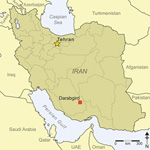
AP: A news agency in Iran is reporting that a car crash involving Afghan migrants has killed 14 people. The semiofficial Mehr news agency reported Sunday that the crash between two cars happened late Saturday night on the outskirts of the town of Darab in southern Iran. The agency identified 13 of the dead as Afghan migrants who illegally crossed the border into Iran, as well as an Iranian driver of one of the cars.
The struggle for human rights: remembering camp Ashraf
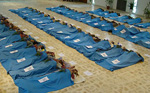
Christian Post: The worldwide struggle for freedom and democracy faces enormous challenges today. Despite the promise of the United States government to support that struggle wherever it can, the Obama administration is not standing tall on the world stage. The American Legacy, as a shining beacon for oppressed peoples everywhere in their time of darkness, is being abandoned.
At least 16,000 systems controlled by Iran outside of its borders
The Guardian: When Israel stepped up Operation Protective Edge in Gaza in July, a crew of hackers going under the name of the Izz ad-Din al-Qassam Cyber Fighters readied their attack tools to show support for their Palestinian brothers. They attempted to flood a core piece of Israel’s internet infrastructure, the Domain Name System that acts as the web’s phone book for the country.
Iran president condemns US sanctions ‘invasion’
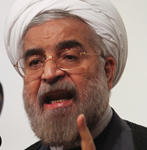
AP: Iran’s President Hassan Rouhani called Western sanctions an “invasion” on Saturday after Washington imposed penalties on 25 businesses, banks and individuals. “Sanctions are an invasion of the Iranian nation. We should resist the invasion and put the invaders in their place,” Rouhani told officials in remarks broadcast by state TV. “We should not allow the continuation and repetition of the invasion.”
Satellite firms’ return to Iran poses risks
Wall Street Journal: Satellite companies Intelsat and Eutelsat Communications are trying to win back business with Iran’s state-run broadcaster, after U.S. authorities allowed the companies to re-enter the country, WSJ reported. But human rights groups say Iran’s broadcaster still televises forced confessions, creating a risk to the reputations of firms that beam the broadcasts.
