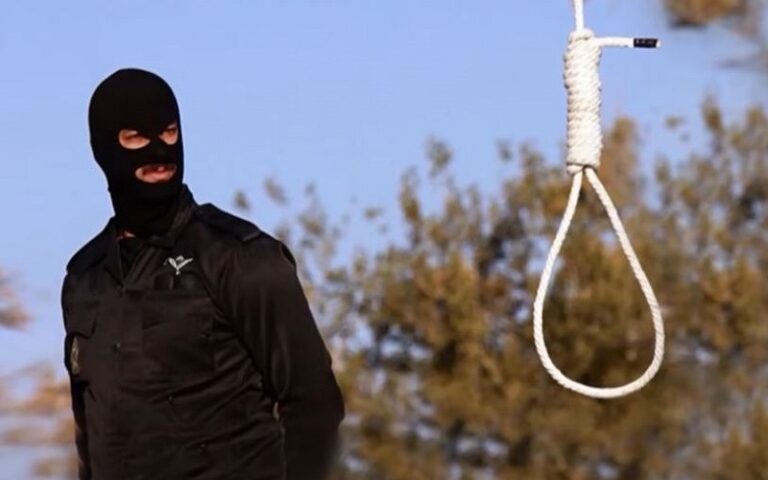
As the sharp increase in executions continues in Iran, 16 prisoners held in Ghezel Hesar Prison in Karaj were transferred to solitary confinement for execution. At the same time, a number of inmates refused to receive their food rations in protest against the wave of executions.
On Monday, October 13, the Iran Human Rights Society reported that at least 16 prisoners had been transferred to solitary confinement in Ghezel Hesar Prison for execution. According to the report, 11 of them were sentenced to death on drug-related charges, while five others were convicted of murder.
In its report, Iran HRS stated that it is still investigating further details and the identities of the prisoners.
Meanwhile, the judiciary of Iran’s regime executed at least seven prisoners, including one woman, on the same day in Dastgerd Prison in Isfahan, as well as in Qazvin and Minab prisons.
A prisoner named Ebrahim Delaram, a 43-year-old resident of Dehdasht, who had been sentenced to death on drug-related charges, was also transferred to a solitary cell in Yasuj Prison to await execution.
As the group of prisoners was transferred to solitary confinement in Ghezel Hesar Prison, a number of inmates in Ward 2, Hall 16 of the prison refused to receive their food rations in protest against the wave of executions.
Prisoners in this ward are mostly held on drug-related charges, and their protest comes amid a sharp rise in executions carried out in Ghezel Hesar Prison in recent weeks.
Ghezel Hesar in Karaj is one of Iran’s most notorious prisons, where numerous executions are carried out for prisoners convicted of various charges.
In a statement the National Council of Resistance of Iran (NCRI) announced that Iran’s regime executed 1,654 people in the past year:
“Over the past year (from October 1, 2024, to September 30, 2025), the religious fascism ruling Iran has recorded a bloody and unprecedented record of cruelty and crime. During this period, the execution of 1,654 prisoners was documented across 31 provinces, representing a 2.3-fold increase compared to the same period the previous year (with 851 executions), and a 2.8-fold increase compared to the year before that (with 693 executions).”
On September 29, UN experts issued a press statement noting that Iran’s regime had executed more than one thousand people in less than nine months, describing this as “a dramatic surge in executions and a violation of international human rights law.”
On September 26, UN Special Rapporteur on Human Rights in Iran, Mai Sato, warned in a report that the human rights situation in Iran “is deteriorating alarmingly,” and that citizens are facing organized repression and widespread restrictions following the end of the 12-day war.
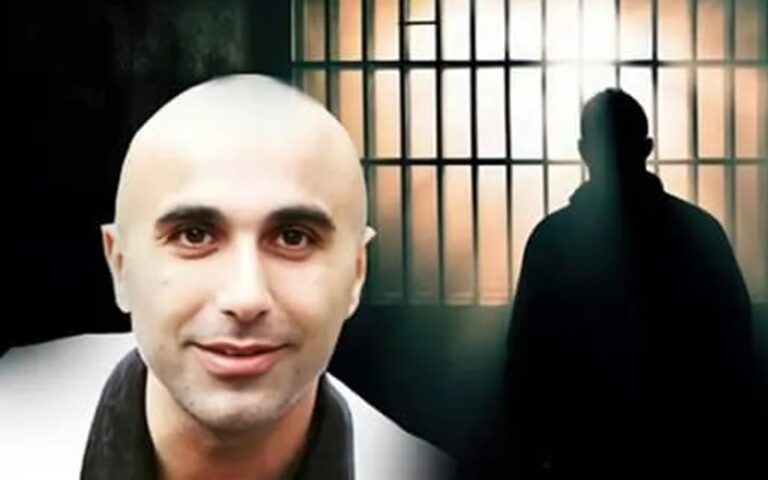
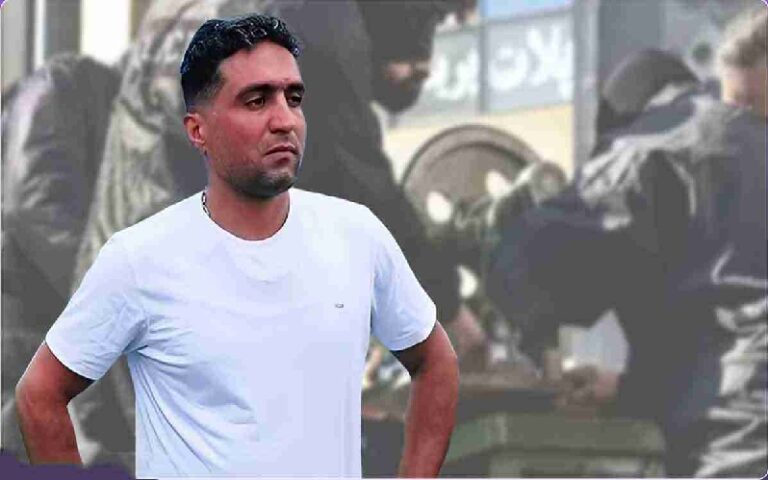
Hamid Haj-Jafar Kashani, a political prisoner, has been transferred to the ward for violent crime inmates in Ghezel Hesar Prison in Karaj after spending one month in solitary confinement.
According to reports, on Monday, October 13, this political prisoner was moved from solitary confinement to Unit 3, Hall 10 of Ghezel Hesar Prison—a ward mainly used to hold prisoners convicted of dangerous and violent crimes.
A source close to his family stated:
“Hamid Haj-Jafar Kashani, in a phone call today, reported repeated threats, an unsafe environment, and inhumane conditions in this ward. His family is deeply concerned for his life.”
The source added that Mr. Kashani had also spent the past month in solitary confinement as a form of punishment.
Sentenced to 15 Months in Prison and Two Years of Exile
Hamid Haj-Jafar Kashani, a well-known political prisoner, was previously tried in Branch 26 of Tehran’s Revolutionary Court, presided over by Judge Iman Afshari, and sentenced to 15 months in prison and two years of exile in Saravan, a city in southeastern Iran. His charge was “insulting Ali Khamenei,” the supreme leader of the Iranian regime.
This political activist was formally charged on April 29 by Branch 3 of the Evin Prosecutor’s Office and then transferred to Ward 4 of Evin Prison. Following airstrikes on Evin Prison, which resulted in the relocation of several prisoners, he was moved to Ghezel Hesar Prison in Karaj.
The transfer of political prisoners to public wards or those housing violent offenders is one of the illegal methods of psychological and physical intimidation repeatedly condemned by human rights organizations. Civil activists stress that such actions violate the principle of separating prisoners by type of offense and constitute psychological torture.
Arrested for Street Protest
Hamid Haj-Jafar Kashani, born in 1982 and a former futsal referee in Iran, was arrested on April 27 for holding a protest placard on Tehran’s Enghelab (Revolution) Street. He had joined the busy street to express civil dissent against the regime’s policies and was arrested by security forces and taken to a security detention center.
Charges and Court Hearing
On April 29, Hamid Haj-Jafar Kashani was charged in Branch 3 of the district 33 Prosecutor’s Office in Tehran with two specific accusations:
Propaganda against the regime
Insulting Ali Khamenei
Trial Held Under Pressure
On Wednesday, June 11, the trial of Hamid Haj-Jafar Kashani was held in Branch 26 of Tehran’s Revolutionary Court, presided over by Judge Iman Afshari. Informed sources have reported that he had repeatedly refused to attend the court session but was eventually brought there by force. The hearing was held without the presence of his chosen lawyer, and the entire process was conducted under the pressure of security forces.
The 90th week of the “No to Execution Tuesdays” campaign was held in 52 prisons across Iran, with participating prisoners going on a hunger strike. A part of the statement referring to the World Day Against the Death Penalty reads:
“Coinciding with the World Day Against the Death Penalty, prisoners participating in the ‘No to Execution Tuesdays ‘ campaign in Ghezel Hesar Prison chanted slogans against the death penalty, expressing their disgust and abhorrence for these cruel and inhumane sentences.”
The full statement of the 90th week of the “No to Execution Tuesdays” campaign is as follows:
Continuation of the “No to Execution Tuesdays” Campaign in Its 90th Week Across 52 Prisons Nationwide
We sincerely thank all the brave and freedom-loving Iranians who participated in the nationwide campaign marking the World Day Against the Death Penalty and made their strong voices of opposition to executions resonate throughout Iran. This enthusiastic presence, relentless support, and ongoing solidarity have given us unparalleled strength and encouragement to continue our path toward an Iran free of capital punishment.
The “No to Execution Tuesdays” campaign still needs such support so that this voice of justice and humanity can reach the conscience of awakened individuals and the international community more powerfully each day.
While the growing pressures and inhumane conditions in Iran’s prisons persist, we have witnessed the transfer of female political and ideological prisoners from Qarchak Prison to Evin Prison. These women were relocated following the tragic killing of their fellow inmate, Somayeh Rashidi, and their widespread protest against Qarchak’s inhumane conditions. They now remain in Evin Prison deprived of basic necessities, including heating facilities, and are enduring extremely harsh conditions. These inhumane circumstances, not limited to Evin, are yet another example of the torture of prisoners and the gross violation of human rights.
Although these prisoners have escaped the hell of Qarchak, hundreds of women—among them death row inmates—remain imprisoned in this torture center. Like other infernal prisons, Qarchak must be shut down, and those responsible for human rights violations must be brought to justice.
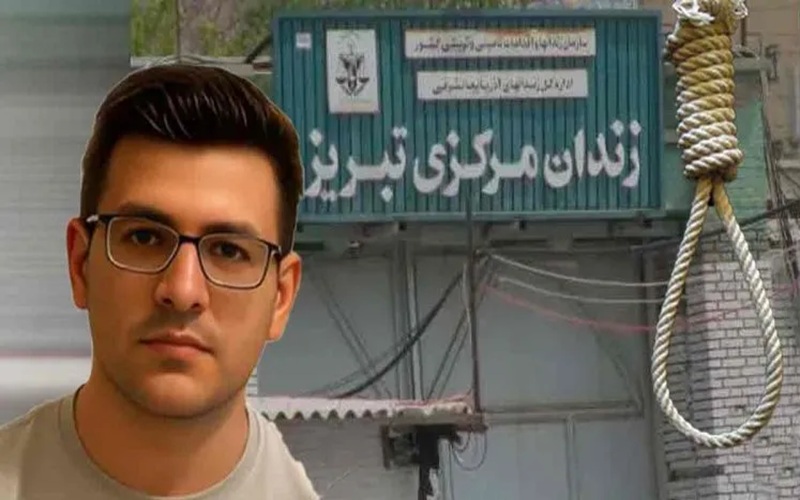
Continuing the issuance of unjust sentences, a few days ago the death sentence of Ehsan Faridi, a student and political prisoner held in Tabriz Prison, was upheld—a decision made without due process, intended to instill fear among youth and students. This act violates human rights and human dignity and must be strongly condemned.
Political Prisoner, Ehsan Faridi
In a further attempt to intimidate society, we have witnessed the issuance of death sentences for three ideological prisoners—Nasimeh Eslamzehi, her husband Arsalan Sheikhi, and Amanj Karvanji. For us, these sentences symbolize the injustice of a despotic judicial system and compel us to continue raising our voices against these widespread and ruthless executions.
Under these circumstances, coinciding with the World Day Against the Death Penalty, prisoners participating in the “No to Execution Tuesdays” campaign in Ghezel Hesar Prison chanted slogans against the death penalty, expressing their disgust and anger toward these cruel and inhumane sentences.
Amid the recent wave of executions, particularly in Ghezel Hesar Prison, on Monday, October 13, following the transfer of several inmates from Ward 2 to solitary confinement for execution, prisoners in this ward—over 1,500 of whom are on death row—staged a sit-in, returned their prison meals, and demanded the return of their fellow inmates. We call on other prisoners to follow the example of Ghezel Hesar inmates by opposing the execution of their cellmates, and we urge anti-execution activists outside prison to take stronger steps to halt the regime’s execution machinery and to support the families of those sentenced to death.
Reports from various prisons indicate that between September 23 and October 12 alone, 162 prisoners were executed, and in the past six months and 20 days, more than 1,000 people have been hanged. These figures have deeply shaken the conscience of the Iranian public and the international community, demanding immediate and decisive global action to stop this criminal trend.
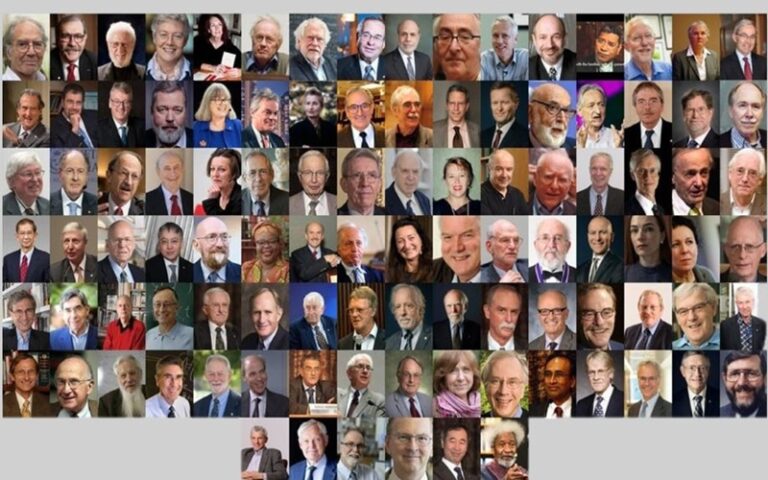
More than 100 Nobel Laureates have issued a strong condemnation of Iran’s human rights violations and declared their support for the country’s democratic resistance.
In an open letter addressed to UN Secretary-General António Guterres and signed in July 2025, the Laureates urged urgent international action to confront what they described as a “grave and escalating human rights crisis in Iran.” The letter denounces widespread executions, systemic repression, and Tehran’s destabilizing activities across the region.
Unprecedented Surge in Executions
The signatories condemned the regime’s reliance on mass executions as a tool of fear and control. According to the letter, at least 1,000 people — including 34 women — were executed in 2024 alone. Iran remains the world’s top executioner per capita, with an estimated 1,275 executions carried out within just the first ten months of the current presidency.
The Laureates emphasized that political dissidents, ethnic and religious minorities, and ordinary citizens are the main targets of these systematic abuses.
The letter recalled Iran’s nationwide uprising in 2022, when citizens expressed their rejection of both monarchical and theocratic rule, demanding instead a democratic republic. It also noted the widespread boycott of the regime’s presidential elections, underscoring the population’s call for freedom and democracy.
Growing Recognition of Iran’s Democratic Opposition
The Laureates’ statement reflects increasing international acknowledgment of the Iranian Resistance, particularly the Ten-Point Plan put forward by Mrs. Maryam Rajavi, President-elect of the National Council of Resistance of Iran (NCRI).
In February 2025, the U.S. House of Representatives passed bipartisan Resolution H. RES. 166 with majority support, condemning Tehran’s terrorism and human rights abuses while endorsing Rajavi’s democratic vision.
In June 2024, more than 4,000 parliamentarians, 130 former heads of state, and 80 Nobel Laureates publicly endorsed Rajavi’s Ten-Point Plan. Since then, parliamentary majorities in numerous countries — including the United Kingdom, France, Italy, Norway, Canada, Ireland, Malta, Switzerland, Romania, Portugal, Argentina, Costa Rica, Iceland, Moldova, and the Netherlands — have issued similar declarations of support.
A Blueprint for a Free and Peaceful Iran
The Nobel Laureates voiced their backing for “a democratic Iran, where sovereignty rests with the people.” They endorsed the Ten-Point Plan, which calls for universal suffrage, free elections, the separation of religion and state, gender and ethnic equality, a non-nuclear Iran, and peaceful relations across the region.
According to the letter, “The Iranian Resistance, with its democratic platform dedicated to human rights, offers a viable path toward national unity, an end to religious dictatorship, and the transfer of sovereignty to the people.”
A Global Call to Action
The Laureates concluded with an appeal to the UN and the international community not to remain silent in the face of Iran’s atrocities. “This vision offers the prospect of a democratic Iran and lasting peace across the Middle East,” the letter stated.
With the voices of more than 100 Nobel Laureates, the letter stands as one of the most powerful moral and academic endorsements yet for Iran’s democratic aspirations.
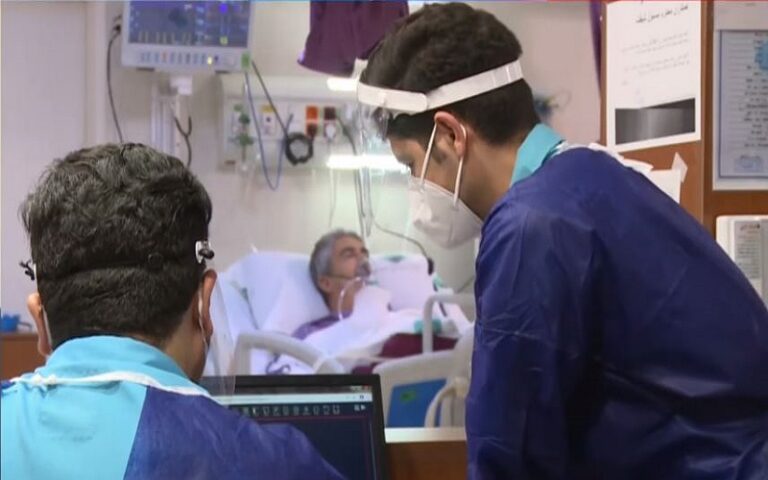
Mohammad Reza Raiszadeh, head of Iran’s regime Medical Council, warned about the growing crisis of specialist shortages, stating that “in a few years,” even Iran’s major cities will face a shortage of pediatricians.
On Sunday, October 12, Raiszadeh said: “We have a shortage of pediatric specialists in Iran, and we must ask why our general practitioners are not interested in specializing in pediatrics.”
He added that many general practitioners in Iran are turning to the beauty industry but show little interest in pursuing pediatrics as a specialty.
As extreme beauty standards spread across social media, specialized cosmetic clinics have experienced a sharp increase in the number of surgeries performed.
Previously, Ali Jafarian, deputy health minister of Iran’s regime, announced that over 80% of emergency medicine program positions and one-third of anesthesiology positions remain vacant due to lack of applicants.
On September 18, the state-run Nournews website, citing official data from the Medical Council, reported that about 29% of registered general practitioners in Iran are not practicing medicine.
In July, Abbas-Ali Raees-Karami, president of Tehran University of Medical Sciences, reported declining interest among applicants for six medical specialties and subspecialties, warning that a shortage of applicants in core medical fields poses a serious challenge to Iran’s healthcare system.
A Crisis Under the Shadow of Budget Shortages
The head of the Medical Council continued: “There are patients in various cities, but no specialist doctors. In the past four years, no medical education plans were implemented. We are short of 600 trillion rials (approximately 545.5 million dollars) to expand medical training capacity.”
Raiszadeh warned: “No one is considering the requirements for general practitioners to enter specialization programs; everyone’s focus is only on the number of general practitioners.”
In November 2023, the state-run Eghtesad24 website warned that the shortage of pediatric specialists in Iran had become a major challenge for the healthcare system across many provinces.
According to the report, many residents of smaller cities are forced to travel to Tehran for their children’s medical treatment.
According to the Iranian regime’s Parliamentary Research Center in November 2023, the share of pediatric graduates among all medical specialists in Iran has fallen to below 1% since 2017.
The increasing wave of physician emigration has further exacerbated the shortage of pediatric specialists in Iran.
Shahin Akhoundzadeh, deputy minister for research and technology at the Ministry of Health, stated on September 15 that meritocracy is the key factor in retaining talent. He revealed that “most of the top 100 students in the medical entrance exam migrate abroad because proper conditions for employment are not available in the country.”
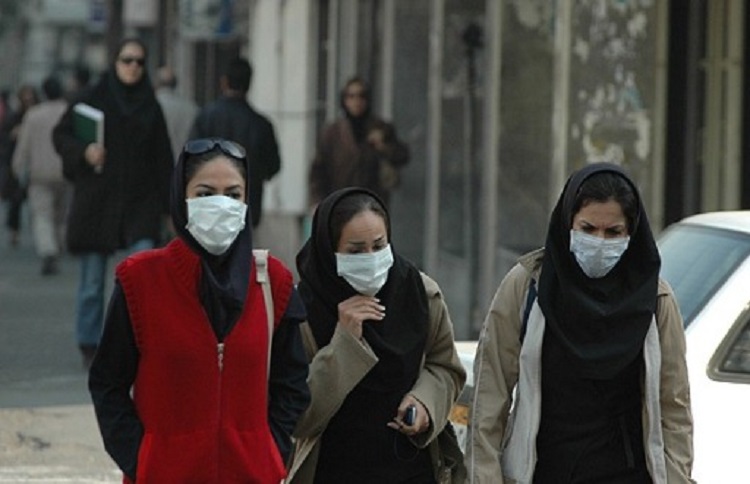
According to media reports, air quality in the provinces of Khuzestan, Isfahan, and Razavi Khorasan has reached a red-level warning. Isfahan has been deprived of clean air for the twentieth consecutive day, and 17 cities in Khuzestan are experiencing unhealthy air. In all urban areas of Mashhad, air quality has been reported as unhealthy for all population groups.
Official sources announced that on Sunday, October 12, air quality in more than 20 cities across Iran reached purple, red, and orange alert levels — classified as hazardous, unhealthy for all groups, or unhealthy for sensitive groups. The reports attributed most of the pollution to dust particles and fine particulate matter.
Air quality in at least 17 cities in Khuzestan province has been reported as unhealthy. According to data from Iran’s National Air Quality Monitoring System, the pollution index in Dasht-e Azadegan reached the purple range, meaning “very unhealthy” for all age groups.
Isfahan’s 20th Consecutive Unhealthy Day
Air pollution in the city of Isfahan continued for the twentieth consecutive day. The city’s air is categorized as orange — unhealthy for sensitive groups. In some districts such as Zeinabiyeh Street and Kordabad, the air has been reported as unhealthy for the general public.
Mashhad in Critical Condition
On the afternoon of Saturday, October 11, the Department of Environmental Protection of Razavi Khorasan issued a self-protection warning to Mashhad residents following an increase in dust and air pollutants forecasted for Saturday and Sunday, October 11 and 12.
On the morning of Sunday, October 12, Mashhad’s Environmental Monitoring Center reported the city’s real-time air quality index at red level, meaning unhealthy for all groups. Air quality across all areas of Mashhad remained at the red level and hazardous for everyone.
In recent weeks, several cities in various provinces of Iran have also experienced air pollution and dust storms, disrupting daily life and affecting residents’ health.
In recent years, air pollution in Iran has repeatedly reached critical levels, while dust storms have further intensified environmental challenges and public health risks.
Despite the growing scale of this crisis, the Iranian regime has so far failed to adopt a systematic and sustainable approach to address it.
The inhumane sentence of amputating four fingers from the right hand of a prisoner named Mohsen Ashiri was carried out in Isfahan Central Prison (Dastgerd Prison), despite the plaintiff’s consent to drop the charges.
The sentence of amputating four fingers of Mohsen Ashiri, a 37-year-old prisoner from Zazaran and resident of Isfahan, was carried out on Tuesday, September 30, at Dastgerd Prison.
Mohsen Ashiri was arrested six years ago on charges of theft. The Isfahan Criminal Court sentenced him to six months in prison and the amputation of four fingers from his right hand.
After serving his prison term, Mohsen was released from prison with the complainant’s consent and by posting bail of 1 billion tomans (approximately 10 billion rials or 10,000 dollars).
However, in September, the court summoned him again and announced that he must increase his bail to 200 billion tomans.
The clerical judiciary declared that otherwise, the sentence of finger amputation would be carried out.
Due to his inability to provide the 200 billion toman bail, Mohsen Ashiri was re-arrested and transferred to Dastgerd Prison.
Less than a month later, the inhumane sentence of amputating his fingers was carried out.
Amputation of Mohsen Ashiri’s Fingers Despite Plaintiff’s Consent
It is worth noting that such inhumane punishments, like amputating the fingers of theft convicts, are carried out under Iran’s regime while reports of massive corruption and embezzlement by regime insiders constantly appear in state-run newspapers and news outlets.
The goal is to intimidate society and suppress any awakened human conscience.
Previously, on June 10, the fingers of two other prisoners were also amputated in Isfahan Prison by order of the regime’s judiciary.
Amnesty International reacted to this inhumane act, warning that such punishments constitute clear examples of “state torture” and “gross violations of human dignity.”
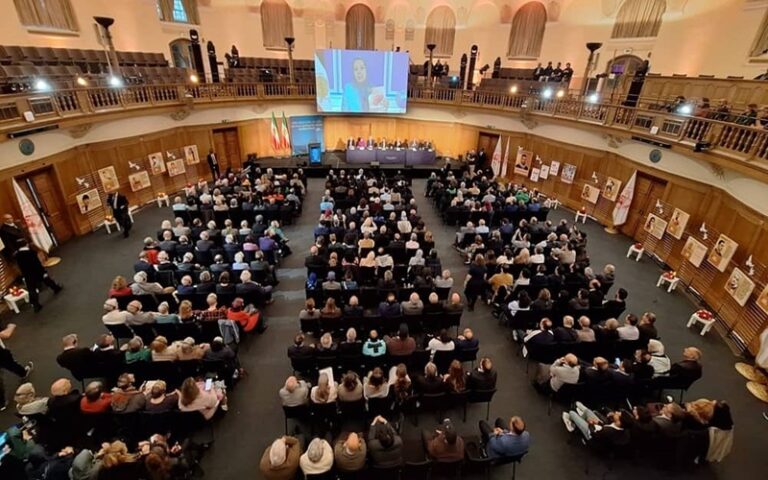
LONDON, October 11, 2025 — At Church House Westminster, lawmakers, human rights advocates, and international dignitaries convened for a major conference marking the World Day Against the Death Penalty. The event, organized by the National Council of Resistance of Iran (NCRI), focused on Iran’s alarming execution record and amplified support for the democratic vision of NCRI President-elect Maryam Rajavi.
Speakers from the UK, Europe, and Latin America condemned Iran’s clerical regime, describing it as a “monster of death” and “capital punishment capital of the world.” Many invoked the rallying cry “No to the Shah, no to the mullahs,” while highlighting the NCRI’s Ten-Point Plan for a free, secular republic.
Stop Executions in Iran: Join Us on the World Day Against the Death Penaltyhttps://t.co/paUoKbbD4S
Rajavi’s Call for Justice
In her keynote, Maryam Rajavi denounced the regime’s reliance on executions, warning that over 1,200 people had been killed in the first nine months of 2025 — the highest figure in nearly four decades. She described executions of PMOI (People’s Mojahedin Organization of Iran) supporters such as Behrouz Ehsani and Mehdi Hassani, and the death of political prisoner Somayeh Rashidi, as “murders committed under the guise of law.”
“The same criminals who ordered that genocide,” she said of the 1988 massacre, “are today in charge of the judiciary, the intelligence apparatus, and the presidency.” Rejecting both monarchy and theocracy, she declared, “No to the Shah, no to the mullahs — no to all forms of dictatorship,” while presenting her Ten-Point Plan for a secular republic grounded in equality, justice, and abolition of the death penalty.
Support from International Figures
Baroness O’Loan revealed a declaration signed by over 500 dignitaries calling for accountability. “Every three and a half hours, a person is executed in Iran,” she said, urging the UK and UN to refer atrocities to the International Criminal Court.
Former Colombian senator Ingrid Betancourt described the conference as “a hall of conscience,” calling executions “an instrument of barbarism.” Praising political prisoner Maryam Akbari Monfared as “the conscience of Iran,” she insisted, “The MEK is not just a political movement. It is a moral force.”
John Bercow, former Speaker of the UK Parliament, branded Iran’s rulers a “fascist state” and condemned their celebration of the 1988 massacre as “bigotry on an industrial scale.” Echoing the crowd, he said: “No to the Shah, no to the mullahs — yes to democracy, rule of law, and gender equality.”
Italian Senator Giulio Terzi called Tehran “the heinous champion in hanging its people” and urged the IRGC’s immediate designation as a terrorist group, insisting, “Neither with the mullahs nor with the Shah. There is a third option — the NCRI and its Ten-Point Plan.”
Former UN Special Rapporteur Javaid Rehman warned executions in Iran had reached “shocking and unprecedented proportions,” stressing the need for international accountability mechanisms.
Dame Theresa Villiers, former UK Cabinet minister, said “every right-thinking person should be repulsed” by Iran’s executions and assassinations abroad, citing 15 assassination attempts in Britain since 2022. She urged renewed sanctions and IRGC proscription.
Irish Senator Gerard Craughwell declared, “Executions in Iran are not justice — they are murders,” comparing Iran’s struggle to Ireland’s own fight for independence. “Just as Ireland became a Republic, so will Iran,” he said.
Voices from the Resistance
Dowlat Nowrouzi, NCRI’s UK representative, noted 39,000 anti-regime activities carried out by Resistance Units last year. “Our option is the third option — Madam Rajavi’s plan for democratic change,” she stressed.
Massoud Zabeti, representing the Iranian community, cited a statement from 35 transatlantic dignitaries warning of Tehran’s “death and terror” exported abroad. “Your time is up,” he told the regime.
Young Iranians also gave powerful testimonies. Rosa Zarei honored her father and aunt, victims of executions. Teacher Azadeh Hosseini recalled relatives persecuted by both the Shah and the clerics, insisting, “No to Shah, no to Mullahs — yes to freedom.” Law student Neda Zabeti, who lost five relatives, urged Western governments to “end their silence.”
Dr. Omid Ebrahimi praised Iran’s Resistance Units as “the rebellious youth who dare to say no to dictatorship and yes to freedom,” while Rana Rahmanfard called nearly 2,000 executions this year alone “intolerable,” urging concrete action in support of the NCRI.
A United Call for Action
Throughout the conference, the message was consistent: executions in Iran are not justice, but political weapons. The speakers demanded international accountability, sanctions on regime leaders, recognition of the NCRI, and global solidarity with the Iranian people.
“Freedom and democracy will not be granted by tyrants,” Rajavi declared. “They will be earned by the courage of our people, the Resistance Units inside Iran, and the unity of the international community that stands with them.”
The price of one gram of gold in Iran has increased by more than 11,600% in just one decade, reaching over 111.4 million rials (approximately $97). Based on this, the monthly minimum wage for workers covered by Iran’s labor law is not even enough to buy one gram of gold.
The state-run Khabar Online website reported on Saturday, October 11, that the average price of one gram of gold in October 2015 was 950,000 rials (approximately $0.82).
The outlet added, “The minimum wage for workers covered by the law in 2015 was 7.12 million rials (approximately $6.1), which was equivalent to the value of 7.4 grams of gold that year.”
In contrast, the current minimum monthly wage is 103 million rials (around $90), which, at best, is enough to purchase only 0.9 grams of gold.
According to Khabar Online, while the price of gold in Iran has risen by 11,600% over the past decade, the minimum wage during the same period has only grown by about 1,345%.
The minimum wage for workers covered by the labor law is determined annually by the Supreme Labor Council, which is affiliated with the Ministry of Cooperatives, Labor, and Social Welfare.
According to two clauses in Article 41 of Iran’s labor law, the minimum monthly wage of workers must be determined based on the inflation rate and the cost of living for a worker’s household.
Nevertheless, independent labor activists and unions have consistently pointed out that the Supreme Labor Council ignores the second clause when approving wage decisions.
The state-run ILNA news agency wrote on October 7, referring to the devaluation of the national currency and the government’s “wage suppression” policies: “While the value of the dollar has jumped by an astonishing 33.5 times, the minimum wage approved by the Supreme Labor Council has increased only a little more than tenfold, from 8.12 million rials (about $7) in 2016 to about 104 million rials (around $91) this year.”
ILNA added, “The minimum wage for workers, excluding benefits, is only $91 this year. Even if we include all general wage benefits, it might reach around $110.”
The minimum wage for workers covered by the labor law, including benefits, is about 150 million rials (approximately $130).
According to labor media and trade unions, this wage and its accompanying benefits are not paid to hundreds of thousands of workers employed in small, informal workshops that are not covered by the labor law.
Khabar Online further wrote, “The lightning-fast rise in gold prices over just 10 years has made this investment commodity unattainable for Iranian households.”
According to the report, the rise in gold prices has been driven by two factors: the increase in the domestic dollar exchange rate and the significant rise in global gold prices.
In recent weeks, runaway inflation and rising foreign exchange rates have heightened concerns over Iran’s worsening economic situation—a trend that has intensified following the reactivation of the UN “snapback” mechanism and the reinstatement of UN sanctions against Tehran.
On the World Day Against the Death Penalty, the United Nations Fact-Finding Mission on Iran expressed grave concern over the shocking surge in executions, announcing that, according to reliable information, Iran’s regime has executed more than 1,000 people since the beginning of 2025.
In a statement the National Council of Resistance of Iran (NCRI) announced the number of executions carried out over the past year as follows:
“Over the past year (from October 1, 2024, to September 30, 2025), the religious fascism ruling Iran has recorded a bloody and unprecedented record of cruelty and crime. During this period, the execution of 1,654 prisoners was documented across 31 provinces, representing a 2.3-fold increase compared to the same period the previous year (with 851 executions), and a 2.8-fold increase compared to the year before that (with 693 executions).”
NCRI also reported that the number of executions in 2025 (March was 1,200: “The number of executions in the first nine months of 2025 reaches at least 1,200. This is while in 2024, a total of 1,001 prisoners were executed. The number of executions during Masoud Pezeshkian’s tenure has reached 1,892.
This figure represents the highest annual number of executions in Iran in at least the past fifteen years.
According to the United Nations Fact-Finding Mission, many of those executed had been sentenced to death on charges such as “espionage.”
Last week, Iran’s regime Guardian Council approved a law expanding the application of the death penalty to vaguely defined crimes under the label of “espionage.” The UN Fact-Finding Mission warned that this legislation could dramatically accelerate the pace of executions in Iran.
In its previous report, the UN Fact-Finding Mission emphasized that executions in Iran are part of a widespread and systematic attack against citizens who demanded rights and equality during the 2022 protests.
The Mission also stated that such actions may constitute crimes against humanity and could entail individual criminal responsibility for those involved, including judges who issued arbitrary death sentences.
In its latest statement, the UN Fact-Finding Mission once again urged the authorities of Iran’s regime to immediately halt all executions as a first step toward the complete abolition of the death penalty.
The statement also calls on the Iranian regime to commute all death sentences to other penalties and to immediately release all individuals sentenced to death arbitrarily and solely for exercising their human rights, including the rights to peaceful assembly and freedom of expression.
The UN Fact-Finding Mission also urged other countries to use all available diplomatic and legal tools, including investigation and prosecution under the principle of universal jurisdiction where appropriate, to hold accountable those responsible for the widespread violation of the fundamental right to life in Iran.