


 Reuters: Facebook – banned in Iran due to its use by activists to rally government opponents in 2009 – has an unlikely new member: Supreme Leader Ayatollah Ali Khamenei. By Yeganeh Torbati
 DUBAI (Reuters) – Facebook – banned in Iran due to its use by activists to rally government opponents in 2009 – has an unlikely new member: Supreme Leader Ayatollah Ali Khamenei.
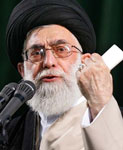
Launched a few days ago, the Facebook page “Khamenei.ir” displays photographs of the 73-year-old cleric alongside speeches and pronouncements by the man who wields ultimate power in the Islamic Republic.
While there are several other Facebook pages already devoted to Khamenei, the new one – whose number of “likes” quadrupled on Monday to over 1,000 – appeared to be officially authorized, rather than merely the work of admirers.
The page has been publicized by a Twitter account of the same name that Iran experts believe is run by Khamenei’s office.
Both U.S-based social media sites are blocked in Iran by a wide-reaching government censor but they are still commonly used by millions of Iranians who use special software to get around the ban.
In 2009, social media were a vital tool for those Iranians who believed the re-election of President Mahmoud Ahmadinejad was rigged. Facebook was used to help organize street protests of a scale not seen since the Islamic Revolution of 1979.
The protests – which the government said were fuelled by Iran’s foreign enemies – were eventually stamped out by the security forces and their political figureheads remain under house arrest.
Khamenei’s Facebook page has so far shared a picture of a young Khamenei alongside the founder of the Islamic Republic, Ayatollah Ruhollah Khomeini, in the early 1960s.
It shares a similar tone, style and content with accounts devoted to disseminating Khamenei’s message on Twitter and Instagram and to the website www.khamenei.ir, a sophisticated official website published in 13 languages.
Experts said the social media accounts showed that Iran, despite restricting access to such sites inside the country, was keen to use them to spread its world view to a global audience.
“Social media gives the regime leadership another medium of communication, one that can share their message with a younger and far more international demographic,” said Afshon Ostovar, a Middle East analyst at CNA, a U.S.-based research organization.
Iran is locked in a decade-long dispute with the West over its nuclear program, which the U.S. and its allies suspect is aimed at developing a bomb, something Iran has repeatedly denied. Iran, the West and regional states are also often opposed on issues such as the violence raging in Syria and the Israeli-Palestinian conflict.
Iranian authorities have said they are trying to build a national intranet, something skeptics say is a way to further control Iranians’ access to the global web. Tehran tried to block Google Inc.’s email service this year but soon reopened access.
(Reporting By Yeganeh Torbati; Editing by Robin Pomeroy)


